Peptide Science
·15 min read
Peptides, Decoded: From a Gila Monster's Venom to Hollywood's Favorite Shot
The real science behind 2026's biggest wellness trend — and the 25 celebrities putting it to the test.
By Tony Medrano & Nikita Hudson Crosby
Eating out on a GLP-1? Our dining partner Menu-Order AI scans restaurant menus for GLP-1 friendly picks.
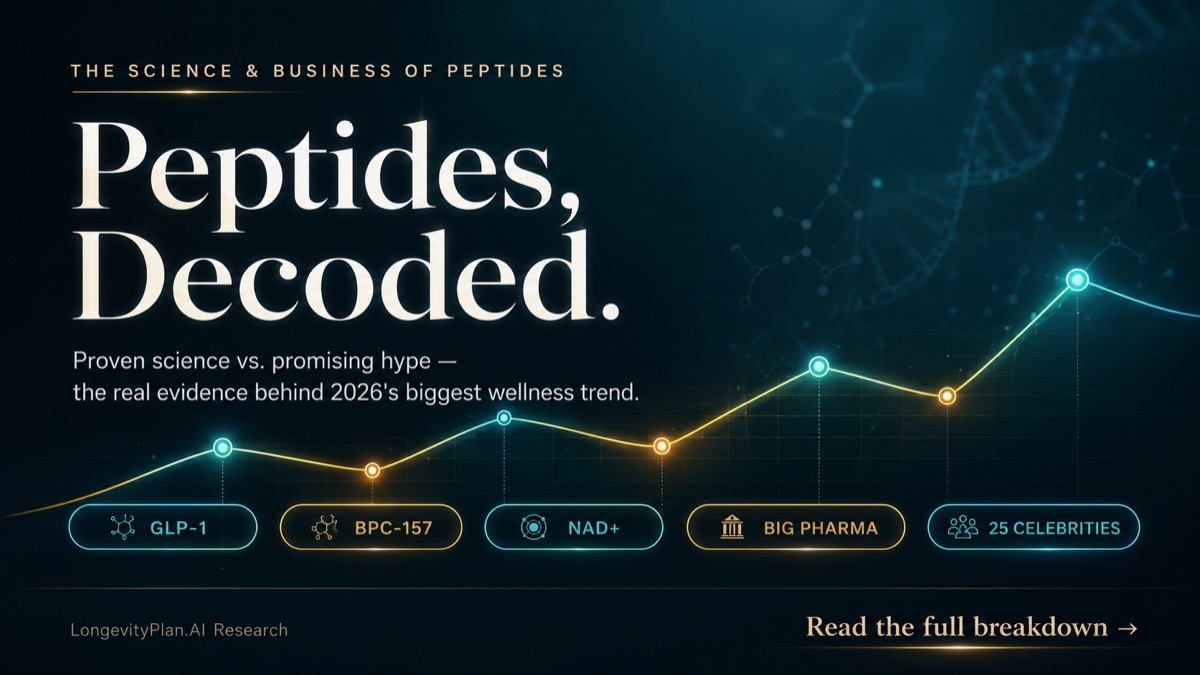
Every great peptide story starts the same way: a molecule the body already makes, borrowed, tweaked, or discovered somewhere unexpected, then turned into medicine. Insulin is a peptide. So is the hormone that makes a Gila monster able to go months without eating — and, improbably, that lizard's venom is the direct ancestor of the first GLP-1 receptor agonist, catalyzing a launch of a drug class whose largest manufacturer was, at one 2024 milestone, reported to be worth more than Denmark's entire GDP. That's the kind of story tier one of this piece tells: patient, rigorously tested, occasionally strange, science. Tier two is a different kind of story — legitimately exciting biology, moving faster than the human trials that would confirm it, propelled in no small part by the celebrities describing what it's done for them. Both tiers are worth understanding on their own terms, which is what this piece sets out to do, one molecule and one household name at a time.
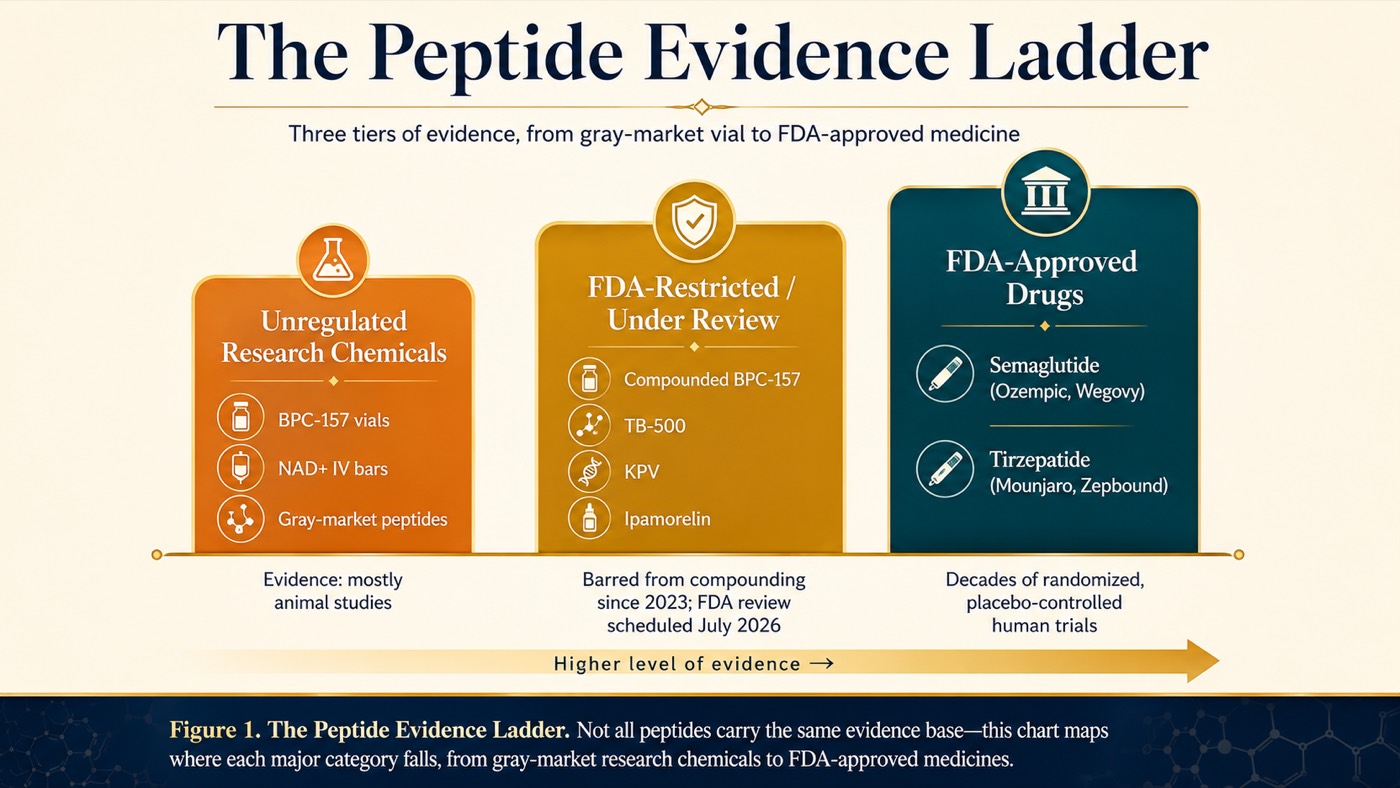
Figure 1. The Peptide Evidence Ladder. Not all "peptides" carry the same evidence — this chart maps where each major category falls, from gray-market research chemicals to FDA-approved medicines, and is used throughout this article.
Tier One: The Well-Earned Reputation
In 1990, endocrinologist John Eng was studying venom at a Bronx VA hospital when he isolated a peptide from Gila monster saliva called exendin-4. It turned out to closely resemble a human gut hormone, GLP-1 (which acts to regulate blood sugar and appetite), with one crucial advantage: while human GLP-1 breaks down in one to two minutes, the lizard version stays active for hours. That stability problem — solved by nature millions of years before any chemist got involved — became the foundation for exenatide, the first FDA-approved GLP-1 drug, in 2005.[1]
The deeper biology behind that drug class was worked out in parallel by a small group of scientists starting in the late 1970s. Biochemist Svetlana Mojsov, working at Massachusetts General Hospital and Rockefeller University, developed the synthesis and antibody methods needed to isolate GLP-1's active fragment. With endocrinologist Joel Habener at MGH and Harvard Medical School, and independently with physiologist Jens Juul Holst at the University of Copenhagen, the teams showed this gut peptide triggers insulin release in response to food — the "incretin effect" behind every GLP-1 drug since. Habener has described the decades-long project simply: it was "just been one surprise after the next." Mojsov was initially left off several major prizes awarded to her male collaborators and pushed back publicly — "I was really upset," she told Science in 2021 — and has since been included on nearly every major prize since, including the 2024 Lasker~DeBakey Award and the 2025 Breakthrough Prize.[2][3]
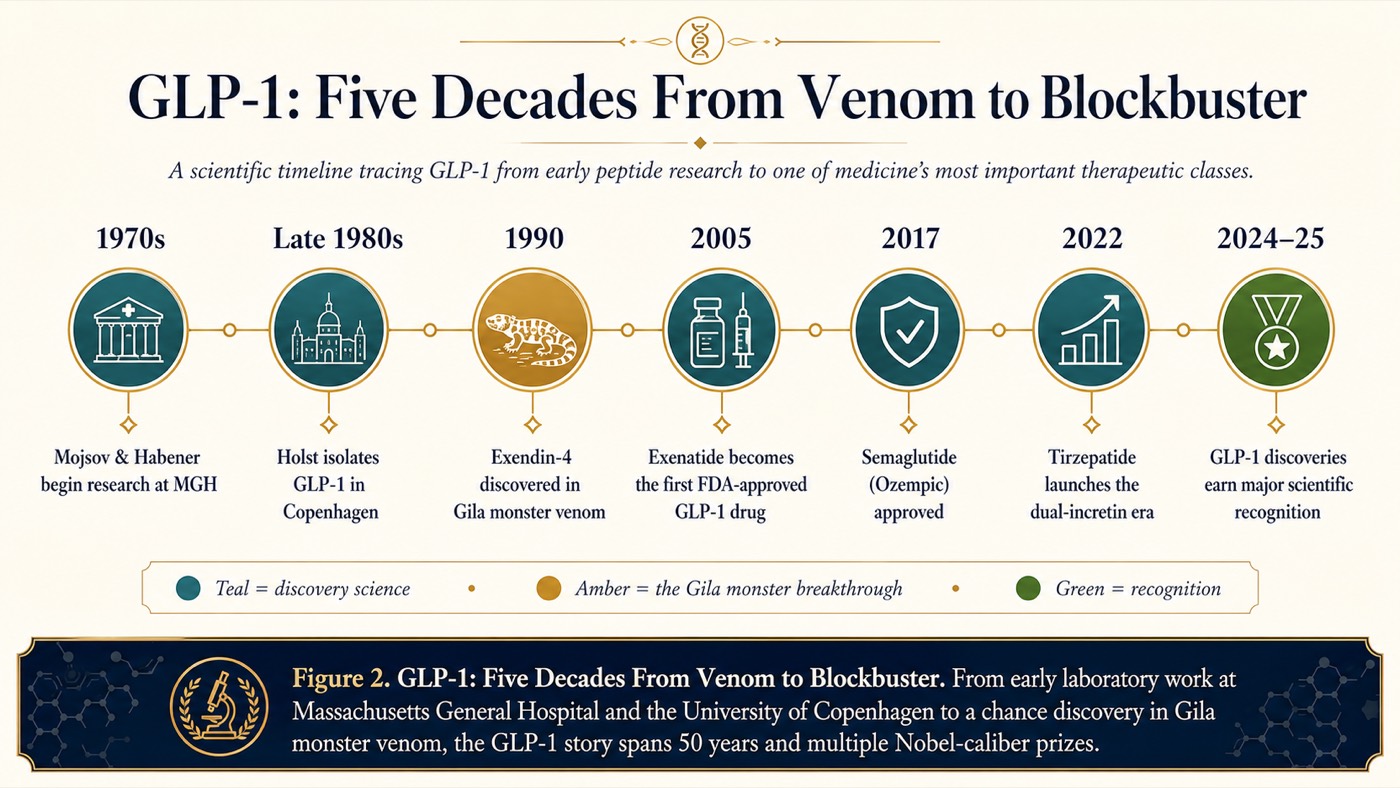
Figure 2. GLP-1: Five Decades From Venom to Blockbuster. From early laboratory work at Massachusetts General Hospital and the University of Copenhagen to a chance discovery in Gila monster venom, the GLP-1 story spans 50 years and multiple Nobel-caliber prizes.
The next leap came from peptide chemist Richard DiMarchi, who spent decades at Eli Lilly before joining Indiana University's chemistry faculty. DiMarchi engineered a single peptide that activates both the GLP-1 and GIP receptors at once. The early rodent results, he's said, were "phenomenally effective for weight loss" — and the resulting drug, tirzepatide (Mounjaro/Zepbound), delivers meaningful weight loss beyond that of single-target GLP-1 drugs. His lab has since added a third target, glucagon; triple-agonist candidates now in trials are showing a mean weight loss of roughly 24% over 48 weeks.[4] And the pipeline keeps expanding beyond weight loss and diabetes: semaglutide is now in large-scale trials for Alzheimer's disease, and exenatide — the original lizard-derived molecule — is being tested separately as a possible neuroprotective therapy, a genuinely exciting second act for a 30-year-old discovery.[1][5]
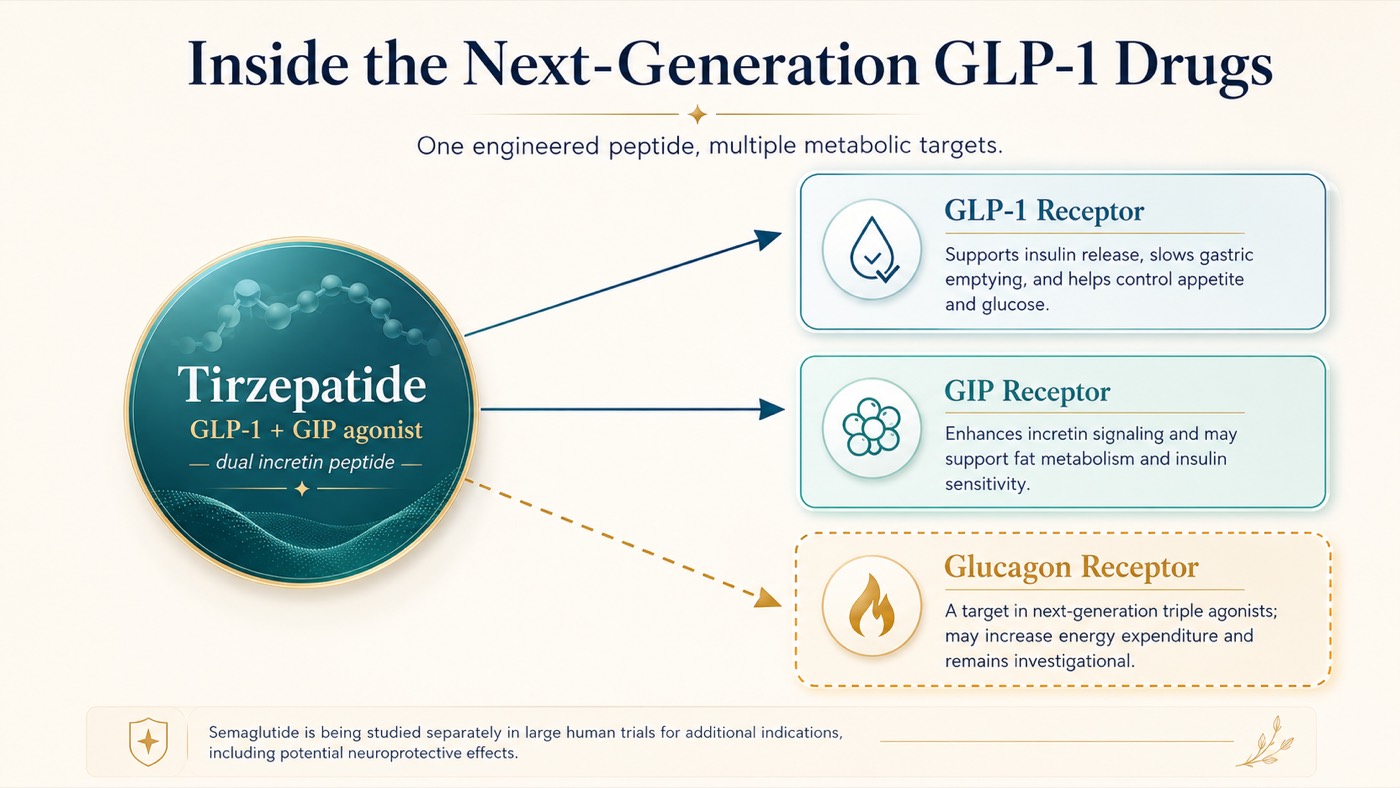
Figure 3. Inside the Next-Generation GLP-1 Drugs. Tirzepatide activates two metabolic receptors at once; newer triple-agonist candidates in clinical trials add a third, glucagon receptor, target for even greater effect.
On the business side, Novo Nordisk and Eli Lilly lead by revenue — Lilly's 2025 tirzepatide-based revenue alone topped $65 billion — but manufacturing, not chemistry, has become the real bottleneck as demand outstripped supply industry-wide. Bachem and CordenPharma have built out large-scale, GMP-certified production capacity to keep up. Zealand Pharma licensed a discovery-stage molecule to Boehringer Ingelheim rather than developing it alone, a common path for smaller biotechs; Ferring and Ipsen instead built defensible niches in reproductive health and neuroendocrine tumors, where GLP-1-giant competition doesn't reach.[6]
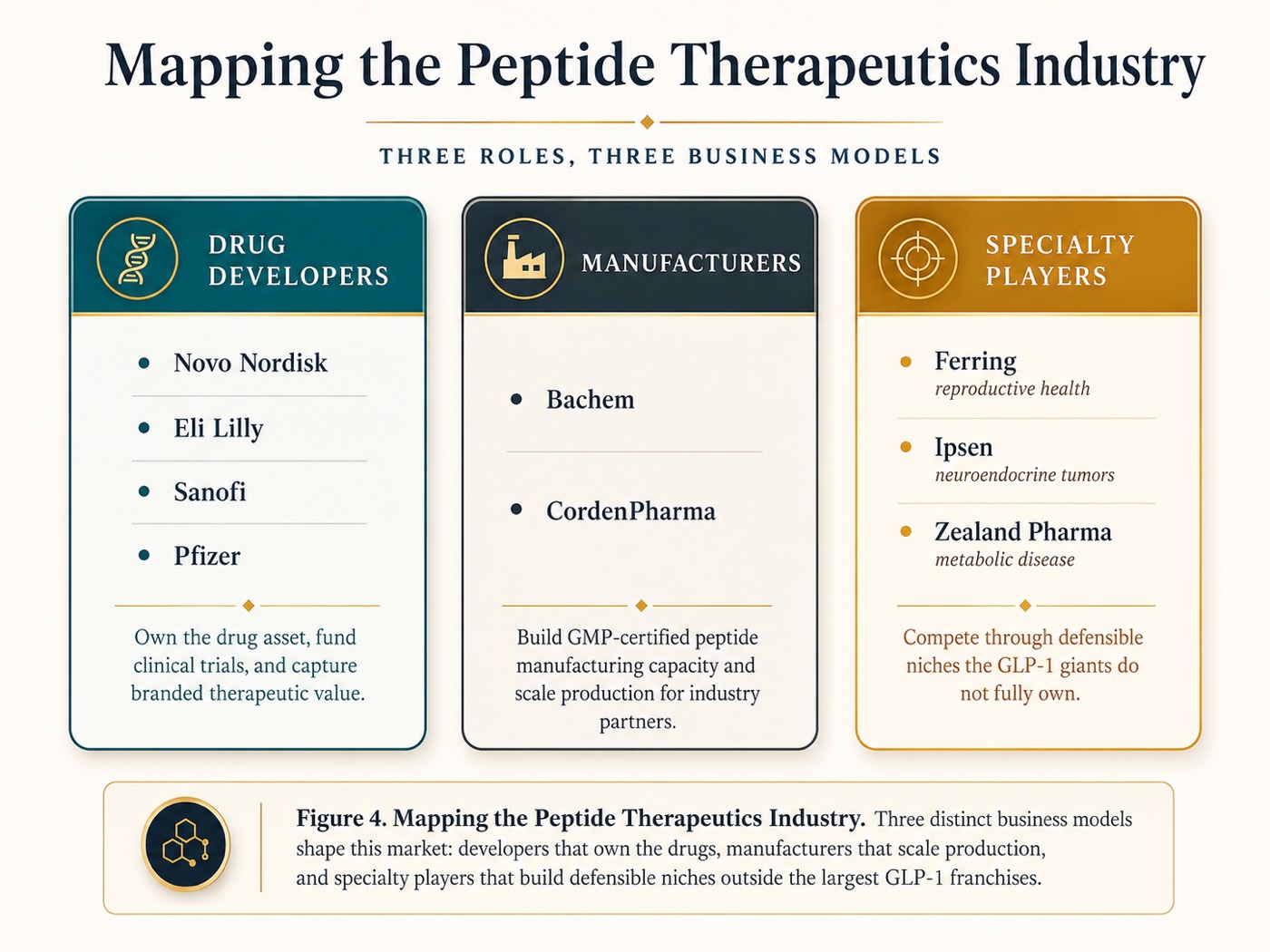
Figure 4. Mapping the Peptide Therapeutics Industry. Three distinct business models compete in this market: the developers who own the drugs, the manufacturers who scale production, and specialty players who build defensible niches the giants don't chase.
The Names Behind the Numbers
It's a drug class with the trial data to back it up — and Hollywood has been unusually candid about using it. Oprah Winfrey, without naming her specific medication, has called the shift from shame to treatment "like relief, like redemption, like a gift" after years of public scrutiny over her weight.[7] A tweet started it all for Elon Musk: asked in 2022 how he'd gotten "fit, ripped and healthy," his answer was two words — "Fasting…and Wegovy" — for what he's said was a roughly 30-pound change.[8]
Not everyone using a GLP-1 is on the drug that people assume. Kelly Clarkson has corrected the record more than once: "Everybody thinks it's Ozempic. It's not," she's said, describing a different medication prescribed after her bloodwork became impossible to ignore.[9] Whoopi Goldberg takes Mounjaro and doesn't hedge about it on air, calling it "that wonderful shot that works for folks who need some help" after losing what she jokingly called "almost two people".[10]
The side-effect stories are just as instructive as the success stories. Amy Schumer tried Ozempic and stopped almost immediately, saying she "felt so sick and couldn't play with my son," before later switching to Mounjaro, which she's since described enjoying.[11] Sharon Osbourne lost 42 pounds on Ozempic and now warns from the other direction — "too gaunt and I can't put any weight on" — a reminder that dosing, not just access, is the real skill involved.[12]
For some, the decision wasn't cosmetic at all. Rebel Wilson used Ozempic briefly on her fertility doctor's advice, to improve her odds with IVF, and has since stopped: "Those drugs can be good," she told the Sunday Times, while crediting her larger transformation to diet and exercise.[13] Chrissy Teigen used Ozempic for about a year following the loss of her son Jack, describing the experience as tangled up with grief rather than aesthetics — one of the more candid public accounts of why someone actually starts.[14] Jonathan Van Ness made a similar proactive choice in 2023 after a health scare prompted a colonoscopy, later pairing the medication with Pilates for a body change they'd wanted for years.[15]
Meghan Trainor and her husband, Daryl Sabara, went on a low dose of Mounjaro together after, in her words, hearing that "more and more of our friends — and even our doctors" were using it, layering the shots into workouts and diet changes rather than relying on them alone.[16] Boy George was similarly unsentimental about it in his memoir Karma, calling GLP-1 drugs "wonder drugs" and noting, bluntly, that anyone heavier last year and slimmer this year is very likely on one.[17] Tori Spelling found Ozempic didn't work for her, then switched: "I went on Mounjaro, which did do the trick," tying her post-pregnancy weight struggle to a hormone shift around perimenopause.[15] Kathy Bates did it the slow way first — 80 pounds over seven years of diet and lifestyle change — before Ozempic helped with a final 20, and she's insistent that calling it "hard work" isn't false modesty.[18]
The most useful counterpoint in this tier isn't a celebrity story so much as a patient story. Anthony Anderson has had type 2 diabetes since 2002 and takes semaglutide medically, not for weight loss — and his public comments have focused less on his own experience than on a real-world consequence of the trend: recreational, off-label demand "creating a shortage for those of us who need the medicine" for genuine health reasons.[19]
Read more scientific research from LongevityPlan.AI, or buy peptides from the LongevityPlan.AI shop.
Tier Two: The Frontier — and the Wolverine Stack
The second category of "peptides" is a looser grouping: BPC-157, TB-500, CJC-1295, Ipamorelin, GHK-Cu, and NAD+ (technically not a peptide, since its molecular backbone is a glycosidic rather than a peptide bond, but marketed alongside them all the same). What makes this tier genuinely interesting — and genuinely unresolved — is that the underlying biology is often plausible and, in animal studies, sometimes striking. BPC-157 is the clearest example, and no one has done more to put it into the wellness mainstream than Joe Rogan.
The Wolverine Stack: A Closer Look
BPC-157 — Body Protection Compound-157 — is derived from a peptide naturally found in human gastric juice, which is believed to help protect and repair the stomach lining. Researchers studying it in animal models have found it accelerates the growth of new blood vessels, a process called angiogenesis, which appears to speed the healing of damaged ligaments, tendons, and muscle tissue. That mechanism is exactly what drew Rogan to it: after years of weightlifting and martial arts training left him with chronic elbow tendinitis, he began injecting BPC-157 and has said the pain was "gone in two weeks."[20] He's since discussed pairing it with TB-500 — a combination nicknamed the "Wolverine stack," after the X-Men character's near-instant healing — a pairing researchers have flagged as particularly risky, since the two compounds have never been studied together in a human trial.[22]
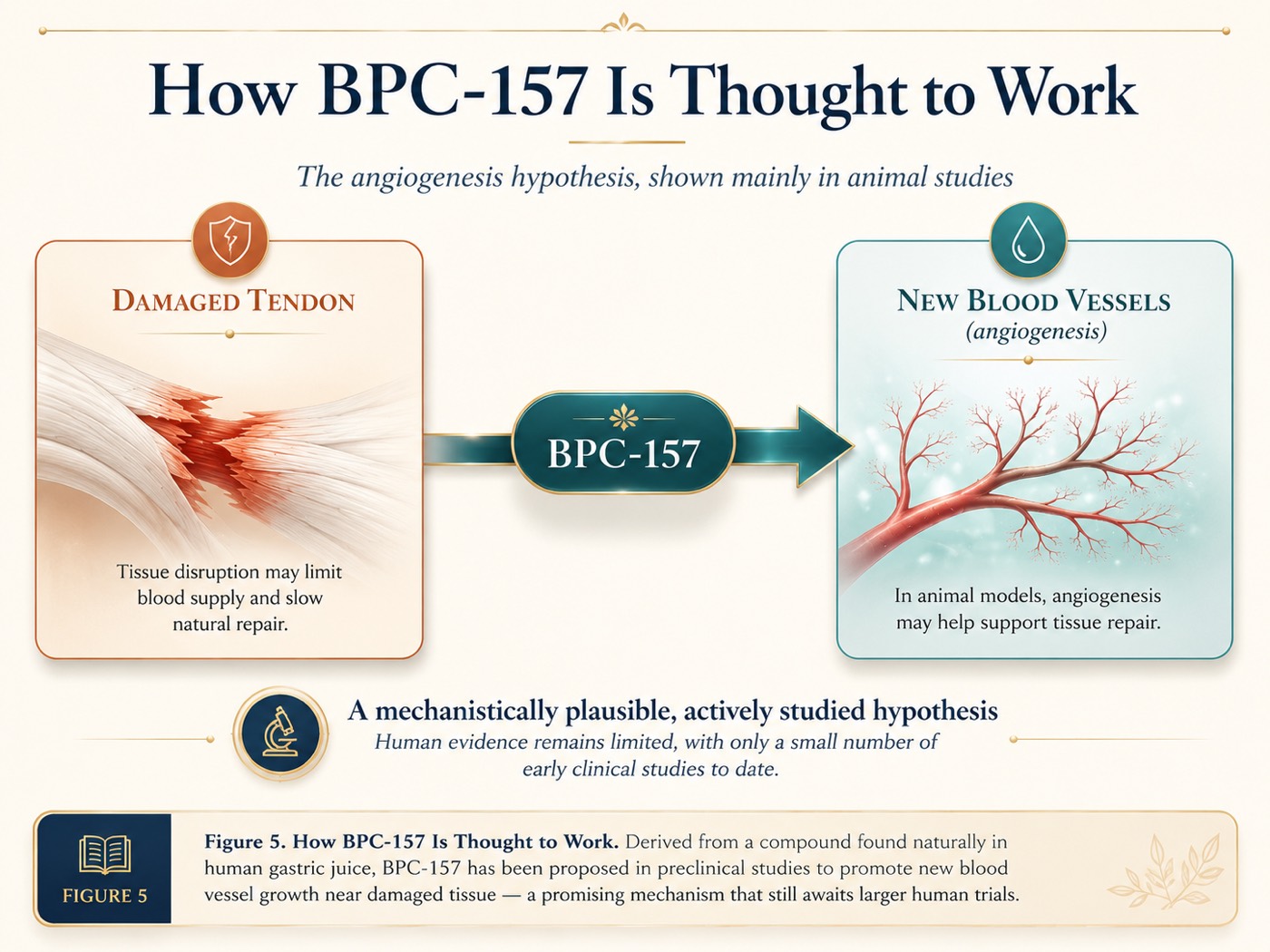
Figure 5. How BPC-157 Is Thought to Work. Derived from a compound found naturally in human gastric juice, BPC-157 appears in animal studies to promote new blood vessel growth in damaged tissue — a genuinely promising mechanism still awaiting larger human trials.
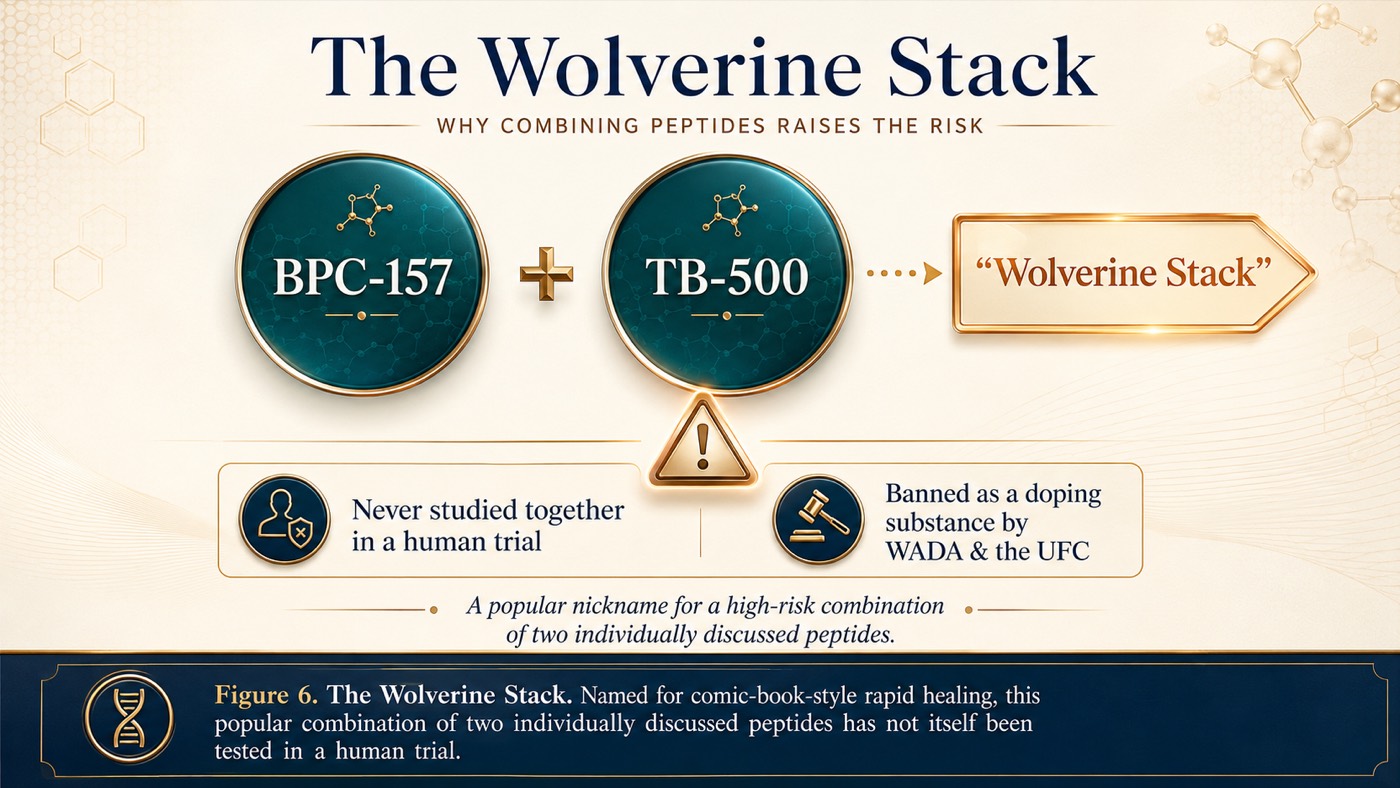
Figure 6. The Wolverine Stack. Named for the X-Men character's rapid healing, this popular combination of two individually studied peptides has never itself been tested in a human trial — the exact concern researchers like Eric Topol have raised.
The animal data behind BPC-157 is worth taking seriously on its own terms — this isn't marketing hand-waving; it's a real, mechanistically coherent hypothesis that plenty of legitimate researchers find worth pursuing. The catch is the size of the human evidence base: a recent review found the case for BPC-157 rested almost entirely on rodent studies, with only three small human pilot trials completed so far.[22] That's the heart of the tension in this entire tier: a compound with real biological promise, racing ahead of the clinical trials that would tell us the right dose, the right duration, and the real risk profile in people. In 2023, the FDA barred compounding pharmacies from producing BPC-157 and roughly two dozen other peptides because of that exact gap, and it remains banned as a doping substance by international sports authorities. Health Secretary Robert F. Kennedy Jr. has since pushed to legalize compounding for 14 peptides, including BPC-157, and the FDA's Pharmacy Compounding Advisory Committee is scheduled to revisit the question on July 23–24, 2026.[23][24]
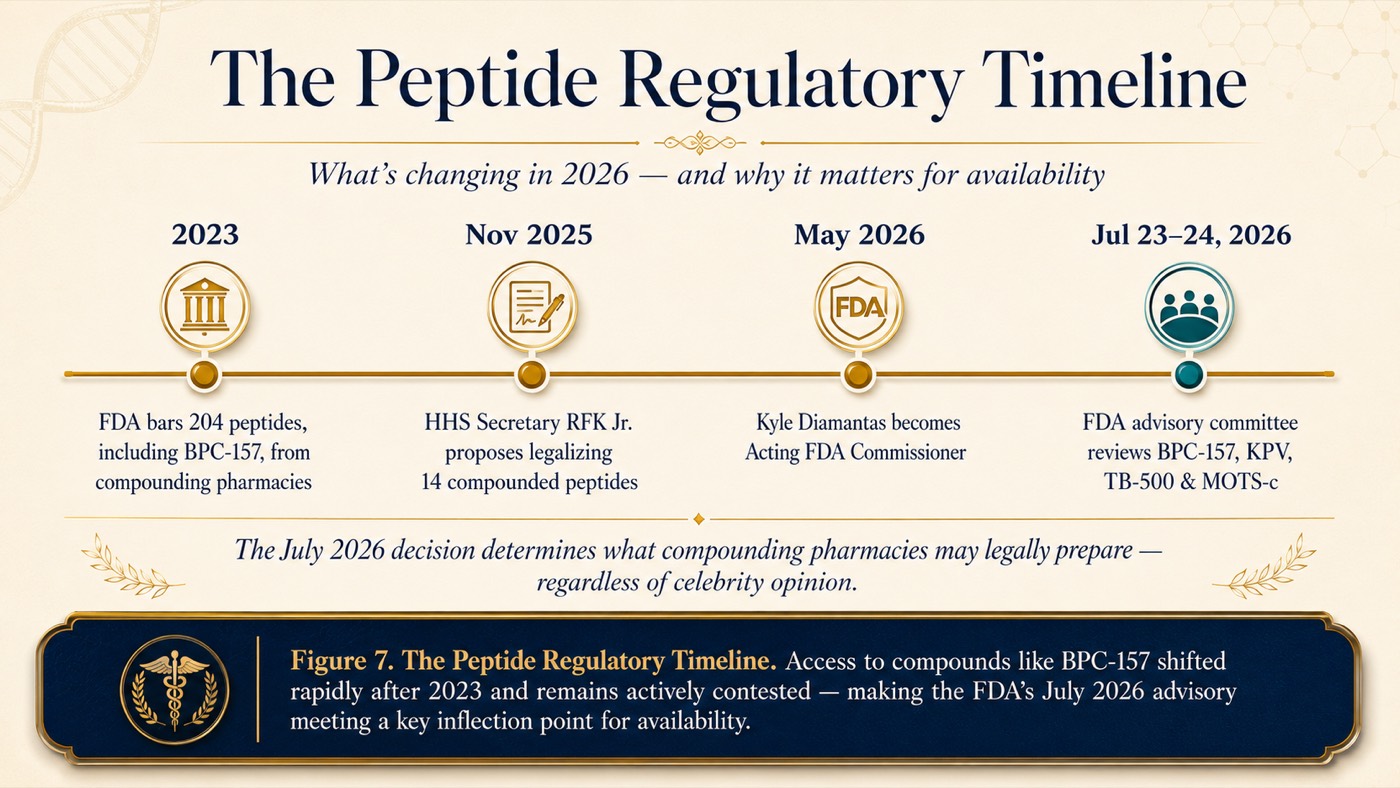
Figure 7. The Peptide Regulatory Timeline. Access to compounds like BPC-157 has shifted quickly since 2023 and remains actively contested — the FDA's July 2026 advisory meeting is the next real inflection point.
The Rest of the Tier
Sylvester Stallone is this category's longest-running case study, having defended his use of human growth hormone since 2007, when Australian customs found 48 vials of it in his luggage. His long-standing position — "HGH is for repair", not a steroid — has doubled as an explanation for a physique he's maintained deep into his 70s.[25] Gwyneth Paltrow has called peptide shots one of her "biggest wellness tools" through Goop without specifying which compounds, making her one of the category's highest-profile promoters.[21] Derrick Lewis claimed on a podcast that the UFC had supplied him with peptides he was taking daily — a claim the organization quickly disputed, saying Lewis had misspoken and that it doesn't provide peptides, most of which it bans as doping substances, to its fighters.[21]
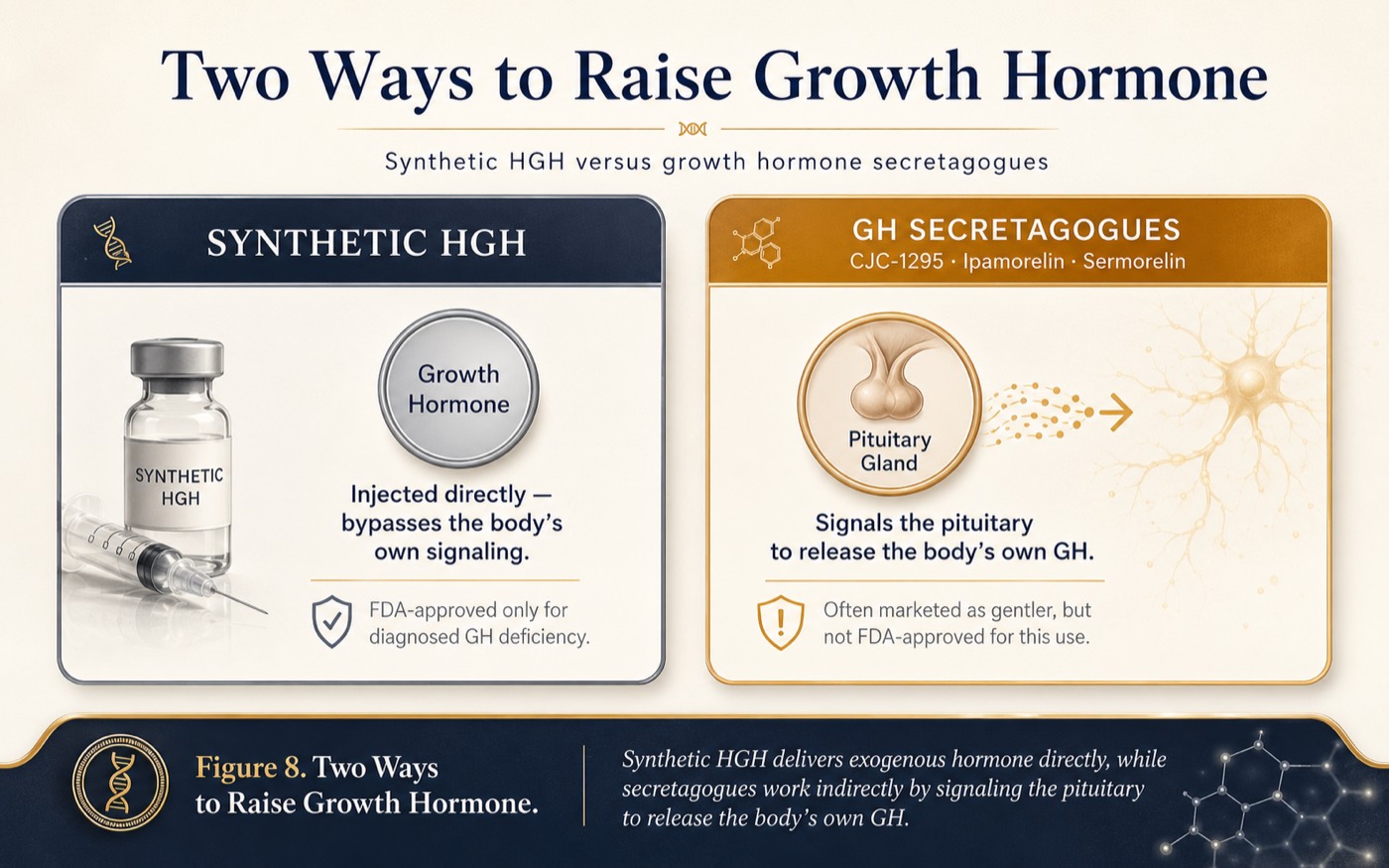
Figure 8. Two Ways to Raise Growth Hormone. Sylvester Stallone's decades-long HGH advocacy predates today's popular secretagogues — a related but chemically distinct approach that works through the body's own pituitary signaling rather than direct hormone replacement.
Jennifer Aniston takes a three-layered approach to skin: weekly injectable peptides, daily collagen peptides as Vital Proteins' Chief Creative Officer, and topical products from OneSkin. Regarding the injections, she told The Wall Street Journal, "I do think that's the future," even as dermatologists note that most cosmetic peptide injectables are not FDA-approved.[26] Halle Berry was blunter about her own regimen during a conversation at a longevity conference with Dr. Mark Hyman — "I've been shot up with so many peptides" — as part of a broader menopause-and-longevity push tied to her Respin platform.[27]
NAD+ has its own celebrity subplot, and its own real biochemistry: the coenzyme is essential to how mitochondria convert food into usable cellular energy, and it activates a family of proteins called sirtuins that are involved in DNA repair — legitimate, well-established cell biology, even though the specific anti-aging claims made for IV infusions haven't been confirmed in controlled human trials. Kendall Jenner and Hailey Bieber made the treatment mainstream when cameras caught their "IV drip party" on The Kardashians; Jenner, recovering from a rough bout of COVID, described the sessions as something that "they comfort me," while Bieber told her on camera she was "never gonna age."[28][29] Justin Bieber has folded weekly NAD+ infusions into a broader recovery regimen following his public health struggles, including Ramsay Hunt syndrome, using it by most accounts for systemic recovery rather than aesthetics.[30]
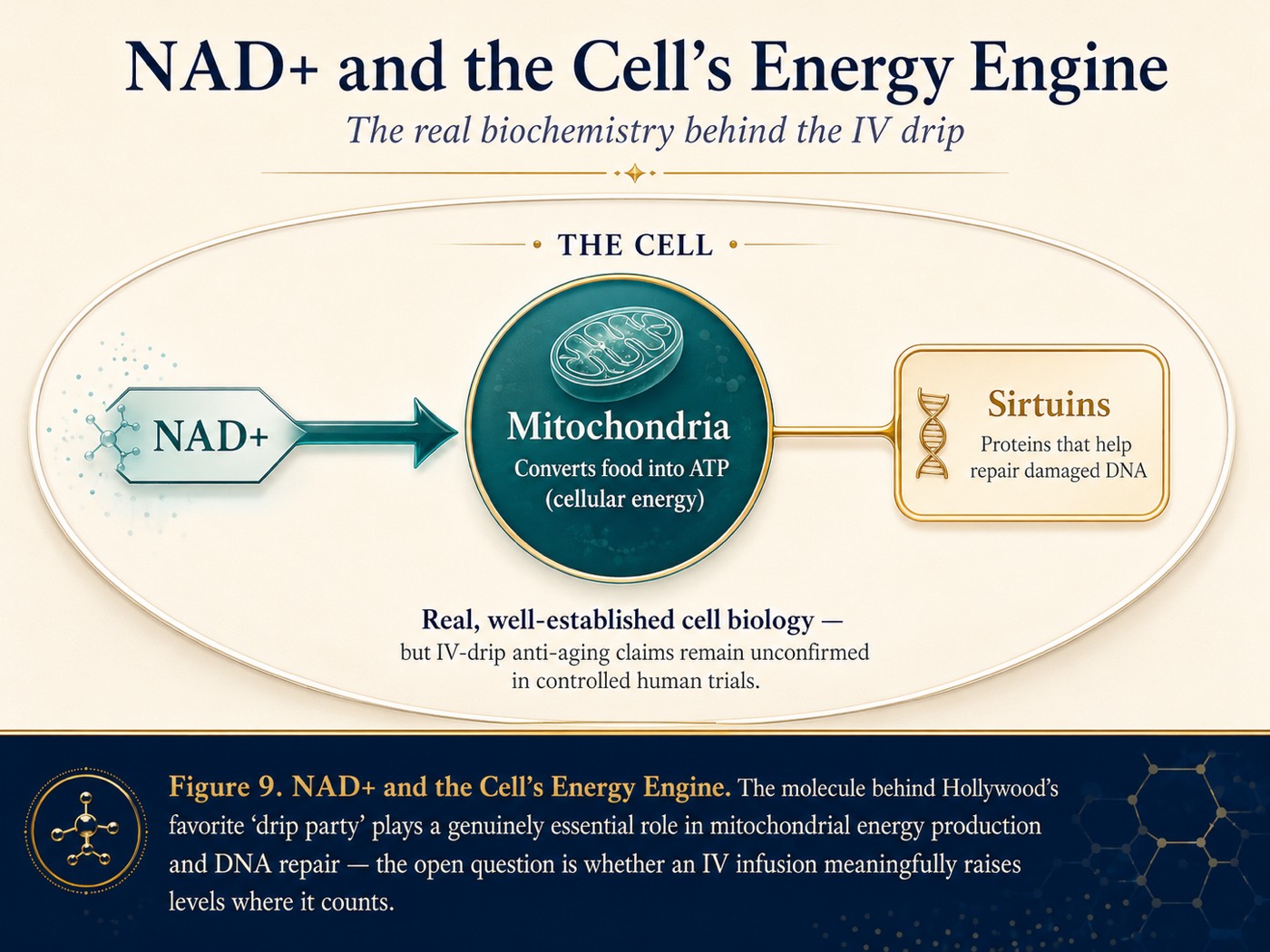
Figure 9. NAD+ and the Cell's Energy Engine. The molecule behind Hollywood's favorite "drip party" plays a genuinely essential role in mitochondrial energy production and DNA repair — the open question is whether an IV infusion meaningfully raises levels where it counts.
Two Notable Non-Users
Not everyone associated with this trend is actually part of it. Sophie Turner is on the record as a critic, not a user — she posted, then deleted, an Instagram story blasting Ozempic advertising in a New York subway station. Julia Fox faced persistent Ozempic speculation after a dramatic post-breakup transformation, but told The New York Times the weight loss came from the stress of her split from Kanye West, not medication.[31] Both are useful reminders that public speculation about a celebrity's body isn't the same thing as a confirmed medical claim. It's also notable that Ozempic was an early peptide with limitations, as it focused almost exclusively on appetite control and not glucose optimization or visceral fat reduction like subsequent GLP-1s.
Where This Leaves Us
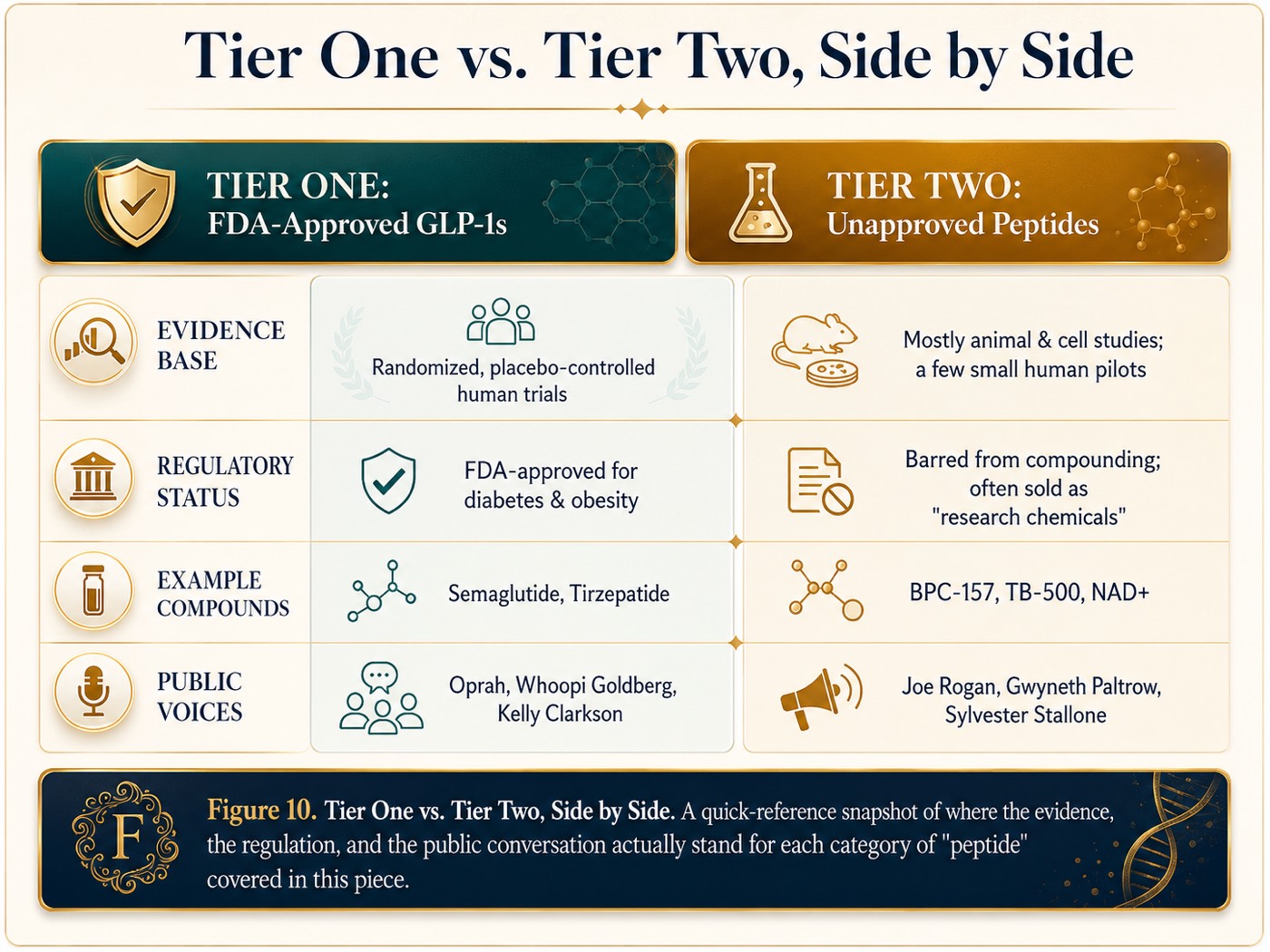
Figure 10. Tier One vs. Tier Two, Side by Side. A quick-reference snapshot of where the evidence, the regulation, and the celebrity conversation actually stand for each category of "peptide" covered in this piece.
The two tiers tell genuinely different stories, and it's worth being precise about which one you're in. Tier one has already delivered on its promise, repeatedly, in trials most drugs never get — and its next chapters, from Alzheimer's to next-generation triple agonists, look every bit as consequential as the first. Tier two is where the science is still being written: legitimately promising mechanisms, some remarkable animal data, and a human evidence base that hasn't yet caught up to the enthusiasm. Geroscience researchers — among them Eric Verdin and Brian Kennedy, who've each led the Buck Institute for Research on Aging's search for interventions that move healthspan rather than just a lab value — are still working out which of tier two's compounds, if any, will eventually earn tier one's kind of proof. For coaches, dietitians, and other professionals whose clients ask about this constantly, that distinction — proven versus promising — is probably the single most useful thing to explain clearly. It's also, twenty years into the GLP-1 story, the safest bet for where the next real breakthrough will actually come from.
Sign Up for FREE Daily Longevity Club Workshops
Sign Up for Affiliate Program (Pays 20%)
Subscribe to the Longevity & Peptide Optimization Newsletter
About the Author
Tony Medrano is CEO and co-founder of LongevityPlan.AI, a platform that integrates performance and health data from athletes and leverages proprietary Digital Twin for Predictive Peptide Performance™ technology, wearable data, and biomarker data to deliver personalized performance optimization and longevity recommendations to athletes, coaches, organizations, businesses, government, and the military. In addition to being a 3x technology/AI company CEO with 2 successful exits, Tony has completed 3 Full Ironman Triathlons (140.6 mi) since 2019. He has degrees from Harvard University, Columbia University, and a JD/MBA from Stanford University.
Tony has been involved with AI and molecular diagnostic start-ups for 10 years, and also worked with the US Olympic Team, National Basketball Association (NBA), National Football League (NFL), Major League Baseball (MLB), Iditarod, FBI, NASA, U.S. Department of Health and Human Services (HHS), Google, Microsoft, Netflix, Bridgewater Associates, ConocoPhillips, British Petroleum, One Medical, and Jenny Craig, Inc. to provide technology, artificial intelligence and/or molecular diagnostics solutions to their employees.
One of Tony's prior companies provided Conversational AI to health, fitness, and wellness companies; another delivered access to digital libraries of British Petroleum for oil discovery; and his first was a mobile app platform funded by Softbank, which resulted in a case study published by Stanford University Press and was taught in multiple MBA programs for a decade. Tony loves to teach and mentor; he earned public school teaching credentials in NY and MA and taught inner-city high school students to give back to the underprivileged community in Harlem. He also lectured on entrepreneurship and venture capital to second-year MBA students at Stanford Business School for five years. He co-authored one of the first issued patents for mobile applications. Tony also served as a US Navy Officer commanding an emergency response team on a USN Destroyer. Tony's military-to-CEO career has recently been chosen to air on an episode of "Operation CEO," a documentary by InsideSuccess.TV, which will air on AppleTV, Prime Video & Amazon MGM Studios, YouTubeTV, and other major platforms worldwide in 2026.
Tony's Chronological Age is 55, his Metabolic Age is 41, and his Biological Age is 28. He is using a 12-peptide protocol from LongevityPlan.AI that leverages his AI-powered Digital Twin and is currently training for his 4th Ironman Triathlon.
Endnotes
- National Institute on Aging, "Exendin-4: From lizard to laboratory...and beyond" — nia.nih.gov; VA Research, "Diabetes drug from Gila monster venom" — research.va.gov
- The Scientist, "Scientists Who Pioneered GLP-1 Drugs Bag Breakthrough Prize" — the-scientist.com; Harvard Gazette, "How a fishing expedition helped lead to GLP-1" — news.harvard.edu
- Science (AAAS), "Her work paved the way for blockbuster obesity drugs. Now, she's fighting for recognition" — science.org
- Science, "Winning researchers unlocked GLP-1 drugs for obesity" — science.org
- Eric Topol, "The Peptide Craze," Ground Truths — erictopol.substack.com
- PeptideJournal, "Top Peptide Companies to Watch in 2026" — peptidejournal.org
- JustJared, "22 Stars Admit to Using Ozempic or Similar Weight Loss Drugs" — justjared.com
- Hone Health, "Elon Musk's Diet, Exercise Routine, and Health Habits" — honehealth.com
- Newsweek, "How Weight Loss Drugs Like Ozempic and Mounjaro Are Eating Away at Body Positivity" — newsweek.com
- NBC News, "Kelly Clarkson sets record straight on Ozempic rumors" — nbcnews.com
- E! Online, "All the Stars Who Have Weighed In on the Ozempic Craze" — eonline.com
- South China Morning Post, "8 celebrities who have spoken out about Ozempic" — scmp.com
- ABC News, "Rebel Wilson shared she briefly used Ozempic" — abcnews.com
- Law Office of Melinda J. Helbock, "Celebrities Who Have Taken Ozempic" — helbocklaw.com
- E! Online, "Celebrities Speaking Out on Ozempic and Weight Loss Medications" — eonline.com
- E! Online, "Rebel Wilson Shares She Tried Ozempic Amid Weight-Loss Journey" — eonline.com (Meghan Trainor)
- Parade, "Celebrities on Ozempic and Other Weight Loss Drugs" — parade.com
- Women.com, "12 Celebs Who Totally Transformed After Taking Ozempic" — women.com
- SET FOR SET, "Celebrities Using Ozempic and Wegovy For Weight Loss" — setforset.com
- CNN, "The trend of unproven peptides is spreading through influencers and RFK Jr. allies" — cnn.com
- TIME, "Why 'Anti-Aging' Peptide Shots Are Trending on Social Media" — time.com
- Scientific American, "The science behind the peptide craze" — scientificamerican.com
- joinfound.com, "Peptides to Watch in 2026: GLP-1s and FDA Updates" — joinfound.com
- NBC News, "Dr. Marty Makary is out as FDA commissioner" — nbcnews.com
- SarmsCentral, "Sylvester Stallone Rambo's HGH Use and Fitness Legacy" — sarmscentral.org
- Yahoo Shopping, "Jennifer Aniston, 57, swears by peptide injections" — shopping.yahoo.com
- Dr. Mark Hyman, "Halle Berry: Why Women Are Being Failed at Menopause" (podcast transcript) — drhyman.com
- BuzzFeed News, "Kendall Jenner And Hailey Bieber Got IV Therapy" — buzzfeednews.com
- South China Morning Post, "Does latest biohack trend NAD+ IV therapy actually work?" — scmp.com
- The Osteo Center, "NAD+ IV Therapy in Miami: Benefits, Safety & FAQs" — theosteocenter.com
- SET FOR SET, ibid.
This article is for general educational and journalistic purposes and does not constitute medical advice. Celebrity accounts of drug and supplement use are self-reported and have not been independently verified beyond the cited public statements.