Peptide Science
·17 min read
The Cellular Energy Frontier: How Peptides Reawaken the Mitochondria
A practical guide to cellular-energy optimization for executives, aging athletes, and the coaches who advise them — specific about the numbers, and clear about what is proven versus promising.
By Tony Medrano
This article is for education and is not medical advice.
1. The watershed moment most people missed
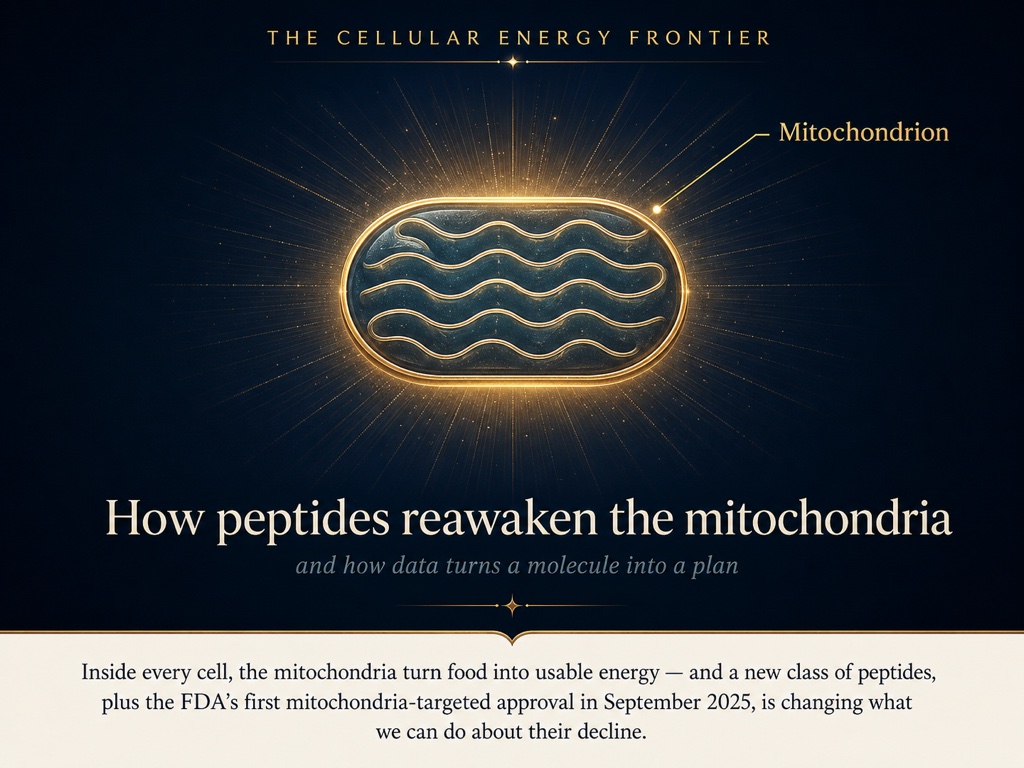
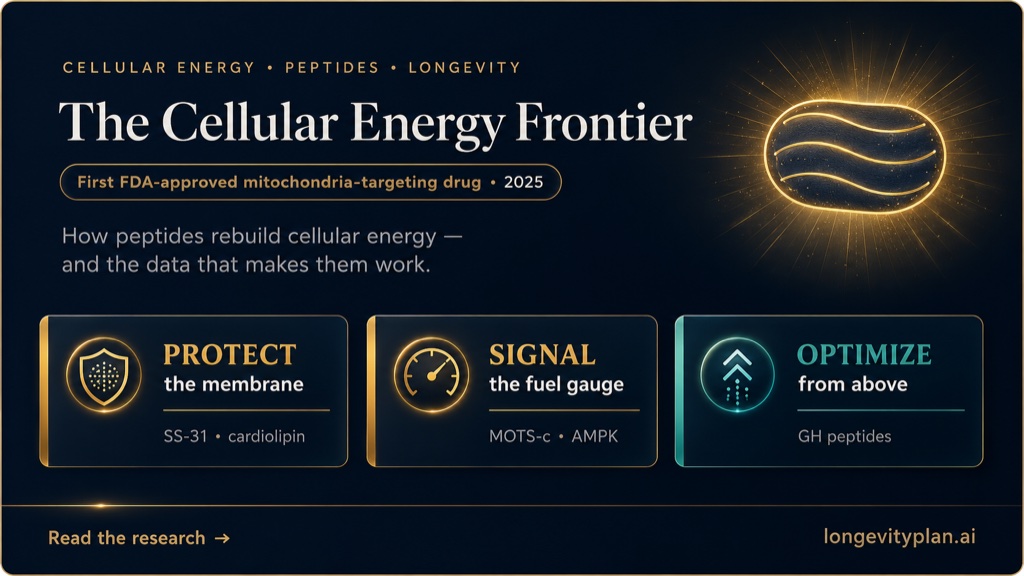
On September 19, 2025, longevity science quietly crossed a line it had been approaching for two decades. The U.S. Food and Drug Administration approved a four–amino-acid peptide called elamipretide — brand name Forzinity — making it the first FDA-approved therapy that directly targets the mitochondrion, the energy-producing engine inside every one of your cells.[1][2]
The approved use is narrow: Barth syndrome, an ultra-rare genetic disease affecting roughly 150 people in the United States.[1] The significance is not. For the first time, a regulator has certified that you can engineer a molecule to reach a specific organelle and restore its core machinery. As Reenie McCarthy, chief executive of developer Stealth BioTherapeutics, framed it, the arrival of the first mitochondria-targeted therapeutic is "a pivotal victory" that opens the door to an entire class.[2]
That door matters to far more than 150 families, because the biology that fails catastrophically in Barth syndrome — damaged mitochondrial membranes, collapsing energy output, rising oxidative stress — is the same biology that fails slowly in the rest of us, beginning somewhere in the fourth decade. It is why the 45-year-old founder who once shrugged off a red-eye now needs two days to recover, and why the masters-division triathlete watches an unchanged training load deliver shrinking returns. A small family of peptides that speak the mitochondria's native language has become the most scientifically interesting answer to that problem — and, increasingly, the most actionable.
2. First principles: what "cellular energy" actually is
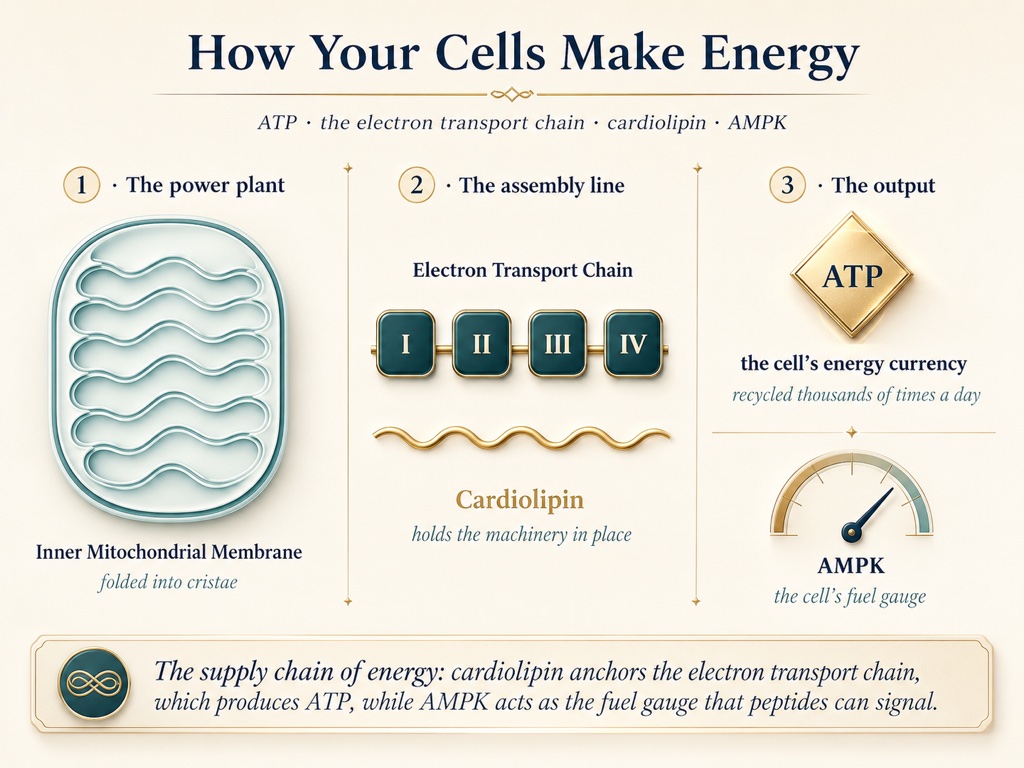
Every deliberate thing your body does is paid for in a molecule called ATP (adenosine triphosphate). You are, right now, cycling through roughly your own body weight in ATP each day — not by storing it, but by recycling each molecule thousands of times. Almost all of that recycling occurs inside the mitochondria, along a set of protein complexes called the electron transport chain, which is embedded in the inner mitochondrial membrane.
Two structural facts explain nearly everything that follows. First, the inner membrane's efficiency depends on a signature phospholipid, cardiolipin, found in meaningful amounts essentially nowhere else in the cell.[3] Cardiolipin holds the energy machinery in formation; when oxidative stress frays it, electrons leak, ATP output drops, and the leaked electrons cause still more damage — a self-reinforcing spiral. Second, the cell keeps a master fuel gauge: an enzyme called AMPK. When energy runs low, AMPK switches on glucose uptake, fat oxidation, and mitochondrial biogenesis. It is the very same switch that exercise and fasting flip — which is why one class of compounds below has earned the nickname "exercise in a vial."
From this, three clean levers emerge. You can protect the membrane, signal the fuel gauge, or optimize the whole system from above. None of the tools below is a stimulant; none borrows tomorrow's energy the way caffeine does. They work on the supply side.
3. Lever one — protect the membrane
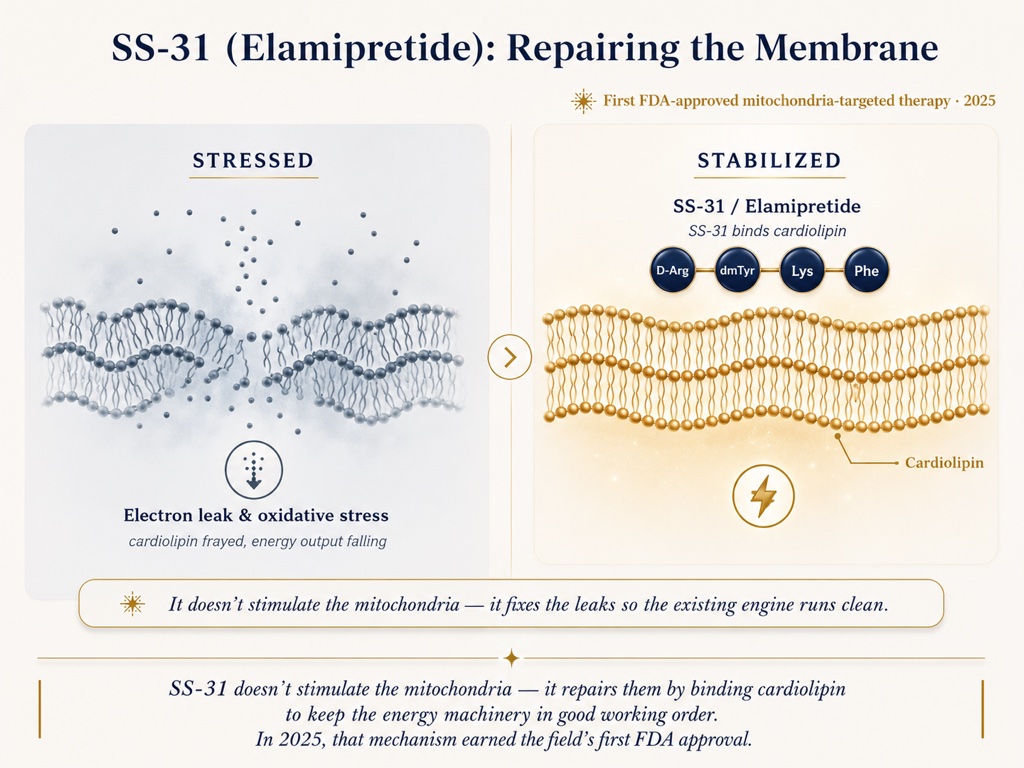
The peptide that just made history is also the clearest illustration of the first lever. Developed by Hazel Szeto and Peter Schiller at Weill Cornell, the compound known in the lab as SS-31 and in the clinic as elamipretide does something genuinely elegant: it concentrates selectively inside the inner mitochondrial membrane — reportedly at a thousand-fold or more above surrounding levels — by binding directly to cardiolipin.[3][4]
Anchored there, it restabilizes the cardiolipin scaffold, maintains proper electron transport chain organization, limits electron leakage, and reduces oxidative self-damage. Across many preclinical models, the payoff is cleaner respiration and more efficient ATP production.[3][4] This is not a molecule that whips the mitochondria harder; it fixes the leaks so the existing engine runs clean — and in September 2025 that mechanism earned the field's first FDA label.[1]
Stealth is now studying elamipretide in dry age-related macular degeneration and primary mitochondrial myopathy — both mitochondria-dense, energy-hungry systems.[2] The larger point stands on its own: an idea that once sounded like science fiction, delivering a drug to a single organelle and repairing it, now carries a regulator's signature. Everything downstream of that proof is engineering.
4. Lever two — signal the fuel gauge (a.k.a. "exercise in a pill")
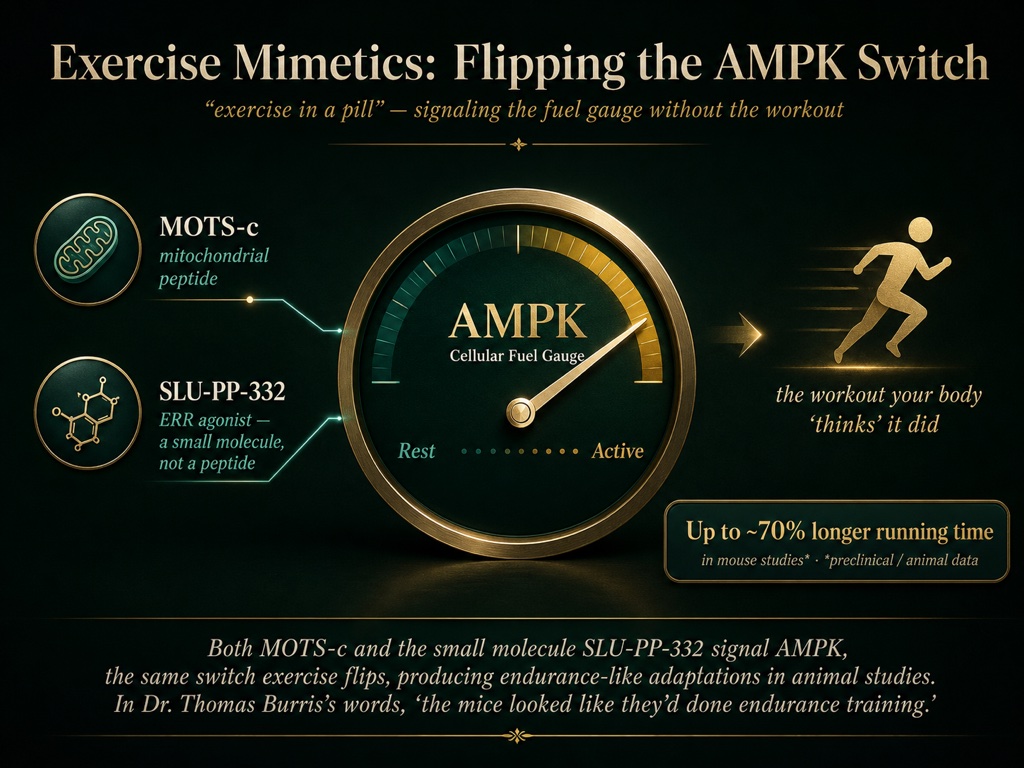
Both MOTS-c and the small molecule SLU-PP-332 signal AMPK, the same switch exercise flips, producing endurance-like adaptations in animal studies. In Dr. Thomas Burris's words, "the mice looked like they'd done endurance training."
The second lever is the one that sets the internet on fire, because it promises the dividends of a workout to a body that hasn't done one. Two very different molecules pull it.
The first is a peptide your own mitochondria write. In 2015, a team led by Changhan David Lee in Pinchas Cohen's laboratory at USC reported that the mitochondrial genome, long thought to encode exactly 37 genes, hides more — short sequences that produce bioactive peptides. Their flagship, published in Cell Metabolism, is a 16–amino-acid molecule named MOTS-c.[5][6] MOTS-c is a true "mitokine": it activates AMPK and, in doing so, mimics several signatures of exercise — enhanced muscle glucose uptake, increased fat oxidation, improved insulin sensitivity.[6] Two facts make it especially compelling. Its levels rise with exercise and fall with age, casting it as both a signal and a casualty of aging.[6] And in USC's animal work, MOTS-c improved insulin resistance, boosted exercise capacity, and extended median lifespan in mice[7] — with early human data (a seven-day intravenous study) showing improved insulin sensitivity in insulin-resistant men.[8] Anti-doping authorities took the mimicry literally, adding MOTS-c to the prohibited list in 2024[9] — a backhanded compliment to how potent the mechanism appears.
Read More Scientific Researchfrom LongevityPlan.AI.
Read more scientific research from LongevityPlan.AI, or buy peptides from our shop.
The second molecule is worth getting right, because precision is the whole point of this field: SLU-PP-332 is not a peptide but a small synthetic molecule developed by Thomas Burris and colleagues at Saint Louis University (with later work at the University of Florida).[10] It activates the estrogen-related receptors (ERRα/β/γ), which switch on the same metabolic gene programs as endurance training. In the 2023 ACS Chemical Biology study it increased mitochondrial function and cellular respiration, shifted muscle toward endurance-type fibers, and raised exercise endurance in mice[11]; follow-up work reported running-time increases on the order of 70%.[10] Burris's own summary became the field's signature line: after treatment, "the mice looked like they'd done endurance training."[12] Notably, unlike GLP-1 weight-loss drugs, this class does not suppress appetite — it acts on muscle — which is exactly why researchers see promise in pairing metabolic modulators with GLP-1 therapy to protect muscle during weight loss.[12]
5. Lever three — optimize the system from above
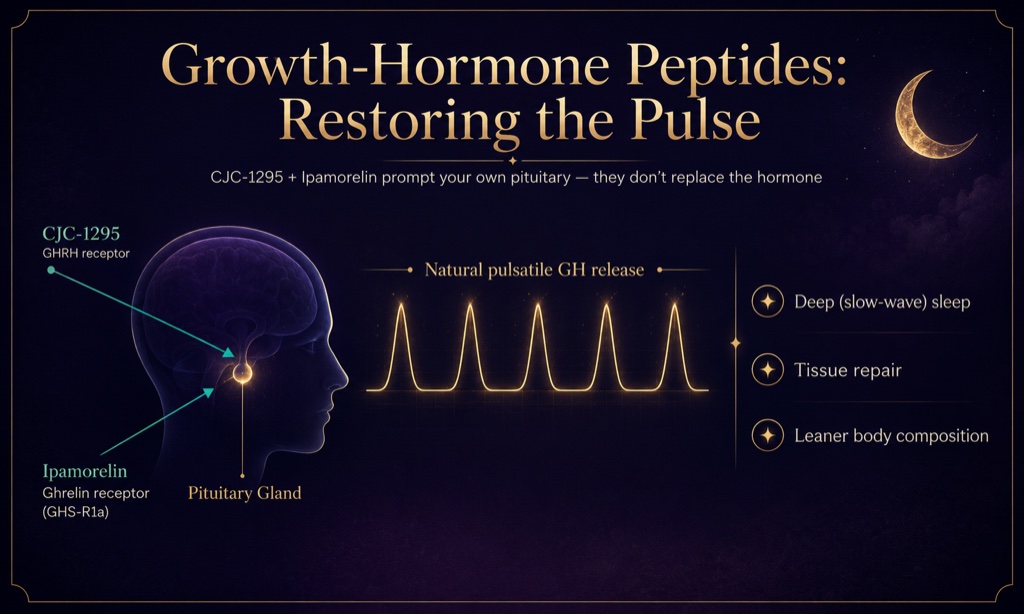
Growth-hormone peptides don't replace the hormone — they prompt the pituitary to release more of your own, in its natural pulses. The dividends show up as deeper sleep, better repair, and leaner composition.
The third lever is the most clinically established and the most systemic. Growth-hormone secretagogues such as CJC-1295 (a GHRH analog) and Ipamorelin (a selective ghrelinreceptor agonist) do not deliver growth hormone — they coax the pituitary into releasing more of its own in the body's natural pulsatile rhythm.[13] Because they engage two complementary receptor pathways, the pair produces a synergistic pulse larger than either alone.[13]
Ipamorelin's defining virtue is selectivity: a 1998 study by Raun and colleagues showed it releases growth hormone without the cortisol, prolactin, and ACTH spikes that plagued earlier secretagogues — which is why practitioners still prefer it.[14] The relevance to energy is indirect but real, running through better slow-wave sleep, tissue repair, and leaner body composition, all of which feed back into how much usable energy you actually have each day. This is often where the aging executive or the recovering athlete begins, because the effects — sleep, recovery, composition — are felt, not just measured.
6. The variable almost everyone ignores: your genome
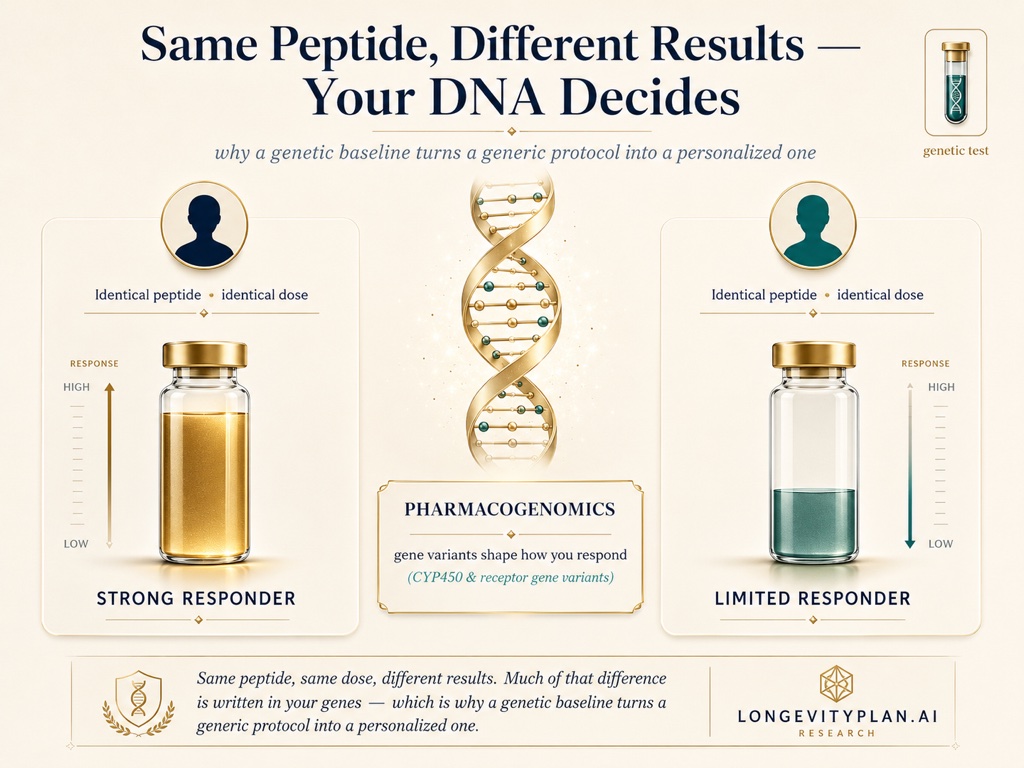
Here is the fact that separates a real strategy from an expensive experiment. Two people can take the identical peptide, at the identical dose, and get meaningfully different results — and much of that difference is written in their DNA.
This is pharmacogenomics, and it is not speculative. Variants in the cytochrome P450 enzyme family already explain why standard medications can range from useless to toxic across individuals, and clinical guidelines routinely adjust drug selection and dosing by genotype.[15][16] The same logic governs the receptors, transporters, and signaling nodes that peptides act on: if your AMPK signaling, ERR expression, or GH-axis sensitivity is genetically atypical, the textbook protocol is, for you, a guess. The market is closing this gap fast — genomic risk stratification pioneered by firms such as Genomics plc (led by Oxford statistician Peter Donnelly) is migrating from disease prediction into optimization,[17] and peptide-specific panels now exist: PlexusDx, for one, profiles how an individual's variants map onto dozens of peptide pathways from a single cheek swab run on clinical-grade sequencing.[18]
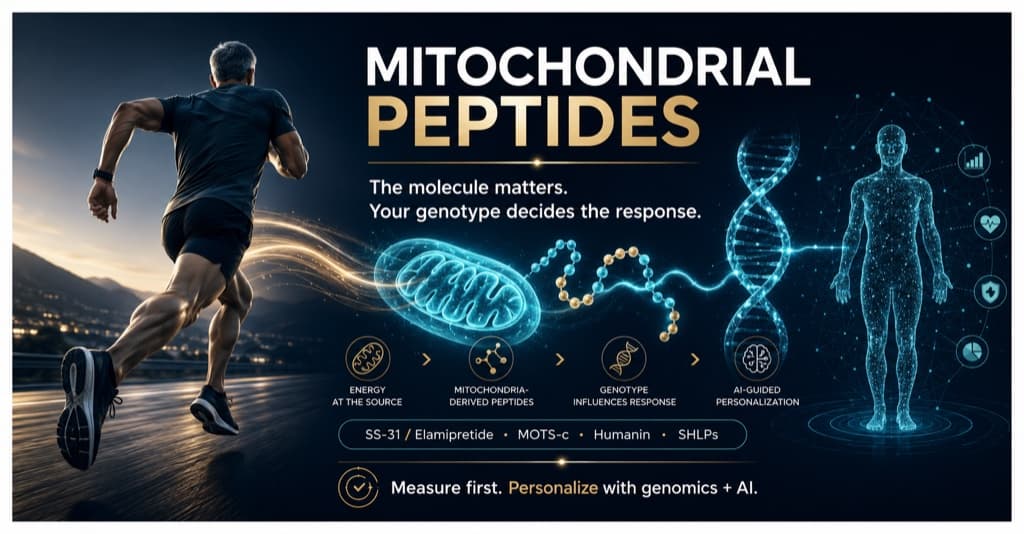
A genetic baseline is the natural foundation for a Digital Twin for Predictive Peptide Performance™ — a personalized model that begins with who you are at the level of your DNA, then keeps learning from everything your body reveals over time. Which is where the data platforms come in.
7. The instrument panel: how the data platforms compare
Knowing the molecules is the easy half. The half that actually determines outcomes is measurement — you cannot optimize an energy system you are not observing. Fortunately, the instruments have become genuinely good and genuinely affordable, and a wave of well-funded platforms now competes to be yours. They are not interchangeable.
Function Health is the depth play: co-founded in 2021 by Dr. Mark Hyman, it runs 100+ biomarkers across two draws a year with clinician notes, an action plan, and proactive physician outreach when a value looks off — roughly $365/year, backed by a $298 million Series B in late 2025.[19][20][21] Best for the person who wants the deepest snapshot and a clinician to act on it. Superpower is the access play: founded in 2023 and backed by roughly $51 million from investors including NBA MVP Giannis Antetokounmpo and the Winklevoss twins, it delivers 100+ biomarkers from about $199/year with a polished AI that explains results in plain language.[19][21] Best for the tech-forward user who wants a low entry price — with an eye on the supplement upsells. Lifeforce is the physician-led play: a focused 40–50-marker panel, but every result interpreted by a concierge doctor with a personalized plan, at a premium.[19][22]
A telling sign the category has matured: in January 2026, Function Health sued Superpower in federal court over allegedly misleading advertising — a dispute that turns, remarkably, on what legally counts as a "biomarker."[21] When elite athletes are writing checks and competitors are litigating definitions, a niche has become an industry. What none of these platforms fully solves on its own is fusion — stitching a twice-yearly blood panel to the continuous stream from wearables into one coherent picture. That is the frontier.
8. From dashboard to digital twin

A blood panel is a photograph; living physiology is a film. Closing that gap is why the most sophisticated operations are moving toward a layered architecture some practitioners describe as a Cardiorespiratory Digital Twin™ — a continuously updated virtual model of your energy systems.
It has three tiers. At the base sits the sensor layer: the ring, the strap, the glucose monitor, the periodic blood draw — the raw instruments that convert physiology into numbers. Above it sits the intelligence tier, where the hard problem lives: reconciling multimodal health data from devices that were never designed to speak to one another and learning the patterns that matter to you. At the top sits predictive modeling — the shift from reporting last night's resting heart rate to forecasting how your energy, recovery, and biomarkers will respond to a given intervention before you try it.
Lay the genetic baseline beneath all three, and the model can do what no static protocol can: predict, for a specific person, whether a membrane-protection approach or a fuel-gauge signal is likelier to move the needle — then verify against real results and correct itself. That closed loop is the engine behind genuine AI-powered coaching improvements: the plan sharpens with every cycle because the twin grows more accurate with each one. The incumbents are already supplying the parts — Illumina's sequencing for the genomic substrate, Quest Diagnostics for the lab backbone nearly every consumer brand quietly runs on, and pharmaceutical leaders including Eli Lilly and Novo Nordisk studying how to preserve muscle and metabolic function during weight loss, the exact problem where exercise-mimetic biology may one day complement GLP-1 therapy.[12] Assembling the parts into one model, personalized to one human, is the work.
9. The practitioner's edge

Consider the most famous performance coach on earth. In 2022, Tony Robbins — a man who built a career on human potential — published Life Force, a bestseller devoted to precisely this frontier, and then co-founded a diagnostics company to operationalize it.[22] That is the tell. The professionals whose entire vocation is helping people perform — weight-loss and performance coaches, dietitians and nutritionists, executive coaches, and the health-and-beauty influencers their clients trust — are moving toward this science because it offers them something rare: measurable leverage.
These are the translators of the field, and their edge is fluency. A coach who understands that MOTS-c signals AMPK the way training does, that elamipretide repairs the membrane rather than stimulating it, and that a client's genome shapes which approach is worth trying can replace generic advice with a hypothesis tailored to one body — and then prove it with data. For a dietitian guiding a client through GLP-1–driven weight loss, understanding muscle-sparing metabolic biology is the difference between losing weight and losing the right weight. For an executive coach, energy is the substrate beneath every high-stakes decision. Scientific literacy in peptides and performance optimization is quickly becoming the credential that separates the trusted advisor from the trend-follower — and it compounds, because clients who see measured results refer others who want the same.
10. The honest chapter: regulation, quality, and risk
A guide that sold only the upside would be a brochure. So, plainly: most of these compounds occupy a regulatory gray zone. Only elamipretide has FDA approval, and only for one ultra-rare disease[1]; even there, the agency required a confirmatory trial, and the drug's broader history is mixed, with several larger trials in heart failure and other conditions failing to meet their primary endpoints.[23] The rest — MOTS-c, SLU-PP-332, the secretagogues — remain investigational, with efficacy evidence that is largely preclinical and, on the open market, quality that is uncontrolled: unknown purity, no sterility guarantees, no dosing oversight.
The regulators are engaged. On July 23–24, 2026, the FDA's Pharmacy Compounding Advisory Committee is scheduled to weigh whether seven popular peptides — MOTS-c among them — belong on the list that governs what compounding pharmacies may legally prepare; the agency's own staff briefing documents recommended against it, citing gaps in characterization and safety data.[24][25] And most of these compounds are prohibited in drug-tested sport, which is why the responsible path always runs through lab-verified sourcing and qualified medical supervision — never a vial from the gray market. The right posture is the scientist's: hopeful, rigorous, and unwilling to outrun the data. That so many of these molecules are modeled on compounds the body already makes is genuine cause for optimism — but "natural in origin" is never a synonym for "proven safe at any dose."
11. Putting it together: a framework, not a prescription
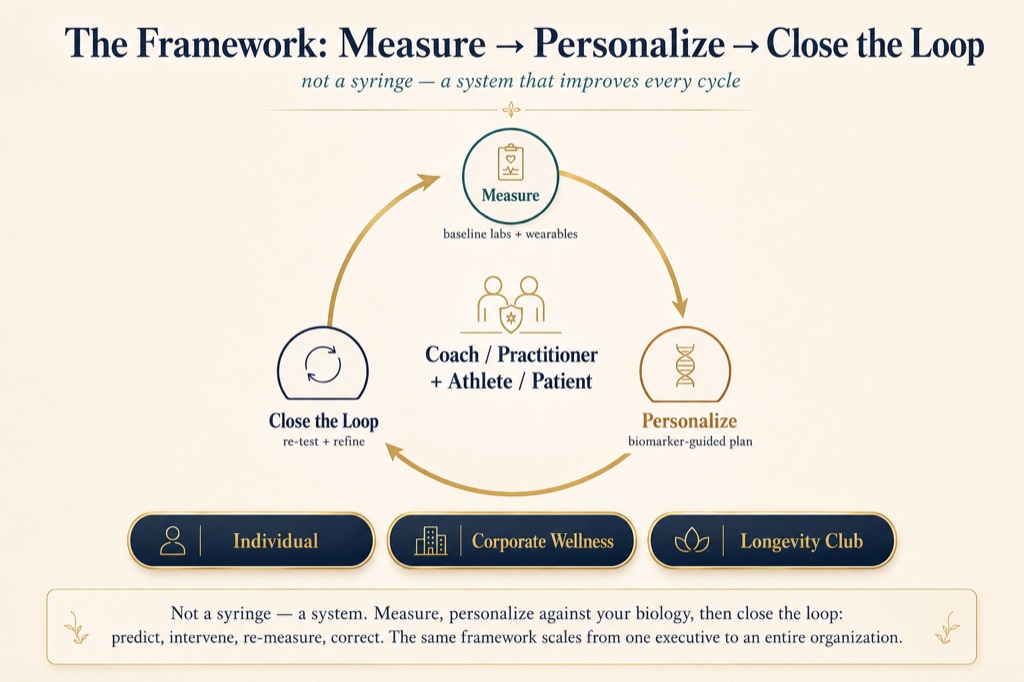
A serious approach is not a syringe. It is a system, and it runs in order. First, measure. Establish a real baseline — a comprehensive panel, ideally paired with continuous wearable data and, increasingly, a genetic profile of how you personally respond. Second, personalize. Use that baseline to reject one-size-fits-all; the genetic and biomarker data are what convert a generic Peptide Therapy menu into a hypothesis built for you — the entire premise of a Peptide Longevity Plan™ worth the name. Third, close the loop. The most durable results come from a partnership between a Coach / Practitioner who can supervise and titrate and an informed Athlete / Patient who treats each cycle as an experiment with a measurable outcome: predict, intervene, re-measure, correct.
The framework scales in both directions. For the individual — the 48-year-old CEO, the masters marathoner, the executive rebuilding after injury — it is a personal operating system for the decades ahead. For organizations, the same logic turns a modern Corporate Wellness Program into an investment in compounding human capital rather than a perk, and it is why a curated Longevity Club that pools data, expertise, and access has become one of the more compelling structures in the space. At every scale, the unit of value is identical: a decision that is right for a specific body, made from data instead of hope.
12. The bottom line
For most of medical history, "low energy" was a shrug — a symptom to manage, not a system to engineer. That era is ending. We now know, with molecular precision, where cellular energy comes from, how it declines, and — as of September 2025 — that a drug can restore the machinery at its source.[1] The peptides that speak the mitochondria's language are among the most promising tools we have.
The molecule, it turns out, was never the hard part. The hard part is knowing which one, at which dose, for which body, verified against which data — and that is a problem genomics and AI were built to solve. Get it right, and you stop chasing energy and start managing it, the way you would manage anything else you intend to keep for a long, long time.
This article is for educational purposes and is not medical advice. The compounds discussed range from FDA-approved to investigational to unapproved; several are prohibited in competitive sport and sold without quality oversight. Consult a qualified, licensed healthcare provider before beginning any peptide, hormone, or supplement protocol. Individual results vary — which is precisely the point.
Sign up for FREE daily Longevity Club Workshops, or join the Affiliate Program (pays 20%). Subscribe to the Longevity & Peptide Optimization Newsletter.
About the Author
Tony Medrano is CEO and co-founder of LongevityPlan.AI, a platform that integrates performance and health data and leverages proprietary Digital Twin for Predictive Peptide Performance™ technology, wearable data, and biomarker data to deliver personalized optimization and longevity recommendations. A 3x technology/AI company CEO with 2 successful exits, Tony has completed 3 Full Ironman Triathlons (140.6 mi) since 2019. He holds degrees from Harvard University, Columbia University, and a JD/MBA from Stanford University, and has worked with the US Olympic Team, the NBA, NFL, MLB, NASA, Google, Microsoft, and Netflix, among others. He also served as a US Navy Officer commanding an emergency response team aboard a destroyer.
Disclaimer: This article is for educational purposes and is not medical advice. The compounds discussed range from FDA-approved to investigational to unapproved; several are prohibited in competitive sport and sold without quality oversight. Consult a qualified, licensed healthcare provider before beginning any peptide, hormone, or supplement protocol. Individual results vary, which is precisely the point.
Endnotes and sources
- U.S. Food and Drug Administration, "FDA Grants Accelerated Approval to First Treatment for Barth Syndrome," press release, September 19, 2025. https://www.fda.gov/news-events/press-announcements/fda-grants-accelerated-approval-first-treatment-barth-syndrome
- Stealth BioTherapeutics, "Stealth BioTherapeutics Announces FDA Accelerated Approval of FORZINITY (elamipretide HCl)," PR Newswire, September 19, 2025. https://www.prnewswire.com/news-releases/stealth-biotherapeutics-announces-fda-accelerated-approval-of-forzinity-elamipretide-hcl-the-first-therapy-for-progressive-and-life-limiting-ultra-rare-genetic-disease-barth-syndrome-302562058.html
- Peptides Institute, "SS-31: Research Profile & Guide" (cardiolipin binding; inner-mitochondrial-membrane targeting). https://www.peptidesinstitute.org/peptides/ss-31
- PeptideJournal, "SS-31 (Elamipretide): Mitochondrial Peptide" (Szeto-Schiller origin; selective membrane accumulation). https://www.peptidejournal.org/peptides/ss-31-mitochondrial-peptide
- Lee C., Cohen P., et al., discovery of MOTS-c, Cell Metabolism, 2015; summarized in "MOTS-c," Wikipedia. https://en.wikipedia.org/wiki/MOTS-c
- PeptideInsight, "MOTS-c: Research Evidence & Safety Profile" (AMPK activation; exercise-induced mitokine; age-related decline). https://peptideinsight.com/en/peptides/mots-c
- USC Leonard Davis School of Gerontology, "Hormone helps prevent muscle loss in mice on high-fat diets," 2021 (improved insulin resistance, exercise capacity, and median lifespan in mice). https://gero.usc.edu/2021/02/22/hormone-prevent-muscle-loss-mots-c/
- Human intravenous MOTS-c study (Lee et al., 2023) reporting improved insulin sensitivity in insulin-resistant men; summarized in PeptideGuideHub. https://peptideguidehub.com/blog/mots-c-fda-review-evidence-guide
- World Anti-Doping Agency prohibition of MOTS-c effective 2024; noted in "MOTS-c," Wikipedia. https://en.wikipedia.org/wiki/MOTS-c
- PeptideDeck, "SLU-PP-332" (pan-ERR agonist; small molecule, not a peptide; Burris/Elgendy, Saint Louis University; ~70% running-time increase in mice). https://www.peptidedeck.com/peptides/slu-pp-332
- Billon C., Sitaula S., Banerjee S., Burris T.P., et al., "Synthetic ERRα/β/γ Agonist Induces an ERRα-Dependent Acute Aerobic Exercise Response and Enhances Exercise Capacity," ACS Chemical Biology, 2023. https://pubs.acs.org/doi/abs/10.1021/acschembio.2c00720
- Medscape, "Diet and Exercise in a Pill Are Real: How Mimetics Work," March 2024 (Thomas Burris, PhD, University of Florida; muscle-vs-appetite mechanism; potential GLP-1 pairing). https://www.medscape.com/viewarticle/diet-and-exercise-pill-are-real-how-mimetics-work-2024a10004rt
- Superpower Guides, "CJC-1295 + Ipamorelin" (GHRH analog + ghrelin-receptor agonist; dual-pathway synergy; pulsatile GH). https://superpower.com/guides/cjc-1295-ipamorelin-stack
- Raun K., et al., European Journal of Endocrinology, 1998 (ipamorelin selectivity: GH release without cortisol, prolactin, or ACTH elevation); via Meto blog. https://meto.co/blog/growth-hormone-peptides-guide-cjc-1295-ipamorelin-tesamorelin
- MedlinePlus Genetics (NIH), "Precision medicine, personalized medicine, and pharmacogenomics." https://medlineplus.gov/genetics/understanding/precisionmedicine/precisionvspersonalized/
- The Scientist, "Scientists Use Pharmacogenomics to Provide Personalized Medicine" (CYP enzyme variants and drug response), December 2025. https://www.the-scientist.com/scientists-use-pharmacogenomics-to-provide-personalized-medicine-73857
- Genomics plc (Peter Donnelly), corporate site: polygenic risk scores and population-scale genetic prediction. https://www.genomics.com/
- PlexusDx, "What Is Genetic Peptide Testing — And Why It Matters Before You Start a Protocol" (Precision Peptide Genetic Test; Illumina Global Screening Array; CLIA-certified). https://plexusdx.com/blogs/learn/what-is-genetic-peptide-testing-and-why-it-matters-before-you-start-a-protocol
- Fin vs Fin, "Function Health vs Superpower vs InsideTracker vs Lifeforce (2026)" (panel sizes, pricing, positioning). https://finvsfin.com/function-health-vs-superpower-vs-insidetracker-vs-lifeforce/
- Heal Nourish Grow, "Function Health vs Superpower" (clinician notes; proactive physician outreach). https://healnourishgrow.com/function-health-vs-superpower/
- ArentFox Schiff (Longevity Lens), "Function Health Sues Superpower," March 2026 (Function $298M Series B, Nov. 2025; Superpower funding and investors; C.D. Cal. litigation over the definition of "biomarker"). https://www.afslaw.com/perspectives/longevity-lens/competing-biomarker-providers-clash-function-health-sues-superpower
- Outliyr, "13+ Best Blood Biomarker Testing Services 2026" (Lifeforce concierge-physician model; origins in Tony Robbins's 2022 book Life Force). https://outliyr.com/best-blood-biomarker-testing-services
- Peptide Basics, "SS-31 (Elamipretide): History, Trials, FDA Status & Mechanism" (mixed results in heart-failure and ischemia-reperfusion trials). https://peptidebasics.com/ss-31/
- U.S. FDA, "July 23–24, 2026: Meeting of the Pharmacy Compounding Advisory Committee" (BPC-157, KPV, TB-500, MOTS-c reviewed for the 503A Bulks List). https://www.fda.gov/advisory-committees/advisory-committee-calendar/july-23-24-2026-meeting-pharmacy-compounding-advisory-committee-07232026
- Drug Topics, "FDA Panel to Evaluate 7 Popular Peptides for Compounding Substances List," 2026 (FDA staff review recommends against listing; WADA-prohibited status of MOTS-c and TB-500). https://www.drugtopics.com/view/fda-panel-to-evaluate-7-popular-peptides-for-compounding-substances-list