Every Peptide Side Effect Explained
Dr. Ashley Froese
✓Peptides 101
A plain-English guide to peptide therapy: what peptides are, how they work in the body, what they are studied to support, and how a physician-supervised protocol keeps them safe.

Peptides 101
✓The science, simply
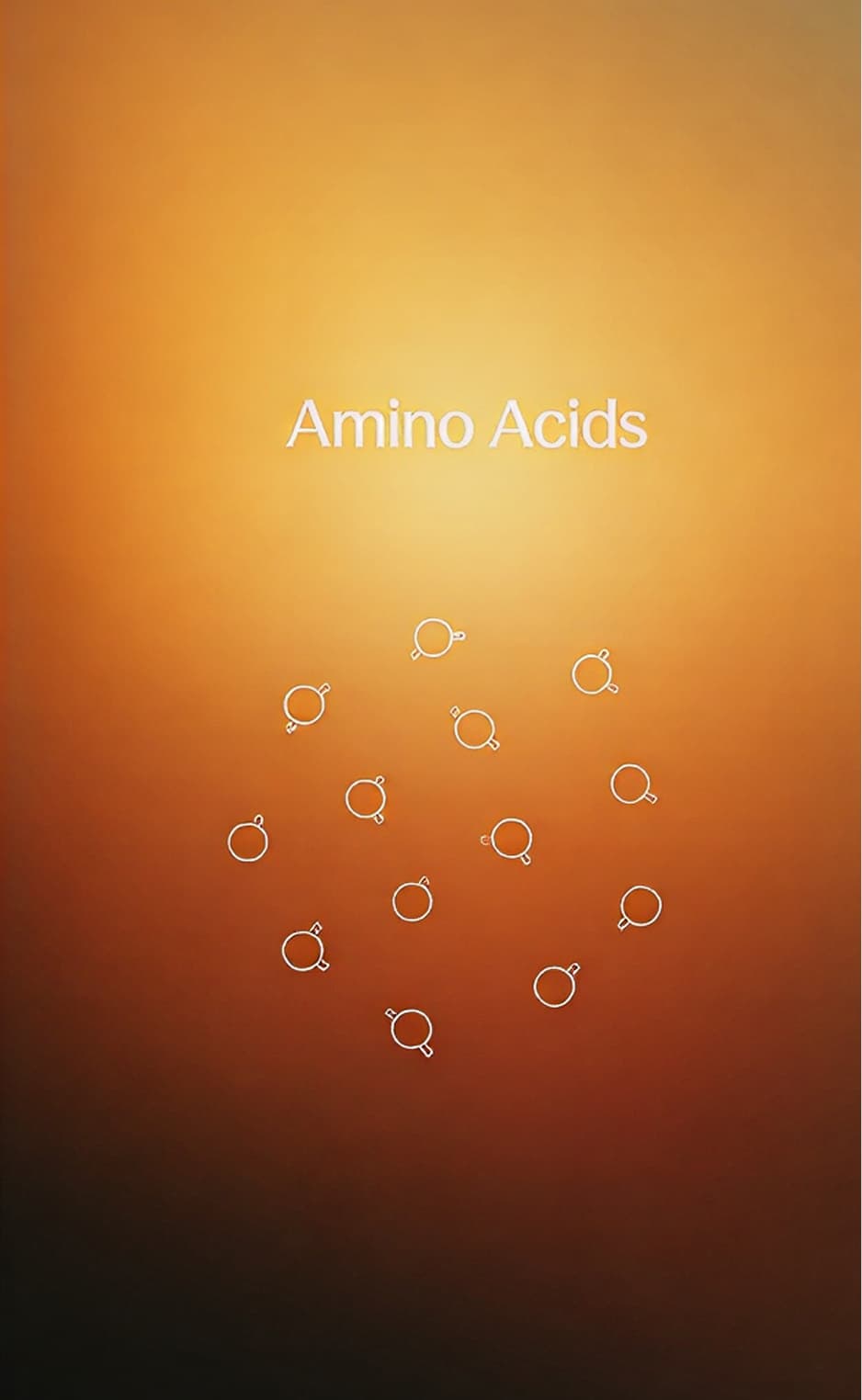
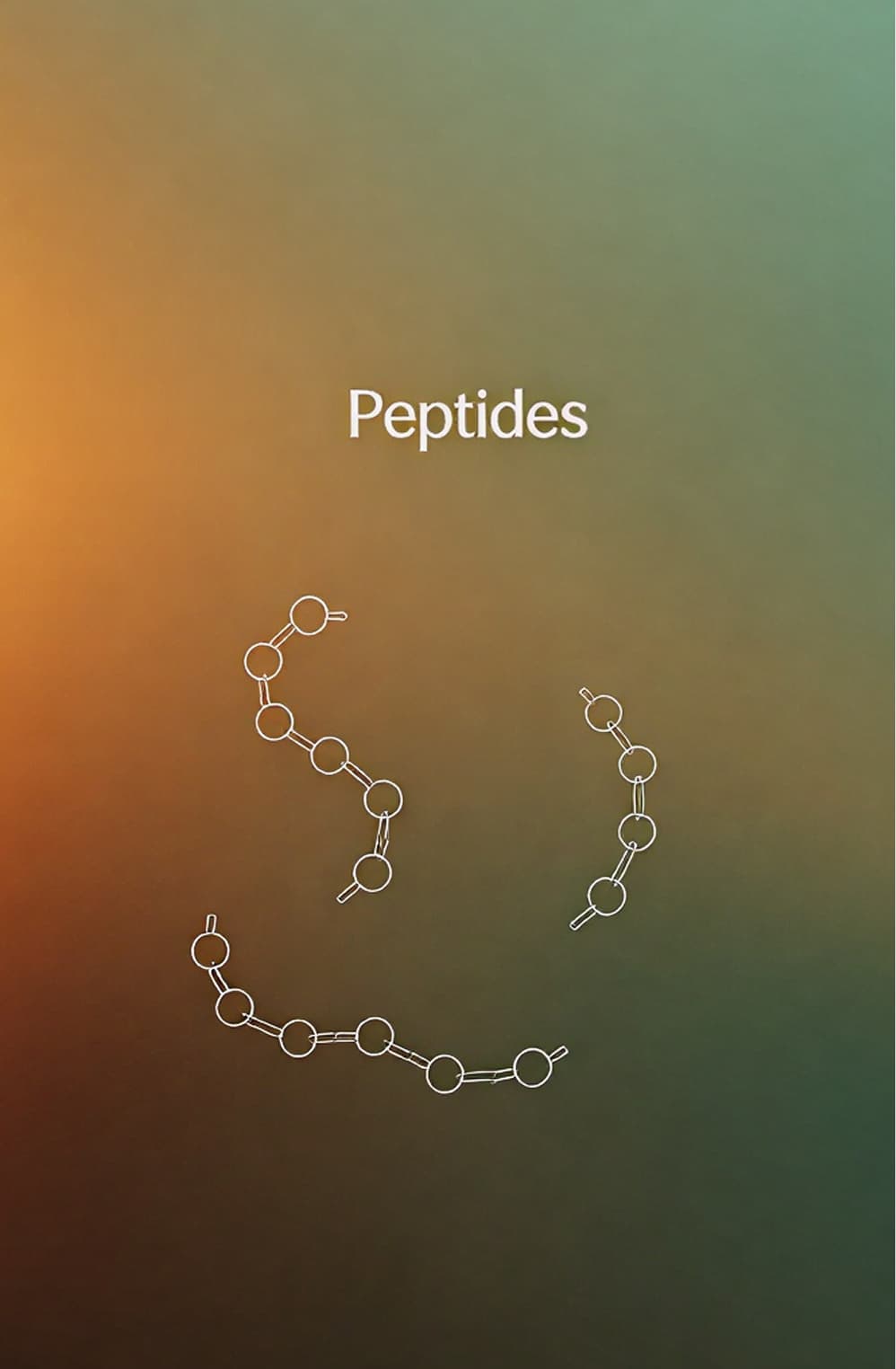

Peptides are short chains of amino acids, usually between two and fifty, linked by peptide bonds. They occur naturally throughout the body, where they act as signaling molecules that tell cells what to do. Therapeutic peptides use that same signaling language to support specific biological processes.
Amino acids are the individual building blocks. Link a few together with peptide bonds and you have a peptide. Link many more, then fold them into a complex shape, and you have a protein. The line between them is mostly one of size: peptides are short, proteins are long.
Because peptides are smaller, the body tends to absorb and act on them more readily. It also means peptide is not one uniform product. A collagen peptide in a supplement and a prescribed therapeutic peptide are both peptides, but they are as different as two tools that happen to be made of the same metal.
✓Watch
If you are new to peptides, this walkthrough from Dr. Ashley Froese covers the same fundamentals in video form.
Third-party educational content. Views are the presenter’s own and are not medical advice.
✓The categories
People use the word peptide for very different things, with very different levels of oversight. Four categories are worth telling apart.
Your body makes thousands of peptides on its own. Others are made in a lab to match or mimic those natural signals. Synthetic does not mean foreign: many lab-made peptides are identical to the ones your body already uses.
Prescribed by a licensed physician and prepared at U.S. 503A compounding pharmacies. These are matched to your goals and health history during a medical review, then used under supervision.
Collagen powders, skincare peptides, and similar over-the-counter products. Evidence varies widely by ingredient and formulation, and quality control is looser than for compounded medications.
Compounds sold strictly for laboratory and research use, and labeled not for human consumption. This category exists for scientific study, and is distinct from the physician-supervised protocols in a wellness program.
✓Research use only
Research use only, often shortened to RUO, is a regulatory category rather than a comment on quality. It means a compound is supplied for laboratory and scientific study, and is not sold as a dietary supplement or as a treatment for anything. It is not approved by the FDA for the prevention or treatment of any condition, and it is not intended for human or veterinary consumption.
Plenty of compounds sit in this category simply because the research is still developing. Some are decades old and well characterised, others were first described only a few years ago. That range is why we publish a reference page for each one: what it is, where it came from, and what the published research actually examines.
Everything we supply is third-party tested with a certificate of analysis, so you know what is in the vial regardless of which category it falls into.
✓The families
Different peptides are researched for different goals. The peptides used in longevity and performance broadly fall into a few families.
Peptides studied for their role in healing, joint and tendon resilience, and recovery from training or injury.
Peptides looked at for appetite signaling, fat metabolism, and lean-mass support, including the GLP-1 family.
Peptides that interact with the body's own growth-hormone signaling, studied for energy, sleep, and recovery.
Peptides researched for focus, stress resilience, and neurological health.
Peptides examined for collagen support, skin quality, and the visible signs of aging.
Peptides studied in the context of healthspan, mitochondrial function, and cellular aging.
Educational only. Individual peptides, their evidence, and their suitability differ. Any protocol should be determined with a licensed physician.
✓The evidence
Evidence is not uniform across peptides. Some uses are well studied, others are early. Here is an honest read, ordered from the most established to the most preliminary.
This is where the science is deepest. The GLP-1 family, studied extensively for appetite signaling and blood-sugar regulation, has the largest evidence base of any peptide group. Changes in body composition are real, but they depend on dose, duration, and the rest of your program.
Collagen and copper peptides are among the most researched for skin quality, elasticity, and the visible signs of aging. The evidence is mixed and formulation-dependent, but this is one of the more studied everyday uses. Think of better skin as a readout that the underlying biology is improving, not the goal itself.
Peptides studied for healing, tendon and joint resilience, and recovery from training. Much of the human evidence is early-stage, which is exactly why response varies between people and why monitoring matters.
Some peptides interact with your own growth-hormone signaling rather than replacing it, and are researched for sleep quality, energy, and recovery. The signals are encouraging but individual, and this group is used carefully under medical supervision.
The longest-horizon and least settled area. Peptides studied for mitochondrial function and cellular aging are genuinely promising, but most evidence is early and long-term human outcomes are still being established. We treat this as a frontier, not a promise.
Educational only. Peptides are studied for these areas; nothing here is a promise of a result. What is appropriate for you is decided with a licensed physician.
✓At a glance
The same word covers products with very different purposes and oversight. Here is how the main categories compare.
Peptide supplements
Topical peptides
Prescription (compounded)
Research peptides
Educational only. This is a general comparison, not medical advice. What is appropriate for you is determined with a licensed physician.
The BPC-157/TB-500 combination Tony gave me is the only thing that has helped my arthritis, and my HRV is finally climbing back up.

Jennifer Little-Fleck
Functional Genomics Practitioner · The Genomics Company

✓Safety
Peptides should be used under medical supervision. In the U.S., therapeutic peptides are prescribed by a licensed physician and compounded at state-licensed 503A pharmacies.
A proper protocol starts with medical intake and lab work, matches the peptide to your goals and health history, and monitors your response over time. Quality matters too: reputable providers third-party test for purity.
✓The LongevityPlan difference
Most peptide programs hand you a vial and hope. LongevityPlan builds a peptide-trained digital twin from your wearable and lab data, so you can see whether a peptide is actually moving your biomarkers, week over week.
That turns peptide therapy from guesswork into something measured, personalized, and provable.
✓Reference
Most peptides arrive as a lyophilized powder and are mixed with bacteriostatic water before use. The guide below covers the full sequence: sterile technique, drawing and injecting the water, dissolving without shaking, refrigerated storage, and the dose maths for converting milligrams to syringe units.

No. Peptides are short chains of amino acids that act as signaling molecules, working with pathways your body already runs. They are a different class of compound from anabolic steroids.
A supplement is an over-the-counter product whose effects depend heavily on the ingredient and how well it is absorbed. A prescribed therapeutic peptide is selected by a physician for your goals and health history, compounded at a licensed pharmacy, and used under supervision.
Research peptides are compounds sold strictly for laboratory study and labeled not for human consumption. They are a separate category from the physician-supervised peptides used in a wellness protocol.
Therapeutic peptides are prescribed by a licensed physician and dispensed from U.S. 503A compounding pharmacies. Your suitability is determined during a medical review.
Depending on the peptide, they may be delivered by subcutaneous injection, nasal spray, or oral capsule. Your protocol specifies the form and dose.
It depends on the peptide and the goal, and results are never guaranteed. Some changes may show up in a few weeks, others take longer. This is exactly why we track your biomarkers, so progress is measured rather than assumed.
✓Watch & learn
A growing library of talks we think are worth your time, from clinicians who work with peptides every day.
Third-party educational content. Views are the presenters’ own and are not medical advice.
Explore physician-supervised peptide therapy, see how your digital twin fits in, or browse the research peptides we carry.
Peptide Scholarships
We cover up to 50% of the cost of peptides for people doing the foundational work and committed to a real transformation.
Firefighter, police officer, military, healthcare worker or teacher? Say so when you apply or on your consult call. We set support aside for public service.