Sports Science
·19 min read
Tadalafil for Athletic Performance: Why Are Athletes Using It to Increase Blood Flow?
What the data really says about PDE5 inhibitors, peptides, and the biology of performance — and why the answer is never in the pill.
By Tony Medrano & Dr. Eric Rightmire
This article is for education and is not medical advice.
Before England's knockout match at altitude this summer, a reporter asked the squad how they planned to handle the thin air. "Well, the Viagra helps," midfielder Jordan Henderson deadpanned — then, over the laughter, "I'm kidding."[1] He was kidding. But the joke lands because it's half-true, and the half that's true is one of the more quietly fascinating stories in vascular biology.
Sildenafil and tadalafil — the molecules the world knows as Viagra and Cialis — were born from a failed heart-medication program, stumbled into a blockbuster indication, and have spent two decades as the punchline of an entire genre of jokes. That reputation has obscured something more interesting: these are, at their core, precision instruments for the same nitric-oxide pathway that endurance athletes chase with beetroot juice, that cardiologists study for its link to fewer heart attacks, and that a whole class of regenerative peptides quietly works through. Told honestly — with the effect sizes, the confidence intervals, and the caveats intact — it's a story about the difference between a molecule that works on average and a molecule that works on you.
Beyond the punchline: sildenafil and tadalafil are precision tools targeting the nitric oxide pathway that governs blood flow, oxygen delivery, and vascular aging.
The pathway everyone is already chasing
To understand why a "bedroom drug" keeps appearing in cardiology, sports science, and geriatrics journals, start with the plumbing. Your endothelium — the single-cell lining of every blood vessel you own — produces nitric oxide (NO). NO signals the enzyme guanylate cyclase to produce cyclic GMP (cGMP), and cGMP signals vascular smooth muscle to relax. Relaxed vessels dilate; dilated vessels deliver more blood, oxygen, and nutrients to whatever sits downstream.
The enzyme phosphodiesterase-5 (PDE5) is the off-switch: its job is to break cGMP down and end the signal. Sildenafil and tadalafil block PDE5, so the "dilate" message plays longer. The genital vasculature is rich in PDE5, which is why the effect was first observed there. But PDE5 also lives in the lungs, the systemic vasculature, and skeletal muscle — which is why researchers keep asking what else happens when you leave the tap open.[2] Hold onto that NO–cGMP pathway. It is the thread that ties this drug to the peptides later in this piece.
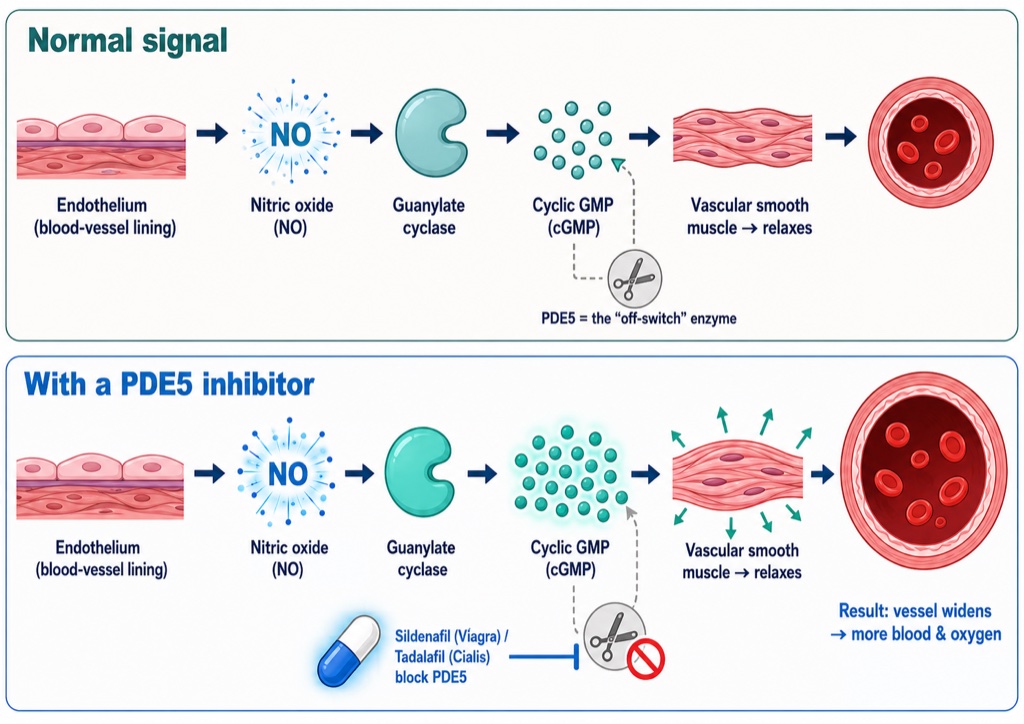
How the switch works: PDE5 inhibitors block the enzyme that breaks down cGMP, so the vessel-relaxing "dilate" signal lasts longer, widening vessels and boosting blood and oxygen flow.
One practical distinction shapes everything downstream. Sildenafil is short-acting (a half-life of roughly 4 hours), making it the natural choice for acute, on-demand studies. Tadalafil lasts far longer — a half-life around 17.5 hours — which makes it the molecule of choice for daily low-dose protocols and, not coincidentally, the one that dominates the chronic-outcome data. When tadalafil keeps winning the healthspan studies, pharmacokinetics is a big part of why.
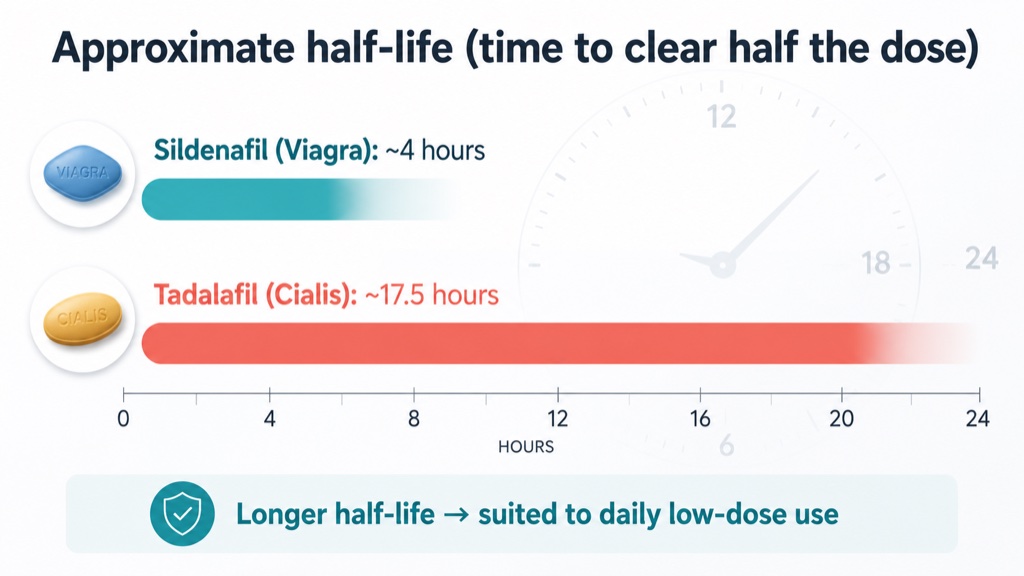
Why tadalafil dominates daily-use research: it lingers in the body roughly 4 times as long as sildenafil, making once-daily dosing possible.
The performance question: real, narrow, and personal
The most-cited "performance" finding traces to a 2006 Journal of Applied Physiology study from a Stanford University and VA Palo Alto team led by Andrew Hsu and Anne Friedlander. Ten trained men cycled at sea level and at a simulated 3,874 meters. At sea level, sildenafil did nothing measurable. At altitude, it raised stroke volume, cardiac output, and arterial oxygen saturation, and cut 6-kilometer time-trial time by 15% on average.[2]
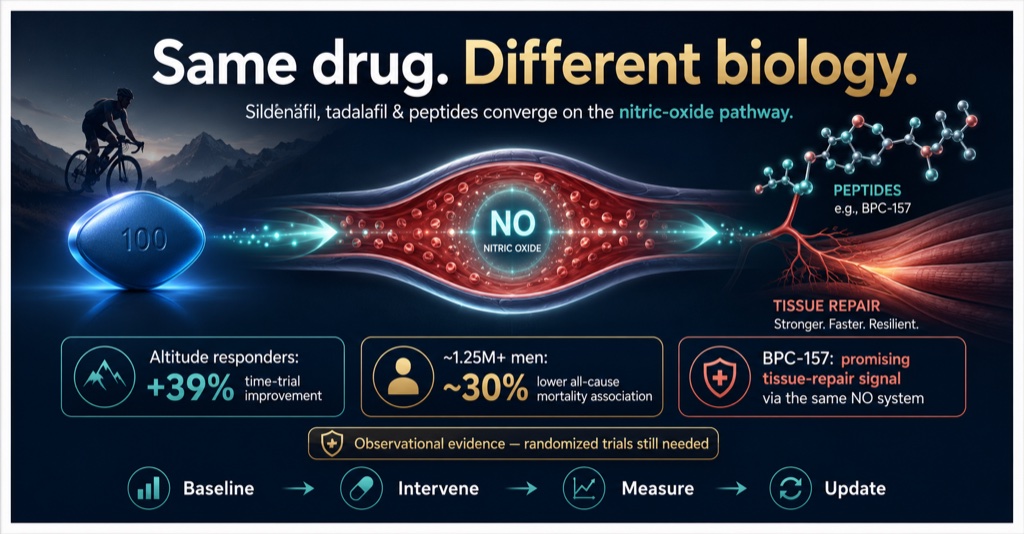
That average hides the real discovery — and it's the finding the internet forgot. The cyclists split into two populations: responders, who improved their time trials by roughly 39% (a few by as much as 45%), and non-responders, who improved about 1%. Same drug, same dose, same protocol; opposite biology. That split is the intellectual heart of this entire article.
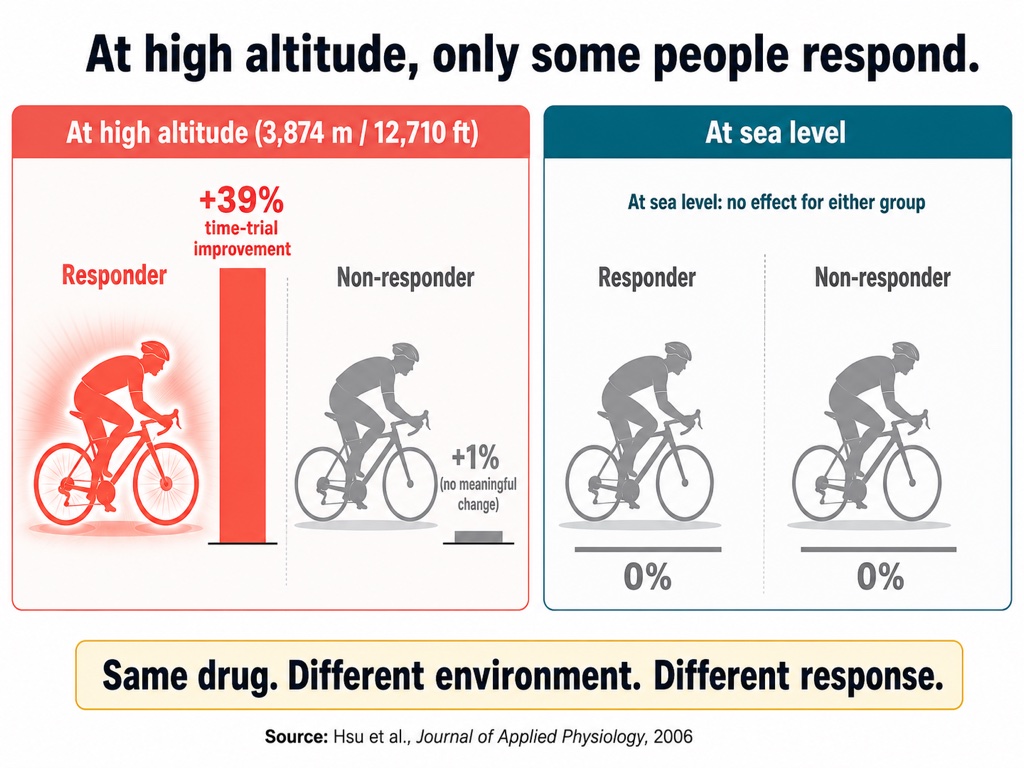
Same drug, opposite biology: at simulated high altitude, "responders" improved time-trial performance by about 39% while others gained roughly 1% — and at sea level, neither group benefited.
Replication has been humbling. When researchers at the University of Miami, led by kinesiologist Kevin Jacobs, tested close to 60 men and women, they found no clear benefit at simulated altitudes from 2,100 to 3,900 meters — a single male participant improved meaningfully.[3], [4] A University of British Columbia review of 14 studies reached the same verdict: sildenafil does not reliably improve performance in hypoxia, though it does consistently lower pulmonary artery pressure. The strongest positive signal survives only at genuinely extreme elevation, where a placebo-controlled crossover trial found benefit at Everest base camp.[5] As Colorado high-altitude physician Peter Hackett puts it flatly, there is little reason for a healthy athlete to reach for it: no meaningful altitude edge for most people, most of the time.[1]
Which brings us back to Henderson's joke — and to the people who aren't joking. In 2015, the Washington Post reported that players on Argentina's storied River Plate club used sildenafil, along with aspirin and caffeine, to blunt the effects of altitude sickness during matches high in the Andes.[6] Note the use case: not a sea-level performance edge, but symptom relief where the air is thin — exactly what the biology supports and the marketing overshoots. At the highest NFL stadium (Denver, ~1,600 m) or a distance race in Mexico City, the honest expectation for a healthy athlete is: probably nothing.
Read More Scientific Researchfrom LongevityPlan.AI.
Read more scientific research from LongevityPlan.AI, or buy peptides from our shop.
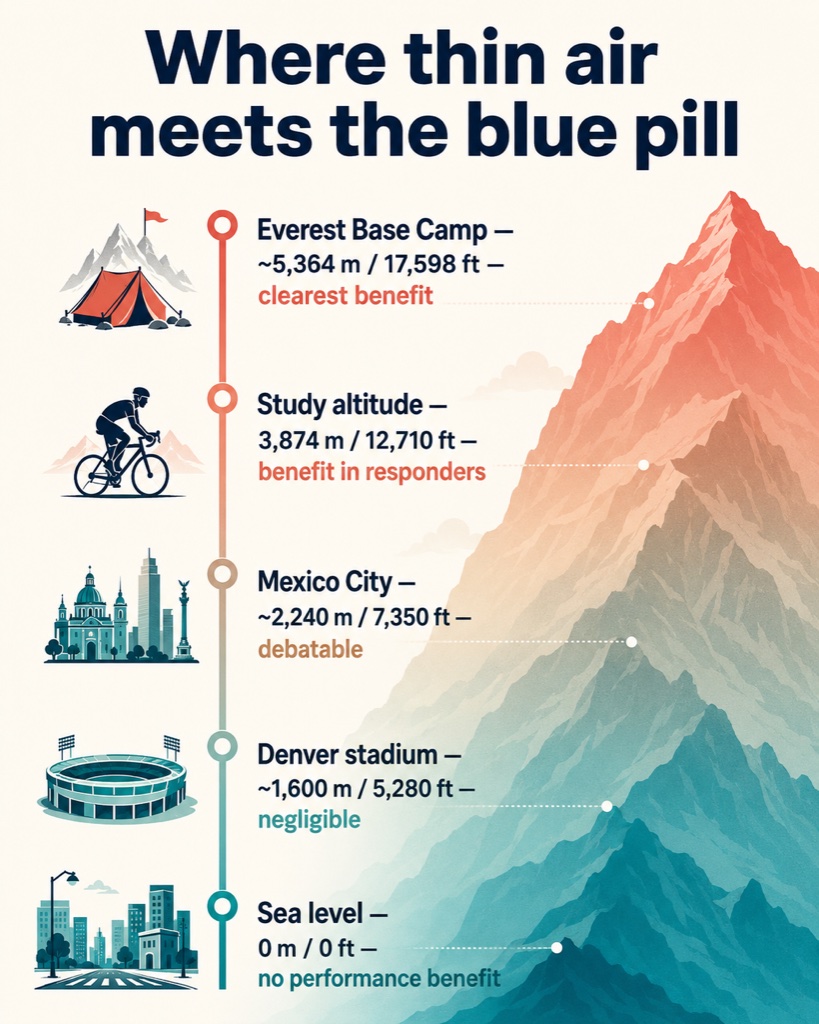
Elevation is everything. The vascular benefit of sildenafil is negligible at Denver's stadium, debatable in Mexico City, and measurable only at extreme altitudes near Everest Base Camp.
Away from aerobic sport, a more mechanistically intriguing thread runs. In 2013, a University of Texas Medical Branch group led by Melinda Sheffield-Moore published a study whose title leaves little room for interpretation: sildenafil increases muscle protein synthesis and reduces muscle fatigue. Eight days of daily dosing raised the fractional synthesis rate of muscle protein, shifted the muscle proteome, and reduced fatigue in human tissue.[7] The mechanism is consistent — more perfusion means more amino-acid and hormone delivery to hungry muscle — and it echoes earlier work showing pharmacological vasodilation improves insulin-stimulated muscle protein anabolism in older adults.[8] The discipline: these are small, short studies aimed at populations in decline — aging, bed rest, disease. That is a legitimate geroscience hypothesis, not a shortcut for a healthy 30-year-old lifter.
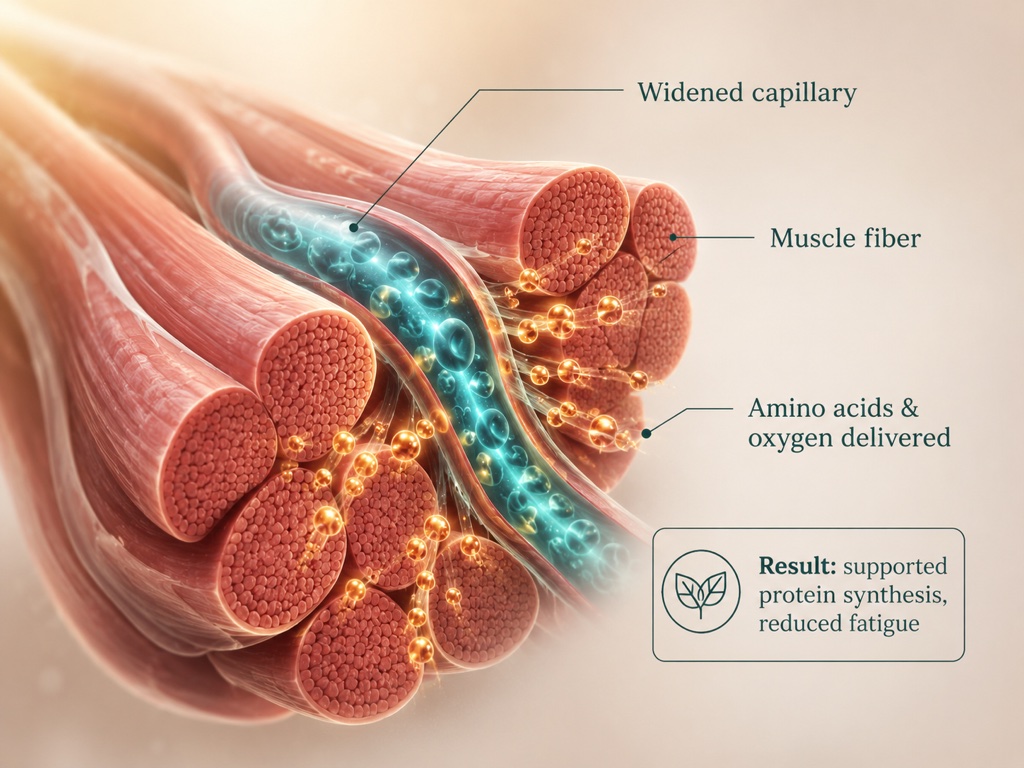
More flow, more repair: by widening vessels, NO–cGMP signaling increases delivery of amino acids, oxygen, and hormones to muscle — a promising lever against age-related decline.
The healthspan question: promising, and not yet proven
Here, the story gets large. In 2024, researchers at the University of Texas Medical Branch (corresponding author: D. Jehle) published an analysis in theAmerican Journal of Medicine, drawing on the TriNetX database, which includes roughly 50 million U.S. men. Among men over 40 with erectile dysfunction, those prescribed tadalafil or sildenafil showed lower rates of all-cause mortality, myocardial infarction, stroke, venous thromboembolism, and dementia, with tadalafil carrying the larger associations, on the order of a one-third reduction in all-cause mortality versus non-users.[9] A 2024 meta-analysis in theEuropean Heart Journal – Cardiovascular Pharmacotherapy, pooling 16 cohorts and more than 1.25 million subjects, found PDE5-inhibitor use associated with a 22% lower rate of major adverse cardiovascular events and a 30% lower rate of all-cause mortality. [10]
Now the fine print, in bold, because it is the whole point:
Every one of these studies is observational. They show association, not causation. Men who fill and refill prescriptions tend to be more engaged with healthcare and healthier in ways that no statistical adjustment fully captures — classic "healthy-user bias." The effect sizes are large enough to be genuinely exciting; they are not, on their own, proof. Veteran cardiologist Robert Kloner, reviewing this literature, argues the field now needs exactly one thing: a large, prospective, randomized, placebo-controlled trial run over several years to convert "travels alongside" into "causes."[11]
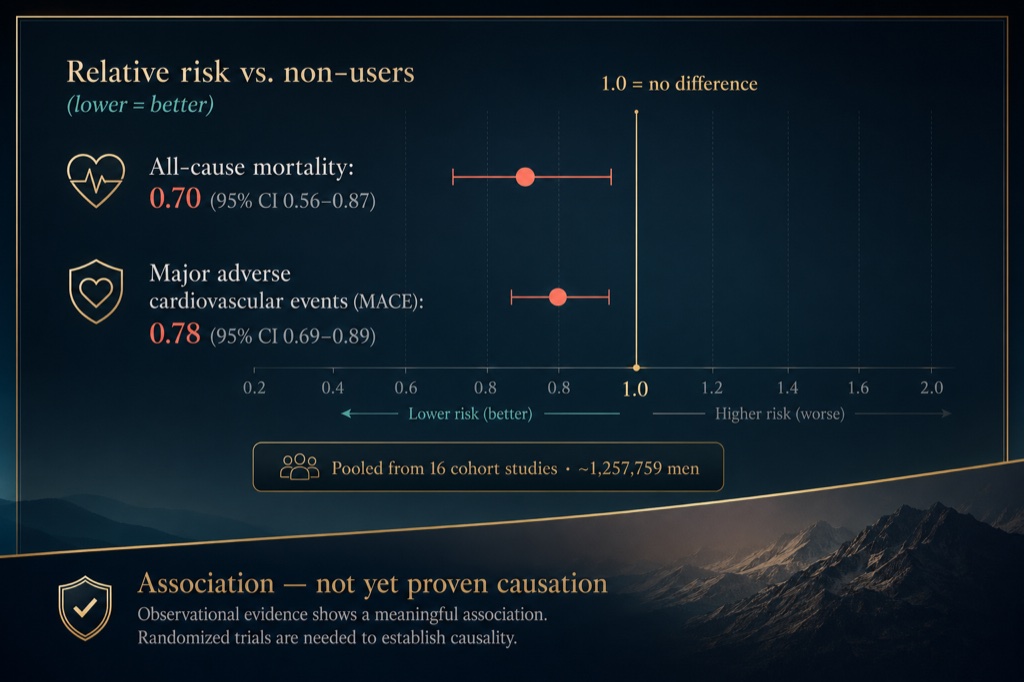
Large and consistent — but observational. Across more than 1.25 million men, PDE5-inhibitor use was associated with fewer cardiovascular events and lower mortality; a randomized trial is still needed to establish cause and effect.
What is well-supported is the mechanism beneath the headlines: daily low-dose PDE5 inhibition improves endothelial function and microvascular perfusion, and endothelial health is one of the most durable predictors of vascular aging we have. The metabolic story rhymes — promising and uneven. Animal models of metabolic syndrome consistently show improved insulin sensitivity and reduced oxidative stress; human trials are messier. A six-month randomized pilot in men with type 2 diabetes improved glycemic control on low-dose daily tadalafil, but the most rigorous entry to date — the placebo-controlled crossover MAKROTAD trial (2023), notably including both sexes — found no improvement in whole-body insulin resistance by gold-standard glucose clamp. It did improve HbA1c, a liver-fat marker, microcirculation, and peripheral insulin sensitivity.[12] Read together, the metabolic benefit looks real but local — microvascular and hepatic rather than a systemic rewiring of insulin signaling — and strongest in people who already have dysfunction to correct.
The real lesson: response is personal
Return to those cyclists. Some improved 39%; others, 1%. That is not noise — it is the signature of individual variability, and it is the reason precision medicine exists as a discipline. The inputs are knowable: baseline endothelial function, resting NO production, PDE5 expression, and — the frontier — genetics. Pharmacogenomics is actively mapping how variation in the NO–cGMP machinery shapes both benefits and side effects.
We'll be precise here because this is where the industry most often tempts itself into overclaiming: there is not yet a validated, clinically actionable gene panel that reliably predicts who will respond to a given PDE5 inhibitor. The variability is real and measurable; the genomic decoder ring is still being written. What genetics can already do is raise or lower the prior probability that an intervention is worth trialing — the substrate that helps explain why one person's protocol is another person's placebo.
Firms building individualized DNA assessment, such as The Genomics Company, frame that profile as a foundation rather than a verdict: a way to shorten the trial-and-error that otherwise dominates this field. It is the seed of what we call a Digital Twin for Predictive Peptide Performance™ — a model that treats a person as a unique system rather than a population average. The single most important sentence in this article is the one that follows from all of it: the answer is never in the pill. It is in the data you collect about yourself.

Why one person's protocol is another's placebo: genetics and baseline biology shape response — the foundation of a predictive "digital twin" built around the individual.
The peptide connection: same pathway, wider toolkit
Here is where the NO thread pays off. The regenerative peptides that recovery-focused athletes, dietitians, and aesthetic practitioners increasingly ask about are not a separate universe from sildenafil — several of them pull on the very same nitric oxide machinery from the other end.
Consider BPC-157, a synthetic pentadecapeptide based on a sequence found in human gastric juice. Across a remarkably consistent body of preclinical work — much of it from Predrag Sikirić's group at the University of Zagreb in Croatia — BPC-157 promotes angiogenesis, collagen synthesis, and the repair of muscle, tendon, ligament, bone, and gut lining, and it appears to do so in part by modulating the nitric-oxide system, including activation of endothelial NO synthase.[13], [14] In rodent models it upregulates VEGF and growth-hormone-receptor expression in tendon cells and accelerates capillary ingrowth into slow-healing, poorly vascularized tissue — more vessels, more oxygen, faster collagen turnover.[15] A 2025 systematic review in orthopedic sports medicine cataloged these functional and structural improvements across injury models,[16] and animal safety has looked favorable, with no lethal dose established in standard testing.
That is a genuinely hopeful profile — and here is the honest frame that makes it usable rather than hype: the animal evidence is coherent and replicated, while robust human trials remain the gap. Peptides like BPC-157 sit in the category of "biologically plausible, low observed toxicity, still-experimental." They are, notably, derived from or modeled on compounds the body already makes, which is part of both their appeal and their plausibility. The excitement is warranted; the certainty is not yet earned. Said plainly, that combination — real mechanism, promising early data, appropriate humility — is exactly the sweet spot a good practitioner lives in.
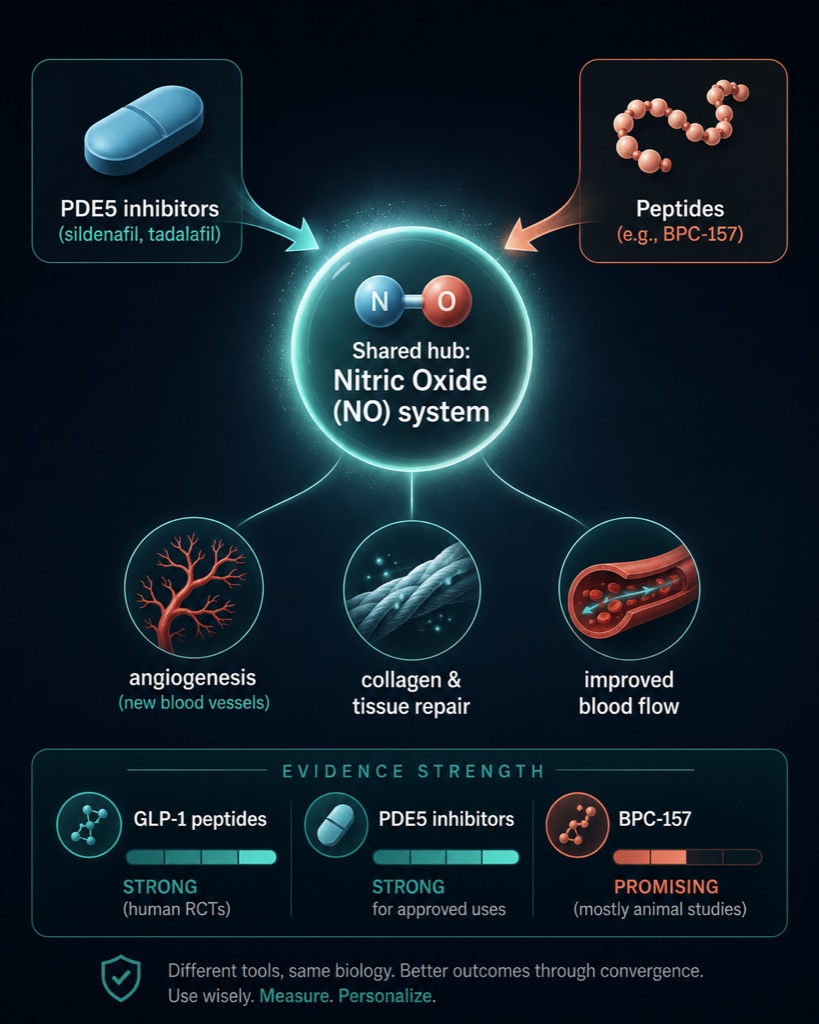
Same pathway, wider toolkit: regenerative peptides like BPC-157 act on the same nitric oxide system as PDE5 inhibitors — promoting new blood vessel formation and tissue repair, though mostly in animal studies so far.
The broader peptide toolkit spans the same coaching conversations. GHK-Cu, a copper tripeptide, has human and animal data supporting collagen synthesis and skin repair — which is why it's a fixture in the aesthetics conversation. Growth hormone secretagogues are being studied for recovery and body composition. And in the metabolic lane, the GLP-1 receptor agonists — semaglutide and tirzepatide are peptide-based therapies and have produced double-digit percentage body-weight reductions in landmark randomized trials, moving the weight-management conversation from willpower to physiology almost overnight. Across that spectrum, the evidence bar ranges from "strong RCT" (GLP-1s) to "promising preclinical" (BPC-157), and a competent Peptide Therapy conversation names which is which rather than blurring them together.
Where the coach and clinician come in
All of this — the responder biology, the peptide toolkit, the healthspan signals — is only as good as the ability to apply it to a specific human. That is the daily work of the modern Coach / Practitioner: the performance coach, the dietitian, the executive coach, the nutritionist, the aesthetic and wellness professional whose clients increasingly arrive fluent in this vocabulary and hungry for someone who can separate signal from marketing. Fluency in this science is quickly becoming a core professional credential — and the professionals who have it are the ones clients trust with the rest of their program.
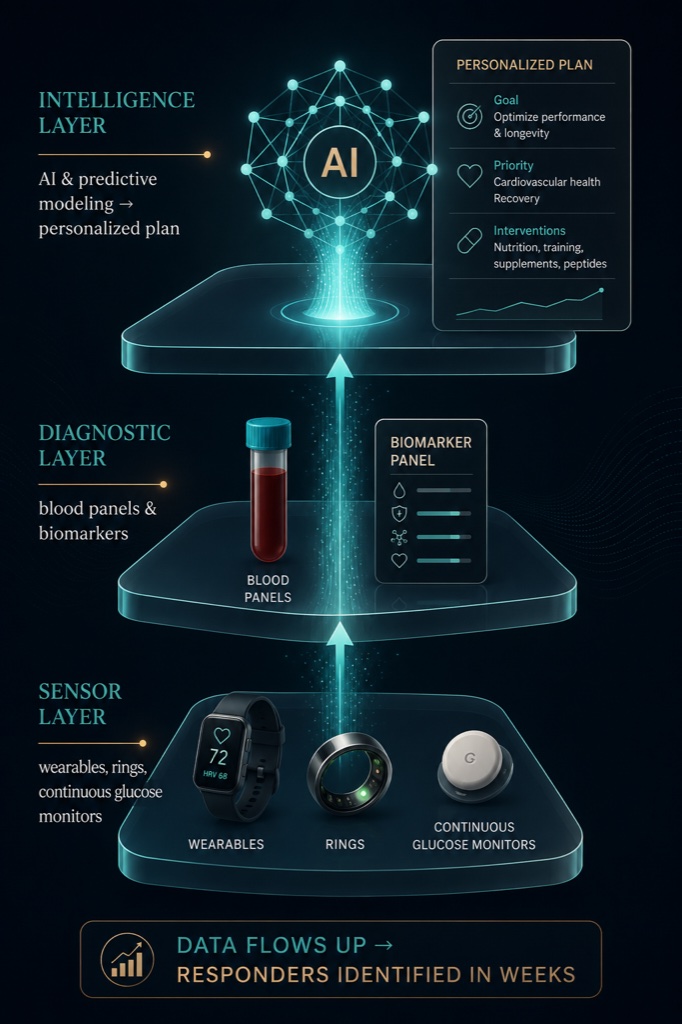
The measurement stack that turns guesswork into a plan: wearables (sensor layer), lab panels (diagnostic layer), and AI modeling (intelligence layer) can reveal a responder within weeks — the modern coach's edge.
At the top is the intelligence layer, where machine learning stops being a marketing word and does real work — the modeling that fuses those streams into a plan. This is where multi-modal health data becomes predictive modeling, and where the responder/non-responder question stops being a mystery and becomes a two-week measurement. For a practitioner, that loop is the entire value proposition: establish a baseline, model the expected response, trial the intervention under appropriate medical oversight, measure the actual result, and update. A responder shows up in the data quickly. So does a non-responder. The coach who runs that loop delivers something no influencer can — a result that's been verified, not asserted — whether for an individual Athlete / Patient or across a company's Corporate Wellness Program.
The adult in the room: safety, legality, and honest limits
An article that lists only benefits is an advertisement. Here is the part that keeps this one honest.
PDE5 inhibitors are prescription drugs, and one contraindication is genuinely dangerous. Combined with nitrates — nitroglycerin and related cardiac medications — they can cause a catastrophic drop in blood pressure. That interaction, plus effects with certain alpha-blockers and other antihypertensives, is the reason these drugs sit behind a prescriber. None of the science above is a license to self-experiment with a compound that acutely lowers blood pressure. And because gray-market "research chemical" supply carries real risks of contamination and mislabeling — a caution that applies with equal force to peptides — pharmaceutical-grade product through a licensed clinician isn't a luxury preference; it's a safety floor.
On sport, one verified and useful fact: PDE5 inhibitors are not on the World Anti-Doping Agency Prohibited List (sildenafil has historically appeared on WADA's monitoring program, a mechanism by which the agency monitors a substance without banning it).[17] Peptides are a different matter: many fall under WADA's prohibited categories, and BPC-157 in particular is detectable and problematic for tested athletes — a critical distinction for any competitor. The broader humility comes from a 2019 review by Jules Heuberger and Adam Cohen, which found only 5 of 23 substance classes on the WADA list have robust evidence of actually enhancing performance — a reminder of how wide the gap is between "banned," "effective," and "merely rumored to work."[18] Athletes remain strictly liable for everything in their bodies and should verify their current status through official channels.
Turning the science into a plan
So what does a numerate, health-invested adult — or the professional advising one — actually do with all this? Not "buy the pill." The useful frame is a sequence, in order:
Establish the baseline before changing anything
Endothelial function, blood pressure, fasting glucose and HbA1c, a lipid panel, and resting heart rate variability. You cannot detect a responder without a "before," and this is the single most-skipped, highest-value step — a fraction of what people later spend on interventions they never measure.
Bring a clinician in early
Not as a formality — because the nitrate interaction is real, and because the clearest signals in the data come from supervised, indicated use, not freelance experimentation.
Match the intervention to a problem you actually have
The metabolic data are strongest in people with existing glycemic or vascular dysfunction; the muscle data target decline, not surplus; the recovery peptides target injured, poorly vascularized tissue. If a system is already excellent, the marginal benefit is, by definition, smaller. Precision means intervening where you have headroom.
Measure, then update
Give it a defined window, re-measure the same markers, and let the result — not the hope — decide. If the needle moves, you're a responder with proof. If it doesn't, you've been spared an open-ended habit built on wishful thinking. That closed loop is the entire discipline, and it applies whether the intervention is a molecule, a peptide, a training block, or an hour of sleep.
The most durable advantage in health isn't the newest molecule. It's the willingness to measure yourself honestly and act on what you find — and the patience to build that baseline before you need it. The best time to start was ten years ago. The second-best is your next blood draw.
The bottom line
Sildenafil and tadalafil are more scientifically interesting than their reputation suggests and less magical than their marketing implies. At altitude, in responders, sildenafil can genuinely help; at sea level, for healthy athletes, it doesn't. In aging and decline, PDE5 inhibition may support muscle and metabolic function; in the already optimized, the evidence thins. The cardiovascular associations are large, consistent, and genuinely promising — and still waiting on the randomized trial that would make them causal. The same is true, one rung earlier, for the regenerative peptides that share the drug's nitric-oxide biology: a coherent mechanism, hopeful early data, and a human-evidence chapter still being written.
That is the paradox worth keeping. The blue pill didn't become interesting when it treated one thing. It became interesting when we started measuring everything else it touched — and had the discipline to report exactly what we found. In a field crowded with certainty for sale, that discipline is the rarest performance enhancer of all.
Sign up for FREE daily Longevity Club Workshops, or join the Affiliate Program (pays 20%). Subscribe to the Longevity & Peptide Optimization Newsletter.
About the Authors
Tony Medrano is CEO and co-founder of LongevityPlan.AI, a platform that integrates performance and health data and leverages proprietary Digital Twin for Predictive Peptide Performance™ technology, wearable data, and biomarker data to deliver personalized optimization and longevity recommendations. A 3x technology/AI company CEO with 2 successful exits, Tony has completed 3 Full Ironman Triathlons (140.6 mi) since 2019. He holds degrees from Harvard University, Columbia University, and a JD/MBA from Stanford University, and has worked with the US Olympic Team, the NBA, NFL, MLB, NASA, Google, Microsoft, and Netflix, among others. He also served as a US Navy Officer commanding an emergency response team aboard a destroyer.
Dr. Eric Rightmire is a dual Board Certified Orthopedic Surgeon specializing in sports medicine. He earned his BA from Harvard University and his MD from SUNY. He completed his residency and internship at Harvard. Dr. Rightmire has served as an orthopedic surgeon to celebrity athletes and is a member of the prestigious Quigley Society. His expertise in sports injuries and arthritis treatment makes him a valuable advisor to the LongevityPlan.AI team.
Disclaimer: This article is educational and is not medical advice. Sildenafil and tadalafil are prescription medications with significant contraindications, most critically a dangerous interaction with nitrate medications. Peptides discussed here, including BPC-157, are largely supported by preclinical (animal) data; robust human trials are limited, and several are not approved for therapeutic use in humans. Nothing here recommends obtaining or using any of these compounds outside the care of a licensed clinician. Where evidence is observational, it is described as such; association does not establish causation. Individual response varies substantially. Consult a qualified physician before changing any health regimen.
Endnotes and sources
- Comments by England midfielder Jordan Henderson (press conference) and by high-altitude physician Dr. Peter Hackett, University of Colorado, reported by 9News, 2026: "Doctor explains Viagra use to treat altitude sickness." Hackett: "there's no reason to take Viagra in terms of the altitude" for healthy athletes.
- Hsu AR, Barnholt KE, Grundmann NK, Lin JH, McCallum SW, Friedlander AL. "Sildenafil improves cardiac output and exercise performance during acute hypoxia, but not normoxia." Journal of Applied Physiology. 2006;100(6):2031–2040.
- Jacobs KA, Kressler J, Stoutenberg M, Roos BA, Friedlander AL. "Sildenafil has little influence on cardiovascular hemodynamics or 6-km time trial performance in trained men and women at simulated high altitude." High Altitude Medicine & Biology. 2011;12(3):215–222. See also Kressler J, et al., European Journal of Applied Physiology. 2011;111(12):3031–3040; and remarks by Kevin Jacobs reported in Live Science ("no clear benefits at altitudes ranging from 2,100 to 3,900 meters").
- University of British Columbia review of 14 studies on sildenafil and exercise: no reliable performance improvement in hypoxia, with a consistent reduction in pulmonary artery pressure (as summarized in contemporary science reporting).
- Ghofrani HA, Reichenberger F, Kohstall MG, et al. "Sildenafil increased exercise capacity during hypoxia at low altitudes and at Mount Everest base camp: a randomized, double-blind, placebo-controlled crossover trial." Annals of Internal Medicine. 2004;141(3):169–177.
- Argentina's River Plate club reported to use sildenafil with aspirin and caffeine against altitude sickness; Washington Post, February 2015 (as reported).
- Sheffield-Moore M, Wiktorowicz JE, Soman KV, et al. "Sildenafil Increases Muscle Protein Synthesis and Reduces Muscle Fatigue." Clinical and Translational Science. 2013;6(6):463–468.
- "Pharmacological vasodilation improves insulin-stimulated muscle protein anabolism but not glucose utilization in older adults." Diabetes. 2010;59(11):2764–2771.
- University of Texas Medical Branch analysis (corresponding author D. Jehle), American Journal of Medicine, 2024/2025: "Benefits of Tadalafil and Sildenafil on Mortality, Cardiovascular Disease, and Dementia." Longitudinal analysis of the TriNetX database (~50 million U.S. men). PubMed ID 39532245.
- "Long-term effects of phosphodiesterase-5 inhibitors on cardiovascular outcomes and death: a systematic review and meta-analysis." European Heart Journal – Cardiovascular Pharmacotherapy. 2024;10(5):403–. 16 cohort studies, 1,257,759 subjects. MACE RR 0.78 (95% CI 0.69–0.89); all-cause mortality RR 0.70 (95% CI 0.56–0.87).
- Cardiologist commentary (R. Kloner and colleagues) on the PDE5-inhibitor cohort literature, reported alongside a 2023 U.S. nationwide cohort study (PubMed ID 36897243), emphasizing the need for a large prospective randomized controlled trial to establish causation.
- MAKROTAD trial: "Feasibility of high-dose tadalafil and effects on insulin resistance in well-controlled patients with type 2 diabetes." eClinicalMedicine. 2023 (both sexes; no effect on whole-body insulin resistance by glucose clamp, but improved HbA1c, liver-fat marker, microcirculation, and peripheral insulin sensitivity). See also the low-dose tadalafil glycemic-control pilot RCT, Diabetology & Metabolic Syndrome. 2022;14:125; and the 4-week tadalafil trial in obese men without diabetes showing no significant change (PubMed ID 28245726).
- "From Regeneration to Analgesia: The Role of BPC-157 in Tissue Repair and Pain Management." Review, PMC (2025/2026): BPC-157 supports angiogenesis, collagen synthesis, fibroblast activity, and modulation of nitric-oxide pathways across preclinical models; human research limited to small pilot studies.
- "Modulatory effects of BPC 157 on vasomotor tone and the activation of the Src–Caveolin-1–endothelial nitric oxide synthase pathway" (PMC); and Sikirić P, et al., work on BPC 157 and the nitric-oxide system.
- Chang CH, Tsai WC, Lin MS, et al. "The promoting effect of pentadecapeptide BPC 157 on tendon healing involves tendon outgrowth, cell survival, and cell migration." Journal of Applied Physiology. 2011;110:774–780. See also growth-hormone-receptor upregulation in tendon fibroblasts (PMC6271067).
- Vasireddi N, Hahamyan H, Salata MJ, et al. "Emerging Use of BPC-157 in Orthopaedic Sports Medicine: A Systematic Review." 2025.
- World Anti-Doping Agency, Prohibited List (current edition): PDE5 inhibitors are not prohibited. Status of any medication should be verified via GlobalDRO.com (USADA); athletes are strictly liable under the World Anti-Doping Code.
- Heuberger JAAC, Cohen AF. "Review of WADA Prohibited Substances: Limited Evidence for Performance-Enhancing Effects."Sports Medicine. 2019;49(4):525–539. DOI 10.1007/s40279-018-1014-1. This article is educational and is not medical advice. Sildenafil and tadalafil are prescription medications with significant contraindications, most critically a dangerous interaction with nitrate medications. Peptides discussed here, including BPC-157, are largely supported by preclinical (animal) data; robust human trials are limited, and several are not approved for therapeutic use in humans. Nothing here recommends obtaining or using any of these compounds outside the care of a licensed clinician. Where evidence is observational, it is described as such; association does not establish causation. Individual response varies substantially. Consult a qualified physician before changing any health regimen.