Skin Health
·19 min read
Skin Care and Peptides
A field manual for the modern man's skin — what the data actually says, from $8 serums to the peptide frontier, and why the least glamorous move on the shelf is also the most powerful.
By Tony Medrano
Scientific review by Dr. Swathi Varanasi-Diaz, PharmD
This article is for education and is not medical advice.
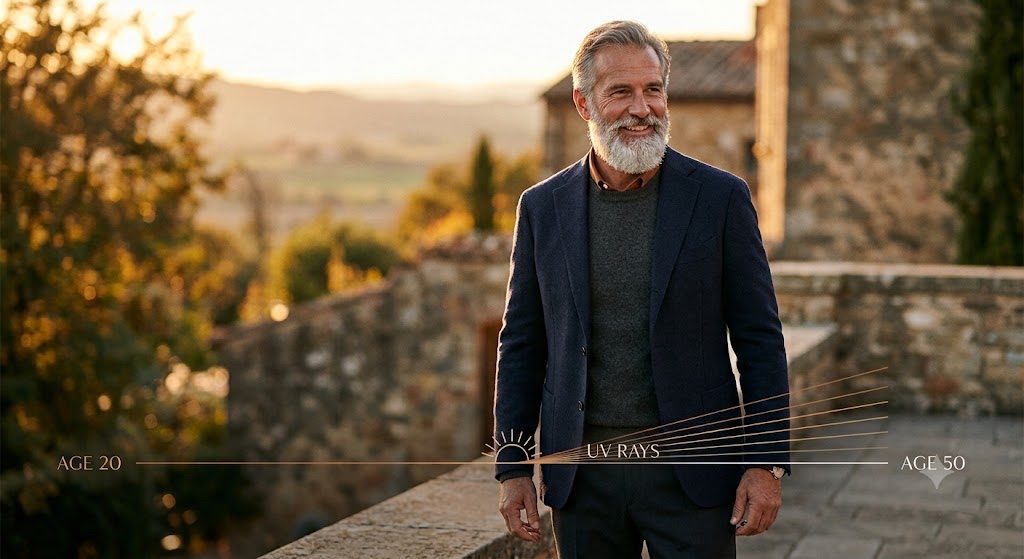
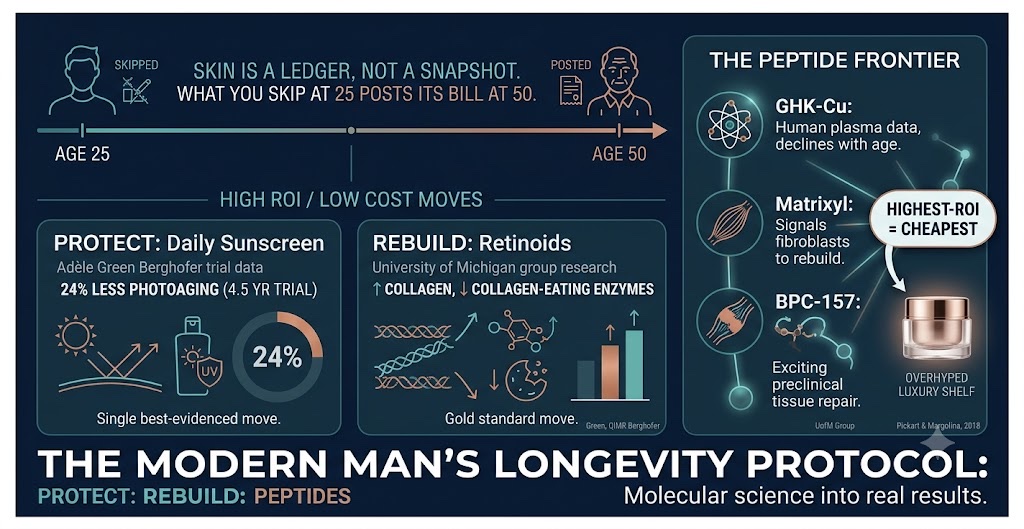
Skin keeps a ledger, not a snapshot. The unprotected sun of your twenties posts its returns in your fifties — which is exactly why the cheapest product in the aisle is the most powerful.
Hugh Jackman spent his Australian childhood, by his own account, playing in brutal sun without a drop of sunscreen. Decades later — after playing a superhero whose defining power is regeneration — he has been treated for basal cell carcinoma repeatedly since 2013, and now sees his dermatologist every few months.[1][2] He keeps posting bandaged-nose videos with the same blunt message: summer is coming, put some sunscreen on, trust me.[2][3] As he puts it, the damage happened 25 years ago and is only surfacing now.[2]
That single sentence contains most of what you need to know about skin. It is a ledger, not a snapshot. What you do — or fail to do — at 25 posts its returns at 50. And the intervention that would have spared Wolverine the biopsies is not a $400 cream or an exotic injectable. It is the cheapest, dullest, most ignored product in the aisle. Therein lies the great secret of skincare: the gap between what works and what markets well is one of the widest value arbitrages in all of personal health.
What follows is a working field manual for that arbitrage — a mechanism-by-mechanism walk through a serious men's protocol. We'll start where the randomized evidence is strongest, move through the supporting actives, and finish at the genuinely exciting frontier where peptides are rewriting what "topical" can mean. The through-line is simple: protect, rebuild, refine, and personalize, in that order of priority. Men, as we'll see, start with a biological head start in this game — and then routinely throw it away.
Your face is a different machine than hers
Skin is the body's largest organ and its most visible longevity biomarker, and it is sexually dimorphic in ways that change how you should treat it. Androgens — testosterone, chief among them — thicken the dermis and drive oil production. The result, measured repeatedly since Sam Shuster's landmark 1975 work in the British Journal of Dermatology, is that male skin is roughly 20–25% thicker than female skin, has higher collagen density, and produces nearly twice as much sebum.[4][5] In collagen terms, a man's skin is often described as about fifteen years "younger" than a woman's of the same age.[5][6]
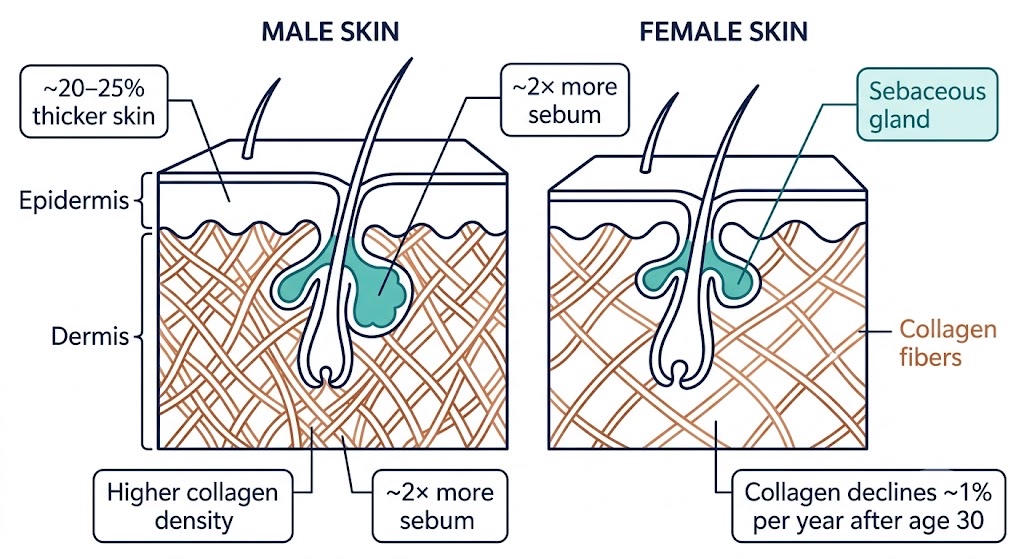
A head start you can lose. Male skin is thicker, denser in collagen, and oilier — but that advantage leaks away about 1% a year after 30, and far faster under unprotected sun.
Here is the catch, and it is the crux of the whole article. That advantage is squandered on two fronts. Male dermal thickness begins declining linearly from about age 20 — a slow, invisible leak rather than a dramatic drop — and both sexes shed roughly 1% of dermal collagen per year after 30.[6] More importantly, the overwhelming majority of the facial aging you actually see is extrinsic: photoaging from cumulative ultraviolet exposure, not the genetic clock. And men wear far less sunscreen than women. So the collagen head start gets quietly erased by a lifetime of unprotected UV — exactly the ledger from our opening, playing out on millions of faces at once.[4][6] Higher sebum, meanwhile, means oilier, larger-pored, more congestion-prone skin, which dictates which textures and actives suit the male face: lightweight, non-occlusive, and unafraid of a little acid.
Pillar one — protect: the highest-ROI molecule you own
If you do exactly one thing, do this. The strongest randomized evidence in the entire appearance-of-aging literature is not for a serum, an antioxidant, or a peptide. It is for daily sunscreen — and, fittingly, the definitive trial was run in Jackman's Australia. In the Nambour Skin Cancer Prevention study, Adèle Green and colleagues at the Queensland Institute of Medical Research and the University of Queensland randomized 903 adults to daily broad-spectrum SPF 15+ versus discretionary use and followed them for 4.5 years. The daily-use group showed 24% less photoaging by objective skin-surface micro-topography (relative odds 0.76; 95% CI 0.59–0.98) — and, remarkably, showed no detectable increase in skin aging over the entire trial.[7][8] When the results ran in Annals of Internal Medicine in 2013, Green's summary was that regular sunscreen doesn't just lower skin-cancer risk; it keeps you looking younger, now with evidence behind the old beauty tip.[9]
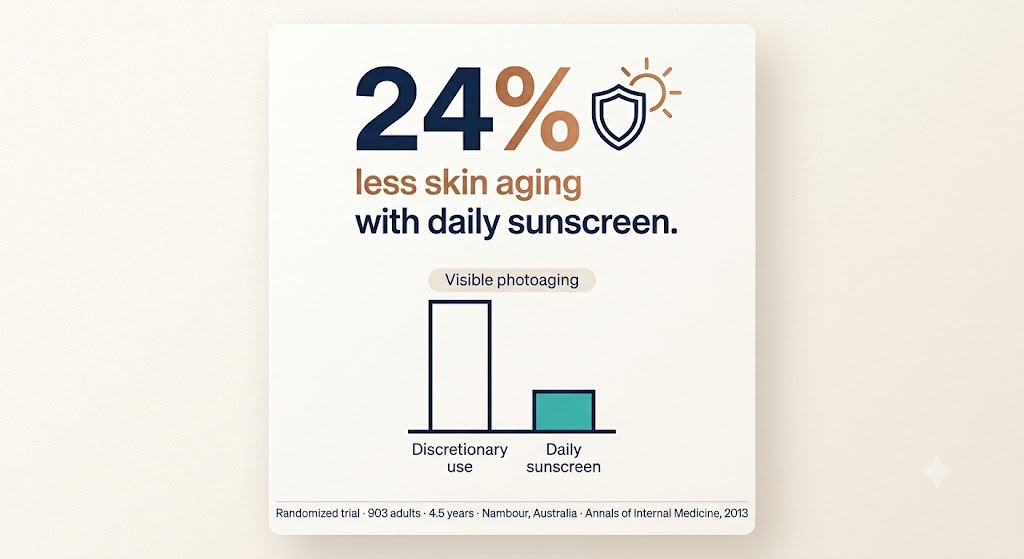
The single best-evidenced anti-aging result in dermatology. Over 4.5 years, adults who used sunscreen daily showed 24% less photoaging — and no measurable increase in skin aging at all.
No retinoid, vitamin C, or peptide can demonstrate a comparable long-duration randomized outcome in human facial aging. That is why sunscreen is the floor of the protocol, not a finishing touch.
Formulation should suit the male face. Mineral (inorganic) filters — the zinc oxide and titanium dioxide in a sheer mineral SPF such as Cetaphil Sheer Mineral 50 — sit on the surface, reflect UV, and tend to be low-irritant, an easy default for reactive or freshly shaved skin. Chemical filters absorb UV and vanish more cosmetically on thicker or hairier skin. A moisturizer-with-SPF like Murad's SPF 50 solves the real problem, which was never chemistry but adherence: the Nambour signal was ultimately behavioral. Daily use was the variable that mattered.[7] The best sunscreen is the one a busy operator will actually reapply.
Pillar two — rebuild: the one prescription-grade upgrade
Protection stops the bleeding; retinoids do the repair. The vitamin A family is the most evidence-supported class of anti-aging actives, and topical tretinoin (all-trans retinoic acid) is, in the plain language of multiple systematic reviews, the gold standard, backed by more than three decades of clinical and histological data.[10][11] The mechanism was largely mapped by the University of Michigan dermatology group — John Voorhees, Gary Fisher, Sewon Kang, Christopher Griffiths, Taihao Quan: retinoids bind nuclear retinoic-acid receptors, upregulate procollagen synthesis, and, critically, suppress the matrix metalloproteinases (notably MMP-1) that UV switches on to chew through existing collagen.[11][12] On biopsy, the result is thicker epidermis, better-organized collagen and elastin, and softened fine lines.[10][11]
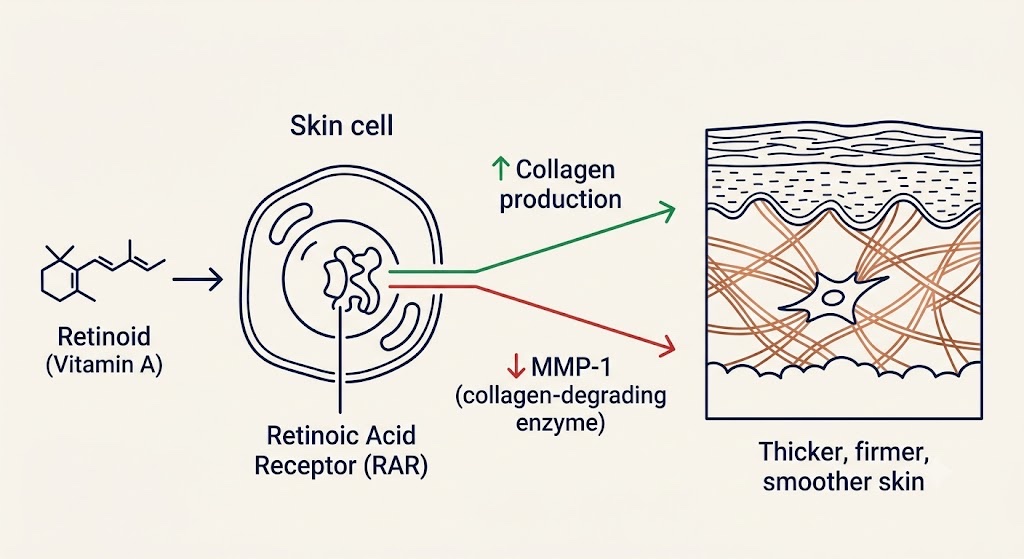
Retinoids play both offense and defense — telling fibroblasts to build more collagen while switching off the MMP enzymes that break it down. It's why they're dermatology's gold-standard rebuild tool.
You can access most of that benefit without a prescription. Retinol — the over-the-counter precursor your skin converts to retinoic acid — has matched tretinoin in split-face randomized studies; in one, retinol at 0.25–1.0% produced photodamage improvements statistically similar to matched tretinoin at 0.025–0.1%.[13] This is exactly where a well-built 1% retinol, like the Paula's Choice product in this stack, earns its place: a meaningful share of tretinoin-class remodeling on a gentler tolerability curve — the right on-ramp for a man over 40 building toward maximal benefit. [11][13]
Two rules fall straight out of biology. Retinoids go at night (they're photolabile and briefly raise UV sensitivity), which makes the next morning's sunscreen non-negotiable. And you titrate: two or three nights a week, acclimate over a couple of weeks, then build. The thicker male dermis often tolerates retinoids well, but irritation kills adherence, and adherence is the whole game.
The amplifiers: getting more from the two pillars
Around the two pillars sits a supporting cast that compounds their effect. None of these will rebuild the dermis the way a retinoid does; together, they make the skin calmer, clearer, better hydrated, and more even — and they raise the ceiling on what protection and repair can achieve.
Vitamin C — the daytime antioxidant
Vitamin C is the classic morning partner to nighttime retinoids. It's the most abundant antioxidant in human skin, and its levels fall with both age and sun damage.[14] It earns its keep twice: as a required cofactor, it stimulates type I procollagen synthesis, and as an antioxidant, it neutralizes UV-generated free radicals and inhibits the AP-1 pathway, reducing MMP-driven collagen breakdown.[14][15] A famous half-face study paired 12 weeks of topical vitamin C with punch-biopsy confirmation of new collagen, matching the visible improvement.[16] The honest caveat, per a 2023 systematic review, is that the benefit is real but incremental and rewards sustained use — and stability is everything, since ascorbic acid oxidizes readily.[15] Its best-documented role is defensive: layered under sunscreen, it extends the day's photoprotection.
Niacinamide — the quiet workhorse for oily male skin
Niacinamide (vitamin B3) maps almost perfectly onto male skin's quirks. Controlled trials support that it boosts ceramide and barrier-lipid synthesis, lowers transepidermal water loss, reduces sebum and the look of enlarged pores, and fades pigmentation by blocking melanosome transfer.[17][18] Studied from roughly 2% to 10%, it suits the oilier, larger-pored face and layers peaceably with nearly everything, which is why a 10% niacinamide slots cleanly into the routine, with a booster on hand to dial concentration to tolerance.
Exfoliation, done right — glycolic (AHA) vs. salicylic (BHA)
This is where men most often overdo it. Glycolic acid, the small-molecule alpha-hydroxy acid, loosens the "glue" between dead surface cells for uniform shedding and, over time, smoother texture and brighter tone — the class pioneered by dermatologists Eugene Van Scott and Ruey Yu in the 1970s.[19][20] Its non-negotiable caveat: glycolic acid can transiently raise UV sensitivity (more sunburn cells, a lower minimal erythema dose, reversible within about a week), which is precisely why it belongs in the evening and mandates morning sunscreen.[21] Salicylic acid — the oil-soluble beta-hydroxy acid — is often the better male fit: it penetrates into the sebaceous follicle to clear the debris that clogs pores and carries aspirin-like anti-inflammatory activity, a strong match for oily, breakout- and razor-bump-prone skin.[22] A salicylic cleanser delivers that in a gentle rinse-off format.
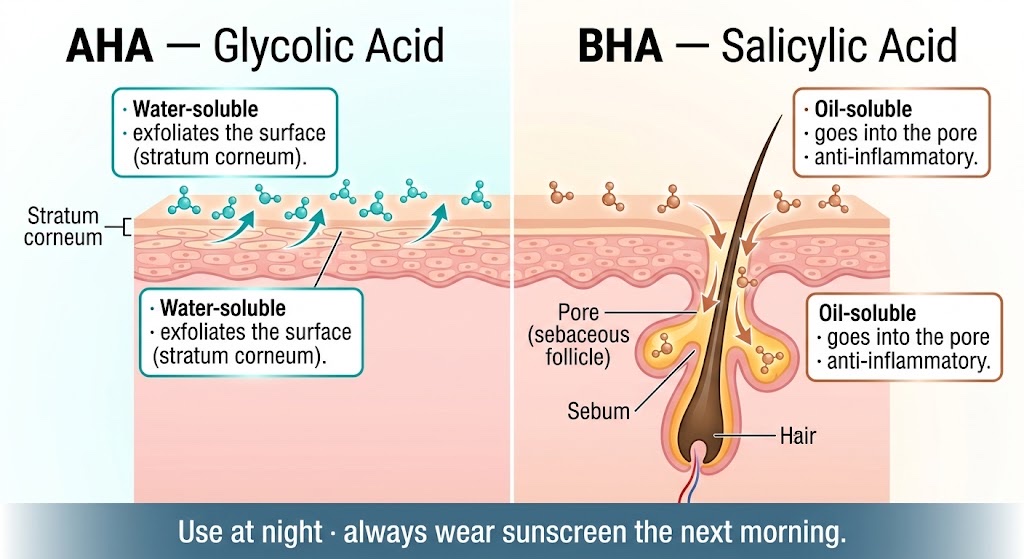
Two acids, two jobs. Glycolic (AHA) resurfaces the top layer; salicylic (BHA) dives into oily pores — usually the better fit for male skin and razor bumps. Both belong at night, under the next morning's SPF.
One shaving note: keep glycolic off freshly shaved skin, and never stack multiple acids plus a retinoid on the same night — the fastest route to a wrecked barrier.
Hydration and support — the tolerability layer
The base layer is real but modest. Hyaluronic acid is a humectant: on damp skin, it binds water into the surface, temporarily plumping fine lines. Panthenol (provitamin B5) soothes and supports the barrier, which is why a hyaluronic-plus-B5 serum or a dedicated hydrator makes a sensible foundation under actives. Caffeine, in an under-eye serum, is a vasoconstrictor that can briefly reduce puffiness. Positioned honestly, these make skin look and feel better day-to-day and improve the tolerability of the hard-working actives above — they are not collagen-remodeling agents, and shouldn't be sold as such.
The peptide frontier — where this gets exciting
Now to the part that has the longevity world genuinely energized, and for good reason. Peptides are short chains of amino acids that act as biological signals, and the most interesting ones are analogs of molecules your body already makes and gradually stops making with age. That is a fundamentally hopeful premise: rather than forcing an outcome with a foreign chemical, a well-chosen peptide reintroduces a message the skin already knows how to obey. The evidence spans two tiers, and both are worth understanding.
Tier one: topical peptides you can use today
Copper peptides (GHK-Cu) are the flagship. GHK-Cu is a naturally occurring tripeptide of glycine, histidine, and lysine bound to copper, isolated from human plasma in 1973 by biochemist Loren Pickart, who noticed that plasma from younger donors made aged tissue behave more youthfully.[23] Its appeal for a longevity audience is that it is endogenous and age-declining — plasma GHK falls from about 200 ng/mL at age 20 to roughly 80 ng/mL by 60.[23][24] The topical data are encouraging: in a 12-week study, GHK-Cu facial cream applied twice daily to 71 women with photoaging improved firmness, density, clarity, and fine lines; a companion eye-cream study in 41 subjects beat both placebo and vitamin K cream on periorbital lines and skin density.[24] Pickart and Anna Margolina's much-cited 2018 review consolidated decades of work showing GHK-Cu stimulates collagen synthesis, favorably shifts the MMP/TIMP remodeling balance, and modulates a striking fraction of human genes in bioinformatic screens.[23][24]
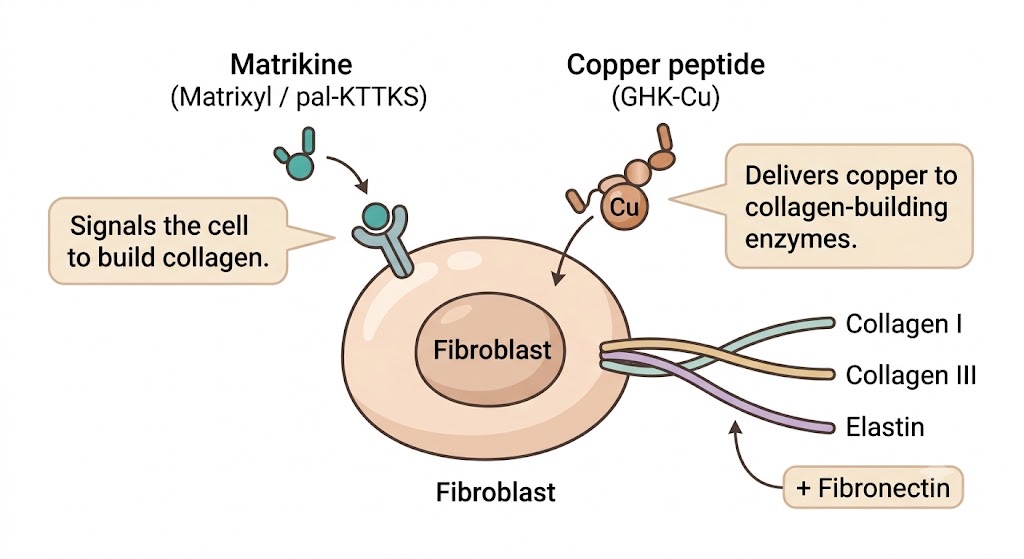
Peptides don't force skin to change — they signal it to. A matrikine like Matrixyl and a copper peptide like GHK-Cu recruit two separate, non-competing routes to the same result: more collagen.
Matrixyl (palmitoyl pentapeptide-4, "pal-KTTKS") is the most extensively studied cosmetic peptide — it has arguably earned the "collagen-boosting" claim that hundreds of products borrow. It is a matrikine mimetic: KTTKS is a fragment naturally released when collagen is broken down, and the skin reads it as a cue to rebuild, prompting fibroblasts to ramp up collagen I, III, and IV, plus fibronectin — a rebuilding signal that requires no injury or irritation.[25] In a 12-week double-blind, split-face randomized trial, a pal-KTTKS formulation significantly reduced wrinkle depth and roughness versus vehicle, and reviews across multiple trials put the effect in the range of a 10–30% reduction in wrinkle appearance over 8–12 weeks — gentler and subtler than a retinoid, with no photosensitivity, which makes it a superb partner rather than a rival.[25][26] Its cousin Argireline (acetyl hexapeptide-8) works differently again, dampening the neuromuscular signaling that etches expression lines — a "topical relaxation" effect studied in multi-peptide eye serums.[27] Stack GHK-Cu (copper-delivery pathway) with a matrikine like Matrixyl (signal pathway), and you're recruiting two non-competing routes to the same fibroblast outcome — a rational, evidence-aligned addition to a mature routine. [25]
Read More Scientific Researchfrom LongevityPlan.AI.
Read more scientific research from LongevityPlan.AI, or buy peptides from our shop.
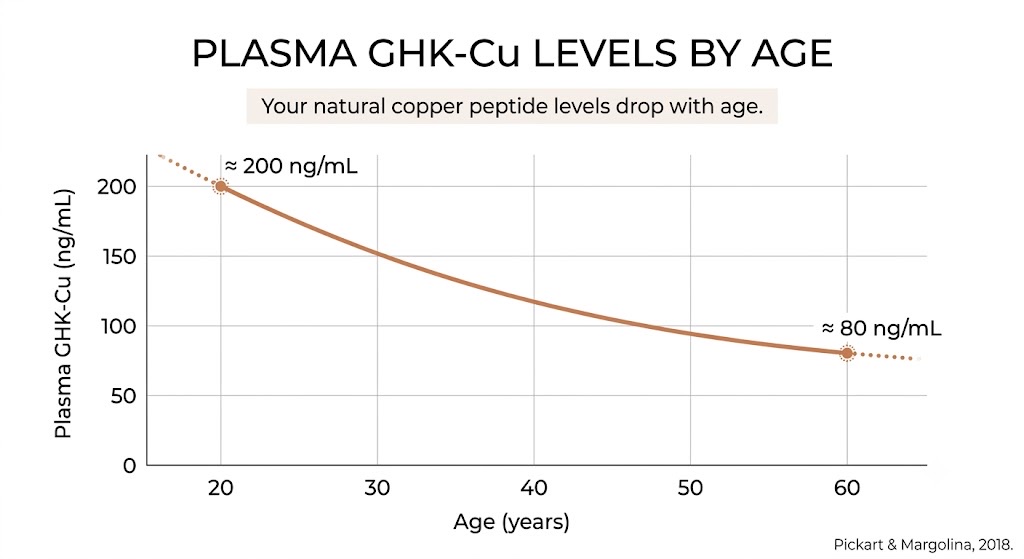
Why copper peptides interest the longevity crowd: GHK-Cu is something your body already makes — and makes less of every decade, dropping from roughly 200 to 80 ng/mL between ages 20 and 60.
Tier two: the regenerative peptides driving the buzz
Beyond the cosmetic shelf sits the class that most excites performance and recovery circles: the systemic regenerative peptides. The headliner is BPC-157, a 15-amino-acid "body protective compound" derived from a protein in human gastric juice. The preclinical record here is genuinely remarkable in its consistency — thirty years and hundreds of indexed studies. In rodent models, BPC-157 has accelerated healing of transected Achilles tendon, medial collateral ligament, and quadriceps injuries; driven angiogenesis via VEGFR2; increased fibroblast activity and collagen synthesis; and — the most translatable endpoint — produced higher load-to-failure biomechanical strength in healed tendons.[28][29] One mechanistic study found that BPC-157 upregulates the growth hormone receptor in tendon fibroblasts, offering a clear molecular explanation for its repair signal.[30] Related peptides such as TB-500 (thymosin β-4) show overlapping wound-healing signals in animal work.[29]
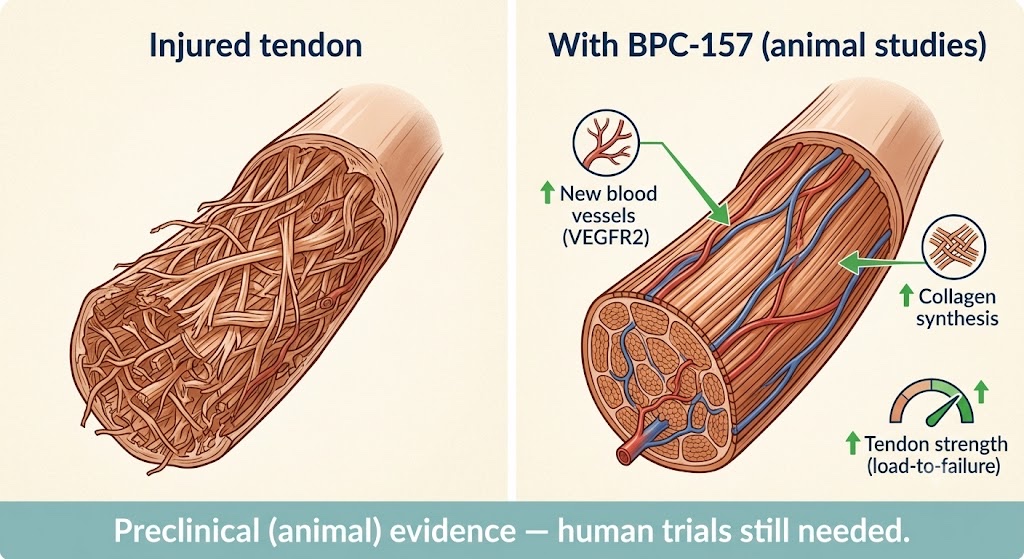
Thirty years of animal research point in the same direction: BPC-157 accelerates tendon and ligament repair, boosting blood-vessel growth, collagen, and strength. The exciting next step is rigorous human data.
Intellectual honesty — the thing that makes an enthusiast credible — requires naming the boundary. This tier's robust evidence is overwhelmingly preclinical: the animal signal is strong and reproducible, but rigorous human efficacy and safety trials are still the next frontier, and these compounds should only be considered under qualified medical supervision.[28][29] That is not a reason for pessimism; it is the ordinary shape of an exciting field early in its translation. The optimistic, defensible read is that peptides represent one of the most promising directions in regenerative and aesthetic medicine precisely because they are endogenous-analog signals with decades of coherent mechanistic data behind them. The task now is to hold that promise to the same standard we apply to everything else — and to watch the human data mature.
Precision, and the professionals who translate it
The routine sketched here is a strong default — but "default" is the operative word, because responses to every active above vary among individuals, and some of that variance is genetic. Baseline antioxidant capacity, the aggressiveness of UV-induced MMP expression, sensitivity to retinoids and acids, sebum set-points, pigmentation tendencies — all differ person to person, and the study of how genotype shapes them, the terrain companies like The Genomics Company work in, is where skincare is heading. No gene panel yet prescribes your exact peptide dose; anyone claiming otherwise is ahead of the evidence. But the direction is unmistakable: from population-average advice to individualized protocols built on multimodal health data and refined by predictive modeling over the same 12-week cycles during which the studies above reached their endpoints. Standardized photography, hydration, and barrier readings, sun-exposure logs, sleep, and inflammatory markers — fuse them, and skincare stops being a monologue of product claims and becomes a measurable feedback loop.
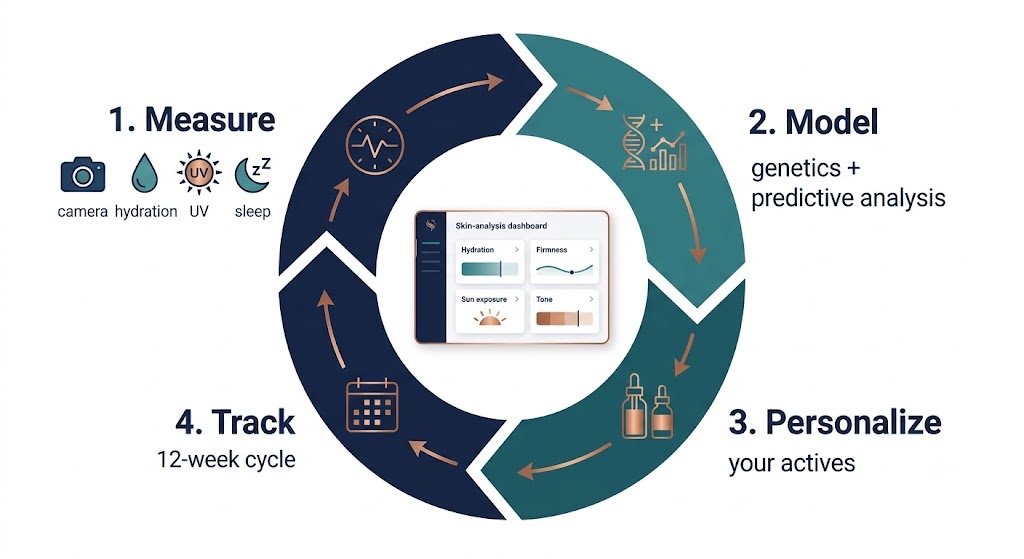
Precision skincare closes the loop. Measure your skin, model it against your genetics and history, personalize the actives, then track over a 12-week cycle — the same window in which the studies here reached their results.
This is exactly where the best weight-loss coaches, performance coaches, dietitians, nutritionists, executive coaches, and health-and-beauty educators are becoming indispensable. They are the translation layer — the professionals who turn a dense body of dermatology, peptide science, and performance research into something a client will actually do on a Tuesday morning. The most effective among them have moved past fads to a genuinely science-forward practice: they understand the difference between a matrikine and a marketing claim, why the Nambour trial rewards daily behavior over heroic dosing, and how to design and track a protocol against real endpoints rather than vibes. A dietitian who can explain why collagen synthesis needs vitamin C as a cofactor, or a performance coach who understands the preclinical logic behind connective-tissue peptides, delivers something a product label never can: context, sequencing, and accountability. Our work at LongevityPlan.AI is built to arm those practitioners precisely — to give the coaches, counselors, and clinicians who guide high-performing people the rigorous, data-grounded scientific backbone their expertise deserves. When the science is this good, the professionals who wield it well are the ones who compound its value.
The assembled protocol
Sequencing follows one rule — thinnest to thickest, water-based before oil-based, pH-sensitive actives spaced out — plus the timing dictated by photostability.
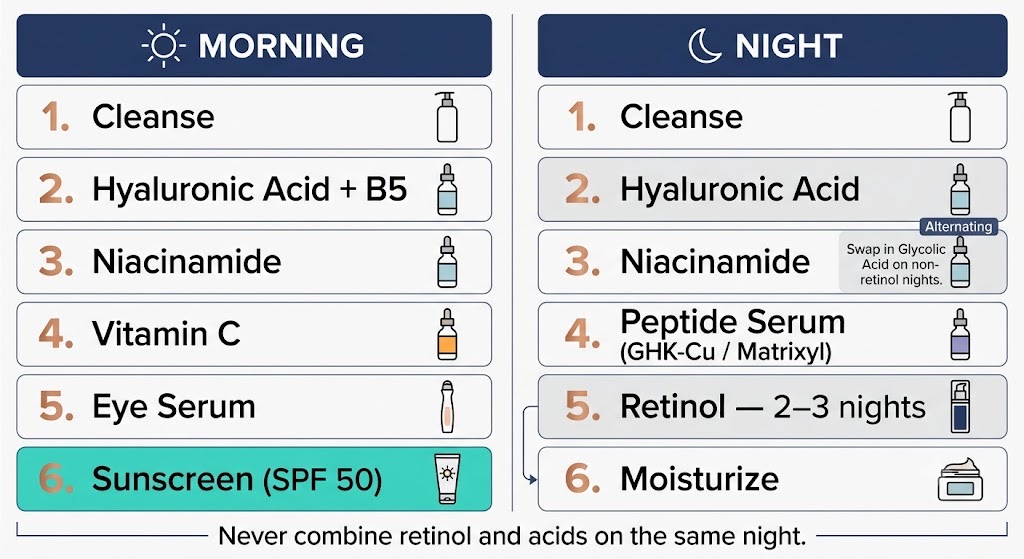
The whole protocol on one card. Protect in the morning, rebuild at night — and keep retinol and acids on separate evenings to keep your barrier intact.
Morning (daily)
Cleanse (a salicylic cleanser on oilier or breakout days) → hyaluronic acid + B5 on damp skin → niacinamide → vitamin C → eye serum → sunscreen, every day, or a moisturizer with SPF to guarantee compliance.
Evening (most nights)
Cleanse → hyaluronic acid + B5 → niacinamide → optional peptide serum (GHK-Cu and/or a matrikine) → light moisturizer. On retinoid nights: cleanse, hydrating base, 1% retinol, buffer with moisturizer — and skip other acids.
Two to three nights per week (in place of the regular evening routine)
Cleanse → glycolic acid toner (not on freshly shaved skin) → hyaluronic acid → optional niacinamide if tolerated. Alternate acid nights and retinoid nights; never combine them.
| Step / Product | Job it does | When |
|---|---|---|
| Salicylic acid cleanser | Oil-soluble BHA; clears follicles, calms breakouts and razor bumps | AM/PM as needed |
| Hyaluronic acid 2% + B5 / hydrator | Humectant hydration and tolerability base | AM & PM |
| Niacinamide 10% (+ booster) | Barrier, sebum control, pore appearance, tone | AM & PM |
| Vitamin C | Antioxidant + procollagen; extends daytime photoprotection | AM |
| Caffeine eye serum | Temporary de-puffing | AM |
| Sunscreen — mineral SPF 50 / SPF-moisturizer | Highest-evidence anti-aging step | AM, daily, reapply |
| Peptide serum — GHK-Cu / matrikine (Matrixyl) | Signal-based collagen support | PM enhancement |
| Retinol 1% | Collagen remodeling, MMP suppression | PM, 2–3 nights, titrate up |
| Glycolic acid 7% toner | AHA surface exfoliation, texture & tone | PM, 2–3 nights (not with retinoid) |
The longer game
Strip away the chemistry, and four principles remain — and they are the same ones that govern healthspan itself. Prevention beats reversal: the retinoid rebuilds slowly, but the sunscreen simply prevents the damage Jackman is still paying for. Consistency beats intensity: Nambour rewarded the daily habit, not the heroic dose. Measurement beats belief: the 12-week biopsy, not the marketing claim, is what tells the truth. And personalization beats the average: the optimal protocol is one derived from your own data, guided by professionals who know how to read it. A man who internalizes those four rules for his face has, not by coincidence, installed the operating system for planning the rest of his life. The visible daily dividend is just the hook.
The bottle that matters most, in the end, is the cheap one you actually use every morning — and the exciting one is the peptide that science is only beginning to unlock.
Sign up for FREE daily Longevity Club Workshops, or join the Affiliate Program (pays 20%). Subscribe to the Longevity & Peptide Optimization Newsletter.
About the Author
Tony Medrano is CEO and co-founder of LongevityPlan.AI, a platform that integrates performance and health data and leverages proprietary Digital Twin for Predictive Peptide Performance™ technology, wearable data, and biomarker data to deliver personalized optimization and longevity recommendations. A 3x technology/AI company CEO with 2 successful exits, Tony has completed 3 Full Ironman Triathlons (140.6 mi) since 2019. He holds degrees from Harvard University, Columbia University, and a JD/MBA from Stanford University, and has worked with the US Olympic Team, the NBA, NFL, MLB, NASA, Google, Microsoft, and Netflix, among others. He also served as a US Navy Officer commanding an emergency response team aboard a destroyer.
Scientific Review by Dr. Swathi Varanasi-Diaz
Dr. Swathi Varanasi-Diaz, known professionally as Dr. Swathi, is an award-winning pharmacist and medical affairs leader passionate about the intersection of evidence-based integrative health, longevity, and healthcare innovation.
She is the Managing Director of Varanasi & Company, a consulting firm providing medical affairs and strategic consulting for consumer health brands including supplements, health foods, healthtech platforms, aesthetic startups, and media ventures. Through fractional executive roles and high-impact consulting projects, Dr. Swathi helps brands generate clinical evidence, craft medically-driven messaging, uphold regulatory standards, educate their consumers, and build healthcare provider engagement channels.
With experience across clinical care, pharma, biotech, CPG, academia, and clinical trials, Dr. Swathi is recognized as a trusted expert in navigating non-FDA regulated product landscapes and competitive consumer health markets with scientific rigor. She has also created postdoctoral residency programs, fellowships, and mentorship initiatives to train the next generation of healthcare professionals in non-traditional career paths.
Dr. Swathi is a sought-after speaker and recurring medical expert on TV (CBS, NBC, ABC) and radio. She has been published in peer-reviewed journals and featured in Well+Good, mindbodygreen, Forbes Health, Yahoo, and Thrive Global. In 2023, she was named one of the 50 Most Influential Leaders in Pharmacy.
She received her Doctor of Pharmacy (PharmD) from the Medical University of South Carolina and her Bachelor of Arts from Carleton College. She is the first pharmacist in the U.S. to complete formal postdoctoral residency training in integrative medicine and preventive health, in addition to a postdoctoral fellowship in Medical Affairs and certification in clinical nutrition from Cornell University.
Disclaimer: Educational content, not medical advice. Topical retinoids and hydroxy acids can cause irritation and photosensitivity; systemic or injectable peptides carry regulatory and safety considerations and should be used only under qualified medical supervision. Consult a board-certified dermatologist or physician before starting a new regimen, particularly if you have a skin condition or take photosensitizing medication.
Endnotes and sources
- Skin Cancer Foundation, "Is Basal Cell Carcinoma Serious? Let's Ask Hugh Jackman" (Jackman's repeated BCC treatment since 2013; quarterly dermatology checks; 2024 documentary Conquering Skin Cancer), 2025.
- NBC News / CBS News coverage of Hugh Jackman's April 2023 skin-cancer scare and prior 2013/2014/2016 basal cell carcinoma treatments; his public statements urging daily high-SPF sunscreen and describing childhood sun exposure "25 years ago."
- Hugh Jackman, public Instagram statements urging sunscreen use ("please wear sunscreen… trust me"), 2021–2023, as reported by ABC News / Good Morning America.
- Rahrovan S, et al. Male versus female skin: what dermatologists and cosmeticians should know. International Journal of Women's Dermatology. 2018;4(3):122–130.
- Shuster S, Black MM, McVitie E. The influence of age and sex on skin thickness, skin collagen and density. British Journal of Dermatology. 1975;93(6):639–643.
- American Academy of Dermatology; Shuster et al. 1975; Rahrovan et al. 2018 — ~1%/year dermal collagen decline after age 30; male skin ~20–25% thicker with higher collagen density; linear male decline from ~age 20; sebum output roughly double in men.
- Hughes MCB, Williams GM, Baker P, Green AC. Sunscreen and prevention of skin aging: a randomized trial. Annals of Internal Medicine. 2013;158(11):781–790.
- Nambour Skin Cancer Prevention Study — daily broad-spectrum SPF 15+ vs discretionary use; ~24% less photoaging over 4.5 years (relative odds 0.76; 95% CI 0.59–0.98); no detectable aging increase in daily-use group.
- Green AC, Queensland Institute of Medical Research / University of Queensland statement accompanying the 2013 Nambour photoaging results.
- Systematic reviews of topical tretinoin for photoaging (randomized controlled trials showing improvement across clinical signs of photodamage), 2022–2025.
- Comparing tretinoin to other topical therapies in photoaging: a systematic review. American Journal of Clinical Dermatology. 2024 (tretinoin as gold standard; collagenase/MMP inhibition; epidermal remodeling).
- University of Michigan dermatology group (Fisher GJ, Voorhees JJ, Kang S, Griffiths CEM, Quan T, Varani J): retinoid up-regulation of procollagen and suppression of UV-induced MMPs; vitamin A antagonizes collagen degradation in aged human skin. J Invest Dermatol and related.
- Randomized, double-blind, split-face study comparing retinol (0.25/0.5/1.0%) with tretinoin (0.025/0.05/0.1%) — comparable photodamage improvement. Journal of Drugs in Dermatology, 2015.
- Telang PS. Topical vitamin C and the skin: mechanisms and clinical applications (most abundant cutaneous antioxidant; AP-1 inhibition; reduced MMP activity). PMC5605218.
- Correia G, Magina S. Efficacy of topical vitamin C in melasma and photoaging: a systematic review. Journal of Cosmetic Dermatology. 2023;22(7) (procollagen stimulation; incremental benefit; sustained use required).
- Fitzpatrick RE, Rostan EF. Double-blind, half-face study of topical vitamin C for photodamage — biopsy-confirmed new collagen over 12 weeks. PMID 11896774.
- Niacinamide efficacy in skin therapy — comprehensive literature review (barrier-lipid/ceramide synthesis, reduced TEWL, sebum reduction, melanosome-transfer inhibition; RCT support). Cosmoderma, 2026.
- Mechanistic basis and clinical evidence for nicotinamide (niacinamide) in skin aging and pigmentation. PMC8389214 (concentrations ~2–10% studied).
- JCAD, "Hydroxy Acids" review (Van Scott EJ & Yu RJ as AHA pioneers; keratolytic mechanisms), 2023.
- Fartasch M, Teal J, Menon GK. Mode of action of glycolic acid on human stratum corneum. Archives of Dermatological Research. 1997;289:404–409.
- Reported glycolic-acid photosensitization: increased sunburn cells and lowered minimal erythema dose on treated skin, reversible ~1 week after cessation — rationale for evening use plus daily SPF.
- Salicylic acid as a lipophilic BHA keratolytic with follicular penetration and aspirin-like anti-inflammatory activity. JCAD "Hydroxy Acids," 2023.
- Pickart L, Margolina A. Regenerative and protective actions of the GHK-Cu peptide in the light of the new gene data. International Journal of Molecular Sciences. 2018;19(7):1987 (PMC6073405). Original isolation: Pickart L, Thaler MM. Nature New Biology. 1973;243:85–87.
- GHK-Cu topical clinical data: 12-week facial cream (71 women with photoaging); eye cream (41 women) outperforming placebo and vitamin K; pilot increases in epidermal/dermal thickness (consolidated in Pickart & Margolina 2018; Maquart FX et al., FEBS Letters, 1988). Plasma GHK ~200→80 ng/mL, age 20→60.
- Matrixyl (palmitoyl pentapeptide-4, pal-KTTKS) as matrikine mimetic stimulating collagen I/III/IV and fibronectin; Robinson LR et al., "Topical palmitoyl pentapeptide provides improvement in photoaged human facial skin," International Journal of Cosmetic Science, split-face RCT.
- Systematic/aggregate reviews of cosmetic peptide trials reporting ~10–30% reduction in wrinkle appearance over 8–12 weeks with pal-KTTKS; consistently favorable tolerability and no photosensitivity.
- Li et al. Clinical evidence of a multi-peptide anti-aging eye serum (acetyl hexapeptide-8 / Argireline, Matrixyl 3000). Journal of Cosmetic Dermatology. 2023 (neuromuscular-signaling mechanism of acetyl hexapeptide-8 via SNAP-25).
- "Regeneration or Risk? A Narrative Review of BPC-157 for Musculoskeletal Healing," PMC12446177 — consistent preclinical acceleration of tendon/ligament/muscle healing; higher load-to-failure; robust evidence overwhelmingly preclinical, human trials lacking.
- Preclinical BPC-157 literature (rat Achilles/MCL/quadriceps models; VEGFR2-mediated angiogenesis; collagen synthesis; FAK-paxillin signaling); TB-500 / thymosin β-4 overlapping wound-healing signals. Reviews 2018–2026.
- Chang C-H et al. Pentadecapeptide BPC-157 enhances growth-hormone-receptor expression in tendon fibroblasts. PMC6271067.