Peptide Science
·16 min read
The Cell's Power Plant, Reprogrammed — Your Mitochondria
Five peptides made inside your own mitochondria are rewriting longevity science — and the biggest surprise is that your genome, not the molecule, decides whether they work.
By Tony Medrano
This article is for education and is not medical advice.
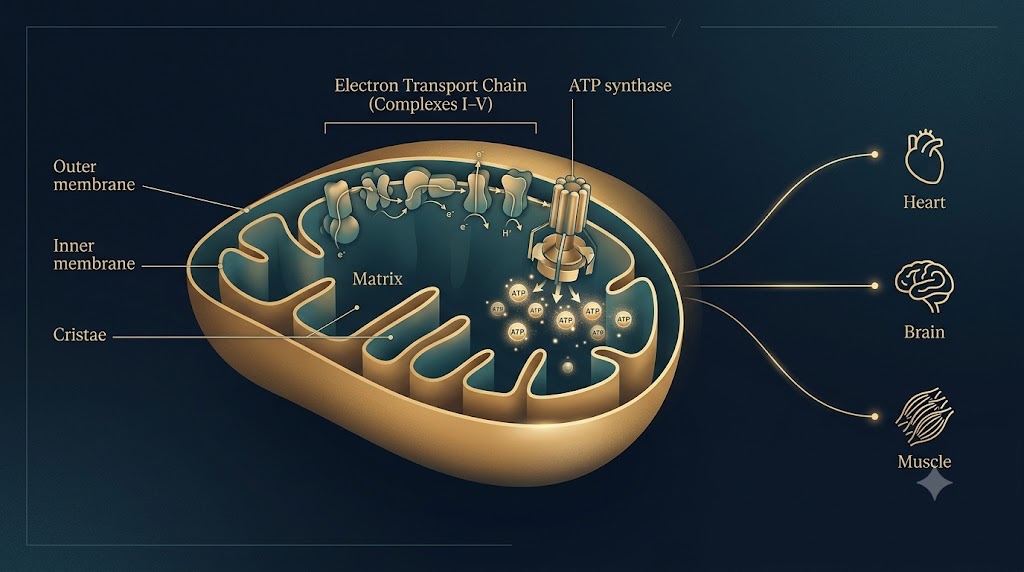
Every heartbeat, thought, and sprint is paid for in ATP — the energy currency produced inside your mitochondria. As these organelles decline with age, so does performance. A new class of peptides aims to fix that at the source.
In the 2025–26 season, LeBron James did something no basketball player had ever done: he suited up for his 23rd NBA season, at age 41, still producing at an All-NBA level.[3] The reported price of that longevity is roughly $1.5 million a year in body maintenance — a figure he has cheerfully declined to confirm or deny — spanning cryotherapy, hyperbaric oxygen, sleep engineering, and private nutrition.[1] But his former teammate Lou Williams put his finger on the part money can't buy. "Everybody," he said, "doesn't have the genetics to do that."[2]
That single sentence is, as it happens, the thesis of this entire article. Because what LeBron is really fighting — what every athlete, executive, and ambitious 55-year-old is fighting — is a decline that begins in a place too small to see. Maximal oxygen uptake and the blood's oxygen-carrying capacity begin falling around age 30, quietly throttling how fast the body can recover between hard efforts.[3] Trace that decline to its source and you arrive at the mitochondria: the organelles that turn food and oxygen into ATP, the molecular cash your heart, brain, and muscles spend every second of your life.
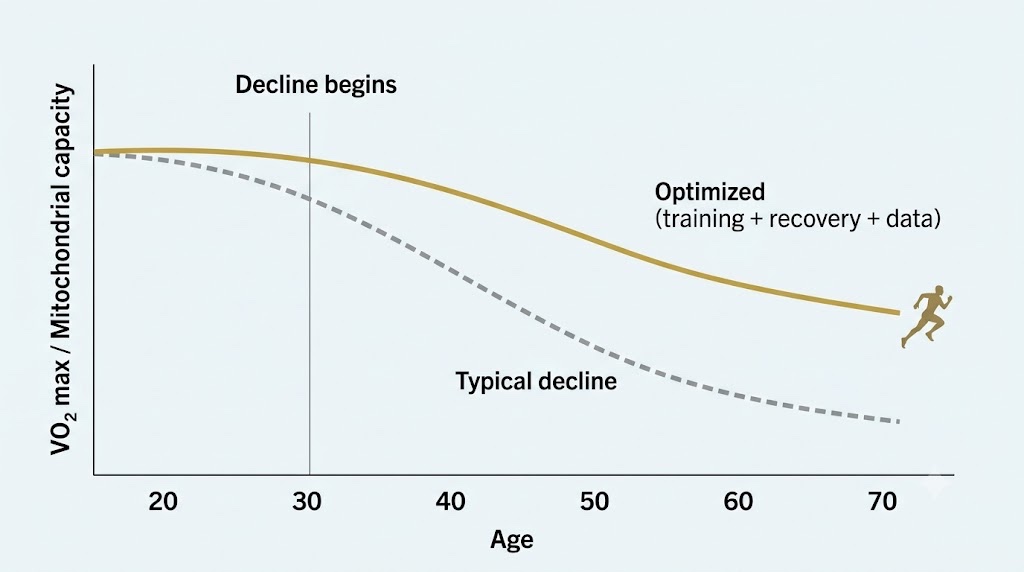
VO₂ max — the strongest physiological predictor of how long and how well you live — begins declining around age 30. Elite performers don't stop the clock; they bend the curve, keeping mitochondrial capacity high for decades.
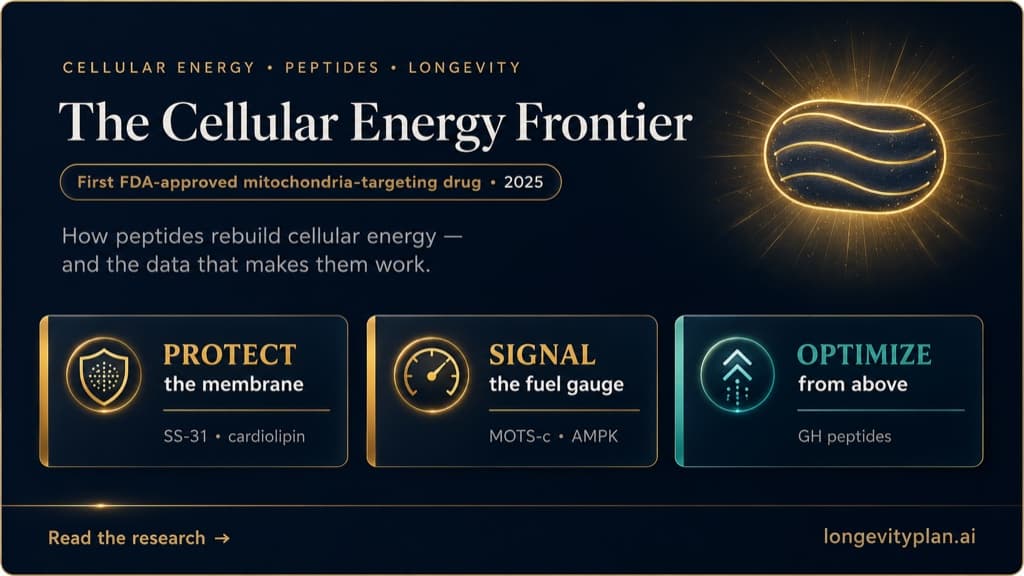
For the first time, medicine can target that decline at its root. In September 2025, the FDA approved elamipretide — a four-amino-acid peptide — as the first drug ever cleared that works by directly repairing mitochondria.[4] It was a landmark, and it is only the most visible member of a remarkable new class of molecules: peptides your mitochondria write themselves. This is a field guide to those molecules for people who invest in their healthspan — what they do, how genuinely exciting the science is, and how the smartest coaches and clinicians are already turning that science into results.
A gene hiding inside a gene
The discovery belongs largely to one lab. At the University of Southern California, Dr. Pinchas Cohen — dean of the USC Leonard Davis School of Gerontology — spent two decades pursuing an idea most biologists thought impossible: that the tiny 16,569-base mitochondrial genome, long assumed to encode only the machinery of respiration, was hiding additional "genes within genes."[5] He was right. Eight of these mitochondria-derived peptides (MDPs) have now been published — humanin, MOTS-c, and the six small humanin-like peptides, SHLP1 through SHLP6.[5]
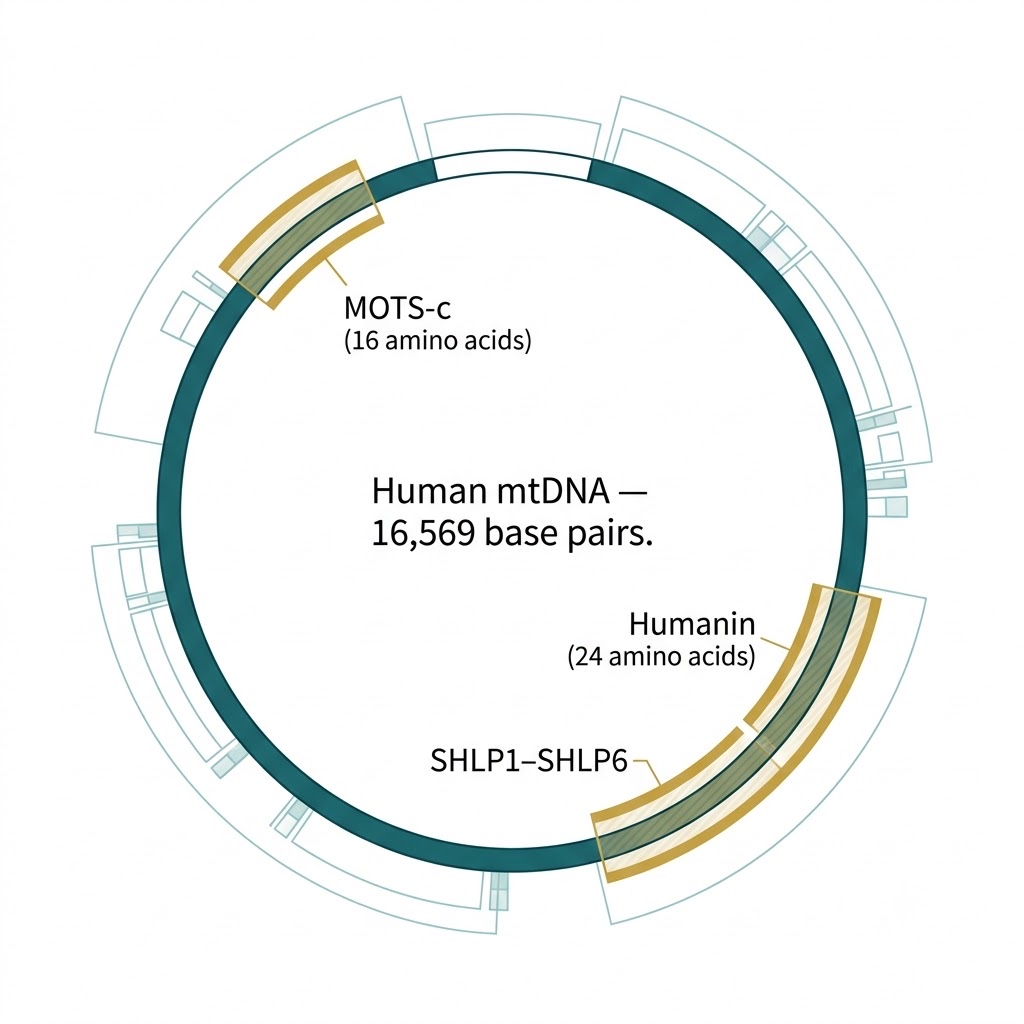
Hidden inside the 16,569 letters of mitochondrial DNA are "genes within genes." Humanin and the six SHLPs are located in the 16S rRNA region; MOTS-c is tucked within the 12S rRNA gene.
Here is why this thrilled geroscientists rather than only marketers. These peptides are not foreign chemicals. They are hormonal signals your own cells transcribe, and their levels fall as you age.[5][16] Cohen describes MDPs as regulators of many of the core processes of aging — molecules that decline in older organisms and, when given back to old animals, improve how those animals function.[6] That is the optimistic heart of the field: what the body loses over time may be possible to restore with the body's own language. The rest of this article is about how far that promise has actually been carried — and it has been carried further than most people realize.
The five peptides, and where each one stands
Below is a working map of the five most-discussed molecules. The right-hand column — where the human evidence actually sits — is the one that separates a data-driven plan from a hopeful guess, and it rewards a careful read.
Peptide
What it does (mechanism)
Most exciting findings
Where the evidence stands
SS-31 / Elamipretide
Binds and stabilizes cardiolipin in the inner mitochondrial membrane; tunes the electron transport chain, lowers ROS, lifts ATP
Restored aged-mouse muscle energetics to youthful levels in one hour; FDA-approved 2025 for Barth syndrome
Human-validated & approved for one rare disease; broad myopathy trial missed its primary endpoint; longevity use is off-label
MOTS-c
Inhibits the folate cycle to activate AMPK; drives mitochondrial biogenesis and fat burning — an "exercise mimetic"
Surges ~12-fold in human muscle with exercise; late-life dosing extended healthspan in mice
Strong human observational data; no published human efficacy trial yet for administered MOTS-c
Humanin
Cytoprotective and anti-apoptotic; preserves membrane potential; a central insulin sensitizer
Higher levels track with human longevity and sharper cognition; the founding MDP (2001)
Rich human biomarker data; therapeutic analogs remain preclinical
SHLP2
Cuts apoptosis and ROS; sensitizes insulin centrally and peripherally; supports biogenesis
Improved mitochondrial metabolism in cells; levels fall with age
Preclinical (cell and rodent)
SHLP3
Drives ERK signaling; raises oxygen consumption and ATP; anti-apoptotic
Boosted cellular respiration and survival in stressed cells
Preclinical (cell and rodent)
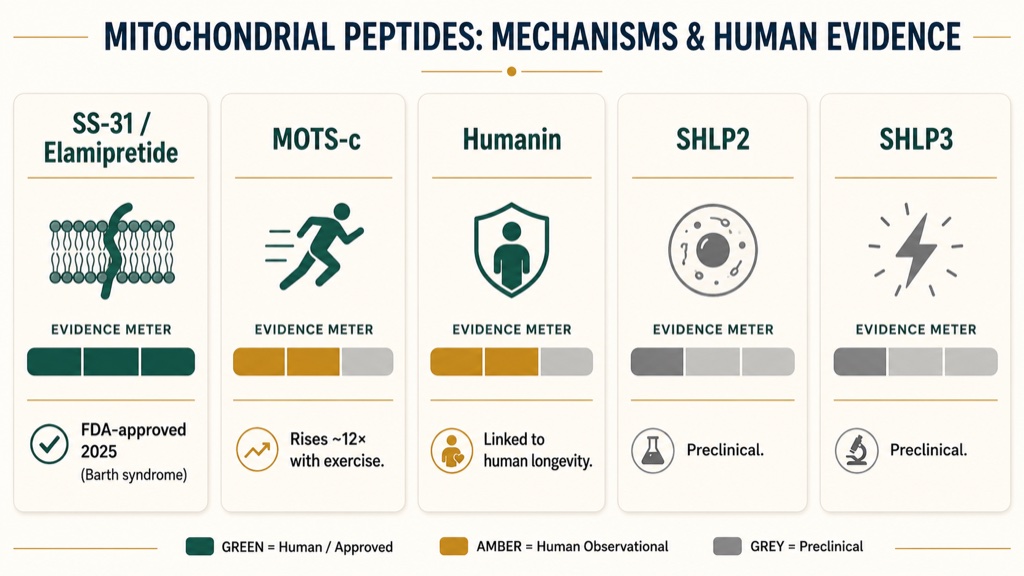
The five most-discussed mitochondrial peptides at a glance. Only SS-31 (elamipretide) has reached FDA approval — for one rare disease — while the others range from strong human signals to promising early-stage research.
SS-31 (Elamipretide): the one that graduated
SS-31 is the field's proof that this biology becomes medicine. A synthetic tetrapeptide from the Szeto-Schiller family — invented by Dr. Hazel Szeto at Weill Cornell — it performs a beautiful trick of targeting: it concentrates thousands of times over inside the inner mitochondrial membrane and binds cardiolipin, the signature lipid that keeps the cristae folded and the electron transport chain humming. Stabilize cardiolipin and electron "leak" drops, reactive oxygen species fall, and ATP output climbs.[11][22]
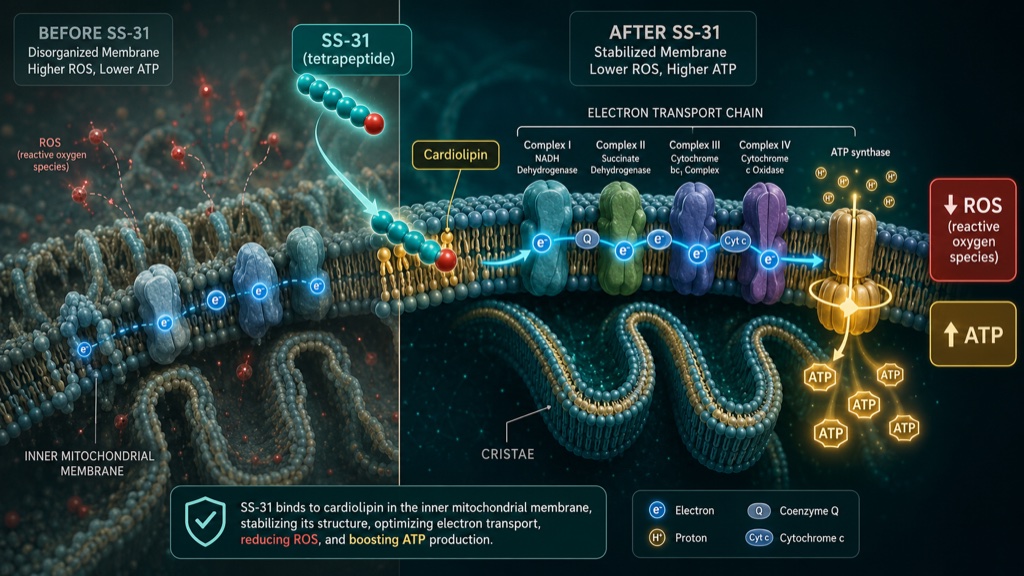
SS-31's elegant trick: it concentrates inside the inner mitochondrial membrane and binds cardiolipin — the lipid that keeps the cristae folded and the electron transport chain efficient. In aged animals, the result is striking: mitochondrial energetics restored to youthful levels within an hour.[10]
The preclinical results are the kind that make researchers sit up. In a 2013 Aging Cell study, David Marcinek and Peter Rabinovitch's University of Washington team gave a single dose of SS-31 to 27-month-old mice and restored their skeletal-muscle mitochondrial energetics to youthful levels within one hour — with no effect on young muscle, a hallmark of a true repair mechanism. Eight days of treatment raised whole-animal endurance.[10] Later work echoed the theme: reversed redox stress and better exercise tolerance in old mice,[12] and rescued blood-flow coupling and cognition in aged brains.[13]
Then came the human validation — and, revealingly, a caveat that turns out to be the article's punchline. The drug's real benefit in Barth syndrome, an ultra-rare cardiolipin disorder, earned FDA accelerated approval in September 2025 as Forzinity, from Stealth BioTherapeutics; CEO Reenie McCarthy called it the first approved mitochondria-targeted therapeutic.[4] Yet its large Phase 3 trial in general mitochondrial myopathy (MMPOWER-3, 218 patients) failed to meet its primary endpoints.[14] Same molecule, same mechanism — brilliant in one population, unremarkable in another. Hold that thought.
MOTS-c: exercise, distilled into a molecule
If SS-31 is the pharmacologist's peptide, MOTS-c is the athlete's, and it may be the single most exciting molecule in exercise biology. Discovered in 2015 by Changhan David Lee and Pinchas Cohen, this 16-amino-acid peptide activates AMPK — the cell's master energy sensor — driving mitochondrial biogenesis, fat oxidation, and glucose uptake. In its debut Cell Metabolism paper, MOTS-c prevented diet-induced obesity and reversed age-dependent insulin resistance in mice.[8] Small wonder it earned the nickname "exercise mimetic."
Read More Scientific Researchfrom LongevityPlan.AI.
Read more scientific research from LongevityPlan.AI, or buy peptides from our shop.
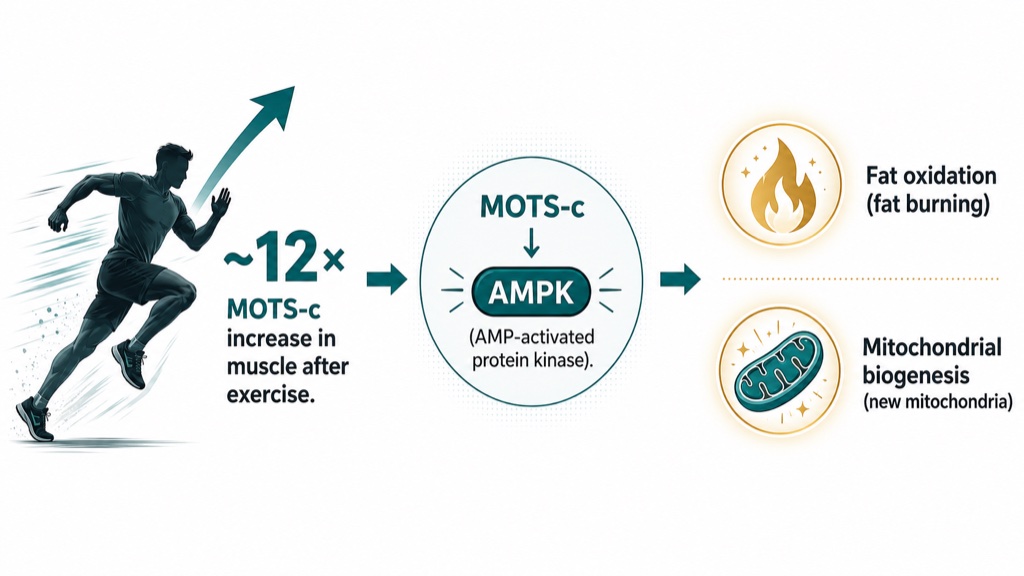
MOTS-c is exercise, distilled into a molecule. A single hard workout raises it roughly twelvefold in human muscle,[9] switching on AMPK — the cell's master energy sensor — to burn fat and build new mitochondria. The best-proven way to raise your MOTS-c is still the oldest: move.
What makes MOTS-c remarkable is that it is demonstrably a human molecule of exertion. In a 2021 Nature Communications study, a single bout of exercise raised MOTS-c in human skeletal muscle roughly twelvefold.[9] In aged mice, intermittent MOTS-c dosing begun very late in life increased physical capacity and healthspan;[9] a follow-up showed it accumulates in trained muscle and sharpens acute performance.[20] This is a peptide your body already fires off when you sprint — which is both its scientific charm and its most practical lesson. The human data so far describe your own peptide responding to training; controlled efficacy trials of administered MOTS-c haven't yet been published.[9] That gap is an invitation to watch closely, and a reminder that the best-proven way to raise your MOTS-c today is also the oldest: move.
Humanin: the founder, and the perfect illustration of destiny in the genome
Humanin, identified in 2001, was the very first MDP — a cytoprotective, anti-apoptotic peptide that shields cells and preserves mitochondrial membrane potential under stress.[5][17] Its human story is unusually rich: circulating humanin declines with age, and studies co-authored with Nir Barzilai at Albert Einstein College of Medicine find more favorable humanin profiles in the exceptionally long-lived and their children.[16] Most striking of all, Cohen's group identified a single genetic variant in the humanin-coding region that lowers a person's humanin levels and associates with earlier cognitive decline.[6] One letter of DNA, a different trajectory of aging. Remember that, too.
SHLP2 and SHLP3: the promising frontier
The small humanin-like peptides emerged when the same USC team computationally scanned the humanin region and found six more peptides — pronounced, delightfully, "schleps."[7] In the foundational 2016 Aging study led by Laura Cobb, SHLP2 and SHLP3 reduced apoptosis and reactive oxygen species and improved mitochondrial metabolism in cells; SHLP2 behaved as an insulin sensitizer, and its levels declined with age.[16] SHLP3 supports oxygen consumption and ATP through ERK signaling.[5] Both are early-stage — cell and rodent work, no human trials — but the trajectory is upward, and they represent exactly the kind of frontier a forward-looking practitioner keeps an eye on.
The real headline: your genome, not the molecule, decides
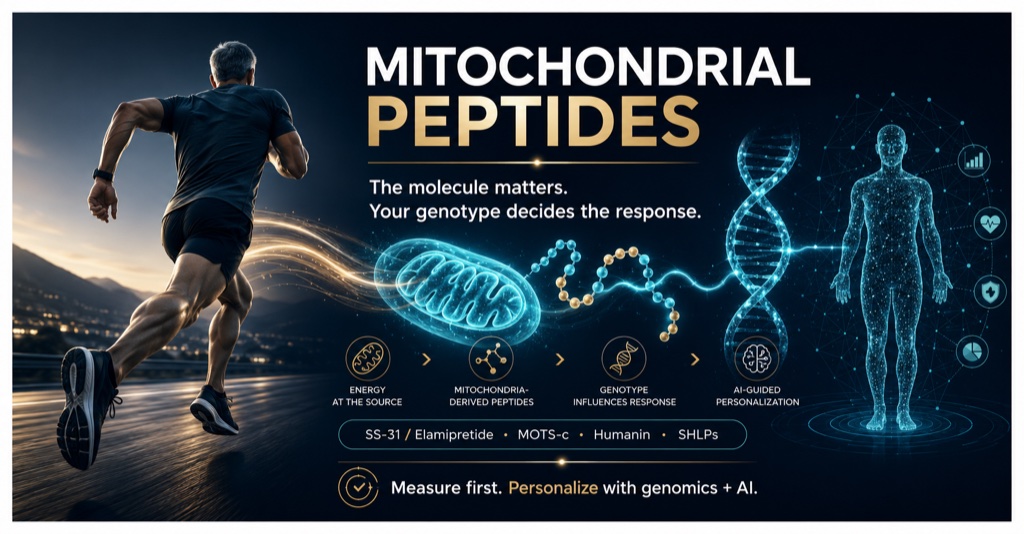
Now collect the clues the story kept dropping. Elamipretide dazzled in Barth syndrome but missed in general myopathy — and a post-hoc analysis revealed why: it clearly helped patients with a specific mtDNA subtype, enough that its makers launched a genotype-selected follow-up trial, NuPOWER.[14][15] A single humanin variant reshapes a person's peptide levels and dementia risk.[6] Peptide profiles differ in the exceptionally long-lived.[16] And a nine-time All-Star shrugs that money can't buy what LeBron has, because "everybody doesn't have the genetics."[2]
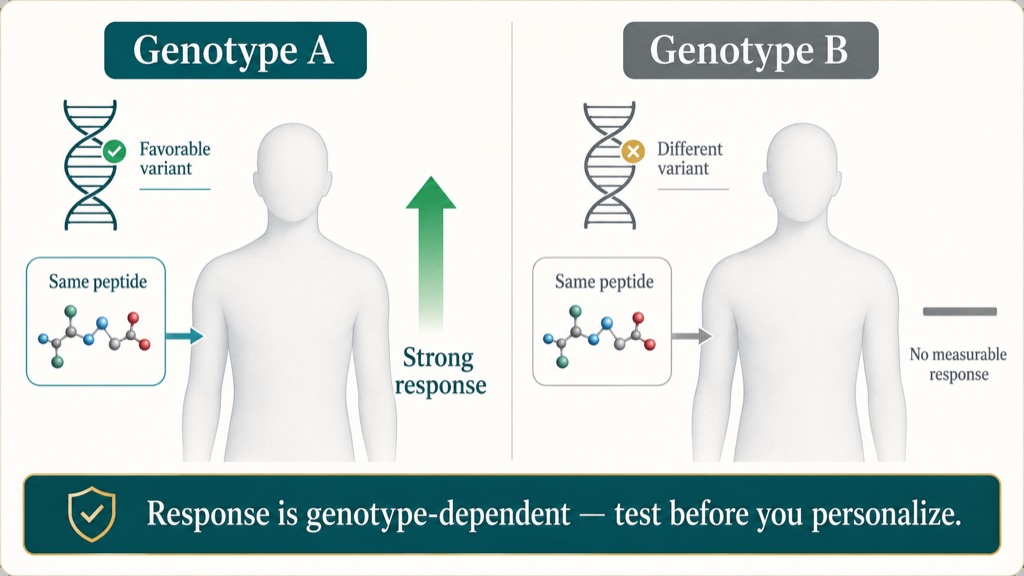
Same molecule, different destiny. Elamipretide helped patients with one mtDNA subtype and missed in others;[15] a single humanin gene variant can lower your peptide levels for life.[6] Your genome, not the molecule itself, determines whether a peptide works.
The pattern is unmistakable, and it is the most important idea in modern peptide science: response to mitochondrial peptides is genotype-dependent. The molecule is not the variable that matters most. You are. Your mitochondrial haplogroup, your nuclear variants, your cardiolipin composition — these determine whether a given peptide is a key that fits your lock or a key that fits someone else's. This is why a serious protocol begins with genomic and biomarker assessment, not a syringe. It is the honest, and frankly more exciting, answer to "will this work?" — because for the right person, matched correctly, the upside is real. Remarkably, the rare-disease clinic reached this conclusion before the wellness industry did: MMPOWER-3's own investigators concluded that genetic subtype must drive trial design.[15] The luxury longevity market is being handed the blueprint by pharmacology itself — test first, then personalize.
The translators: why the best coaches and clinicians own this science
Here is the part the headlines miss. A peptide is inert until someone turns it into a plan, a measurement, and a result — and that someone is rarely a chemist. It is the weight-loss coach who understands why AMPK activation and protein timing decide whether a client keeps muscle while losing fat. The performance coach who reads a VO2 trend against a training block. The dietitian who knows that mitochondrial biogenesis is fed at the table. The executive coach and nutritionist who translate a lab panel into a Monday-morning routine a busy founder will actually keep. These professionals are the connective tissue of longevity, and this science makes them dramatically more valuable to the clients who trust them.
The infrastructure that lets them do it has three layers. The sensor layer gathers objective truth — VO2 max (the metric most strongly tied to how long and how well you live), DEXA body composition, continuous glucose, and metabolic and inflammatory labs; a Cardiorespiratory Digital Twin™ gives that stream a shape. The intelligence layer fuses those readings with a person's genomic profile and runs predictive modeling — estimating, for instance, whether someone's genotype resembles that of elamipretide responders or non-responders before a single dose is considered. And the human layer closes the loop: a Coach / Practitioner interpreting the model alongside an Athlete / Patient, adjusting to what the biomarkers actually do. Stack those layers, and you get a Digital Twin for Predictive Peptide Performance™ — a model that asks, before anything is administered, whether a given Peptide Therapy is likely to work for this person.

From data to decision. A sensor layer captures objective biology, an intelligence layer fuses it with your genome to predict what will work, and the Coach / Practitioner turns the model into a plan the Athlete / Patient can live by.
For organizations, the same logic scales. A Corporate Wellness Program built on measurement rather than perks is, in effect, an investment in the productive healthspan of its most experienced people — the executives and specialists whose judgment compounds with age, provided their energy keeps pace. The coaches and clinicians fluent in this science are the ones who will deliver it. Their edge is not access to molecules; anyone can buy those. Their edge is knowing, for a specific human, which molecule, whether the evidence supports it, and how to prove it worked.
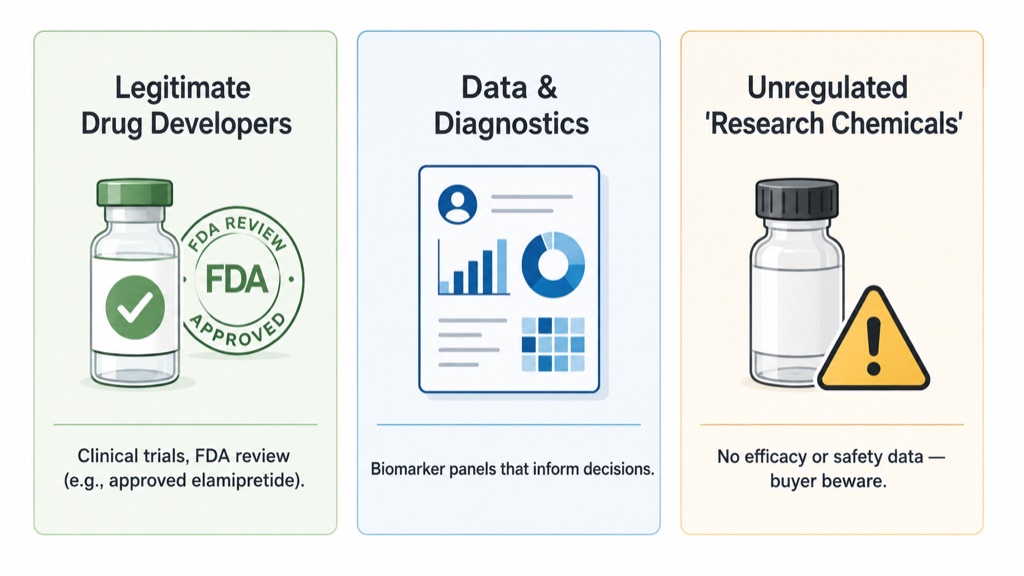
Know who you're buying from. Source your science from clinical developers and your data from diagnostics platforms — and never buy molecules on price alone.
The strategic read for a discerning consumer or the professional advising them: source your science from the first camp, your data from the second, and your molecules only through legitimate, physician-supervised, quality-controlled channels. The frontier is genuinely exciting; the way to enjoy it safely is to bring measurement and supervision to it.
The long game
Return to where we started. LeBron's greatness is genetics, relentless work, and a small fortune spent on recovery — three things compounding at once. What's new is that science can now read the first of those, and increasingly act on it. The tools he leans on — cold, heat, oxygen, sleep, nutrition — are the accessible foundation available to anyone. Mitochondrial peptides are the frontier just beyond it, and the discipline that unlocks the frontier is the same one that made him: measure honestly, respect your own biology, and let the data lead.

Longevity by design. The people who thrive in the next decade won't inject the most peptides — they'll be the ones who sequenced their genome, built their baseline, and matched the molecule to the person. The best time to start is while your mitochondria are still writing good news.
The mitochondrion spent two billion years learning to power your cells with elegant efficiency. We are only now learning to read the messages it sends — and, in one FDA-approved case, to answer them. The people who thrive in the next decade of longevity won't be the ones who inject the most peptides. They'll be the ones who sequenced their genome, built their baseline, and matched the molecule to the person. Starting that work while your mitochondria are still writing you good news is, quietly, the most optimistic decision you can make.
This article is educational and is not medical advice. Apart from FDA-approved elamipretide (for Barth syndrome), the peptides discussed are not approved for anti-aging or performance use, and several have limited or no human data. Consult a licensed physician before beginning any protocol.
Sign up for FREE daily Longevity Club Workshops, or join the Affiliate Program (pays 20%). Subscribe to the Longevity & Peptide Optimization Newsletter.
About the Author
Tony Medrano is CEO and co-founder of LongevityPlan.AI, a platform that integrates performance and health data and leverages proprietary Digital Twin for Predictive Peptide Performance™ technology, wearable data, and biomarker data to deliver personalized optimization and longevity recommendations. A 3x technology/AI company CEO with 2 successful exits, Tony has completed 3 Full Ironman Triathlons (140.6 mi) since 2019. He holds degrees from Harvard University, Columbia University, and a JD/MBA from Stanford University, and has worked with the US Olympic Team, the NBA, NFL, MLB, NASA, Google, Microsoft, and Netflix, among others. He also served as a US Navy Officer commanding an emergency response team aboard a destroyer.
Disclaimer: This article is for education and is not medical advice. Of the peptides discussed here only elamipretide has advanced through late-stage clinical trials, and the rest remain investigational with little or no human data. Nothing here recommends a specific therapy; decisions of this kind belong with a qualified clinician working from your own laboratory data.
Endnotes and sources
- LeBron James body-maintenance investment (reported ~$1.5M/year; originally cited by Bill Simmons, 2016; addressed by James in Netflix's "Starting 5," 2024, where he neither confirmed nor denied the figure). Fortune/AOL, 2024.
- Lou Williams on LeBron James's longevity and genetics ("Everybody doesn't have the genetics to do that"). Basketball Network, 2025.
- Age-related decline in VO₂ max and blood oxygen-carrying capacity, and LeBron James's record 23rd season. MedicalXpress, Oct 2025.
- Stealth BioTherapeutics. "FDA Accelerated Approval of FORZINITY (elamipretide HCl), the First Therapy for Barth Syndrome." Press release, Sept 19, 2025; FDA NDA 215244 approval letter.
- Miller B, Kim SJ, Kumagai H, Yen K, Cohen P. "Mitochondria-derived peptides in aging and healthspan." J Clin Invest. 2022;132(9):e158449.
- Cohen P. "Ask the Expert" interview on mitochondrial discoveries and aging research (humanin variant and cognitive decline). American Federation for Aging Research (AFAR).
- USC Leonard Davis School of Gerontology / USC Today. "Newly discovered proteins may protect against age-related illnesses" (identification of SHLP1–6).
- Lee C, Zeng J, Drew BG, Sallam T, Martin-Montalvo A, Wan J, et al. "The mitochondrial-derived peptide MOTS-c promotes metabolic homeostasis and reduces obesity and insulin resistance." Cell Metab. 2015;21(3):443–454.
- Reynolds JC, Lai RW, Woodhead JST, et al. "MOTS-c is an exercise-induced mitochondrial-encoded regulator of age-dependent physical decline and muscle homeostasis." Nat Commun. 2021;12(1):470.
- Siegel MP, Kruse SE, Percival JM, Goh J, White CC, Hopkins HC, Kavanagh TJ, Szeto HH, Rabinovitch PS, Marcinek DJ. "Mitochondrial-targeted peptide rapidly improves mitochondrial energetics and skeletal muscle performance in aged mice." Aging Cell. 2013;12(5):763–771.
- Zhao K, Zhao GM, Wu D, et al. "Cell-permeable peptide antioxidants targeted to inner mitochondrial membrane inhibit mitochondrial swelling, oxidative cell death, and reperfusion injury." J Biol Chem. 2004;279(33):34682–34690.
- Campbell MD, Duan J, Samuelson AT, et al. "Improving mitochondrial function with SS-31 reverses age-related redox stress and improves exercise tolerance in aged mice." Free Radic Biol Med. 2019;134:268–281.
- Tarantini S, et al. "Treatment with the mitochondrial-targeted antioxidant peptide SS-31 rescues neurovascular coupling responses and improves cognition in aged mice." Aging Cell. 2018;17(2):e12731.
- MMPOWER-3 investigators. "Efficacy and Safety of Elamipretide in Individuals With Primary Mitochondrial Myopathy: The MMPOWER-3 Randomized Clinical Trial." Neurology. 2023 (NCT03323749; primary endpoints not met).
- "Genotype-specific effects of elamipretide in patients with primary mitochondrial myopathy: a post hoc analysis of the MMPOWER-3 trial." Orphanet J Rare Dis. 2024;19:421 (basis for the genotype-selected NuPOWER Phase 3 trial).
- Cobb LJ, Lee C, Xiao J, Yen K, Wong RG, Nakamura HK, et al. "Naturally occurring mitochondrial-derived peptides are age-dependent regulators of apoptosis, insulin sensitivity, and inflammatory markers." Aging (Albany NY). 2016;8(4):796–809.
- Hashimoto Y, Niikura T, Tajima H, et al. "A rescue factor abolishing neuronal cell death by a wide spectrum of familial Alzheimer's disease genes and Aβ." PNAS. 2001;98(11):6336–6341 (discovery of humanin).
- Lee C, Kim KH, Cohen P. "MOTS-c: A novel mitochondrial-derived peptide regulating muscle and fat metabolism." Free Radic Biol Med. 2016;100:182–187.
- Kong BS, Min SH, Lee C, Cho YM. "Mitochondrial-encoded MOTS-c prevents pancreatic islet destruction in autoimmune diabetes." Cell Rep. 2021;36(4):109447.
- Hyatt JK. "MOTS-c increases in skeletal muscle following long-term physical activity and improves acute exercise performance after a single dose." Physiol Rep. 2022;10(13):e15377.
- Wan W, et al. "Mitochondria-derived peptide MOTS-c: effects and mechanisms related to stress, metabolism and aging." J Transl Med. 2023;21:36 (review).
- "Elamipretide: A Review of Its Structure, Mechanism of Action, and Therapeutic Potential." PMC11816484, 2025.