Peptide Science
·17 min read
The Precision Longevity Peptide Stack
A tour through what actually moves healthspan: the peptides earning their place, the ones still writing their story, and the genomics, digital twins, and AI that turn a shelf of vials into a plan worth following.
By Tony Medrano
This article is for education and is not medical advice.
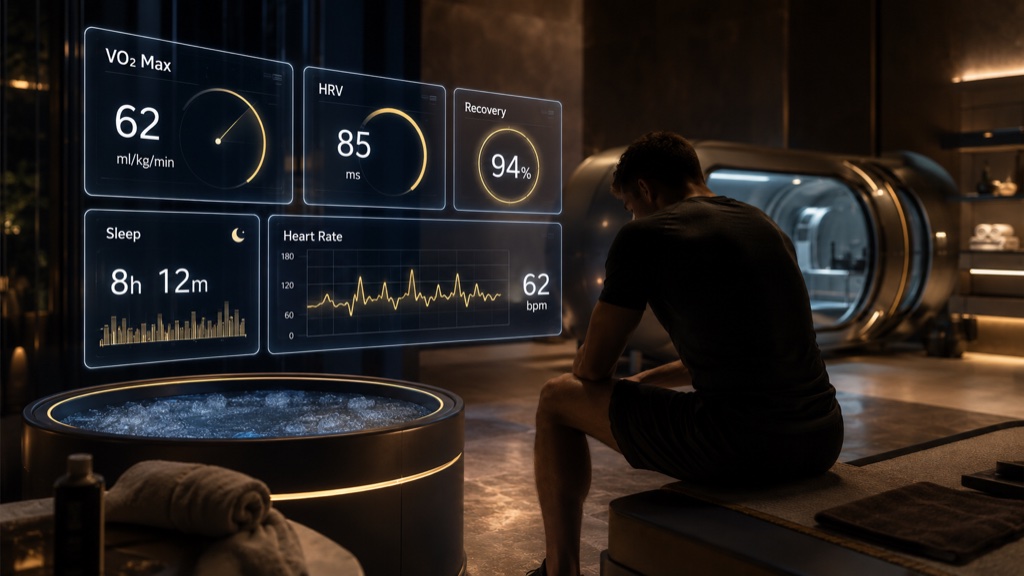
The secret behind elite longevity isn't the price tag — it's the mindset: treat the body as a flagship asset and invest in it with data, not fashion.
1. The people who do this well ask to see the data
At 40 years old, in his 22nd NBA season, LeBron James is still one of the best basketball players alive — a sentence that should be physiologically impossible. For years, the sports world traded a single explanation: that he spends roughly $1.5 million a year on his body. James himself has waved the number off, telling interviewers he has no idea where it came from, though he happily cops to the underlying obsession.[1] And that obsession is the real story. Cryotherapy, hyperbaric oxygen, red-light therapy, ruthless sleep hygiene, a personal team of bodyworkers and chefs — James treats his body the way a founder treats a flagship product: as an asset you invest in relentlessly because everything else depends on it.[1] The dollar figure is a distraction. The logic is the lesson.
That logic now drives an entire economy of people — executives past 40, physicians, aesthetic-medicine clients, aspirational athletes, and anyone rebuilding after an injury or a hard couple of decades — who have decided their healthspan is worth managing like a portfolio. They tend to be sharp, and they have grown allergic to hype. For them, the most useful sentence in the whole longevity conversation came from Dr. Eric Topol, the Scripps Research cardiologist and geneticist whose 2025 book Super Agers became a New York Times bestseller by separating the science of aging from its surrounding noise.[2] His entire standard fits in six words: "Show me the data."[3]
This guide adopts that standard. It walks through the peptides, diagnostics, genomics, and AI a serious person might assemble — and grades each one honestly by the weight of evidence behind it, because the exciting truth is that the honest version of this story is more compelling than the exaggerated one. A frame to carry throughout: the goal is not lifespan, the raw count of years, but healthspan — the years you stay strong, sharp, and free of disease. Topol organizes the science of extending it around five levers: lifestyle, cells, omics, artificial intelligence, and drugs.[2] Four of the five are things you measure and model, not things you swallow. Keep that ratio in mind. It is the whole plot.
2. The foundation no one can sell you
Before a single peptide enters the conversation, two variables deserve top billing, because no injectable on earth outperforms them for lengthening a capable life — and they are exactly what LeBron's routine is built to protect.
The first is cardiorespiratory fitness, measured as VO₂max — the maximum volume of oxygen your body can use under maximal effort. In 2018, Cleveland Clinic researchers published an analysis in JAMA Network Open of 122,007 adults who underwent treadmill testing and were followed for a median of 8.4 years.[4] Fitness was inversely associated with mortality, with no observed upper limit of benefit; the survival gap between the least-fit and the most-fit was on the order of a fivefold difference in risk, larger than the risk associated with smoking, diabetes, or hypertension in the same data.[4] A 2022 study of more than 750,000 veterans reached the same conclusion on an even greater scale.[5] If longevity has a single most powerful dial, this is it.
The second is muscle, specifically the strength and power you carry into later decades. Dr. Stuart Phillips of McMaster University, cited more than 85,000 times for his work on aging muscle, states the hierarchy with unfashionable bluntness: "Resistance training is king, and good nutrition is queen."[6] Muscle declines at roughly 1% per year after midlife and falls off a cliff after any illness or immobility, yet Phillips is adamant that the rate is not fixed.[6] He reframes the gym as compounding interest: "It's an investment in the future you" — a small strength edge built now can be the reason a person lives independently five or six years longer.[7]
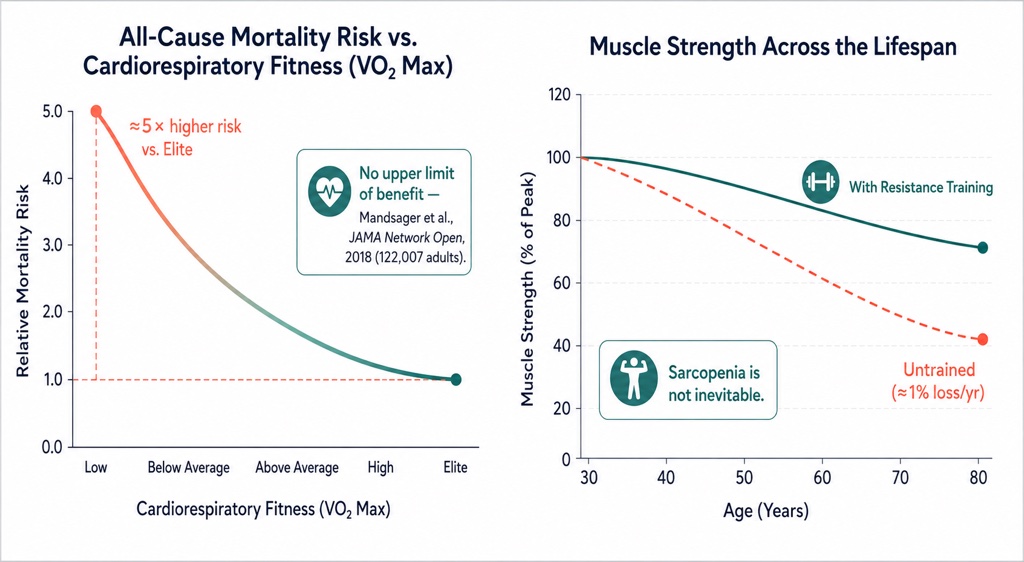
Before any peptide: aerobic capacity and muscle are the two most powerful, best-proven levers on how long — and how well — you'll live.
Why open a peptide-focused guide with exercise? To fix the yardstick. Peptides, hormones, and supplements are accelerants layered on top of a trained cardiovascular system and preserved muscle — never replacements for them. Any program that inverts that order is selling the garnish as the meal. Everything that follows is graded against this foundation.
3. The peptide evidence spectrum
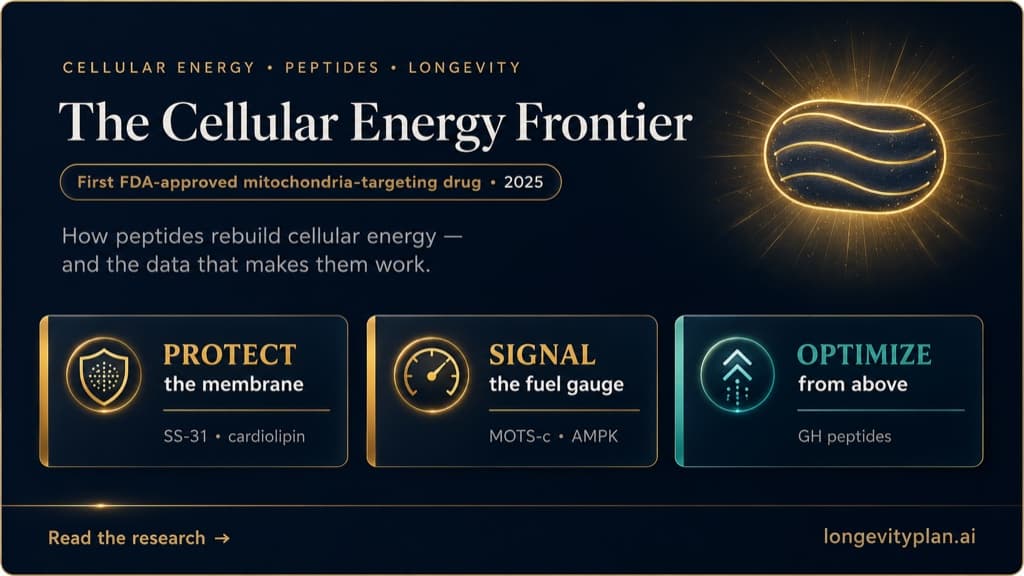
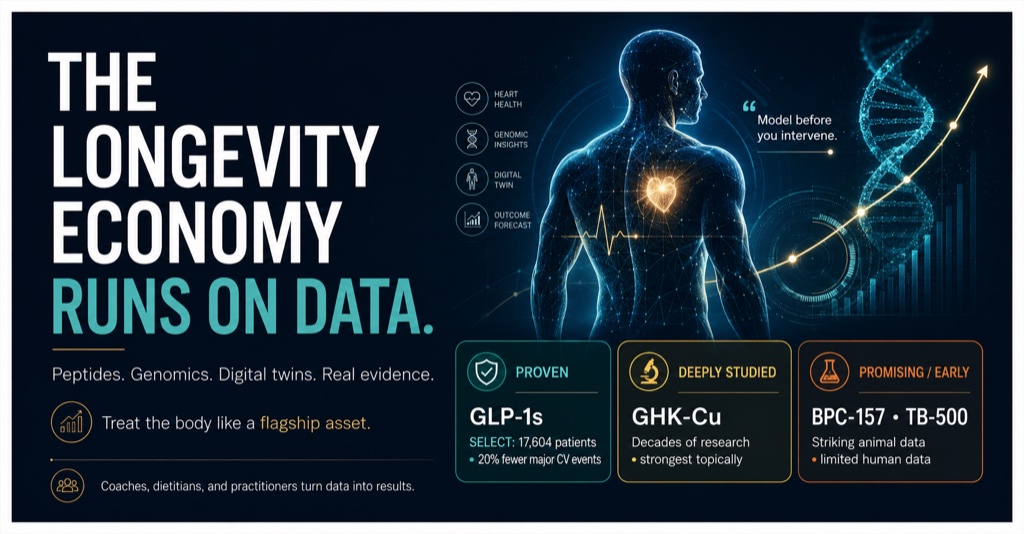
Now the exciting part — and here is the reframe that changes how you read the whole category. Peptides are not fringe biohacking. They are among the most important frontiers in medicine, and they span a spectrum: from FDA-approved blockbusters proven in tens of thousands of patients to compounds with striking animal data and a passionate following but thin human evidence. The optimism is earned because the top of this spectrum has already rewritten medicine. The discipline is in knowing where on the spectrum any given molecule actually sits. Walk it from proven to promising.
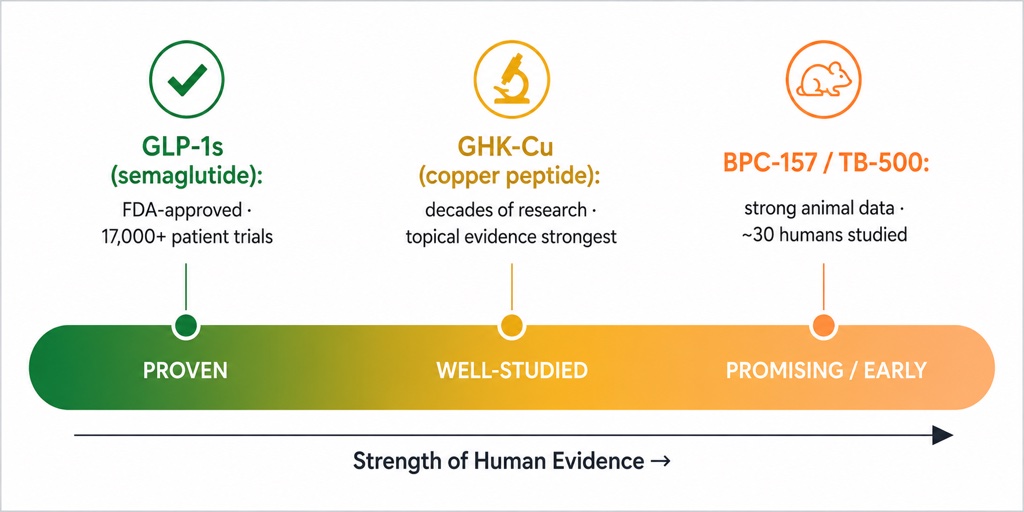
Peptides aren't one thing. They span a spectrum — and knowing where a molecule truly sits is what separates a plan from a purchase.
Proven: the GLP-1 revolution
The most consequential drug class of the decade is a peptide class. GLP-1 receptor agonists — semaglutide, tirzepatide, and their successors — are peptides, full stop. The landmark is Novo Nordisk's SELECT trial, published in The New England Journal of Medicine in 2023, which randomized 17,604 adults with overweight or obesity and cardiovascular disease but no diabetes to once-weekly semaglutide or placebo.[8] The result, reported by Cleveland Clinic's Dr. A. Michael Lincoff, was a 20 percent reduction in major cardiovascular events — heart attack, stroke, cardiovascular death — alongside roughly 9.4 percent weight loss sustained out to four years, and a related analysis showing a 73 percent drop in progression to diabetes.[8][9] Topol devotes real space in Super Agers to GLP-1s precisely because their reach — into inflammation, the cardiovascular system, and the brain — extends far past the scale.[2] This is what the summit of the spectrum looks like: a peptide. Everything else in the category should aspire to this bar.
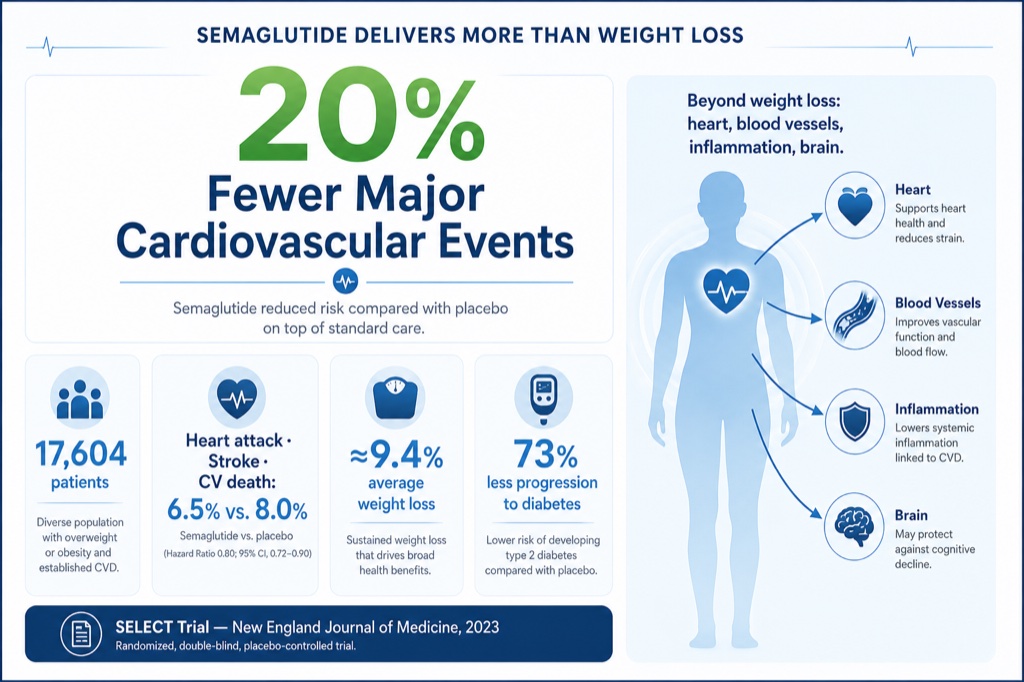
GLP-1 receptor agonists are peptides, and the SELECT trial is what the top of the evidence pyramid looks like.
Deeply studied: the copper tripeptide
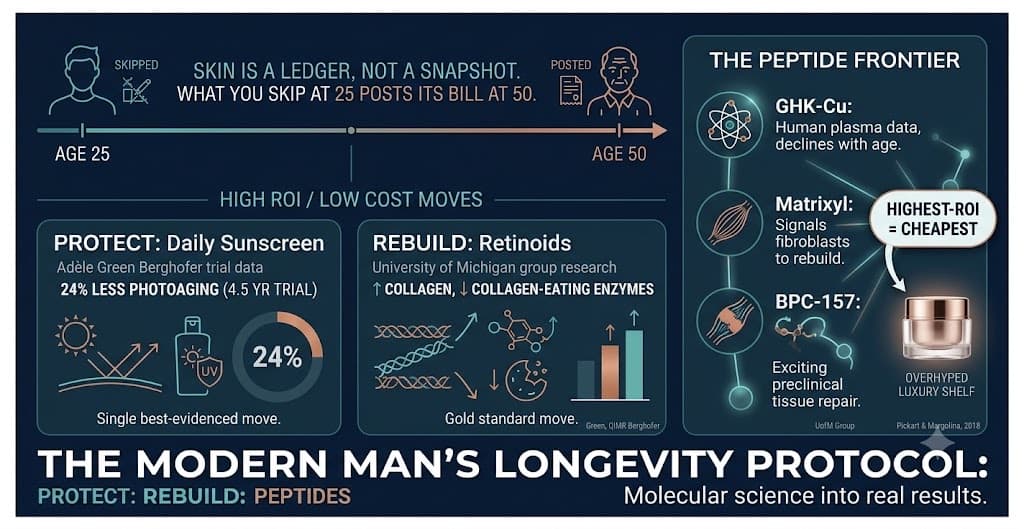
One rung down, but with an unusually rich research history, sits GHK-Cu — glycyl-L-histidyl-L-lysine bound to copper. Isolated from human plasma in 1973 by biochemist Loren Pickart, who noticed that plasma from younger donors could coax aged tissue into behaving young again, GHK-Cu is what he calls a "biological signal of tissue damage": when tissue is injured, levels rise and orchestrate repair — recruiting fibroblasts, driving collagen synthesis, sprouting new blood vessels.[10] The molecule's plasma concentration declines with age, the classic "you stopped making it" arc — except here the arc is backed by work. A Broad Institute analysis using the Connectivity Map database found GHK shifts the expression of more than 4,000 human genes, broadly turning up tissue-remodeling and antioxidant programs while quieting inflammatory ones.[11] On the clinical side, a randomized 12-week trial of a GHK-Cu cream in Dermatologic Surgery documented measurable improvement in aging skin, and foundational work established its collagen-stimulating activity in human cells.[12][13]
Read More Scientific Researchfrom LongevityPlan.AI.
Read more scientific research from LongevityPlan.AI, or buy peptides from our shop.
Here is the distinction every practitioner should be able to explain in one breath: GHK-Cu's evidence and its clean regulatory status are strongest for topical use. In the U.S., it sits on the FDA's Category 1 list of substances permitted for compounding — but explicitly not for injectable routes.[14] A copper-peptide serum after microneedling and a copper-peptide injection are not the same product with the same evidence, however similar the label reads. Treat them as two different questions.
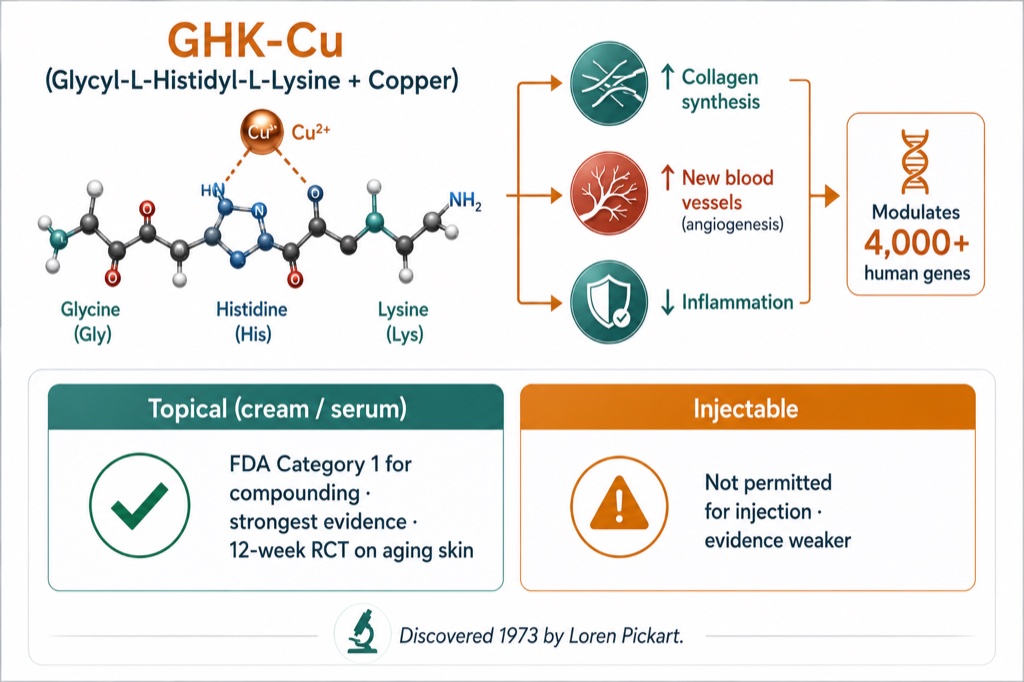
GHK-Cu is one of the best-researched regenerative peptides — but a serum and an injection are two different questions with two different answers.
Promising and early: the regenerative peptides
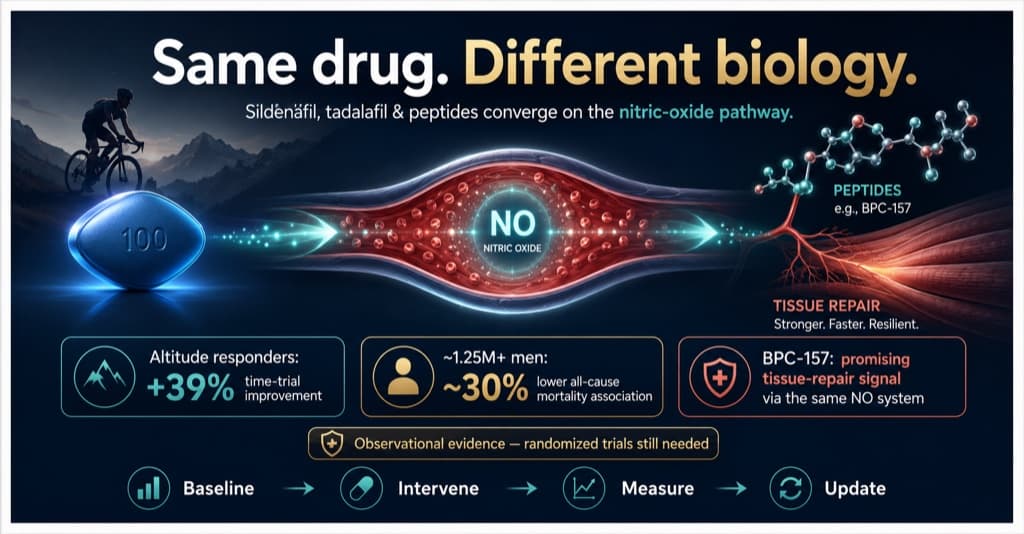
Now the compounds that fill the group chats — and where enthusiasm and honesty have to travel together. BPC-157 is the headliner, a synthetic 15-amino-acid fragment of a protein in human gastric juice, and its animal literature is genuinely exciting: across numerous preclinical models, it has accelerated the healing of tendon, muscle, gut lining, and even nerve tissue, promoted angiogenesis, and shown a benign toxicity profile in those models.[15] Proponents and a growing number of clinicians report similar recovery benefits in practice, and the mechanistic story — a naturally-occurring compound that switches on the body's own repair machinery — is exactly the kind of biology worth being hopeful about. TB-500 (a thymosin beta-4 fragment) draws comparable enthusiasm for tissue repair and flexibility.
The honest asterisk is simple and non-negotiable: the human evidence has not caught up to the animal excitement. In the published record, BPC-157 has been studied in roughly 30 people across three small trials.[16] That is a reason for rigorous optimism and careful sourcing, not for the marketing claim that "decades of use without trials" proves safety — the missing trials are the reason safety is still an open question, not a settled one. The regulatory picture reflects that, and it moves fast: the FDA placed BPC-157 in its cautionary Category 2 in 2023, then removed BPC-157, TB-500, and CJC-1295 from that list in April 2026 without approving them or granting Category 1 status, leaving them in a genuine gray zone now under active FDA advisory-committee review.[14][17][18] Competitive athletes face an added consideration — BPC-157 was temporarily banned by WADA in 2022 — so any Peptide Therapy near sport should be in a clinician's hands.[15]
And a quiet standout deserves its moment, because it shows what the promising middle can look like when someone does the homework: collagen peptides. In a randomized, double-blind, placebo-controlled trial, 53 older men with sarcopenia took 15 grams daily for 12 weeks alongside resistance training and gained more lean mass and leg strength than those who received training plus placebo.[19] Oral, inexpensive, unglamorous — and actually trialed in humans. Sometimes the boring peptide has the best paperwork.
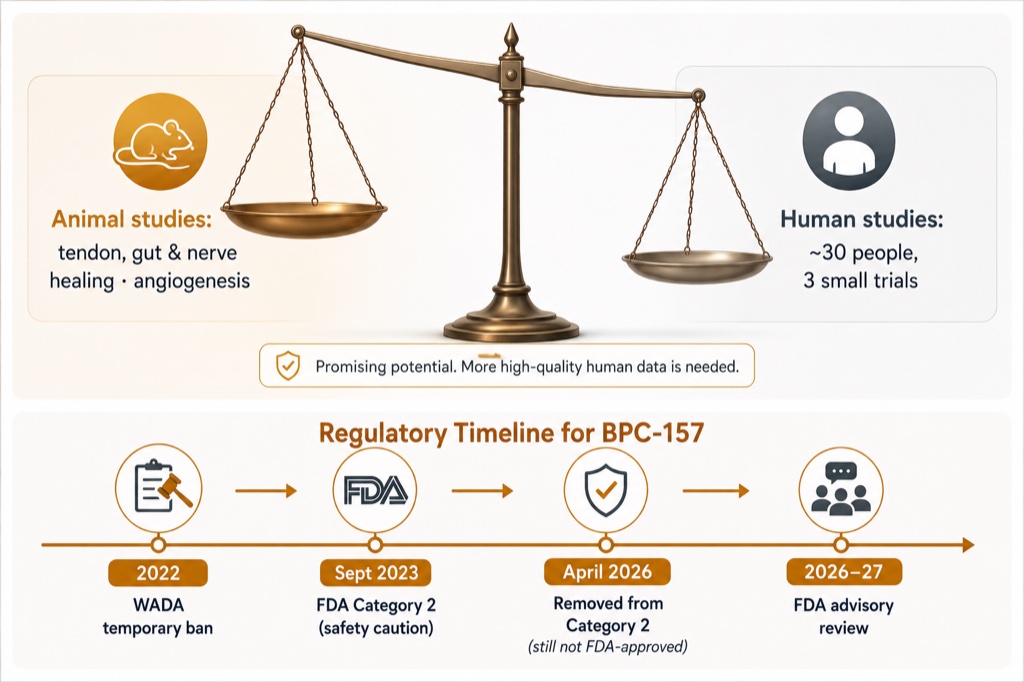
The excitement around regenerative peptides is real — and so is the gap between animal promise and human proof. Optimism, with eyes open.
4. Why personalization is the whole game
Every entry above shares one hidden variable: you. The same intervention lands differently in different bodies, and that is not a slogan — it is one of the best-established facts in pharmacology. Common genetic variation, for instance, in the cytochrome P450 enzymes that metabolize a large share of drugs, means two people can take an identical dose and reach very different blood levels, with correspondingly different benefits and risks. Topol makes the parallel argument about screening: treating every 40-year-old identically ignores that most will never develop the disease being screened for, while the true high-risk few slip through.[2] Precision isn't an upsell; the biology demands it.
Two honest guardrails keep this from tipping into overreach. Pharmacogenomics is far better validated for established drugs than for research peptides — the claim that a gene panel can today forecast your personal response to BPC-157 is aspirational, not settled. And a genome is a static snapshot, while your physiology is a moving target. Which is exactly why the frontier is not genetics alone but genetics as the foundational layer beneath a living, updating model — the premise of a Digital Twin for Predictive Peptide Performance™. Your DNA deals the starting hand; the twin plays it against real, changing data. That brings us to the part of the stack advancing fastest.
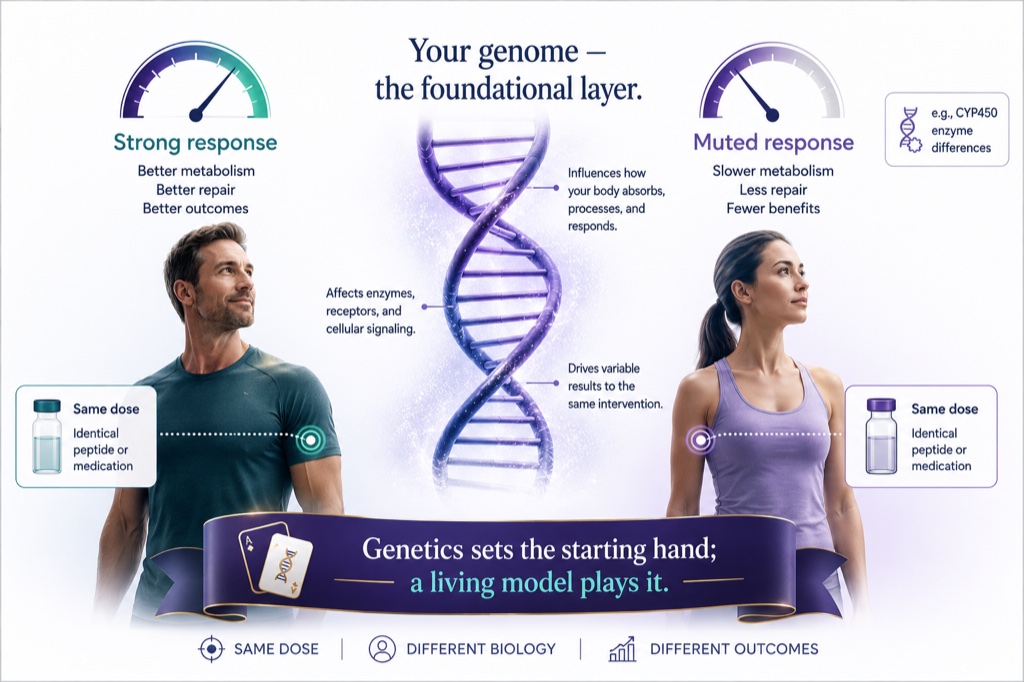
Two people, the same molecule, different results. Genetics is why blanket protocols are blunt instruments — and the foundation on which a personalized model is built.
5. The intelligence layer: digital twins and in silico medicine
The most exciting development in longevity isn't a molecule at all. It is the modeling — building a computational replica of a physiological system, feeding it your data, and simulating outcomes before you intervene. And it is already a regulatory reality.
The proof lies in cardiology. In 2014, Dassault Systèmes launched the Living Heart Project with the FDA, cardiologists, engineers, and regulators to build a validated, fully simulated replica of the human heart, with collaborators including Stanford and UC Berkeley.[20] By 2024, the collaboration published the first FDA-recognized guidance for "in silico" clinical trials: testing a virtual device inside a virtual patient population before a single human is enrolled.[21] As the FDA's Tina Morrison has noted, such simulations have, in some cases, already produced results comparable to human trials — and Dassault has begun layering generative AI on top of them to personalize each simulated twin.[22][23]
Move that architecture from a heart valve maker to a person, and you get a longevity plan worth paying for, running in three layers. The sensor layer is the raw input — blood panels, DEXA body composition, VO₂max, continuous glucose, and the stream from wearables like Oura and WHOOP. The intelligence layer fuses the multi-modal health data into one coherent picture and performs predictive modeling — not just "what is your fitness today," but "what is it trending toward, and what changes the trajectory." A Cardiorespiratory Digital Twin™ built this way turns a folder of disconnected results into a system you can simulate, stress-test, and steer. It is the same logic the FDA already accepts for hearts, applied to the human attached to the heart.
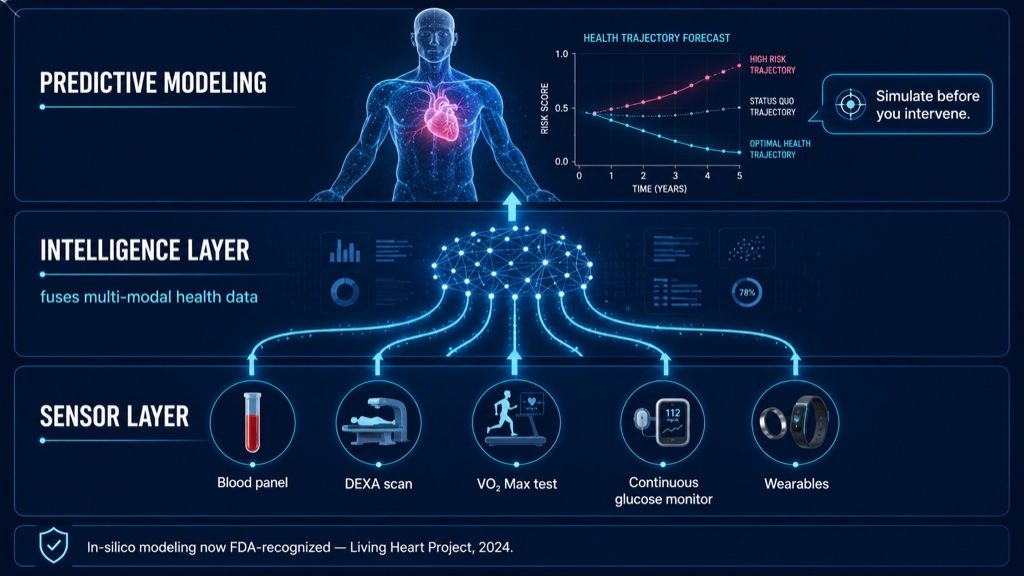
The frontier isn't a molecule — it's the model: raw data becomes a living twin you can simulate, stress-test, and steer.
6. The working loop — and the professionals who run it
Assemble the pieces and a practical rhythm emerges: not a rigid protocol but a control loop. Measure honestly — VO₂max, DEXA, a broad panel, and genomics as a foundational input. Model those inputs into a twin that flags where the trajectory bends toward trouble and which levers actually move it. Intervene in evidence order — the aerobic and strength foundation first, then proven pharmacology where indicated (a GLP-1 for the right cardiometabolic profile), then well-supported adjuncts (topical GHK-Cu after a resurfacing procedure), and only then, with informed consent and clinical oversight, the experimental tier. Then re-test and adjust, which is where AI-powered coaching improvements compound — each cycle of fresh data makes the model smarter, so month twelve is measurably wiser than month one. A static protocol decays; a modeled one learns.
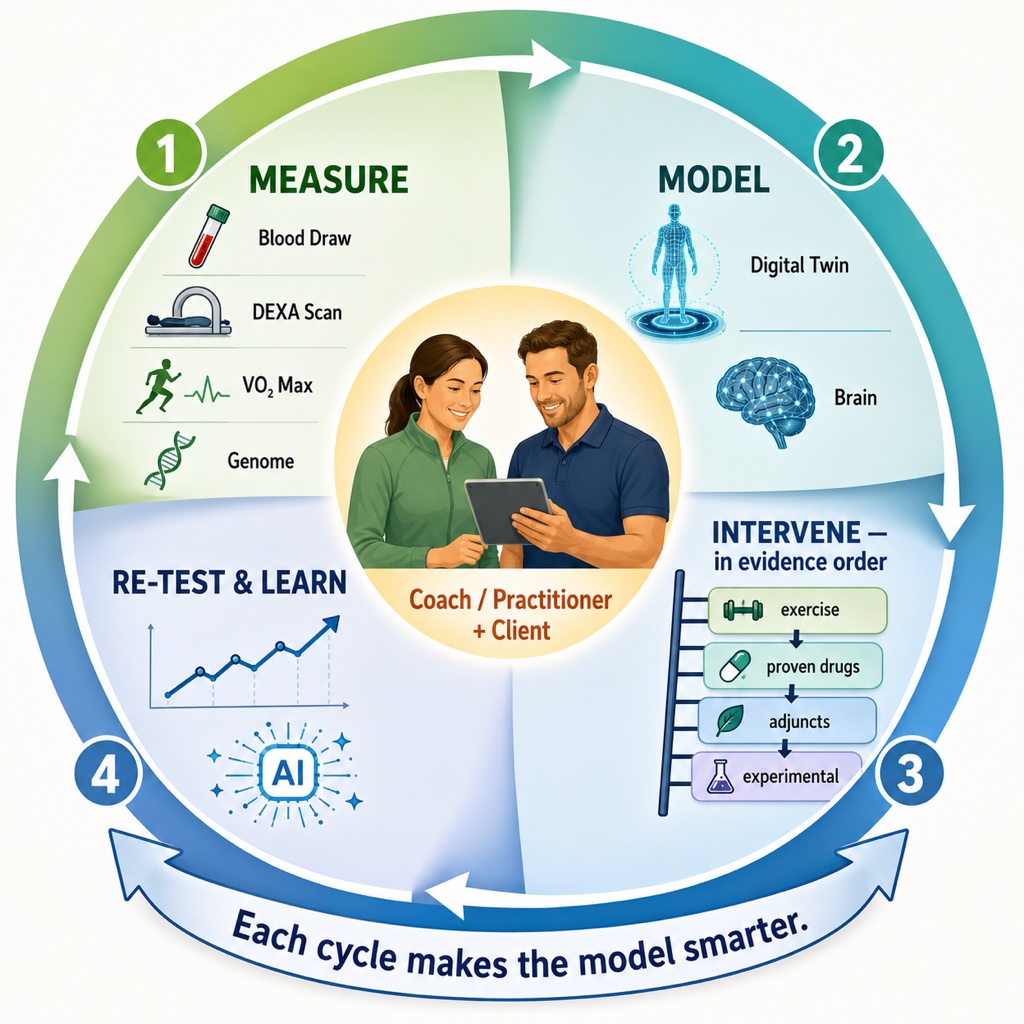
A longevity plan isn't a protocol — it's a loop. And the human guide at the center is what turns data into results.
But a model is inert until a human brings it to life in someone's life — and this is where a specific group of professionals becomes indispensable. The weight-loss coach, the performance coach, the registered dietitian, the executive coach, the nutritionist, the aesthetic and wellness practitioner — these are the people who translate a dense readout into behavior a client will actually sustain, and who hold the relationship where change really happens. Their edge in a crowded, noisy market is precisely scientific fluency: the ability to explain why a GLP-1's benefits run deeper than weight loss, what a copper peptide can and cannot do, where the evidence on a regenerative peptide is thrilling, and where it thins out — and the judgment to loop in a prescribing clinician at exactly the right moment. Data doesn't change anyone; a trusted, well-informed Coach / Practitioner interpreting that data for a specific Athlete / Patient is what changes outcomes. The platforms that will matter are the ones that make these professionals smarter and more credible, not the ones that try to replace them.
The same loop scales past the individual. It is what lets an organization run a Corporate Wellness Program that extends the productive, healthy years of the people it depends on — and what turns a Longevity Club from a status symbol into a shared intelligence system, where pooled, anonymized data sharpens every member's model. Whether the output is a single client's Peptide Longevity Plan™ or a company-wide initiative, the discipline never changes: measure honestly, model rigorously, intervene in evidence order, and let the system learn.
7. The evidence-first ethos
The longevity field's credibility problem is self-inflicted — every overstated claim makes the discerning client trust the whole category a little less. The way out is also the way to win: be the source that shows the data and says plainly where it runs out. Treat proven interventions as the core of a plan, promising ones as calculated bets made with a clinician, and the merely hoped-for as exactly that — while staying genuinely optimistic, because a category whose flagship peptide cuts cardiovascular events by a fifth has earned optimism.
LeBron James doesn't invest in his body because a founder's newsletter told him to. He does it because the return — more years at the top of his game — is worth it, and because he treats recovery with the same seriousness as the work itself. That is the posture available to anyone now, at any age and any starting point: measure, model, and act on evidence rather than fashion. The best time to start modeling your healthspan was a decade ago. The second-best time is before your next blood draw — because in this field, the person who starts measuring earliest gives their future self the most room to work.
Sign up for FREE daily Longevity Club Workshops, or join the Affiliate Program (pays 20%). Subscribe to the Longevity & Peptide Optimization Newsletter.
About the Author
Tony Medrano is CEO and co-founder of LongevityPlan.AI, a platform that integrates performance and health data and leverages proprietary Digital Twin for Predictive Peptide Performance™ technology, wearable data, and biomarker data to deliver personalized optimization and longevity recommendations. A 3x technology/AI company CEO with 2 successful exits, Tony has completed 3 Full Ironman Triathlons (140.6 mi) since 2019. He holds degrees from Harvard University, Columbia University, and a JD/MBA from Stanford University, and has worked with the US Olympic Team, the NBA, NFL, MLB, NASA, Google, Microsoft, and Netflix, among others. He also served as a US Navy Officer commanding an emergency response team aboard a destroyer.
Disclaimer: This article is for education and is not medical advice. The compounds discussed range from FDA-approved therapies to investigational peptides without human trials; the legal, appropriate, and safe use of any of them should be determined with a licensed clinician who can evaluate your individual situation.
Endnotes and sources
- LeBron James recovery/investment routine and his response to the reported $1.5M figure: Fortune, "LeBron James reportedly spends $1.5 million a year on his biohacking regimen," 2024, https://fortune.com/well/article/lebron-james-biohacking-regimen-routine/ ; James neither-confirms-nor-denies via Netflix's Starting 5, per Lakers Nation, https://lakersnation.com/does-lebron-james-really-spend-1-5-million-per-year-on-his-body/
- Topol E. Super Agers: An Evidence-Based Approach to Longevity. Simon & Schuster, 2025. Scripps Research summary: https://www.scripps.edu/news-and-events/press-room/2025/20250506-topol-super-agers.html
- Topol quoted at the Institute for Systems Biology event with Lee Hood, Nov. 2025: https://isbscience.org/news/health/healthspan-and-longevity/eric-topol-super-agers-longevity-prevention/
- Mandsager K, Harb S, Cremer P, Phelan D, Nissen SE, Jaber W. Association of Cardiorespiratory Fitness With Long-term Mortality. JAMA Netw Open. 2018;1(6):e183605. https://jamanetwork.com/journals/jamanetworkopen/fullarticle/2707428
- Kokkinos P, et al. Cardiorespiratory Fitness and Mortality Risk Across the Spectra of Age, Race, and Sex. J Am Coll Cardiol. 2022;80(6):598–609.
- Phillips S, quoted in "The Science of Staying Strong," ASBMB Today, Dec. 2025: https://www.asbmb.org/asbmb-today/science/122625/the-science-of-staying-strong
- Phillips S, Alliance for Aging Research, 2025: https://www.agingresearch.org/blog/new-podcast-episode-features-dr-stuart-phillips-on-muscle-loss-resistance-training-and-investing-in-your-future-health/
- Lincoff AM, Brown-Frandsen K, Colhoun HM, et al. Semaglutide and Cardiovascular Outcomes in Obesity Without Diabetes (SELECT). N Engl J Med. 2023;389(24):2221–2232. doi:10.1056/NEJMoa2307563
- SELECT prespecified analyses: weight sustained to 208 weeks (Nature Medicine, PMC11271387) and 73% reduction in incident diabetes (PMC12277595).
- Pickart L, Thaler MM (GHK isolated from human plasma, 1973); "biological signal of tissue damage" characterization reviewed at https://www.gethealthspan.com/research/article/ghk-cu-for-skin-81gq
- Broad Institute Connectivity Map analysis; GHK modulates >4,000 genes. Reviewed in Pickart L, Margolina A. Int J Mol Sci. 2018 (PMC6073405).
- Leyden JJ, et al. Anti-aging benefits of a GHK-Cu facial and eye cream: a randomised 12-week clinical trial. Dermatol Surg. 2005;31(7):809–816.
- Maquart FX, et al. Stimulation of collagen synthesis in fibroblast cultures by the tripeptide–copper complex GHK-Cu. FEBS Lett. 1993.
- FDA, bulk drug substances for compounding — Category 2 ("may present significant safety risks") and interim 503A list (GHK-Cu in Category 1 for cosmetic/topical, not injectable): https://www.fda.gov/drugs/human-drug-compounding/certain-bulk-drug-substances-use-compounding-may-present-significant-safety-risks
- Multifunctionality and Possible Medical Application of the BPC 157 Peptide — Literature and Patent Review (strong preclinical data; favorable animal toxicity; no FDA approval; WADA history): https://www.ncbi.nlm.nih.gov/pmc/articles/PMC11859134/
- Summary of BPC-157 human data (~30 subjects across 3 small studies) and FDA history: https://rethinkpeptides.com/articles/bpc-157-and-the-fda-the-category-2-classification-explained
- FDA removal of BPC-157, TB-500, and CJC-1295 from Category 2, April 2026 (not moved to Category 1; remain non-approved): https://newdrugloft.com/recent-regulatory-updates-on-compounded-peptide-injections/
- FDA advisory-committee evaluation of multiple peptides, 2026–2027 (BioSpace): https://www.biospace.com/fda/fda-mulls-compounding-for-peptides-previously-flagged-over-safety-risks
- Zdzieblik D, et al. Collagen peptide supplementation with resistance training in elderly sarcopenic men: a randomised controlled trial. Br J Nutr. https://www.ncbi.nlm.nih.gov/pmc/articles/PMC4594048/
- Dassault Systèmes Living Heart Project (with Stanford, UC Berkeley, FDA), launched 2014; IEEE Spectrum overview: https://spectrum.ieee.org/living-heart-project-virtual-twins
- First FDA-recognized in silico clinical trial guidance ("Enrichment Playbook," 2024): https://www.rdworldonline.com/how-the-living-heart-project-could-transform-fdas-approach-to-medical-device-testing/
- Morrison T (FDA CDRH), on in silico trials producing results comparable to human trials: https://www.3ds.com/newsroom/press-releases/dassault-systemes-and-fda-extend-collaboration-inform-cardiovascular-device-review-process-and-accelerate-access-new-treatments
- Dassault generative-AI "Living Heart" personalization beta, 2025: https://blog.3ds.com/industries/life-sciences-healthcare/fast-company-honors-healthcare-innovation/
- Function Health announcement and valuation (160+ tests, $365/yr, $298M Series B, ~$2.5B, Ezra acquisition): https://www.functionhealth.com/article/function-announcement ; https://longevity.technology/news/preventive-health-disruptor-hits-2-5-billion-valuation/
- Superpower (100+ biomarkers, ~$199/yr, AI protocols, wearable sync): https://superpower.com/
- Lifeforce (co-founded by Tony Robbins & Peter Diamandis; Serena Williams backer; quarterly draws; prescribes hormones/GLP-1s/peptides): https://www.mylifeforce.com/landers/start-now ; https://www.mobihealthnews.com/news/celebrity-backed-health-optimization-platform-lifeforce-scores-12m