Women's Health
·18 min read
The Menopause Peptide Playbook: What the Neuroscience Actually Says
A field guide to peptides, precision medicine, and AI-guided longevity planning through the menopause transition — for the people living it and the professionals who advise them.
By Tony Medrano & René Caruso
This article is for education and is not medical advice.
Consider the most measured, optimized humans on the planet: elite endurance athletes. They track sleep to the minute, fuel to the gram, and recovery to the heartbeat. And yet when a survey of 187 female runners, cyclists, swimmers, and triathletes aged 40 to 60 asked how the menopause transition affected them, the answers were humbling — 88% reported sleep problems, 83% physical and mental exhaustion, 67% weight gain, and 65% hot flashes, with most saying it interfered with training and performance.[1] If a decade of disciplined optimization can be blindsided by a hormonal shift, the shift is worth understanding at the molecular level — because that is exactly where the most exciting science is now being written.
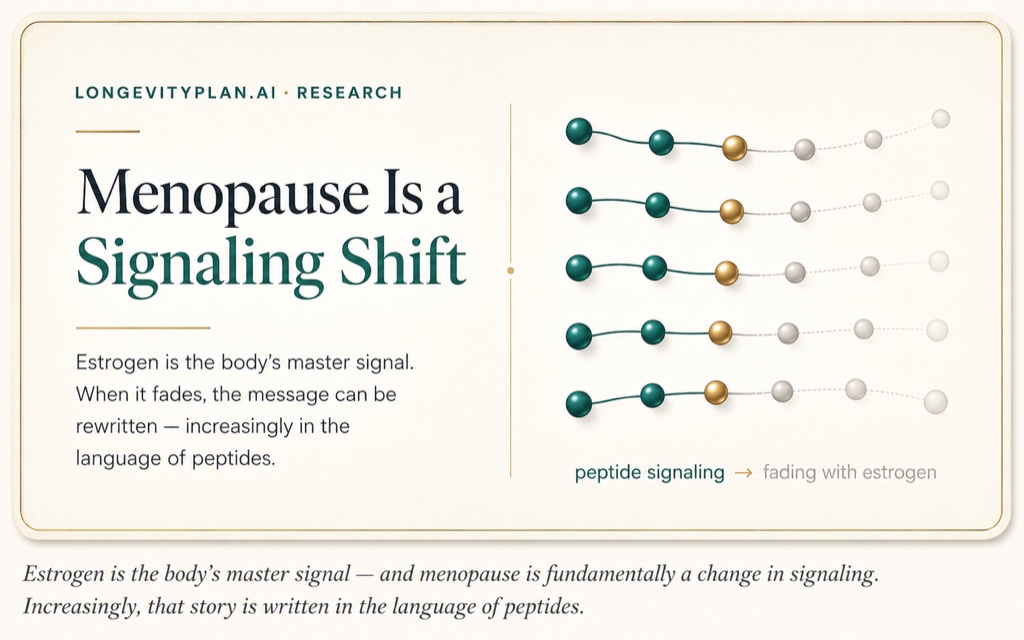
That science is increasingly a story about peptides: short chains of amino acids the body uses as signaling molecules. Estrogen is, in effect, a master signal that quietly maintains bone, skin, muscle, metabolism, mood, and even the brain's thermostat. When it withdraws at around age 51, the body's messaging system goes quiet in four places at once. The good news — and it is genuinely good — is that signals can be studied and, in some cases, replaced or modulated. Some of the most encouraging results in all of menopause medicine have come from decoding these peptide messages, and this article walks through them in the order that matters most: how strong the evidence is, what it shows, and how a data-driven plan turns promising molecules into real-world results.
The estrogen cascade: four systems, one signal
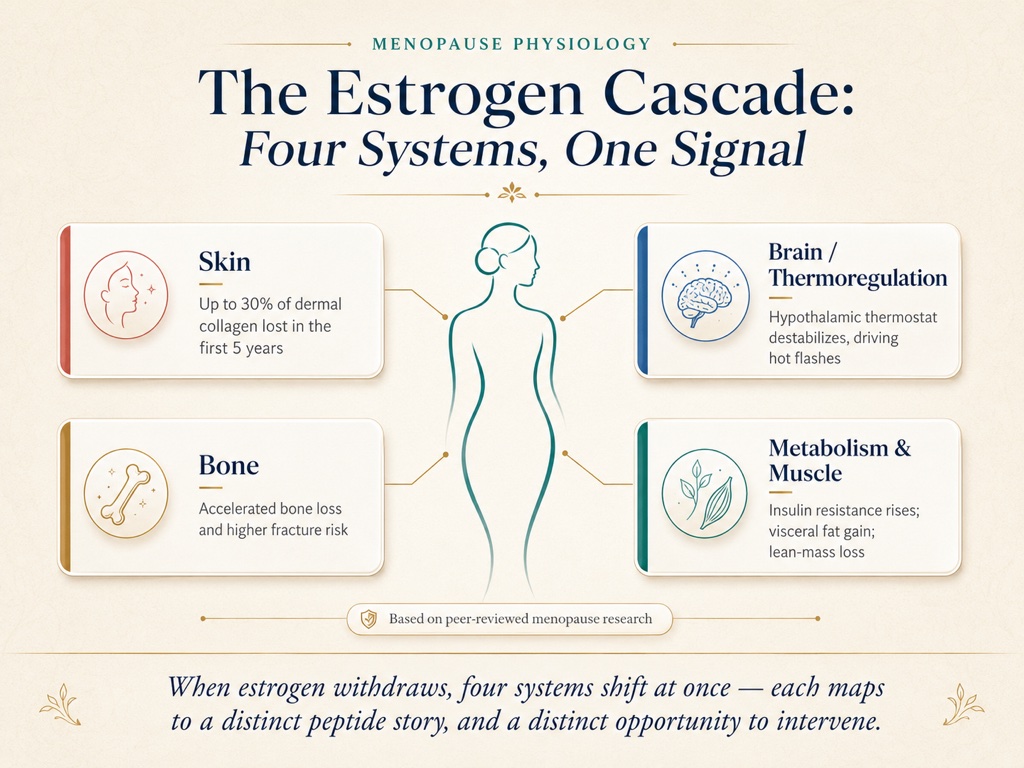
When estrogen declines, four systems shift together, and each maps to a peptide story. Bone tips toward net resorption, raising fracture risk. Skin loses structure quickly — dermatologists estimate that women lose up to 30% of dermal collagen in the first five years after menopause, then about 2% per year for fifteen more years.[2][3] Metabolism and muscle drift toward fat gain, lean-mass loss, and rising insulin resistance. And the brain's thermostat destabilizes, producing the hot flashes that send more women to the clinic than any other menopausal symptom.[4]
This is not a cosmetic transition; it is a longevity inflection point, and it arrives precisely when many people are at the peak of their professional and physical ambitions. It is also where expert guidance earns its keep. The athletes above were not short on discipline — they were short on a map. The practitioners who add the most value here, from performance coaches and dietitians to executive coaches and clinicians, are the ones who read the molecular map first and personalize from there. Let us read it, in descending order of proof.
Before exploring what peptides may add to the hormonal longevity toolkit, it is essential to address the intervention with the deepest evidence base: menopausal hormone replacement therapy (HRT). For the majority of symptomatic women entering menopause — particularly those under 60 or within 10 years of their final menstrual period — HRT remains the most effective, guideline-recommended treatment for vasomotor symptoms, bone density preservation, and quality of life. The 2024 JAMA synthesis of Women's Health Initiative data by JoAnn Manson and colleagues at Harvard Medical School confirmed that the benefit-to-risk profile of appropriately timed hormone therapy is substantially more favorable than the fear generated by the original 2002 WHI headlines suggested. The Menopause Society, the Endocrine Society, and the American College of Obstetricians and Gynecologists all affirm that HRT should be the first conversation — not an afterthought — for women navigating this transition.
The reason HRT deserves this primacy is biological directness: it restores the estrogen and progesterone signaling that the ovary is no longer providing. When estradiol levels decline, the downstream consequences — accelerated bone resorption, unfavorable lipid shifts, vasomotor instability, urogenital atrophy, and disrupted sleep architecture — are driven by the absence of a specific hormonal signal. HRT replaces that signal. The peptides discussed in this article — BPC-157 for tissue repair, MOTS-c for metabolic signaling, growth hormone secretagogues for body composition — operate through different and largely complementary mechanisms, but none of them restores ovarian endocrine function. Moreover, the human evidence base for these peptides in menopausal populations specifically is early-stage or nonexistent, whereas HRT is supported by randomized controlled trials enrolling tens of thousands of women over decades. Any reader considering a peptide protocol for midlife health optimization should first have an informed conversation with a qualified clinician about whether HRT is appropriate for her individual risk profile — because for many women, it will be the single highest-impact intervention available.
That said, HRT is not the entire answer, and this is precisely where the peptide conversation becomes valuable rather than competitive. Many women have contraindications to systemic hormone therapy — a history of estrogen-receptor-positive breast cancer, active thromboembolic disease, or undiagnosed vaginal bleeding, among others. Some women choose not to use HRT for personal reasons. And even among women who do use hormone therapy, HRT does not address every axis of age-related decline: it does not directly enhance mitochondrial bioenergetics the way MOTS-c research suggests, it does not accelerate connective tissue repair in the manner BPC-157 preclinical data indicate, and it does not restore the growth hormone pulsatility that declines independently of ovarian function. The most scientifically honest framing is therefore not "peptides instead of HRT" but "HRT as the evidence-based foundation, with peptides as an emerging complementary layer for women and men seeking to optimize additional longevity pathways." That layered approach — conventional endocrinology first, investigational optimization second — is the philosophy behind the Peptide Longevity Plan and, more broadly, the way personalized medicine should work.
Bone and skin: the collagen peptide with the receipts
The single best-supported peptide aimed squarely at a menopausal problem is neither exotic nor injected. It is an oral, specific bioactive collagen peptide, with bone as the endpoint.
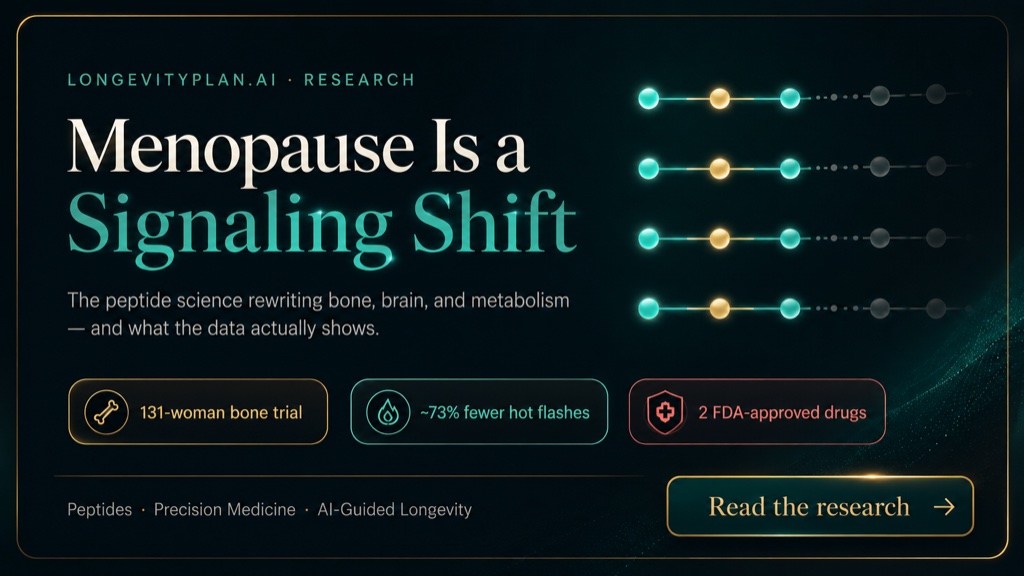
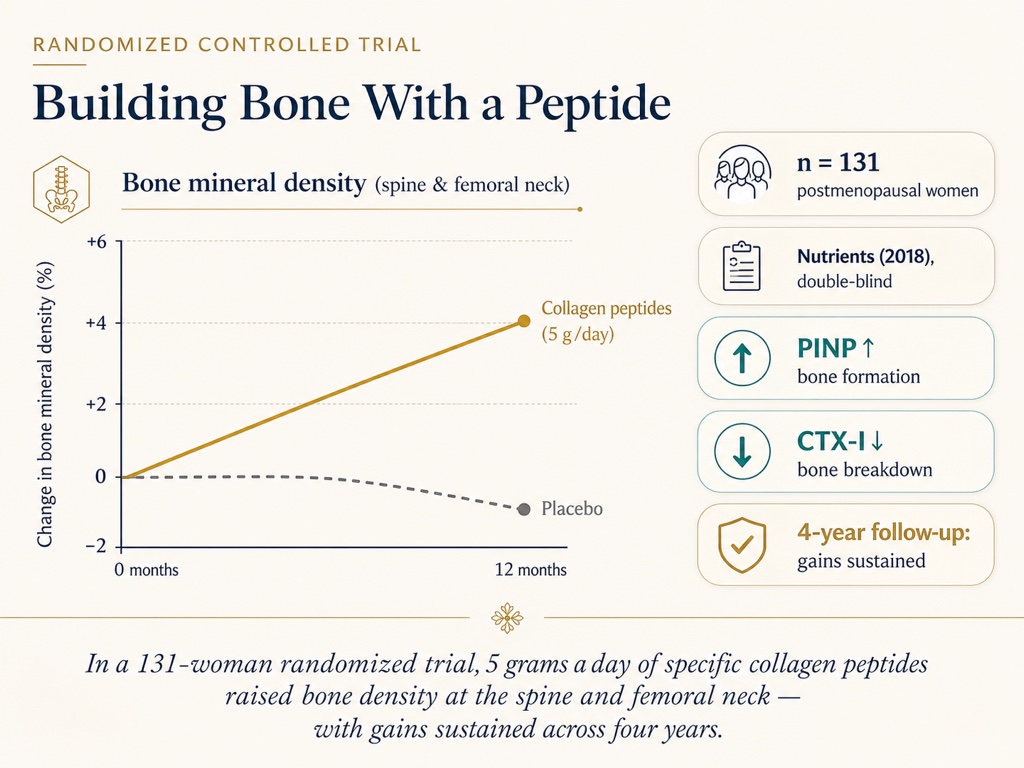
In a randomized, double-blind, placebo-controlled trial published in Nutrients in 2018, Daniel König, Steffen Oesser, Stephan Scharla, Denise Zdzieblik, and Albert Gollhofer enrolled 131 postmenopausal women with reduced bone mineral density. Participants took 5 grams per day of specific collagen peptides (the FORTIBONE preparation from the German ingredient firm GELITA) or placebo for a year. The collagen group showed statistically significant gains in bone mineral density at both the spine and femoral neck, with bone chemistry shifting the right way — the formation marker P1NP rose while the resorption marker CTX-1 fell.[5] A four-year open-label follow-up in the Journal of Bone Metabolism reported continued, clinically relevant gains.[6] Sustained direction of effect over years is precisely what casual supplement studies almost never show.
The mechanism is elegant: ingested collagen peptides are absorbed as small di- and tripeptides that appear to act as signaling fragments, nudging osteoblasts and fibroblasts toward synthesis. That same signaling is why the molecule reappears in the skin conversation, where the estrogen-driven collagen collapse is most visible. For the nutritionist or dietitian, this is a rare gift: a low-risk, food-based intervention with multi-year randomized human data, a complement to the established pillars of resistance training, protein, vitamin D, and — where appropriate — hormone therapy. It is the part of the menopause-peptide story that survives every round of scrutiny, and it is a natural first move in any evidence-led plan.
The brain's thermostat: a neuropeptide breakthrough
The most important menopause-peptide story of the last decade is one most people have never heard, and it is thrilling — because it runs the full arc from a napkin-sketch idea to two FDA-approved drugs.
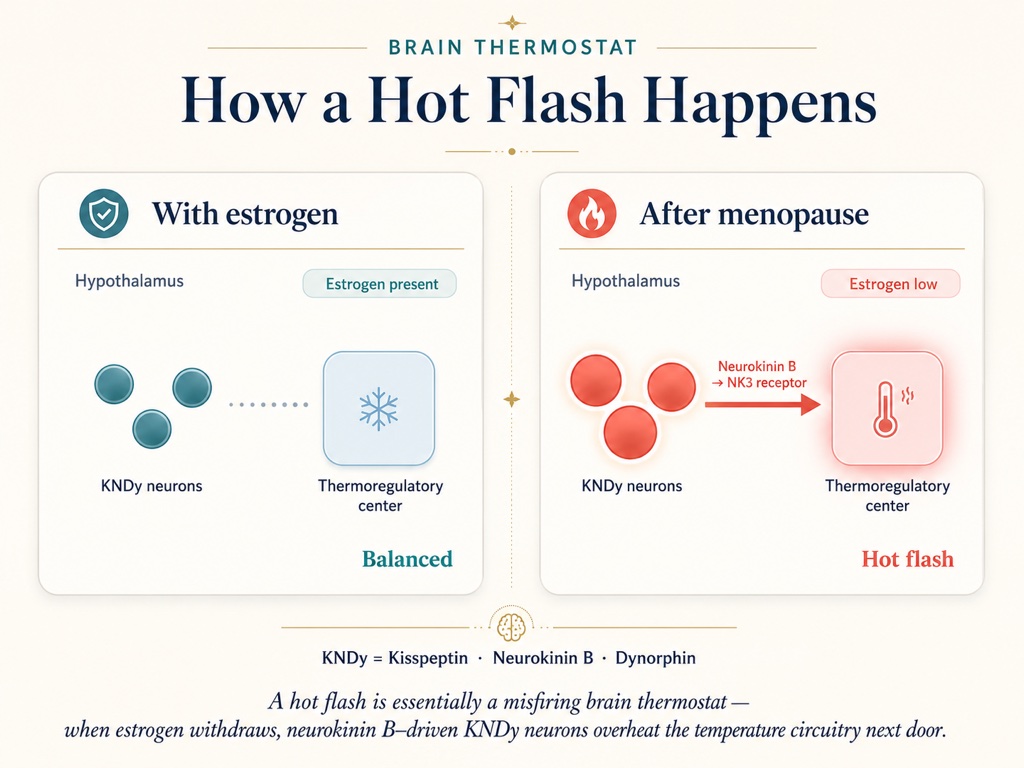
It begins with a cluster of hypothalamic neurons called KNDy neurons, named for the three signals they co-express: kisspeptin, neurokinin B, and dynorphin. Neuroanatomist Naomi Rance discovered that these neurons enlarge dramatically after menopause and sit right beside the brain's temperature-control circuitry. When estrogen withdraws, they lose their brake, neurokinin B signaling surges, and the neighboring thermoregulatory neurons misfire — a hot flash. Rance's work revealed that the reproductive axis and thermoregulation are, in her words, "intimately integrated."[7]
In 2012, endocrinologist Waljit Dhillo of Imperial College London heard Rance present and moved to the clinic with rare speed. His team confirmed the hypothesis directly — infusing women with neurokinin B to trigger flashes — then tested a drug blocking the neurokinin-3 receptor. Published in The Lancet in 2017, the NK3-antagonist reduced weekly hot flashes by roughly 73% in a phase 2 randomized trial.[8] That insight became medicine twice over. In 2023, the FDA approved fezolinetant (Veozah), from Astellas — the first NK3-receptor antagonist and the first hormone-free drug to target the neural root of hot flashes rather than mask them.[9] Then, on October 24, 2025, the FDA approved elinzanetant (Lynkuet), from Bayer, the first dual NK1/NK3 antagonist; in the phase 3 OASIS program it cut moderate-to-severe hot-flash frequency by 73.8% at twelve weeks versus 47% on placebo, with signals on sleep as well.[10][11]
"Today's approval of elinzanetant is a significant advance for women's health," said James A. Simon, MD, clinical professor of obstetrics and gynecology at George Washington University**.[11]
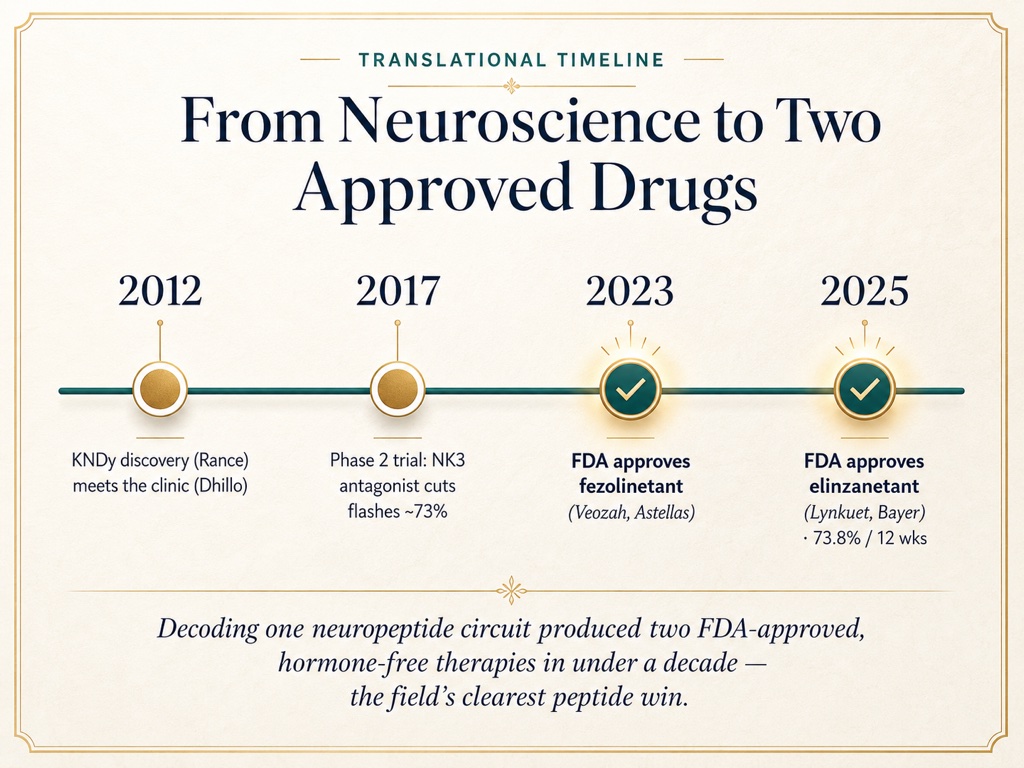
The lesson reframes the whole category. The biggest peptide win in menopause did not come from a vial bought online — it came from decoding a neuropeptide circuit and building rigorously tested drugs around it. Kisspeptin itself, the "K" in KNDy, is the master switch of the reproductive axis; Dhillo and colleague Ali Abbara have shown in humans that it also modulates emotional and sexual brain processing and interacts with bone metabolism, and their 2024 Endocrine Reviews synthesis maps a therapeutic frontier spanning hot flashes, PCOS, and fertility.[12][13] It is a live and legitimate area of promise.
Desire: PT-141, one of the few peptides with an FDA badge
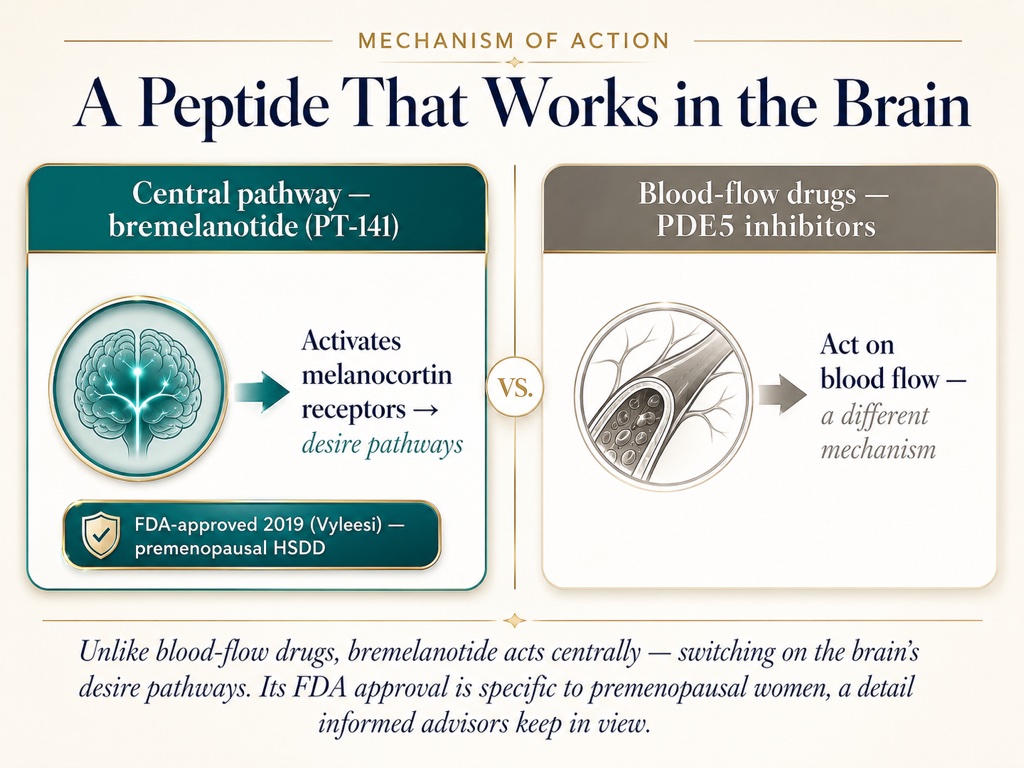
Low libido is among the most under-discussed menopausal complaints, and here the relevant peptide is bremelanotide (PT-141), marketed as Vyleesi — one of the rare peptides to hold genuine FDA approval, granted in 2019.[14] It is a synthetic cyclic peptide and melanocortin receptor agonist that acts centrally, activating the brain's desire pathways rather than affecting blood flow as PDE5 inhibitors do. That central mechanism is what makes it distinctive and clinically interesting.
The detail an informed practitioner keeps in view: Vyleesi's approval is specifically for acquired, generalized hypoactive sexual desire disorder in premenopausal women, and the label notes it is not indicated for postmenopausal women.[15] The biology of the mechanism is agnostic to menopausal status, so research interest in postmenopausal use is real — but today that use is off-label. Knowing exactly what has been proven, and in whom, is precisely the expertise that separates a credible advisor from a hopeful one.
Metabolism and muscle: the frontier peptides worth watching
Menopause frequently brings the metabolic triad — visceral fat, insulin resistance, and flagging energy — plus the muscle loss that estrogen withdrawal accelerates. Two peptide stories point straight at this cluster, and both are exciting.
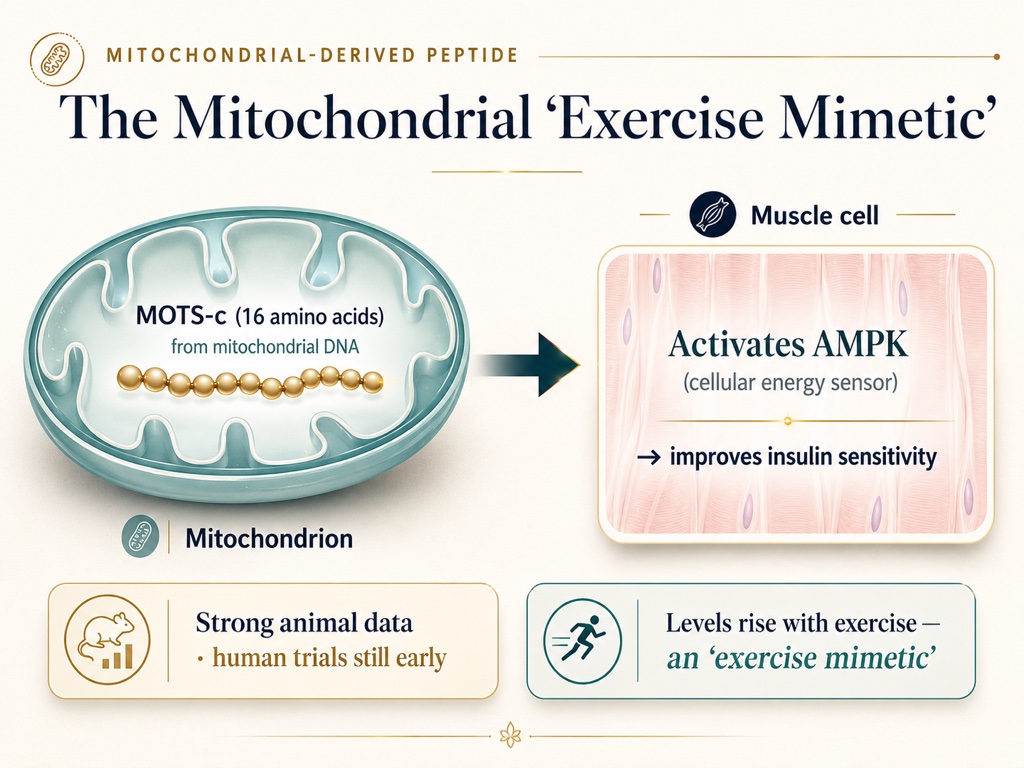
MOTS-c may be the most fascinating molecule in the entire field. It is a 16-amino-acid peptide encoded not in the cell's nucleus but inside the mitochondrial genome itself, discovered in 2015 by Changhan David Lee and Pinchas Cohen at USC and published in Cell Metabolism. The finding rewrote a textbook assumption, revealing that mitochondrial DNA harbors additional bioactive coding sequences.[16] As Lee put it, the mitochondrial genome encodes small proteins with roles across "aging, exercise, metabolism, and immunity."[17] Functionally, MOTS-c activates AMPK — the cell's master energy sensor — which is why it is nicknamed an "exercise mimetic." In animal models, it improves insulin sensitivity and counters diet-induced and age-related metabolic decline,[16][18], and a 2021 USC study reported that MOTS-c enhanced physical performance in aged mice, in some experiments roughly doubling running capacity — old animals performing like young ones. Those are striking, hope-inspiring results. They are also, importantly, mouse results; human data is early and encouraging but limited, and there are not yet controlled trials in menopausal women. MOTS-c belongs on every serious researcher's watch list as one of the most promising leads in metabolic longevity.
The growth-hormone secretagogues — CJC-1295, ipamorelin, and sermorelin — target the same body-composition goals from a different angle. CJC-1295 and sermorelin are analogs of growth-hormone-releasing hormone; ipamorelin is a ghrelin-receptor agonist. They coax the pituitary into releasing the body's own growth hormone by acting on the somatotropic (growth-hormone) axis — not, as is sometimes misstated, the hypothalamic-pituitary-gonadal axis that governs sex hormones. Because they work upstream and preserve natural feedback loops, proponents argue they are unlikely to push growth hormone to supraphysiologic extremes, and human pharmacology shows they can restore more youthful growth-hormone pulse patterns with downstream effects on body composition and sleep. Menopause-specific outcome trials are still lacking, which makes these a frontier to explore thoughtfully rather than a settled answer — but the mechanistic rationale is sound, and the early signals are genuinely promising.
From lab to life: a colorful case in point
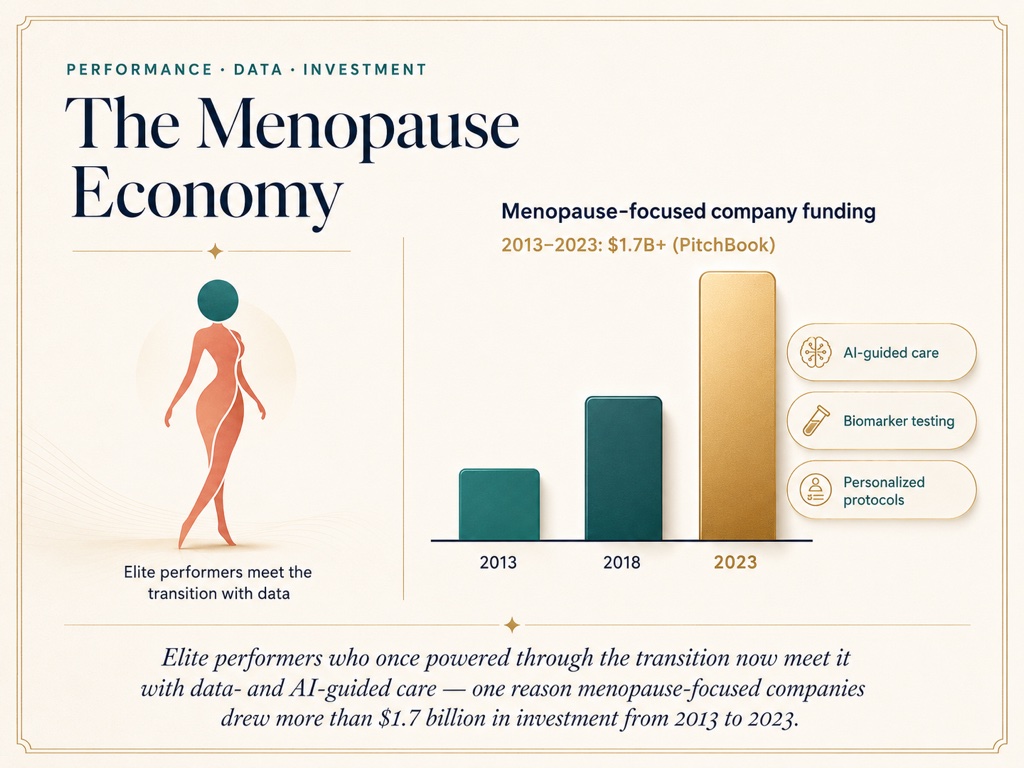
Few people embody this convergence of performance, menopause, and data better than Halle Berry. She built a career on physically demanding roles — training as a fighter for Bruised, the MMA drama she both directed and starred in — and remained, well into her fifties, one of Hollywood's most visibly athletic figures. She was also, by her own account, misdiagnosed during perimenopause by a physician who "had no knowledge," an experience that turned her into an advocate.[19] In May 2024 she stood on the Capitol steps championing a $275 million menopause research bill; in February 2025 she launched Respin Health, an AI-enabled menopause-care platform backed by Khosla Ventures.[19][20]
Berry's arc is the real-world application of this article's thesis in miniature: an elite performer, blindsided by a signaling change no amount of training could out-muscle, who responded not with a single product but with data and personalization at scale. That is the pattern to emulate — not celebrity, but method. She is one prominent face of a category that drew more than $1.7 billion in funding from 2013 to 2023,[21] alongside figures like Naomi Watts, whose brand Stripes launched the first National Hot Flash Day. The cultural silence has broken; the opportunity now is to fill it with rigor.
Turning molecules into a plan: genetics, digital twins, and the experts who deliver them
Every peptide here interacts with a biochemistry that is, quite literally, one of a kind — and that is not a marketing flourish but pharmacology. Genetic variation in drug-metabolizing enzymes, such as the cytochrome P450 family, means that two people can take an identical dose and experience meaningfully different exposure, response, and side-effect risks. Pharmacogenomics is among the most established ideas in precision medicine, and companies such as The Genomics Company build on exactly this premise: a genetic and molecular baseline should inform what you try, not the reverse.
That baseline is the foundation of a Digital Twin for Predictive Peptide Performance™ — a computational model of an individual assembled from multi-modal health data: genomics, longitudinal biomarkers, body composition, continuous wearable streams, and symptom tracking. A sensor layer captures what is actually happening in the body; an intelligence layer integrates those signals and applies predictive modeling to estimate how a specific person is likely to respond — and, just as valuably, when to stop. In practice, a well-instrumented model can monitor whether collagen supplementation is affecting bone turnover markers, whether an NK antagonist is resolving hot flashes cleanly, or whether a metabolic intervention is genuinely improving glucose regulation.
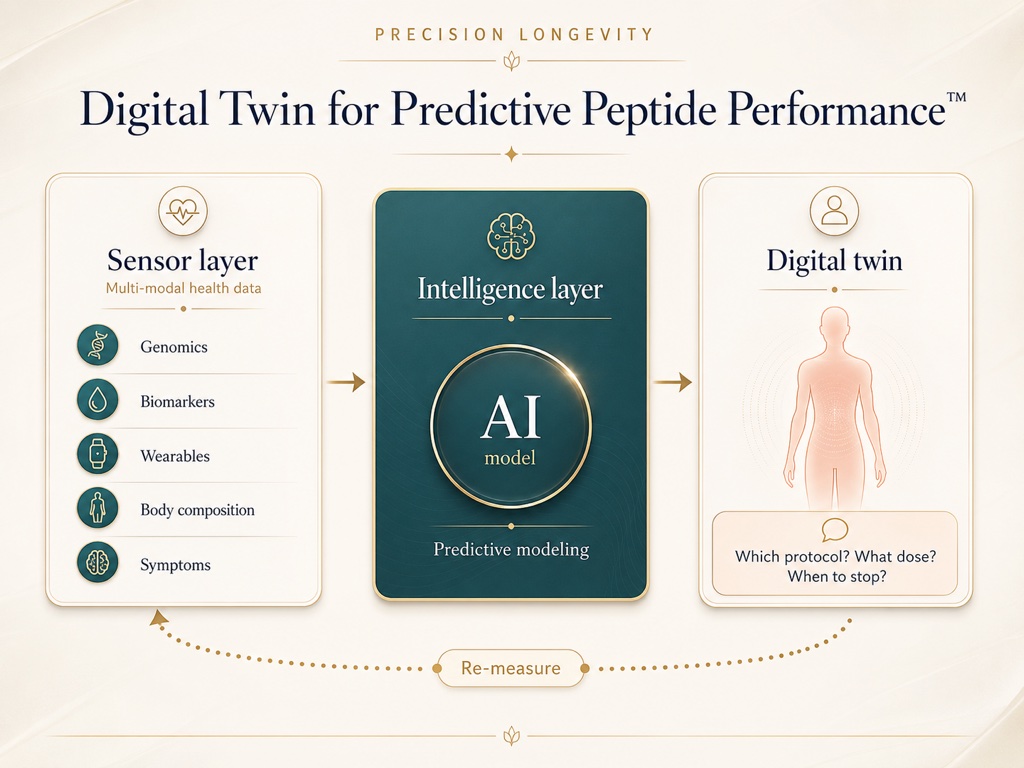
Technology, though, does not deliver outcomes — people do. The professionals who translate population-level science into individual results are the connective tissue of this entire field: the performance coaches who periodize training around a changing hormonal profile, the dietitians and nutritionists who deploy protein and collagen peptides with precision, the executive coaches who protect cognition and sleep, and the clinicians who own the prescription decisions. The best of them share one habit — they lead with data. In the Coach / Practitioner and Athlete / Patient relationship, the discipline is simple and powerful: establish a real baseline before adding anything; sequence interventions by strength of evidence, starting where human data is deepest and treating frontier molecules as monitored experiments; then re-measure, and let objective markers, not enthusiasm, decide what stays. That loop is the core of a Peptide Longevity Plan™, and it scales from a single high performer to a Corporate Wellness Program built to extend the productive, high-functioning years of an entire leadership team.
A word on the rules of the game
One piece of context every informed advisor tracks: the regulatory status of compounded peptides has been moving quickly. In September 2023, the FDA placed roughly nineteen popular peptides — including BPC-157, CJC-1295, ipamorelin, and MOTS-c — in "Category 2," effectively barring compounding pharmacies from preparing them, citing concerns about immunogenicity, impurities, and limited human data.[22] In February 2026, U.S. Health and Human Services Secretary Robert F. Kennedy Jr. announced that about fourteen of them would move back toward Category 1, with a Pharmacy Compounding Advisory Committee review set for July 2026.[23] The essential nuance, easily lost in the headlines: reclassification governs compounding legality only. It does not confer FDA approval, validated dosing, or an established benefit-risk profile.[23] The distance between "a pharmacy may prepare this" and "this is proven to work for you" is exactly the distance a rigorous plan is designed to cover.
The bottom line
Peptides are signals, and menopause is fundamentally a change in signaling — which is why this field is so full of promise. The strongest stories here are also the most inspiring: an oral collagen peptide with multi-year randomized data on bone; a neuropeptide circuit whose decoding yielded two approved, hormone-free drugs for hot flashes; a centrally acting peptide with real FDA standing for desire; and a genuinely exciting metabolic frontier in MOTS-c and growth hormone secretagogues. The molecules point the way; the people who measure, personalize, and re-measure are the ones who arrive.
Menopause happens to land at the height of many people's ambitions, which is the best possible argument for building a data baseline early — before you need it — and working with advisors who value the science as much as the outcome. Do that, and the evidence now genuinely runs in your favor. That is a hopeful message, and unlike most hopeful messages in wellness, it comes with citations.
Sign up for FREE daily Longevity Club Workshops, or join the Affiliate Program (pays 20%). Subscribe to the Longevity & Peptide Optimization Newsletter.
About the Authors
Tony Medrano is CEO and co-founder of LongevityPlan.AI, a platform that integrates performance and health data and leverages proprietary Digital Twin for Predictive Peptide Performance™ technology, wearable data, and biomarker data to deliver personalized optimization and longevity recommendations. A 3x technology/AI company CEO with 2 successful exits, Tony has completed 3 Full Ironman Triathlons (140.6 mi) since 2019. He holds degrees from Harvard University, Columbia University, and a JD/MBA from Stanford University, and has worked with the US Olympic Team, the NBA, NFL, MLB, NASA, Google, Microsoft, and Netflix, among others. He also served as a US Navy Officer commanding an emergency response team aboard a destroyer.
René Caruso is a metabolic health specialist, peptide-certified consultant, and founder of REPO Fit Consulting, where she works at the intersection of clinical longevity science and business growth strategy for anti-aging clinics, medical spas, and wellness centers. She brings more than 30 years across nutrition, exercise physiology, biohacking, and culinary arts, along with a background as a competitive natural bodybuilder, obstacle course racer, and distance cyclist. Her consulting practice helps high-achieving professionals reclaim metabolic function through personalized protocols addressing hormonal change, inflammation, and cellular health, while advising wellness enterprises on the revenue, marketing, and clinical operations strategies that turn emerging longevity science into sustainable practice.
Disclaimer: This article is for education and is not medical advice. Peptides and hormone-related therapies carry real risks and interact with individual medical histories; decisions about them belong with a qualified, licensed clinician. The regulatory status of compounded peptides is actively changing, so verify current FDA guidance before acting, and remember that reclassification does not equal proof of safety or efficacy.
Endnotes and sources
- Frequency and perceived influence of menopausal symptoms on training and performance in female endurance athletes (N=187, ages 40–60): sleep problems 88%, exhaustion 83%, sexual problems 74%, hot flushes 65%, weight gain 67%. NIH/PMC PMC12711079; summarized in ScienceDaily, Dec. 2025.
- Berson D., "A solution for estrogen-deficient skin," Dermatology Times (AAD 2019): up to 30% collagen loss in the first five years of menopause, ~2% annually thereafter.
- Roó E, et al. Skin, hair and beyond: the impact of menopause. Climacteric. 2022;25(5):434–442 (citing Brincat MP et al.).
- Prague JK, Dhillo WS, et al. The Lancet. 2017;389(10081):1809–1820 (~70% of women affected by hot flushes); ~75% prevalence per UCLA Health / Contemporary OB/GYN.
- König D, Oesser S, Scharla S, Zdzieblik D, Gollhofer A. Specific Collagen Peptides Improve Bone Mineral Density and Bone Markers in Postmenopausal Women—A Randomized Controlled Study. Nutrients. 2018;10(1):97. DOI: 10.3390/nu10010097.
- Zdzieblik D, Oesser S, König D. Specific Bioactive Collagen Peptides in Osteopenia and Osteoporosis: Long-Term Observation in Postmenopausal Women. Journal of Bone Metabolism. 2021;28(3):207–213. PMID: 34520654.
- Naomi Rance on KNDy neurons and thermoregulation ("the reproductive axis is integrated with thermoregulation… intimately integrated"); ScienceDaily / University of Arizona, June 28, 2017.
- Prague JK, Roberts RE, Comninos AN, et al. NK3 receptor antagonism as a novel treatment for menopausal hot flushes: phase 2 RCT. The Lancet. 2017;389(10081):1809–1820 (~73% reduction). PMID: 28385352.
- Fezolinetant (Veozah, Astellas): first NK3-receptor antagonist FDA-approved (2023) for moderate-to-severe vasomotor symptoms; reported in Pharmacy Times, 2025.
- Bayer press release: Lynkuet (elinzanetant), first dual NK1/NK3 receptor antagonist, FDA approval, October 24, 2025.
- Panay N, et al. Elinzanetant for the Treatment of Vasomotor Symptoms Associated With Menopause: Phase 3 Randomized Clinical Trial (OASIS). JAMA Internal Medicine. 2025 (−73.8% vs −47% placebo at week 12); Simon JA quoted via Contemporary OB/GYN.
- Comninos AN, Dhillo WS, et al. Kisspeptin modulates sexual and emotional brain processing in humans. Journal of Clinical Investigation. 2017;127(2):709–719.
- Patel B, Koysombat K, Mills EG, Tsoutsouki J, Comninos AN, Abbara A, Dhillo WS. The Emerging Therapeutic Potential of Kisspeptin and Neurokinin B. Endocrine Reviews. 2024;45(1):30–68.
- Palatin Technologies press release: FDA approves NDA for Vyleesi (bremelanotide injection), June 21, 2019.
- VYLEESI (bremelanotide) FDA Prescribing Information, Initial U.S. Approval 2019: indicated for premenopausal women with acquired, generalized HSDD; "not indicated for the treatment of HSDD in postmenopausal women or in men."
- Lee C, Zeng J, Drew BG, … Cohen P. The Mitochondrial-Derived Peptide MOTS-c Promotes Metabolic Homeostasis and Reduces Obesity and Insulin Resistance. Cell Metabolism. 2015;21(3):443–454.
- Changhan David Lee, USC Leonard Davis School of Gerontology, on mitochondrial-derived peptides ("aging, exercise, metabolism, and immunity"), USC Leonard Davis news, 2021.
- Kim SJ, Miller B, Mehta HH, … Cohen P. The mitochondrial-derived peptide MOTS-c is a regulator of plasma metabolites and enhances insulin sensitivity. Physiological Reports. 2019;7(13):e14171.
- Halle Berry: perimenopause misdiagnosis and advocacy (Capitol, May 2, 2024, Advancing Menopause Care and Mid-Life Women's Health Act, $275M); reported by The Hill, AP, ABC News. Bruised (2021), directed by and starring Berry.
- Fine JB, "Halle Berry Launches Respin Health for Modern Menopause Care," WWD, Feb. 2025 (AI-enabled menopause platform; Khosla Ventures backing).
- PitchBook data via Epker E, "Stripes Beauty… National Hot Flash Day," Forbes, Sept. 9, 2024: menopause-focused companies raised over $1.7 billion, 2013–2023.
- FDA, "Certain Bulk Drug Substances for Use in Compounding that May Present Significant Safety Risks" (interim 503A Category 2, September 2023); see also FDA Law Blog and Lexology coverage.
- "The Peptide Reclassification Everyone's Talking About," Pharmacy Times, 2026: HHS Secretary R.F. Kennedy Jr. announcement (Feb. 27, 2026) moving ~14 peptides toward Category 1; PCAC review July 2026; reclassification governs compounding legality only, not FDA approval or proven benefit-risk.