Digital Health
·3 min read
Digital Twins: The Future of Injury Prevention
How Virtual Replicas of the Human Body Are Revolutionizing Safety Science
By Dr. Karim Godamunné, MD MBA SFHM FACHE
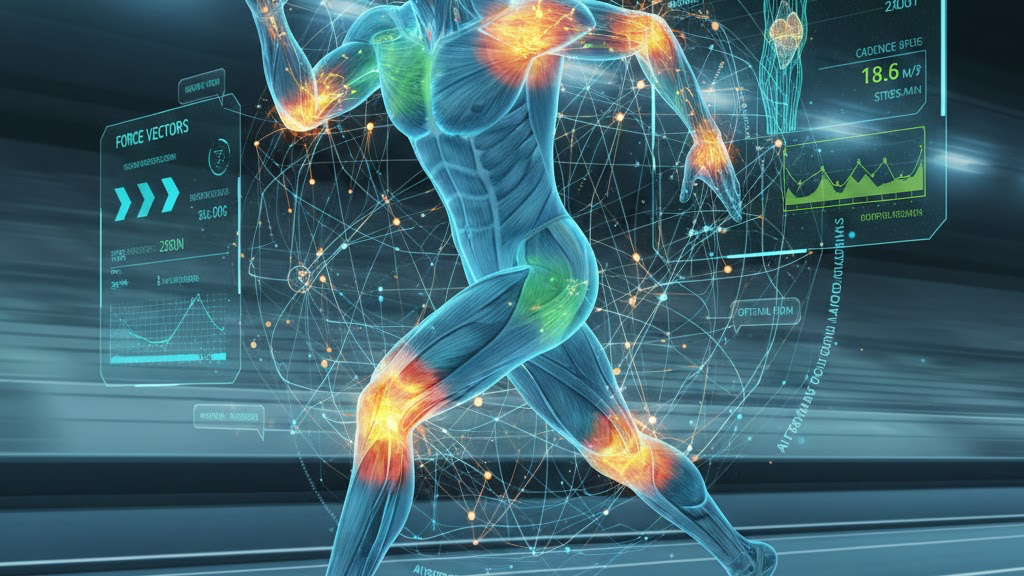
Imagine a virtual replica of your body that can predict an injury weeks before you feel the first twinge of pain. This isn't science fiction—it's the emerging reality of digital twin technology, a convergence of sensors, biomechanics, and artificial intelligence that's revolutionizing how we prevent injuries across sports, healthcare, military operations, and workplaces.
What Are Human Digital Twins?
A human digital twin is a dynamic, physics-based virtual model of an individual that continuously updates based on real-world data. Unlike static health records or one-time assessments, these twins evolve with you, learning from every movement, impact, and recovery cycle. They integrate wearable sensor data, biomechanical simulations, and machine learning to forecast tissue failure, overuse patterns, and injury risk windows before traditional symptoms appear. The fundamental shift is from reactive care to predictive prevention.
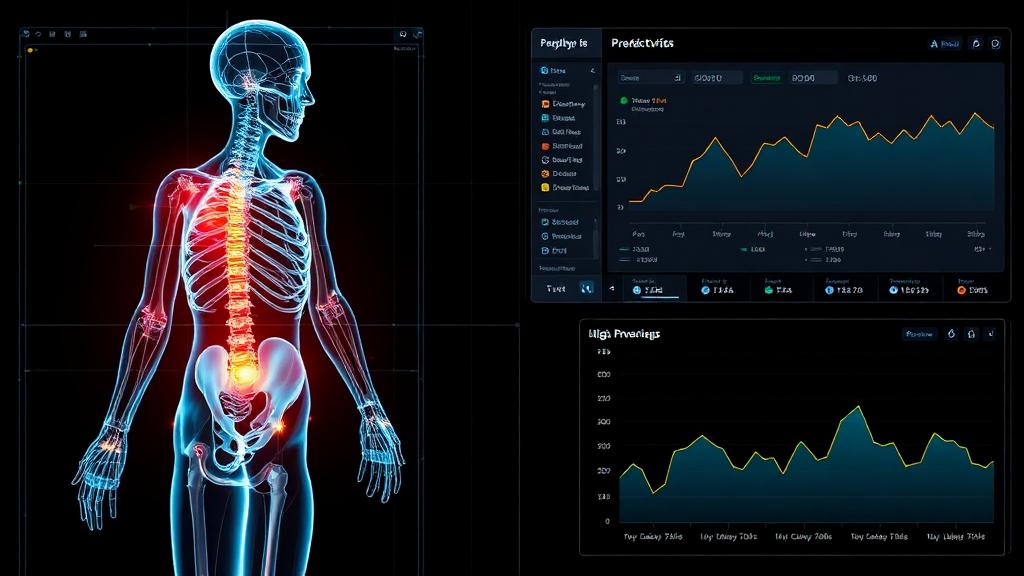
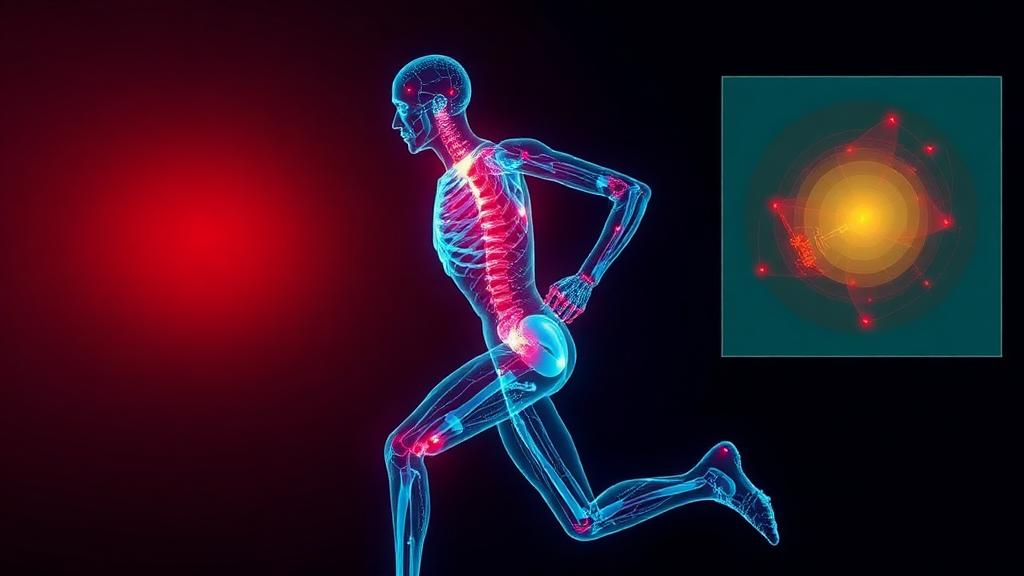 Digital twin technology creates a living biomechanical model of the human body, continuously updated by wearable sensors to predict injury risk before symptoms appear.
The Technology Stack: Six Layers of Innovation
Digital twin systems operate through six interconnected layers. Layer 1: Physical Sensing captures human movement through inertial measurement units, force plates, surface electromyography, and markerless motion capture. Organizations like Catapult Sports and DorsaVi have pioneered wearable IMU systems used by professional athletes daily.
Layer 2: Data Fusion synchronizes, filters, and transforms raw sensor streams—aligning time series from devices sampling at different rates and extracting physics-informed features. Layer 3: The Biomechanical Core uses musculoskeletal models, finite element models, and fatigue accumulation models to calculate forces at each joint. Leading institutions including the University of Michigan, Virginia Tech, and ETH Zurich have developed increasingly sophisticated solvers.
Layer 4: AI Prediction Engines add pattern recognition through time-series deep learning architectures, Bayesian risk modeling, and physics-informed neural networks. Layer 5: Decision Support translates predictions into concrete recommendations—load caps, technique corrections, personalized prescriptions. Layer 6: Continuous Feedback enables living models that improve over time, learning from individual and population-level insights.
 The six-layer digital twin technology stack transforms raw sensor data into actionable injury prevention intelligence through biomechanical modeling and AI prediction.
Leading Organizations Driving Innovation
Commercial leaders like Catapult Sports, Kitman Labs, and Motus Global provide platforms used by professional sports teams worldwide. Prevent Biometrics and Blackbox Biometrics have developed head impact monitoring systems that changed concussion protocols across contact sports. Healthcare institutions including the Cleveland Clinic, Hospital for Special Surgery, and SWORD Health are applying digital twin concepts to orthopedic care. Academic powerhouses—Harvard, MIT, Stanford, Johns Hopkins—form the theoretical foundation.
From Sports to Broader Applications
The NFL employs advanced digital twin technology combining helmet sensors, impact biomechanics, and AI risk modeling for traumatic brain injury prevention. Military applications through the Army Research Laboratory and NASA operate some of the most advanced self-improving twins for missions where medical resources are limited. Workplace safety applications are emerging for construction, manufacturing, and logistics—predicting repetitive strain injuries and ergonomic risks before they manifest.
The digital twin revolution represents a fundamental paradigm shift: from treating injuries after they occur to predicting and preventing them before the first symptom appears. As sensor costs decrease and AI capabilities expand, this technology is poised to democratize injury prevention from elite sports to everyday life.