Sexual Health
·16 min read
The Desire Circuit: Sex on Peptides
What the science actually shows about peptides for sexual health and performance — and how genomics and AI turn molecules into a plan.
By Tony Medrano
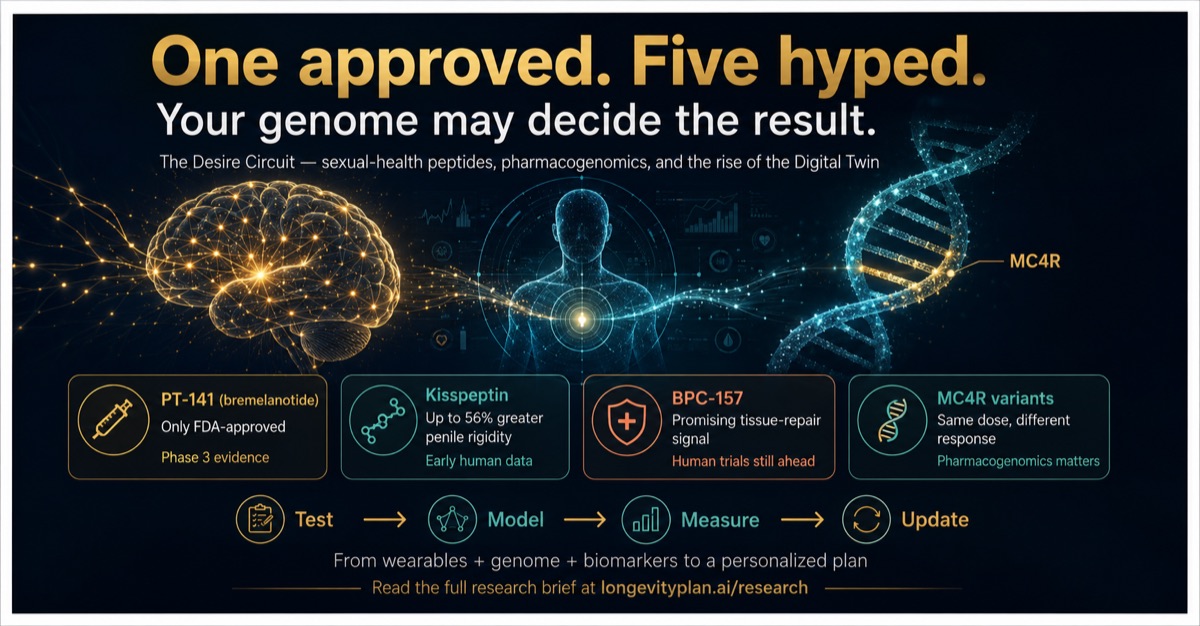

Figure 1. Sexual Health Starts With Data. Modern sexual-health science starts with data, not guesswork — the same wearables and labs that track your recovery also reveal the vascular, hormonal, and neurological signals behind desire.
Sexual health is one of the most honest signals the body sends. Long before a stress test flags anything, desire, arousal, and erectile or lubrication response quietly report on the state of your blood vessels, hormones, sleep, mood, and central dopamine tone. When those systems hum, intimacy tends to take care of itself. When they fade, sex is often the first thing to notice — which makes it less a vanity metric than an early-warning system with excellent instincts.
What is genuinely thrilling about the current science is where the action has moved. For a generation, "treatment" meant one idea: improve blood flow to the tissue and hope the mind follows. The newest and best-studied peptides do something more interesting. They work upstream — in the brain's desire circuitry, in the hormonal command center, in the machinery of bonding and repair. They are, in effect, molecular messengers that speak the body's own language, because most of them are analogs or mimics of hormones we already make. That kinship is a big part of why several of them carry encouraging tolerability profiles and why the field feels, right now, like it is on the edge of something.
This is a field guide to five of them — graded honestly, celebrated where the data earn it, and framed by the one thing almost every article on this subject omits: your biology is not the average. The same molecule that transforms one person's experience does nothing for the next, and the reason is increasingly traceable to genetics and physiology we can now actually measure. Get that part right, and peptides stop being a gamble and start being a plan.
A confidence map, not a verdict. We grade each peptide the way elite sports-science and clinical-research groups — from Stanford to the U.S. Olympic and Paralympic performance system — grade an intervention: by how certain we are, not by how promising it is. Grade A = FDA-approved with Phase 3 trial support; Grade B = small but well-controlled human trials; Grade C = encouraging human data with a strong placebo signal; Grade D = a remarkable preclinical (animal/lab) file with human trials still ahead. A lower grade is not a knock — it marks the frontier, where the most exciting biology and the most rapid progress tend to live. The job of a good plan is simply to know which grade you are betting on.
1. PT-141 (Bremelanotide): Desire, Approved
Grade A (for its approved use) · Central melanocortin agonist
If these peptides had a valedictorian, it would be bremelanotide. Sold as Vyleesi, it earned FDA approval on June 21, 2019, as the first and only on-demand treatment for acquired, generalized hypoactive sexual desire disorder (HSDD) in premenopausal women — a 1.75 mg subcutaneous shot taken about 45 minutes before intimacy.[1][2]
Its charm is architectural. Where Viagra-class PDE5 inhibitors act peripherally on blood vessels, bremelanotide acts centrally: derived from alpha-melanocyte-stimulating hormone, it activates melanocortin receptors — the MC4R subtype in the hypothalamus being most relevant to desire.[3] In plain terms, it addresses the wanting, not just the plumbing.
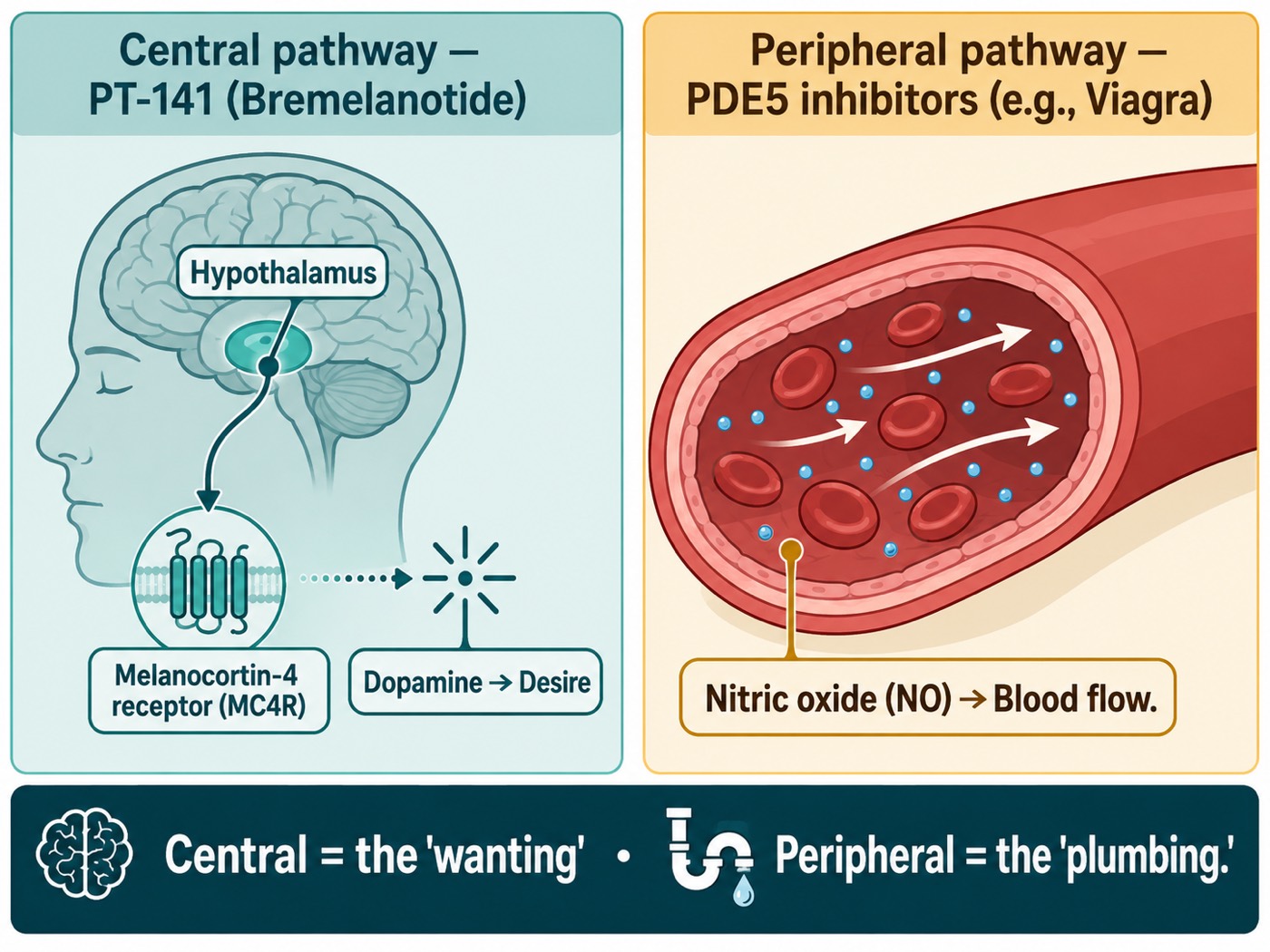
Figure 2. Two Routes to the Same Destination. PT-141 works in the brain to switch on desire, while Viagra-class drugs work on blood flow — which is exactly why one can succeed where the other fails.
The evidence is the RECONNECT program: two identical Phase 3, randomized, placebo-controlled trials in roughly 1,250 women, showing significant gains over placebo in both sexual desire and the distress that shadows it (P < 0.001), with a 52-week extension in 684 women confirming durability and no new safety signals.[3][4][5] The main trade-off is well-characterized: first-dose nausea in about 40% of users, usually gone within a few hours, plus a small transient blood-pressure bump that keeps it away from uncontrolled hypertension.[4]
The frontier here is male. Bremelanotide's use in men is off-label today, but Palatin Technologies, the biotech that discovered it, led by CEO Carl Spana, Ph.D., is running a Phase 3 program pairing bremelanotide with a PDE5 inhibitor for the roughly 35% of men with erectile dysfunction who don't respond to PDE5 inhibitors alone.[6] The design is elegant: marry the central "want" signal to the peripheral "can" signal. With bremelanotide already administered to some 3,500 subjects across 43 completed studies, it enters that frontier with a safety database that most peptides can only envy.[7] The takeaway: for the right patient under a clinician's care, PT-141 is the reference standard — and living proof that, for many people, desire was never a blood-flow problem in the first place.
2. Kisspeptin: The Upstream Ignition Switch
Grade B · Master regulator of the reproductive axis, with direct effects on the "sexual brain"
Kisspeptin sits at the very top of the hormonal cascade. It tells the hypothalamus to release GnRH, which drives luteinizing hormone and, downstream, testosterone — all while working with the body's own feedback loops rather than overriding them, which is why it has drawn interest as a way to support natural hormone production and fertility signaling at once.
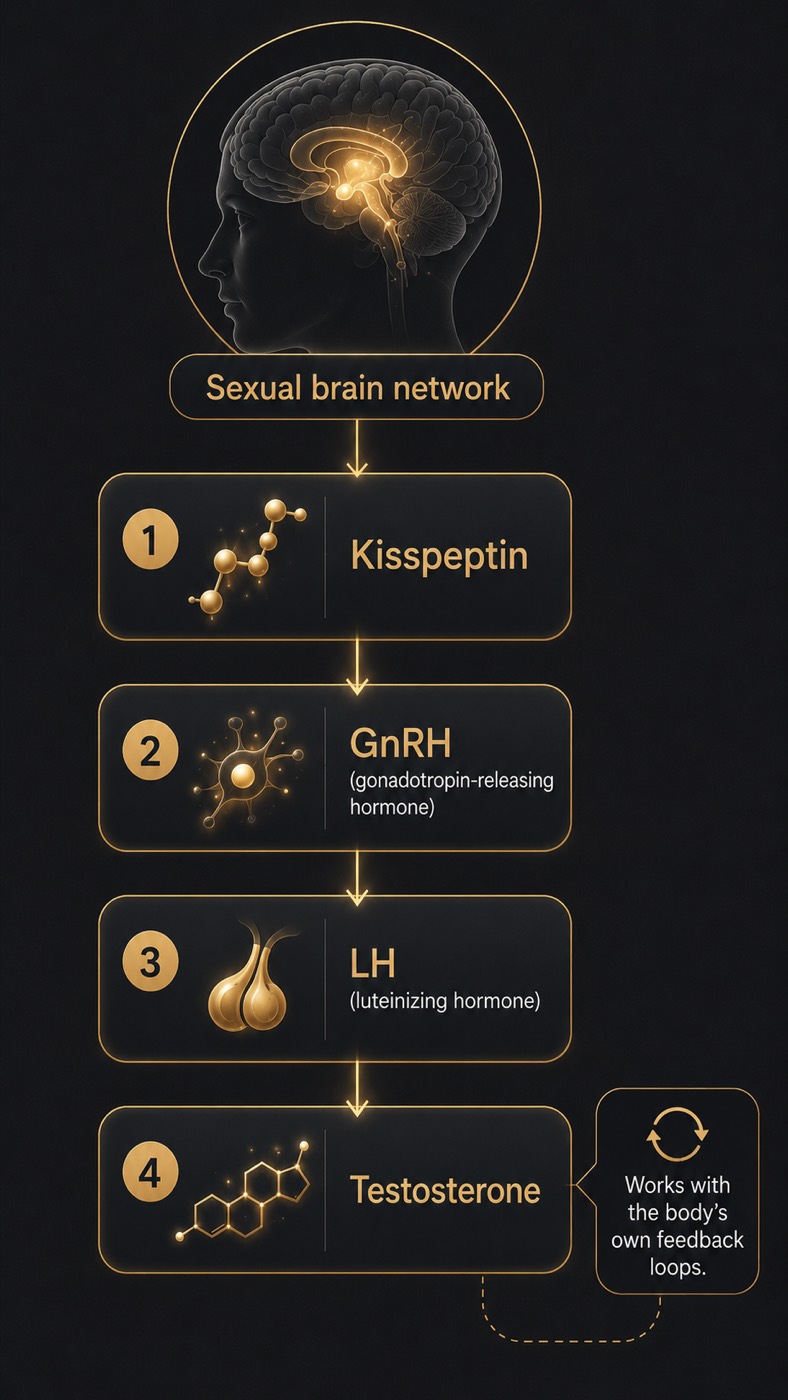
Figure 3. The Upstream Ignition Switch. Kisspeptin sits at the top of the chain — signaling the brain to release GnRH, which lifts luteinizing hormone and then testosterone, all while lighting up the brain's own desire circuitry.
The standout work comes from Imperial College London, where Professor Waljit Dhillo and Dr. Alexander Comninos have chased this molecule for over a decade — animals first, then healthy volunteers, then patients.[8][9] Their two 2023 randomized trials in JAMA Network Open are the headline: in men with HSDD, kisspeptin lit up the brain's sexual-processing network and boosted penile rigidity by up to 56% versus placebo during erotic stimuli — with the biggest effects in the men most distressed by their low desire.[10][11] "Giving kisspeptin boosts response in these areas," as Dhillo summarized it — and notably, it did so without the mood-dampening trade-offs seen with some other agents.[12]
Read more scientific research from LongevityPlan.AI, or buy peptides from the LongevityPlan.AI shop.
Why clinicians love this: it reframes low desire as physiology, not character — a point long championed by Sheryl Kingsberg, Ph.D., of Case Western Reserve University, who notes that the patients who qualify are the ones genuinely troubled by the change: "The women coming into my office are deeply distressed."[13] Kisspeptin is still investigational — the trials are early and academic, and the team's own next step is larger, more diverse studies.[11] But as an upstream, body-native approach to desire, it is one of the most promising stories in the field, and worth watching closely.
3. Oxytocin: The Connection Molecule
Grade C · Central neuromodulator of bonding, arousal, and orgasm
Oxytocin is the peptide everyone thinks they know — the surge of childbirth, breastfeeding, trust, and orgasm. In the sexual context, it does double duty: oxytocinergic neurons reaching the spinal cord can switch on nitric-oxide synthase, linking the "bonding molecule" to the same nitric-oxide machinery behind erectile and clitoral engorgement.
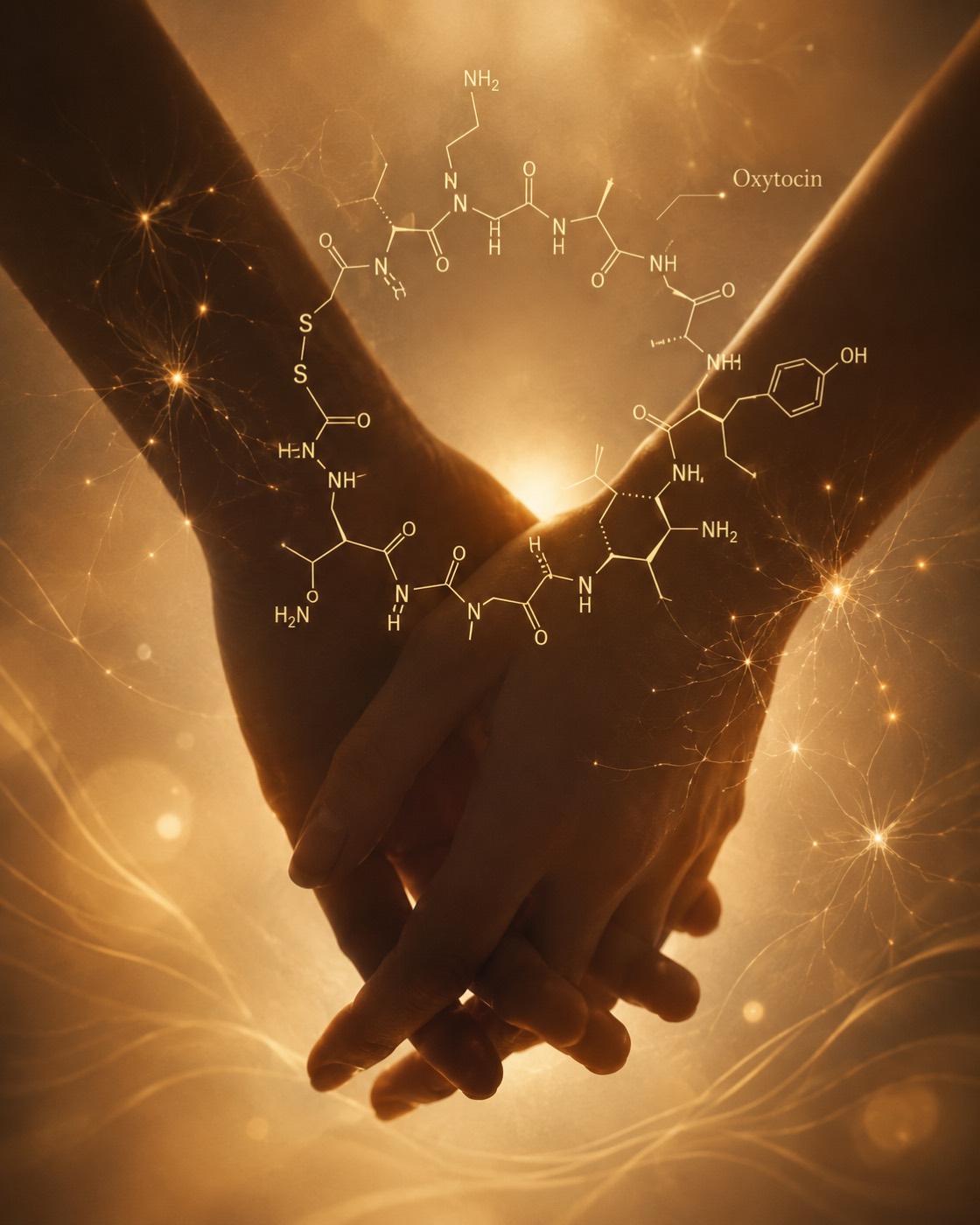
Figure 4. Strongest for Connection. The evidence is strongest for connection: oxytocin reliably deepens intimacy, contentment, and orgasm intensity — most useful when stress or distance, rather than blood flow, is the real barrier.
The human data paint a nuanced and rather lovely picture. In a randomized, placebo-controlled crossover trial in Fertility and Sterility, intranasal oxytocin improved women's sexual function — though so did placebo, a reminder of how powerfully expectation and attention shape intimacy.[14] Where the signal is most consistent is the afterglow: studying couples, Behnia and colleagues found intranasal oxytocin heightened orgasm intensity and post-coital contentment, especially in men.[15] Across the literature, oxytocin's strength is the emotional and orgasmic dimension of sex more than raw desire.[16] The takeaway: think of it as a modulator of closeness, calm, and climax — most compelling when a couple's difficulty is entwined with stress, anxiety, or distance rather than a pure vascular or hormonal deficit. That large placebo effect is itself a clue worth respecting: context is not noise in sexual health; it is part of the mechanism.
4. CJC-1295 + Ipamorelin: The Foundation Stack
Grade C for the combination · A GHRH analog plus a ghrelin mimetic that coaxes the pituitary to release the body's own growth hormone
This is the most-prescribed growth-hormone secretagogue pairing in performance and anti-aging medicine, and it is beloved by coaches for a reason. CJC-1295 provides a sustained growth-hormone signal; ipamorelin amplifies each natural pulse while sparing cortisol and prolactin. Together, they aim for a physiologic GH pattern rather than the flat, sledgehammer elevation of injected synthetic hormone. The reported benefits practitioners chase — deeper slow-wave sleep, improved body composition, better recovery, and the vitality that follows — are exactly the substrate on which sexual energy is built, since quality sleep is itself a well-established driver of endogenous testosterone.
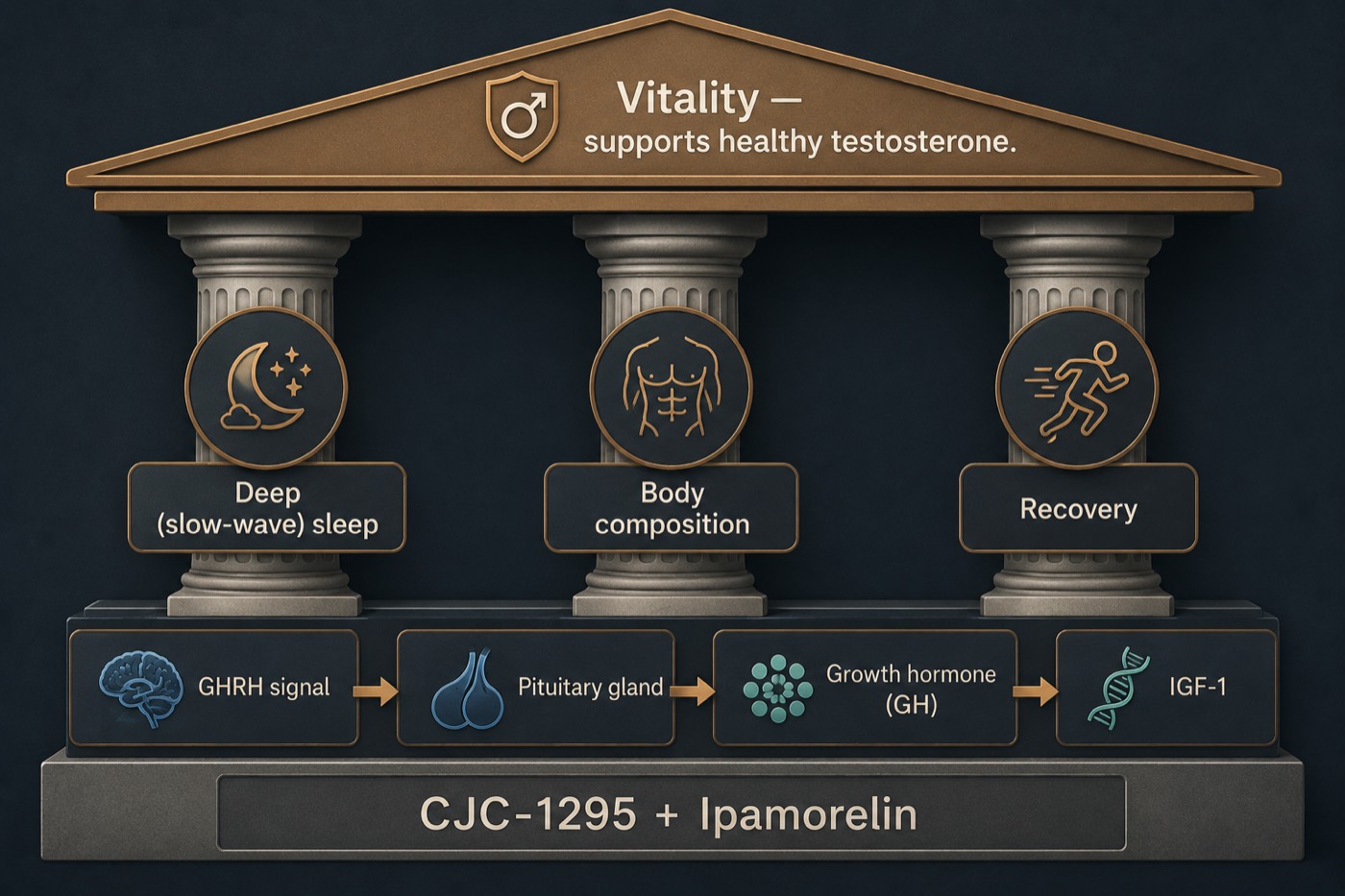
Figure 5. Foundation, Not Fireworks. This stack is foundation, not fireworks — by nudging the body's own growth-hormone rhythm, it supports the sleep, body composition, and recovery that vitality (and healthy testosterone) are built on.
So the honest framing is not "does it work?" but "what is it for?" This stack is foundation, not fireworks — it tends the soil rather than forcing the bloom, and it rewards patients who pair it with training, nutrition, and sleep. On the specifics: neither peptide is FDA-approved, the combination hasn't been tested as a paired therapy in a large randomized trial, and its U.S. compounding status has been genuinely turbulent and remains in flux as of 2026 — verify current status with a licensed provider before acting.[17][18] For readers who want a regulated anchor in this exact class, tesamorelin (Egrifta) is the one GHRH analog with full FDA approval, earned via two Phase 3 trials (816 patients) showing a ~15% cut in visceral fat.[19] The mechanism family is real and validated; the specific compounded stack is popular practice ahead of pivotal proof — a distinction a discerning coach or clinician keeps front of mind.
5. BPC-157: The Regeneration Frontier
Grade D (for human sexual-health claims) · A gastric peptide with striking tissue-protective and blood-vessel-building properties in animal models
Now for the field's most electrifying preclinical story. BPC-157 ("Body Protection Compound-157") is a stable pentadecapeptide derived from a protein in the gut, and its animal-and-lab file is genuinely remarkable: more than 100 preclinical studies, largely from Predrag Sikirić's laboratory at the University of Zagreb, describing accelerated angiogenesis (new blood-vessel formation), calmer inflammation, modulated nitric-oxide signaling, and broad, sometimes dramatic healing across tendon, muscle, ligament, and gut.[20][21] In rodent tendon and ligament work, repair proceeds faster and stronger than expected — the kind of result that makes a sports-medicine researcher lean in.
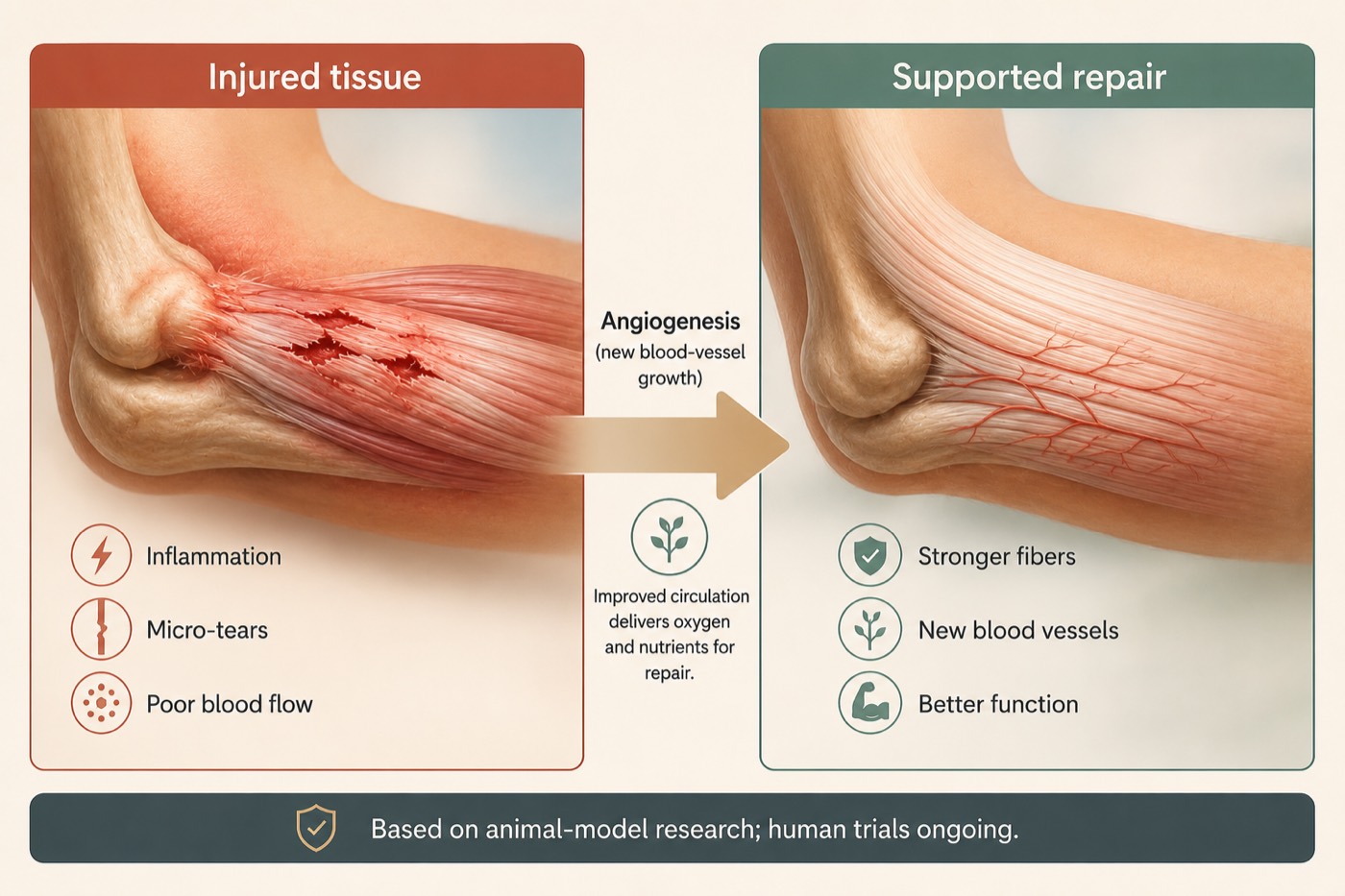
Figure 6. The Regeneration Frontier. In animal studies, BPC-157 speeds healing by driving angiogenesis — the growth of new blood vessels. Human trials are still ahead, but this repair story is what put peptides on the cultural map.
It is also the peptide that dragged this whole category into the cultural mainstream. On his podcast, Joe Rogan described a stubborn elbow tendonitis that resisted every conventional fix: "I started using BPC-157, and it was gone in two weeks," he said — christening it, in the internet's favorite phrase, "Wolverine" recovery.[22] Anecdotes like that are not evidence, and Rogan himself emphasizes medical supervision — but they capture why athletes and high performers keep asking about it, and why the vascular angle is so tantalizing for sexual health specifically: erectile and arousal function live and die by healthy endothelium and nitric oxide, the very pathways BPC-157 supports in the lab.
Here is the frontier framed fairly: the human evidence is still young — a handful of small pilot studies and case series rather than completed randomized trials, and no controlled human data yet on sexual function.[21][23] That is not a strike against the biology; it is an invitation. The preclinical promise is real, and the safety signals in animals look benign — what the field needs next is the rigorous human trial the molecule deserves. Watch this one with optimism and patience in equal measure.
The Five at a Glance
Deliberately simple, so it survives a copy-paste into a doc or a slide. Grades reflect certainty of human evidence, not desirability.
| Peptide | Primary target | What the data best supports | US status (2026) | Grade |
|---|---|---|---|---|
| PT-141 (Bremelanotide) | Central melanocortin (MC4R) | Desire + distress relief in premenopausal women; male use investigational | FDA-approved (Vyleesi) for premenopausal HSDD | A |
| Kisspeptin | Reproductive axis + sexual brain network | Heightened sexual brain activity; ~56% rise in penile rigidity in a male HSDD trial | Investigational | B |
| Oxytocin | Central bonding/orgasm circuitry | Orgasm intensity, contentment, intimacy; large placebo effect on desire | Not approved for sexual use | C |
| CJC-1295 + Ipamorelin | Growth-hormone axis (foundational) | Sleep, body composition, recovery — the substrate of vitality | Not approved; compounding status in flux | C |
| BPC-157 | Angiogenesis/tissue repair | Striking animal healing data; human sexual-health trials still ahead | Not approved; under review | D |
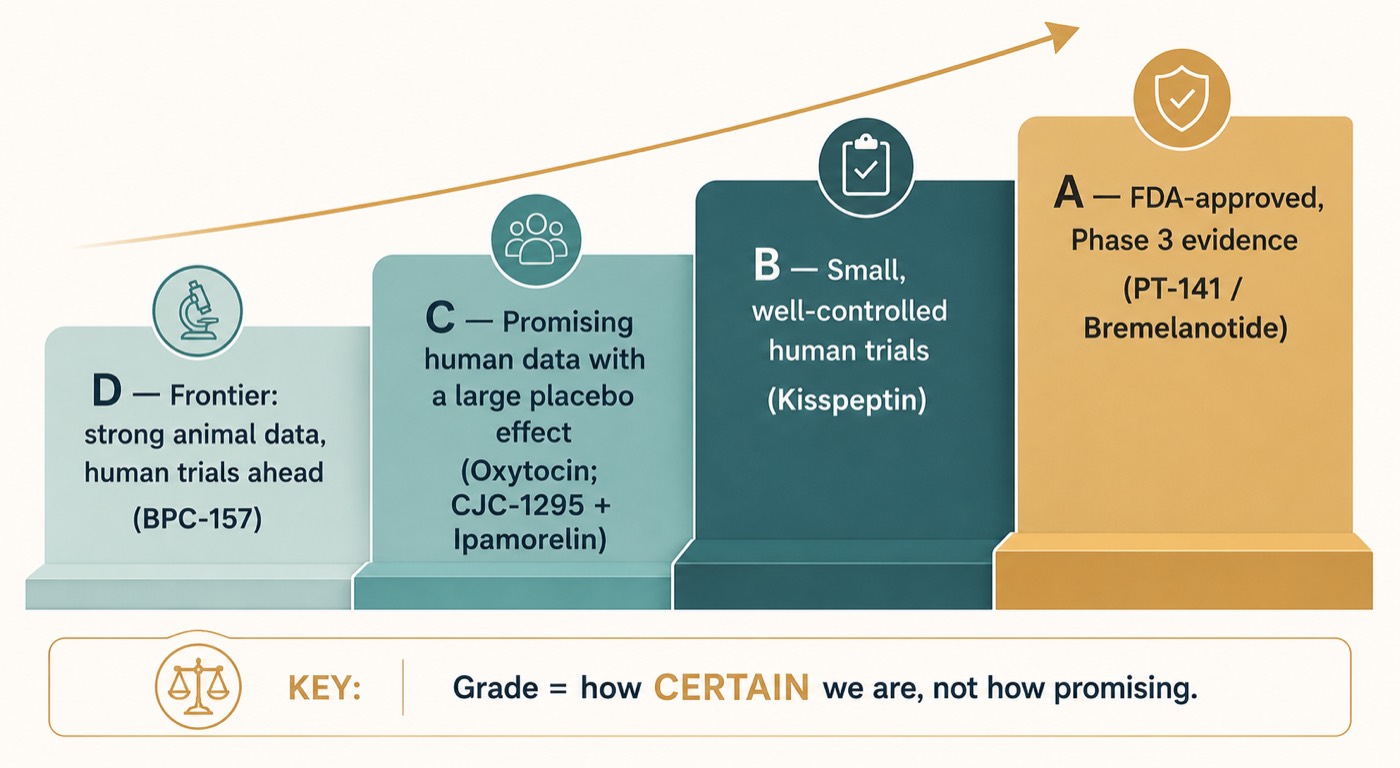
Figure 7. A Confidence Map, Not a Verdict. Every peptide here earns a confidence grade — a measure of how certain the human evidence is, not how exciting the biology sounds. Higher isn't necessarily "better"; it's more proven.
Why the Winner Is Personal: Your Genome Casts the Deciding Vote
Return to our valedictorian for a moment. Bremelanotide works through MC4R — and MC4R happens to be the single most common gene in monogenic obesity, with more than 150 described variants, many of which measurably change how well the receptor fires.[24][25] The same receptor that governs appetite also modulates erectile function and sexual behavior, a link established in foundational work in PNAS.[26]
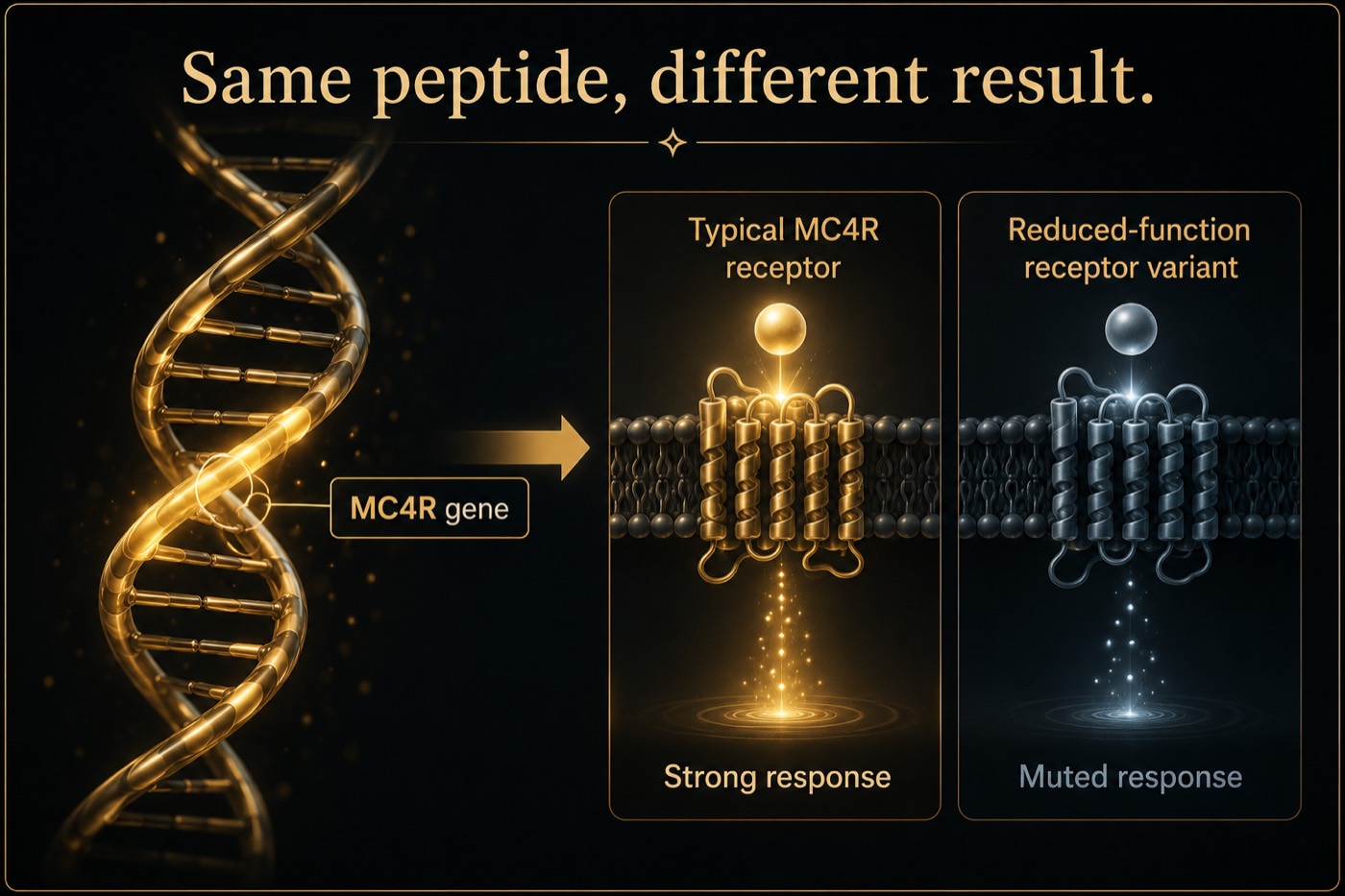
Figure 8. Your Genome Casts the Deciding Vote. Your genes help decide which peptides work for you. Because PT-141 acts through the MC4R receptor, a common gene variant can mean the same dose that transforms one person barely moves another.
Follow that thread, and a powerful idea appears. If a melanocortin drug works by activating MC4R, and your MC4R carries a reduced-function variant, your response to that entire class may differ from your neighbor's — not for lack of effort, but because your receptor reads the signal differently. This is precisely the reasoning now driving melanocortin pharmacogenomics as newer, more selective MC4R drugs advance.[25] The genomics-first thesis — championed by companies such as The Genomics Company — is that your DNA is a foundational input, not a footnote: variation in receptor genes, hormone-metabolizing enzymes, and vascular pathways plausibly shapes which peptides help you, which do nothing, and which cause side effects.
This is why the most sophisticated longevity practices refuse to run a single protocol on everyone — the same n-of-1 discipline that defines Stanford Athletics, the U.S. Olympic and Paralympic performance model, and NASA's astronaut health programs. It is the through-line connecting Andrew Huberman's "test, don't assume," Peter Attia's clinical method, and Eric Topol's decade-long case for individualized, data-dense medicine. Sexual-health peptides are the perfect illustration, because the mechanisms are so varied — central, vascular, hormonal, relational — that guessing is expensive and measuring is transformative.
From Molecule to Model: The Digital Twin for Predictive Peptide Performance™
So how do you operationalize "everyone is different"? You build a model of the individual and let data — not marketing — choose the protocol. That is the idea behind a Digital Twin for Predictive Peptide Performance™: a continuously updated computational portrait of one person, assembled in layers.
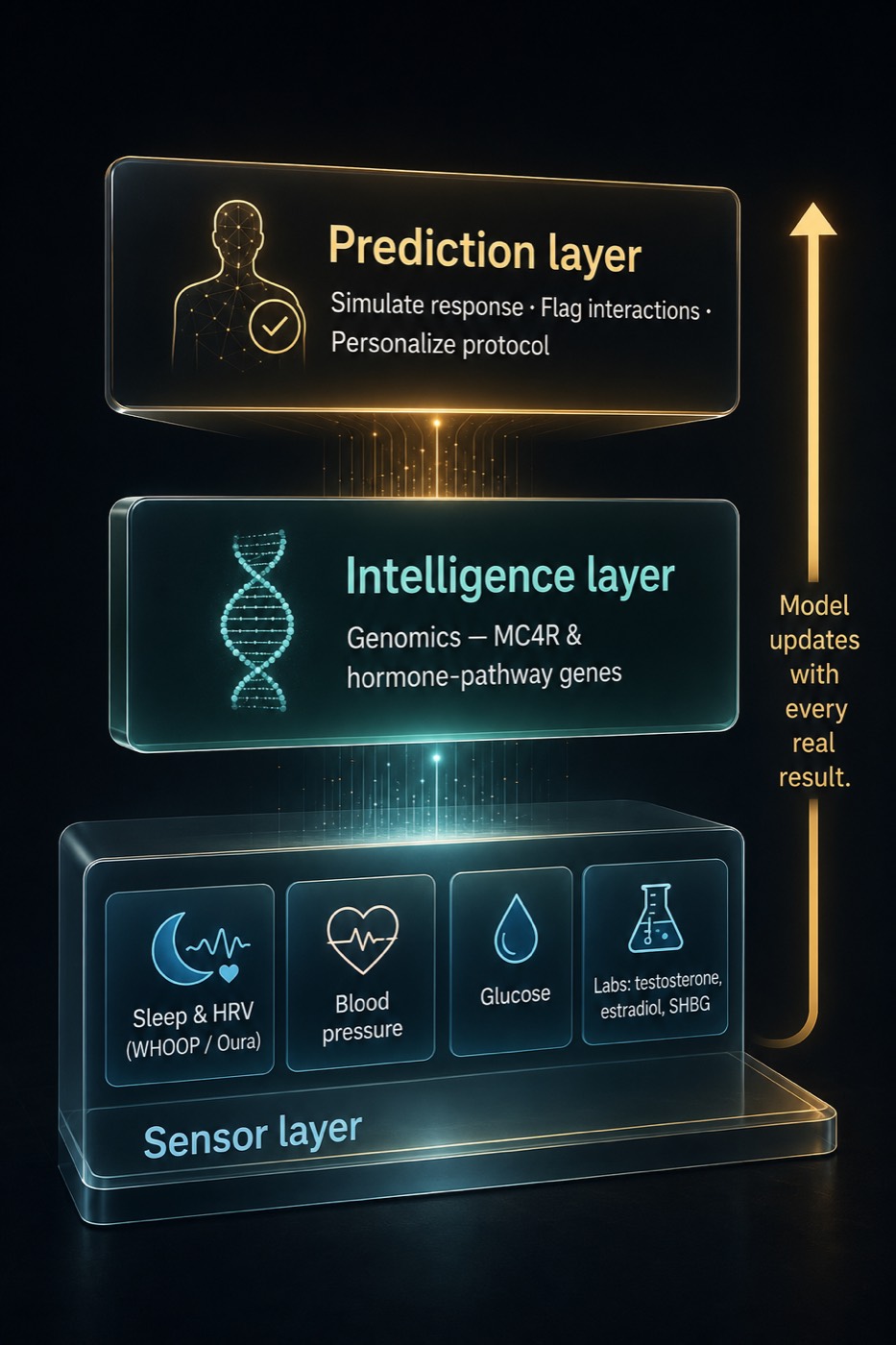
Figure 9. From Molecule to Model. A Digital Twin for Predictive Peptide Performance stacks your data, your genome, and predictive modeling — then sharpens its advice with every real-world result, so the plan gets smarter the longer you use it.
At the base is the sensor layer — the raw physiological stream the best performance programs already track: sleep staging and heart-rate variability (the recovery currency of WHOOP, Oura, and clinical devices), blood pressure, glucose dynamics, and periodic labs for testosterone, estradiol, SHBG, and inflammation. And on top is predictive modeling: the twin simulates likely responses, flags interactions, and — most valuably — updates itself as your real-world results arrive. Did the central agonist move your desire scores, or only your nausea? Did fixing sleep lift free testosterone before you ever reached for an on-demand agent? Each result sharpens the next recommendation in a tight loop between a Coach/Practitioner and the Athlete/Patient.
The payoff is not just efficacy — it is avoiding waste and avoiding disappointment. Plenty of people spend four figures a month on molecules that, for their particular genome, will never move the needle. A model that can say "your rate-limiter is the vascular pathway, not the central one" saves money, time, and the demoralizing cycle of trying the wrong thing first. That is longevity planning as engineering rather than horoscope — and it is exactly the kind of edge that turns a molecule into a result.
The Practitioner's Edge: Why Fluency Here Is a Superpower
If you coach, counsel, or guide people toward better health, this is your moment — and your differentiator. Weight-loss and performance coaches, dietitians, nutritionists, executive coaches, and the sharpest voices in the health-and-beauty world are increasingly the first people clients trust with questions like "should I be looking at peptides?" The professionals who thrive are the ones who can answer with genuine scientific fluency: what a melanocortin agonist actually does, why the growth-hormone stack is foundation and not fireworks, why a client's genome might explain a friend's rave review that they themselves didn't share.

Figure 10. The Practitioner's Edge. For coaches, dietitians, and counselors, fluency in peptide science is a trust multiplier — it turns "I saw something online" into a data-backed, personalized conversation clients come back for.
That fluency is a trust multiplier. A dietitian who can connect slow-wave sleep to endogenous testosterone, or an executive coach who understands that a leader's flagging drive may be a downstream vascular signal rather than a motivation problem, is operating a full tier above generic wellness advice. Peptides fit naturally into this counsel because they work with the body's existing signaling — many are analogs of hormones we already produce — which makes them a comfortable extension of the "optimize the system, don't override it" philosophy these practitioners already teach. Paired with objective data and a personalized model, peptide literacy enables a coach to move a client from "I read something on Instagram" to "Here is what your numbers, your genome, and the actual studies suggest for you." That is the conversation clients pay for, come back for, and refer their friends for. LongevityPlan.AI exists in large part to arm exactly these practitioners with the science, the data infrastructure, and the personalization to deliver it credibly.
The Innovators — and the Road Ahead
The center of gravity is shifting from gray-market compounds toward rigorously developed, mechanism-based drugs, and that is the most encouraging trend of all. Palatin Technologies — bremelanotide's originator — is advancing a next generation of melanocortin therapeutics, including an oral MC4R agonist (PL7737) and a once-weekly injectable peptide, alongside its bremelanotide-plus-PDE5i program.[6][27] Its melanocortin science now reaches into obesity and even retinal disease through a partnership with Boehringer Ingelheim.[27] And Rhythm Pharmaceuticals has commercially validated the entire MC4R thesis with setmelanotide for rare genetic obesity — proof that precisely targeting this receptor in genetically defined patients yields real outcomes.[27] Those two words are the whole future in miniature.
On the consumer side, the ecosystem that makes personalized peptide planning practical is maturing fast: comprehensive diagnostics from Function Health and Superpower, longitudinal biomarker programs from Lifeforce, and the genomics-as-foundation philosophy of The Genomics Company. None is a peptide vendor first; they are data companies, which is the point. In this model, the molecule is the last decision, not the first.
The Bottom Line
There is every reason for optimism here. These peptides are short chains of amino acids in the body's own alphabet; several are analogs of hormones we already make, and the pipeline is filling with better-characterized, better-tolerated candidates. Even the compounds still living on the preclinical frontier carry animal data striking enough to justify the excitement — and the trials that will settle the questions are actively underway. The next decade of sexual and metabolic health is going to be a good one.
The discipline that turns that optimism into results is simple to state: match the molecule to the mechanism, and match the mechanism to you. Test before you assume. Build the model while you are well, because the very measurements that would fine-tune a peptide protocol — sleep, HRV, blood pressure, glucose, hormones, and your genome — are the same ones quietly forecasting your cardiovascular and metabolic future. The peptides are the exciting part. The personalized plan is the part that actually pays off. Get both right, and the desire circuit becomes one more system you get to keep.
Sign Up for FREE Daily Longevity Club Workshops
Sign Up for Affiliate Program (Pays 20%)
Subscribe to the Longevity & Peptide Optimization Newsletter
About the Author
Tony Medrano is CEO and co-founder of LongevityPlan.AI, a platform that integrates performance and health data from athletes and leverages a proprietary Digital Twin for Predictive Peptide Performance™ technology, wearable data, and biomarker data to deliver personalized performance optimization and longevity recommendations to athletes, coaches, organizations, businesses, government, and the military. In addition to being a 3x technology/AI company CEO with 2 successful exits, Tony has completed 3 Full Ironman Triathlons (140.6 mi) since 2019. He has degrees from Harvard University, Columbia University, and a JD/MBA from Stanford University.
Tony has been involved with AI and molecular diagnostic start-ups for 10 years, and also worked with the US Olympic Team, National Basketball Association (NBA), National Football League (NFL), Major League Baseball (MLB), Iditarod, FBI, NASA, U.S. Department of Health and Human Services (HHS), Google, Microsoft, Netflix, Bridgewater Associates, ConocoPhillips, British Petroleum, One Medical, and Jenny Craig, Inc. to provide technology, artificial intelligence and/or molecular diagnostics solutions to their employees.
One of Tony's prior companies provided Conversational AI to health, fitness, and wellness companies; another delivered access to digital libraries of British Petroleum for oil discovery; and his first was a mobile app platform funded by Softbank, which resulted in a case study published by Stanford University Press and was taught in multiple MBA programs for a decade. Tony loves to teach and mentor; he earned public school teaching credentials in NY and MA and taught inner-city high school students to give back to the underprivileged community in Harlem. He also lectured on entrepreneurship and venture capital to second-year MBA students at Stanford Business School for five years. He co-authored one of the first issued patents for mobile applications. Tony also served as a US Navy Officer commanding an emergency response team on a USN Destroyer. Tony's military-to-CEO career has recently been chosen to air on an episode of "Operation CEO," a documentary by InsideSuccess.TV, which will air on AppleTV, Prime Video & Amazon MGM Studios, YouTubeTV, and other major platforms worldwide in 2026.
Tony's Chronological Age is 55, his Metabolic Age is 41, and his Biological Age is 28. He is using a 12-peptide protocol from LongevityPlan.AI that leverages his AI-powered Digital Twin and is currently training for his 4th Ironman Triathlon.
Endnotes & Sources
- Palatin Technologies. "FDA Approves New Drug Application for Vyleesi (bremelanotide injection)." Press release, June 21, 2019. palatin.com.
- Contemporary OB/GYN. "Sexual dysfunction treatment approved by FDA" (bremelanotide/Vyleesi indication and administration). contemporaryobgyn.net.
- U.S. FDA. VYLEESI (bremelanotide injection) Prescribing Information, Initial U.S. Approval 2019 (MC4R mechanism, blood-pressure and safety data, Phase 3 trial identifiers NCT02333071 / NCT02338960). accessdata.fda.gov.
- Kingsberg SA, et al. "Bremelanotide for the Treatment of Hypoactive Sexual Desire Disorder" (RECONNECT Phase 3 trials, ~1,250 women; co-primary endpoints; ~40% first-dose nausea). Obstetrics & Gynecology, 2019.
- Simon JA, Kingsberg SA, et al. 52-week open-label extension of RECONNECT (684 participants; no new safety signals). Obstetrics & Gynecology, 2019.
- Palatin Technologies. "Update on Clinical Programs, Strategic Priorities, and Anticipated Milestones" (bremelanotide + PDE5i for PDE5i non-responders; ~35% of ED patients; Spana commentary). Press release, 2024. palatin.com / BioSpace.
- Clinical trial protocol NCT04179734, "Role of the Melanocortin-4 Receptor in HSDD" (bremelanotide administered to ~3,500 subjects across 43 studies). clinicaltrials.gov.
- Comninos AN, Dhillo WS, et al. "Kisspeptin modulates sexual and emotional brain processing in humans." Journal of Clinical Investigation, 2017.
- Dhillo WS, et al. "Modulations of human resting brain connectivity by kisspeptin." JCI Insight, 2018.
- Mills EG, Comninos AN, Dhillo WS, et al. "Effects of Kisspeptin on Sexual Brain Processing and Penile Tumescence in Men With HSDD: A Randomized Clinical Trial." JAMA Network Open, Feb 3, 2023 (32 men; penile rigidity up to 56% vs placebo).
- Imperial College London / NIHR Imperial BRC. "Kisspeptin hormone injection could treat low sex drive in women and men" (twin JAMA Network Open studies; greatest effects in most-distressed patients; next-step commentary). Feb 2023.
- HealthDay. "Kisspeptin: Is Injected Hormone the Remedy for Flagging Libido?" (Dhillo quote; absence of desire-dampening side effects), 2023.
- CNN Health. "Low sex drive in men linked to chemical imbalance, study says" (Kingsberg commentary on HSDD distress; Dhillo background), April 2023.
- Muin DA, et al. "Effect of long-term intranasal oxytocin on sexual dysfunction in pre- and postmenopausal women: a randomized trial" (32 IU intranasal; strong placebo response). Fertility and Sterility, 2015.
- Behnia B, Heinrichs M, et al. "Differential effects of intranasal oxytocin on sexual experiences and partner interactions in couples" (increased orgasm intensity and contentment, notably in men). Hormones and Behavior, 2014.
- Syntheses of oxytocin and human sexual function (evidence stronger for orgasm quality and bonding than for desire initiation).
- Clinical and regulatory reviews of CJC-1295 and ipamorelin, 2026 (no FDA approval; no large combination RCT; contested compounding status following FDA Category 2 designation and PCAC review).
- FDA compounding documentation on CJC-1295 and ipamorelin (Category 2 designation 2023; subsequent advisory-committee review). fda.gov and secondary reporting, 2023–2026.
- Theratechnologies / FDA. Tesamorelin (Egrifta) approval, 2010, for HIV-associated lipodystrophy; LIPO-010 and LIPO-011 Phase 3 trials (816 patients; ~15% visceral-fat reduction over 26 weeks).
- Sikirić P, et al., and independent reviews. "Multifunctionality and Possible Medical Application of the BPC 157 Peptide — Literature and Patent Review" (100+ preclinical studies; angiogenesis and tissue-repair mechanisms; not FDA-approved). PMC, 2025.
- Systematic reviews and clinical-status summaries of BPC-157, 2025–2026 (small uncontrolled human studies; no completed RCT; ongoing regulatory review).
- The Joe Rogan Experience (public podcast discussions of BPC-157 for injury recovery; Rogan's account of resolving elbow tendonitis; emphasis on medical supervision), 2020–2026, as reported across multiple outlets.
- American Journal of Sports Medicine systematic review of BPC-157 (2025): of 544 screened articles, only one human clinical study met inclusion criteria.
- Tao Y-X. "The melanocortin-4 receptor: physiology, pharmacology, and pathophysiology" (MC4R cloned 1993; >150 mutations; most common monogenic obesity gene; roles including reproduction and sexual function). Endocrine Reviews, 2010.
- MC4R pharmacogenomics analysis (in-silico characterization of MC4R variants and receptor–agonist interaction relevant to melanocortin drug response). Personalized Medicine, 2026.
- Van der Ploeg LHT, et al. "A role for the melanocortin 4 receptor in sexual function." PNAS, 2002 (MC4R modulates erectile function and sexual behavior).
- Palatin Technologies fiscal-year 2026 corporate updates and ObesityWeek 2025 data (PL7737 oral MC4R agonist; once-weekly injectable peptide; Boehringer Ingelheim melanocortin partnership); Rhythm Pharmaceuticals commercial validation of MC4R targeting (setmelanotide). palatin.com; company disclosures, 2025–2026.
Disclosure and disclaimer: This article is for educational purposes and is not medical advice. Several compounds discussed are not FDA-approved for sexual health and, where available at all, are prescribed off-label or prepared by compounding pharmacies under a licensed clinician's supervision; regulatory status is fluid and should be verified before any decision. Sexual difficulty can signal underlying cardiovascular, endocrine, or psychological conditions — work with a qualified physician to address the cause, not just the symptom.