Sports Medicine
·17 min read
The Repair Signal: Peptides, Genetics, and AI for Joint Health
The molecules that tell tissue to rebuild — what the studies actually show, why your genome changes the answer, and how a digital twin turns a hopeful protocol into a measured plan.
By Tony Medrano
This article is for education and is not medical advice.
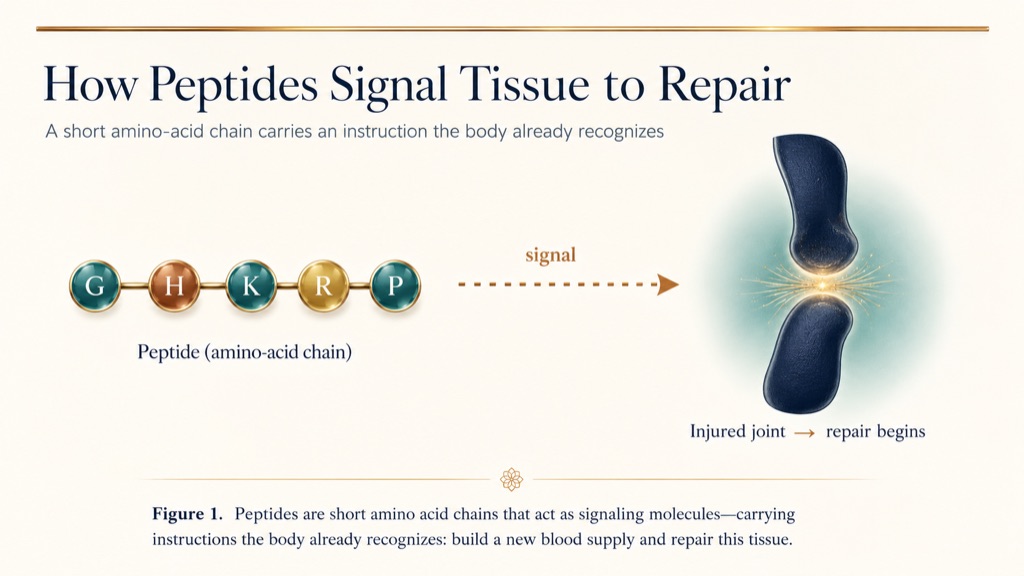
Peptides are short amino acid chains that act as signaling molecules — carrying instructions the body already recognizes: build a new blood supply and repair this tissue.
Every high-performing life eventually pays a tax, and it is usually collected in cartilage. The executive who skis in February and negotiates in March. The 52-year-old who took up padel and rediscovered a shoulder she'd forgotten since college. The former college athlete whose knees now supply the weather report. Injury and slow recovery are the quiet governors on an ambitious life — the reason a calendar full of intent collides with a body that heals on its own schedule.
For most of medical history, the menu for a stubborn tendon has been short: rest, anti-inflammatories, physical therapy, cortisone, and — when patience runs out — a scalpel. What has changed is not that we found a shortcut around biology, but that we started learning biology's own language. That language is written, in large part, in peptides.
This piece is written for the people who have to decide what to actually do — the executive, the clinician, the coach, the master's athlete, the parent of an elite student, the person in their sixties who refuses to accept that a bad hip is destiny. The aim is to show what the molecules do, what the research supports, and how genetics and artificial intelligence are converting a category that used to run on anecdote into something you can measure and manage.
What a peptide is — and why the body already speaks it fluently
A peptide is a short chain of amino acids — the same building blocks as protein, fewer of them — that functions as a signaling molecule. Where a conventional drug often forces a receptor open or slams it shut, a peptide tends to carry an instruction the body already recognizes: build a blood vessel here, calm this inflammation, migrate cells into that wound. This is not exotic chemistry. It is the vocabulary your own tissues use to coordinate repair, which is a large part of why the safety ceiling has looked so favorable.
The therapeutic lineage runs a century deep — insulin, a peptide, became a medicine in the 1920s — but the pipeline is suddenly enormous: recent reviews count more than 170 peptide agents in active clinical development.1 The stakes are not niche, either. Musculoskeletal disorders affect more than 1.7 billion people worldwide and are the single leading cause of disability on the planet.2 Anything that reliably accelerates the repair of tendon, ligament, cartilage, and muscle is a direct lever on how long people stay mobile, independent, and productive.
The four workhorses of tissue repair
Four families of peptides dominate the joint-and-injury conversation. Each pairs a compelling mechanism with a genuinely encouraging body of research — much of it preclinical, some of it human — and each is worth understanding on its own terms.
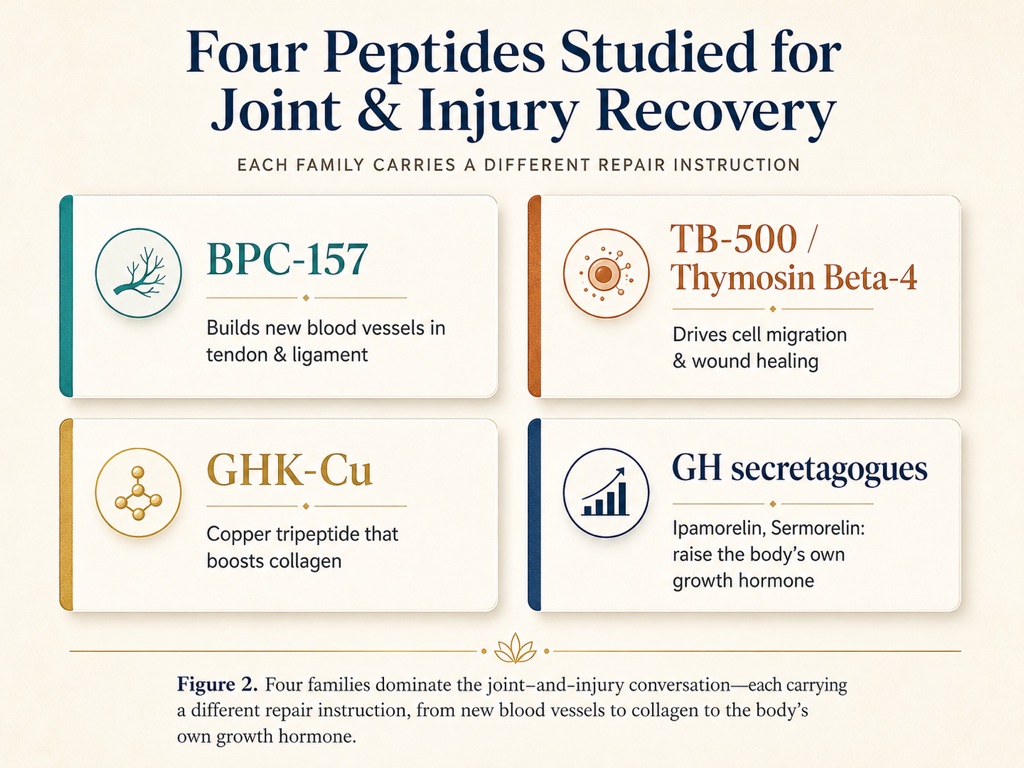
Four families dominate the joint-and-injury conversation — each carrying a different repair instruction, from new blood vessels to collagen to the body's own growth hormone.
1. BPC-157: the body's own protection compound
Body Protection Compound-157 is a stable gastric pentadecapeptide — a 15–amino-acid fragment of a protein found in human gastric juice. Most of the foundational science comes from the laboratory of Professor Predrag Sikiric at the University of Zagreb, whose group has published on it for three decades within a framework they call cytoprotection: a single mediator that helps tissues defend themselves and repair themselves across many organ systems at once.3
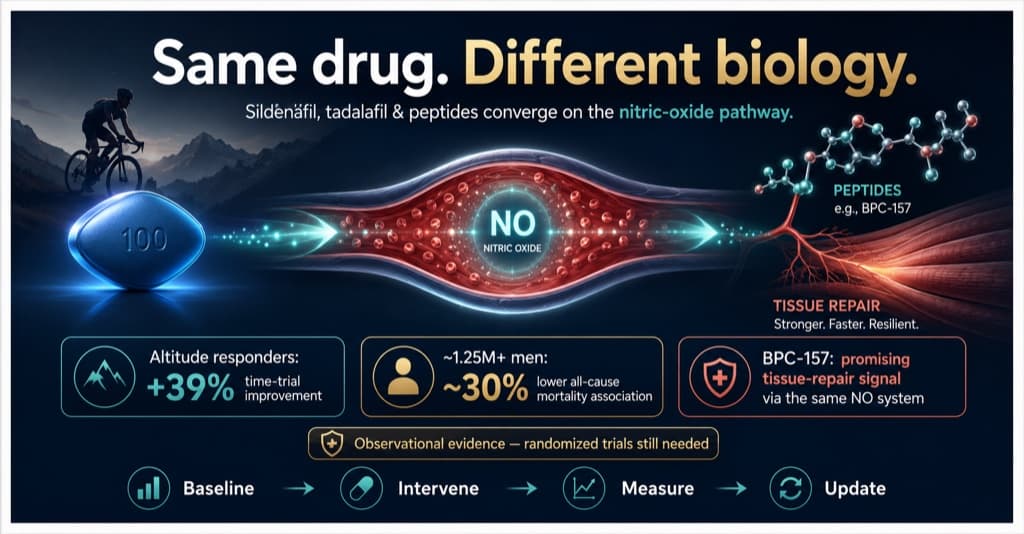
The animal data are the reason clinicians keep looking. BPC-157 upregulates VEGF to drive angiogenesis (new blood vessel formation), activates cell-adhesion and proliferation pathways, modulates nitric oxide, and — notably in tendon — increases growth hormone receptor expression in tendon fibroblasts, effectively making healing tissue more responsive to the body's own repair signals.4 A 2025 systematic review in the HSS Journal (the musculoskeletal journal of the Hospital for Special Surgery), led by Nikhil Vasireddi with senior authors James Voos and Jacob Calcei, analyzed 36 studies spanning 1993–2024 and found consistent improvement in functional, structural, and biomechanical outcomes across muscle, tendon, ligament, and bone models.5 The most striking finding for skeptics of "recovery hype": in a rat Achilles model, BPC-157 restored tendon-to-bone healing even in the presence of corticosteroids, which normally sabotage it — a signal that the peptide can work in exactly the compromised, low-blood-supply environments where healing usually stalls.6 Related rat studies report chondroprotective effects (guarding cartilage from breakdown) and successful muscle-to-bone reattachment after surgical detachment.7 This is why tendon, where blood flow is limited and recovery is famously slow, is precisely the target for a "build new blood supply" peptide.
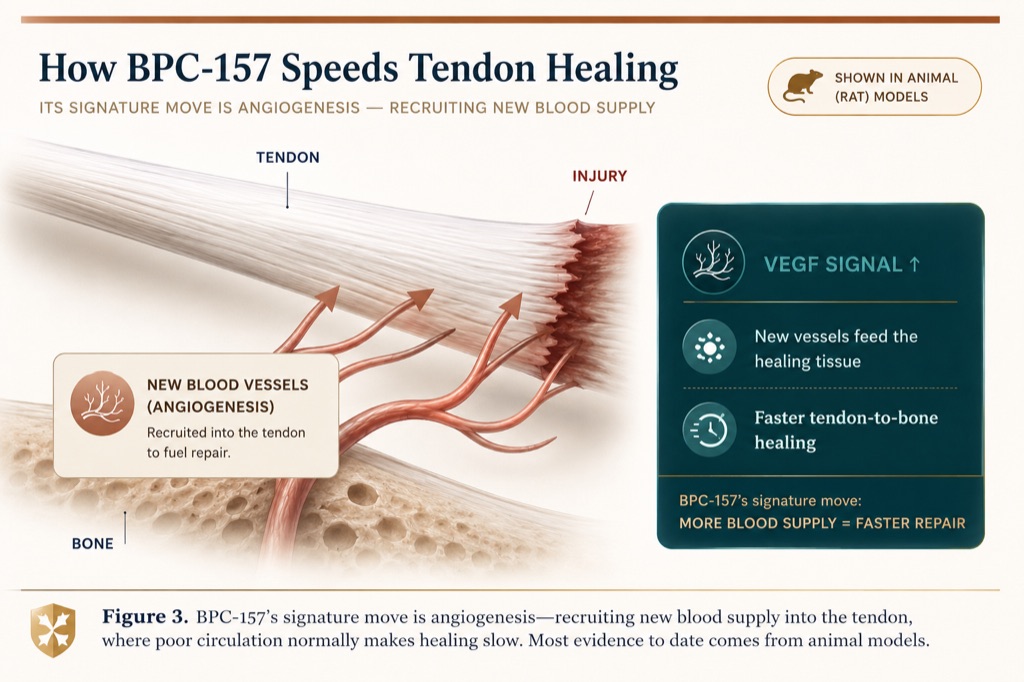
BPC-157's signature move is angiogenesis — recruiting new blood supply into the tendon, where poor circulation normally makes healing slow. Most evidence to date comes from animal models.
2. TB-500 / thymosin beta-4: the cell-migration peptide
Thymosin Beta-4 (Tβ4) is a naturally occurring 43–amino-acid peptide found throughout human tissue; TB-500 is a synthetic analog discussed alongside it. Its signature move differs from BPC-157's: Tβ4 sequesters actin, the scaffolding protein that governs how cells migrate, how vessels form, and how stem cells mobilize toward damage — so it turns up repeatedly in angiogenesis, reduced fibrosis, and the orderly resolution of inflammation.8 Its human evidence is actually deepest outside orthopedics: Tβ4 has advanced into Phase 2 clinical trials for difficult wounds — pressure ulcers, venous stasis ulcers, and the blistering disease epidermolysis bullosa — and carries a substantial literature in corneal healing, the body's most unforgiving repair surface.8,9
3. GHK-Cu: the copper tripeptide that resets the repair program
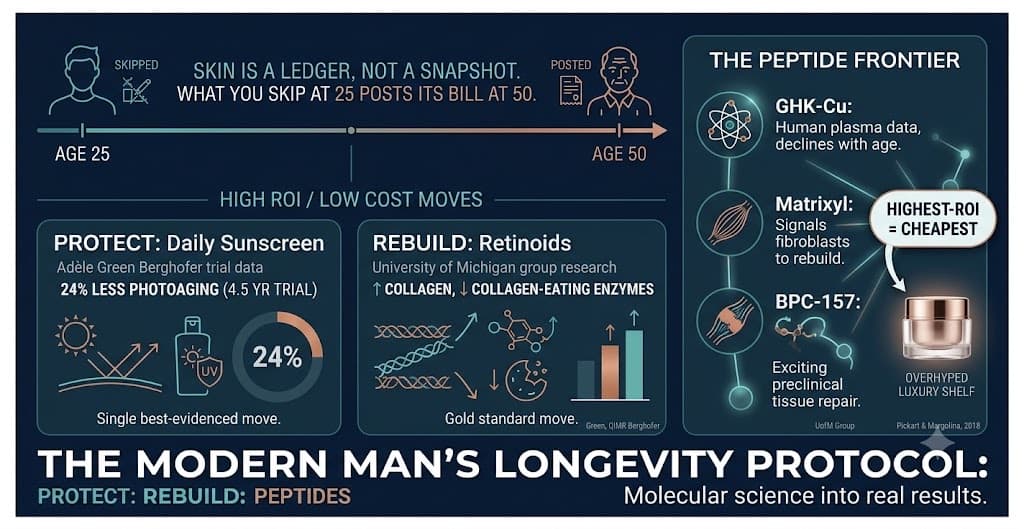
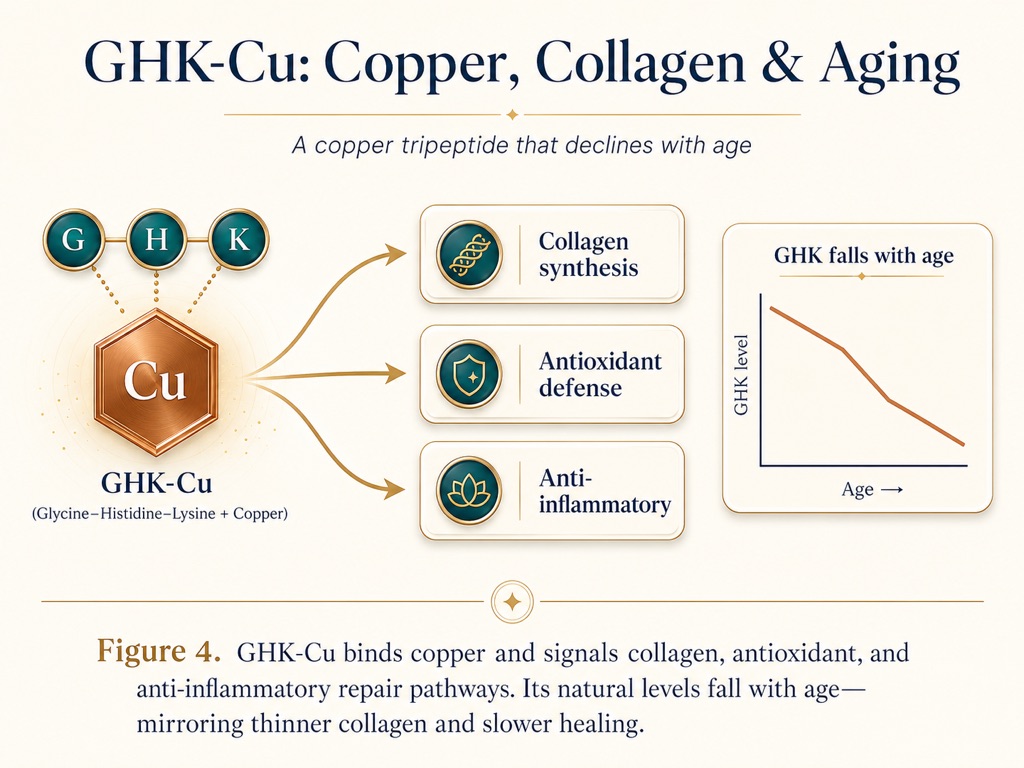
GHK-Cu — glycyl-L-histidyl-L-lysine bound to a copper(II) ion — has the longest human track record of the group. It was isolated from human plasma in 1973 by the late Loren Pickart, who noticed that a small peptide factor could make aged liver tissue behave young again.10 GHK is abundant in young adults and declines with age — a decline that tracks with thinner collagen, slower wound healing, and lost skin firmness. What sets it apart is breadth: it is less a single-target growth factor than a biological instruction set. It stimulates collagen and elastin synthesis (demonstrated in fibroblast cultures as far back as 1988), acts as an anti-inflammatory and antioxidant signal, and — most remarkably — a 2018 gene-expression review by Pickart and Anna Margolina reported that GHK-Cu can alter the expression of roughly a third of human genes at a meaningful threshold, enriched for tissue-remodeling, collagen, and antioxidant pathways.11,12 Its clinical footprint is strongest in skin, where a controlled trial showed benefit in photodamaged tissue, and years of cosmetic use have established a favorable safety record13 — a promising foundation for the connective tissue that is, after all, mostly collagen.
4. Growth-hormone secretagogues: turning up the body's own repair volume
The fourth family works upstream. Rather than acting on tissue directly, growth-hormone secretagogues coax the pituitary into releasing more of the body's own growth hormone, raising IGF-1 — the downstream messenger that carries out most of GH's anabolic effects, including protein synthesis and muscle repair.14 Ipamorelin, a selective synthetic pentapeptide, triggers a clean GH pulse via the ghrelin receptor with little spillover into cortisol; sermorelin and CJC-1295 act at a different (GHRH) receptor, so the classes are sometimes combined. Crucially, this family includes genuinely approved medicines — sermorelin was historically FDA-approved for pediatric GH deficiency, and tesamorelin (Egrifta) is an approved GHRH analog — which sets it apart from the gray market.15 Studies show these secretagogues can raise GH and IGF-1 into, not beyond, physiologic norms, with associated gains in lean mass.16 For an older adult whose GH output has faded, the appeal is intuitive: restore a youthful repair signal without overshooting it.
How to read this evidence. The pattern across all four families is consistent: strong mechanistic logic, encouraging preclinical results, a favorable early safety signal, and — for joints specifically — human data that ranges from robust (Tβ4 in wounds) to early (one clinical BPC-157 series). That is not a reason to dismiss these molecules; it is the reason to treat each protocol as a measured experiment on a population of one, with data collected before and after. The promise is real. The discipline is what converts it into a result.
Read more scientific research from LongevityPlan.AI, or buy peptides from our shop.
The Rodgers case: when the anecdote meets the animal model
When Aaron Rodgers ruptured his Achilles four snaps into the 2023 NFL season — an injury that ordinarily ends a season and, at 39, threatens a career — he reportedly incorporated peptides into an aggressive recovery program and returned to the field months ahead of the textbook timeline.17 He is not alone in the public record: Joe Rogan and former UFC champion Georges St-Pierre have both openly discussed using BPC-157 and TB-500 for injury recovery and joint health.18
The reason the Rodgers story is more than celebrity color is that the science underneath it is oddly specific. The very injury he suffered — Achilles mid-substance tendon rupture — is a similar model in which BPC-157 restored healing in rats, even in the presence of corticosteroids.6 A high-profile anecdote and a controlled animal study rarely rhyme this cleanly. It is precisely the kind of convergence that should make a serious reader curious rather than credulous: not proof that it worked for him, but a well-lit hypothesis worth measuring in the next patient, which is the entire premise of doing this with data instead of hope.
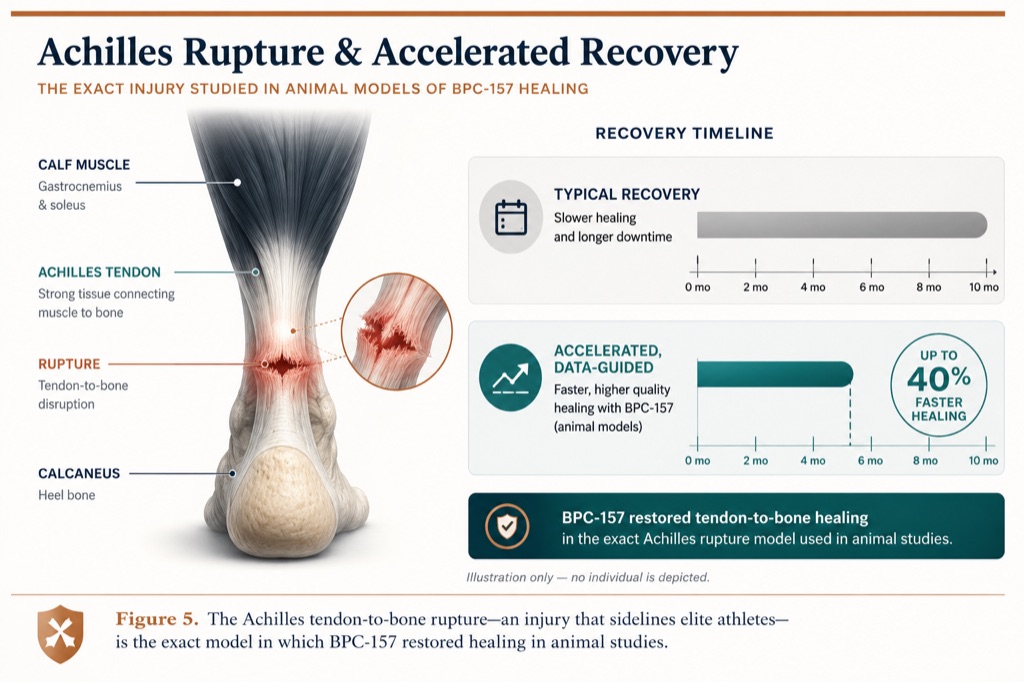
The Achilles tendon-to-bone rupture — an injury that sidelines elite athletes — is the exact model in which BPC-157 restored healing in animal studies. (Illustration only; no individual is depicted.)
Borrowed genius: what other fields already knew
Tissue-repair peptides look less speculative once you notice how many adjacent disciplines already rely on the same biology. Ophthalmology is the underappreciated proof of concept: the cornea is avascular and unforgiving, and it is exactly where Tβ4's human wound-healing data is strongest.8,9 Chronic wound care is where the economics already work — diabetic, pressure, and venous ulcers cost health systems billions and are the arena where Tβ4 reached controlled human trials. And regenerative orthopedics has already normalized the concept: platelet-rich plasma and bone marrow aspirate concentrate — biologics that concentrate the body's own healing factors — are now being tested for osteoarthritis, tendinitis, and rotator cuff injury.19 Peptides are the logical refinement: instead of a messy cocktail of factors, deliver the specific signal. The frontier isn't inventing repair. It's learning to direct it.
Why the same peptide is a different drug in every body
Here is the fact that separates rigorous practice from the influencer version: two people can run an identical protocol and get opposite results — and most never find out why. Part of the answer is genetic. The growth-hormone secretagogues make it obvious. Their entire benefit runs through a chain — pituitary release, hepatic IGF-1 production, receptor signaling in muscle and tendon — and every link is shaped by inherited variation in hormone metabolism, methylation, and detoxification. This is pharmacogenomics applied to molecules that work through the body's own endocrine wiring.
This is where genomic profiling becomes foundational rather than decorative. The Genomics Company, for example, reads an individual's DNA across seven functional systems — hormones, detoxification, methylation, nutrition, cardiovascular, sleep, and stress neurochemistry — and translates it into how that specific body processes chemicals, hormones, and medicines.20 Their framing is a useful antidote to averages: across just 50 functional regions of the genome, the odds of matching an unrelated person are roughly one in 14.5 quintillion. The "average" patient in a peptide study is a statistical fiction. And because your hormone-processing wiring never changes, it is read once and becomes a permanent lens for interpreting everything you try afterward. Genetics sets the expectation; data confirms the reality.
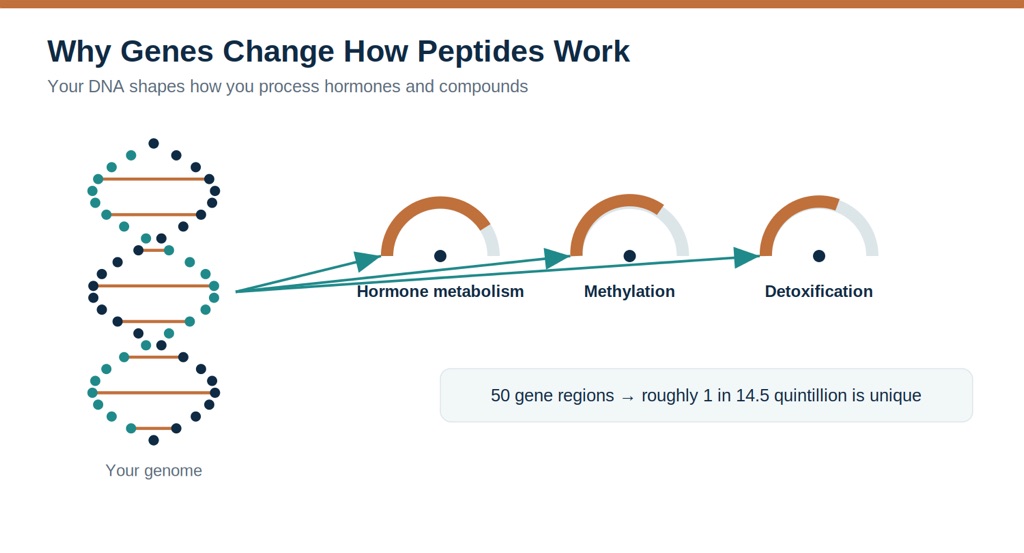
The same peptide behaves differently in every body. Genomic testing reads how you process hormones and compounds — turning an average protocol into a personal one.
The Digital Twin for Predictive Peptide Performance™
A digital twin is a living virtual replica of a physical system, kept in sync with continuous data and used to simulate what will happen next before it happens in real life. The concept moved from aerospace into medicine fast: the global digital-twin market was roughly $10.1 billion in 2023 and is projected to reach $110.1 billion by 2028, a compound annual growth rate above 61%.21 In musculoskeletal medicine specifically it is already operational — a 2025 review in Knee Surgery, Sports Traumatology, Arthroscopy led by Pedro Diniz and Bernd Grimm described systems that fuse physics-based modeling with wearable data to simulate how a tendon behaves under load, while a companion 2025 review found that adaptive, data-driven rehabilitation produced 25–40% better functional outcomes than static protocols and predicted rotator-cuff re-tear risk with 0.75–0.88 accuracy.22,23
Point that architecture at peptides and a Digital Twin for Predictive Peptide Performance™ takes shape across three layers. The sensor layer is the raw input — wearables tracking recovery, sleep, and heart rate variability; periodic bloodwork tracking IGF-1, inflammatory markers, and copper status; imaging that monitors tendon remodeling; and the fixed genomic baseline — fused into true multimodal health data. The intelligence layer combines the genetic expectation (how this body should respond) with live evidence (how it is responding) to forecast trajectory and flag divergence. The output is predictive modeling: not "here is a generic protocol," but "given your genome and your last eight weeks, here is what continuing looks like, here is what adjusting looks like, and here is the signal that says stop."
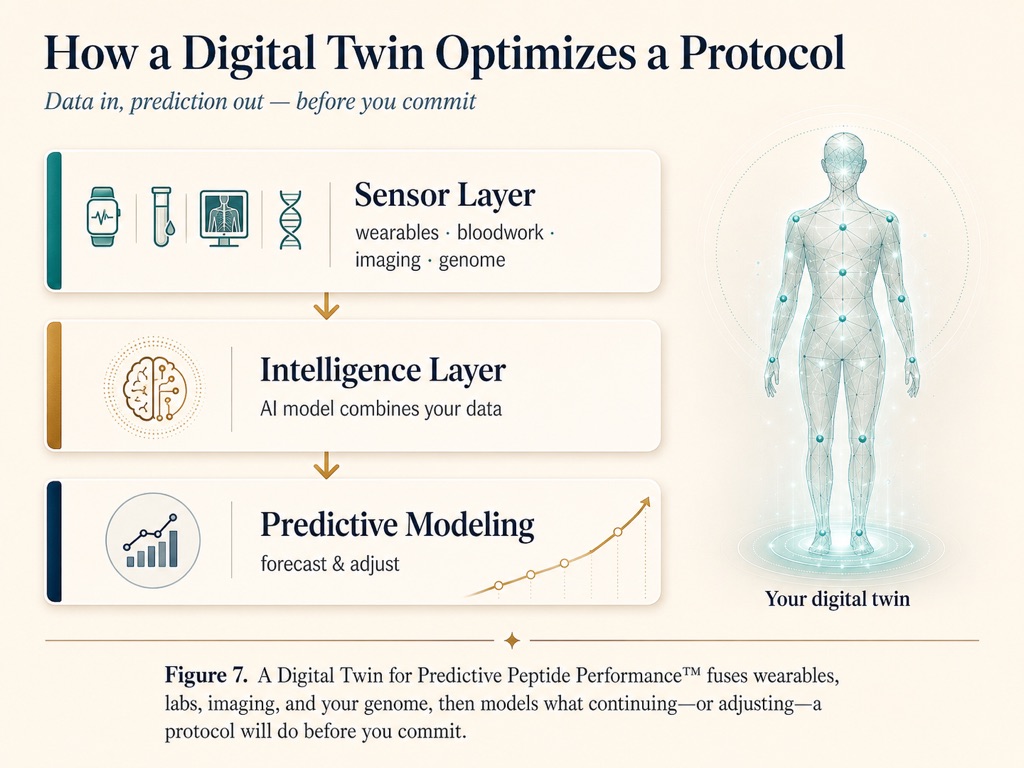
A Digital Twin for Predictive Peptide Performance™ fuses wearables, labs, imaging, and your genome, then models what continuing — or adjusting — a protocol will do before you commit.
This closes the loop the field has been missing. The human evidence is thin partly because thousands of people run uncontrolled experiments and discard the data. A twin keeps it — and across a population of users, every individual experiment quietly contributes to a collective picture of what works, for whom, and why. It is how a category built on anecdote begins to build its own evidence.
From molecule to method — and the professionals who run it
Peptides are the ingredient. The method is what turns ingredients into outcomes, and it looks less like a shopping list than a controlled experiment: establish a baseline first (genomic profile plus the relevant bloodwork — IGF-1 for GH-axis work, copper and ceruloplasmin for copper-dependent peptides, an inflammatory marker and metabolic panel for everyone); use the genetic expectation to predict response; then measure to confirm it. If IGF-1 doesn't move on a secretagogue, you know in eight weeks, not eight months. That disciplined loop, wrapped around a genomic core, is the essence of a Peptide Longevity Plan™.
Notably, this is where the health-and-performance professional becomes more valuable, not less. The weight-loss coach, the performance coach, the dietitian, the executive coach, the nutritionist, the credible influencer — these are the people who already hold the client relationship, trust, and behavioral leverage that no algorithm can supply. A twin doesn't replace them; it arms them. It provides a Coach / Practitioner with an objective, shared picture of the Athlete / Patient in front of them — genomic tendencies, live biomarker trends, response to Peptide Therapy — so their judgment rests on evidence rather than guesswork. The result is AI-powered coaching improvements: the same trusted guide, now able to explain why a protocol is working, adjust it with precision, and prove the outcome. For professionals whose brand is built on being ahead of the science, fluency in peptides and performance data is fast becoming the differentiator — and the same architecture scales cleanly from one client to a Corporate Wellness Program that extends a workforce's productive years, or to a Longevity Club's worth of pooled, anonymized learning.
What the framework deliberately omits is equally important: specific doses and self-administration instructions. That omission is load-bearing. These are potent, largely unapproved compounds; the responsible path is supervision and measurement, not a recipe.
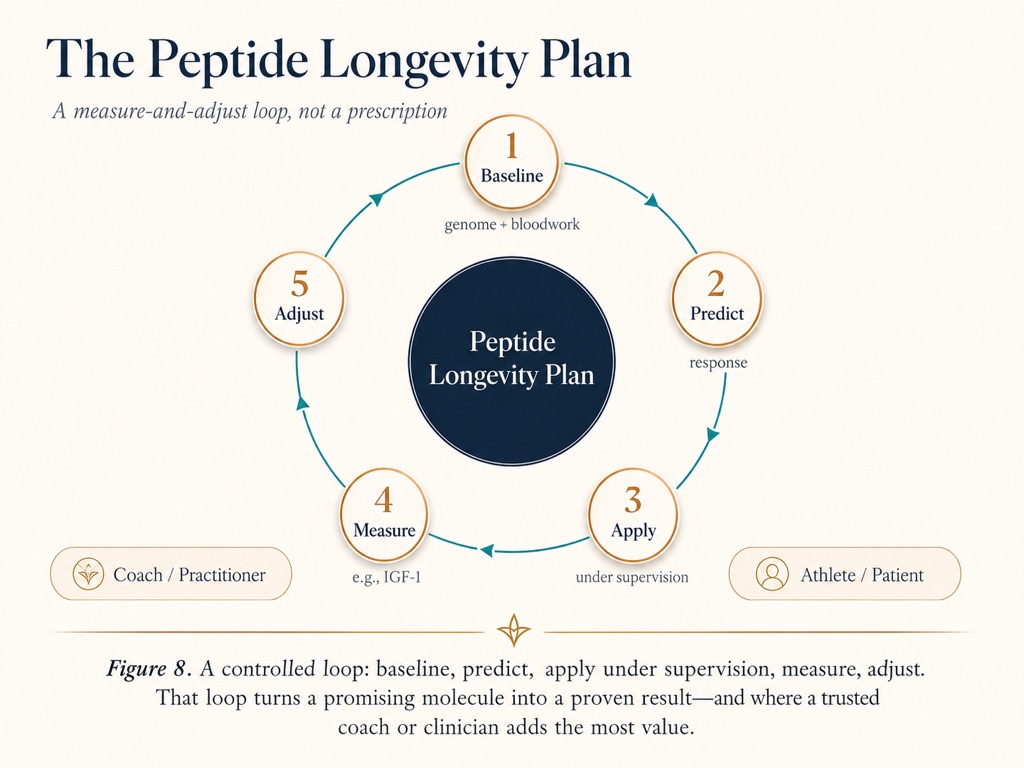
The method is a controlled loop: baseline, predict, apply under supervision, measure, adjust. It's what turns a promising molecule into a proven result — and where a trusted coach or clinician adds the most value.
The clear-eyed part: safety, sourcing, and the rulebook
A pro-science stance takes the risks as seriously as the promise, and three facts belong at the top of any decision. First, regulatory status is not a technicality: BPC-157 and TB-500 are not FDA-approved for these uses, and BPC-157 sits on the World Anti-Doping Agency's Prohibited List under S0 (banned at all times), with major professional-league bans since 2022.5,26 For any competitive athlete, that ends the conversation — though the approved secretagogues and the long-used cosmetic peptide GHK-Cu occupy very different regulatory ground, which is why "peptides" is too coarse a label to be useful on its own. Second, sourcing is a safety issue, not a price issue: because much of this market is unregulated, the real hazard often lies in contamination, mislabeling, or unknown purity in products sold "for research use only." Third, human safety data is genuinely limited: the favorable preclinical record is real and encouraging, and the fact that these molecules are derived from compounds the body already makes is a legitimate point in their favor — but the absence of large human trials is a fact to plan around, which is exactly why the measured, supervised, twin-tracked approach is not just the sophisticated option but the safe one.
The reason to plan now
Connective tissue is one of the few systems in which the cost of waiting is written into its biology: GHK levels fall with age, growth hormone output fades, and tendons lose both their blood supply and their patience. The window in which a repair signal has the most to work with is the window before the damage compounds — a quietly compelling argument for building your baseline while you still have a healthy one to measure against.
None of this is a promise of a superhero's healing factor. What the science offers is more durable than a miracle: a coherent set of molecules that speak the body's repair language, a genome that tells you how your particular body will listen, and an intelligence layer that turns the whole thing from a hope into a measurement. The tendon doesn't care about your ambition. But for the first time, you can give it something better than rest and hope — a plan.
Join the Affiliate Program (pays 20%), or subscribe to the Longevity & Peptide Optimization Newsletter.
About the Author
Tony Medrano is CEO and co-founder of LongevityPlan.AI, a platform that integrates performance and health data and leverages proprietary Digital Twin for Predictive Peptide Performance™ technology, wearable data, and biomarker data to deliver personalized optimization and longevity recommendations. A 3x technology/AI company CEO with 2 successful exits, Tony has completed 3 Full Ironman Triathlons (140.6 mi) since 2019. He holds degrees from Harvard University, Columbia University, and a JD/MBA from Stanford University, and has worked with the US Olympic Team, the NBA, NFL, MLB, NASA, Google, Microsoft, and Netflix, among others. He also served as a US Navy Officer commanding an emergency response team aboard a destroyer.
This article is for educational purposes and is not medical advice, nor an endorsement of self-administering any compound. Several peptides discussed are not FDA-approved and are prohibited in competitive sport; some are prohibited at all times by anti-doping authorities. Decisions about any therapy should be made with a qualified, licensed clinician who can supervise testing and monitoring. Figures, pricing, and regulatory status are current as of publication and change frequently — verify before acting.
Endnotes
- Thymosin Beta-4 and TB-500 in Tissue Healing, Regeneration, and Musculoskeletal Repair: A Scoping Review. Applied Sciences (MDPI). 2026;16(12):6202. (Notes 170+ peptide agents in active clinical development.)
- Musculoskeletal Digital Therapeutics and Digital Health Rehabilitation: A Global Paradigm Shift in Orthopedic Care. Journal of Clinical Medicine. 2025;14(23):8467. doi:10.3390/jcm14238467. (MSDs affect >1.7 billion people; leading cause of global disability.)
- Sikiric P, et al. Stable Gastric Pentadecapeptide BPC 157, Robert's Cytoprotection/Adaptive Cytoprotection/Organoprotection, and Selye's Stress Coping Response: Progress, Achievements, and the Future. Gut and Liver. 2020;14(2):153–167. doi:10.5009/gnl18490.
- Chang CH, Tsai WC, Hsu YH, Pang JHS. Pentadecapeptide BPC 157 Enhances the Growth Hormone Receptor Expression in Tendon Fibroblasts. Molecules. 2014;19(11):19066–19077. doi:10.3390/molecules191119066.
- Vasireddi N, Hahamyan H, Salata MJ, Karns M, Calcei JG, Voos JE, Apostolakos JM. Emerging Use of BPC-157 in Orthopaedic Sports Medicine: A Systematic Review. HSS Journal. 2025;21(4):485–495. doi:10.1177/15563316251355551. (36 studies, 1993–2024; one clinical series — 7 of 12 chronic-knee-pain patients reported >6 months' relief after intra-articular BPC-157; authors counsel athletes to know their organizations' rules.)
- Modulation of Early Functional Recovery of Achilles Tendon-to-Bone Unit After Transection by BPC 157 and Methylprednisolone (rat model). PubMed ID 18594781. (BPC-157 facilitated early tendon-to-bone recovery, including where corticosteroids impair healing.)
- Stable Gastric Pentadecapeptide BPC 157 as Therapy After Surgical Detachment of the Quadriceps Muscle for Muscle-to-Bone Reattachment in Rats. PMC11768438. See also chondroprotective findings summarized in Ref. 19 and narrative reviews.
- Thymosin Beta-4 and TB-500 in Tissue Healing, Regeneration, and Musculoskeletal Repair: A Scoping Review. Applied Sciences (MDPI). 2026;16(12):6202. (Human evidence concentrated in ocular/cornea and wound/skin; Phase 2 programs in pressure ulcers, venous stasis ulcers, epidermolysis bullosa.)
- Seiwerth S, et al. Stable Gastric Pentadecapeptide BPC 157 and Wound Healing. Frontiers in Pharmacology. 2021;12:627533. (Context on angiogenic/wound-healing peptide mechanisms.)
- Pickart L, Thaler MM. Tripeptide in Human Serum Which Prolongs Survival of Normal Liver Cells and Stimulates Growth in Neoplastic Liver. Nature. 1973;243:85–87. See also Pickart L. The Human Tri-Peptide GHK and Tissue Remodeling. J Biomater Sci Polym Ed. 2008;19(8):969–988. PMID:18644225.
- Maquart FX, Pickart L, Laurent M, Gillery P, Monboisse JC, Borel JP. Stimulation of Collagen Synthesis in Fibroblast Cultures by the Tripeptide–Copper Complex Glycyl-L-Histidyl-L-Lysine-Cu2+. FEBS Letters. 1988;238(2):343–346.
- Pickart L, Margolina A. Regenerative and Protective Actions of the GHK-Cu Peptide in the Light of the New Gene Data. International Journal of Molecular Sciences. 2018;19(7):1987. PMID:29986520.
- Leyden JJ, et al. Clinical Evaluation of a Copper Tripeptide Cream and Serum for Photodamaged Skin. Journal of Cosmetic Dermatology. 2002;1(3):197–204.
- Yakar S, LeRoith D, et al. On the role of IGF-1 in mediating growth hormone's anabolic effects (muscle growth and protein synthesis). Endocrine Reviews (GH/IGF-1 axis review literature).
- Safety and Efficacy of Approved and Unapproved Peptide Therapies for Musculoskeletal Injuries and Athletic Performance. Sports Medicine (Springer). 2026. doi:10.1007/s40279-026-02437-0. (Distinguishes approved agents — e.g., tesamorelin/Egrifta, sermorelin — from unapproved "gray-market" peptides.)
- Beyond the Androgen Receptor: The Role of Growth Hormone Secretagogues in the Modern Management of Body Composition in Hypogonadal Males. PMC7108996. (GHS raise GH/IGF-1 within physiologic norms, with associated body-composition effects.)
- Public reporting on Aaron Rodgers' 2023 NFL-season Achilles rupture and recovery, including reported use of peptide therapy (accessed 2026). Reported use is anecdotal and not a controlled study.
- Public statements by Joe Rogan and Georges St-Pierre regarding personal use of BPC-157 and TB-500 for injury recovery and joint health (accessed 2026).
- From Regeneration to Analgesia: The Role of BPC-157 in Tissue Repair and Pain Management. International Journal of Molecular Sciences. 2026;27(6):2876. (Context on PRP/BMAC in regenerative orthopedics and BPC-157 chondroprotection.)
- The Genomics Company (a division of BrainCelling, LLC), Pittsburgh, PA. Programs and genomic-systems framework, thegenomicscompany.com (accessed 2026).
- Diniz P, Grimm B, Garcia F, et al. Digital Twin Systems for Musculoskeletal Applications: A Current Concepts Review. Knee Surgery, Sports Traumatology, Arthroscopy. 2025;33:1892–1910. doi:10.1002/ksa.12627. (Digital-twin market $10.1B in 2023, projected $110.1B by 2028; CAGR >61%.)
- Diniz P, Grimm B, et al., ibid. (Multibody dynamics, finite-element analysis, and wearable integration for musculoskeletal digital twins.)
- Musculoskeletal Digital Therapeutics and Digital Health Rehabilitation. Journal of Clinical Medicine. 2025;14(23):8467. (Adaptive algorithms: 25–40% functional improvement vs. static protocols; rotator-cuff re-tear prediction AUC 0.75–0.88.)
- Function Health, Inc. v. Superpower Health, Inc., No. 2:26-cv-00810-JFW-DSR (C.D. Cal. filed Jan. 26, 2026). Company/pricing details per published 2026 platform comparisons (Function Health $298M Series B, Nov. 2025).
- Fountain Life Launches New APEX Membership (press release, Mar. 31, 2026), adding VO₂ max and functional-movement assessment; statement attributed to Dr. Dawn Mussallem, Global Chief Medical Officer.
- Sport Integrity Australia / World Anti-Doping Agency. BPC-157 listed on the WADA Prohibited List under S0, Non-Approved Substances (banned at all times); professional-league bans since 2022 per Ref. 5.