Bone Health
·15 min read
Evolution of Targeted Bone Therapies: How Peptides, Biologics, and AI Are Changing Osteoporosis Care
Bone is a living organ that rebuilds itself about once a decade. Peptides, biologics, genomics, and AI are turning osteoporosis care from a one-size-fits-all pill into a personalized, sequence-aware plan.
By Tony Medrano & Lisa Vance Castleton
Here is a fact to reorder how you think about aging: the skeleton you are carrying right now is younger than you are. Adults recycle roughly 10% of their bone every year, dismantling and rebuilding the entire scaffold about once a decade.¹ Bone is not the inert coat-rack it appears to be on an X-ray. It is a living, hormonally active, self-renovating organ — which means, like any organ, it can be optimized, neglected, or repaired under proper medical guidance.
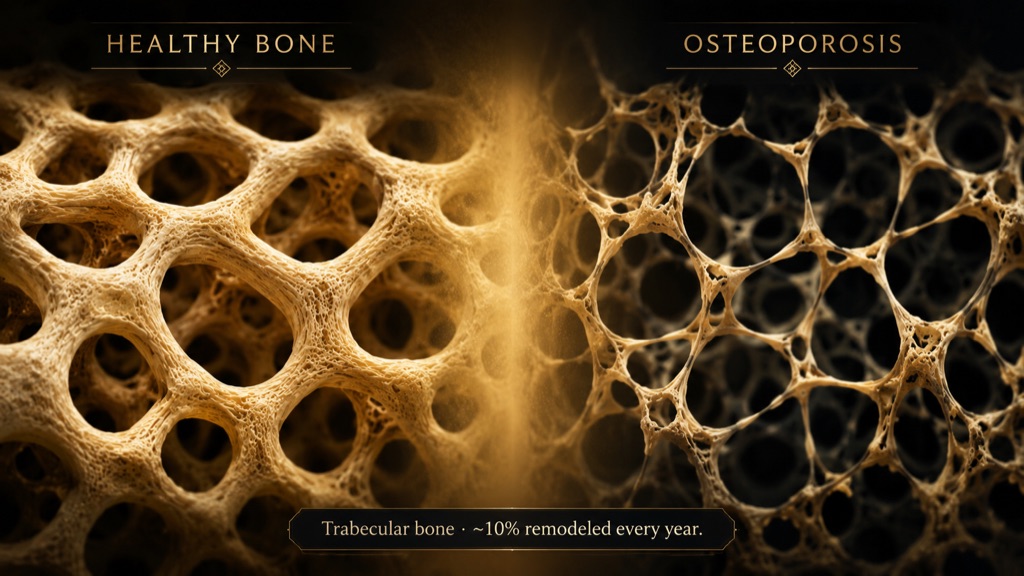
Bone is a living organ that rebuilds itself about once a decade. Osteoporosis is simply the demolition crew outworking the construction crew — a balance modern targeted therapeutics can tip back the other way.
For those interested in optimizing longevity — the 48-year-old founder who still deadlifts, the 63-year-old cardiologist, the former college athlete, the impeccably fit 70-year-old who fully intends to ski at 85 — bone is the literal load-bearing wall of healthspan. One can carry a pristine VO₂ max and the metabolism of someone half their age, but a shattered hip will end the entire project in an afternoon. The encouraging news is that modern medicine has developed classes of targeted therapeutics, including peptides and biologics, that can actively build bone. Genomics and AI are now making it possible to assist clinicians in understanding patient-specific Wnt-pathway profiles (a signaling pathway involved in bone growth and repair) and historical bone turnover rates, thereby better tailoring these interventions.
A Vigorous Woman, Blindsided
Consider Sally Field. Two Academy Awards, a career spanning Gidget to Norma Rae to Steel Magnolias, and by her own description, a "real physical person" who had always eaten well, exercised, and taken her calcium. Then, just shy of her 60th birthday, a routine bone-density scan showed her numbers had taken a steep dive. The diagnosis was osteoporosis, and she never had a single symptom to warn her.²
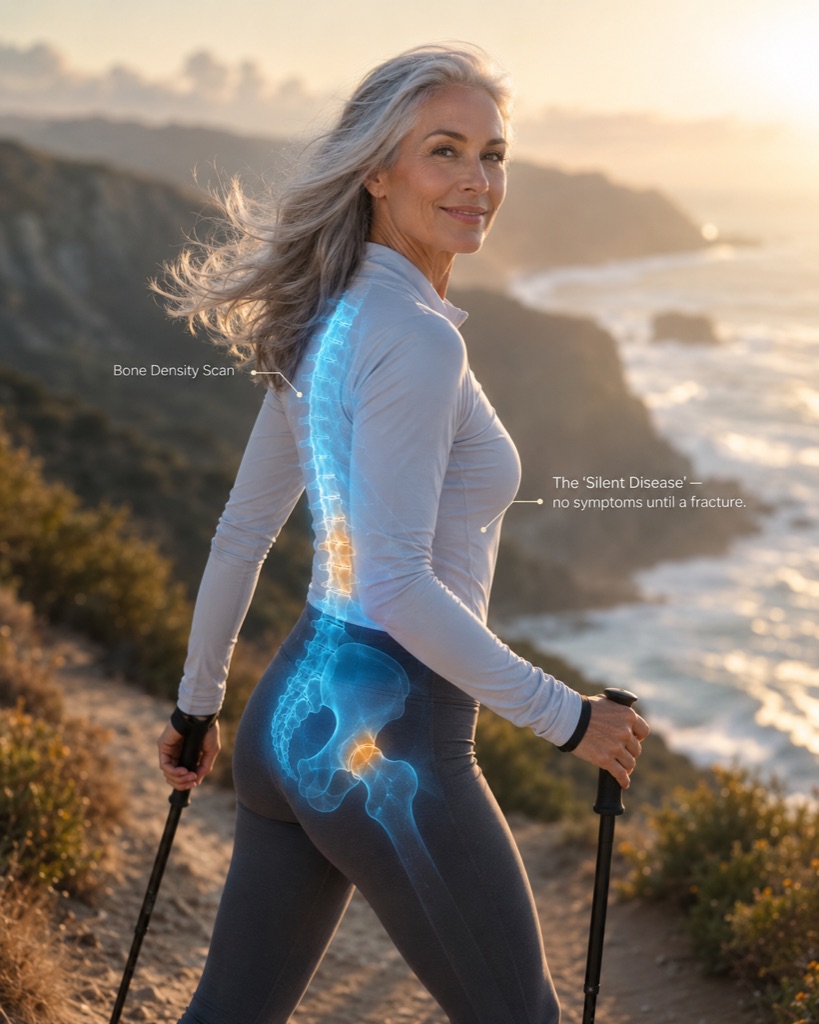
Osteoporosis rarely announces itself. It strikes active, accomplished people who feel perfectly strong, which is exactly why early screening, not a first fracture, should be the trigger to act.
What makes her story instructive is not that a celebrity got a disease. It is why she got it despite doing everything "right." Field ticked nearly every risk box: post-menopausal, small-framed, and a strong family history, having watched her own grandmother left badly stooped by the disease. She would later call her diagnosis, with characteristic bluntness, "almost a slam-dunk."² No amount of kale and dumbbells was going to fully override her genetics. Because a doctor had been watching her precisely for that reason, the drop was caught before it became a broken hip — the kind of fracture that, she noted, she could have suffered simply by picking up her granddaughter.
Field turned that scare into a decade of advocacy, taking the message to Capitol Hill alongside clinicians such as Columbia's Ethel Siris, who has spent a career insisting that osteoporosis is "both beatable and treatable" rather than an inevitable tax on old age.² That message matters, because the disease is astonishingly common and astonishingly under-treated: worldwide, fragility fractures number in the millions each year, roughly one in two women over 50 will suffer one, and most people who fracture were never tested or treated beforehand.³
The mainstay of Field's generation was an antiresorptive pill (such as a bisphosphonate) — a drug that slows the demolition of bone. Useful, but fundamentally defensive. Today, a patient at her level of risk has access to therapeutics that actively rebuild bone, plus a genomic and AI layer that can help physicians better understand which of them fits your biology. This article is about that upgrade. We'll take the five therapists that matter, and then show how the same issues that made Field's diagnosis a "slam-dunk" can be turned from a verdict into a plan.
The "best peptides for osteoporosis" lists on the internet are often topped by BPC-157, TB-500, or copper peptides. Those molecules have interesting tissue-repair biology and seem very promising. But they do not yet have a completed randomized human clinical study for fracture prevention. The five agents below are the ones with receipts: pivotal Phase 3 data, regulatory review, and hard fracture numbers.
Why Bone Is a "Longevity Organ"
To understand the drugs, understand the machine. Three cell types run the remodeling economy. Osteoclasts are the demolition crew, dissolving old bone. Osteoblasts are the masons, laying down fresh matrix. And buried inside the mineral, wired together like a neural net, are the osteocytes — the foremen who decide where and when building or demolition happens. Stavros Manolagas of the University of Arkansas spent a career establishing that the birth, life, and death of these cells is the real story of osteoporosis.¹
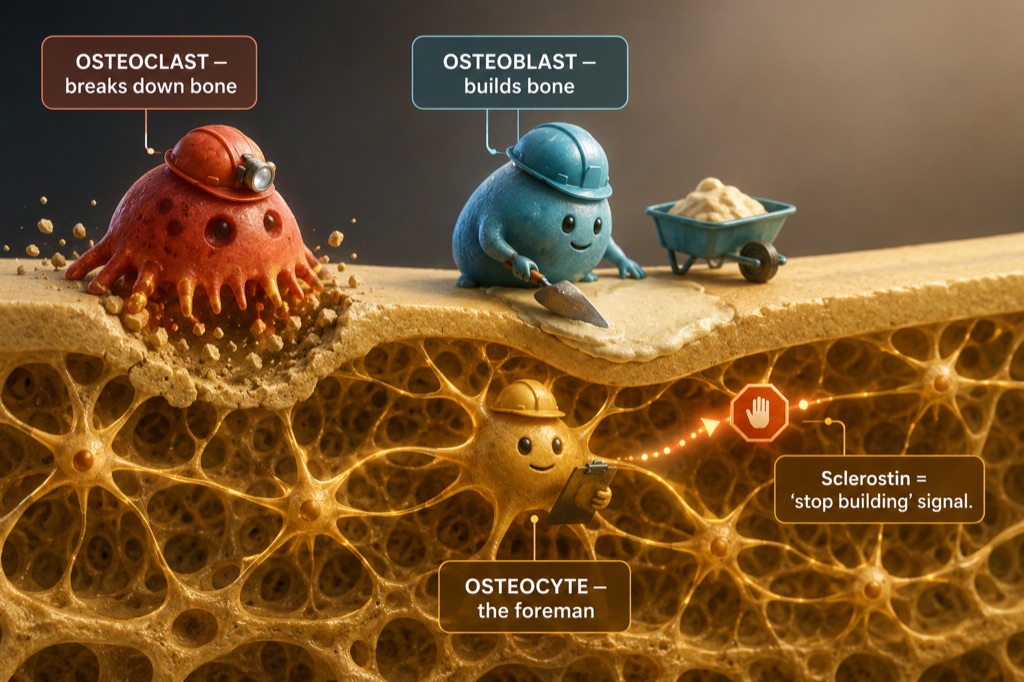
The remodeling crew: osteoclasts demolish, osteoblasts build, and osteocytes call the shots — partly through a "stop building" signal called sclerostin. Every drug in this article talks to one of these cells.
The osteocyte's single most consequential message is a protein called sclerostin — a molecular "stop building" signal. Meanwhile, at Mayo Clinic, Sundeep Khosla has shown that much age-related bone loss is driven by cellular senescence: "zombie" cells that accumulate with age and poison their neighborhood. In mice, clearing them preserves bone.⁴ Bone also turns out to be an endocrine organ that talks back to metabolism and muscle — so defending your skeleton isn't only fracture insurance; it's maintenance on an organ that helps run the rest of you.
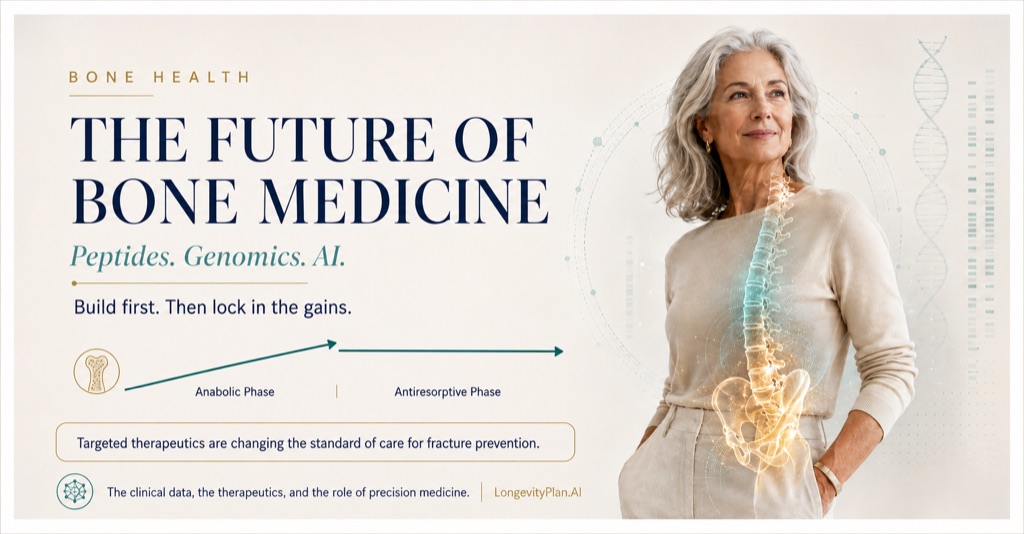
Every therapeutic that follows is, at heart, a way to send one of two instructions to this system: build more (anabolic) or tear down less (antiresorptive). The genius — and the reason timing will become the hero of this story — is that the same molecule can help or waste itself depending on when it's used.
The Bone Builders
#1 Teriparatide (PTH 1–34): The Peptide That Broke the Rules
For decades, dogma held that parathyroid hormone destroys bone. It does — when exposure is continuous, as in hyperparathyroidism. But in one of endocrinology's great counterintuitive discoveries, an intermittent once-daily injection of the first 34 amino acids of PTH does the opposite: it stimulates bone formation more than resorption.⁵ That 34-residue fragment is teriparatide (Eli Lilly's Forteo), approved by the FDA in 2002 as the first anabolic — bone-building — osteoporosis drug.
The pivotal trial, led by Robert Neer and published in the New England Journal of Medicine, enrolled 1,637 postmenopausal women with prior vertebral fractures. Over a median of 21 months, teriparatide cut the risk of new vertebral fractures by 65% and nonvertebral fragility fractures by 53% versus placebo.⁶ Those aren't cosmetic density bumps; those are broken bones that didn't happen. John Bilezikian of Columbia, among the world's foremost authorities on PTH, has long argued that agents like this belong first in the treatment sequence for patients at the highest imminent risk.
The caveats are significant: it's a daily injection, its benefit is capped at roughly a two-year window, and it originally carried a boxed warning based on osteosarcoma seen in rats given lifelong high doses — a signal that extensive human surveillance has not borne out (though its use is still cautioned in patients with an increased baseline risk of osteosarcoma). Common adverse events include nausea, dizziness, and leg cramps.²⁹ And crucially, when you stop, the gains erode unless something is done to hold them.
#2 Abaloparatide (PTHrP 1–34 Analog): The Engineered Successor
If teriparatide is the original, abaloparatide (Radius Health's Tymlos, approved 2017) is the precision-engineered sequel — a case study in how molecular design turns a good peptide into a better one. It's a 34-amino-acid synthetic analog of another molecule, parathyroid hormone-related protein.⁷ The elegance is in the receptor pharmacology: work by Gary Hattersley, Thomas Gardella, and colleagues showed abaloparatide preferentially engages a particular short-lived conformation of the PTH-1 receptor, producing a strong build signal with less of the calcium-mobilizing side effect that limits its predecessor.⁸
The payoff appeared in the Phase 3 ACTIVE trial (2,463 women): abaloparatide reduced new vertebral fractures by 86% versus placebo, with early reductions in nonvertebral fractures too.⁹ Analyzing the "number needed to treat," Jean-Yves Reginster, Lorraine Fitzpatrick, and E. Michael Lewiecki made the case that abaloparatide is a highly efficient use of a precious anabolic window.¹⁰ Common adverse reactions include hypercalciuria, dizziness, nausea, and palpitations.³⁰ A transdermal micro-needle version is in development — an early sign that the injection burden, the single biggest reason people abandon these drugs, may be an engineering problem, not a law of nature.
#3 Romosozumab (Anti-Sclerostin): The Drug That Human Genetics Designed
This is the most remarkable origin story in the field, and it doubles as a preview of how genomics could reshape everything.
Years ago, physicians noticed two rare populations: people with a South African condition called sclerosteosis, and Dutch families with Van Buchem disease, whose bones were extraordinarily dense and fracture-resistant. Geneticists traced both to loss-of-function mutations in a single gene, SOST — the gene for that osteocyte "stop building" signal, sclerostin.¹¹ The logic wrote itself: if switching sclerostin off genetically builds nearly unbreakable bone, a drug that blocks sclerostin should do the same. Roland Baron of Harvard, whose work mapped how the Wnt signaling pathway governs bone mass, helped make the target credible.¹²
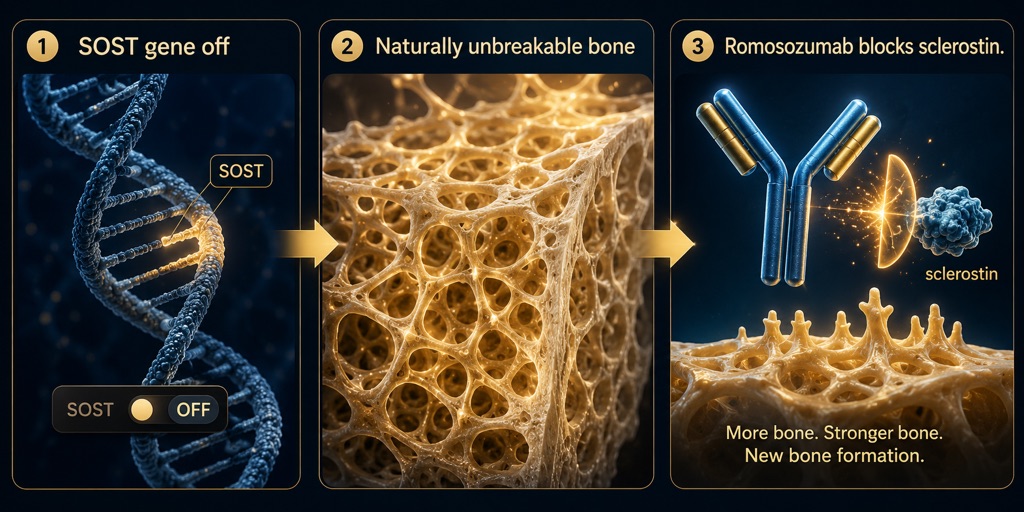
Reverse-engineering a blessing: people born with an inactive SOST gene have extraordinarily strong bones. Romosozumab mimics that genetic quirk on demand — a drug inspired by human genetics.
That drug is romosozumab (Amgen and UCB's Evenity, approved 2019). It is a monoclonal antibody rather than a peptide — but it is the direct therapeutic realization of the peptide/Wnt-signaling story. It's also uniquely two-handed: by neutralizing sclerostin, it simultaneously increases formation and decreases resorption. In the FRAME trial (first-authored by Felicia Cosman of Columbia, involving over 7,000 women), one year of romosozumab reduced new vertebral fractures by 73% versus placebo, with lumbar-spine density gains of around 13% in 12 months — territory no antiresorptive reaches.¹³ In the ARCH trial, romosozumab followed by alendronate beat alendronate alone, cutting new vertebral fractures by 48% over two years.¹⁴
A significant consideration: ARCH surfaced a cardiovascular imbalance (adjudicated major cardiac events, hazard ratio roughly 1.87), and the U.S. label now carries a boxed warning against starting the drug in anyone who had a heart attack or stroke in the prior year.¹⁵ Because of this Boxed Warning, romosozumab must be carefully prescribed by a physician evaluating a patient's comprehensive cardiovascular history. Additionally, common adverse reactions include joint pain and headaches.³¹
The Cautionary Classic
#4 Salmon Calcitonin: The Peptide That Teaches Humility
Every credible list needs the molecule that keeps us honest. Calcitonin is a 32-amino-acid peptide hormone; the salmon version is far more potent in humans than our own, and for years it was a go-to antiresorptive delivered by nasal spray. The PROOF trial showed a real but modest effect — a 33% reduction in new vertebral fractures at the 200-IU dose — and no convincing protection at the hip, the fracture that matters most.¹⁶
Then the story turned. Pooled analyses raised a small but statistically significant malignancy signal, and in 2012 the European Medicines Agency recommended against using salmon calcitonin for osteoporosis at all; U.S. use is now confined to narrow situations where better options are contraindicated.¹⁷,¹⁸ The lesson is precisely the one that separates medicine from marketing: a peptide being "natural" and "a hormone your body already makes" guarantees nothing about whether it works or whether it's safe. Calcitonin maintains a niche in short-term relief after an acute vertebral fracture, but as a preventive strategy, it has been eclipsed.
The Frontier
#5 Oral PTH and the Next Generation of Targeted Therapies
The fifth therapeutic is really a frontier, and it's where the disruptors live. The two problems that shrink the market for everything above are the needle and the specialist bottleneck: most people who should receive an anabolic never do. A small Israeli-American company, Entera Bio, is attacking the needle directly with EB613, an oral tablet of PTH(1–34) built on a proprietary oral-peptide delivery platform. In December 2025, the FDA qualified total-hip bone density as a validated surrogate endpoint for fracture trials — a landmark that smooths the path for exactly this kind of program — and by mid-2026, Entera had secured positive FDA feedback on its Phase 3 design.¹⁹,²⁰ The company's CEO, Miranda Toledano, frames the mission plainly: to "democratize anabolic treatment."²¹ If a bone-building peptide can become a pill your primary-care physician prescribes, the addressable population changes by an order of magnitude. (Note: EB613 remains an investigational agent; its safety and efficacy are subject to ongoing clinical trials and ultimate FDA approval.)
On the Wnt side, the sclerostin idea keeps iterating. Transcenta Holding is advancing a next-generation anti-sclerostin antibody (TST002/blosozumab) through Phase 2, and Wnt-focused biotechs such as Surrozen are engineering molecules to more selectively tune the same pathway.²² Beneath all of it sits an unglamorous but decisive layer: peptide manufacturers such as Bachem and PolyPeptide Group, whose synthesis capacity determines whether a promising sequence can ever be made at scale and price, and biosimilar makers like Alvotech and GlycoNex, whose work to lower the cost of the biologics may impact the public-health story.
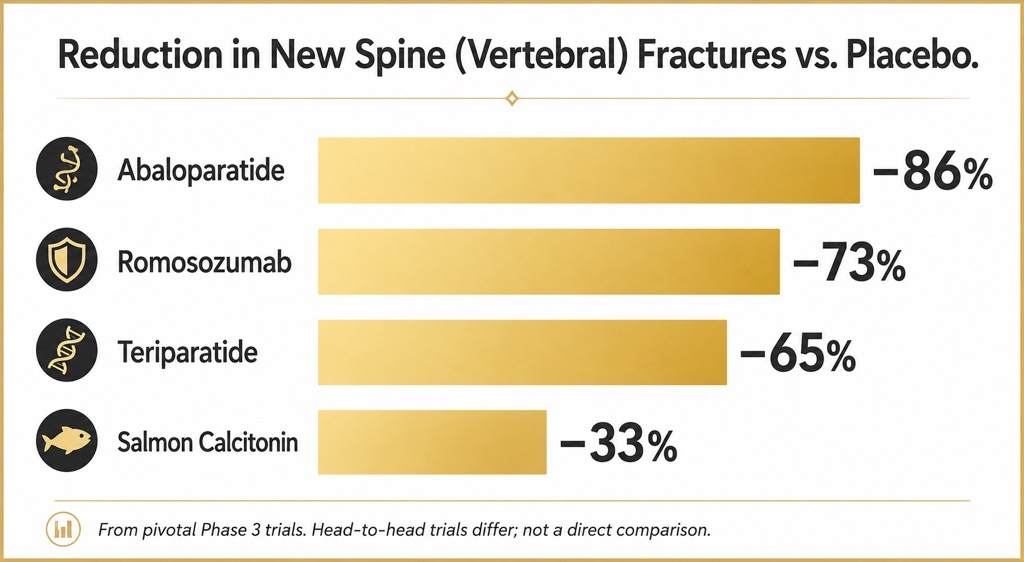
Advances in fracture reduction: these are the spine fracture reductions reported in each agent's pivotal trial. (Note: These percentages represent data from separate clinical trials with different patient populations, baselines, and durations. They are not head-to-head comparisons and should not be used to directly rank relative efficacy.)
The Layer Almost Nobody Talks About: Your Genome
Return, for a moment, to Sally Field. She did the lifestyle work and still drew osteoporosis, because the deck was stacked in her DNA before she took her first calcium tablet. She wasn't being fatalistic — she was being accurate. Bone density is among the most heritable traits in medicine, with heritability estimates ranging from 50% to 85%.
Large genome-wide studies have now linked more than a thousand independent genetic loci to bone mineral density.²³ And these aren't abstract genes: the LRP5 gene — a co-receptor in the very Wnt pathway that romosozumab targets — produces near-unbreakable bone when it's hyperactive and a devastating early-onset osteoporosis when it's broken.²⁴,²⁵ The pathway your genes tune is the pathway these drugs modulate. Two people with identical scans can carry very different Wnt-pathway genetics — a plausible reason they respond differently to an anti-sclerostin or a PTH agent.
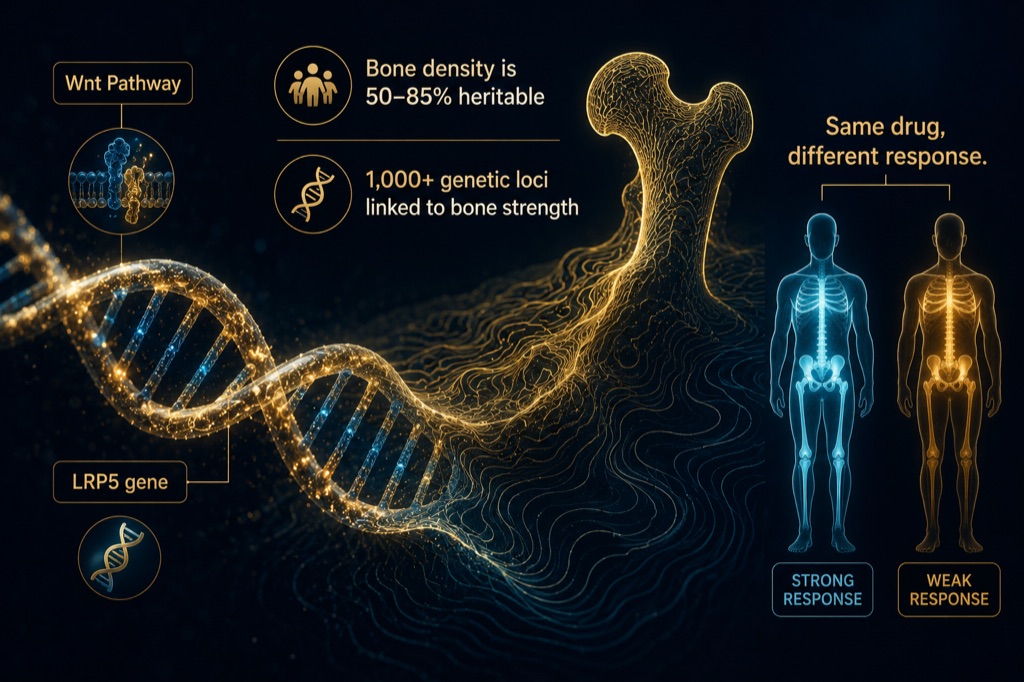
Bone density is one of the most heritable traits in medicine. Your genome reads the terrain before you choose the vehicle — and helps explain why the same therapy can be highly effective for one person and a miss for another.
Pharmacogenomic prediction of individual peptide response is still an emerging science, and we do not want to oversell it. But the direction of travel is unmistakable, and it's why companies such as The Genomics Company treat a genetic assessment not as a novelty but as the bedrock data layer beneath any serious, personalized bone protocol. Genetics reads the terrain before you choose the vehicle — the difference between Field's "slam-dunk" being a life sentence and being a head start.
From Genome to Game Plan: Clinical Data Aggregation
A genome is a static map. Bone is a moving target. The frontier is fusing the two — and this is where AI stops being a buzzword and becomes something concrete: a comprehensive data-visualization tool for your skeleton.
Consider what a well-built model actually ingests. At the base is a layer of objective inputs: serial bone-density scans, trabecular bone score, and two blood markers that reveal the remodeling economy in near real time — P1NP (a formation marker) and CTX (a resorption marker). Above it, an intelligence layer weaves those signals together with genomics, vitamin D and calcium status, kidney and hormone panels, medication history, and wearable-derived loading and activity. This is the promise of true multimodal health data: not a single number on a single day, but a coherent, living portrait. LongevityPlan.AI calls the bone-specific version a Digital Twin for Predictive Peptide Performance™ — a virtual model of your remodeling system that can be stress-tested as an educational tool before a needle ever touches skin, much as a Cardiorespiratory Digital Twin™ does for the heart-lung system.
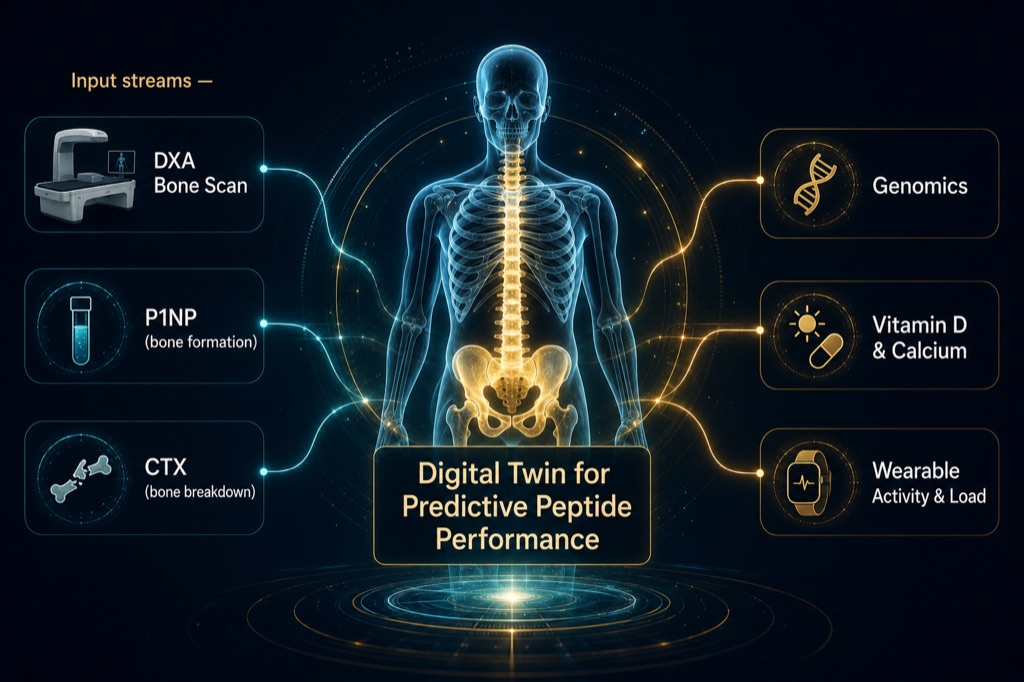
A digital twin fuses scans, blood markers, genomics, and wearable data into one living model of your skeleton — so a theoretical protocol can be visualized for your physician before a needle ever touches skin.
What does that buy you? The answer is the variable we flagged twice: timing and sequence, the most underappreciated lever in all of osteoporosis care. The field's own data are emphatic. Benjamin Leder's DATA and DATA-Switch studies at Massachusetts General Hospital showed that the order in which you give an anabolic and an antiresorptive dramatically changes the result: build first with a peptide or biologic, then "cement" the gains with an antiresorptive, and you keep far more bone than the reverse order — and far more than stopping an anabolic with nothing to hold the line.²⁶ In 2026, Leder and colleagues pushed the logic further with the LIDA trial, showing that even a short three-month course of romosozumab followed by an antiresorptive could match a full year — a finding that could widen access and cut cost.²⁷ Michael McClung, a central figure in the romosozumab program, has championed this build-then-defend strategy for years.
These are precisely the calls — which agent, in what order, for how long, when to switch — where a model can help a licensed endocrinologist. Feed an AI model your P1NP trajectory, and it can flag a fading anabolic response weeks before the next scan confirms it, providing your physician with clearer data to make critical therapeutic decisions. That is predictive modeling converting reactive medicine into a proactive clinical partnership, and it reshapes the relationship between the Doctor and the Patient from annual guesswork to continuous course correction.
The NASA analogy that should both terrify and inspire you. Want to watch osteoporosis in fast-forward? Send someone to orbit. In microgravity, astronauts lose weight-bearing bone at roughly 1–1.5% per month — a decade of earthbound aging compressed into weeks.²⁸ That is exactly why NASA obsesses over countermeasures: resistance loading, nutrition, and pharmacology, all tracked with dense telemetry. Your skeleton on Earth is running the same program in slow motion; the tools that keep an astronaut's hip intact are the ones worth borrowing.
Whose Science You're Standing On
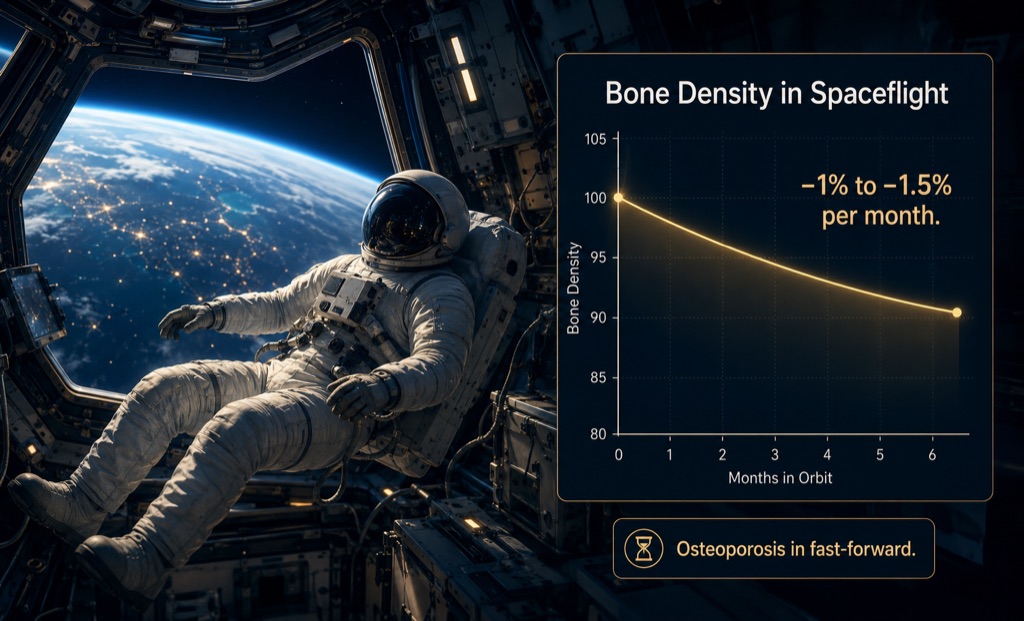
Astronauts lose bone up to 1.5% a month — a decade of aging in weeks. It's why NASA tracks the skeleton with dense telemetry and countermeasures, the same playbook precision medicine is bringing down to Earth.
A plan is only as good as the evidence beneath it, so it's worth knowing who generates that evidence — because their data are what any digital twin is ultimately built from. The clinical guardrails are set by professional bodies: the American Society for Bone and Mineral Research (ASBMR), the Bone Health & Osteoporosis Foundation (BHOF), the International Osteoporosis Foundation (IOF), and the UK's Royal Osteoporosis Society. The 2025 breakthrough that bone density can now serve as a fracture surrogate came from a public-private partnership run through the Foundation for the NIH — the SABRE project — which pooled 52 trials and more than 160,000 participants to prove the point.¹⁹
The commercial engines are Eli Lilly (teriparatide), Radius Health (abaloparatide), and Amgen with UCB (romosozumab), while the disruptors — Entera Bio, Transcenta, Surrozen — chase the next generation. The academic depth is a quiet marvel. Beyond Bilezikian, Cosman, Leder, McClung, Khosla, Manolagas, and Baron, three loose "schools" propel the field: the cell-biology school probing how bone cells live and die (Lilian Plotkin on osteocytes at Indiana; Nicola Partridge on PTH gene regulation at NYU; Joy Wu on skeletal stem cells at Stanford; Clifford Rosen on marrow biology at MaineHealth; Jennifer Westendorf on Wnt and epigenetics at Mayo); the mechanics-and-quality school (Mary Bouxsein on bone biomechanics at Harvard; Marja Hurley on growth factors at UConn); and the trialists and epidemiologists whose rigor lets us claim any of this works at all (Socrates Papapoulos in Leiden, Ian Reid in Auckland, and Steven Cummings and Dennis Black at UCSF). Ethel Siris of Columbia — the clinician who stood beside Sally Field on Capitol Hill — has spent decades making sure the pharmacology actually reaches patients.
Putting the Science to Work
How should a discerning, data-literate person actually treat bone as a longevity asset? A few principles follow from everything above.
Measure before you medicate. The baseline worth having isn't one scan but a panel: bone density with trabecular bone score, a FRAX fracture-probability estimate, P1NP and CTX turnover markers, vitamin D and calcium, and — increasingly — a genetic read of your Wnt-pathway and density loci. That panel is the raw material a digital twin needs; without it, any protocol is a guess in an expensive format. Sally Field's outcome hinged on exactly this: someone was measuring, so the steep drop was caught while it was still a number and not yet a fracture.
Build, then defend. If your risk is high, the science favors your physician building first with an anabolic peptide or biologic, then locking in the gains with an antiresorptive — never the reverse, and never an anabolic that simply stops with nothing behind it. The most common way people waste a bone-building drug is quitting cold.
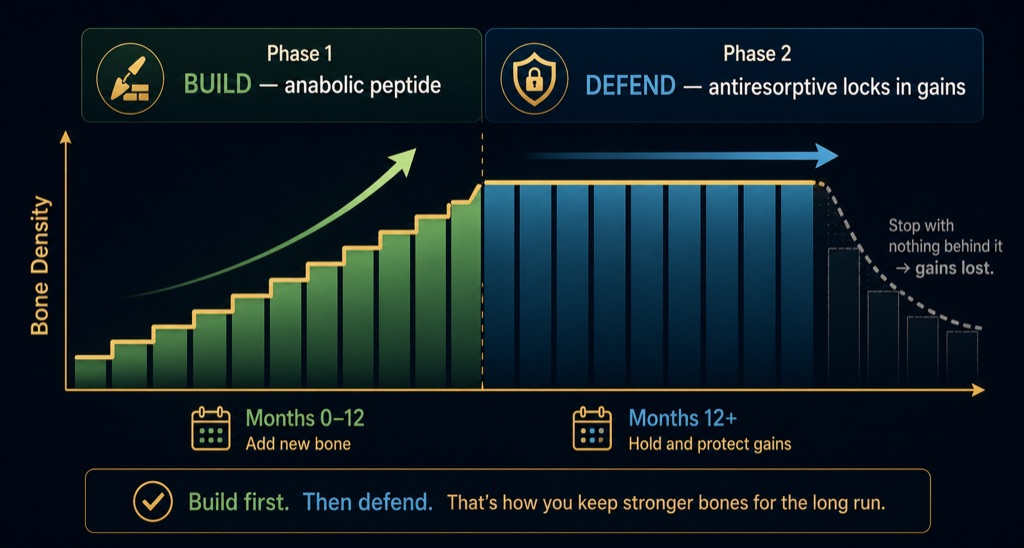
Sequence is everything. Build bone first with an anabolic peptide or biologic, then lock the gains in with an antiresorptive — the reverse order, or stopping cold, quietly, can result in rapid bone loss.
Remember, the drug is half the plan. No peptide substitutes for mechanical load. Progressive resistance training and impact-style loading are the osteoblast's native language; adequate protein and vitamin D are its supply chain. The most sophisticated pharmacology underperforms in a sedentary, under-fueled body, which is why a genuine comprehensive treatment protocol integrates the molecule with movement, nutrition, and monitoring rather than treating the injection as a stand-alone fix.
Start earlier than feels necessary. Peak bone mass is largely set in your twenties and thirties, and the anabolic window is most valuable before a first fracture, not after. For organizations, that's why bone and body-composition screening increasingly belongs in a serious Corporate Wellness Program — a fractured senior leader is an expensive, avoidable event. For individuals, it's why a preventative medicine approach that catches declining turnover markers at 50 beats heroic rescue at 75. As Field's advocates put it, too many people wait until a fracture in their seventies, when it's too little, too late.
The Bottom Line
Osteoporosis is one of the rare corners of aging where medicine genuinely delivers — where a peptide or biologic can cut fracture risk by two-thirds and, unlike most of the longevity internet, has the trials to prove it. Teriparatide, abaloparatide, and the sclerostin story are triumphs. But a great drug applied blindly is still a blunt instrument. The next decade's advantage won't come from a newer molecule alone; it will come from knowing — from your genome, your turnover markers, your loading data, your history — which therapeutic, in what sequence, at what moment, will keep your skeleton standing.
Sally Field's generation got a defensive pill and a good scare. Yours gets a bone that can be rebuilt and a model that can help physicians explain how. Bone is the scaffold on which every other longevity ambition is built; reinforce it, and everything you're constructing on top — the strength, the mobility, the extra decades — becomes a great deal more secure. The molecules are ready. The only open question is whether your plan is.
Sign up for FREE daily Longevity Club Workshops, or join the Affiliate Program (pays 20%).
About the Author
Tony Medrano is CEO and co-founder of LongevityPlan.AI, a platform that integrates performance and health data and leverages proprietary Digital Twin for Predictive Peptide Performance™ technology, wearable data, and biomarker data to deliver personalized optimization and longevity recommendations. A 3x technology/AI company CEO with 2 successful exits, Tony has completed 3 Full Ironman Triathlons (140.6 mi) since 2019. He holds degrees from Harvard University, Columbia University, and a JD/MBA from Stanford University, and has worked with the US Olympic Team, the NBA, NFL, MLB, NASA, Google, Microsoft, and Netflix, among others. He also served as a US Navy Officer commanding an emergency response team aboard a destroyer.
Lisa Vance Castleton is a life sciences and healthcare technology executive with over 15 years of leadership across regulatory strategy and clinical trial operations, most recently as Vice President and Associate General Counsel at ImmunityBio, with prior senior roles at Spectrum Pharmaceuticals, Abbott, and Edwards Lifesciences. She earned her J.D. from Yale Law School, graduated magna cum laude from Harvard University, and advises LongevityPlan.AI on regulatory pathways, risk mitigation, and strategic growth. (The views expressed are her own and do not necessarily reflect those of her past or current employers.)
Disclaimer: This article is for educational purposes and is not medical advice, diagnosis, or treatment. Osteoporosis, peptide, and hormone decisions should be made with a qualified clinician who can interpret your individual results.
Endnotes
- Manolagas SC. Birth and death of bone cells: basic regulatory mechanisms and implications for the pathogenesis and treatment of osteoporosis. Endocrine Reviews, 2000. (Bone-cell biology; adult remodeling replaces ~10% of the skeleton annually, roughly whole-skeleton turnover per decade.)
- Sally Field's osteoporosis diagnosis, risk factors, family history, and "Rally with Sally for Bone Health" advocacy (including Capitol Hill briefings with the National Osteoporosis Foundation's Ethel Siris). HealthDay, 2006; WebMD feature; Newswise, 2007. healthday.com; webmd.com; newswise.com
- Osteoporosis epidemiology: global fragility-fracture burden, lifetime fracture risk in women over 50, and the treatment gap. International Osteoporosis Foundation; Bachem review of peptides and osteoporosis (2024). bachem.com
- Farr JN, Khosla S, et al. Targeting cellular senescence prevents age-related bone loss in mice. Nature Medicine, 2017.
- Mechanism of intermittent vs. continuous PTH exposure (anabolic vs. catabolic). Teriparatide, StatPearls, NCBI Bookshelf. ncbi.nlm.nih.gov/books/NBK559248
- Neer RM, et al. Effect of parathyroid hormone (1–34) on fractures and bone mineral density in postmenopausal women with osteoporosis (Fracture Prevention Trial, n=1,637). New England Journal of Medicine, 2001;344:1434–1441. Vertebral −65%, nonvertebral −53%.
- Tella SH, Kommalapati A, Correa R. Profile of Abaloparatide and Its Potential in the Treatment of Postmenopausal Osteoporosis. Cureus, 2017. PMC5493470
- Hattersley G, Dean T, Corbin BA, Bahar H, Gardella TJ. Binding selectivity of abaloparatide for PTH-type-1-receptor conformations and effects on downstream signaling. Endocrinology, 2016.
- ACTIVE trial (Study BA058-05-003; n=2,463): abaloparatide reduced new morphometric vertebral fractures by 86% vs. placebo (teriparatide 80%). Miller PD, Hattersley G, et al., JAMA, 2016;316:722–733; trial protocol, ClinicalTrials.gov.
- Reginster JY, Hattersley G, Williams GC, Hu MY, Fitzpatrick LA, Lewiecki EM. Abaloparatide is an Effective Treatment Option…Number Needed to Treat Compared with Teriparatide. Calcified Tissue International, 2018. PMC6182596
- Discovery of sclerostin via SOST loss-of-function in sclerosteosis and Van Buchem disease. Kerschan-Schindl K, Wiener Medizinische Wochenschrift, 2019 (review of Wnt/sclerostin biology). PMC7098919
- Baron R, Kneissel M. WNT signaling in bone homeostasis and disease: from human mutations to treatments. Nature Medicine, 2013;19:179–192.
- Cosman F, et al. Romosozumab treatment in postmenopausal women with osteoporosis (FRAME, >7,000 women): new vertebral fractures −73% at 12 months; lumbar-spine BMD +~13%. New England Journal of Medicine, 2016;375:1532–1543. FRAME analysis, PMC. PMC9511529
- Saag KG, et al. Romosozumab or alendronate for fracture prevention in women with osteoporosis (ARCH): 48% lower risk of new vertebral fracture over 24 months vs. alendronate. New England Journal of Medicine, 2017;377:1417–1427. nejm.org
- ARCH cardiovascular signal (adjudicated MACE, relative risk ~1.87) and U.S. Evenity boxed warning (do not initiate within one year of MI or stroke). Cleveland Clinic, Consult QD. consultqd.clevelandclinic.org
- Chesnut CH 3rd, et al. PROOF study: nasal salmon calcitonin 200 IU reduced new vertebral fractures by 33%; no significant hip benefit. American Journal of Medicine, 2000;109:267–276. PubMed 10996576
- EMA/CHMP 2012 recommendation against salmon calcitonin for osteoporosis owing to a malignancy signal; restriction of indications. Review: "Calcitonin: a useful old friend," PMC. PMC7716677
- Overman RA, Borse M, Gourlay ML. Salmon calcitonin use and associated cancer risk. Annals of Pharmacotherapy, 2013. PubMed 24259626
- FDA qualification of total-hip BMD as a surrogate endpoint for fractures (Dec 19, 2025), based on the FNIH SABRE project (52 trials; >160,000 participants). Editorial, The Lancet Diabetes & Endocrinology, 2026. thelancet.com
- Entera Bio EB613 (oral PTH 1–34): positive FDA feedback on Phase 3 protocol (June 2026); potential first oral anabolic osteoporosis therapy. GlobeNewswire, June 23, 2026. globenewswire.com
- Miranda Toledano (CEO, Entera Bio) on the mission to "democratize anabolic treatment." Entera Bio corporate update, 2026 (via Quiver Quantitative summary of GlobeNewswire release). quiverquant.com
- Transcenta Holding TST002 (blosozumab), a next-generation anti-sclerostin antibody in Phase 2; Surrozen Wnt-pathway programs. Osteoporosis pipeline summaries, 2025. researchandmarkets.com
- Morris JA, et al. An atlas of genetic influences on osteoporosis in humans and mice (heel eBMD GWAS identifying >1,000 loci). Nature Genetics, 2019;51:258–266.
- Boyden LM, et al. High bone density due to a mutation in LDL-receptor-related protein 5 (LRP5). New England Journal of Medicine, 2002;346:1513–1521.
- Gong Y, et al. LDL receptor-related protein 5 (LRP5) affects bone accrual and eye development (osteoporosis-pseudoglioma syndrome). Cell, 2001;107:513–523.
- Leder BZ, et al. Denosumab and teriparatide transitions in postmenopausal osteoporosis (DATA-Switch): the sequence of anabolic and antiresorptive therapy determines bone outcomes. The Lancet, 2015;386:1147–1155.
- Leder BZ, et al. LIDA trial: a 3-month course of romosozumab followed by denosumab was non-inferior to 12 months of romosozumab for total-hip BMD. The Lancet Diabetes & Endocrinology, 2026. thelancet.com
- Spaceflight-associated bone loss of roughly 1–1.5% per month in weight-bearing sites, and countermeasure research. NASA Human Research Program / long-duration spaceflight bone studies.
- Eli Lilly and Company. FORTEO® (teriparatide injection) Prescribing Information. U.S. Food and Drug Administration. (Supports safety data, contraindications, and warnings regarding osteosarcoma risk and common adverse reactions).
- Radius Health, Inc. TYMLOS® (abaloparatide injection) Prescribing Information. U.S. Food and Drug Administration. (Supports safety data and common adverse reactions, including hypercalciuria and palpitations).
- Amgen Inc. and UCB, Inc. EVENITY® (romosozumab-aqqg) Prescribing Information. U.S. Food and Drug Administration. (Supports safety data, including the Boxed Warning for potential risk of myocardial infarction, stroke, and cardiovascular death).