Hormonal Health
·16 min read
10 Ways to Increase Testosterone "Naturally" With Peptides
Which peptides touch the testosterone axis, which ones don't, and how genomics plus AI turn a generic protocol into a personal one.
By Tony Medrano & Marc Anthony Longwith
This article is for education and is not medical advice.
Watch or listen to the companion episode: Apple | Spotify | YouTube
Rambo was half right
In 2008, promoting the fourth Rambo and looking improbably carved at 61, Sylvester Stallone told Time magazine exactly what he thought about the human growth hormone he had recently been caught importing into Australia. "HGH is nothing. Anyone who calls it a steroid is grossly misinformed," he said. *"Testosterone to me is so important for a sense of well-being when you get older. Everyone over 40 years old would be wise to investigate it … Mark my words. In 10 years, it will be over the counter."*1
Stallone got the impulse right and the biology wrong — and in doing so, he perfectly captured the confusion that governs this entire market. He treated growth hormone and testosterone as interchangeable levers of "getting older well." They are not. HGH and the popular growth-hormone peptides act on a completely different axis than the one that makes testosterone. His prediction missed too: nearly two decades later, HGH is neither over the counter nor a testosterone therapy. The instinct to optimize as you age is sound and increasingly evidence-based. The instinct to reach for whatever is trending is what causes people to waste years and money. This article is a map of what actually moves testosterone — foundational habits first, genuine axis-level peptides second, and the genomics and AI that decide whether any of it will work for you.

The instinct to optimize with age is sound and increasingly evidence-based — the skill is knowing which levers actually move the needle.
The decline is real, even where the sales pitch is not
Something has been happening to male testosterone for decades. In the Massachusetts Male Aging Study, Thomas Travison and colleagues tracked the same Boston-area men across three waves from the late 1980s to 2004 and found a population-level, age-independent decline of roughly 1% per year that survived adjustment for obesity, smoking, and illness.2 As Travison put it, "a 60-year-old in 1989" had higher testosterone than *"a different 60-year-old measured in 1995 … over a wide range of ages."*3 Shalender Bhasin of Harvard-affiliated Brigham and Women's Hospital called the pace *"disquieting."*3 Layer on the individual trajectory — testosterone falls about 1% per year after age 404 — and you have the exact demographic reading peptide ads at 2 a.m.: the over-40 executive, the master's athlete, the person rebuilding after injury, illness, or weight gain.
A map the market would rather you didn't have
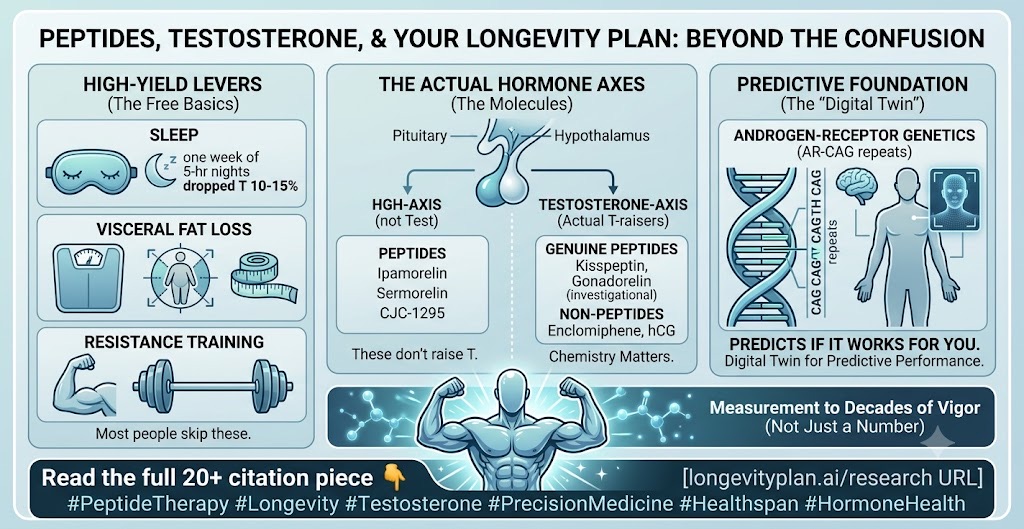
Testosterone is governed by the hypothalamic–pituitary–gonadal (HPG) axis. The hypothalamus releases gonadotropin-releasing hormone (GnRH) in pulses; the pituitary responds with luteinizing hormone (LH) and follicle-stimulating hormone (FSH); LH signals the testes' Leydig cells to produce testosterone. Every honest question about "raising testosterone with peptides" comes down to where on this cascade a molecule acts — and the marketed products fall into three very different buckets.
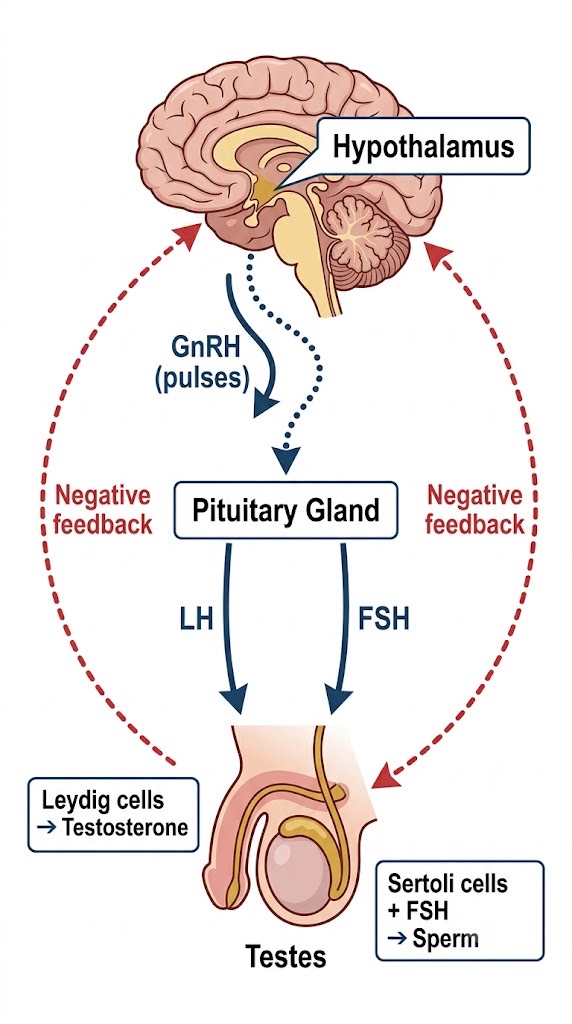
The hypothalamic–pituitary–gonadal (HPG) axis. Every peptide that genuinely raises testosterone acts somewhere on this cascade — the only honest question is where.
Peptides that genuinely act on the axis. Kisspeptin and gonadorelin (GnRH) sit at the top of the cascade and can increase LH, FSH, and testosterone levels.5,6
Compounds that raise testosterone but aren't peptides. Enclomiphene and clomiphene are selective estrogen receptor modulators (SERMs); hCG is a glycoprotein hormone that mimics LH. Effective for endogenous stimulation — just not peptides, no matter what the label says.7,8
Peptides that don't raise testosterone — but are sold as if they might. This is Stallone's error, industrialized. Sermorelin, CJC-1295, and ipamorelin are growth-hormone secretagogues; they stimulate the GH/IGF-1 axis, not the testes. As one clinical team states flatly, CJC-1295 *"does not directly stimulate testosterone production."*9 They can improve sleep, recovery, and body composition — outcomes that feel testosterone-adjacent — but the mechanism is different, and buying them to raise testosterone is buying the wrong tool.
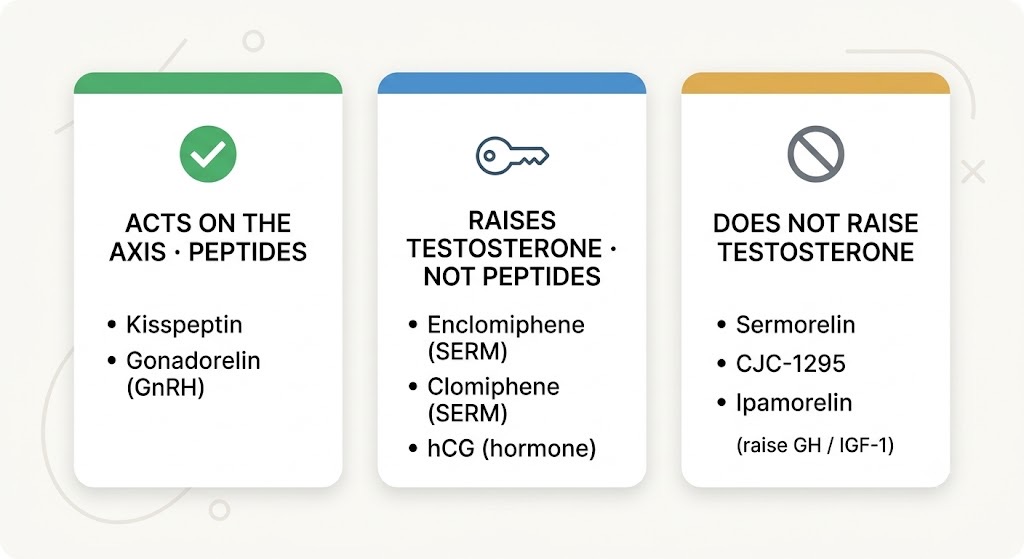
Three buckets the marketing blurs together. The bestsellers on the right raise growth hormone and IGF-1, not testosterone.
With the map in hand, here are ten evidence-graded levers, from the highest-yield foundations to the personalization that ties them together.
Tier 1 — the foundation (before anything involving a needle)
1. Reclaim sleep — the fastest legal way to move the number
Rachel Leproult and Eve Van Cauter restricted 10 healthy young men (average age 24) to 5 hours of sleep for 1 week. Daytime testosterone fell by 10–15% — comparable, the authors noted, to 10–15 years of aging.10 Van Cauter's framing sticks: *"Low testosterone levels are associated with reduced well-being and vigor, which may also occur as a consequence of sleep loss."*10 Most of a man's daily testosterone is released during sleep, and obstructive sleep apnea — common and underdiagnosed in this demographic — suppresses it further. No peptide repairs a broken night.
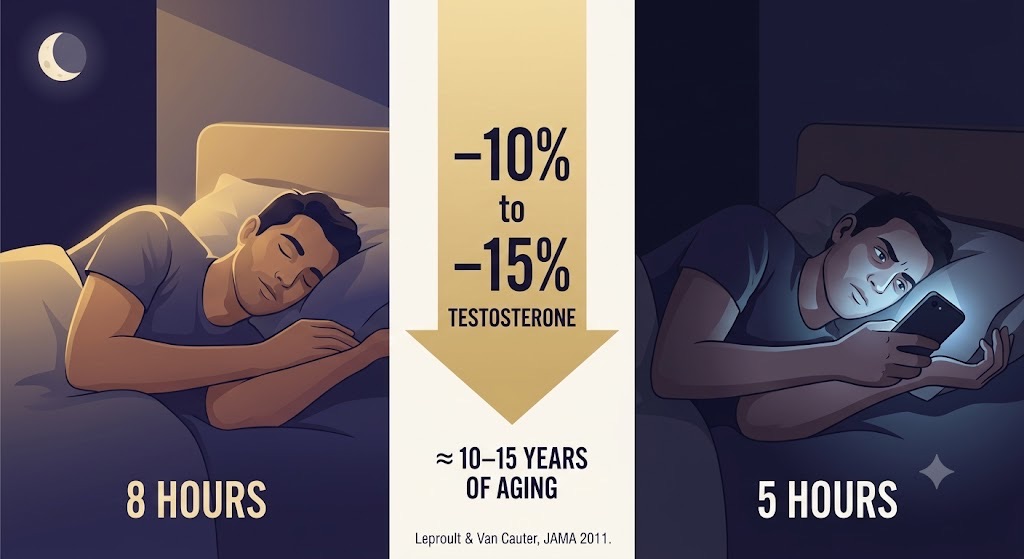
One week of five-hour nights dropped healthy young men's daytime testosterone by 10–15% — the hormonal equivalent of aging a decade. It is the cheapest lever on this list.
2. Shed visceral fat — because fat tissue actively dismantles testosterone
Adipose tissue is the body's largest site of aromatase, the enzyme that converts testosterone to estradiol. More fat means more aromatization, more estrogenic feedback shutting down the HPG axis, and lower testosterone — a loop clinicians call male obesity-associated secondary hypogonadism.11,12 It runs both ways: weight loss reliably raises testosterone in proportion to the fat lost, and in the T4DM trial, testosterone added to a lifestyle program improved the odds of a favorable metabolic outcome by roughly 40% over lifestyle alone.12,13
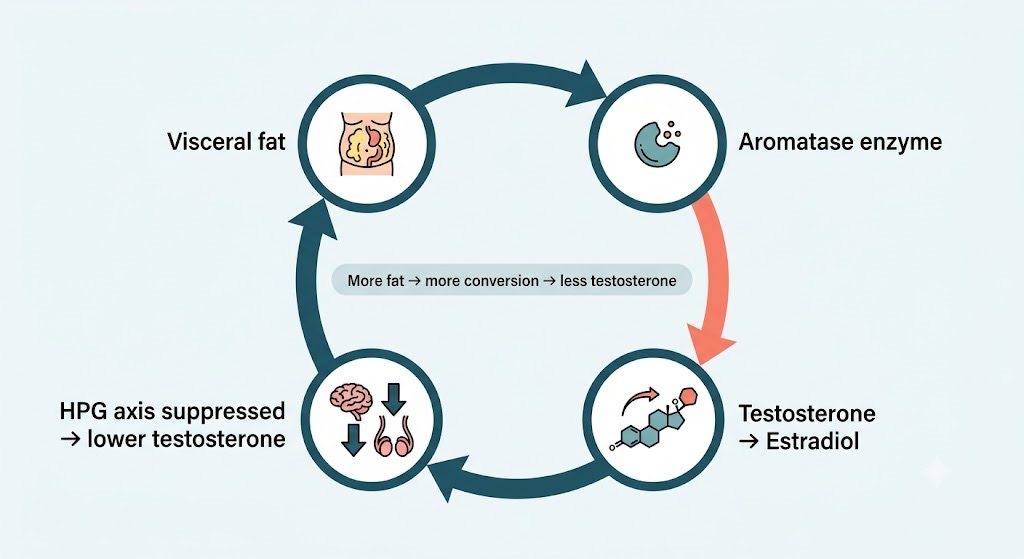
Fat tissue is the body's largest source of aromatase, which converts testosterone into estrogen, thereby feeding a self-reinforcing loop. Losing fat runs the cycle in reverse.
3. Train against resistance, and keep moving
Independent of body weight, higher fitness and activity track with higher testosterone, and resistance training helps mainly by cutting fat mass and improving insulin sensitivity.11,12 The much-hyped post-workout testosterone spike is fleeting and clinically trivial; the durable, trained physiology is what compounds over years.
4. Correct deficiencies — but only if you're actually deficient
Here, evidence-based practice diverges from supplement marketing. Vitamin D and zinc deficiencies are associated with low testosterone — yet in the Graz randomized controlled trial, Elisabeth Lerchbaum and Stefan Pilz administered 20,000 IU of vitamin D weekly for 12 weeks and found no effect on testosterone in men with normal baseline levels.14 Repletion helps the deficient and does little for the replete. Treating the individual rather than the population average is the whole game.
5. Moderate alcohol, manage cortisol, reduce endocrine-disruptor exposure
Heavy alcohol suppresses testosterone independent of weight; chronic cortisol antagonizes the HPG axis; and environmental endocrine-disrupting chemicals are a leading hypothesis for the population-level decline itself.2,12,15 Unglamorous, free, and usually where the largest untapped gains sit.
Tier 2 — the agents that actually touch the axis
6. Kisspeptin analogs — the upstream master switch
Kisspeptin is the neuropeptide sitting above GnRH, dictating when the hypothalamus fires. The foundational human work belongs to Imperial College London: in 2005, Waljit Dhillo and colleagues published the first demonstration that kisspeptin-54 raises LH, FSH, and testosterone in healthy men.5 Twenty years of trials followed under Ali Abbara and Alexander Comninos, spanning fertility, hypothalamic diagnostics, and psychosexual function.6,16 Dhillo has described kisspeptin as offering "a safe and much-needed treatment" for distressing psychosexual disorders, *"well-tolerated … with no side-effects reported."*16 The kisspeptin-receptor agonist MVT-602 has since reached randomized, placebo-controlled trials.17 For now, kisspeptin is a research tool and investigational drug — not a self-administered booster.
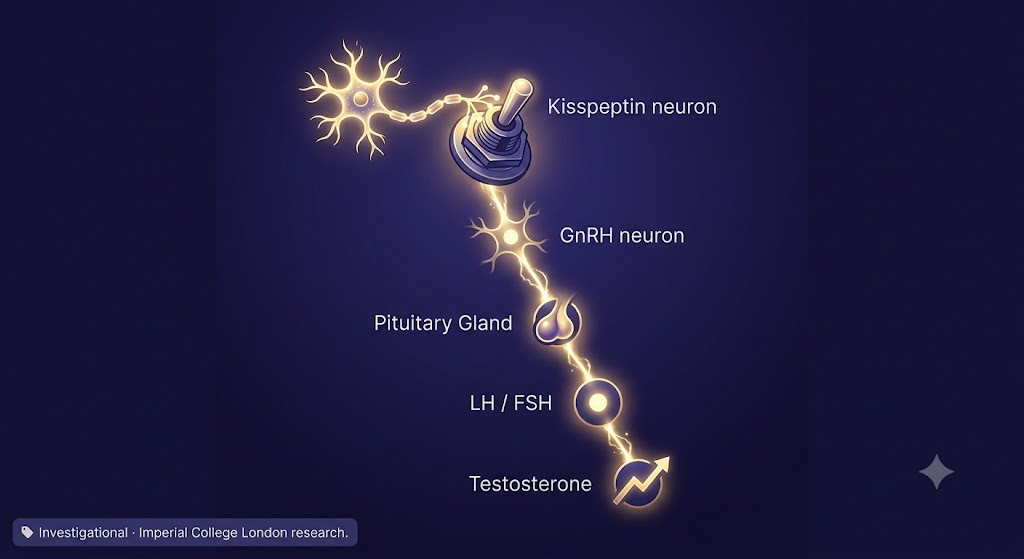
Kisspeptin sits one step above GnRH — the switch that tells the brain when to start the whole cascade. Promising, well-tolerated in trials, and still investigational.
7. Gonadorelin (GnRH) — restoring the pulse
Gonadorelin is synthetic GnRH, the very peptide the hypothalamus uses. The catch is pharmacological: the pituitary responds only to pulses, while continuous exposure paradoxically shuts the axis down. Delivered correctly, it stimulates the pituitary and helps preserve testicular function — a genuine axis peptide whose narrow window is exactly why it is no simple "boost."6
8. hCG — the LH mimic (a hormone, not a peptide)
Human chorionic gonadotropin binds the LH receptor and directly drives the testes to produce testosterone while preserving size and intratesticular function — the classic tool for men who want to raise or maintain their own production and fertility rather than replace testosterone from outside. Chemically a glycoprotein hormone, it earns its place on any complete map of endogenous strategies.8
Read more scientific research from LongevityPlan.AI, or buy peptides from our shop.
9. Enclomiphene and clomiphene — flipping the axis back on
Enclomiphene, the purified active isomer of clomiphene, blocks estrogen's negative feedback at the pituitary, lifting LH and FSH and, downstream, testosterone. In a randomized Phase II trial (Wiehle and colleagues, Fertility and Sterility, 2014), enclomiphene raised morning testosterone, LH, and FSH to levels comparable to a topical testosterone gel — but while the gel suppressed LH, FSH, and sperm output, enclomiphene preserved them.7 The logic is elegant: exogenous testosterone tells the brain to go quiet; enclomiphene tells it to signal harder. To be exact, it is a SERM, not a peptide.
10. Match the tool to your genome — the step that decides whether 1–9 work
The tenth lever is not another molecule; it is the reason the same molecule produces a transformation in one man and a shrug in another. Testosterone is a key that only matters if the lock turns. The androgen receptor gene carries a variable CAG repeat sequence: shorter repeats produce a more sensitive receptor, longer repeats a less sensitive one, which is why two men with identical serum testosterone levels can have entirely different symptoms and responses. The effect is real enough to be documented in the Vietnam Era Twin Study of Aging and sold today as a commercial AR-CAG sensitivity test.18,19 Add CYP19A1 (how fast you aromatize testosterone to estrogen) and vitamin D receptor variants, and "one protocol for everyone" collapses. Knowing your genotype before you choose an intervention is what separates a plan from a guess.
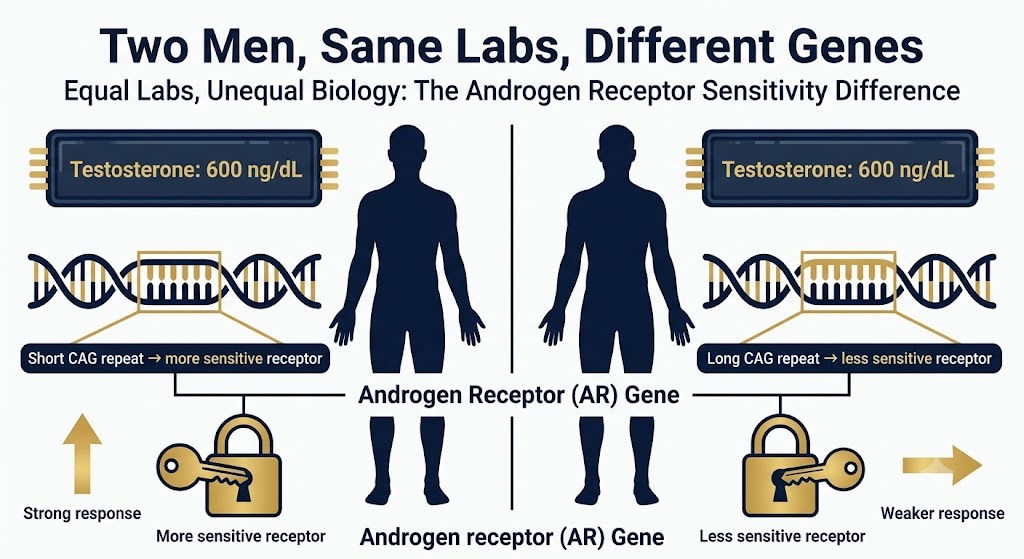
Same testosterone, different genetics. Androgen-receptor CAG-repeat length changes how strongly the body responds — which is why a plan built on labs alone is a guess.
From genotype to a working model: the Digital Twin
Genetics is the foundation, not the finished building. Companies such as The Genomics Company provide genetic assessments; the value comes from combining them with everything that changes week to week. A single testosterone value is a snapshot of a hormone that is pulsatile, diurnal, and seasonal. The sensor layer — serial labs, sleep and recovery data, glucose, body composition trends — produces multi-modal health data that no clinician can integrate in real time. Feed genomic sensitivity plus that stream into an intelligence layer, and you get a Digital Twin for Predictive Peptide Performance™: a model that predicts, before a single injection, whether a given individual is even likely to respond to an axis-level intervention — and flags the man whose CAG genotype means he should be optimizing receptor sensitivity and metabolic health rather than chasing a bigger number. Notably, the Imperial group is applying the same philosophy to research, using AI to study reproductive hormone dynamics precisely because complex hormonal data is, in their words, well-suited to it.6
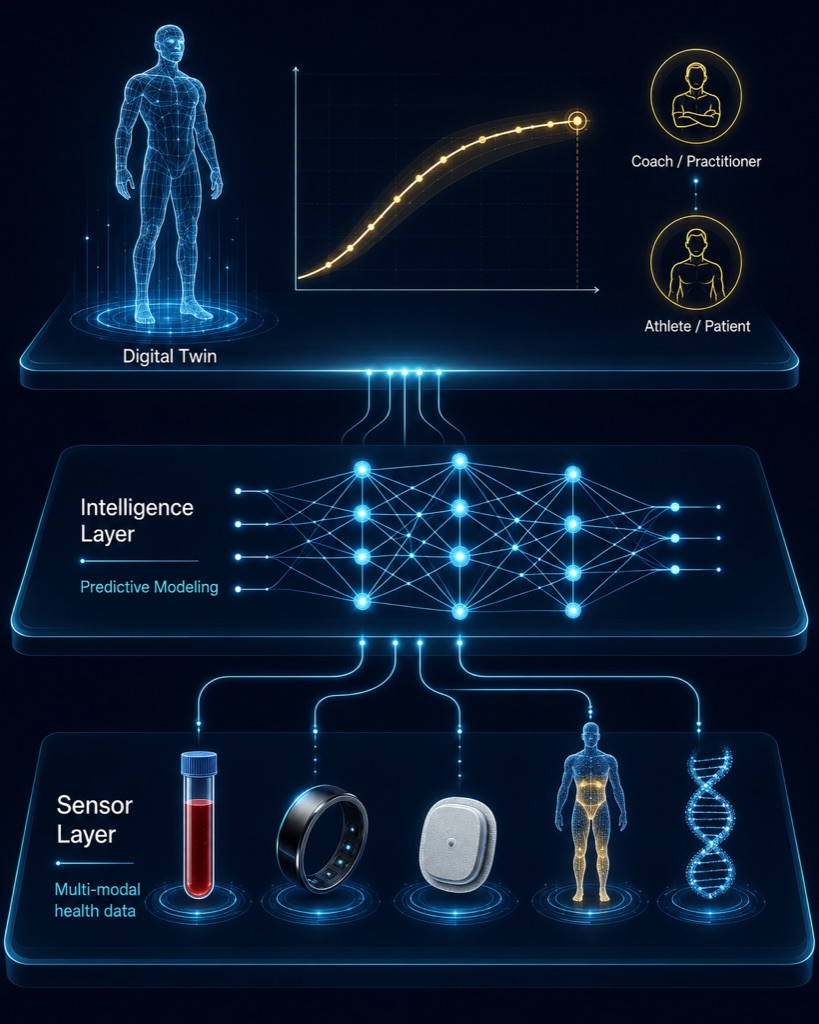
A digital twin fuses genomics, lab data, and wearable data, then models the effects of an intervention before it is tried — moving hormone care from measurement to prediction.
This is also where today's longevity platforms diverge. Function Health and Superpower lead with broad, low-friction biomarker panels; Lifeforce pairs hormone-focused testing with clinician-guided predictive modeling and AI-powered coaching improvements for both the Coach / Practitioner and the Athlete / Patient. The frontier is no longer measurement — everyone can measure testosterone — but prediction: telling this person what their number will do, and why.
The safety and regulatory reality — the part to read twice
Optimism should be disciplined by evidence, and here the evidence is reassuring on one front and cautionary on others. On treating diagnosed hypogonadism, the TRAVERSE trial — 5,246 men, led by A. Michael Lincoff and Shalender Bhasin, funded by AbbVie and reported through Cleveland Clinic investigators at the Endocrine Society's 2023 meeting — found testosterone therapy noninferior to placebo for major adverse cardiac events, while flagging a higher rate of atrial fibrillation.20 That settled a long-running controversy for appropriately diagnosed patients.
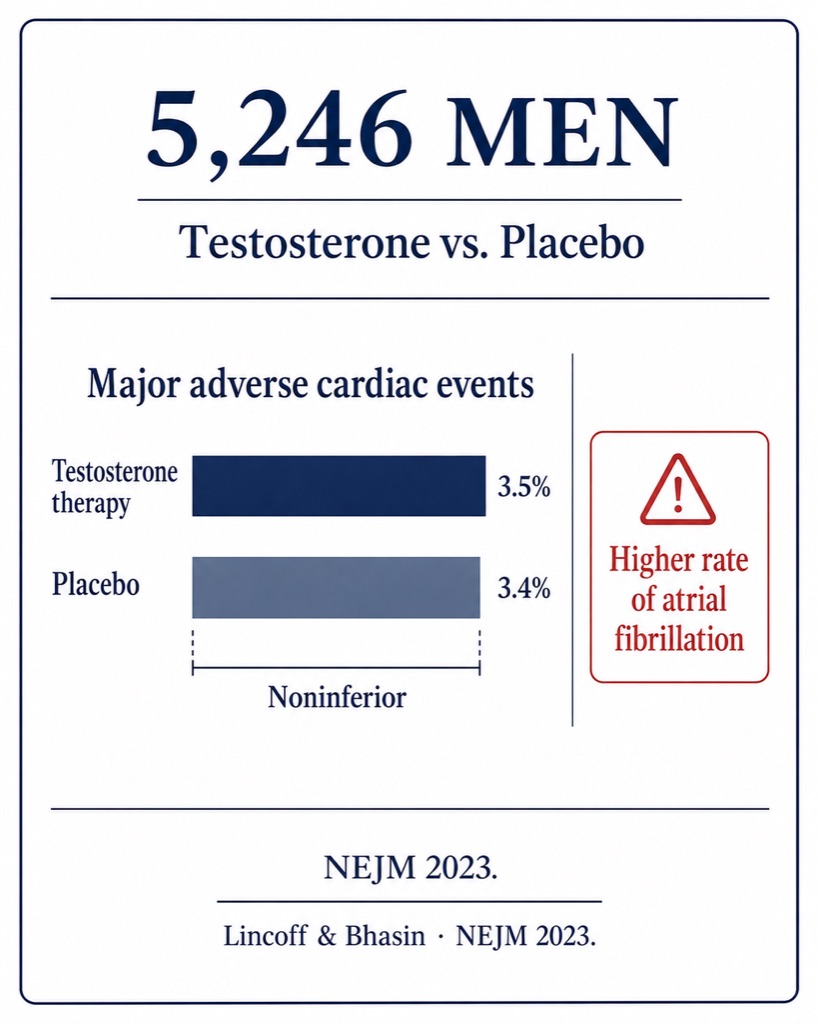
The 5,246-man TRAVERSE trial found testosterone therapy noninferior to placebo for major cardiac events in diagnosed hypogonadism, while flagging more atrial fibrillation. Reassurance, with an asterisk.
The peptide frontier is a different matter, and one caution covers most of it: the axis-level agents above are investigational or compounded, not FDA-approved for raising testosterone in healthy men, and compounded products vary in purity. Professional guidance — the Endocrine Society clinical practice guideline (Bhasin, Hayes, Matsumoto, Snyder, Swerdloff, Wu, and colleagues), the American Urological Association, and the Sexual Medicine Society of North America — puts lifestyle first and reserves pharmacology for documented deficiency.21 And for anyone drug-tested, kisspeptin, GnRH analogs, hCG, and SERMs all sit within categories the U.S. Anti-Doping Agency and WADA scrutinize closely. "Natural," as Stallone's HGH saga illustrates, is a marketing word — not a regulatory or anti-doping one.
What the high performer should take away
The unglamorous truth is that the highest-yield "testosterone peptides" for most people are sleep, muscle, and the loss of visceral fat — free interventions with the strongest data behind them. The genuinely exciting frontier, kisspeptin and the axis-level agents, is real science that remains largely academic and investigational. And the loudest-marketed peptides — the growth-hormone stacks Stallone conflated with testosterone in 2008 and that are sold the same way in 2026 — don't touch testosterone at all.
What changes the equation is personalization. A generic protocol disappoints because androgen receptor sensitivity, aromatase genetics, sleep architecture, and metabolic health differ from person to person — and are visible only if you measure and model them. Building a plan on a genomic and multi-modal foundation is not a shortcut to a bigger number; it is the difference between guessing and knowing. For the executive, the master's athlete, or the organization weighing the decades-long contribution of its people, that shift from reactive to predictive is the entire reason to plan for your own longevity before you need to.
Stallone was right that the over-40 crowd would be wise to investigate. He was just eighteen years early on the tools — and off by one hormone. The number on the lab report was never the goal. The decades of vigor it represents are.
Sign up for FREE daily Longevity Club Workshops, or join the Affiliate Program (pays 20%). Subscribe to the Longevity & Peptide Optimization Newsletter.
About the Authors
Tony Medrano is CEO and co-founder of LongevityPlan.AI, a platform that integrates performance and health data and leverages proprietary Digital Twin for Predictive Peptide Performance™ technology, wearable data, and biomarker data to deliver personalized optimization and longevity recommendations. A 3x technology/AI company CEO with 2 successful exits, Tony has completed 3 Full Ironman Triathlons (140.6 mi) since 2019. He holds degrees from Harvard University, Columbia University, and a JD/MBA from Stanford University, and has worked with the US Olympic Team, the NBA, NFL, MLB, NASA, Google, Microsoft, and Netflix, among others. He also served as a US Navy Officer commanding an emergency response team aboard a destroyer.
Marc Anthony Longwith is CEO and founder of Evolved Entrepreneur, an advisory and coaching practice built around the ERI Method (Excavate, Reconstruct, Integrate), a framework he developed to help founders and executives identify and dismantle the internal patterns that quietly cap their growth. Marc works with established founders, executives, special operators, and professional athletes, using a proprietary psychometric assessment called the Logos to profile clients across archetypes, genius scores, and execution patterns before building a tailored path forward. Before building Evolved Entrepreneur, Marc spent 20 years in Las Vegas hospitality as a sommelier and alongside Michelin-star chefs, while competing professionally in mixed martial arts and earning a black belt. He later consulted elite athletes and special operators on pressure literacy drawn from his fighter training, co-founded one of downtown Las Vegas's top-rated breweries, and has since exited two seven-figure brands. He is based in Medellín, Colombia, where he hosts the Evolved Entrepreneur Podcast.
Disclosures and scope. Educational content, not medical advice; no specific therapy is recommended. Hormonal and peptide decisions require a qualified clinician and current laboratory data. Compounded and investigational agents are not FDA-approved for raising testosterone in healthy men.
Endnotes
- Stallone S, interview, Time magazine (Feb. 4, 2008 issue), as reported by the Associated Press and Voice of America; separately, Stallone pleaded guilty in 2007 to illegally importing 48 vials of human growth hormone into Australia (Reuters).
- Travison TG, Araujo AB, O'Donnell AB, Kupelian V, McKinlay JB. A population-level decline in serum testosterone levels in American men. J Clin Endocrinol Metab. 2007;92(1):196–202. doi:10.1210/jc.2006-1375.
- Travison TG, quoted in "Generational decline in testosterone levels observed," Healio Endocrinology; Bhasin S, accompanying editorial commentary ("disquieting").
- Narayanaswamy S, Jayasena CN, Abbara A, et al. Hypothalamic response to kisspeptin-54 and pituitary response to GnRH are preserved in healthy older men. Neuroendocrinology. 2018;106(4):401–410. doi:10.1159/000488452. (~1%/year decline after age 40.)
- Dhillo WS, Chaudhri OB, Patterson M, et al. Kisspeptin-54 stimulates the hypothalamic-pituitary gonadal axis in human males. J Clin Endocrinol Metab. 2005;90(12):6609–6615. doi:10.1210/jc.2005-1468.
- Imperial College London, Reproductive and Investigative Endocrinology Group (Abbara A, Dhillo WS): program description, AI for reproductive neuroendocrinology, and industry consulting disclosures (Myovant Sciences; KaNDy Therapeutics).
- Wiehle RD, Fontenot GK, Wike J, et al. Enclomiphene citrate stimulates testosterone production while preventing oligospermia: a randomized phase II clinical trial comparing topical testosterone. Fertil Steril. 2014;102(3):720–727. NCT01270841. (Investigational; available via compounding pharmacies.)
- British Society of Sexual Medicine / World Journal of Men's Health, position statement on enclomiphene: HPG-axis-sparing agents including hCG and clomiphene. doi:10.5534/wjmh.250395.
- Rewind Anti-Aging clinical team, "Does CJC-1295 Increase Testosterone?" — CJC-1295 stimulates the GH/IGF-1 axis, not the testes; consistent with GH-secretagogue pharmacology (Veldhuis JD, et al., 2009).
- Leproult R, Van Cauter E. Effect of 1 week of sleep restriction on testosterone levels in young healthy men. JAMA. 2011;305(21):2173–2174. doi:10.1001/jama.2011.710. Van Cauter quotation via University of Chicago Medicine / ScienceDaily (2011).
- Grossmann M, et al. Obesity, type 2 diabetes, and testosterone in ageing men (review, PMC9789005): aromatase/adiposity, MOSH, fitness and activity associations, alcohol effects.
- Impact of Weight Loss on Testosterone Levels: A Review of BMI and Testosterone. Cureus. 2024. PMID 39840189.
- Wittert G, et al. Testosterone treatment to prevent or revert type 2 diabetes in men enrolled in a lifestyle programme (T4DM). Lancet Diabetes Endocrinol. 2021;9(1):32–45. doi:10.1016/S2213-8587(20)30367-3.
- Lerchbaum E, Pilz S, Trummer C, et al. Vitamin D and testosterone in healthy men: a randomized controlled trial. J Clin Endocrinol Metab. 2017;102(11):4292–4302. doi:10.1210/jc.2017-01428.
- Understanding the Secular Decline in Testosterone: Mechanisms, Consequences, and Clinical Perspectives. Int J Mol Sci. 2026;27(2):692. (Endocrine-disrupting chemicals and lifestyle contributors.)
- Comninos AN, Dhillo WS, et al.; Imperial College London news release, "Kisspeptin hormone injection could treat low sex drive in women and men" (2023); JCI Insight (2018). Dhillo quotations from Imperial College London press materials.
- Abbara A, Dhillo WS, et al. Endocrine profile of the kisspeptin receptor agonist MVT-602 in healthy premenopausal women: randomized, placebo-controlled trials. Fertil Steril. 2024;121(1).
- Genetic variation in the androgen receptor modifies the association between testosterone and vitality in middle-aged men (Vietnam Era Twin Study of Aging), PMC7718411.
- Marek Diagnostics, Androgen Receptor Sensitivity (AR-CAG repeat) genetic test — commercial application of CAG-repeat pharmacogenomics.
- Lincoff AM, Bhasin S, Flevaris P, et al.; TRAVERSE Study Investigators. Cardiovascular safety of testosterone-replacement therapy. N Engl J Med. 2023;389(2):107–117. doi:10.1056/NEJMoa2215025. NCT03518034 (funded by AbbVie and others). Higher atrial-fibrillation incidence noted in NEJM correspondence (2023).
- Bhasin S, Brito JP, Cunningham GR, Hayes FJ, Hodis HN, Matsumoto AM, Snyder PJ, Swerdloff RS, Wu FC, Yialamas MA. Testosterone therapy in men with hypogonadism: an Endocrine Society clinical practice guideline. J Clin Endocrinol Metab. 2018;103(5):1715–1744. (Lifestyle-first; consistent with AUA and SMSNA guidance.)