Peptide Science
·18 min read
The Peptide Ledger: What Peptides Andrew Huberman Actually Tried
One neuroscientist doubled his deepest sleep. One of the most famous women on Earth reset her metabolism in public. Both stories point to the same next step: making the science personal.
By Tony Medrano
This article is for education and is not medical advice.
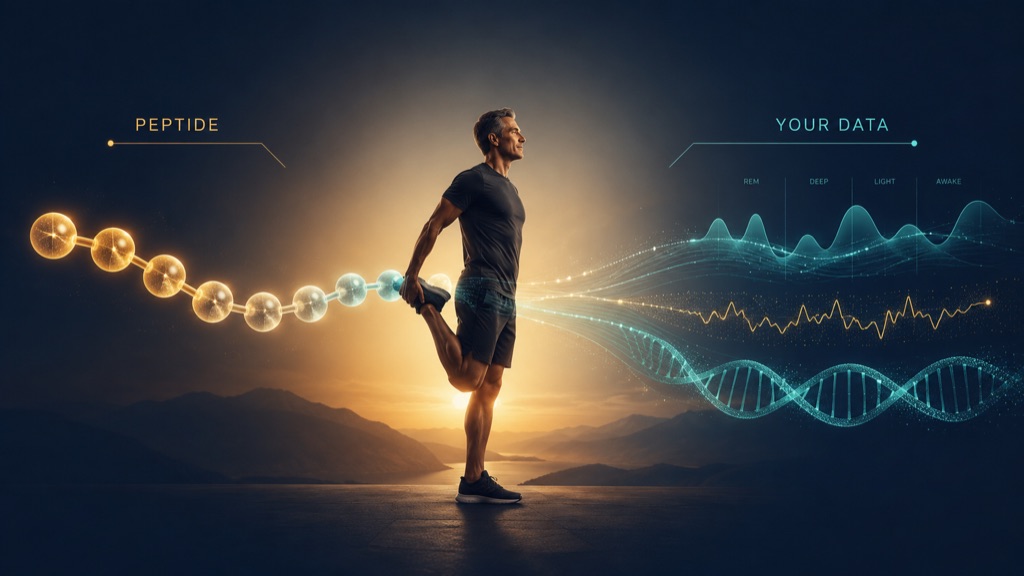
Two peptides — pinealon and GLP-1 — made headlines for a neuroscientist and a media mogul. The lesson beneath both stories is the same: the molecule starts it, but personal data makes it reliable.
Two very different people have made the case for peptides more persuasively than any research paper could.
The first is a Stanford neuroscientist. On his own podcast, Andrew Huberman described tracking his REM sleep with a wearable and watching it climb from roughly an hour or an hour and a half a night to nearly three — over four to six months of using an injectable peptide called pinealon, pulsed rather than taken nightly.[2] He has called it the only thing that has ever reliably improved his REM. Even Bryan Johnson, the entrepreneur who has turned his own sleep into a public optimization project, reportedly took notice of the numbers.[2]
The second is Oprah Winfrey. Beginning in 2023, she used a GLP-1 medication — and GLP-1, glucagon-like peptide-1, is itself a peptide, one of the most consequential the pharmaceutical industry has ever commercialized. She went from a "default weight" of about 211 pounds, pre-diabetic and with high cholesterol, to roughly 155, and described the experience in a phrase that has since entered the culture: it "quiets the food noise."[19] When she stopped for about six months, she regained twenty pounds and concluded the obvious: for her body, this is a lifetime tool, not a crash diet.[20] Her collaborator, Yale endocrinologist Dr. Ania Jastreboff, frames the underlying biology as an "Enough Point" — a weight range each person's genes and environment conspire to defend.[21]
Hold those two stories side by side and the whole field comes into focus. Peptides are not a fad and not snake oil; they are short chains of amino acids that your body already uses as signaling molecules, and the best of them are delivering measurable, life-changing results at the highest levels of science and celebrity alike. The frontier question is no longer whether peptides work. It is how any given person captures their upside reliably — because, as Huberman's and Oprah's own experiences show, the same molecule can be a revelation for one body and a mismatch for another. That gap between a promising molecule and a reliable result is exactly what modern longevity science — genomics, continuous biomarkers, and AI — was built to close. This is a working guide on how.
1. Why the peptide era is real — and genuinely exciting
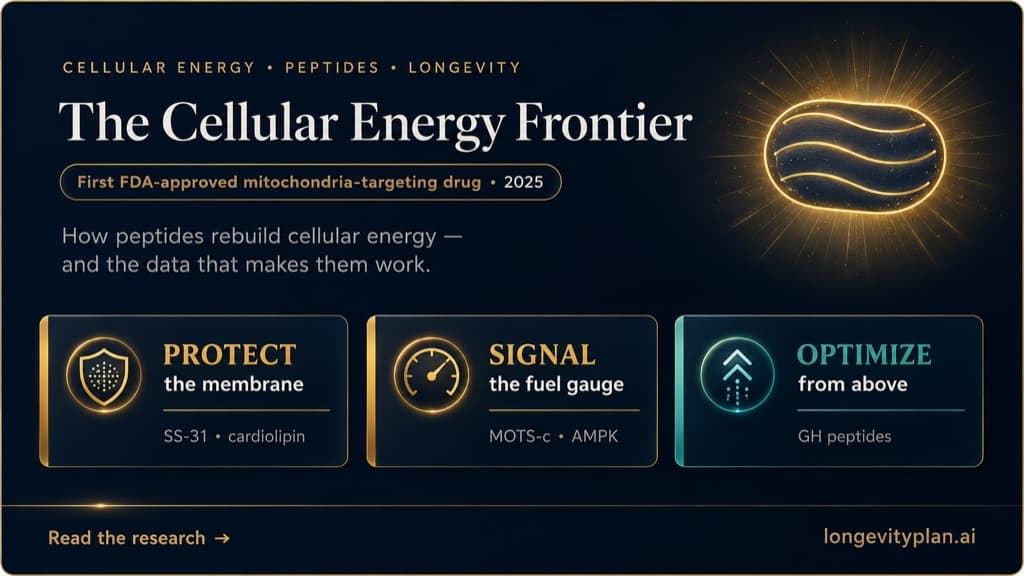
A peptide is a short chain of amino acids, the same building blocks that make up proteins — just fewer of them, usually under fifty. Your body manufactures thousands and uses them as chemical messages: grow this tissue, release that hormone, calm this inflammation, signal fullness.[1][17] Insulin is a peptide. So is oxytocin. So are the GLP-1 drugs remaking obesity medicine. That biological pedigree is the source of real, defensible optimism: because many therapeutic peptides are close analogs of compounds the body already makes and can break down, they tend to be cleanly metabolized into ordinary amino acids, and several carry decades of use behind them.
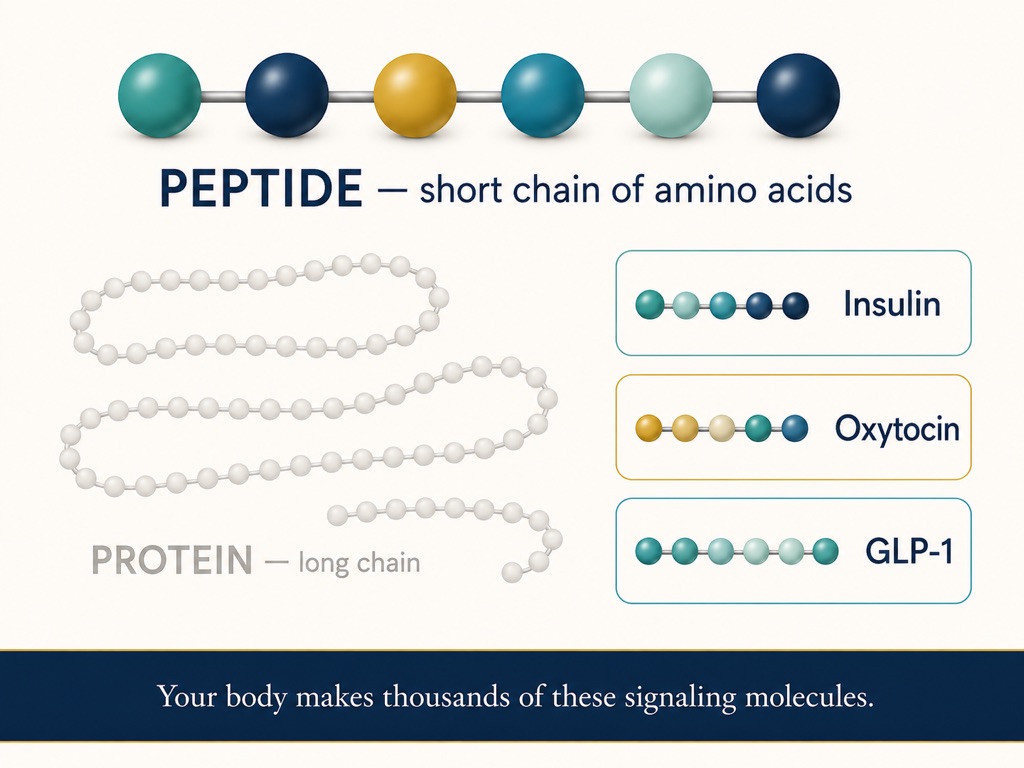
A peptide is simply a short chain of amino acids — the same messengers your body already uses to signal hunger, growth, and repair. Insulin, oxytocin, and GLP-1 are all peptides.
The scale of the opportunity is no longer speculative. A 2022 review in Signal Transduction and Targeted Therapy counted more than eighty peptide drugs already approved worldwide and hundreds more advancing through clinical pipelines, describing peptides as occupying a valuable sweet spot between small molecules and large biologics — specific enough to hit a target cleanly, small enough to manufacture at scale.[1] The GLP-1 phenomenon is simply the most visible proof of concept: a class of peptides that mimics a natural gut hormone, dampens appetite, improves blood sugar, and has produced weight and cardiometabolic outcomes that, a decade ago, would have sounded like fiction. When Oprah says the medication let her understand, for the first time, what it feels like to eat only when hungry, she is describing a peptide doing precisely what peptides do best — speaking the body's own signaling language.[19]
That is the lens for everything that follows. Peptides are a maturing branch of pharmacology with a rapidly expanding toolkit. The art is matching the right molecule to the right person — and that art is what turns exciting science into dependable outcomes.
2. Huberman's ledger: four molecules, told honestly
Much of what circulates online about "Huberman's peptide stack" is invented. What follows are only the peptides he has personally described using, chiefly in his conversation with Dr. Craig Koniver, a physician with more than fifteen years of peptide-prescribing experience.[2] Read together, they form a compact education in what this class can do — and in why personalization is the whole game.

Huberman's own ledger reads like a syllabus in personalization: one breakthrough, one recovery win, one "helped-then-hindered," and one immediate "no."
Pinealon is the standout. Used intermittently alongside oral glycine, it is what Huberman credits with roughly doubling his REM sleep over several months, as objectively measured.[2] Remarkably, he reported that the improvement persisted even on nights he skipped it — leading them to wonder aloud about restored pineal function, while candidly noting that no published human trial has demonstrated that mechanism for the pineal. A large, measured personal effect, paired with an honest map of what remains unproven: this is the field at its best.
BPC-157 is the injury story everyone repeats. After an L5 disc compression left him with stubborn lower-back pain, Huberman said it resolved within two injections to a degree that heat, massage, and electrical stimulation never achieved.[2] Koniver described BPC-157 as the most widely used peptide in his practice until recently. We return to its genuinely exciting science in the next section.
Sermorelin is the most instructive entry. This growth-hormone-releasing-hormone analog initially deepened Huberman's early-night sleep when he used it several nights a week — then he stopped, because in the second half of the night it eroded his REM, and because it consistently nudged his prostate-specific antigen (PSA) upward, which normalized once he discontinued.[2] Without tracking, he would have caught neither effect. File that away; it is the seed of this article's central argument.
Read more scientific research from LongevityPlan.AI, or buy peptides from our shop.
MK-677 (ibutamoren, technically an oral secretagogue rather than a peptide, but a constant companion in the conversation), he tried once. It wrecked his sleep through relentless hunger — he quipped that "it sounds like a weapon."[2] Yet that same appetite drive is exactly what another person might want to gain mass. One molecule, two verdicts.
The through-line is not a protocol to copy. It is a principle: peptides can deliver dramatic benefits, and the same peptide can help one person, help-then-hinder another, and simply not suit a third, which is why the decisive skill in this field is not choosing a molecule but reading a person.
3. The evidence, from an exciting frontier to a proven therapy
Peptides sit on a ladder of evidence, and matching your confidence to the rung is the mark of a sophisticated practitioner. Two molecules illustrate the full range.
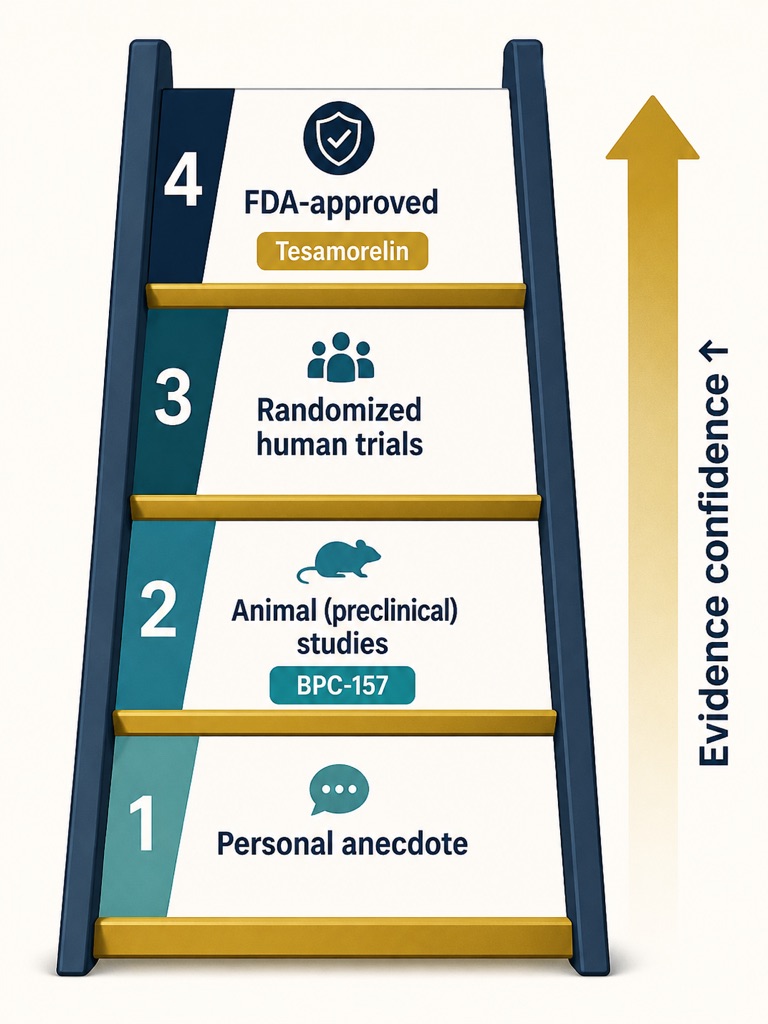
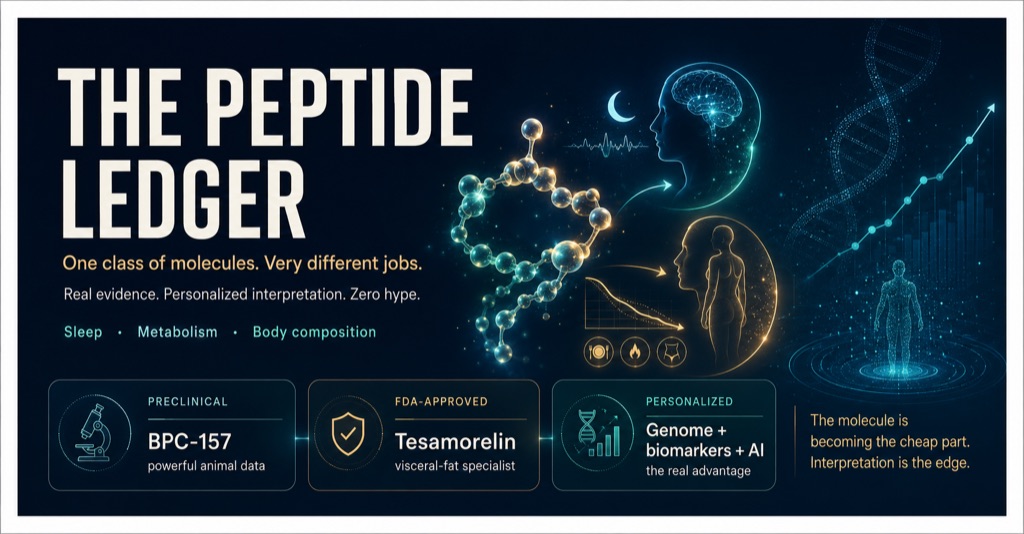
Not all peptides earn the same trust. Grading where a molecule sits — from rat data to a 400-patient randomized trial — is the mark of a sophisticated user.
BPC-157: a preclinical powerhouse
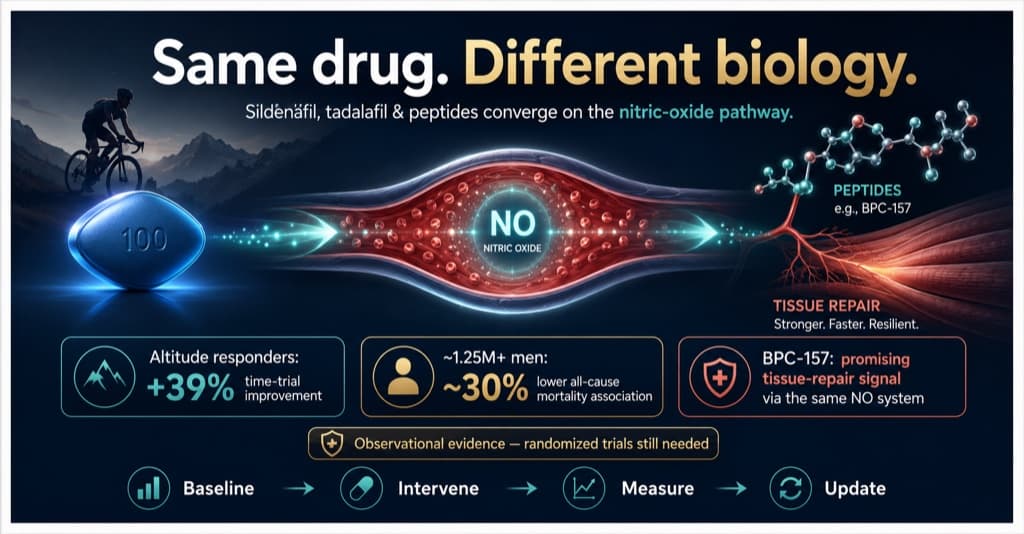
BPC-157 — "Body Protection Compound 157" — is a fifteen-amino-acid fragment first isolated from human gastric juice, and its animal research is genuinely impressive. Across three decades, Predrag Sikiric and colleagues at the University of Zagreb documented BPC-157 accelerating the healing of transected Achilles tendons, tendon-to-bone junctions that otherwise fail to mend on their own, plus muscle, ligament, bone, and gut tissue in rodent models — a breadth and consistency that have made it one of the most-studied regenerative peptides in preclinical science.[3][5][7] The proposed mechanisms are elegant: activation of the VEGFR2–Akt–eNOS pathway that drives new blood-vessel growth, modulation of nitric-oxide signaling, and — in a much-cited 2014 Molecules paper by Chang and colleagues — a marked increase in growth-hormone-receptor expression in tendon fibroblasts, which helps explain why treated tissue appears primed to respond to the body's own repair signals.[4] For anyone who cares about recovery, that is a thrilling body of work.
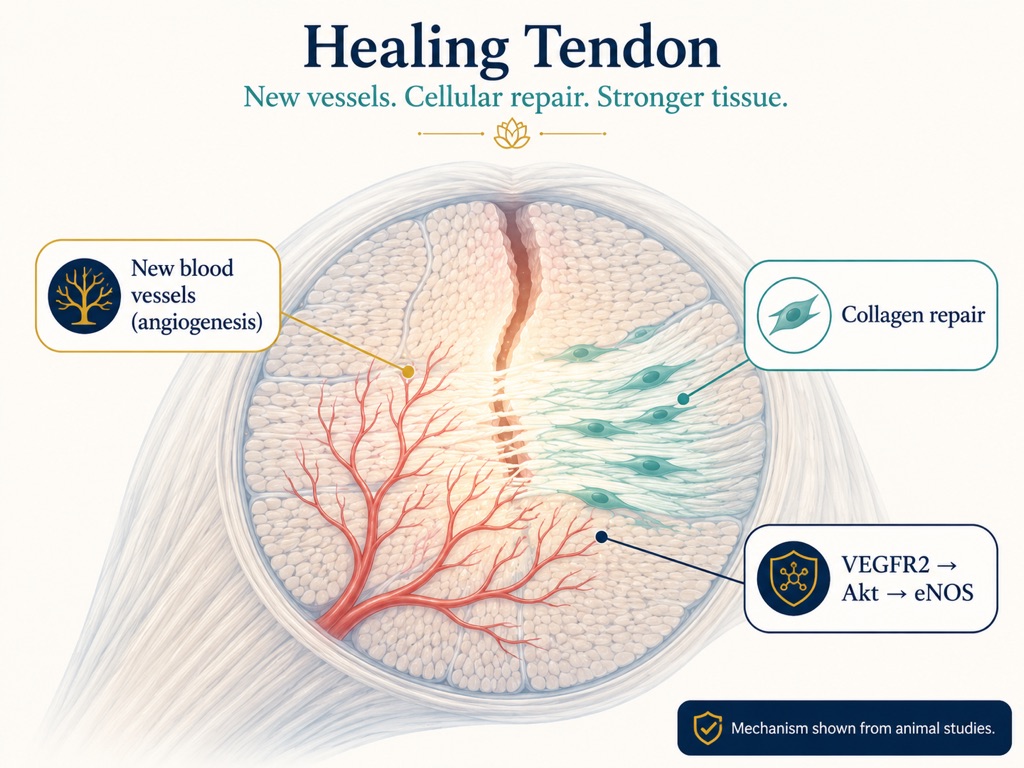
In animal studies, BPC-157 appears to accelerate tissue repair by promoting new blood vessel growth and collagen formation — a promising preclinical picture whose human trials are still being written.
It is also, so far, a story written mostly in animals. A 2025 systematic review in HSS Journal cataloged 36 BPC-157 studies from 1993 to mid-2024; 35 were preclinical, and the human evidence consisted of a single uncontrolled chart review, with a plasma half-life under 30 minutes and no completed controlled human efficacy trials yet on the books.[6] The right way to hold this is not as a debunking but as a map: BPC-157 is a preclinical powerhouse whose human chapter is still being written. That is precisely why a thoughtful person pairs it with real-time measurement of their own response rather than assuming the rat data transfers unchanged — and why the tools to do that measurement matter so much.
Tesamorelin: proof that peptides can clear the highest bar
Now, the top of the ladder, and an encouraging one. Tesamorelin, a 44-amino-acid GHRH analog, is the rare peptide in this family with clean, published, randomized human data. In the pivotal Phase 3 program — Falutz and colleagues in The New England Journal of Medicine, 2007 — roughly 400 patients saw visceral fat fall about 15% over 26 weeks while the placebo crept upward.[8] Later randomized work led by Steven Grinspoon and Takara Stanley at Massachusetts General Hospital and Harvard extended the result to liver fat over 12 months, with a 2014 JAMA trial showing a visceral fat treatment effect of −42 cm² versus placebo.[10] The FDA approved it as Egrifta in 2010, and a more convenient formulation followed.[9] Notably, tesamorelin targets the specific, cardiometabolically dangerous fat wrapped around the organs — something even GLP-1 drugs do not do selectively — a reminder that different peptides are precision instruments for different jobs.
The pairing is the lesson. BPC-157 and tesamorelin are both loosely described as "peptides that help tissue," yet one rests on rodent studies and anecdotal testimony, while the other carries a 400-patient randomized trial and regulatory approval. Recognizing which rung a molecule occupies — and adjusting how aggressively and how watchfully you use it — is what separates informed optimism from wishful thinking. The growth-hormone secretagogue family (sermorelin, ipamorelin, CJC-1295, GHRP-6, hexarelin) spreads across this same ladder: each nudges the pituitary to release the body's own growth hormone rather than replacing it — a smarter, feedback-preserving design — but their evidence quality falls off as you move from tesamorelin toward the compounded-only members supported chiefly by mechanism and clinical experience.[2]
4. Your genome is the cheat code — not the caveat
Why did sermorelin help Huberman's sleep and raise his PSA, while it might do neither to the executive down the hall? Why does Oprah's body defend a set point that willpower alone could never override? A large part of both answers is written in the genome — and that is good news, because a variable you can read is a variable you can plan around.
The best-studied example is a common variant of the growth-hormone receptor gene in which exon 3 is deleted, the "d3-GHR" isoform, which produces a receptor with enhanced signal transduction. Researchers led by Ouni in the Journal of Clinical Endocrinology & Metabolism calculated that d3-GHR alone accounted for about 19% of the variance in the amount of IGF-1 people produced in response to growth-hormone stimulation; add an epigenetic factor — methylation at a specific IGF-1 promoter site — and the two together explained more than 40%.[12] A separate CA-repeat variant in the IGF1 promoter further tunes how much IGF-1 a given hormonal signal produces.[15] Intriguingly, that same high-activity d3-GHR isoform has been linked in some studies to longevity itself.[14] In plain terms, two people can take the identical growth-hormone peptide at the identical dose and get meaningfully different results, and the genome sees it coming.
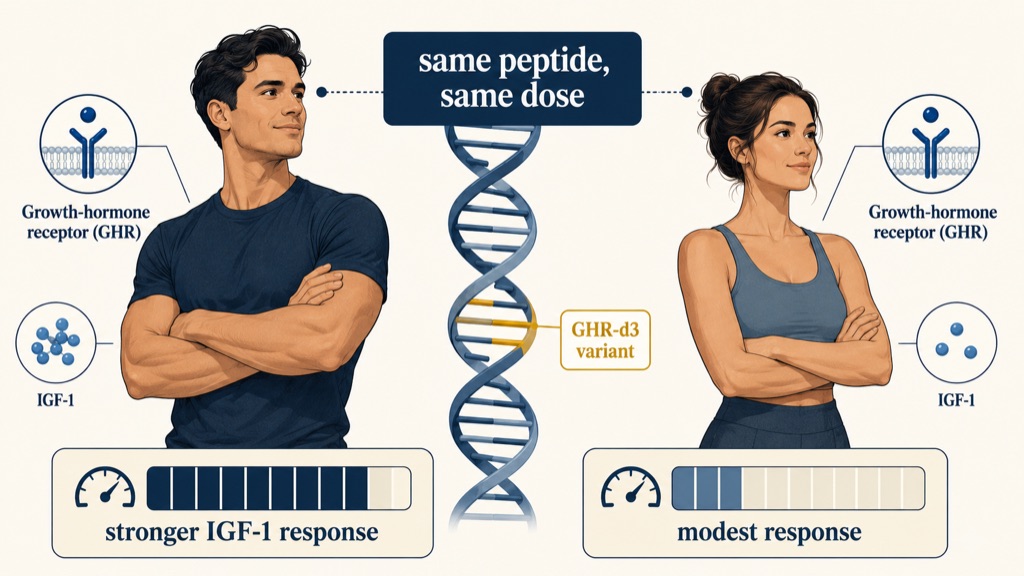
Same peptide, same dose, different result. A common receptor variant (GHR-d3) explains roughly a fifth of how strongly people respond — which is why your genome is a head start, not a footnote.
Honesty sharpens the tool rather than dulling it. When a large, multi-cohort, genome-wide study of growth hormone response — the PREDICT program — sought to confirm the GHR-d3 effect, it could not consistently replicate it.[13] The lesson is not that genetics is useless; it is that genetics is a powerful prior, not a crystal ball. It dramatically narrows the search space — telling you which peptides deserve a trial and which biomarkers to watch — and then real-world measurement confirms or refutes the prediction in your body. Oprah's own reframing captures the spirit: as she came to understand it, obesity was driving her overeating rather than the reverse, and the culprit was biology, not character.[20] Genetics tells that same liberating story at the molecular level — and firms such as The Genomics Company have built entire practices on translating it, sequencing seven functional body systems (hormones, detoxification, methylation, cardiovascular function, nutrition, brain chemistry, sleep) into a plain-language strategy for time-poor executives, priced around $1,500 and framed explicitly as a design manual rather than a destiny.[18] Used that way — to raise or lower suspicion before you test — genomics is one of the highest-leverage first moves in the entire field.
5. The synthesis: building a working model of you
Assemble the pieces, and a system emerges. You have a genome that shifts the odds a given peptide working for you. You have biomarkers — the PSA that quietly rose on sermorelin, the IGF-1 that reveals whether a secretagogue is doing anything, a fasting glucose, and an inflammatory marker. You have a wearable that streams sleep stages, resting heart rate, heart rate variability, and recovery. Individually, each is a fragment. Fused and modeled, they become something close to a working simulation of your physiology — the logic behind what LongevityPlan.AI calls a Digital Twin for Predictive Peptide Performance™.
The architecture is easiest to picture in three tiers. The sensor layer is everything that measures you: genomic sequencing, blood and hormone panels, continuous glucose and wearable telemetry, DEXA body composition, and VO₂ Max testing. An intelligence layer ingests this multi-modal health data, reconciles the fact that your ring, your lab, and your genome all speak different dialects, and learns the relationships among them. On top, predictive modeling asks the only question a serious person cares about: given everything known about this specific individual, how likely is this specific peptide, at this dose, to produce the outcome they want — and what should we watch to catch trouble early?
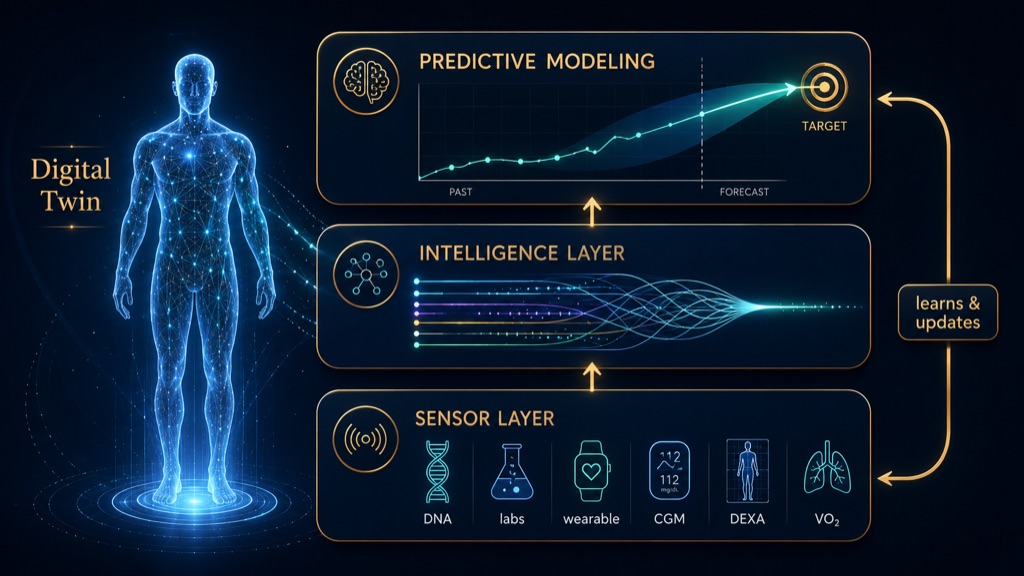
A digital twin stacks your genome, labs, and wearable data into one model that forecasts which peptide is likely to work for you — and flags trouble early, getting smarter every cycle.
Run Huberman's sermorelin episode through that engine, and it plays out differently. A twin that knew his GH-axis genotype might have flagged an elevated chance of a strong IGF-1 response; a twin ingesting his PSA trend would have surfaced the upward drift weeks sooner and scheduled a recheck; a twin watching his sleep staging would have registered the late-night REM suppression as a signal rather than noise. The peptide never needed to be abandoned blindly — it needed to be managed against data. That is the entire proposition: not replacing expert judgment but arming it, so the Coach / Practitioner and the Athlete / Patient share a single, continuously updated picture instead of comparing hunches once a quarter. The same engine that models heart and lungs — a Cardiorespiratory Digital Twin™ — generalizes to peptides, because the discipline is identical: convert scattered measurements into a personal forecast, then update it every time reality disagrees. Each cycle compounds, and the model gets better at predicting you the longer it watches.
6. The coach's advantage: why this science makes experts indispensable
Here is the part the industry sometimes misses. The molecules in this field are increasingly commoditized — the same compounds flow through the same compounding pharmacies. What is scarce, and rising in value, is trustworthy interpretation. That is precisely the domain of the professionals who guide people toward better bodies and sharper minds: weight-loss coaches, performance coaches, dietitians, nutritionists, executive coaches, and the most credible voices in the health-and-beauty world.
Consider the Oprah effect through their eyes. A GLP-1 quiets appetite, but someone still has to protect lean mass with resistance training and adequate protein, manage the risk of regain when a client pauses, and hold the psychological line against decades of misplaced shame — the exact work a great dietitian or coach does. The peptide is the lever; the professional is the fulcrum. As these tools proliferate, clients will need that guidance more, not less, and the counselor who can speak fluently about mechanisms, evidence tiers, biomarkers, and genetics becomes the obvious person to trust. Scientific literacy is quietly becoming the health-and-beauty industry's most durable competitive asset.

As peptides go mainstream, the scarce resource isn't the molecule — it's expert interpretation. The coach or clinician who can read the data becomes the person clients trust most.
This is where the marketplace is actually competing — on data and interpretation, not secret molecules. At the pharmaceutical end, Theratechnologies earned its position by running randomized trials for tesamorelin rather than selling a compound directly to consumers, while contract manufacturers such as the PolyPeptide Group and Bachem supply the industrial synthesis across the entire category.[8][9] At the consumer end, membership diagnostic platforms — Function Health, Superpower, Lifeforce, Protocole, Extension Health — have built their propositions on running broad biomarker panels at a cadence that traditional care does not, then wrapping the results in software and, increasingly, in AI interpretation. What none has fully solved is fusion: genome, bloodwork, wearable, and protocol still tend to live in separate dashboards. Unifying them into a single predictive model — and handing that model to the practitioner — is the frontier, where a coach's intuition is multiplied by machine precision into AI-powered coaching improvements that get sharper with every client and every cycle. LongevityPlan.AI exists to put that firepower in the expert's hands.
7. Doing it well: a disciplined path to real results
If you are an over-40 executive eyeing recovery and body composition, an aspirational master's athlete extending a competitive window, a clinician exploring options for patients, or someone contending with an old injury or an unwanted shift in body composition, here is a principled way through — written as reasoning, because health decisions deserve more than a checklist.
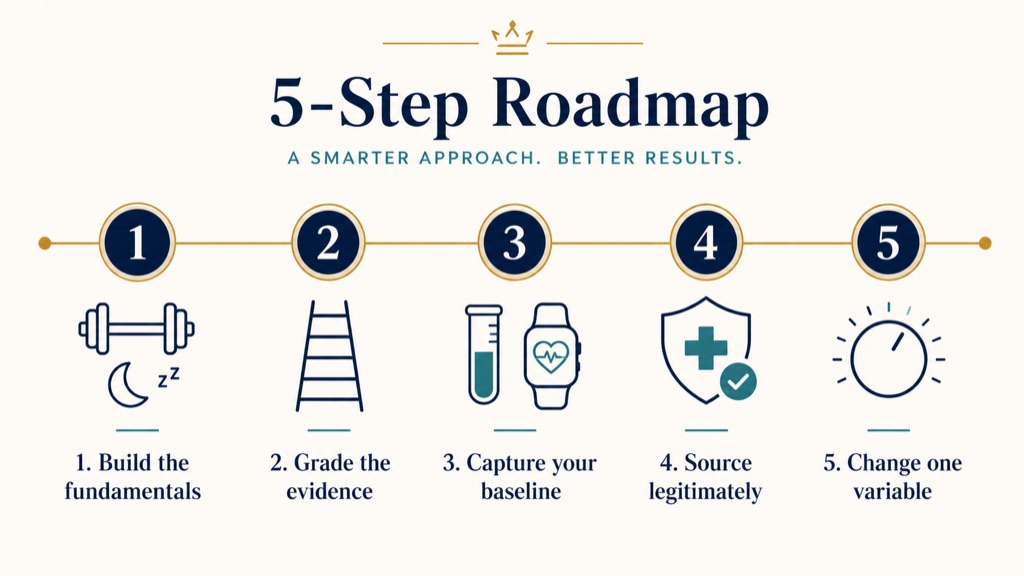
A disciplined path turns a promising molecule into a reliable result: fundamentals first, honest evidence-grading, a real baseline, legitimate sourcing, and one change at a time.
Build the foundation that earns the upside. Peptides sit atop a sleep, resistance training, protein, and cardiovascular base; they amplify a strong platform rather than substitute for a missing one. The largest, best-evidenced gains still live in the fundamentals, and the best results come when a potent molecule meets a body already doing the basics well.
Grade the evidence before the marketing. Use the ladder from Section 3. A peptide with randomized human trials and approval (tesamorelin) is a categorically different proposition from one supported by exciting animal data and testimony (BPC-157). Both can have a place; you simply price the uncertainty accordingly and watch a preclinical-stage molecule more closely.
Capture your baseline before the first injection. Huberman caught two distinct sermorelin effects only because he was tracking. Establish the relevant biomarkers first — for the growth-hormone family, that means at least IGF-1 and PSA in men — plus a body-composition scan and a wearable-established sleep and recovery baseline, with genomic context read honestly as a probability-shifter. Baseline data is what converts "I think I feel better" into "here is exactly what changed." A well-run Peptide Therapy protocol is, in the end, a rigorous experiment on a sample size of one — and a Peptide Longevity Plan™ is that experiment made systematic, with the Digital Twin predicting the likeliest winners and flagging the earliest warning signs.
Source legitimately, every time. This is the one non-negotiable. Work through a physician and a licensed compounding pharmacy — FDA-registered, state-inspected, tested for sterility and endotoxins — rather than the gray-market "research chemical" channel, where bacterial endotoxin load can accumulate silently. It is worth knowing the regulatory backdrop is in motion: the FDA restricted several popular peptides in October 2023, and by early 2026 some (including CJC-1295, ipamorelin, and thymosin alpha-1) had been reapproved for compounding, with further changes under public discussion.[16] Verify current status rather than trusting any single snapshot — including this one.
Change one variable at a time. Stacking may be where synergy eventually lives — Koniver's memorable claim is that the right combination can make "one plus one equal four"[2] — but you learn what works in your body by introducing, measuring, and only then combining. This same discipline scales cleanly to organizations: employers building a Corporate Wellness Program around executive healthspan, and membership communities such as a Longevity Club, are finding that the differentiator is never access to molecules but the quality of the data model wrapped around each person.
8. The hopeful conclusion
The optimistic case for peptides is real and worth stating plainly. They are, in many instances, close cousins of molecules your body already makes and already knows how to handle; several carry long track records; the mechanistic science — Sikiric's tendon-healing pathways, the growth-hormone-axis biology, tesamorelin's targeted assault on visceral fat, GLP-1's quieting of the food noise — is genuinely impressive; and the best of them have already delivered measurable, life-changing results in humans, from a neuroscientist's sleep to one of the most-watched body transformations of the decade. For the person recovering from injury, the executive fighting a desk-bound decade of metabolic drift, the older athlete refusing to concede the fade, this promise is not abstract.
What turns that promise into a dependable outcome is precision. The same molecule can help and hinder the same person at different hours of the same night; individual genetics meaningfully shift who responds; and the smartest move available today is to understand your own biology in high resolution and then let a model of yourself grow sharper every year. Andrew Huberman's ledger is a gift, not a protocol to copy, but a public demonstration of the method — try carefully, measure relentlessly, respect the biomarkers, adjust with the data. The people who will benefit most from the coming decade of peptide medicine are those who decide early to see themselves clearly. The molecule matters. The high-resolution picture of the person receiving it may matter more.
Join the Affiliate Program (pays 20%), or subscribe to the Longevity & Peptide Optimization Newsletter.
About the Author
Tony Medrano is CEO and co-founder of LongevityPlan.AI, a platform that integrates performance and health data and leverages proprietary Digital Twin for Predictive Peptide Performance™ technology, wearable data, and biomarker data to deliver personalized optimization and longevity recommendations. A 3x technology/AI company CEO with 2 successful exits, Tony has completed 3 Full Ironman Triathlons (140.6 mi) since 2019. He holds degrees from Harvard University, Columbia University, and a JD/MBA from Stanford University, and has worked with the US Olympic Team, the NBA, NFL, MLB, NASA, Google, Microsoft, and Netflix, among others. He also served as a US Navy Officer commanding an emergency response team aboard a destroyer.
Disclosure and disclaimer: LongevityPlan.AI is a precision-longevity platform. This article is educational and not medical advice; it does not diagnose, treat, or recommend any specific therapy. Peptide regulatory status is changing and should be independently verified. Consult a licensed physician before beginning any peptide or hormone protocol.
Endnotes and sources
Figures and quotations trace to the linked primary or peer-reviewed sources. Where human evidence is limited, the text says so. This article is educational, not medical advice; peptide decisions should be made with a licensed physician.
- Wang, L. et al. (2022). "Therapeutic peptides: current applications and future directions." Signal Transduction and Targeted Therapy. doi:10.1038/s41392-022-00904-4
- Huberman Lab Podcast — conversation with Craig Koniver, MD, "Benefits & Risks of Peptide Therapeutics for Physical & Mental Health," and related Huberman–Koniver interviews: personal-use disclosures (pinealon, BPC-157, sermorelin, MK-677), secretagogue "flavor" distinctions, stacking, sourcing and endotoxin warnings, and FDA-status commentary, as compiled and cited at fastlifehacks.com/andrew-huberman-peptides. Full episode: hubermanlab.com.
- Staresinic, M., Sikiric, P. et al. (2003). "Gastric pentadecapeptide BPC 157 accelerates healing of transected rat Achilles tendon and in vitro stimulates tendocyte growth." Journal of Orthopaedic Research, 21(6):976–83. Original BPC-157 clinical development (PL-14736) by Pliva.
- Chang, C.H., Tsai, W.C., Hsu, Y.H., Pang, J.H. (2014). "Pentadecapeptide BPC 157 enhances the growth hormone receptor expression in tendon fibroblasts." Molecules, 19(11):19066–77.
- Krivic, A., Sikiric, P. et al. (2006). Achilles tendon-to-bone healing with BPC 157; opposition to corticosteroid aggravation. PubMed 16583442.
- Vasireddi, N., Hahamyan, H., Salata, M.J. et al. (2025). Systematic review of BPC-157 (36 studies, 1993–2024; 35 preclinical, 1 uncontrolled human chart review; half-life <30 min; no completed controlled human efficacy trials; no human safety data). HSS Journal.
- Seiwerth, S., Sikiric, P. et al. (2021). "Stable Gastric Pentadecapeptide BPC 157 and Wound Healing." Frontiers in Pharmacology, 12:627533.
- Falutz, J. et al. (2007). Phase 3 tesamorelin trial; ~15% visceral adipose tissue reduction over 26 weeks. New England Journal of Medicine.
- U.S. FDA approval of tesamorelin (Egrifta), 2010; later EGRIFTA WR formulation. Developer: Theratechnologies, Inc.
- Stanley, T., Grinspoon, S. et al. (2014). "Effect of tesamorelin on visceral fat and liver fat in HIV-infected patients with abdominal fat accumulation: a randomized clinical trial." JAMA (treatment effect ~−42 cm² VAT; reduced hepatic fat over 6–12 months). PubMed 25038357.
- Meta-analysis of tesamorelin RCTs in HIV-associated lipodystrophy (2026), ScienceDirect S1871403X26000025 (pooled VAT reduction; neutral glycemic profile).
- Ouni, M. et al. (2015). "Genetic and Epigenetic Modulation of Growth Hormone Sensitivity Studied With the IGF-1 Generation Test." Journal of Clinical Endocrinology & Metabolism, 100(6):E919 (GHR-d3 ~19% of IGF-1 response variance; with IGF-1 promoter CG-137 methylation, >40% combined).
- PREDICT / genome-wide pharmacogenetic study of growth-hormone responsiveness (multi-cohort; GHR-d3 association not consistently replicated). PMC7446971.
- Review of the exon-3-deleted GHR (d3GHR) polymorphism (2023), International Journal of Molecular Sciences; d3/d3 prevalence ~5–20%; longevity association. PMC10531306.
- IGF1 promoter (CA)n microsatellite polymorphism and rhGH response (2011), The Pharmacogenomics Journal. doi:10.1038/tpj.2011.3
- U.S. FDA, human drug compounding — bulk drug substances presenting significant safety risks (Category 2 listing affecting BPC-157, CJC-1295, thymosin alpha-1, MK-677 and others), effective October 2023; partial reapprovals reported early 2026 (see note 2).
- Grossman, M.I. (1979). "Chemical messengers: a view from the gut." Federation Proceedings (peptides as endogenous signaling molecules).
- The Genomics Company — genomic testing and interpretation across seven functional systems; "Medicine 3.0" framing; program pricing. thegenomicscompany.com.
- Oprah Winfrey, interview with People (December 2023) and "The Oprah Podcast": use of a GLP-1 agonist as a maintenance tool; "quiets the food noise." Reporting via TODAY.com.
- Winfrey, People cover interview (late 2025): began GLP-1 in 2023, ~211 lb baseline (pre-diabetic, high cholesterol) to ~155 lb; regained ~20 lb after a ~6-month pause; describes GLP-1 as a lifetime tool. Reporting via Fox News Health / People.
- Jastreboff, A.M. (Yale Obesity Research Center) & Winfrey, O. (2025). "Enough" — the "Enough Point" set-weight-range concept shaped by genetics and environment.