Longevity
·19 min read
Oral, IV, or Injection? The Best Way to Administer NAD+
A precision field guide to the molecule at the center of the longevity conversation — where the data is strong, where it's theater, and how measurement turns a fashionable drip into a real protocol.
By Tony Medrano
This article is for education and is not medical advice.
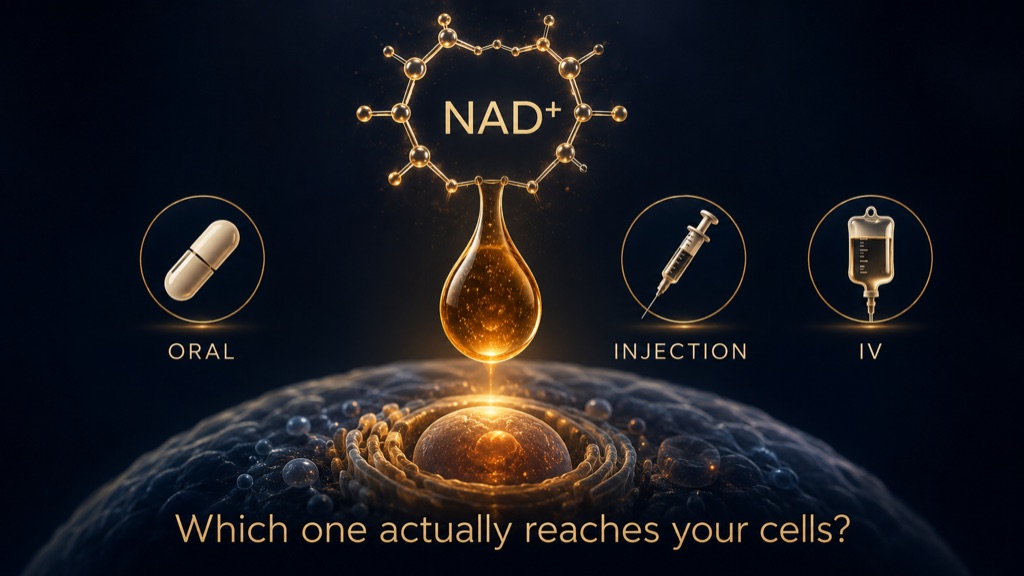
The NAD+ boom has three front doors — a pill, a shot, and a drip. Only one is backed by the deepest human evidence, and it isn't the one on your favorite celebrity's Instagram.
"For the rest of my life"
In a now-famous episode of Hulu's The Kardashians, Kendall Jenner and Hailey Bieber lounged in a Miami suite, arms tethered to IV poles, bonding over a shared NAD+ infusion. Jenner described the ritual as something that comforted her; Bieber declared she'd be doing NAD "for the rest of my life" and never aging.25 The internet, predictably, had opinions — the sharpest of which was a joke that the bags could have been colored saline and the supermodels would never have known the difference.25
That joke is the most scientifically interesting thing about the whole scene, and it's where this article begins. Walk into any high-end wellness clinic today, and you'll be offered the same NAD+ drip, riding a global IV-therapy market worth billions.18 The pitch is seductive and, at first glance, unarguable: deliver the molecule straight into the bloodstream, skip the gut, and get near-total bioavailability a pill could never match. There is just one problem, and it's a good one to understand before you spend a dollar — the molecule at the center of this market cannot easily get into your cells.
That single fact, quietly acknowledged in the peer-reviewed literature and loudly debated among the scientists who discovered these pathways, reorganizes everything you think you know about "the best delivery method." What follows is a field guide to that reorganization, written for the person deciding what to actually do: the executive optimizing a decade of output, the master's athlete protecting connective tissue, the weight-loss or performance coach fielding the question fifteen times a week, and the reader who simply wants signal pulled out of noise. We'll be pro-data and pro-precision, because that's the only defensible posture here — and honest, including where the honest answer undercuts the flashiest option. As it happens, that's exactly what makes NAD+ the perfect teaching case for how modern longevity planning should work.
First principles: the molecule you're losing
Nicotinamide adenine dinucleotide (NAD+) is not a supplement fad; it's one of the most fundamental molecules in biology. It's a coenzyme present in every living cell, indispensable to ATP production, DNA repair, and the activity of two enzyme families near the center of the aging conversation: the sirtuins (SIRT1–7) and the PARPs.5,7 Strip NAD+ out of a cell and metabolism stops. It is, in the most literal sense, non-negotiable.
The catch is that NAD+ declines with age, and that decline has been linked to essentially all of the recognized hallmarks of aging.5 That's why NAD+ has become the connective tissue of the entire longevity field — and why raising it has become a commercial gold rush. The scientific question was never "does NAD+ matter." It obviously does. The question is far more practical: if you want more of it in the tissues that count, what actually works?
The fact that flips the hierarchy
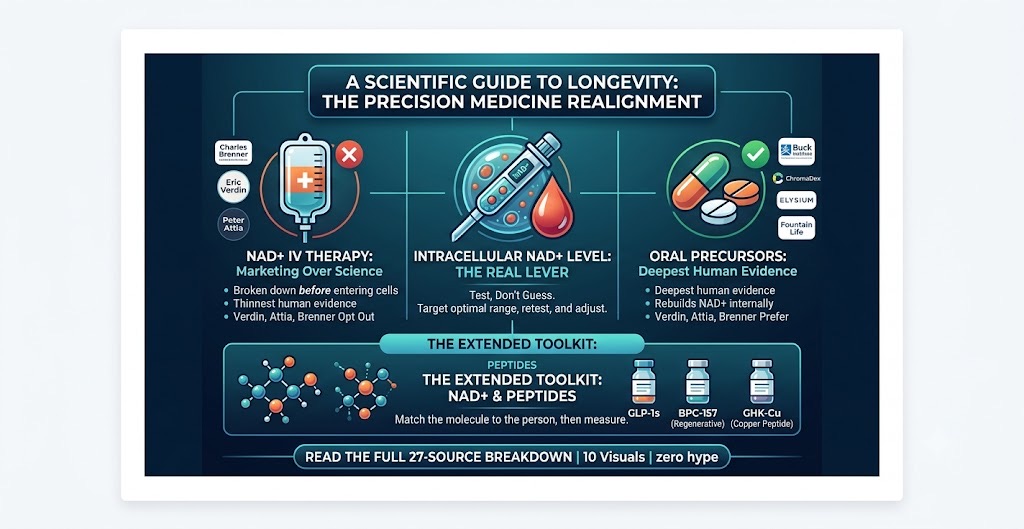
Here's the biochemistry most clinic brochures omit. NAD+ itself is a large, charged molecule. When you infuse it, it does not glide intact through cell membranes to top up your intracellular supply. Instead, the peer-reviewed pharmacology shows that circulating NAD+ is largely broken down in the extracellular space — hydrolyzed to nicotinamide mononucleotide (NMN), then cleaved to nicotinamide riboside (NR) — and it's chiefly that smaller NR fragment that cells take up, via nucleoside transporters, before rebuilding NAD+ inside.4 Providing NR rather than NAD+ itself, the researchers note, appears to be the more efficient route to raising intracellular NAD+.4
Charles Brenner — the biochemist who discovered NR as a vitamin precursor of NAD+, now Chief Scientific Advisor to ChromaDex (recently rebranded Niagen Bioscience) and, since 2026, a professor at the University of Helsinki — has argued for years that direct NAD+ approaches largely amount to an expensive, uncomfortable way of delivering what your cells will ultimately use as NR anyway.9,10 A skeptic quoted in the trade press was blunter still, calling direct NAD injection "completely idiotic from a biochemistry point of view" precisely because NAD can't readily cross the membrane.8
You don't have to accept the harshest framing to grasp the takeaway: the "100% bioavailability" claim for IV NAD+ is technically true in the bloodstream but potentially misleading at the cellular level. Getting a molecule into plasma is not the same as getting it into the mitochondria — and the mitochondria are where you wanted it. Hold that lens up to the three delivery routes and the marketing hierarchy inverts.
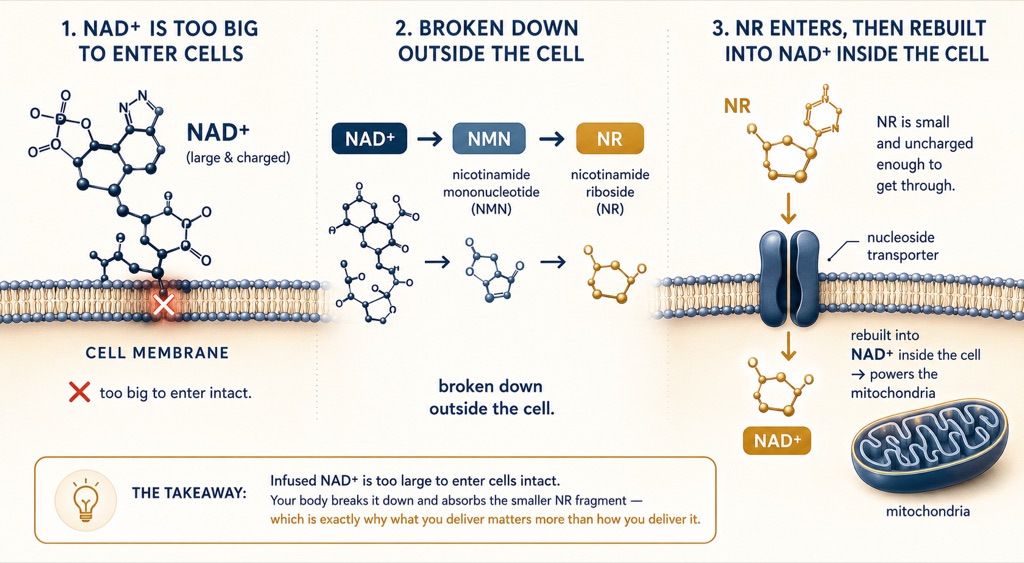
The catch behind the drip: infused NAD+ is too large to enter cells intact. Your body breaks it down and absorbs the smaller NR fragment — which is exactly why what you deliver matters more than how dramatically you deliver it.
Three doors: IV, injection, and the humble capsule
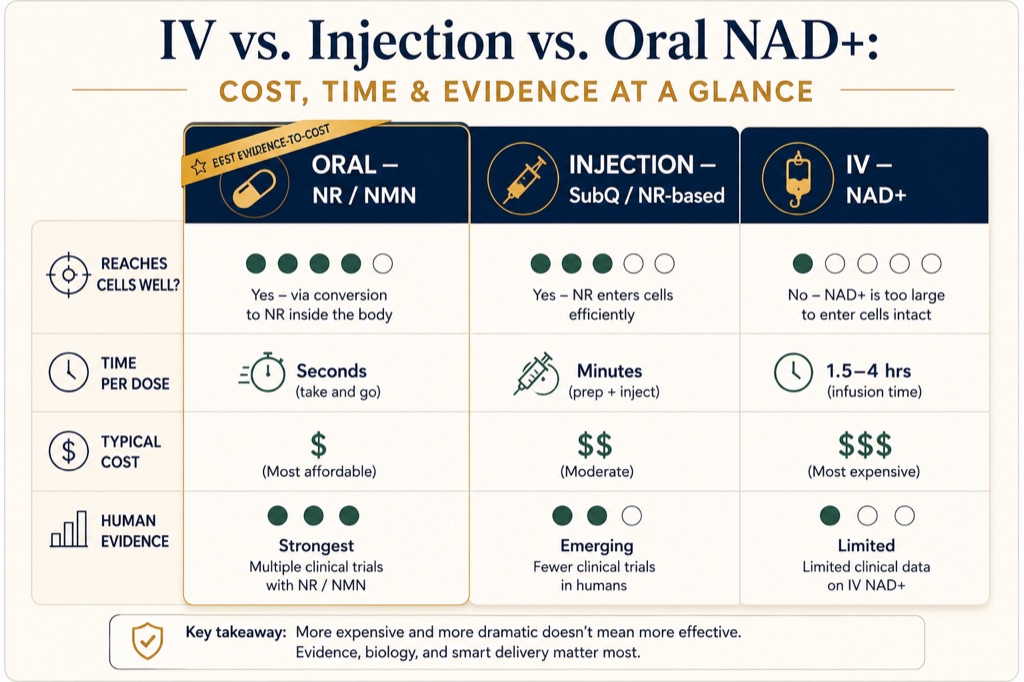
Three ways in, three very different trade-offs. The flashiest option (IV) carries the highest price and the thinnest evidence; the humblest (a daily capsule) has the deepest human research behind it.
Door one — intravenous NAD+: fast, dramatic, thinly evidenced
Let's give IV its fair hearing. Infusing NAD+ does bypass the gut and the liver's first-pass metabolism, and it does spike circulating NAD+ within a session.2 Users routinely report a jolt of clarity, and there are genuinely interesting signals in specific niches: the strongest human evidence sits in addiction and withdrawal settings, and a separate mechanism — extracellular NAD+ acting on cell-surface receptors rather than crossing the membrane — may explain why some people feel something even when intracellular uptake is limited.6,9
But the honest truth is that the evidence is thin. A systematic assessment found only a handful of randomized trials and described the broader longevity case as promising yet speculative.7,8 The practical experience isn't gentle either: rapid infusion commonly triggers chest tightness, cramping, flushing, and nausea, which is why protocols drip slowly over one to several hours.6,8 And two of the most credible voices in the field land in the same place. Eric Verdin, president and CEO of the Buck Institute for Research on Aging, has said intravenous NAD+ is *"not something that should be done."*23 Peter Attia, the physician and author of Outlive, is skeptical of the whole geroprotective claim and has said plainly that he doesn't take NAD infusions, NR, or NMN himself.22 When the people building longevity's intellectual foundations are personally opting out of the premium option, that's data too.
Which brings us back to Miami. The Bieber–Jenner drip party wasn't dangerous; it was, most likely, a pleasant and very expensive way to spend an afternoon. The problem the internet intuited is real: without measurement, a dramatic infusion and a bag of colored saline can feel identical. Drama is not the same as delivery.
Where IV genuinely earns its place: patients who can't tolerate oral intake, certain gastrointestinal conditions, and supervised addiction, withdrawal, or neurological programs under a clinician's care.6 As a monthly luxury "reset" for an otherwise healthy person, it carries the weakest cost-to-evidence ratio in the category.
Door two — injection: the middle path, and a genuinely new product
Subcutaneous injection is the pragmatic middle. It skips first-pass metabolism like IV, trades the dramatic peak for a steadier release, and — crucially for adherence — can often be self-administered at home in minutes rather than surrendered to a multi-hour clinic chair.6 The most consequential recent development in the entire debate is a product that dissolves the false choice between "effective" and "the fragment your cells actually use." In 2024, ChromaDex launched Niagen+, a pharmaceutical-grade injectable and IV form of nicotinamide riboside chloride, FDA-authorized for compounding by 503B outsourcing facilities and distributed to clinics including Next Health, Restore Hyper Wellness, and Cenegenics.18,19 Instead of infusing bulky NAD+ and hoping, you can now infuse the smaller NR fragment directly.
Read more scientific research from LongevityPlan.AI, or buy peptides from our shop.
The first human pilot is the clearest illustration of the thesis as a whole. In a randomized, double-blind comparison, a 500 mg dose of NR-based Niagen IV was well tolerated with no adverse events, delivered a 75% shorter infusion time, and drove blood NAD+ higher and faster at three hours than a matched dose of traditional NAD+ IV.4,18 Here, for once, the biochemistry and the marketing agreed — rarer than it should be.
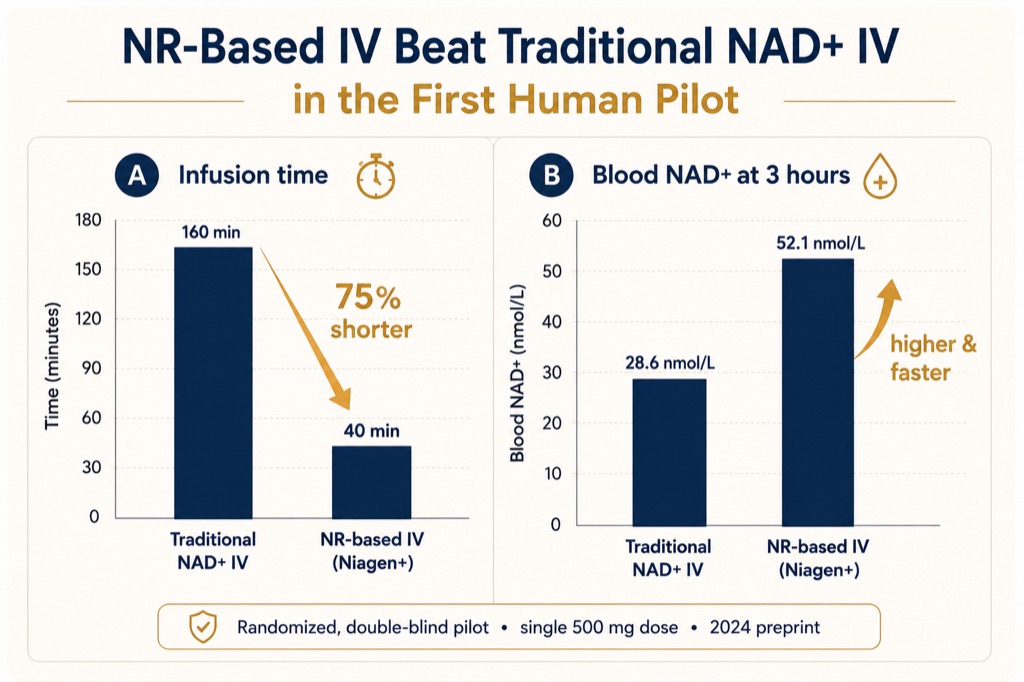
The most exciting product news in the category isn't more NAD+ — it's infusing the smaller NR fragment your cells actually use. In an early human pilot, it ran 75% faster and raised NAD+ levels higher than a classic NAD+ drip.
Door three — oral precursors: unglamorous, best-documented
Here the data density flips. Swallowing NAD+ itself is largely pointless — it degrades and can't enter cells intact — which is why oral strategies rely on precursors cells can convert.4 And on the precursor side, the human evidence is deeper than anywhere else in this article.
Two landmark trials anchor the case. Martens and colleagues (2018) gave healthy middle-aged and older adults 1,000 mg/day of NR for six weeks in a randomized, placebo-controlled crossover design. It was well tolerated, measurably raised NAD+, and produced an early signal toward lower blood pressure and reduced aortic stiffness — a cardiovascular hint worth taking seriously in an aging population.1 Then Yoshino and colleagues (2021), publishing in Science, gave postmenopausal women with prediabetes just 250 mg/day of NMN for ten weeks. Muscle insulin sensitivity rose meaningfully — roughly a 25% improvement in insulin-stimulated glucose disposal — alongside upregulated muscle-remodeling genes.2
Intellectual honesty requires the footnote a supplement ad would omit: that the NMN trial drew a published critique in Science noting an imperfect randomization, because the placebo group happened to carry substantially more liver fat — a confounder for the very outcome measured.3 It doesn't erase the finding, but it's exactly the caveat a serious guide includes. The larger point stands: by trial count and quality, the best-evidenced way to raise NAD+ in humans is the least glamorous one — a daily capsule.
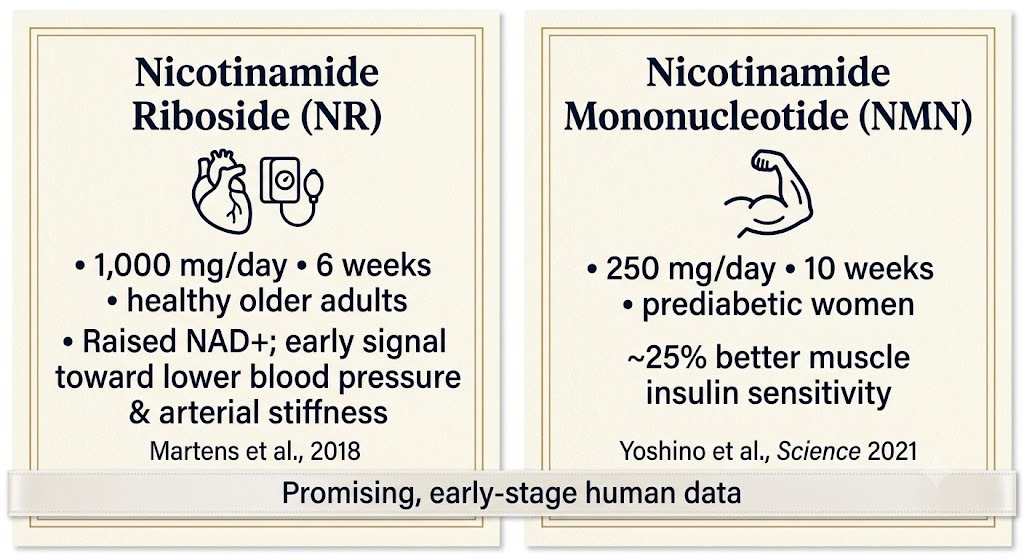
The unglamorous capsule has the receipts: two landmark human trials show oral NAD+ precursors raising NAD+ with real metabolic and cardiovascular signals — early data, honestly labeled, but the strongest in the category.
| Route | What actually reaches cells | Time & typical cost* | Human evidence | Best-fit use case |
|---|---|---|---|---|
| IV NAD+ | Largely broken down extracellularly; cells absorb the NR fragment4 | ~1.5–4 hrs; hundreds to low thousands per session8 | Limited RCTs; strongest in addiction/withdrawal6,7 | Malabsorption; supervised clinical niches |
| Injectable (SubQ / NR-based) | Bypasses gut; NR-based formats deliver the usable fragment directly18 | Minutes to under an hour; mid-range monthly | Emerging; Niagen IV pilot promising, early4 | Time-constrained users wanting parenteral delivery |
| Oral precursors (NR / NMN) | Absorbed, converted intracellularly to NAD+1,4 | Seconds; lowest monthly cost | Deepest — multiple RCTs (Martens, Yoshino)1,2 | Sustained daily maintenance for most people |
*Cost and time figures are approximate market ranges compiled from public sources and vary widely by clinic, region, and formulation.8
Choosing a precursor: NR, NMN, and a regulatory plot twist
Spend ten minutes in longevity forums, and you'll meet the NR-versus-NMN partisans. The two molecules differ by a single phosphate group, and that phosphate is the whole argument. Brenner's position is that it's a liability: charged molecules don't cross membranes, so NMN must shed its phosphate and enter cells as NR anyway — making NMN, in his words, a molecule that *"doesn't get into cells as NMN."*13 The NMN camp counters with the 2019 discovery, from Shin-Ichiro Imai's Washington University lab, of Slc12a8 — a dedicated NMN transporter that would let NMN enter certain tissues intact.11 This is a live, unresolved dispute, not settled fact: the transporter finding drew a pointed same-journal rebuttal titled "Absence of evidence that Slc12a8 encodes a nicotinamide mononucleotide transporter," and the groups have exchanged formal replies.12 (The commercial stakes are real too — the transporter patent was licensed to Japanese corporation Teijin.14)
Step back, though, and the feud mostly dissolves, because both molecules demonstrably raise intracellular NAD+ in humans, and the physicians least prone to hype treat them as effectively interchangeable.22 For anyone deciding what to take, the actionable translation is that the delivery-and-dose system matters far more than which of two nearly identical precursors wins a message-board war.
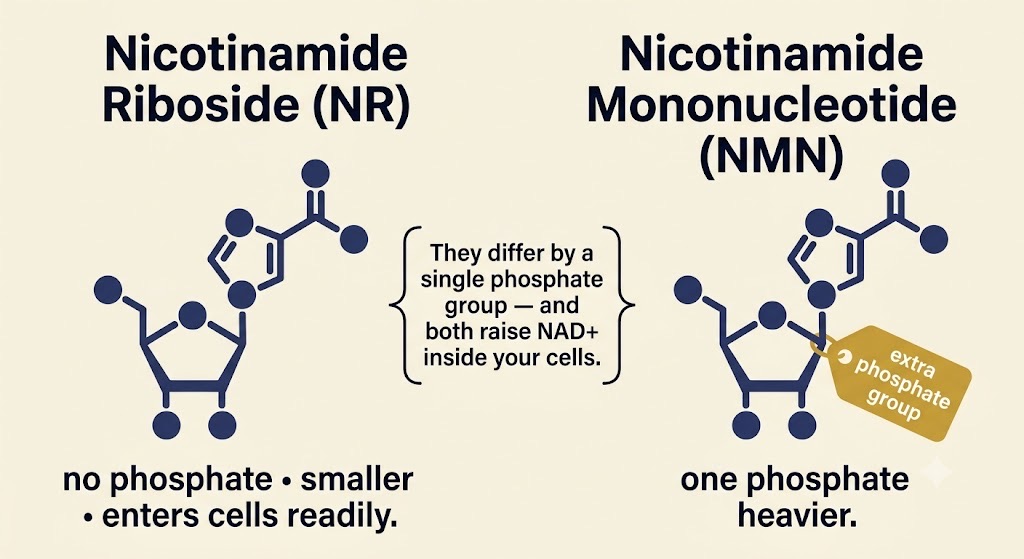
The whole NR-vs-NMN argument comes down to one phosphate group. It fuels a genuine scientific debate — but for the person choosing a supplement, both molecules reliably raise NAD+, and the system around them matters far more.
Regulation quietly shaped which molecule you could even buy — and the story just reversed, which most articles get wrong. In November 2022, the FDA declared NMN could no longer be sold as a dietary supplement, because it had been investigated as a drug first (Metro International Biotech's pharmaceutical-grade candidate, MIB-626, now in Phase II).15,17 That left NR — which holds self-affirmed GRAS status since 2016 and two favorable New Dietary Ingredient notifications — as the cleanly legal, well-documented oral precursor.17 Then came the twist: after a multi-year fight led by the Natural Products Association, the FDA reversed course, and as of late 2025 reinstated NMN's status, permitting it once again as a supplement.16 So the accurate 2026 picture — often reported out of date — is that both NR and NMN are lawfully available, with NR carrying the longer regulatory track record. If a guide still tells you NMN is banned, it's running on 2023 information. Currency matters; this is why we date our sources.
The real lever isn't a route — it's a number
Notice what every argument so far has quietly assumed: that "raise NAD+" is a single, uniform goal. It isn't. The most important and least-marketed fact in this field is that NAD+ response to the same dose varies dramatically between individuals. Two executives on identical regimens can land in completely different places — one comfortably repleted, the other barely moved. That variation is why the smartest move in the entire category isn't choosing a route. It's measuring, personalizing, and adjusting.
Test, don't guess
The field's most interesting company here isn't selling a molecule at all — it's selling a number. Jinfiniti Precision Medicine, founded by geneticist Dr. Jin-Xiong She, built the first clinical-grade at-home intracellular NAD+ test (CLIA-certified, from a simple finger-prick), reporting your actual level in micromolar against an optimal range of roughly 40–100 μM.21 Their data reports that 85% of participants reached optimal NAD+ within four weeks when dosing was guided by testing rather than guesswork.21 Their motto compresses modern longevity practice into three words: test, don't guess. This reframes the whole delivery debate. The "best" route is simply the one that gets your intracellular NAD+ into your optimal range, as confirmed by measurement, at a cost and cadence you can sustain. A drip that makes you feel electric but doesn't move your number is theater; a capsule that quietly lands you at 70 μM is medicine. (Ask Miami.)
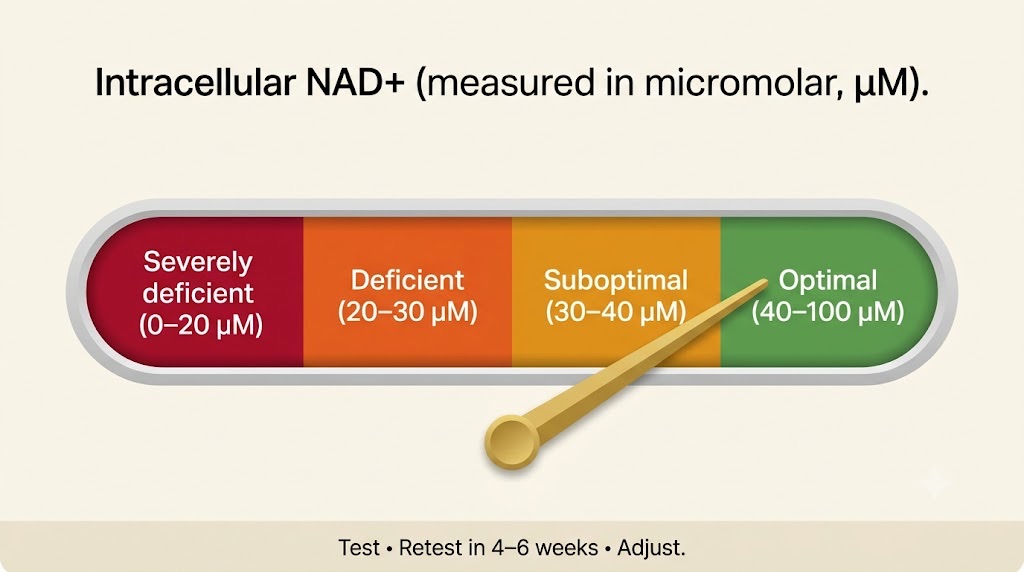
"More" isn't the goal — "optimal" is. A simple at-home test reports your intracellular NAD+ as a number, so you can confirm your protocol is actually landing you in the 40–100 µM range instead of guessing.
Why your genes sit underneath it
That individual variation isn't random — it's substantially genetic, which is why genomic assessment belongs at the foundation of any serious protocol. NAD+ is governed by a tug-of-war between salvage enzymes that rebuild it (the NAMPT and NRK pathways) and consumers that burn through it, most notably CD38, the inflammatory "NADase" that accelerates decline with age.4,9 Variation in these salvage and consumption genes — and in NNMT, which methylates and clears nicotinamide — helps explain why one person's 250 mg lands very differently than another's. Layering a genomic assessment (the kind offered by dedicated partners such as The Genomics Company) on top of a baseline NAD+ measurement turns a generic supplement habit into a personalized one.
From molecule to model
Here's how the pieces assemble into something more powerful than any single infusion. Picture three layers. A sensor layer captures the inputs — genomic profile, baseline and follow-up intracellular NAD+, wearables tracking recovery and heart rate variability, bloodwork, and sleep architecture. An intelligence layer fuses those multi-modal health data streams and runs predictive modeling against them, learning each person's dose-response curve rather than assuming the label's. The output is a living protocol: not "take NAD+," but "for your genetics and current level, this precursor at this dose, retested on this schedule, with parenteral escalation only if oral fails to move your number." This is the biological bedrock of a Digital Twin for Predictive Peptide Performance™ — a computational model of an individual that predicts how a given molecule will behave in that body before a single dose is taken. Genetics defines the terrain; measurement calibrates the map; the model turns both into decisions.
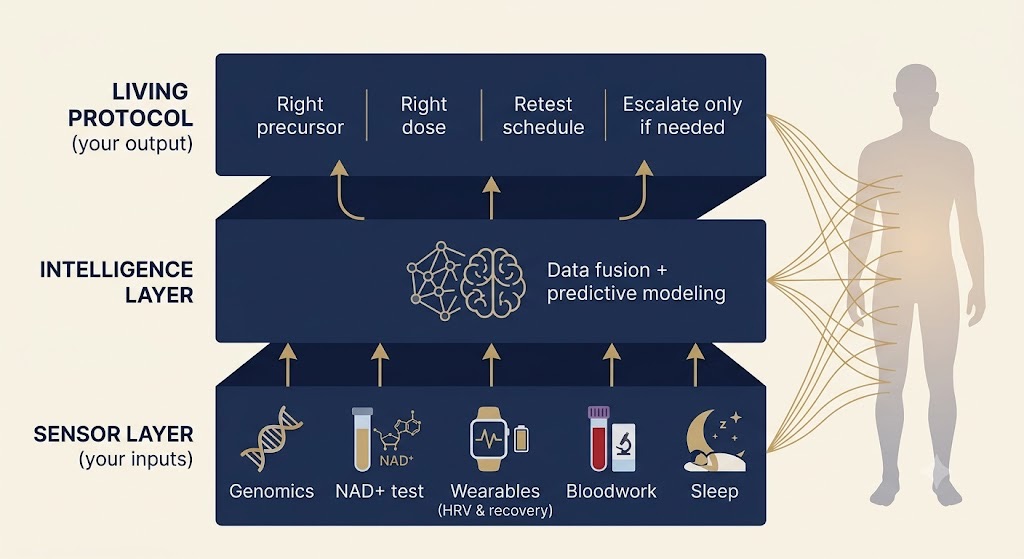
The molecule is a commodity; the model is the expertise. A digital twin fuses your genetics, labs, and wearables to predict how your body will respond — turning "take NAD+" into a precise, self-correcting plan.
NAD+ is one instrument; peptides are the fastest-growing section of the orchestra
Zoom out, and NAD+ is a single instrument in a much larger molecular toolkit — and the section growing fastest is peptides. This matters especially for practitioners who increasingly shape their clients' choices: weight-loss and performance coaches, dietitians, nutritionists, executive coaches, and counselors in the health-and-beauty world, who are expected to have a credible answer when a client asks about the injectable everyone's talking about. Here's the good news for that audience: peptides are one of the most scientifically legible and genuinely promising frontiers in the field, and the same measure-and-personalize logic applies cleanly to all of them.
Start with the class that has already rewritten an entire industry. The GLP-1 receptor agonists — semaglutide and tirzepatide — are peptides, and their weight-loss data is among the most impressive ever recorded for a drug. Across the STEP trials, semaglutide produced mean body-weight reductions in the mid-teens; in the head-to-head SURMOUNT-5 trial published in NEJM, tirzepatide reached roughly 20% at 72 weeks, approaching territory once reserved for bariatric surgery.26 For a weight-loss coach or dietitian, this isn't fringe biohacking — it's the best-validated pharmacology in modern obesity medicine, and clients are already asking about it. What they need is a professional who can pair it with the fundamentals that make it stick: protein targets, resistance training to preserve lean mass, and measurement of what's actually changing.
Then there's the regenerative class that has earned a devoted following among athletes and performance coaches. BPC-157, a synthetic peptide derived from a protective compound found in gastric juice, has shown striking results in animal models — accelerated tendon, ligament, and gut healing, new blood-vessel formation, and in one Journal of Orthopedic Research study, improved tendon-to-bone healing even in the presence of corticosteroids that normally impair it.27 Its frequent partner, TB-500 (a thymosin beta-4 fragment), promotes cell migration and angiogenesis in muscle and cardiac repair models. The honest framing — the one that builds trust with a discerning client — is that this is compelling preclinical evidence with human trials still emerging, and that these compounds are not FDA-approved and are banned by WADA for competitive athletes.27 That caveat isn't a weakness in the pitch; it's the mark of a practitioner worth listening to. And the enthusiasm is well-founded: peptides are, by design, close cousins of signaling molecules the body already makes, which is a large part of why the field is so hopeful about their future.
The beauty and longevity-skincare world has its own darling in GHK-Cu, the copper tripeptide studied for collagen synthesis, skin remodeling, and hair follicle support — a favorite reference point for aesthetic practitioners and influencers precisely because it sits at the intersection of visible results and real biochemistry. The through-line across all of these — metabolic, regenerative, aesthetic — is that individual response varies, dosing is personal, and outcomes are only knowable if you measure. That's the same lesson NAD+ taught us, which is why a Digital Twin built to predict peptide response, grounded in genomics and biomarkers, is the natural home for serious Peptide Therapy. The molecule is a commodity; the model is the expertise. For the Coach / Practitioner and the Athlete / Patient working from a shared, evolving picture — and for the counselors and influencers whose credibility depends on getting the science right — that is precisely the value we exist to provide.
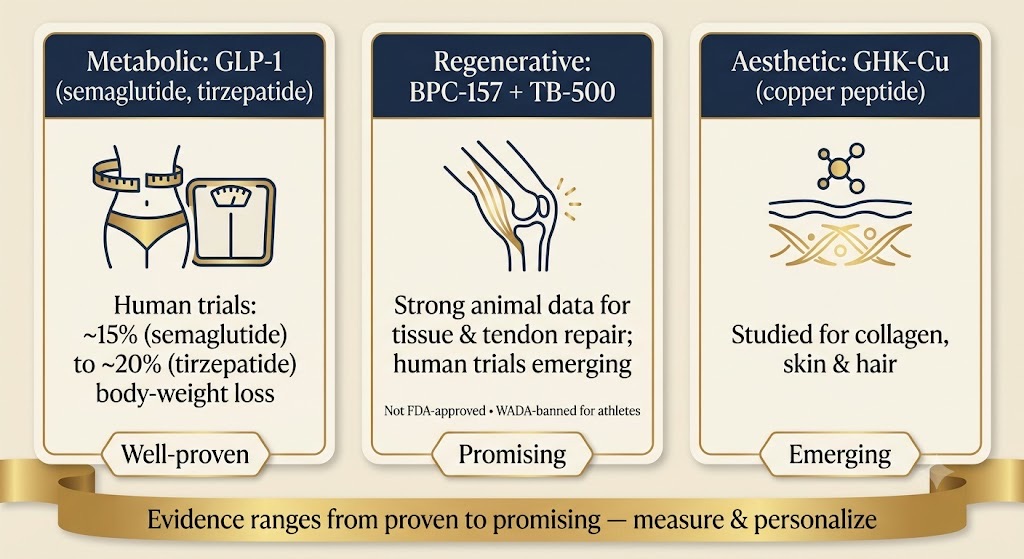
NAD+ is one instrument; peptides are the orchestra's fastest-growing section. From clinically proven GLP-1s to promising regenerative and copper peptides, the winning move is the same — match the molecule to the person, then measure.
The field, and how to read it
Understanding the players clarifies the choices. Broadly, three business models converge on your NAD+ question. The ingredient and product houses compete on molecule and mechanism: ChromaDex (Niagen Bioscience) built its position on patented NR and extended it into the pharmaceutical-grade Niagen+ injectable, spanning both the supplement shelf and the clinic; Metro International Biotech is taking the drug-development road with MIB-626, pursuing NMN as a regulated pharmaceutical; Elysium Health popularized the combination approach.15,17,18 The measurement and personalization companies compete on data — Jinfiniti's intracellular test turned "am I even absorbing this?" from a shrug into a lab value, and this layer is the natural home of genomics partners and Digital Twin platforms.21 And the membership platforms compete on the whole picture: Function Health and Superpower have scaled broad biomarker panels into consumer subscriptions, while Lifeforce and Fountain Life wrap testing, clinician access, and interventions into concierge memberships. For most of these, NAD+ is one line item on a dashboard — which is exactly the right altitude from which to view it. The winning consumer move is rarely "buy the most aggressive delivery." It's "join a system that measures, personalizes, and adjusts."
A framework for deciding
Strip away the debate and a defensible default emerges. If you're generally healthy and want the best evidence-to-cost ratio, start with a daily oral NR or NMN at studied doses, because that's where the human trials live and where sustainability is highest.1,2 Measure your intracellular NAD+ first, retest after four to six weeks, and let your number — not a brochure — decide whether to escalate.21 Reserve injectable NR-based formats for when you want parenteral delivery without the time cost of a drip, and reserve IV for genuine clinical indications or supervised programs, going in clear-eyed that you're paying the highest price for the thinnest evidence.6,7
A quiet word on the meta-point, since it's the real subject underneath the molecule: the compounding returns of good health decisions are enormous, and they start now. The person who builds a measured, personalized plan in their forties — NAD+ and peptides as instruments within a larger orchestra of sleep, training, and metabolic care — is buying optionality on their own future that no single infusion can deliver in an afternoon. Whether you find your people in a concierge clinic, a Corporate Wellness Program, or a longevity club, the best time to make longevity a plan rather than a purchase is before you feel you need it.
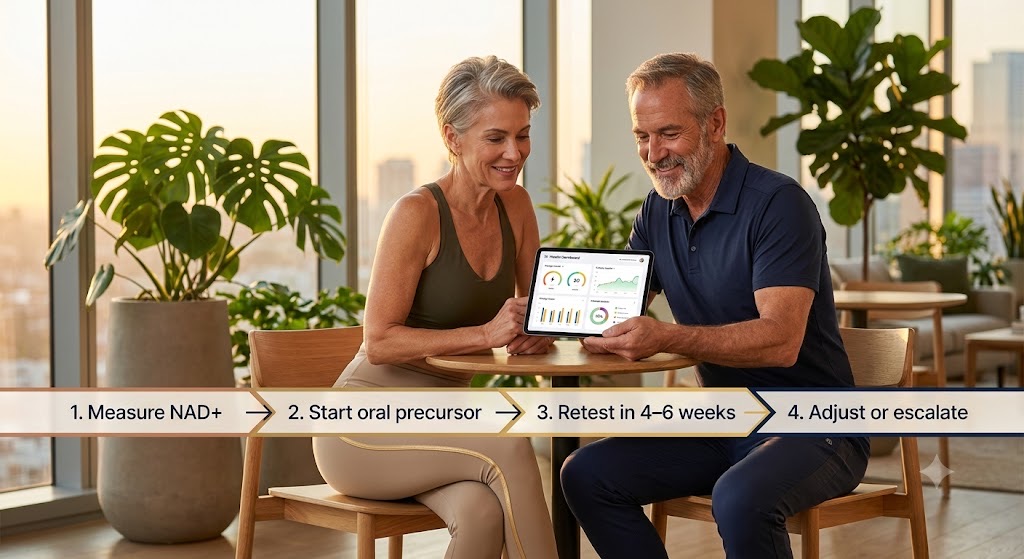
Make longevity a plan, not a purchase. Start with a measured baseline, choose a sustainable oral base, retest to confirm it's working, and escalate only if your number warrants it.
The bottom line
NAD+ is real, its decline is real, and raising it is a legitimate longevity lever. But the marketing hierarchy — IV at the top, pills at the bottom — is nearly inverted when you look at the biochemistry and the trials. The infused NAD+ molecule mostly can't enter your cells intact; the humble oral precursor has the deepest human evidence; the most exciting product innovation works precisely because it delivers the fragment your cells actually use; and the highest-leverage decision isn't a route at all — it's measuring, personalizing to your genetics, and adjusting from your own data.
That's the through-line of serious longevity practice, and it extends cleanly to the peptides reshaping weight management, recovery, and aesthetics. Don't buy the drip because it's dramatic — Hailey Bieber's "rest of my life" notwithstanding. Build the plan because it's yours. Test, don't guess — and let the number, not the noise, tell you what's working.
Sign up for FREE daily Longevity Club Workshops, or join the Affiliate Program (pays 20%). Subscribe to the Longevity & Peptide Optimization Newsletter.
About the Author
Tony Medrano is CEO and co-founder of LongevityPlan.AI, a platform that integrates performance and health data and leverages proprietary Digital Twin for Predictive Peptide Performance™ technology, wearable data, and biomarker data to deliver personalized optimization and longevity recommendations. A 3x technology/AI company CEO with 2 successful exits, Tony has completed 3 Full Ironman Triathlons (140.6 mi) since 2019. He holds degrees from Harvard University, Columbia University, and a JD/MBA from Stanford University, and has worked with the US Olympic Team, the NBA, NFL, MLB, NASA, Google, Microsoft, and Netflix, among others. He also served as a US Navy Officer commanding an emergency response team aboard a destroyer.
Disclaimer: This article is educational and not medical advice. NAD+ precursors, peptides, and infusion therapies can interact with health conditions and medications, and several sources note theoretical caution around active malignancy. Peptides such as BPC-157 and TB-500 are not FDA-approved and are prohibited for competitive athletes under WADA rules. Decisions about supplementation, peptides, or infusion therapy should be made with a qualified clinician who can interpret your genetics, biomarkers, and history.
Endnotes and sources
- Martens CR, Denman BA, Mazzo MR, et al. "Chronic nicotinamide riboside supplementation is well-tolerated and elevates NAD+ in healthy middle-aged and older adults." Nature Communications, 2018. PMC5876407. (1,000 mg/day NR; blood-pressure and arterial-stiffness signal.)
- Yoshino M, Yoshino J, Kayser BD, et al. "Nicotinamide mononucleotide increases muscle insulin sensitivity in prediabetic women." Science 372:1224–1229 (2021). DOI:10.1126/science.abe9985. Trial NCT03151239. (250 mg/day NMN; ~25% improvement in insulin-stimulated glucose disposal.)
- "Comment on 'Nicotinamide mononucleotide increases muscle insulin sensitivity in prediabetic women.'" Science, 2021. DOI:10.1126/science.abj1696. (Randomization/liver-fat critique.)
- Randomized, placebo-controlled pilot evaluating Niagen+ IV and NAD+ IV in healthy adults. medRxiv preprint, 2024. DOI:10.1101/2024.06.06.24308565. (Extracellular breakdown of NAD+ to NMN/NR; NR uptake via nucleoside transporters; 75% shorter infusion vs. NAD+ IV.)
- Verdin E. "NAD+ in aging, metabolism, and neurodegeneration." Science 350:1208–1213 (2015). (Foundational review; NAD+ decline and the hallmarks of aging.)
- "NAD+ IV Therapy: Evidence, Costs, and How It Compares to Other Delivery Methods." Healthspan research, 2026. gethealthspan.com. (Subcutaneous middle path; strongest IV evidence in withdrawal; infusion-reaction profile.)
- "Evaluation of safety and effectiveness of NAD in different clinical conditions: a systematic review." Am J Physiol Endocrinol Metab, 2023. DOI:10.1152/ajpendo.00242.2023.
- "NAD IV Therapy: Pros, Cons, and Risks." Jinfiniti summary, 2025 (Dr. Michael Sagner, King's College London, "completely idiotic from a biochemistry point of view"; NAD IV not FDA-approved; cost context). jinfiniti.com/nad-iv-benefits.
- Brenner C. FoundMyFitness episode and related commentary on NAD biology, precursor uptake, CD38, and IV infusions, 2026. foundmyfitness.com/episodes/charles-brenner; raisingnad.com.
- Brenner Lab CV (Alfred E. Mann Family Foundation Chair, City of Hope 2020–2026; Professor of Metabolic Regulation, University of Helsinki, 2026–present; Chief Scientific Advisor, ChromaDex/Niagen Bioscience). brennerlab.net/curriculumvitae; cityofhope.org.
- Grozio A, Mills KF, Yoshino J, et al. "Slc12a8 is a nicotinamide mononucleotide transporter." Nature Metabolism 1:47–57 (2019). DOI:10.1038/s42255-018-0009-4.
- "Absence of evidence that Slc12a8 encodes a nicotinamide mononucleotide transporter." Nature Metabolism, 2019. DOI:10.1038/s42255-019-0085-0. (Rebuttal to the transporter claim; see also the authors' formal reply.)
- Reddit AMA and Twitter threads: Dr. Charles Brenner on NMN vs. NR ("NMN doesn't get into cells as NMN…"). raisingnad.com.
- Slc12a8 NMN-transporter patent (PCT/US18/46233), assigned to Washington University, licensed to Teijin Limited (Japan). Nature Metabolism competing-interests disclosure.
- ChromaDex: "FDA's Conclusion that NMN May Not Be Sold or Marketed as a Dietary Supplement" (Nov 4, 2022). Niagen Bioscience / BusinessWire.
- "FDA reinstates NDI status of NMN with new letters to ingredient players." NutraIngredients-USA, Dec 2025; "US FDA Confirms NMN Lawful in Dietary Supplements," CIRS Group, 2025.
- "NMN and NR: Pipeline, FDA Status, and What Comes Next" — NR self-affirmed GRAS since 2016 and two NDI notifications; MIB-626 (Metro International Biotech) in Phase II. HealthRX.com, 2026.
- "ChromaDex to Launch Niagen+, First Pharmaceutical-Grade IV and Injectable Niagen (NRC)." BioSpace / BusinessWire, June 2024 (FDA 503B authorization; 75% shorter infusion; higher/faster NAD+ at 3 hrs vs. NAD+ IV).
- "ChromaDex Announces Pharmaceutical-Grade IV/Injectable Niagen Will Debut at Leading Wellness Clinics." BusinessWire, July 2024 (clinic roster incl. Next Health, Restore Hyper Wellness, Cenegenics).
- (See 18.) Rob Fried (ChromaDex CEO) remarks on Niagen IV tolerability and NAD+ elevation. BusinessWire, 2024.
- Jinfiniti Precision Medicine, Intracellular NAD Test (CLIA-certified; founder Dr. Jin-Xiong She): optimal range ~40–100 μM; 85% reached optimal within 4 weeks when dosing was testing-guided; "test, don't guess." jinfiniti.com/product/intracellular-nad-test.
- "NAD+ Precursors, Aging, and Longevity: Dr. Peter Attia's Thoughts" — Attia states he does not take NAD infusions, NR, or NMN, and treats the NR/NMN debate as largely irrelevant to outcomes. nad.com/news; peterattiamd.com/nad-for-health-and-longevity.
- Eric Verdin (President & CEO, Buck Institute for Research on Aging) on The Peter Attia Drive #359: intravenous NAD+ "not something that should be done." Summarized at nad.com/news.
- Chen AC, Martin AJ, Choy B, et al. "A Phase 3 Randomized Trial of Nicotinamide for Skin-Cancer Chemoprevention" (ONTRAC). N Engl J Med 373(17):1618–1626 (2015). DOI:10.1056/NEJMoa1506197. (500 mg nicotinamide twice daily; ~23% fewer new nonmelanoma skin cancers — a NAD-pathway chemoprevention signal Attia has called genuine.)
- Kendall Jenner and Hailey Bieber NAD+ IV therapy, The Kardashians (Hulu, 2022, Miami); Bieber's "for the rest of my life" remark and fan reactions. Restore Hyper Wellness blog; Sportskeeda; Poosh.
- SURMOUNT-5 head-to-head trial (tirzepatide vs. semaglutide), N Engl J Med, 2025 (Eli Lilly): ~20.2% vs. ~13.7% mean body-weight reduction at 72 weeks; STEP-trial semaglutide reductions ~10–18%. See also American College of Cardiology SURMOUNT-5 summary, 2025.
- BPC-157 and TB-500 — background, indications, efficacy, safety: strong animal/preclinical tissue-repair data (incl. tendon-to-bone healing, J Orthop Res), limited human trials, not FDA-approved, WADA-prohibited. GlobalRPH, 2025; Albano Clinic; klow-peptide review, 2026.