Body Composition
·19 min read
The Muscle Dividend: Inside the Myostatin-Inhibitor Race
The one thing the GLP-1 era got wrong, the three antibodies built to fix it, and how to plan for it with data, genetics, and AI.
By Tony Medrano
This article is for education and is not medical advice.

The real question of the GLP-1 era isn't how much you lose — it's what you keep. Preserving muscle is what turns weight loss into a longevity gain.
In 2009, a three-year-old from Roosevelt Park, Michigan, became a minor television sensation. Liam Hoekstra could do pull-ups, snap off inverted sit-ups, and hold something close to a gymnast's iron cross — as a toddler. He carried roughly 40% muscle mass with almost no body fat, ate constantly, and stayed lean no matter what. The cause was a rare genetic quirk in a single pathway: myostatin-related muscle hypertrophy.[1][2]
Liam's story is the whole thesis of this article in miniature, for two reasons. First, that combination — abundant muscle, minimal fat, effortless leanness — is precisely the body composition the most exciting drugs of 2025 are trying to reproduce on purpose. Second, and just as important: reports suggest that as an adult, without sustained training, Liam's build became strong-but-ordinary rather than superhuman. Genetics set the ceiling. Something else has to build up to it. Hold onto both halves of that idea; the entire field, and everything a longevity-minded person should do about it, lives in the space between them.
Because after two years in which the loudest story in medicine was how much weight the GLP-1 drugs could strip away, 2025 asked a better question: what kind of weight? A scale that reads twenty pounds lighter can be hiding a problem the mirror won't reveal for a decade — a meaningful share of that loss isn't fat. It's muscle. And a class of drugs built around Liam's pathway may be the fix.
1. Muscle is a longevity organ, not a vanity metric
Start with the stakes, because they're bigger than aesthetics. Skeletal muscle is your body's largest glucose sink, its metabolic thermostat, its amino-acid reservoir during illness, and — bluntly — your insurance policy against the falls and frailty that end independence. Its age-related loss has a clinical name, sarcopenia, and the mortality data are not subtle. A 2026 meta-analysis pooling 39 studies and 76,151 older adults linked sarcopenia to roughly 79% higher all-cause mortality (odds ratio 1.79) and 90% higher risk of functional decline.[3] Muscle isn't something you merely have; it's something that keeps you mobile and alive.
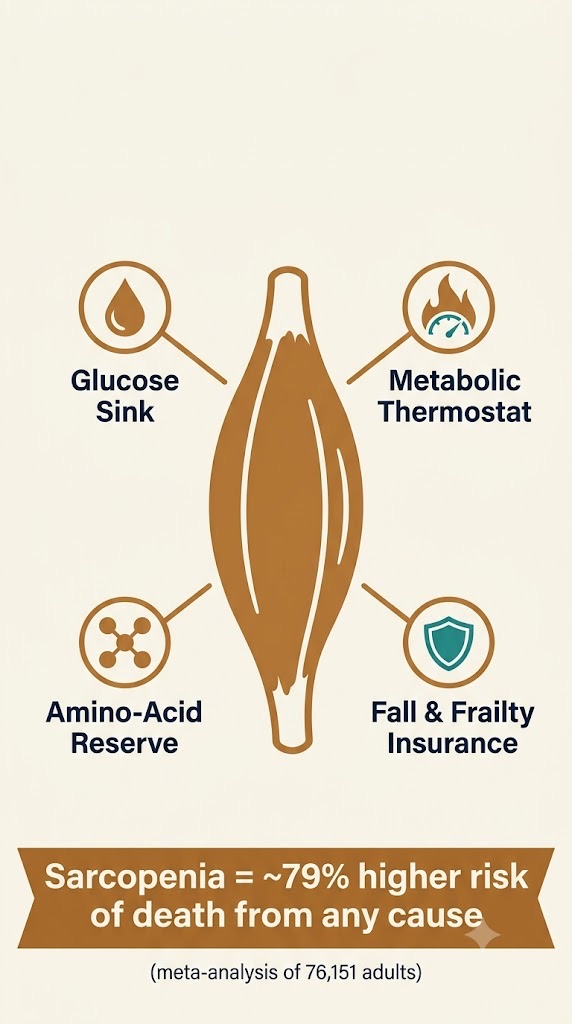
Muscle is not a vanity metric — it's an organ system doing four essential jobs. Losing it is one of the strongest predictors of decline in later life.
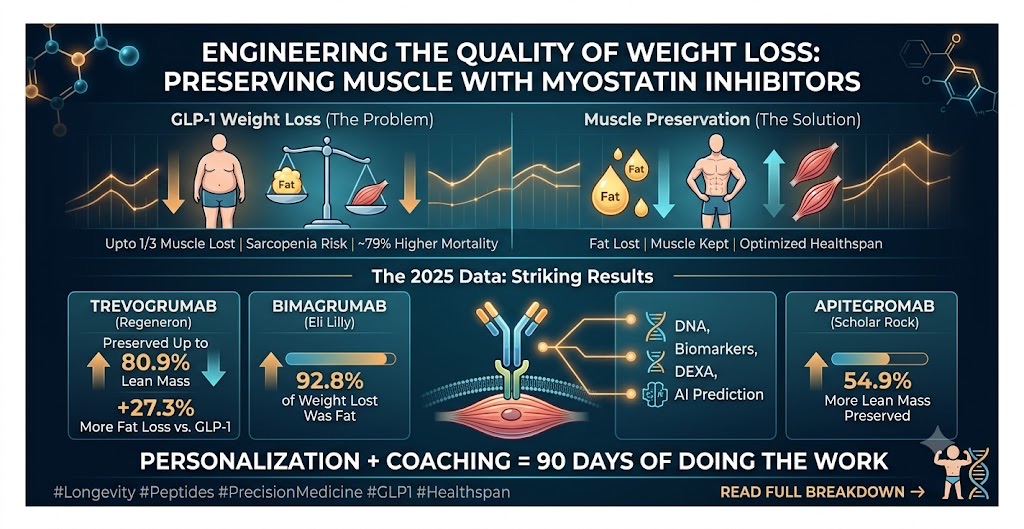
Now overlay the GLP-1 revolution. These drugs are genuinely transformative — but the velocity of the weight loss they produce extracts a physiological tax. In the pivotal STEP 1 trial of semaglutide, participants shed about 15% of body weight, yet roughly 39% of that was lean mass.[4] Field reviews now estimate GLP-1–associated lean-mass loss at 15–40% of total weight loss, depending on population, dose, and whether resistance training and protein intake were in place.[5] For a 35-year-old who lifts, that's manageable. For a 68-year-old already sliding down the sarcopenia curve, unstructured GLP-1 use can accelerate the very muscle decline that predicts disability — the paradoxical state of sarcopenic obesity, where the BMI looks "normal" while functional capacity quietly collapses.[6]
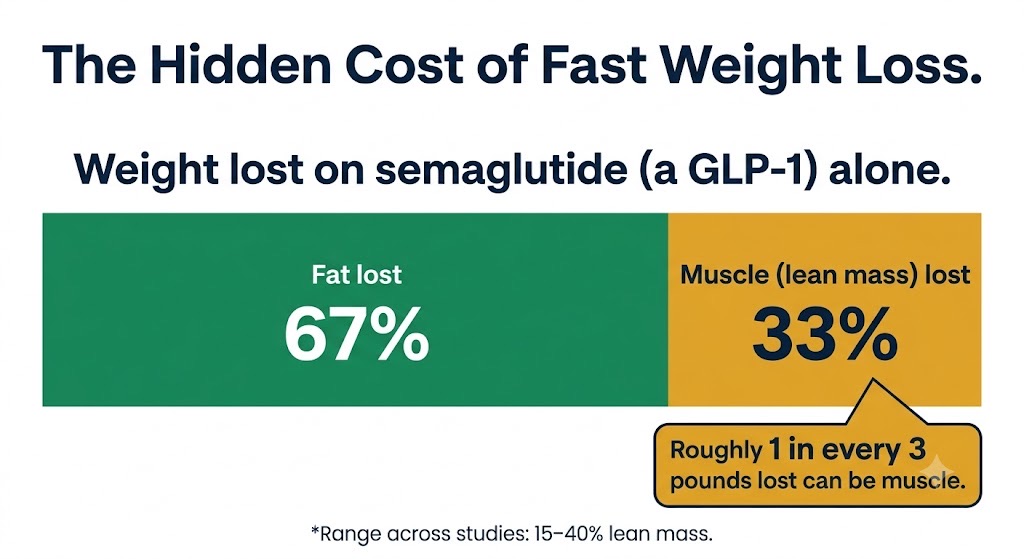
GLP-1 medications are transformative — but roughly a third of the weight they strip away can be muscle rather than fat. That gap is exactly what the new drugs aim to close.
That is the problem the myostatin drugs were built to solve. To see why they might, we have to go back to a mouse.
2. The brake nature built: from a mighty mouse to the strongest boy in the room
In 1997, geneticists Se-Jin Lee and Alexandra McPherron, then at Johns Hopkins, engineered a mouse missing a single gene. It developed with more than twice the normal amount of skeletal muscle. They named the gene's product myostatin — literally "muscle stop" — because its job is to restrain muscle growth. Remove the brake, and muscle mass runs to two or three times normal.[7]
Then they asked whether nature had already run the experiment. It had. That same year, they showed that two famously hyper-muscled cattle breeds — the Belgian Blue and the Piedmontese, prized by farmers for a century and a half — carry natural loss-of-function mutations in the identical gene. The Belgian Blue's 11-nucleotide deletion wipes out the active protein, and these "double-muscled" animals carry 20–25% more muscle than conventional cattle.[8] The gene was so conserved across species — cattle, mice, dogs, humans — that the same brake was clearly operating in all of us. The Jackson Laboratory later called Lee the "visionary scientist" whose decades of work dissected this biology.[9]
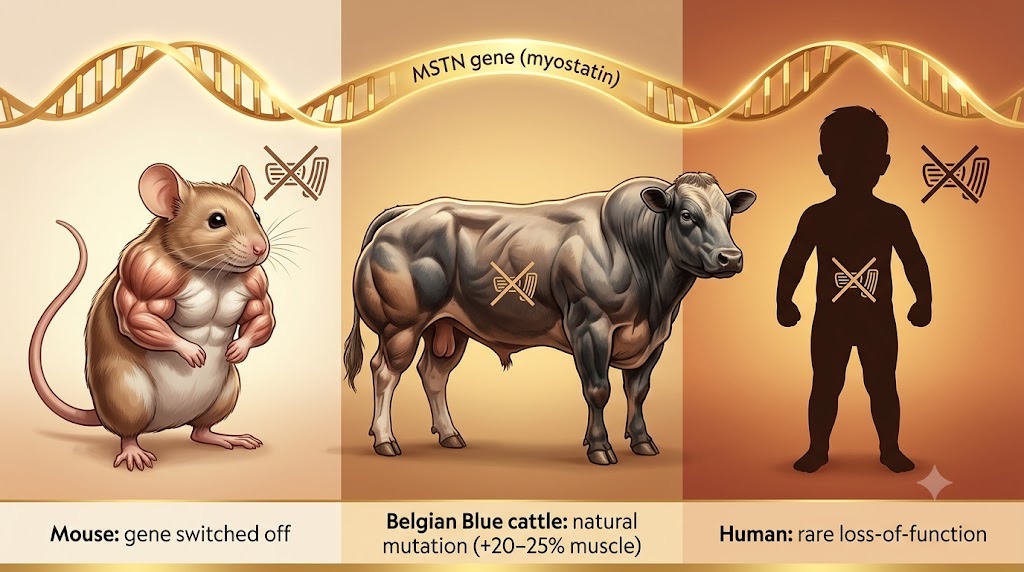
The same gene — conserved from mice to cattle to humans — sets the ceiling on muscle. Switch it off, and muscle mass soars. That discovery launched an entire class of drugs.
The human confirmation arrived in the New England Journal of Medicine in 2004. Neurologist Markus Schuelke and colleagues (including Se-Jin Lee) described a German boy, born to a mother who was a former professional athlete, who carried two inactivated copies of the myostatin gene. Ultrasound at six days confirmed extraordinary muscle bulk; by four and a half, he could hold two three-kilogram dumbbells horizontally with arms fully extended — a feat most adults can't manage.[10][11] Liam Hoekstra, diagnosed a few years later, was the same story in a different key.
Read more scientific research from LongevityPlan.AI, or buy peptides from our shop.
Here is the detail that turns a curiosity into a strategy: the boy's mother, carrying just one mutated copy, was herself unusually strong but not superhuman. Myostatin biology is not a light switch; it's a dimmer. And that means two people running the same protocol can respond differently because their myostatin pathways are tuned differently at the DNA level. Nature sets each of us a different ceiling — a point we'll return to when we get to personalization, because it's the reason no serious plan can be a template.
3. Blocking the brake: how these drugs work — and where peptides fit
Myostatin belongs to the TGF-β family of signaling proteins. Along with its cousins the activins, it binds a pair of muscle-cell receptors called ActRIIA and ActRIIB. That binding switches on an internal messenger cascade — the SMAD2/3 pathway — that suppresses muscle-building and nudges the cell toward protein breakdown. Block the signal, and the opposing growth pathway (mTOR, the master switch for protein synthesis) is freed to build and preserve muscle fiber, even during a caloric deficit.[7]
There are two ways to cut the wire, and the distinction is the whole ballgame:
Ligand blockade — antibodies that grab the circulating myostatin protein itself before it can dock. Precise: you neutralize the specific brake. Regeneron's trevogrumab and Scholar Rock's apitegromab work this way (apitegromab binds the inactive precursor of myostatin for extra selectivity).
Receptor blockade — antibodies that plug the ActRII receptors directly. Because those receptors also accept activin A and other ligands, this casts a wider net: a stronger muscle-building signal, but more room for off-target effects. Eli Lilly's bimagrumab works this way. Regeneron adds a third move — garetosmab, an antibody against activin A layered on top of trevogrumab — to approximate the broad blockade while keeping each component targeted.
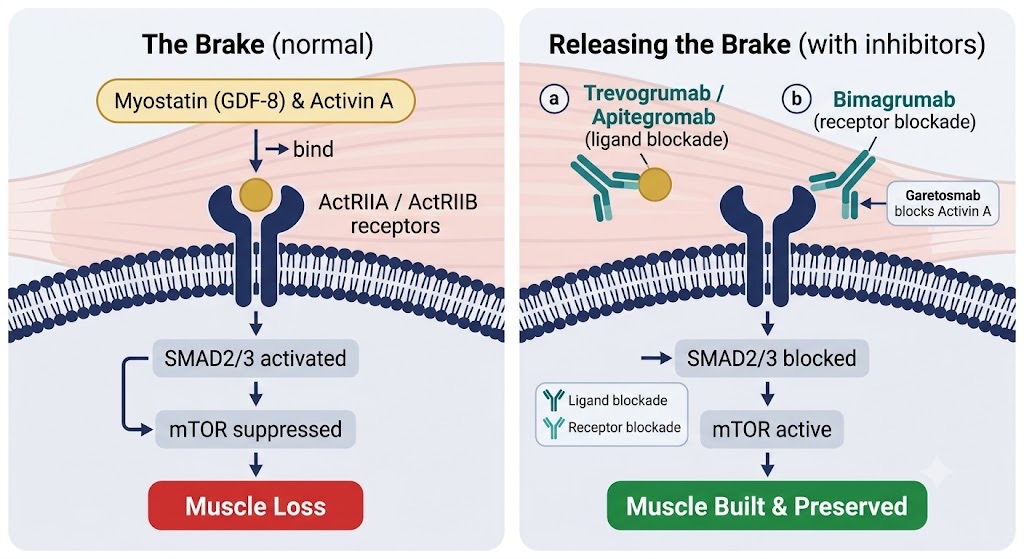
The entire strategy in one picture: block myostatin's signal — either by grabbing the protein (trevogrumab, apitegromab) or capping its receptor (bimagrumab) — and the body's muscle-building mTOR pathway is freed to work, even during weight loss.
Notice how neatly this maps onto our two boys: the German child's mechanism was a classic myostatin (ligand) loss, while some reports place Liam Hoekstra's defect on the receptor side. The drugs are simply pharmacology's way of dialing that same dimmer down on demand.
Where peptides fit — and why the outlook is genuinely bright
A precision point that separates this brief from the wellness-blog genre — and, happily, one that strengthens the optimistic case rather than dampening it. The target here, myostatin (also called GDF-8), is an endogenous peptide growth factor your own muscle secretes into the blood. The drugs above are its precisely engineered antibody cousins — large biologics, roughly a thousand times the size of the small peptides sold in gray-market "research" vials, delivered in monitored trials. That distinction matters for safety and for honesty. But it also points to the deeper reason for optimism: modern muscle medicine is increasingly about working with the body's own signaling molecules rather than against them.
That is the through-line of the broader peptide movement, and it's a hopeful one. Peptides are derived from, or mimic, compounds the body already makes, which is a large part of why so many carry favorable tolerability profiles and a long real-world track record. The animal data on this exact pathway are a case in point: myostatin-deficient mice don't just gain muscle — they also resist body fat accumulation, a two-for-one signal that maps directly onto what the human trials are now chasing.[12] Across the wider peptide landscape — from tissue repair and recovery to metabolic and connective-tissue signaling — the pattern is similar: promising mechanistic logic and encouraging early or animal-stage data, with larger human trials arriving to convert plausibility into proof. Peptide Therapy, understood this way, is less a fad than the leading edge of a shift toward biology-native medicine. The myostatin antibodies are simply its most rigorously tested, headline-grabbing tip.
4. The 2025 evidence: three programs, one thesis
Three companies read out human data in 2025, each pairing a muscle-preserving antibody with a GLP-1 drug. Here's what they actually showed.
Regeneron — trevogrumab (± garetosmab), the COURAGE trial
COURAGE first confirmed the problem: about 33% of the weight lost on semaglutide alone was lean mass — roughly 7.9 pounds of muscle in the monotherapy group.[13] Then it delivered the fix. Adding trevogrumab prevented about half that muscle loss (the lower-dose combination preserved 50.8% of the otherwise-lost lean mass, the higher dose 51.3%) while increasing fat loss. The triplet — adding garetosmab's activin-A blockade — preserved 80.9% of the lean mass semaglutide alone would have stripped away, and enhanced fat reduction by 27.3% versus semaglutide alone.[13][14] Regeneron's Chief Scientific Officer George Yancopoulos noted that weight loss too often comes at the expense of muscle, which "is important to overall health."[13] Lead investigator Julio Rosenstock called the complete 26-week results "a meaningful opportunity to preserve muscle mass while enhancing fat loss."[14] The combination was generally well tolerated.
Eli Lilly — bimagrumab, the BELIEVE trial
Bimagrumab has the most storied lineage of the three: discovered at Novartis, licensed to a startup called Versanis Bio, and acquired when Lilly bought Versanis for up to $1.9 billion in 2023.[15] The Phase 2b BELIEVE study enrolled 507 adults, dosing bimagrumab intravenously at weeks 4, 16, 28, and 40 alongside weekly semaglutide.[16] The composition results were striking. The combination cut body weight 22.1% at 72 weeks, of which 92.8% came from fat; semaglutide alone produced a 15.7% reduction (71.8% from fat); and bimagrumab alone produced a 10.8% reduction that was 100% fat — accompanied by a 2.5% gain in total lean mass.[17] Published in Nature Medicine, the trial reported combination weight loss up to 17.8 kg versus 14.2 kg for semaglutide alone, with lean mass preserved and visceral fat reduced.[18] Co-investigator Louis Aronne of Weill Cornell summarized that lean mass was "largely preserved" while visceral fat fell, and framed bimagrumab as a potential maintenance therapy or an option for patients who can't tolerate incretins.[19][20]
Scholar Rock — apitegromab, the EMBRAZE trial
Scholar Rock arrived from a different door: apitegromab is already a late-stage drug for spinal muscular atrophy, built on a platform of highly selective myostatin inhibitors. Its EMBRAZE trial paired apitegromab with tirzepatide (the GLP-1/GIP agonist sold for weight loss as Zepbound). Tirzepatide alone lost 30% of total weight as lean mass; adding apitegromab preserved an additional 4.2 pounds — 54.9% more lean mass than tirzepatide alone (p=0.001) — shifting the quality of weight loss from 70% fat / 30% lean to 85% fat / 15% lean over 24 weeks.[21][22] R&D president Akshay Vaishnaw said the platform could support "healthier weight loss for millions of patients on GLP therapies."[21]
Reading the scoreboard
The three programs line up almost exactly as the ligand-versus-receptor biology predicts:
| Program | Company | Target & approach | Partner drug | Signature 2025 result |
|---|---|---|---|---|
| Trevogrumab (± garetosmab) | Regeneron | Myostatin ligand (+ activin A in triplet) | Semaglutide | ~51% lean-mass preservation; 80.9% with the triplet; +27.3% fat loss vs. semaglutide alone |
| Bimagrumab | Eli Lilly (via Versanis; orig. Novartis) | ActRII receptor blockade (broad) | Semaglutide | 22.1% weight loss, 92.8% from fat; monotherapy added +2.5% lean mass |
| Apitegromab | Scholar Rock | Selective myostatin (pro-form) ligand | Tirzepatide | +4.2 lb / 54.9% more lean mass preserved (p=0.001) |
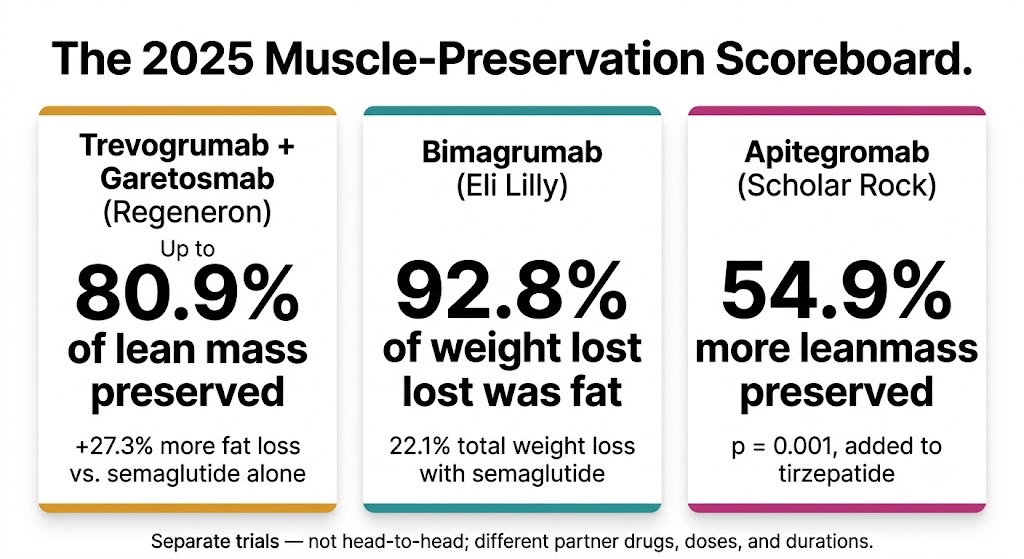
Three companies, three antibodies, one shared conclusion: blocking myostatin sharply improves the quality of weight loss. These are separate trials, not a head-to-head race — but the direction is unmistakable.
What's absent is telling: no head-to-head trials. Cross-trial comparisons are hazardous — different partner drugs, doses, durations, and populations. The honest and genuinely exciting read is that all three independently validated the same thesis. Blocking myostatin materially improves the quality of GLP-1 weight loss. The field, not any single molecule, is the breakthrough.
5. The caveats worth hearing
Optimism is warranted; naïveté is not. A discerning reader — or the coach advising one — will want four honest qualifiers on the table:
Investigational, not approved. None of these agents is cleared for muscle preservation during weight loss. Their safety and efficacy for this use have not been established by regulators.
The field has history — and it counsels humility. Myostatin has been chased for two decades; earlier antibodies proved the target is real but that mouse-sized effects are hard to reproduce in humans. This generation is far more sophisticated, but not yet finished.
A scan is a means, not yet a proven end. Preserving muscle on a DEXA image is compelling; regulators and prudent patients still want proof it translates into function — strength, fewer falls, preserved metabolic rate, better long-term outcomes. In September 2025, in fact, Lilly paused one of its two bimagrumab trials for "strategic business reasons," amid signals that muscle-sparing drugs may need to show more than favorable body composition; a separate obesity trial continued.[15] The science is moving fast, and the path is still being negotiated in real time.
The performance-enhancement gray zone. Any muscle-building pathway attracts athletic misuse; myostatin manipulation sits squarely in anti-doping crosshairs. This is therapy for muscle preservation in disease and aging — not a sanctioned shortcut for sport.
None of this dims the promise. It sharpens it. The professionals who will add the most value in this era are precisely the ones who can hold enthusiasm and evidence in the same hand.
6. Why it lands differently on you: genetics, AI, and the digital twin
Return to that heterozygous mother, and to Liam's ceiling. Individual response to muscle-pathway drugs will vary because individual myostatin biology varies — from rare loss-of-function variants to common polymorphisms. The K153R variant (rs1805086), for instance, has been associated with differences in peak muscular power, and a meta-analysis spanning 71 studies has examined its links to strength in athletes.[23][24] Population-average trial results are a starting point, not a personal prescription.
This is exactly where the industry's most interesting players are pointing their computing power — and it's a preview of what's coming to consumers. Consider how the drugs were found in the first place. The Regeneron Genetics Center now draws on more than three million sequenced exomes, using machine learning to link genes to disease at scale.[25] That engine already produced an obesity milestone: by sequencing roughly 640,000 people, it identified rare mutations in the GPR75 gene carried by individuals who weigh about 12 pounds less on average and have a 54% lower obesity risk — and is now building drugs to mimic that natural protection.[26] Center head Aris Baras described the work as a way to rapidly "translate those discoveries to the development of new medicines."[26] The lesson at the level of the individual is identical to the one at the level of the pipeline: genetics tells you which lever moves your physiology.
That capability is now reaching people directly, not just pharma. Firms such as The Genomics Company translate a saliva-based genome into plain-language reports across seven body systems — hormones, methylation, detoxification, nutrition, cardiovascular function, sleep, and neurochemistry — explicitly framed as how your body "processes chemicals, medicines, food, and hormones."[27] That last clause is the pharmacogenomic hook: your genome is a first-order input into how any peptide or biologic is likely to perform on you. Feed that genetic layer into longitudinal biomarkers and body-composition scans, and you have the raw material for a personalized model — a Digital Twin for Predictive Peptide Performance™ — that forecasts response and flags where a one-size-fits-all protocol would misfire.
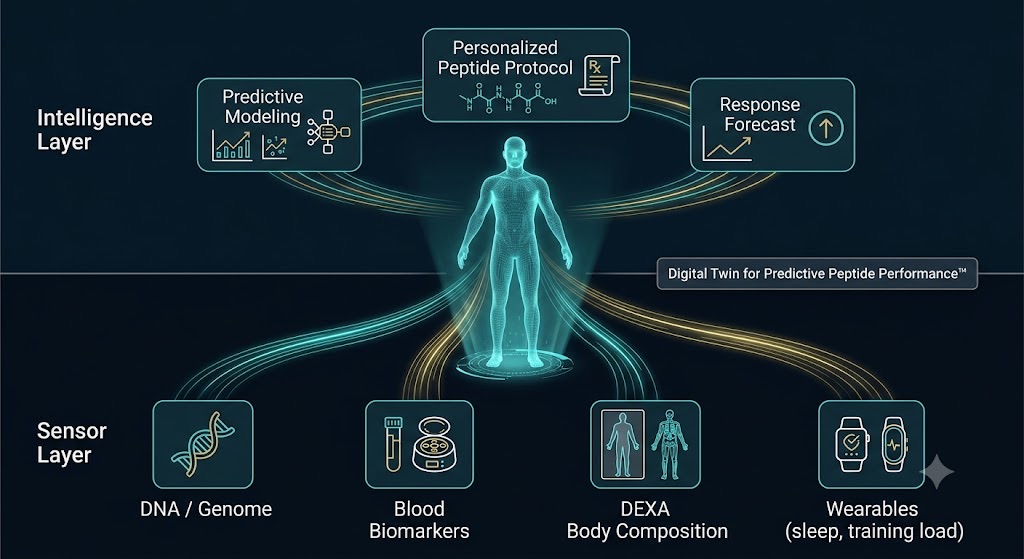
Your genome, bloodwork, body composition, and wearable data feed a personalized model that predicts how your body will respond — before a single injection. Personalization is the difference between a template and a plan.
7. From molecule to plan
Suppose you're the reader this brief is written for — building or defending a high-performing body into your 50s, 60s, and beyond, and willing to invest to do it right. The myostatin drugs may be a year or more from your medicine cabinet, but the planning starts now, and it follows the same discipline that makes elite sports science work: measure, don't guess.
Establish ground truth with the right instrument
A bathroom scale is worse than useless here — it can't tell a pound of muscle from a pound of fat, and during any weight-loss protocol that's the only distinction that matters. A DEXA scan can. It's the reference-grade way to quantify lean mass, fat mass, and visceral fat, turning the abstract "quality of weight loss" into a number you can track quarterly. If you do nothing else before starting a GLP-1, get a baseline DEXA.
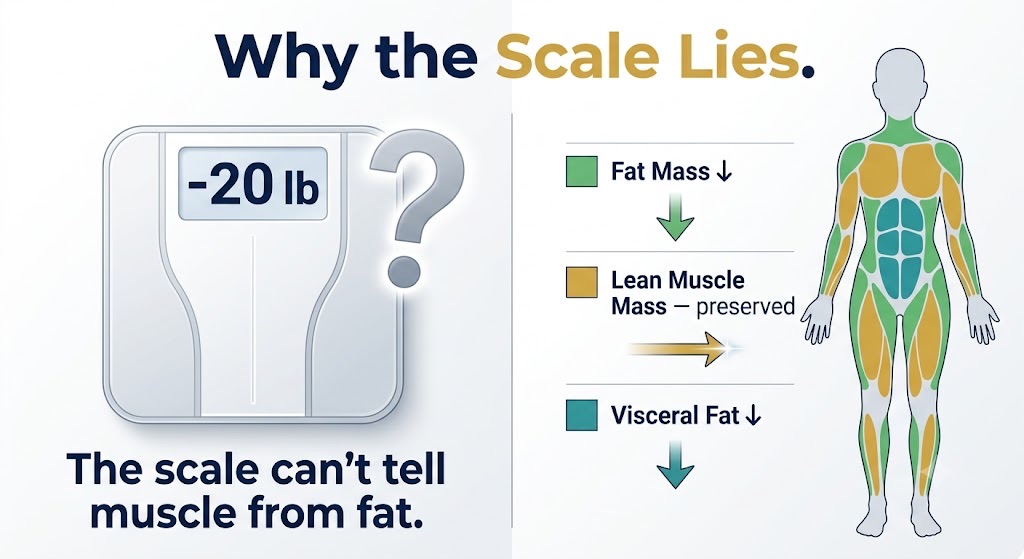
A scale reports a number; a DEXA scan reports the truth. A baseline body-composition scan turns "quality of weight loss" from a slogan into a measurable target.
Fuse the inputs into an intelligence layer
Think in two tiers. The sensor layer is everything that produces raw signal: DEXA, blood panels, the genome, and the wearables tracking sleep and training load. The intelligence layer is the model that fuses this multimodal health data, benchmarks you against your own history rather than a population mean, and runs predictive modeling to determine how a given intervention should shift your lean-mass and fat-mass curves. The conversation then shifts from "here's the standard protocol" to "here's what your data says to expect, and here's the tripwire that tells us to adjust."
The people who turn molecules into results
Here is where Liam's second lesson comes due. Genes loaded the gun; sustained training and nutrition were supposed to pull the trigger — and without them, even a once-in-a-generation ceiling settled toward ordinary. No drug, no scan, and no algorithm changes that. Which is why the most valuable figures in this entire story aren't the molecules at all. They're the weight-loss and performance coaches, the dietitians and nutritionists, the executive coaches and counselors, and the credible voices in health and beauty who translate data into adherence, protein into muscle, and good intentions into ninety consecutive days of doing the work.
These professionals are the reason a plan survives contact with real life, and they are the audience LongevityPlan.AI is built to equip. When the Coach / Practitioner and the Athlete / Patient can both see the same model, expertise compounds: the science becomes a shared language, the peptide literacy becomes a differentiator, and the practitioner's judgment — the irreplaceable human read on motivation, context, and readiness — is amplified rather than replaced. That is what we mean by AI-powered coaching improvements: not automation of the coach, but a sharper instrument in a skilled hand. For the coach who already commands their client's trust, fluency in this science isn't optional polish. In a market where every competitor can quote a GLP-1 headline, it's the edge.
8. The muscle dividend
The trajectory is clear even where the timeline isn't. GLP-1 and dual-agonist drugs will keep improving. Muscle-preserving antibodies — trevogrumab, bimagrumab, apitegromab, and the fast-followers behind them — are converging on combination regimens designed to deliver fat loss without the muscle tax. And the discovery engines producing them are increasingly genomic and AI-driven, which means the same personalization now reaching drug pipelines is coming to everyday protocols.

Muscle behaves like compound interest — what you build and protect now pays out as strength, independence, and vitality for decades. The dividend goes to those who start measuring early.
Here's the part worth sitting with. Muscle is one of the few longevity assets that behaves like compound interest: what you build and protect in your 40s and 50s pays out as independence and resilience in your 70s and 80s, and what you lose is expensive to rebuild. That is genuinely hopeful news — for the first time, we are learning to lose fat without surrendering the muscle that keeps us alive. But the dividend goes to the people who treated their body composition like a portfolio and started measuring early, while the interventions were still optional rather than remedial. Liam Hoekstra was handed the ceiling and, absent the work, drifted back toward the floor. Most of us are handed an ordinary ceiling — and, with data, coaching, and the right molecules arriving at the right moment, can spend a lifetime climbing pleasantly toward it.
Plan for the muscle, and the longevity tends to follow.
Sign up for FREE daily Longevity Club Workshops, or join the Affiliate Program (pays 20%). Subscribe to the Longevity & Peptide Optimization Newsletter.
About the Author
Tony Medrano is CEO and co-founder of LongevityPlan.AI, a platform that integrates performance and health data and leverages proprietary Digital Twin for Predictive Peptide Performance™ technology, wearable data, and biomarker data to deliver personalized optimization and longevity recommendations. A 3x technology/AI company CEO with 2 successful exits, Tony has completed 3 Full Ironman Triathlons (140.6 mi) since 2019. He holds degrees from Harvard University, Columbia University, and a JD/MBA from Stanford University, and has worked with the US Olympic Team, the NBA, NFL, MLB, NASA, Google, Microsoft, and Netflix, among others. He also served as a US Navy Officer commanding an emergency response team aboard a destroyer.
Disclaimer: This article is for educational purposes and is not medical advice. The therapies discussed (trevogrumab, garetosmab, bimagrumab, apitegromab) are investigational and not approved by any regulatory authority for muscle preservation during weight loss. Individual results vary. Consult a qualified physician before starting, stopping, or combining any medication, supplement, or peptide protocol. LongevityPlan.AI does not provide financial or investment advice; company references illustrate the science and are not endorsements.
Endnotes
- "Superkid, 3, Moves Furniture, Weights." CBS News (Liam Hoekstra; myostatin-related muscle hypertrophy; low fat, enlarged muscle fibers; first human case a German boy). Link
- "Super Strong Kids May Hold Genetic Secrets." ABC News, 2009 (Hoekstra case; rarity; interest from scientists and clinicians). Link
- Zhao Y, et al. "Long-term impact of sarcopenia on functional decline and mortality in community-dwelling older adults: a systematic review and meta-analysis." Frontiers in Nutrition, 2026. DOI:10.3389/fnut.2025.1652386. Link
- "The GLP-1 Aftermath: What the Science Says About Muscle Loss and Cellular Aging." Harvard Science Review, Feb 2026 (STEP 1: ~39% of lost weight was lean mass). Link
- "Impact of GLP-1 Receptor Agonist Therapy in Patients High Risk for Sarcopenia." Oregon Health & Science University (lean loss 15–40%; protein and resistance training). Link
- "Weighing the risk of GLP-1 treatment in older adults: Should we be concerned about sarcopenic obesity?" ScienceDirect, 2025. Link
- McPherron AC, Lawler AM, Lee SJ. "Regulation of skeletal muscle mass in mice by a new TGF-β superfamily member." Nature 387:83–90 (1997). (Myostatin discovery; 2–3× muscle in knockouts; SMAD/ActRII biology.)
- McPherron AC, Lee SJ. "Double muscling in cattle due to mutations in the myostatin gene." PNAS 94(23):12457–61 (1997). Link
- "Se-Jin Lee: Of mighty mice and men." The Jackson Laboratory, 2018. Link
- Schuelke M, Wagner KR, Stolz LE, et al. "Myostatin mutation associated with gross muscle hypertrophy in a child." N Engl J Med 350:2682–8 (2004). Link
- OMIM #614160, "Muscle Hypertrophy; MSLHP" (clinical detail: two 3-kg dumbbells at age 4.5). Link
- McPherron AC, Lee SJ. "Suppression of body fat accumulation in myostatin-deficient mice." J Clin Invest 109(5):595–601 (2002). (Myostatin loss increases muscle and reduces fat accumulation in mice.)
- "Regeneron Phase 2b Study Shows Antibodies Help Preserve Lean Mass During Weight Loss with Semaglutide." Patient Care Online (33%/34.5% lean loss; 50.8%/51.3%/80.9% preservation; Yancopoulos remarks). Link
- "Results from Phase 2 COURAGE Trial … Presented at EASD." Regeneron, Sept 17, 2025 (complete 26-week data; +27.3% fat loss; Rosenstock remarks). Link
- "Lilly stops trial of muscle-sparing obesity drug." BioPharma Dive, Sept 2025 (Novartis→Versanis→Lilly lineage, ~$1.9B; Sept 25 trial termination; FDA signaling). Link
- "ADA 2025: Combination of Bimagrumab and Semaglutide Shows Enhanced Fat Loss and Muscle Preservation." Pharmacy Times (507 patients; IV weeks 4/16/28/40). Link
- "Lilly's Antibody Protects Patients From Losing Muscle While Taking Novo's Wegovy." BioSpace, June 2025 (22.1% / 92.8% fat; 15.7% / 71.8%; 10.8% / 100% fat; +2.5% lean mass on monotherapy). Link
- "Bimagrumab plus semaglutide alone or in combination for the treatment of obesity: a randomized phase 2 trial." Nature Medicine, 2026 (up to 17.8 kg vs 14.2 kg; ActRII target). Link
- "Combination bimagrumab plus semaglutide confers weight loss while preserving lean mass." Healio, June 2025 (Aronne remarks; Versanis/Lilly funding). Link
- "Combination Treatment Reduces Weight While Keeping Muscle." Medscape, June 2025 (Aronne on maintenance / incretin-intolerant use). Link
- "Scholar Rock Reports Positive Phase 2 EMBRAZE Trial Results …" Scholar Rock, June 18, 2025 (54.9% preservation, p=0.001; Vaishnaw remarks). Link
- EMBRAZE data detail (85/15 vs 70/30; 12.3% vs 13.4% weight; fat-mass figures over 24 weeks). Link
- Santiago C, et al. "The K153R Polymorphism in the Myostatin Gene and Muscle Power Phenotypes in Young, Non-Athletic Men." PLoS One, 2011. Link
- "Association of Myostatin Gene Polymorphisms with Strength and Muscle Mass in Athletes: A Systematic Review and Meta-Analysis of the MSTN rs1805086 Mutation." PMC. Link
- "Regeneron Genetics Center — Genetics to Therapeutics" (3M+ exomes; machine learning). Link
- "Regeneron Genetics Center Discovers GPR75 Gene Mutations that Protect Against Obesity" (640k exomes; ~12 lb; 54% lower risk; Baras remarks). Link
- The Genomics Company (saliva genome interpretation across seven systems). Link
- Function Health — How It Works (100+ biomarkers; clinician review; retest 3–6 months). Link
- Superpower — How It Works / FAQs (100+ biomarkers via Quest; AI + care team; wearable sync). Link
- Lifeforce (clinician-led, 50+ biomarkers, quarterly, Lifescore). Link
- "Super Strong Kids" / myostatin-related hypertrophy background (mechanism context, including receptor-side reports). NBC News. Link
- "Function Health vs Superpower vs InsideTracker vs Lifeforce" (independent platform comparison; pricing and upsell caveats). Link