Metabolic Health
·16 min read
The Empty-Tank Advantage: Fasting for Endurance Optimization
What fasting, ketones, and mitochondrial peptides actually do for endurance, and how genomics and AI turn the hype into a personal plan.
By Tony Medrano, CEO & Founder, LongevityPlan.AI
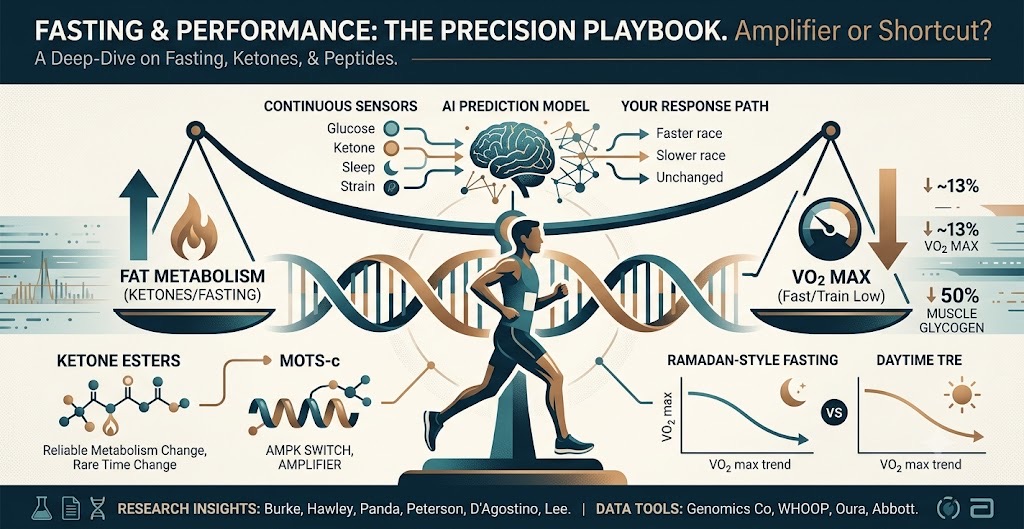

The empty-tank advantage was never really about the empty tank — it's about knowing which fuel your body should run on, and when.
There is a seductive idea circulating in boardrooms, triathlon transition zones, and longevity clinics alike: that the body performs better when you feed it less. Skip breakfast, run on empty, sip a ketone ester, and somehow emerge leaner, sharper, and more metabolically immortal. It is a tidy story. It is also, like most tidy stories about human physiology, partly true, partly oversold, and entirely dependent on who you are.
This article is written for the skeptic — the person who has read the headlines about intermittent fasting and exercise and wants to know what survives peer review. It moves through three questions in order. First: Does eating less actually make you perform better? (Mostly not — but it changes your metabolism in revealing ways.) Second: if not performance, then what is fasting good for? (Something quieter and more valuable: the cellular machinery of healthspan.) Third: how do you know which version, if any, is right for you? That last question is where modern preventive medicine actually lives — in your genome, your sensors, and the predictive models that connect them. The thesis is not "fast more." It is something more useful and more demanding: the optimal protocol for one person is the wrong protocol for another, and the only way to know the difference is to measure it.
1. What "fasting" actually does to a working body
Start with the cleanest possible experiment: take well-trained people and remove food entirely. In January 2025, a team led by Jørgen Jensen at the Norwegian School of Sport Sciences published exactly that in Nature Communications — thirteen participants (seven men, six women) fasted for seven days while researchers tracked muscle biochemistry, strength, and oxygen uptake. The results are a useful antidote to magical thinking.
After a week without food, participants lost 4.6 kilograms of lean mass and 1.4 kilograms of fat. Maximal isometric and isokinetic leg strength were essentially unchanged — the body fiercely protects its ability to generate force, because force once meant the difference between catching dinner and becoming it. But peak oxygen uptake fell by 13 percent, muscle glycogen was cut roughly in half, and high-intensity endurance capacity dropped. The molecular reason is elegant: an enzyme called pyruvate dehydrogenase kinase 4 (PDK4) rose roughly thirteen-fold, throttling carbohydrate oxidation and forcing the body onto fat and ketones. Notably, the authors found that AMP-activated protein kinase (AMPK) activity did not change with fasting — a direct challenge to the popular assumption that fasting is an AMPK switch you can simply flip.
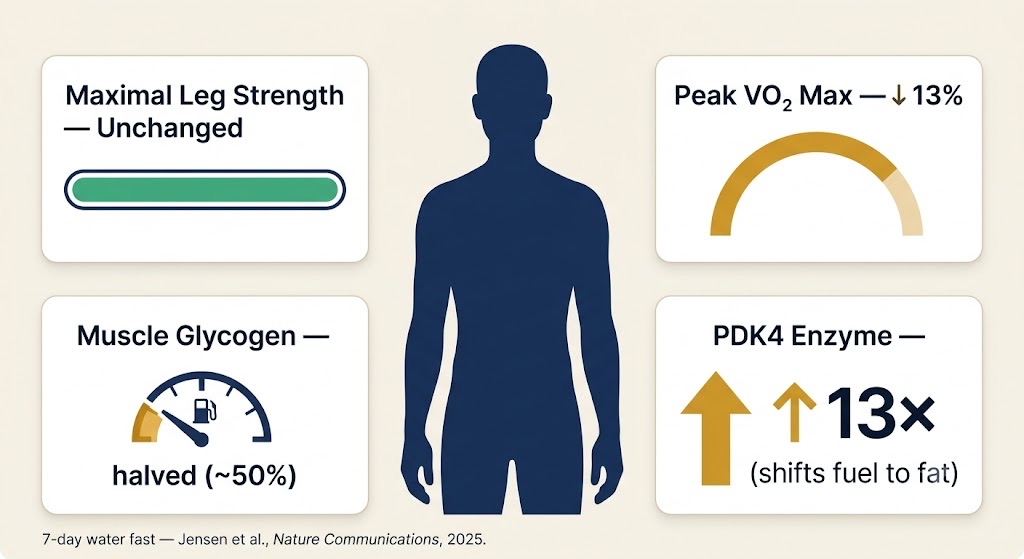
Seven days without food preserves raw strength but quietly trades away your top-end engine — a poor deal for racers, a reasonable one for metabolic health.
The lesson generalizes. Acute, prolonged food deprivation does not make you faster. It makes you a better fat-burner at the cost of top-end power. For an endurance athlete whose event is decided in the final surge, that is a poor trade. For a sedentary executive whose goal is metabolic flexibility rather than a podium, it may be a fine one. Same intervention, opposite verdict — and we have not yet introduced a single variable about your particular biology.
2. The Ramadan paradox: why "intermittent fasting" is not one thing
Most of what the public believes about fasting and sport comes, unknowingly, from studies of Ramadan — the one large natural experiment in which millions of trained people abstain from food and water during daylight. The performance literature here is consistently unflattering: among soccer players, runners, and cyclists, sprint speed, agility, and aerobic capacity tend to decline during Ramadan. A 2020 systematic review and meta-analysis quantified the split with unusual clarity. When researchers pooled the trials, Ramadan intermittent fasting was associated with a significant reduction in maximal oxygen uptake, while time-restricted eating protocols were associated with a significant increase in it.
That single contrast dissolves most of the confusion. Ramadan fasting bundles three performance-killers together — daytime dehydration, a genuine calorie deficit, and circadian disruption from eating and training at biologically wrong hours. Time-restricted eating keeps fluids flowing, keeps calories roughly intact, and aligns eating with daylight. They are both called "fasting," and they do nearly the opposite for an athlete. Any honest discussion has to specify which fast, for whom, and around which sessions.
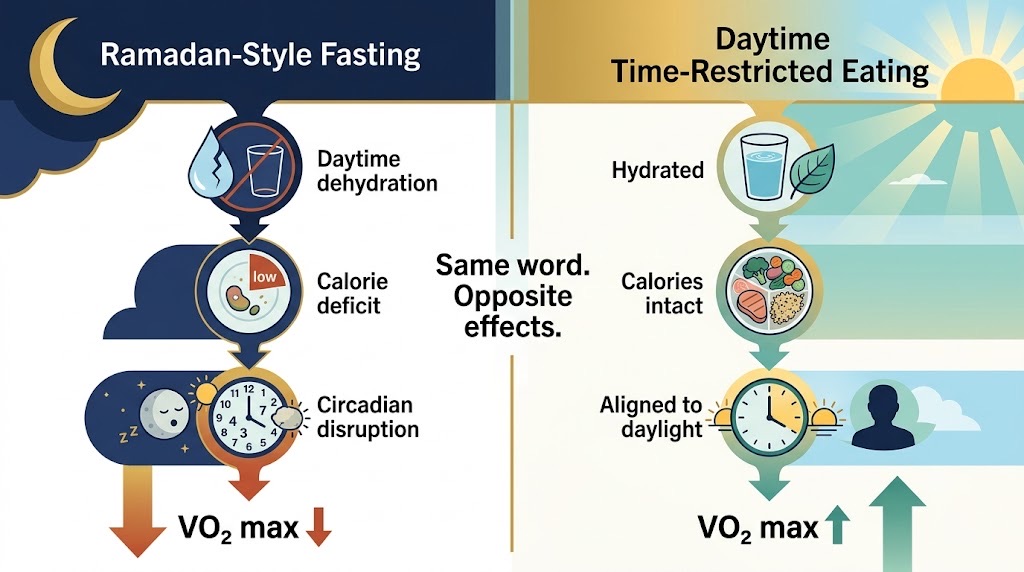
Both are called "fasting," yet they do nearly the opposite for an athlete. The label hides the mechanism.
There is also a hard floor here. Endurance athletes carry large training loads, and an eating window that creates a chronic energy deficit can tip them into Relative Energy Deficiency in Sport (RED-S) — a syndrome that disrupts hormones, immunity, sleep, and protein synthesis. Fasting protocols that ignore total energy availability do not optimize anything; they quietly dismantle it.
3. "Train low, compete high": the one fasting idea that earned its keep
If acute fasting is mostly a tax, is there a version of carbohydrate scarcity that pays? The most rigorous answer comes from a body of work built by John Hawley and Louise Burke (now anchored at the Mary MacKillop Institute for Health Research and the Australian Institute of Sport) and James Morton at Liverpool John Moores University. Their insight, formalized in a 2010 review, is that the adaptive signal from a training session is amplified when muscle glycogen is low. Train with empty tanks and the cell behaves as if the emergency is dire, ramping up the machinery of mitochondrial biogenesis — the manufacture of new cellular power plants that ultimately raise endurance capacity.
The mechanism is concrete. Morton's group showed that exercising with reduced carbohydrate availability enhances signaling through p53, a regulator of mitochondrial biogenesis. Asker Jeukendrup's collaborators demonstrated that training with low muscle glycogen increases the muscle's capacity to burn fat. And the most athlete-friendly refinement — the "sleep low" strategy — came from a 2016 trial by Marquet and colleagues, working with Hawley and Burke: do a glycogen-depleting session in the evening, sleep without refueling, then train easily the next morning still depleted. After three weeks, the periodized group improved endurance performance more than athletes who trained with full tanks throughout. Morton's lab packaged the practical version under a memorable banner — "fuel for the work required" — meaning you match carbohydrate intake to each session's actual demand rather than carb-loading reflexively.
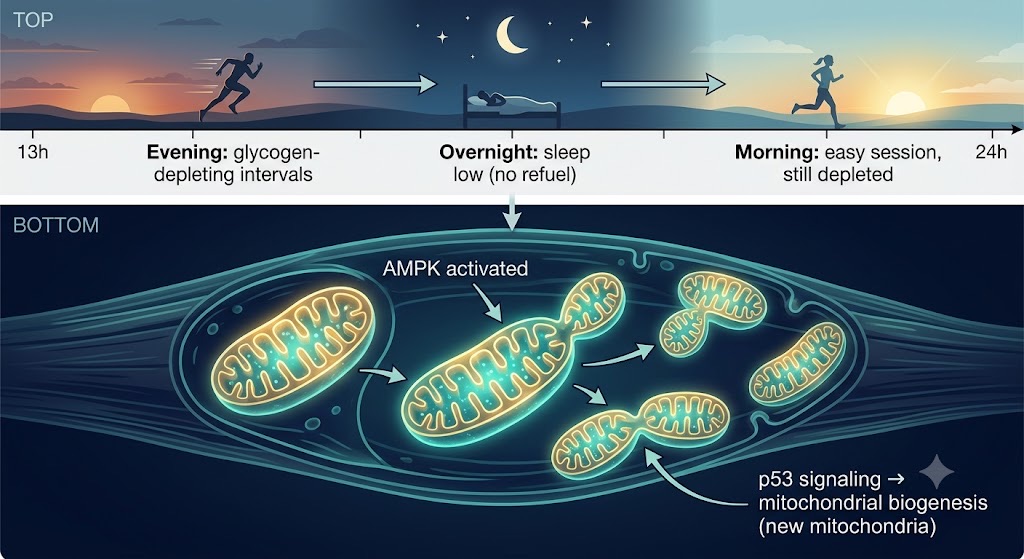
Training on near-empty tanks coaxes the cell into building more mitochondria — the engines of endurance. Reserved for easy days, never race-pace efforts.
Here is where intellectual honesty matters, because this is exactly the kind of finding that gets oversold. The "train low" effect is real at the level of cellular signaling, but its translation to race results is inconsistent. A 2017 study pointedly titled itself around finding "no superior adaptations" to carbohydrate periodization in elite endurance athletes. And Burke herself delivered the field's most important cautionary result: when she put elite race walkers on a ketogenic low-carbohydrate, high-fat diet, their fat-burning soared — but their exercise economy worsened, and the diet negated the performance gains that the same intensified training produced in carbohydrate-fueled walkers. More fat-burning did not mean faster walking. It meant slower walking with impressive metabolism.
Notice the shape of that result, because it recurs throughout this article: the intervention reliably changed the athlete's metabolism without reliably improving their performance. Even the best-supported fasting-adjacent strategy is a scalpel, not a supplement — powerful in the right hands for the right session, counterproductive in the wrong hands.
4. Ketones in a bottle: fasting's metabolism without the fast
If the appeal of fasting is the ketone-fueled metabolic state it produces, why not just drink the ketones? That is the premise behind ketone esters, and the foundational study is genuinely striking. In 2016, Pete Cox and colleagues in Kieran Clarke's Oxford laboratory published the results of five experiments in 39 elite athletes in Cell Metabolism. A ketone-ester drink shifted fuel selection toward fat and ketone oxidation, lowered muscle glycolysis and blood lactate, and — in one arm — let cyclists ride about 400 meters farther over 30 minutes, roughly a 2 percent gain. Cox described it memorably as doing "the same exercise with completely different metabolism."
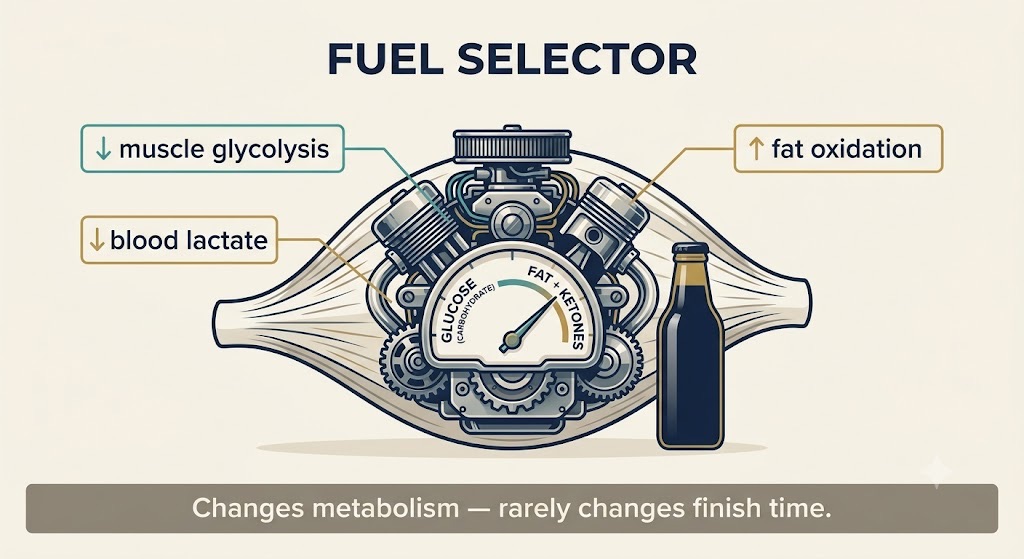
A ketone drink reliably rewrites which fuel your muscles burn. Whether that makes you faster is a separate — and far less settled — question.
Then came the part that the supplement marketing tends to omit. A 2017 replication under race-simulation conditions found performance worsened by about 2 percent, accompanied by gastrointestinal distress. And a 2022 meta-analysis of eight controlled trials concluded that acute ketone ester ingestion does not reliably improve endurance performance at all — the pooled effect size was small and statistically indistinguishable from zero. The honest current reading is the same split we saw with train-low: ketone esters reliably change your metabolism, but not reliably your finish time. Where signal remains is in recovery and in tolerating heavy training blocks — a longevity-relevant benefit more than a race-day one.
This is also where science meets a real consumer market. Dominic D'Agostino at the University of South Florida has spent a career on exogenous ketones and metabolic therapies, and commercial ketone esters from companies such as H.V.M.N. and KetoneAid have moved the molecule from the lab bench into the hands (and water bottles) of professional cycling teams and curious executives. The molecule is real, and the physiology is real. The marketing claims simply run ahead of the meta-analysis, which is precisely the gap a data-driven buyer should learn to see.
5. The clock matters more than the calendar: circadian time-restricted eating
So far, fasting has mostly failed the performance test while quietly passing a metabolic one — which reframes the entire question. If the payoff was never really a faster finish, what is it? The clearest answer is the time-restricted eating we set against Ramadan earlier, and the key turns out to be timing, not quantity. Satchidananda Panda at the Salk Institute showed in animal models that confining food to a daytime window prevents metabolic disease even without cutting calories — the timing itself carries the benefit. Courtney Peterson, now at the University of Alabama at Birmingham and trained in Panda's circadian tradition, ran the landmark human test: in a supervised, weight-stable trial, men with prediabetes who ate within an early six-hour window (dinner before 3 p.m.) improved insulin sensitivity, blood pressure, and oxidative stress — with no weight loss at all.
For the longevity buyer, the more interesting Peterson finding is molecular. In a follow-up, early time-restricted eating increased morning expression of SIRT1 — a stress-response and aging gene — and of the autophagy marker LC3A, alongside elevated ketones. Autophagy is the cell's recycling program, clearing damaged proteins and organelles; it is one of the most credible mechanistic bridges between caloric timing and healthspan. This is the quiet payoff that fasting advocates are usually reaching for, even when they describe it badly: not a faster 10K, but a cleaner cell.
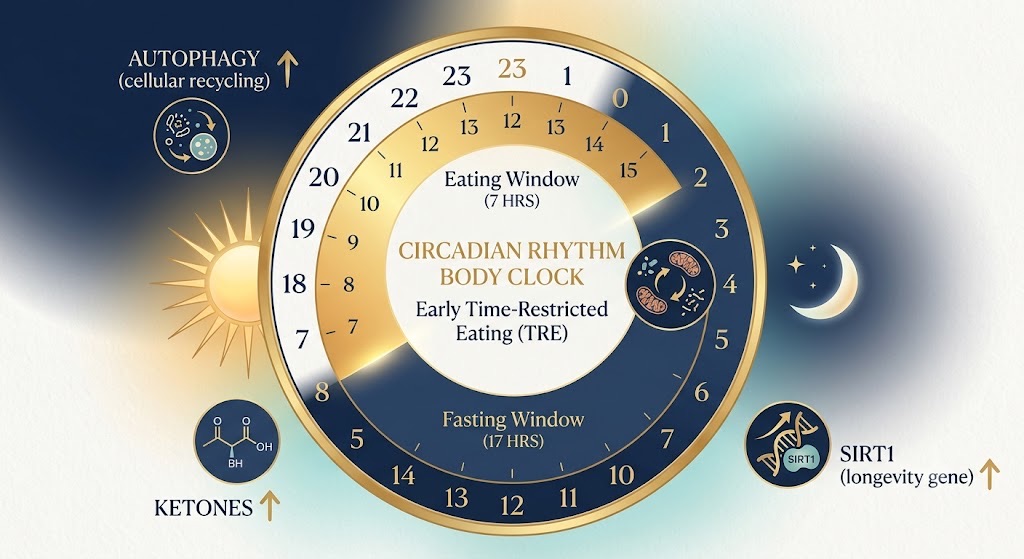
Eat with your body clock, not against it. The real prize of time-restricted eating isn't a faster 10K — it's a cleaner, better-recycled cell.
Even here, restraint is warranted. A recent randomized crossover trial in women found that an isocaloric time-restricted schedule shifted circadian clock timing but did not improve cardiometabolic markers. Sex, baseline metabolic health, and the exact window all move the result, which points squarely at a question we have deferred long enough: who, exactly, does any of this work for?
6. Enter the peptide: "exercise in a vial" and the honest version of the story
Before we get to who, one more intervention completes the picture — because the same cellular pathways that fasting and training switch on can, in principle, be triggered by a molecule. This is the frontier the headlines love: the cellular adaptations of exercise without the deprivation or the miles. The most scientifically serious candidate is MOTS-c, a 16-amino-acid peptide encoded not in your nuclear DNA but inside your mitochondria — a member of a newly recognized class called mitochondrial-derived peptides.
In a 2021 Nature Communications paper, Joseph Reynolds, Changhan David Lee, and colleagues at the University of Southern California's Leonard Davis School of Gerontology showed that MOTS-c is induced by exercise in human skeletal muscle and circulation, and that it activates AMPK — the same energy-sensing pathway engaged by fasting and training. When they treated mice, MOTS-c improved physical performance across young, middle-aged, and old animals; late-life intermittent dosing (three times weekly) increased both physical capacity and healthspan. Lee, the corresponding author, frames mitochondria not merely as batteries but as "hubs that coordinate and fine-tune metabolism." Because circulating MOTS-c declines with age, it has become a compelling target for anyone interested in offsetting the metabolic slope of midlife.
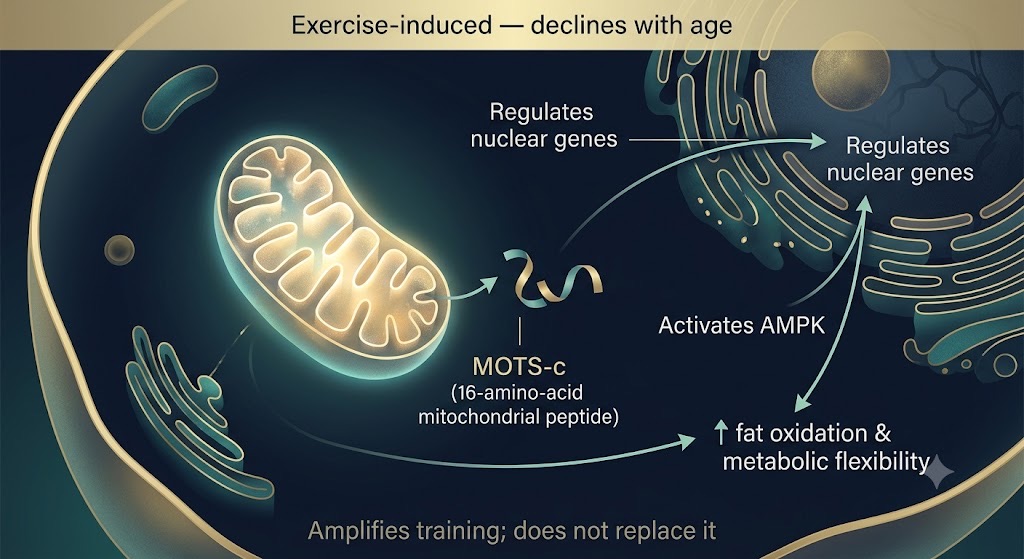
Often called "exercise in a vial," MOTS-c flips many of the same cellular switches as training and fasting — a promising amplifier, not a shortcut around the work.
This is the moment to apply the skepticism we have been practicing all article. The mouse data are remarkable; the human therapeutic data are not yet there. MOTS-c reliably activates the right pathways, but it does not replicate the mechanical loading of training — it will not build a tendon, strengthen a bone, or teach your nervous system to recruit muscle. The accurate framing, echoed by clinicians who actually prescribe within research frameworks, is that a mitochondrial peptide may amplify the metabolic response to exercise, or restore it in people whose response has faded with age — not substitute for the work. MOTS-c sits alongside related mitochondrial peptides such as humanin and SS-31, each with a narrower evidence base. Treated as a supplement to training and fasting strategy, it is interesting. Treated as a replacement for them, it is wishful.
7. Why your genome gets the deciding vote
Which brings us, at last, to who. The single variable behind every result in this article has not been the protocol — it has been the person running it. That variability is not random noise; it is, substantially, genetic.
Consider MOTS-c itself: a naturally occurring variant of the peptide, known as K14Q (arising from the mitochondrial m.1382A>C polymorphism), alters its function and has been studied in relation to type 2 diabetes risk, particularly in Japanese populations. In other words, two people can run the same protocol and produce a different peptide. Your response to a fasting window, a fat-adapted diet, or a metabolic intervention is filtered through how your particular DNA handles fuel, hormones, methylation, and recovery.
This is where personalized genomic assessment stops being a luxury and starts being a prerequisite. The Genomics Company, for instance, reads seven functional systems — detoxification, hormones, methylation, the brain's stress wiring, nutrition processing, cardiovascular resilience, and sleep — from a saliva sample, and notes a statistic worth sitting with: across just 50 functional regions of DNA, the odds of sharing the same code as an unrelated person are roughly 1 in 14.5 quintillion. "Average advice" is, statistically, advice written for a person who does not exist.
This genetic foundation is the bedrock of what we call a Digital Twin for Predictive Peptide Performance™ — a model that begins with your DNA precisely because your DNA is the one input that never changes and that conditions how everything downstream behaves. Before recommending a fasting window or any form of Peptide Therapy, the responsible question is not "what works?" but "what works for this genome?"
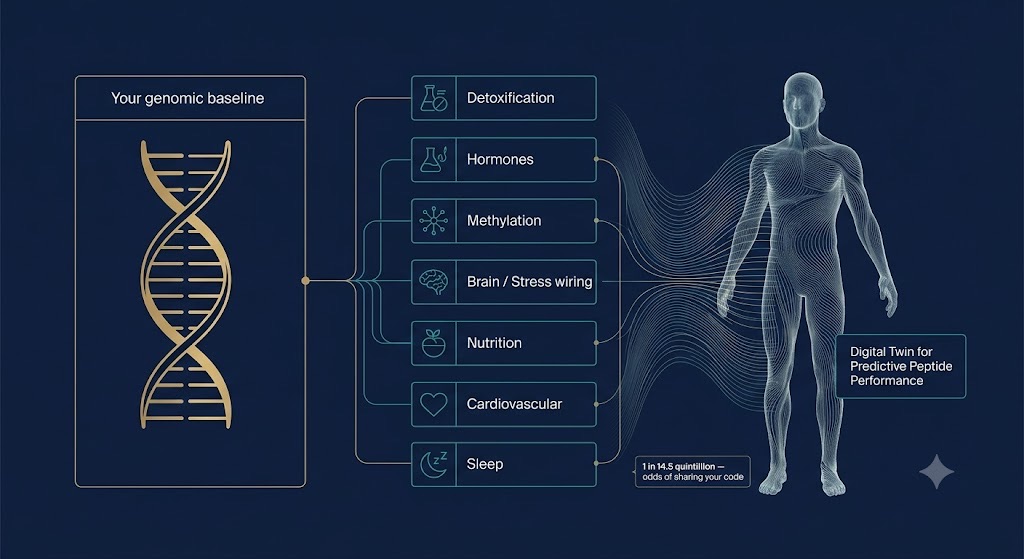
No two people share the same wiring. A genomic baseline is what turns a generic protocol into a plan built for exactly one person — you.
8. From measurement to plan: how AI turns biology into decisions
A genome is a starting condition, not a daily readout. To act on it, you need a continuous picture of how the body is responding right now — and this is where the contemporary longevity stack comes together in three tiers.
The first tier is the sensor layer: the instruments that capture the body in motion. Continuous glucose monitors moved from diabetes care into healthy-person metabolism with Abbott's over-the-counter Lingo system, cleared in 2024, with the company openly developing a sensor that reads glucose and ketones together — a direct nod to the fat-versus-carbohydrate fuel question at the heart of this article. Recovery and strain wearables from WHOOP and Oura quantify sleep, heart-rate variability, and autonomic load. The market's history here is also instructive: Supersapiens, a glucose platform built specifically for endurance athletes on Abbott's biosensor, wound down its athlete service in 2023 — a reminder that a sensor without a credible decision layer and a viable model is a gadget, not a plan.
The second tier is the intelligence layer, where machine learning fuses multimodal health data — genomic, continuous glucose, wearable, and lab biomarkers — into a single, coherent model rather than seven disconnected apps. The third tier is predictive modeling: using that fused picture to forecast how you will respond to a sleep-low session, an early eating window, or a metabolic intervention before you commit to a training block. The same logic that lets a digital twin of a jet engine predict failure before it happens lets a Cardiorespiratory Digital Twin™ flag that your glucose stability, recovery scores, and genomic fuel-handling all point toward fat-adaptation strategies — or warn that they emphatically do not.
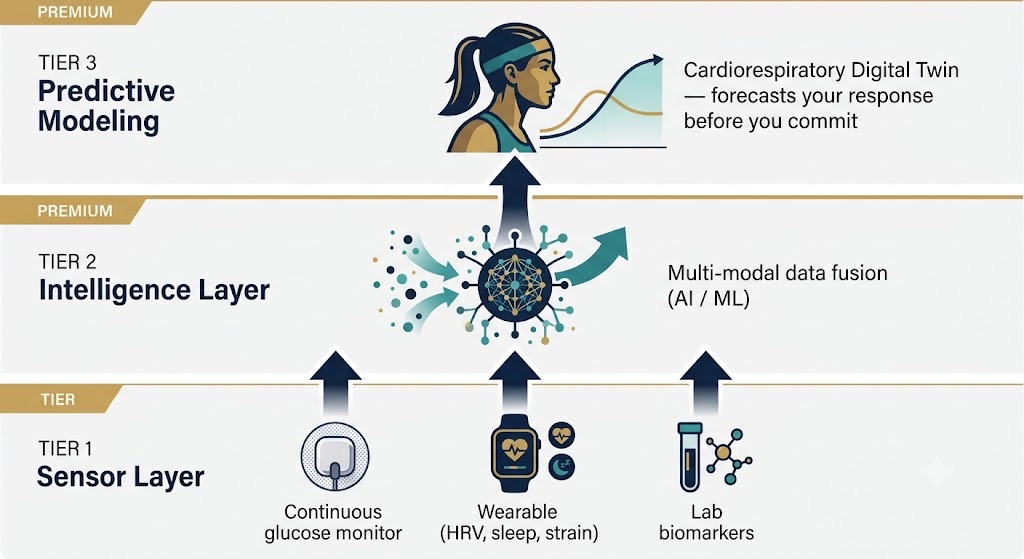
Sensors capture the body in motion; AI fuses the signals; predictive models forecast how you'll respond — turning quarterly guesswork into continuous adjustment.
Different companies attack this demand from different corners of the stack, and comparing them clarifies the landscape. Diagnostic-first services such as Function Health and Lifeforce lead with comprehensive biomarker panels and longitudinal lab tracking. Membership clinics such as Superpower and Extension Health bundle testing with clinical interpretation and access. Concierge programs such as Protocole emphasize physician-guided protocols. The differentiator that matters is not who runs the most tests, but who closes the loop — who converts genomic and sensor data into a specific, revisable plan, and who pairs the data with a human in the loop. AI does not replace the Coach / Practitioner; it gives them a higher-resolution view of the Athlete / Patient than any clinic visit ever could, turning quarterly guesswork into continuous, evidence-driven adjustment.
9. Matching the strategy to the person
Strip away the hype, and the practical guidance becomes refreshingly specific to who is asking.
The older endurance athlete (the 45-year-old triathlete or marathoner). The credible tool here is carbohydrate periodization, not chronic fasting. A small number of easy sessions performed with low glycogen — never the hard, race-specific ones — can sharpen mitochondrial adaptation, provided total weekly energy stays adequate. Glucose data and recovery metrics are the guardrails that keep "train low" from becoming "under-fuel." For race day, full tanks win; for select base-phase mornings, scarcity can teach the cell something useful.
The successful executive over 40. If the goal is metabolic flexibility, body composition, and durable energy rather than a podium, the evidence favors early time-restricted eating — a consistent daytime window aligned with circadian biology — over heroic multi-day fasts. The autophagy and insulin-sensitivity signals are real, the deprivation is modest, and continuous glucose data make the experiment legible within weeks. This is also the demographic for whom a structured Peptide Longevity Plan™, built on a genomic baseline rather than a clinic's house protocol, separates precision from fashion.
The person rebuilding after injury, illness, or weight gain. Here, caution dominates. Aggressive fasting on a deconditioned or under-muscled body risks accelerating the very lean-mass loss that the seven-day fasting study quantified — 4.6 kilograms in a week. The priority is preserving muscle and bone while improving metabolic health, which favors gentle eating-window adjustments, adequate protein, resistance training, and close biomarker monitoring over any dramatic restriction. Mitochondrial peptides may eventually play a role in restoring a blunted exercise response in this group — but only as an adjunct to loading, never as a bypass around it.
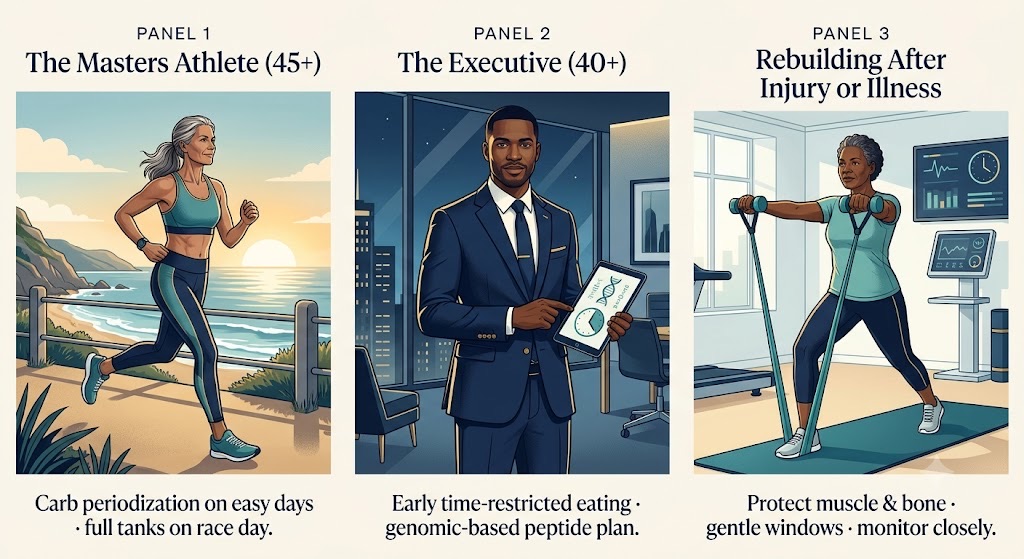
There is no universal protocol — only the right one for your body and goals. The same science points three different people in three different directions.
What unites all three cases is the question being asked. Not "does fasting work?" but "what is this doing to the markers that predict how well I will age?" — and whether you are measuring well enough to know. That second question is where the real stakes live.
10. The longevity dividend
Step back, and the deepest reason to care about any of this is not the next race. The pathways we have been tracking — AMPK signaling, mitochondrial biogenesis, autophagy, ketone metabolism, insulin sensitivity — are the same pathways that govern how well you age. VO2 max and metabolic flexibility are among the strongest predictors of how long and how well a person lives. Fasting strategies, carbohydrate periodization, ketones, and mitochondrial peptides are, at bottom, different levers on the same machine: the one that determines whether your seventies look like decline or like a slightly slower version of your fifties.
That is why the planning matters more than any single protocol. The decision to understand your own metabolism — to baseline your genome, instrument your physiology, and let a model rather than a magazine choose your interventions — is itself a longevity decision, and it compounds. The people who benefit most from this science are rarely the ones chasing the newest peptide; they are the ones who started measuring early, adjusted often, and treated their healthspan as a portfolio to be managed rather than a number to be feared. Whether that planning happens inside a clinic, a Corporate Wellness Program, or a Longevity Club, the operative verb is the same: measure, then decide.
The empty-tank advantage, it turns out, is not really about the empty tank. It is about knowing — precisely, individually, and continuously — which tank you should be running on, and when. That is not a diet. It is a strategy. And like every good strategy, it begins with data about you.
Sign up for FREE daily Longevity Club Workshops, or join the Affiliate Program (pays 20%).
About the Author
Tony Medrano is CEO and co-founder of LongevityPlan.AI, a platform that integrates performance and health data and leverages proprietary Digital Twin for Predictive Peptide Performance™ technology, wearable data, and biomarker data to deliver personalized optimization and longevity recommendations. A 3x technology/AI company CEO with 2 successful exits, Tony has completed 3 Full Ironman Triathlons (140.6 mi) since 2019. He holds degrees from Harvard University, Columbia University, and a JD/MBA from Stanford University, and has worked with the US Olympic Team, the NBA, NFL, MLB, NASA, Google, Microsoft, and Netflix, among others. He also served as a US Navy Officer commanding an emergency response team aboard a destroyer.
Disclaimer: This article is for education and is not medical advice. Fasting, ketogenic strategies, and peptides carry real risks and interactions; mitochondrial and other peptides are largely investigational in humans and their regulatory status varies by jurisdiction. Discuss any protocol with a qualified clinician — ideally one looking at your own genomic and biomarker data — before beginning. RED-S and Low Energy Availability are serious clinical conditions; if you train hard and restrict food, energy availability deserves professional attention.
Endnotes
- Jensen, J. et al. "Effects of seven days' fasting on physical performance and metabolic adaptation during exercise in humans." Nature Communications 16, 122 (2025). DOI: 10.1038/s41467-024-55418-0.
- "How does intermittent fasting affect athletic performance? There's no simple answer." The Conversation (2025), summarizing Ramadan performance and RED-S literature.
- Correia, J.M. et al. "Effects of Intermittent Fasting on Specific Exercise Performance Outcomes: A Systematic Review Including Meta-Analysis." Nutrients 12(5):1390 (2020). PMC7284994.
- Hawley, J.A. & Burke, L.M. "Carbohydrate Availability and Training Adaptation: Effects on Cell Metabolism." Exercise and Sport Sciences Reviews 38(4):152–160 (2010).
- Bartlett, J.D., Morton, J.P. et al. "Reduced carbohydrate availability enhances exercise-induced p53 signalling in human skeletal muscle: implications for mitochondrial biogenesis." Am J Physiol Regul Integr Comp Physiol 304:R450–R458 (2013).
- Hulston, C.J., Jeukendrup, A.E. et al. "Training with low muscle glycogen enhances fat metabolism in well-trained cyclists." Medicine & Science in Sports & Exercise 42(11):2046–2055 (2010).
- Marquet, L.A., Hawley, J.A., Burke, L.M. et al. "Enhanced Endurance Performance by Periodization of Carbohydrate Intake: 'Sleep Low' Strategy." Medicine & Science in Sports & Exercise 48(4):663–672 (2016).
- Impey, S.G., Morton, J.P. et al. "Fuel for the work required: a practical approach to amalgamating train-low paradigms for endurance athletes." Physiological Reports 4(10):e12803 (2016). PMC4886170.
- Gejl, K.D. et al. "No Superior Adaptations to Carbohydrate Periodization in Elite Endurance Athletes." Medicine & Science in Sports & Exercise 49(12):2486–2497 (2017).
- Burke, L.M. et al. "Low carbohydrate, high fat diet impairs exercise economy and negates the performance benefit from intensified training in elite race walkers." The Journal of Physiology 595(9):2785–2807 (2017). DOI: 10.1113/JP273230.
- Cox, P.J. et al. "Nutritional Ketosis Alters Fuel Preference and Thereby Endurance Performance in Athletes." Cell Metabolism 24(2):256–268 (2016). DOI: 10.1016/j.cmet.2016.07.010. PMID: 27475046.
- Leckey, J.J. et al. "Ketone diester ingestion impairs time-trial performance in professional cyclists." Frontiers in Physiology (2017). PMID: 29109686.
- Brooks, E. et al. "Ketone Supplementation and Endurance Performance: A Systematic Review and Meta-Analysis." International Journal of Sport Nutrition and Exercise Metabolism (2022). PMID: 35042186.
- Hatori, M., Panda, S. et al. "Time-restricted feeding without reducing caloric intake prevents metabolic diseases in mice fed a high-fat diet." Cell Metabolism 15(6):848–860 (2012).
- Sutton, E.F., Ravussin, E., Peterson, C.M. et al. "Early Time-Restricted Feeding Improves Insulin Sensitivity, Blood Pressure, and Oxidative Stress Even without Weight Loss in Men with Prediabetes." Cell Metabolism 27(6):1212–1221 (2018). PMID: 29754952.
- Jamshed, H., Peterson, C.M. et al. "Early Time-Restricted Feeding Improves 24-Hour Glucose Levels and Affects Markers of the Circadian Clock, Aging, and Autophagy in Humans." Nutrients 11(6):1234 (2019). PMID: 31151228.
- "Intended isocaloric time-restricted eating shifts circadian clocks but does not improve cardiometabolic health in women with overweight." Science Translational Medicine (2024/2025).
- Reynolds, J.C., Lee, C. et al. "MOTS-c is an exercise-induced mitochondrial-encoded regulator of age-dependent physical decline and muscle homeostasis." Nature Communications 12, 470 (2021). DOI: 10.1038/s41467-020-20790-0.
- "'Exercise protein' doubles running capacity in mice." USC Leonard Davis School of Gerontology (Jan 20, 2021), quoting Changhan David Lee.
- Clinical overview of mitochondrial peptides (MOTS-c, humanin, SS-31), administration and monitoring framing. Lamkin Clinic / clinical reference summaries (2026).
- Zempo, H. et al., on the m.1382A>C (K14Q) MOTS-c polymorphism and type 2 diabetes association (cited within ref. 18). See Reynolds et al. 2021 reference list, Nature Communications.
- The Genomics Company — seven functional systems and genomic uniqueness statistics. thegenomicscompany.com.
- Abbott. "Abbott Launches Lingo & Libre Rio in U.S. Biowearables Market" (2024), including development of a combined glucose-and-ketone sensor.
- "Supersapiens terminates memberships and product shipments." endurance.biz (2024); see also DC Rainmaker (2024).