Peptide Science
·17 min read
The Cartilage Question: What the Data Actually Says About the 5 Most-Studied Peptides for Arthritis
Separating signal from hype — where the human evidence is real, where it stops at the edge of a rat model, and how genomics turns a guessing game into a plan.
By Tony Medrano & Dr. Eric Rightmire
This article is for education and is not medical advice.
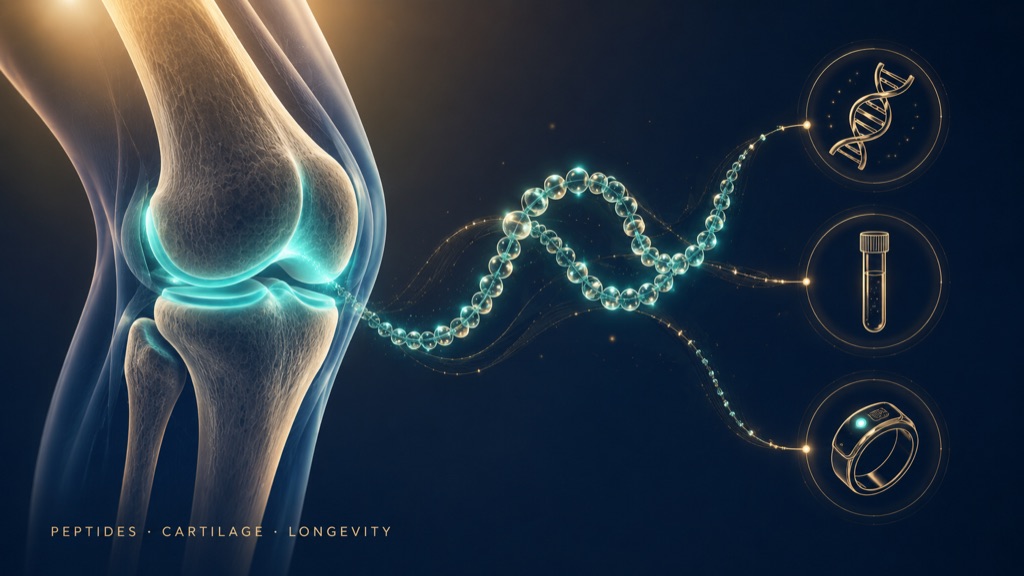
Peptides are already one of medicine's most successful drug classes — from insulin to GLP-1s. The real question for the aging joint isn't whether peptides work, but which ones have earned it.
A few years ago, on the most-listened-to podcast on the planet, Joe Rogan mentioned that a stubborn case of elbow tendonitis he had been unable to fix cleared up within about two weeks of starting a peptide called BPC-157.3 It was one man's anecdote, delivered without a control group or a p-value — and it may have done more to launch the modern peptide boom than any paper ever published. Within months, "the Wolverine peptide" was sold out across half the internet.
That moment captures the whole tension of this topic. On one side, an explosion of enthusiasm, real stories, and genuinely exciting biology. On the other hand, a body of human evidence is thinner than the excitement suggests. The job of a serious longevity practice is not to pick a side but to hold both honestly — because the science here is legitimately promising and legitimately early, and the reader who understands the difference is the one who benefits.
Start with the fact that should reframe the conversation: peptides are not a fringe category. They are one of the most successful drug classes in modern medicine. Insulin is a peptide. So are semaglutide in Ozempic and tirzepatide in Mounjaro — molecules that have reshaped metabolic medicine and made Novo Nordisk and Eli Lilly two of the most valuable healthcare companies on Earth. The global peptide therapeutics market reached roughly $50 billion in 2024.1 When someone says peptides "don't work," they are ignoring the pharmacy shelf. The honest question was never whether peptides work — plainly, some work spectacularly — but which ones have earned their reputation in the arthritic joint, and on what strength of evidence.
The lens: an evidence spectrum, not a hierarchy of hope
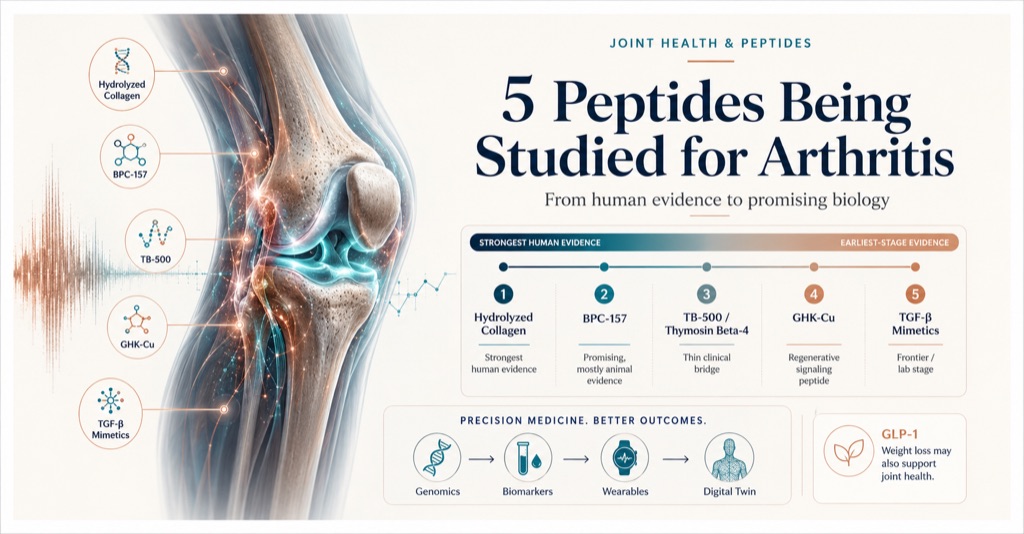
Every peptide below sits somewhere on a single spectrum that runs from proven in humans to promising in rodents. That spectrum, not marketing copy, is the right organizing lens. At one end are oral bioactive collagen peptides, which have randomized controlled trial support in osteoarthritis. At the other are regenerative and anti-inflammatory peptides — BPC-157, thymosin beta-4 fragments, copper peptides, growth-factor mimetics — whose evidence is mechanistically rich, frequently dramatic in animals, and, for now, largely preclinical. Both ends of the spectrum are worth knowing. Mistaking one for the other is where consumers get hurt and where credible practitioners earn their keep. Here are the five, ordered as the evidence orders them.
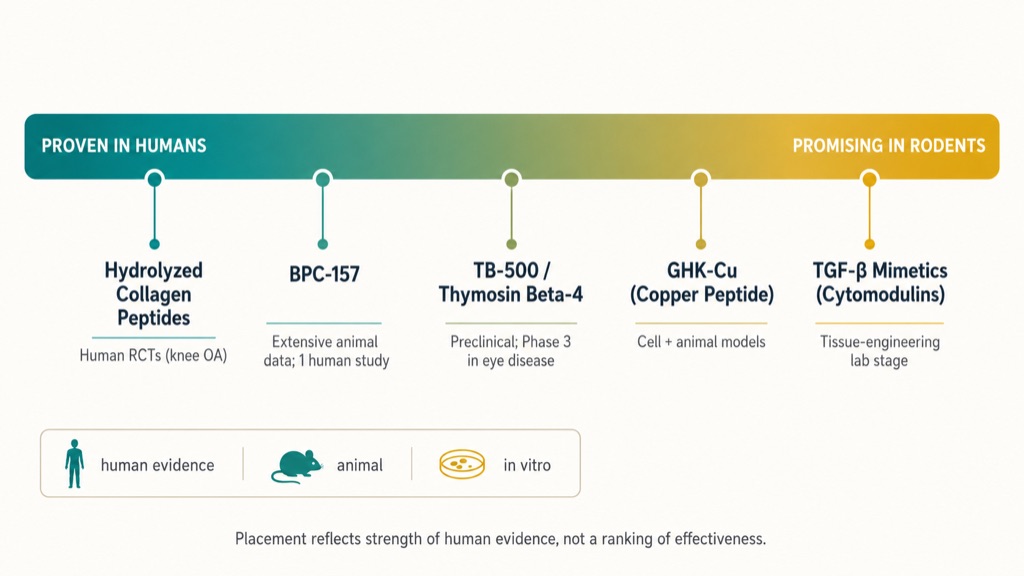
The organizing lens for this entire conversation: each peptide plotted by the extent to which human evidence supports it — from replicated clinical trials to promising rodent studies.
1. Hydrolyzed collagen peptides — the one that cleared the human bar
The peptide with the strongest evidence for osteoarthritis in humans is also the least glamorous: hydrolyzed collagen, taken by mouth, typically around 10 grams a day. Collagen hydrolysate is cleaved into short peptides — notably prolyl-hydroxyproline — that survive digestion, appear to accumulate preferentially in cartilage, and may act as both raw material and a signal nudging chondrocytes toward matrix synthesis.
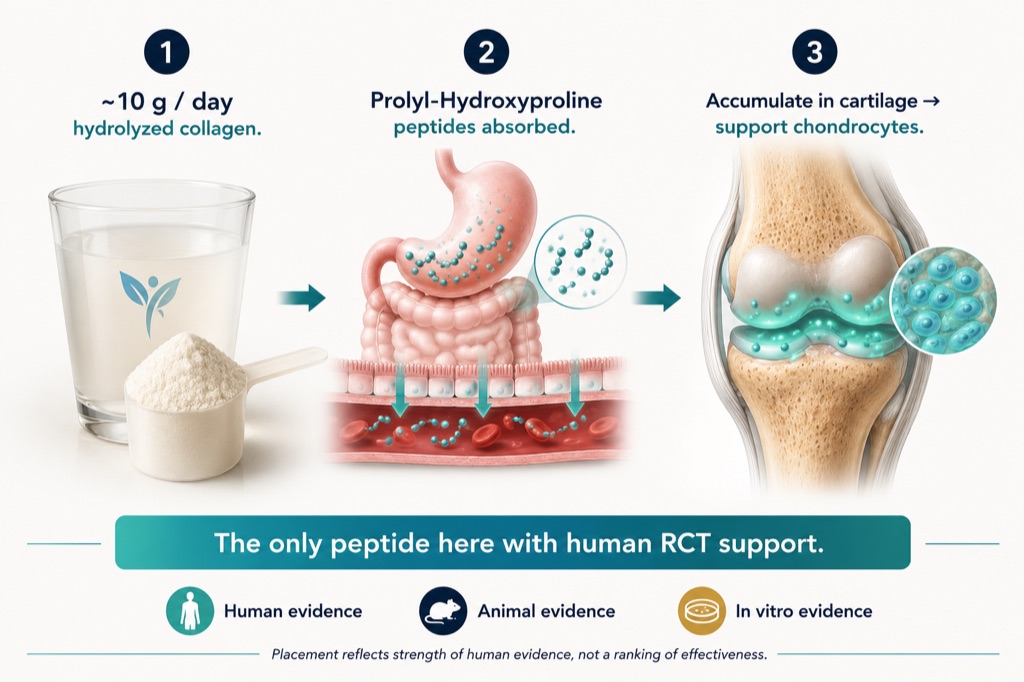
How oral collagen peptides reach the joint. A 2023 meta-analysis of four trials involving 507 patients with knee osteoarthritis found significant pain relief compared with placebo — the evidence-backed, low-risk place to start.
The pivotal synthesis is a 2023 systematic review and meta-analysis in the Journal of Orthopedic Surgery and Research. Pooling four randomized controlled trials involving 507 patients with knee osteoarthritis, the analysis found a statistically significant reduction in pain with collagen peptides versus placebo, with no significant increase in adverse events — a favorable read on both efficacy and safety.2 The intellectually honest footnote, which the authors themselves stress, is that all four trials carried a high risk of bias, so the effect is best described as modest and activity-related rather than joint-restoring. This is the first RCT-level meta-analysis of its kind, and it argues for bigger, cleaner trials — not against the ingredient.
The practical read: collagen peptides are the evidence-backed, low-risk entry point. They will not regrow a joint, but for activity-related pain and function, they have replicated, placebo-controlled human data and a clean safety record — a combination none of the injectable peptides below can currently match.
2. BPC-157 — the animal superstar the whole boom is built on
No peptide inspires more devotion than BPC-157, a synthetic 15-amino-acid sequence based on a protective protein found in human gastric juice. The enthusiasm is not baseless — in preclinical work spanning more than 100 studies over three decades, it has accelerated healing of tendon, ligament, muscle, bone, and nerve; improved the structure and function of injured rat Achilles tendons; and dampened inflammatory responses in a dose-dependent manner.3,4 The mechanism is coming into focus, too. A 2026 study in Cell Communication and Signaling showed that BPC-157 binds the ubiquitin-ligase adaptor FBXO22 via its proline-3 residue, thereby stabilizing the transcription factor BACH1 and upregulating a suite of pro-angiogenic factors (PDGFB, EGFR, FGF2, FGFR1) that drive new blood vessel formation.5 Since poor blood supply is exactly why tendons, ligaments, and cartilage heal so slowly, a peptide that reliably improves local angiogenesis is a genuinely compelling idea. Predrag Sikiric's group at the University of Zagreb, which has driven most of this research, also argues the compound has a wide safety margin, noting that a lethal dose was never reached in their toxicology work.6
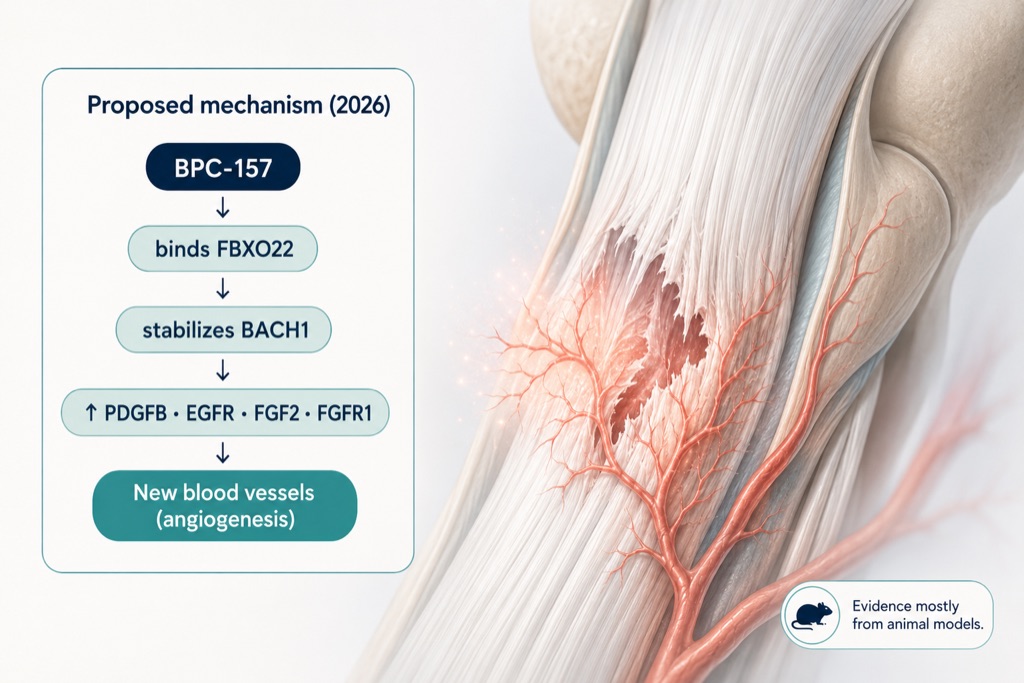
Why athletes are fascinated by BPC-157: newly mapped in 2026, it appears to switch on the body's blood-vessel-building machinery — the bottleneck for slow-healing tendons and ligaments. Compelling biology, still proven mainly in animals.
Now the discipline that keeps this credible. A 2025 systematic review in the American Journal of Sports Medicine screened 544 articles on BPC-157 for orthopedic uses and found exactly one that qualified as a clinical study — the rest were animal studies or in vitro studies.4 That single statistic is the whole situation: substantial animal evidence, almost no human evidence. The gap is partly economic rather than scientific — a natural peptide fragment is hard to patent, so no sponsor has funded the nine-figure trials FDA approval demands. Two developments are about to test the hype against data: an FDA advisory decision on BPC-157 is anticipated in 2026, and a Phase 2, randomized, double-blind, placebo-controlled trial for acute hamstring strain (sponsor Hudson Biotech) is now enrolling, with MRI-measured injury volume and return-to-sport as endpoints — the first real human test the field has had.7,9
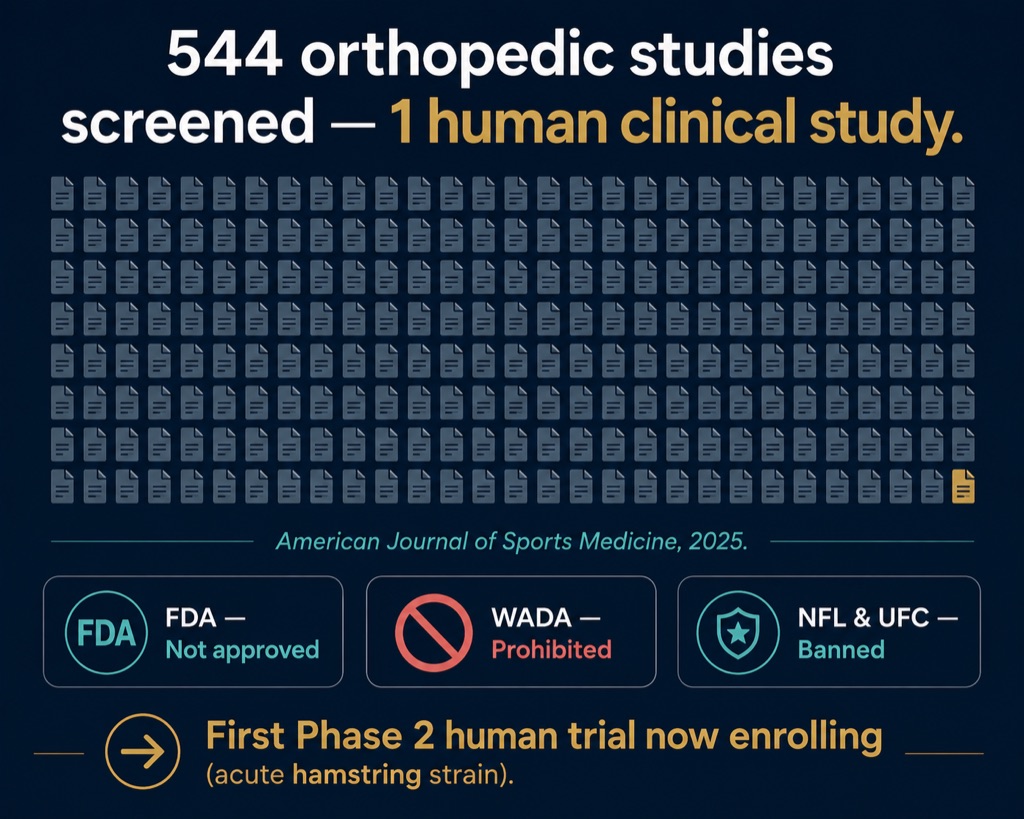
The honest counterweight to the hype: overwhelming animal data, almost no human trials — and clear regulatory limits. The good news is that the first real human test is finally underway.
Regulation and sport are unambiguous today: BPC-157 is not FDA-approved, was removed from 503B bulk-compounding eligibility in 2024 (some 503A pharmacies still dispense patient-specific prescriptions under a separate, contested framework), and is prohibited by WADA, the NFL, and the UFC.7,8 Enforcement is live — the Canadian Center for Ethics in Sport handed a four-year ban to volleyball player Emma Brooks for BPC-157 and TB-500, and a 19-year-old U.S. speed skater drew a one-year ban in 2024.8 The lesson for any competitive athlete is simple and non-negotiable: this is a career-ender under testing, full stop.
3. TB-500 / thymosin beta-4 — elite biology, thin clinical bridge
Thymosin beta-4 (Tβ4) is a 43-amino-acid actin-binding protein present in nearly every human cell, with well-characterized roles in cell migration, angiogenesis, and the control of inflammation. TB-500, the version sold by research-chemical vendors, is a synthetic fragment (the acetylated heptapeptide Ac-LKKTETQ, residues 17–23) marketed for soft-tissue recovery.10 The parent-protein biology is arguably the most impressive of any peptide here.
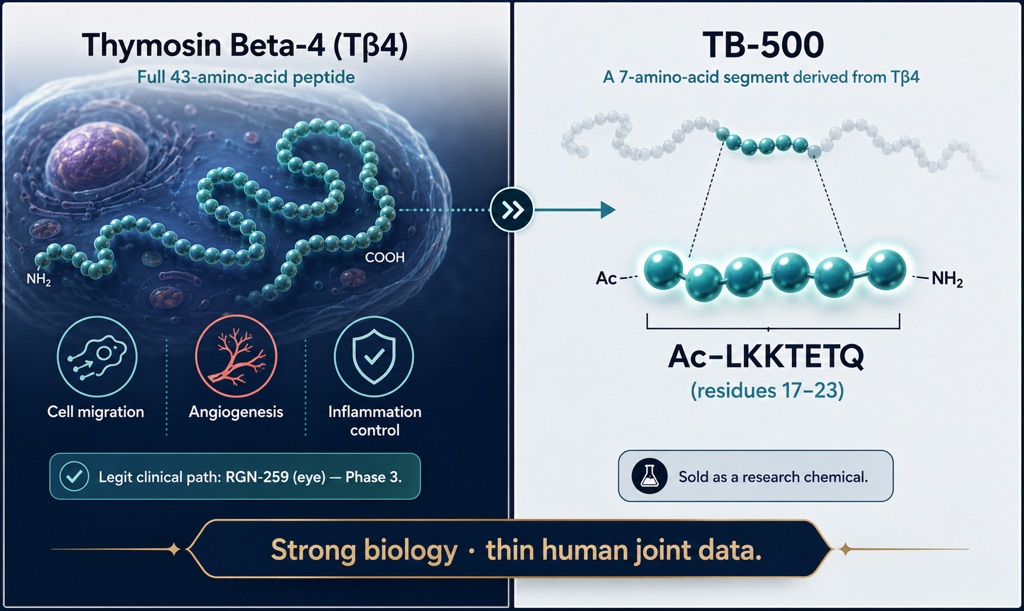
The parent protein, Thymosin Beta-4, has genuinely elite repair biology. TB-500 is just a fragment of it — and its direct human evidence for muscles and joints currently rests on a single study.
The catch is translation. The legitimate clinical development of Tβ4 is RGN-259, an ophthalmic formulation that has reached Phase 3 trials for dry eye and corneal wounds — real drug development, though not yet an approved product.10 A 2026 scoping review mapping the entire Tβ4/TB-500 literature reached a sober conclusion: the evidence is largely preclinical and unevenly distributed; human data concentrate in eye and skin/wound settings; and direct TB-500 evidence relevant to muscles and joints was limited to a single included study.11 Like BPC-157, TB-500 is not FDA-approved and has been WADA-prohibited since 2011. Superb basic science; a long way still to your knee.
4. GHK-Cu — the copper peptide that reprograms gene expression
GHK-Cu has one of the great origin stories in the field. In 1973, biochemist Dr. Loren Pickart isolated the tripeptide glycyl-L-histidyl-L-lysine from human plasma after noticing that plasma from younger donors restored regenerative activity in aged liver tissue better than plasma from older donors.12 The active factor was a small peptide with an extraordinary affinity for copper. Crucially for anyone over forty, endogenous GHK declines with age — from roughly 200 ng/mL at 20 to about 80 ng/mL by 60.12 We quite literally make less of our own repair signal as we age.
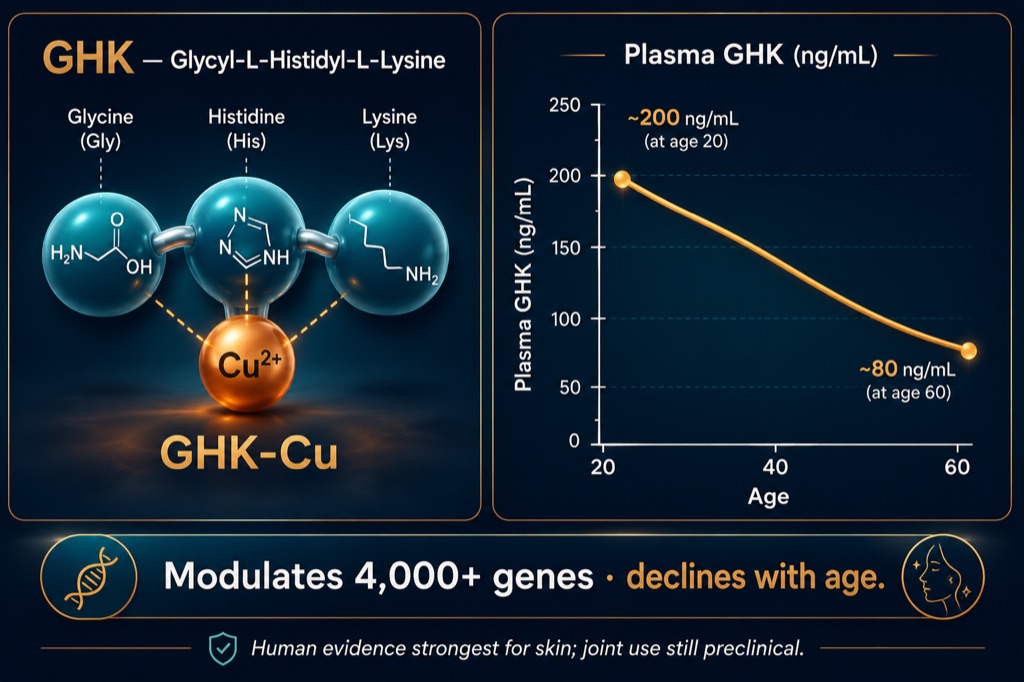
GHK-Cu is a natural copper-binding peptide that helps switch on thousands of repair and anti-inflammatory genes — and our levels fall by more than half between ages 20 and 60. Promising in the lab; still early for joints.
What sets GHK-Cu apart is breadth. Analyses using the Broad Institute's Connectivity Map report that GHK modulates expression of more than 4,000 human genes — on the order of a third of the genome — broadly upregulating tissue-remodeling and antioxidant programs while downregulating inflammatory and tumor-associated ones.13 Writing in the International Journal of Molecular Sciences, Pickart and Anna Margolina describe the peptide's many actions as, to current knowledge, uniformly "health positive."14 For joints specifically, cell studies on chondrocytes show increased glycosaminoglycan synthesis and reduced IL-1β–induced cell death, along with suppression of the cartilage-degrading enzymes MMP-1 and MMP-3; in a rat ACL-reconstruction model, articular injection of GHK-Cu improved healing outcomes.12,15
Read more scientific research from LongevityPlan.AI, or buy peptides from our shop.
The honest caveat matters. The overwhelming majority of GHK-Cu's human evidence is topical and dermatological, where its safety record is excellent. Injectable and intra-articular use in humans remains preclinical and is not FDA-approved, and the patent literature itself flags copper toxicity as a real concern for systemic delivery.16 A remarkable signaling molecule on skin; an open, exciting question inside a joint.
5. TGF-β mimetic peptides (cytomodulins) — the regeneration frontier, still in the lab
Transforming growth factor beta (TGF-β) is the master anabolic signal for cartilage, driving chondrogenesis and matrix synthesis via SMAD2/3. But native TGF-β is unstable, costly, and prone to side effects, and it loses its protective punch in aging cartilage as signaling drifts toward the SMAD1/5/8 route linked to hypertrophy.17 The elegant workaround: short synthetic peptides — cytomodulins (typically 4–6 amino acids, such as CM-10) and TGF-β1-derived sequences like YYVGRKPK — that mimic the signal with greater stability, lower immunogenicity, and lower cost.17,18
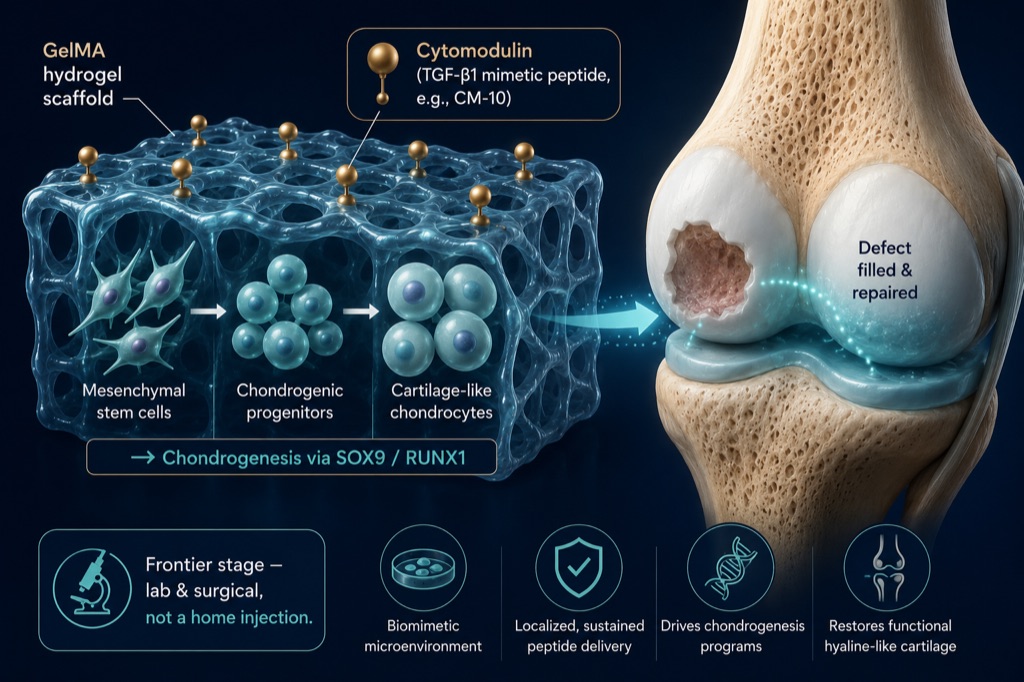
The regeneration frontier: growth-factor-mimicking peptides anchored to a scaffold coax stem cells into new cartilage. Genuinely exciting — but it will arrive as a surgical procedure, not a subscription.
The consumer-relevant detail is delivery. These peptides perform best not as a soluble shot but immobilized on scaffolds — GelMA hydrogels, liposomes, alginate microspheres — where they persistently steer stem cells toward cartilage through SOX9 and RUNX1 without pushing them into a hypertrophic dead end.18,19 This is a thrilling advance in osteochondral tissue engineering that may one day replace autologous cartilage implantation. But it is a surgical and bioengineering platform in development, not a vial you order online. Filed accurately, cytomodulins belong to the future operating room, not this year's protocol.
From molecule to person: why "the best peptide" is the wrong question
Notice the pattern: the same molecule that dazzles in one context underperforms in another, and the compound that helps one person may do nothing for the next. That is not a defect in the science — it is a clue about how to use it. Response depends on individual biology, and biology is not uniform.
Pharmacogenomics is the established discipline here. Genetic variation shapes how a person synthesizes and cross-links collagen, metabolizes copper, and mounts an inflammatory response — so a peptide that leans on any of those pathways will not land identically in two different bodies. The current state of the art: while the principle that genetics modulates response is well established, there is not yet a validated commercial test that reads your genome and tells you which of these specific peptides will work for your specific joint. Anyone selling that certainty is selling ahead of the evidence.
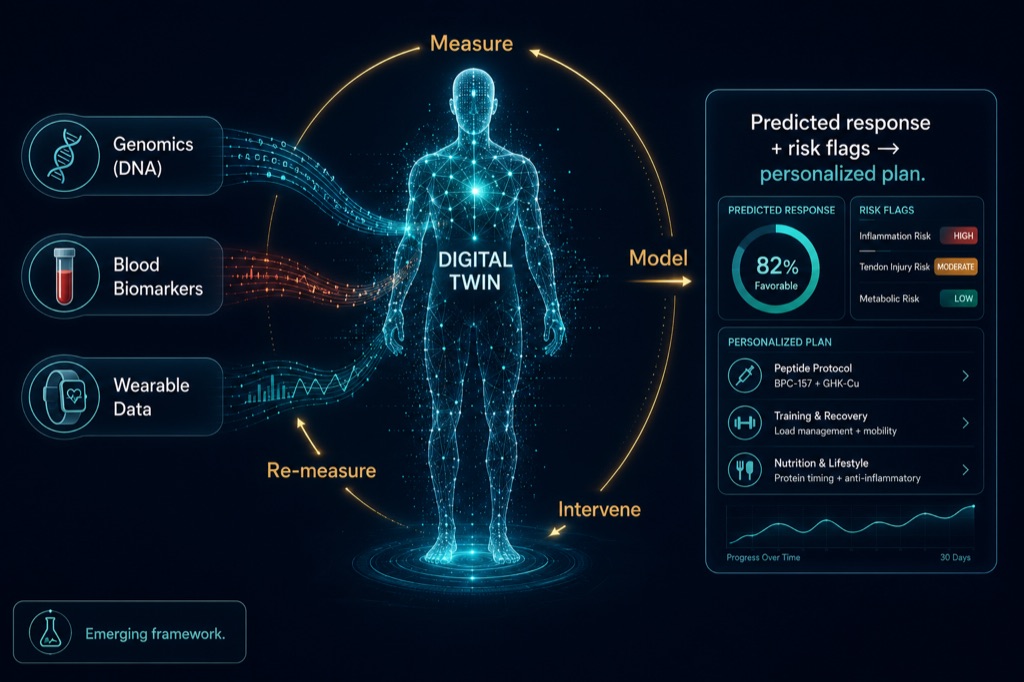
The goal isn't one "best" peptide — it's the right plan for one person. A digital twin fuses genomics, blood biomarkers, and wearable data to predict who is likely to respond, and to flag risks before anything begins.
Closing that gap is precisely the ambition of a Digital Twin for Predictive Peptide Performance™ — not magic, but integration. The concept layers multi-modal health data (genomic profiling from providers such as The Genomics Company, comprehensive blood biomarkers, body-composition scans, and continuous wearable streams) into a computational model of one individual, then uses predictive modeling to estimate the likely direction of response and, just as importantly, to flag risks before anything is administered. Today, it is best understood as an emerging framework — a disciplined way to trade anecdote for measurement — rather than a finished oracle. The value is the loop: measure, model, intervene, re-measure. Everything downstream depends on the quality of that measurement layer, which is exactly where the market has concentrated its money.
The practitioner's advantage
Here is the part the headlines miss. As the science gets more nuanced, it gets harder for an individual to navigate alone — and that is precisely what makes an informed Coach / Practitioner more valuable, not less. The weight-loss coach, performance coach, dietitian, nutritionist, and executive coach who can situate a compound on the evidence spectrum, read a biomarker panel, insist on pharmacy-grade sourcing with a certificate of analysis, and set honest expectations is delivering something no vendor and no viral clip can: judgment. In a field where enthusiasm routinely outruns proof, judgment is the product.
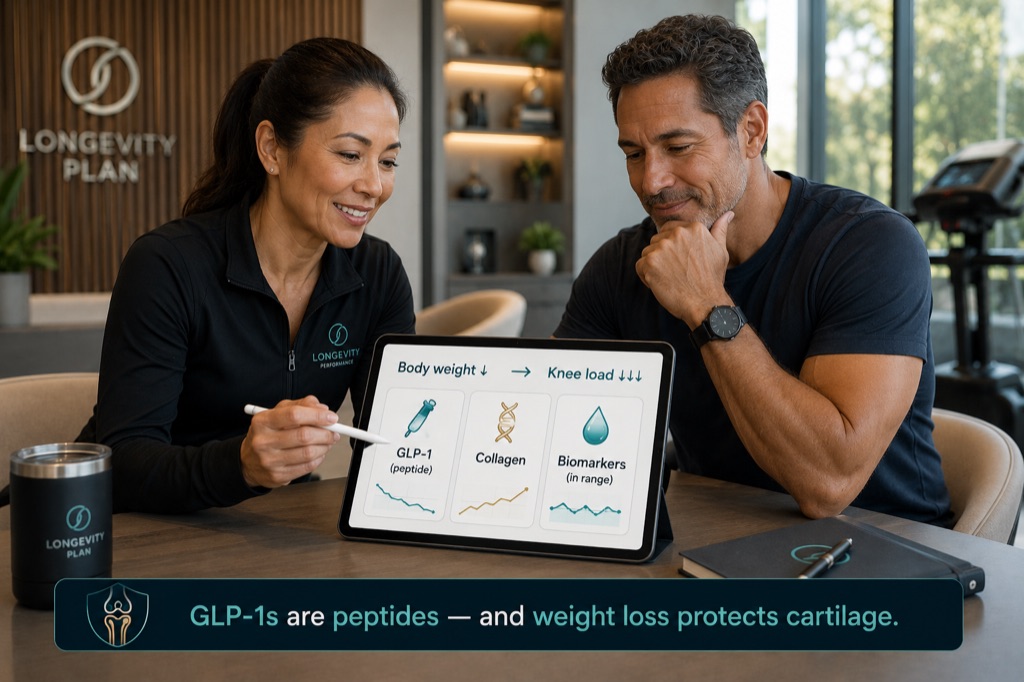
The coach's edge. Weight-loss and performance coaches are already peptide practitioners — GLP-1s are peptides — and guiding smart fat loss while protecting muscle and joints may do more for cartilage than most injectables can claim.
Weight-loss coaches, in particular, are already peptide practitioners, whether they use the word or not — the GLP-1 medications reshaping their field are peptides. And the connection to joints is direct and evidence-backed: excess body weight multiplies the load on the knee with every step, and weight loss is among the most effective interventions in osteoarthritis care. A coach guiding a client through GLP-1–supported fat loss while protecting lean mass and joint loading is doing more for that client's cartilage than most injectable peptides can currently claim to. That is the honest, powerful pitch — and it belongs to the practitioner who understands the whole picture.
For those clients, a simple, evidence-matched framework keeps everyone out of trouble. Begin where the human data is strongest, and the risk is lowest: oral hydrolyzed collagen around 10 g/day, layered on the interventions that outperform every peptide on this list for joints — progressive resistance training, preserved muscle mass and power, weight management, adequate protein and vitamin D. Peptides are an accelerant for that foundation, never a substitute. Treat BPC-157, TB-500, and injectable GHK-Cu as mechanistically promising but clinically unproven and tightly regulated — the domain of a qualified prescribing clinician, legitimate sourcing, baseline and follow-up biomarkers, and clear-eyed awareness of WADA and FDA status. And recognize cytomodulins and scaffold-bound TGF-β mimetics for what they are today: laboratory and surgical science that will arrive as a procedure, not a subscription. The practitioner who holds that map is the one clients keep coming back to.
The freeing truth: the most powerful "longevity intervention" for an arthritic joint is rarely a single molecule. It is a measured, individualized plan — the right training foundation, the evidence-backed peptide where it fits, honest biomarkers to prove it is working, and the humility to drop what isn't. The molecules improve every year. The discipline of measurement turns them into results.
The long view
There is a reason this field draws serious scientists and serious capital: it rides a real biological insight. Many of these peptides are not foreign chemicals but fragments of signals the body already makes — and makes less of as we age. Restoring, mimicking, and precisely targeting that native signaling is a rational strategy with, so far, a reassuring safety record for the endogenous-derived compounds, even where formal trials lag behind the enthusiasm. That is genuine grounds for optimism, held with genuine rigor.
It also rewards planning. The people who get the most from this science are rarely the ones chasing the newest vial; they are the ones who built a baseline early, measured consistently, and treated their own biology as a dataset worth understanding before they needed to. Whether that takes the form of a personal practice, a workplace program that keeps experienced people contributing longer, or simply an annual panel and a trusted clinician, the move is the same: decide before you're forced to. The arthritic knee at 60 is often written years earlier, in choices that were entirely optional at 40. The peptides on this list are, at their best, tools for keeping people doing what they love for longer — and, used with data and honesty, that is exactly what they can become.
Sign up for FREE daily Longevity Club Workshops, or join the Affiliate Program (pays 20%). Subscribe to the Longevity & Peptide Optimization Newsletter.
About the Authors
Tony Medrano is CEO and co-founder of LongevityPlan.AI, a platform that integrates performance and health data and leverages proprietary Digital Twin for Predictive Peptide Performance™ technology, wearable data, and biomarker data to deliver personalized optimization and longevity recommendations. A 3x technology/AI company CEO with 2 successful exits, Tony has completed 3 Full Ironman Triathlons (140.6 mi) since 2019. He holds degrees from Harvard University, Columbia University, and a JD/MBA from Stanford University, and has worked with the US Olympic Team, the NBA, NFL, MLB, NASA, Google, Microsoft, and Netflix, among others. He also served as a US Navy Officer commanding an emergency response team aboard a destroyer.
Dr. Eric Rightmire is a dual board-certified orthopedic surgeon specializing in sports medicine. He earned his BA from Harvard University and his MD from SUNY, and completed his residency and internship at Harvard. Dr. Rightmire has served as an orthopedic surgeon to celebrity athletes and is a member of the Quigley Society. His expertise in sports injuries and arthritis treatment makes him a valuable advisor to the LongevityPlan.AI team.
Medical disclaimer. This article is for educational purposes and is not medical advice. Several compounds discussed (BPC-157, TB-500/thymosin beta-4, injectable GHK-Cu, and TGF-β mimetic peptides) are not approved by the FDA for arthritis or any musculoskeletal condition; most are prohibited in competitive sports by WADA and the major professional leagues; and their long-term safety in humans has not been established. Do not begin any peptide regimen without consulting your rheumatologist or primary-care physician, and never source prescription compounds from unregulated vendors.
Endnotes
- Certified Peptide Solutions, "BPC-157: Research Areas, Risks, and Legal Status" (peptide therapeutics market ~$50B in 2024; WADA 2026 Prohibited List). Link
- Luo C, et al. "Analgesic efficacy of collagen peptide in knee osteoarthritis: a meta-analysis of randomized controlled trials." Journal of Orthopaedic Surgery and Research, 2023 (4 RCTs, 507 patients; significant pain relief vs placebo; no significant increase in adverse events; high risk of bias). PMC10505327. Link
- Popularization of BPC-157 and the Joe Rogan account of resolving elbow tendonitis (paraphrased anecdote), as documented in Stanfield B, "Should YOU Be Taking BPC-157 Peptides?" Link
- Sivasundaram L (Orthopedic Sports Medicine), summary of the 2025 American Journal of Sports Medicine systematic review (544 articles screened, 1 clinical study met inclusion; ~100+ preclinical studies; improved rat Achilles tendon healing). Link
- Zhang J, Liu M, Ou H, et al. "BPC157 drives angiogenesis through FBXO22-dependent stabilization of BACH1." Cell Communication and Signaling 2026;24:149 (BPC-157 binds FBXO22 via proline-3, stabilizes BACH1, upregulates PDGFB/EGFR/FGF2/FGFR1). Link
- Sikiric P, et al. Comment on Józwiak et al., Pharmaceuticals 2025 (defense of BPC-157 safety margin, "LD1 not achieved"; rebuttal of angiogenesis/neurodegeneration concerns). PMC12567428. Link
- Moonshot Medical / Maryland Orthopedic Specialists: BPC-157 not FDA-approved; removed from 503B bulk-compounding eligibility in 2024; 503A dispensing continues under a contested framework; FDA advisory decision anticipated in 2026. Link Link
- BSCG, "BPC-157: Rules and Risks for Athletes and Military Service Members" (WADA/NFL/UFC prohibition; Emma Brooks four-year ban for BPC-157 and TB-500; 2024 speed-skater one-year ban). Link
- ClinicalTrials.gov NCT07437547, "BPC 157 for Acute Hamstring Muscle Strain Repair" (Phase 2, randomized, double-blind, placebo-controlled; sponsor Hudson Biotech). Link
- BSCG, "TB-500 — Status, Risks, and Bans"; TrimRX evidence review (Ac-LKKTETQ, residues 17–23; RGN-259 ophthalmic program reached Phase 3; not FDA-approved; WADA-prohibited since 2011). Link Link
- Scoping review, "Thymosin Beta-4 and TB-500 in Tissue Healing, Regeneration, and Musculoskeletal Repair," Applied Sciences (MDPI), 2026 (evidence largely preclinical; direct TB-500 musculoskeletal human evidence limited to a single study). Link
- Pickart L, Margolina A. "The potential of GHK as an anti-aging peptide" and related reviews (GHK isolated from human plasma in 1973; plasma decline ~200→80 ng/mL from age 20 to 60; chondrocyte and rat ACLR data). PMC8789089. Link
- Broad Institute Connectivity Map analyses of GHK (modulation of >4,000 human genes; upregulation of repair/antioxidant programs, downregulation of inflammatory/tumor programs), summarized in Pickart et al. reviews. Link
- Pickart L, Margolina A. "Regenerative and Protective Actions of the GHK-Cu Peptide in the Light of the New Gene Data." Int J Mol Sci 2018;19(7):1987. Link
- Real Peptides research analysis, "Does GHK-Cu Help Osteoarthritis?" (in-vitro chondrocyte GAG synthesis, reduced IL-1β-induced death, MMP-1/MMP-3 downregulation; preclinical status). Link
- U.S. Patent literature on GHK/copper peptides noting copper toxicity concerns for non-topical delivery. Link
- "Multipotential Role of Growth Factor Mimetic Peptides for Osteochondral Tissue Engineering," Int J Mol Sci 2022 (cytomodulins as TGF-β mimetics; SMAD2/3 signaling; TGF-β loses protection with aging). PMC9266819. Link
- "Peptide-Based Biomaterials for Bone and Cartilage Regeneration," Biomedicines 2024 (cytomodulins 4–6 aa; scaffold-immobilized peptides outperform soluble forms). Link
- "Cytomodulin-10 modified GelMA hydrogel with kartogenin for in-situ osteochondral regeneration," Acta Biomaterialia 2023 (CM-10 as TGF-β1 mimetic; chondrogenesis via RUNX1/SOX9). Link
- Fin vs Fin, "Function Health vs Superpower vs InsideTracker vs Lifeforce" (Function Health founded 2022, co-founded by Dr. Mark Hyman, 100+ biomarkers, $365/yr; Lifeforce co-founded by Tony Robbins and Peter Diamandis, clinician-led, includes peptides). Link
- Crown Counseling review and Surges guide, 2026 (pricing across Function Health $365/yr, Superpower $199/yr, OneTwenty $499/yr quarterly + wearables + AI). Link
- Forbes, "Superpower Raises $30 Million To Launch World's First Health Super-App," Apr 2025 (backers include Giannis Antetokounmpo, Winklevoss Capital). Link
- ArentFox Schiff, "Competing Biomarker Providers Clash: Function Health Sues Superpower," Mar 2026 (Jan 2026 Lanham Act complaint; dispute over the definition of a biomarker; Function's $298M Series B, Nov 2025). Link
- American Orthopaedic Society for Sports Medicine (AOSSM), "The Boom of Peptides in Sports Medicine," 2026 (clinical context; translational gap between rodent data and human evidence; provider guidance). Link