Peptide Therapy
·20 min read
The Clockwork of Peptides: Why When You Dose May Matter as Much as What You Dose
A user's guide to circadian timing, growth hormone biology, and the data layer that turns a syringe schedule into a plan.
By Tony Medrano
This article is for education and is not medical advice.
A world record in Las Vegas — and the wrong lesson
In May 2026, at a Las Vegas spectacle billed by some as "the Olympics with steroids," Greek swimmer Kristian Gkolomeev touched the wall in the 50m freestyle at 20.81 seconds — quicker than the standing world record — and pocketed a $1 million bonus. Down the hall, Thor Björnsson, the "Mountain" from Game of Thrones, hauled 475 kilograms off the floor. The Enhanced Games, which let athletes use performance enhancers openly under medical supervision, had promised a flood of records; it delivered mostly spectacle, some alarm, and one asterisked swim — Gkolomeev also wore a banned high-tech supersuit and openly swam enhanced.22
It makes a useful foil, because it dramatizes the least interesting version of human optimization: throw everything at the body and see what breaks the tape. The more valuable question — the one this guide is about — is quieter. Not "how much can you take," but "what, exactly, and when, and for whom." That is the difference between brute force and precision, and it is in precision that peptides, used thoughtfully, actually earn their reputation.
The hidden variable in every protocol
Precision starts with a fact most protocols ignore: the body is not a static test tube. Hormone levels swing across the day and night, driven partly by sleep and behavior and partly by a circadian timing system governed by the suprachiasmatic nucleus of the hypothalamus, with peripheral clock proteins in tissues throughout the body.1 A signal that lands in phase with that rhythm gets amplified; a signal that lands out of phase can be blunted or wasted. So the first question isn't ipamorelin versus CJC-1295 — it's when. Serious longevity medicine, the version practiced in endocrinology clinics and sports science departments, treats timing as a first-class variable.
It treats evidence as a first-class variable too, which is the harder discipline. As Dr. Alex Tatem — a board-certified urologist and editor of the American Urological Association's Core Curriculum on testosterone deficiency — frames the moment: peptides have gone mainstream, and the honest task is showing "what the science actually shows — and what it doesn't."2 That is the posture here: the mechanistic reason behind "morning" versus "before bed," an honest line between proven and promising, and how a data-driven Peptide Longevity Plan™ turns rules of thumb into something personal.
Two clocks, two windows
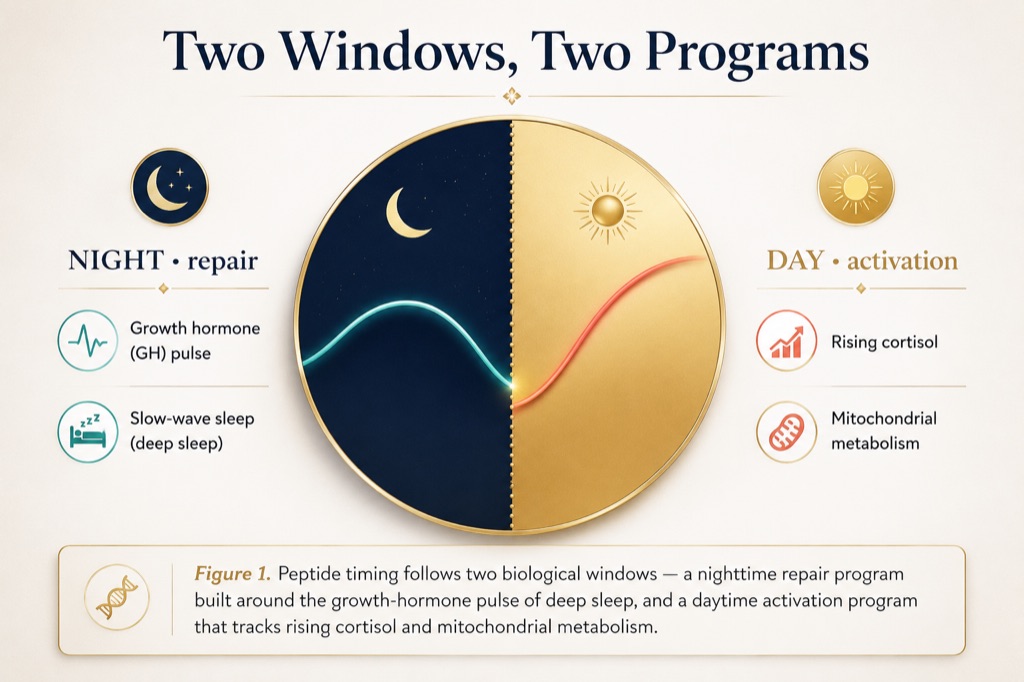
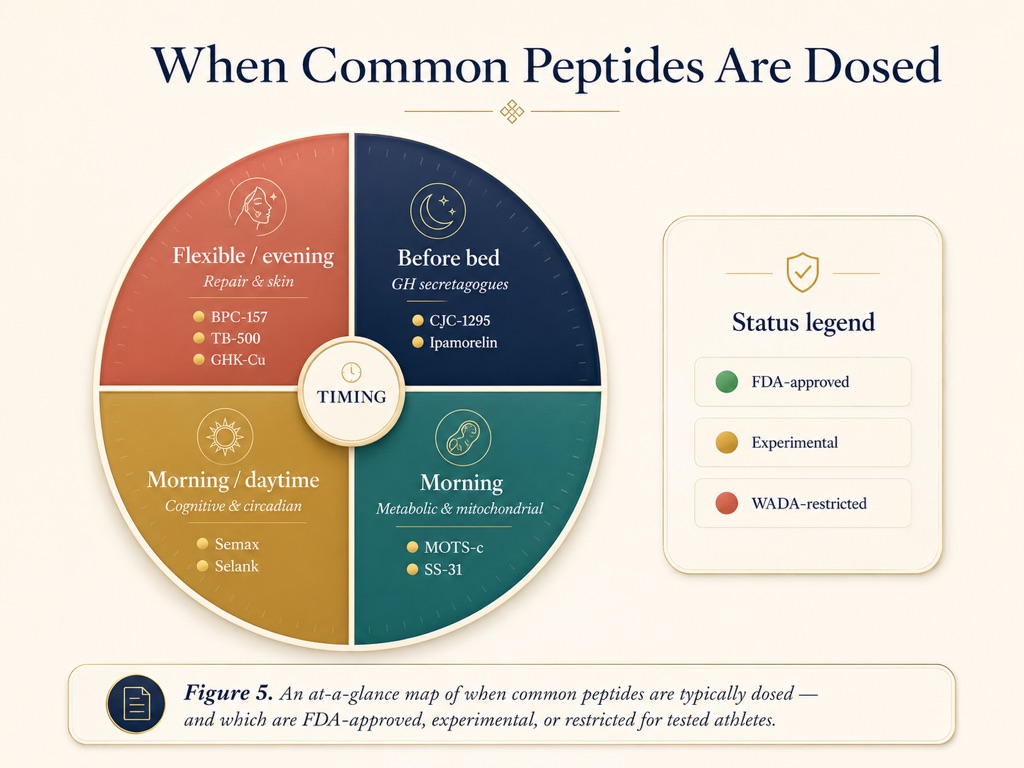
Nearly all peptide-timing logic reduces to one fact: the body runs a nighttime repair program and a daytime activation program, governed by different hormones.
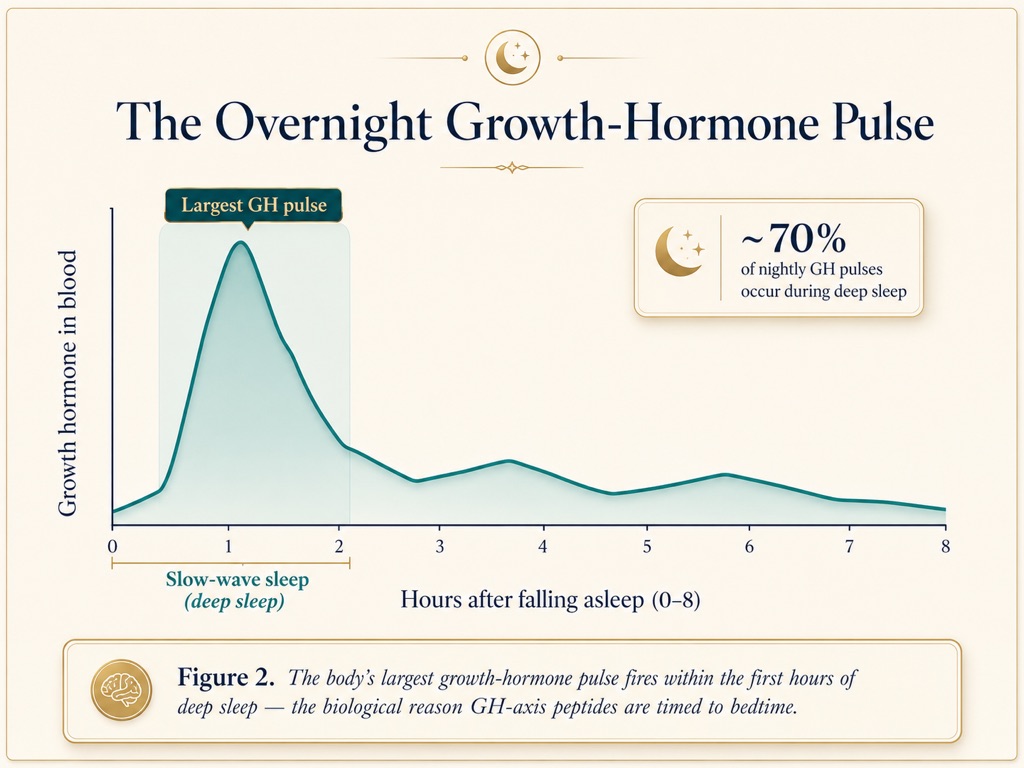
The night window is built around growth hormone. GH is secreted in pulses, and its largest, most reproducible pulse occurs shortly after sleep onset, tightly coupled to the first episode of slow-wave sleep (SWS) — the deepest stage of non-REM sleep.3,4 In men, roughly 70% of sleep-related GH pulses coincide with slow-wave sleep, and the amount released tracks the amount of SWS.4 Eve Van Cauter of the University of Chicago, whose lab defined much of this field, summarizes the coupling plainly: during slow-wave sleep, anabolic growth hormone is released while the stress hormone cortisol is suppressed.5 This is why GH-axis peptides are traditionally timed to bedtime — the goal is to arrive in phase with a pulse the body is already trying to fire.6
The morning window is built around cortisol and mitochondrial activation. Upon waking, cortisol rises to mobilize energy, and metabolic tissues shift toward fuel burning. Peptides whose job is metabolic, mitochondrial, or cognitive stimulation align with this rising-cortisol state rather than with the consolidate-and-repair state of deep sleep. Van Cauter's broader work adds the stakes: the endocrine changes of a significant sleep debt, she has noted, "mimic many of the hallmarks of aging."7 Timing a protocol without protecting sleep is optimizing the signal while degrading the amplifier.
Two windows. Most of the rules below are just consequences of the window in which a peptide's mechanism belongs.
The night class: growth-hormone secretagogues
These are split into two mechanistic families. GHRH analogs (sermorelin, tesamorelin, CJC-1295) bind the growth hormone-releasing hormone receptor and signal the pituitary to release more of your own GH. GH secretagogues and ghrelin mimetics (ipamorelin, GHRP-2, GHRP-6) act through a shared receptor. Stacking one of each is common precisely because they push two levers on the same pulse, making the combinations more potent and warranting more respect, not less.
Why bedtime. The rationale is phase-matching. If the dominant GH pulse fires at the onset of slow-wave sleep, a secretagogue taken 30–60 minutes before bed amplifies that pulse rather than counteracting daytime somatostatin tone. The corollary is the insulin rule: GH and insulin are metabolic antagonists, so a carbohydrate-driven insulin spike suppresses GH, which is why the empty-stomach guidance is biochemistry, not folklore. The reverse coupling is just as real: deepening slow-wave sleep doubles the first GH pulse after sleep onset, showing how tightly GH output is chained to sleep architecture.8
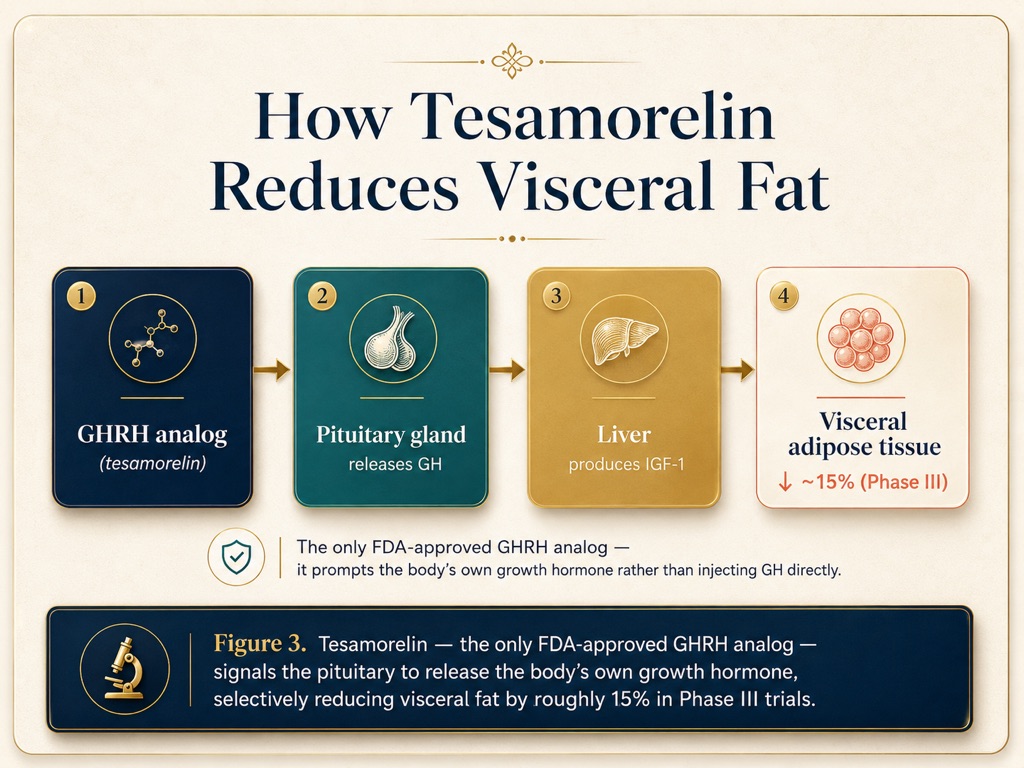
The molecule-specific exception: tesamorelin. Tesamorelin is the only FDA-approved GHRH analog — approved in 2010 for the reduction of excess abdominal fat in adults with HIV-associated lipodystrophy (Egrifta; reformulated as Egrifta SV).9,10 Its evidence is not anecdotal: in a pooled analysis of two pivotal Phase III trials (n = 806, randomized 2:1), 2 mg daily subcutaneously reduced visceral adipose tissue ~15% versus placebo over 26 weeks (treatment effect −15.4%, p < 0.001), selectively targeting visceral fat.10,11 Because its longer-acting GHRH signaling depends less strictly on the nocturnal pulse, some protocols dose it in the morning — a reminder that the pharmacology of the specific molecule can override "GH peptide = nighttime."9
The morning class: metabolic and mitochondrial fuel
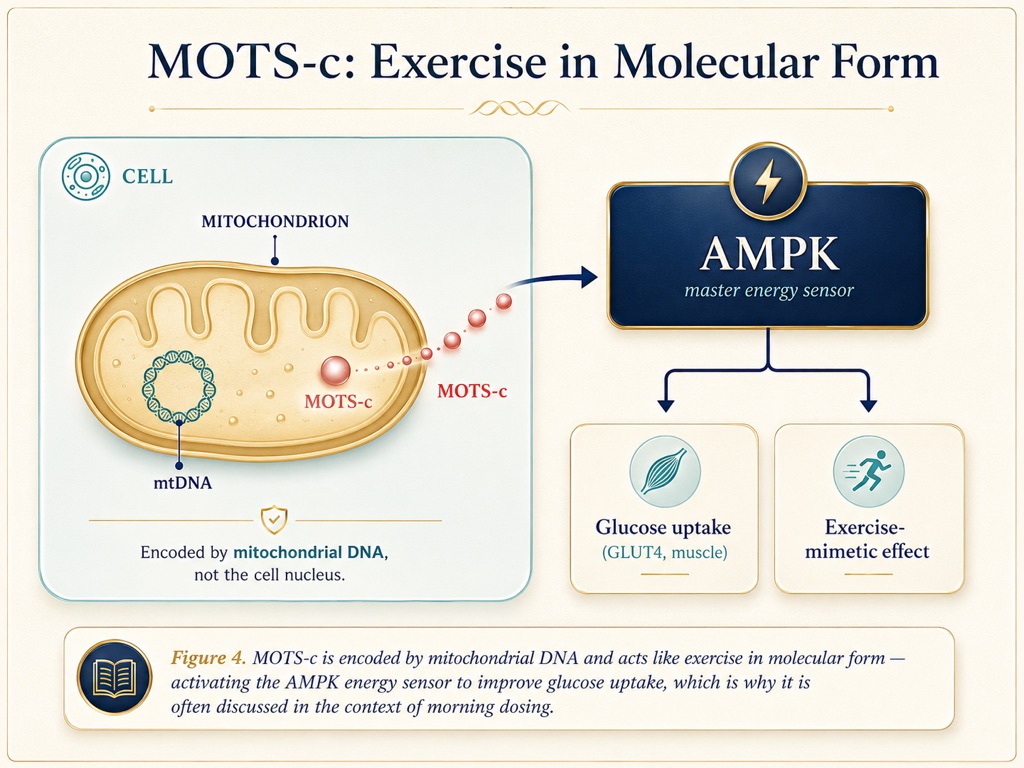
The standout here is MOTS-c, one of the more remarkable molecules in metabolic biology. It is a 16-amino-acid peptide encoded not by nuclear DNA but by the mitochondrial genome — first described by Changhan David Lee and Pinchas Cohen at USC in 2015.12 Mechanistically it activates AMPK, the cell's master energy sensor, and behaves like an "exercise mimetic": in aged mice, MOTS-c dosed three times weekly roughly doubled treadmill running capacity, and clamp studies show ~30% improvements in whole-body insulin sensitivity localized largely to muscle.12,13 Lee frames the aging angle directly — the work suggests you can "rejuvenate an older mouse so it is as fit as a younger one."12 Circulating MOTS-c also declines with age, measuring lower in men over 70 than under 30.14
Why morning. A molecule that engages AMPK and fuel-oxidation pathways aligns with the waking, fuel-mobilizing state — often dosed fasted and stacked atop the body's own daytime metabolic upswing. The honest caveat: human evidence remains early and context-dependent, and MOTS-c is not FDA-approved.15 The mechanism is elegant and the preclinical data strong — which is exactly why "promising, not proven" should be stated, not inflated.
The morning class: cognitive, circadian, and hormonal signals
Semax and Selank are Russian-developed neuropeptides (with regulatory histories in that region) used for cognition and anxiolysis; morning placement keeps their alerting effect inside working hours. Epitalon and Pinealon are pineal-associated peptides studied in circadian and telomere contexts, dosed to reinforce day-anchoring signals. Kisspeptin sits slightly apart — it stimulates the reproductive (GnRH→LH) axis, so its logic is hormonal rather than circadian.
A correction worth making. DSIP — Delta Sleep-Inducing Peptide — is frequently mislabeled as a morning "energy" peptide. Its name and literature point the other way: it is associated with sleep and delta-wave activity, so its logical window is evening. Placing it in a morning bucket is a mechanism error — the kind of inconsistency that separates a real protocol from a copied chart.
The flexible / evening class: tissue repair and skin
Repair peptides are the ones people most want to believe in, and where discipline about evidence matters most. BPC-157 (a synthetic pentadecapeptide related to a gastric sequence) and TB-500 (a thymosin beta-4 fragment) have been studied for angiogenesis, wound healing, and control of inflammation — but almost entirely in cell and animal models; human clinical evidence is minimal.16,17 Regan Archibald, founder of the medically managed peptide program at East West Health and author of The Peptide Blueprint, emphasizes their endogenous origin — peptides like BPC-157 and KPV are, in his words, "naturally made in your gastric secretions," which is part of why practitioners explore oral, nasal, and injectable routes.18
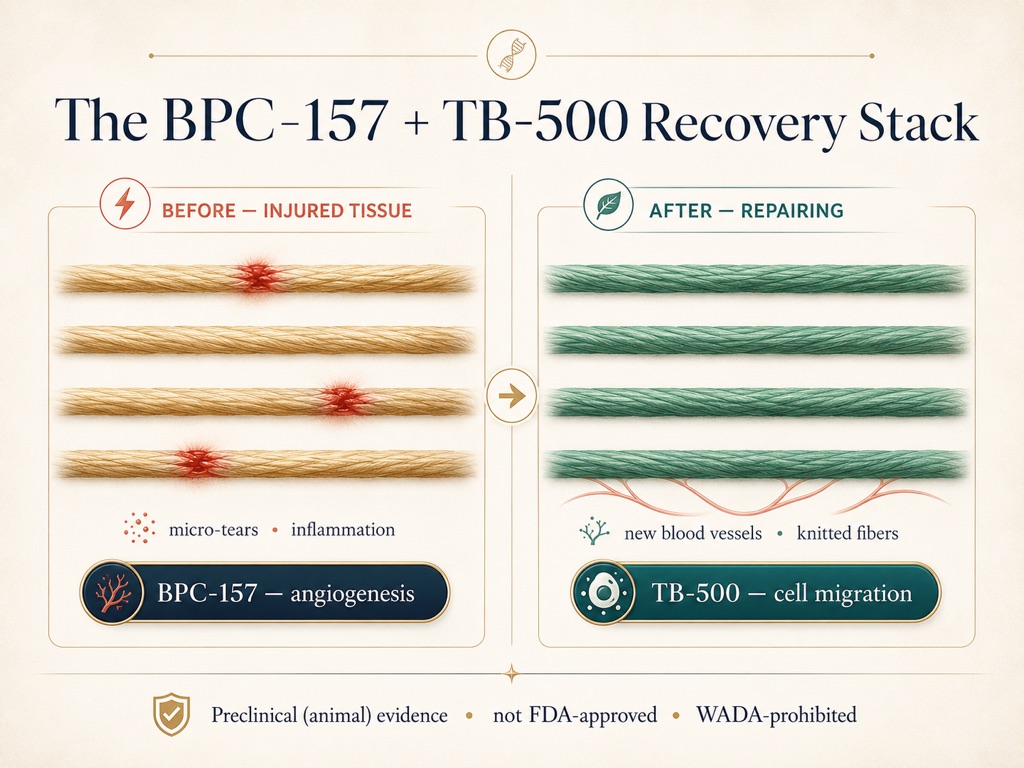
Timing logic. Because these act on local repair processes rather than a hormonal pulse, timing is flexible — often anchored to the day's mechanical demand (post-workout or morning), sometimes split. Topical copper-peptide skincare (GHK-Cu) is conventionally applied at night to avoid daytime sun interaction and ride the overnight skin-repair cycle.
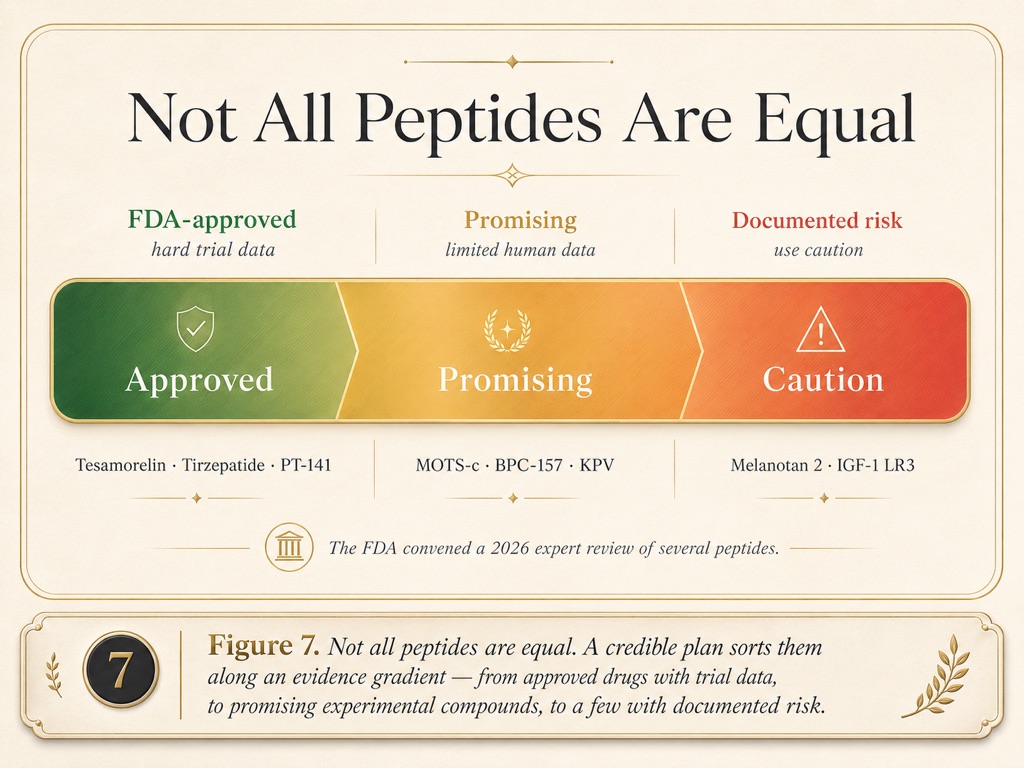
Regulatory reality, without spin. BPC-157 is not FDA-approved for any human use; the FDA placed it in Category 2 of its interim bulk review, citing immunogenicity and impurity concerns, and deemed it ineligible for 503A/503B compounding. The DOJ has prosecuted a pharmacy for distributing it.19,20 It is also prohibited at all times under the World Anti-Doping Agency's S0 category, with no Therapeutic Use Exemption — a rule that has already ended athletic careers — and because it has not been studied at scale in humans, no established safe dose exists.17 The hopeful, current development: under new leadership, the FDA convened a 2026 expert meeting on seven peptides it had flagged, with BPC-157 (ulcerative colitis), KPV (wound healing), and MOTS-c (obesity/osteoporosis) in the first batch and five more slated by early 2027.21 The gray zone is being examined in the open — the right direction for a field built on molecules the body already makes.
The peptide-by-peptide reference
How to read this: for FDA-approved drugs, published and approved regimens are stated as fact. For compounds not approved for human use, this gives mechanism, evidence quality, timing rationale, and regulatory or anti-doping status — the decision-relevant science — rather than a self-administration protocol; specific dosing for any of these belongs with a licensed prescribing clinician. WADA status is flagged because it disqualifies athletes who have tested positive.
Night window — GH secretagogues
CJC-1295 (no DAC) + ipamorelin. The archetypal stack: a short-acting GHRH analog paired with a selective GH secretagogue that raises GH with minimal effect on cortisol or prolactin. Timed before bed to amplify the slow-wave-sleep GH pulse, on an empty stomach. Not FDA-approved for human use; sold as research material of variable purity; WADA-prohibited (S2).
Tesamorelin. The only FDA-approved GHRH analog: 2 mg subcutaneously once daily (Egrifta SV 1.4 mg) for HIV-associated lipodystrophy, and the one item in this class with hard human trial data (Phase III visceral-fat results discussed above). Off-label longevity use is not approved. WADA-prohibited (S2).
"Sculpt" (tesamorelin + ipamorelin, ± additional component). A compounded blend pairing the GHRH analog with a secretagogue for two-lever GH stimulation; bedtime, fasted. Combines an approved drug with unapproved components; the blend itself is not an FDA-approved product. WADA-prohibited.
(The original source table's GHRP-2, GHRP-6, and sermorelin belong here too — same bedtime, phase-matching logic; sermorelin was previously FDA-approved, but commercial production was discontinued.)
Morning window — metabolic and mitochondrial
MOTS-c. Mitochondrial-derived, AMPK-activating exercise mimetic; strong preclinical metabolic data, limited human data. Morning and fasted to align with daytime metabolism. Not FDA-approved (currently under FDA compounding review).21
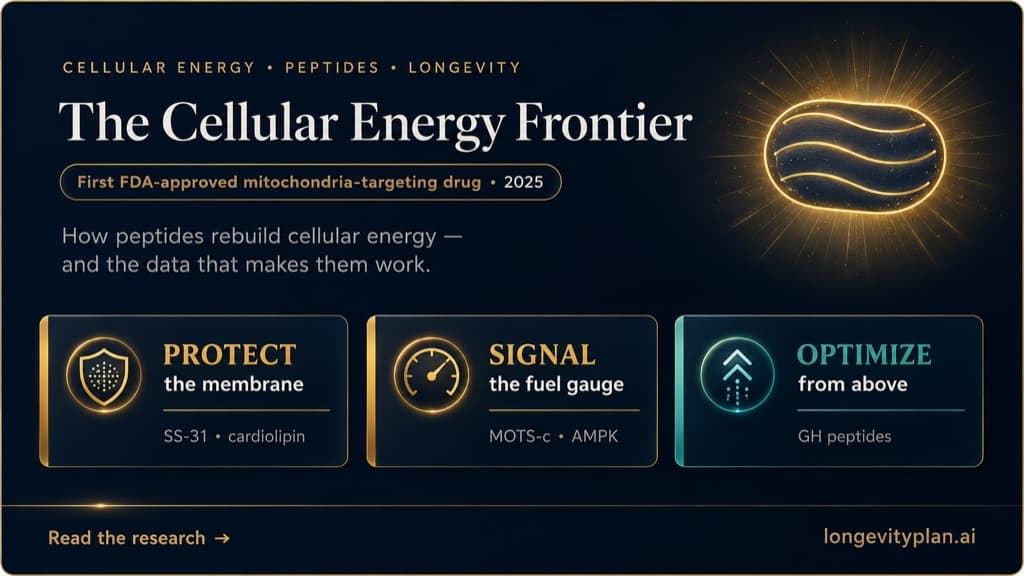
SS-31 (elamipretide). A mitochondria-targeting peptide that stabilizes cardiolipin to improve mitochondrial efficiency; investigated in clinical trials for mitochondrial and cardiac disease. Morning fits its bioenergetic rationale. Investigational — not FDA-approved.
NAD+ and precursors. Not a peptide but central to the same daytime energy logic; supports mitochondrial redox and sirtuin activity. Typically in the morning, as it can be alerting. Sold as a supplement (precursors) or via clinic IV/injection; NAD+ itself is not an approved drug for longevity indications.
AOD-9604. A GH fragment (176–191) marketed for fat metabolism, lacking GH's growth effects; human fat-loss data have been largely unimpressive. Morning and fasted by convention. Not FDA-approved (holds GRAS-related history but no approved therapeutic indication).
5-Amino-1MQ. A small-molecule NNMT inhibitor (not a peptide) explored for adipocyte metabolism and NAD+ salvage; preclinical only. Morning and fasted. Not approved; human evidence is minimal.
Glutathione. The body's master antioxidant tripeptide, morning or via clinic IV, supports detoxification and redox balance rather than the GH axis. Widely used as a supplement or IV; not an approved drug for anti-aging claims.
IGF-1 LR3. A long-acting IGF-1 analog — potent, anabolic, and the highest-caution item on this list: risks include hypoglycemia and theoretical promotion of tumor growth. Not FDA-approved; WADA-prohibited (S2). Belongs in the "documented risk" column, not routine optimization.
Morning window — cognitive, circadian, and hormonal
Semax. Neuropeptide (ACTH fragment analog) used for focus and neuroprotection, often intranasal; morning for daytime cognition. Regulatory history in Russia; not FDA-approved in the U.S.
Selank. Anxiolytic neuropeptide (tuftsin analog), intranasal; morning or as needed for calm focus. Same regulatory status as Semax.
Epitalon (Epithalon) and Pinealon. Pineal-associated peptides studied for circadian regulation and (for Epitalon) telomerase activity in limited studies; short cycles, morning. Not FDA-approved; human data are thin.
Kisspeptin. Upstream reproductive-axis stimulator (drives GnRH→LH/FSH); research interest in fertility and libido. Timing tied to hormonal, not circadian, goals. Investigational.
Dihexa. A potent angiotensin-IV–derived nootropic peptide studied preclinically for synaptogenesis; morning. Not approved; essentially no human safety data — high uncertainty.
DSIP. Reclassified here to evening. Delta Sleep-Inducing Peptide is associated with sleep architecture; if used, its logic is bedtime, not morning. Not FDA-approved.
Flexible / evening — repair, immune, and skin
BPC-157. Pentadecapeptide studied preclinically for tissue healing and angiogenesis; flexible timing (often post-workout or morning). Not FDA-approved (FDA Category 2); WADA-prohibited (S0); no established safe human dose.17,19
TB-500. Thymosin beta-4 fragment for cell migration and repair; flexible timing, sometimes loading-then-maintenance in practice. Not FDA-approved; WADA-prohibited (S2).
BPC-157 + TB-500 ("Wolverine"). The signature recovery pairing — angiogenesis plus cell migration — is used in response to injury and training load. Combined regulatory and anti-doping cautions of both components apply.
KPV. A tripeptide fragment of α-MSH with anti-inflammatory activity, notably in gut contexts; flexible or with meals for GI use. Not FDA-approved (under FDA compounding review for wound healing).21
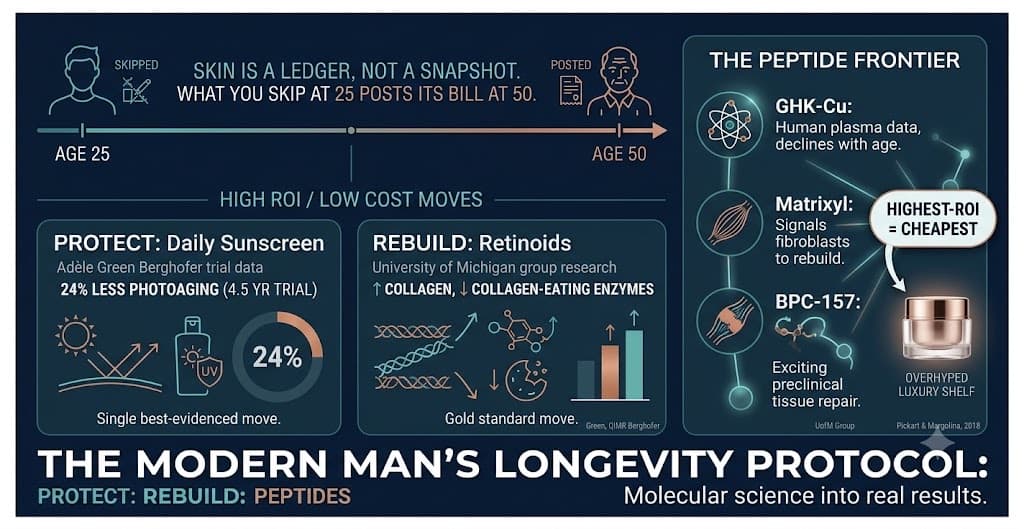
GHK-Cu (copper peptide). Best-evidenced as a topical skin-remodeling peptide; applied at night in skincare. Injectable use is not FDA-approved. Notably, not on the WADA prohibited list, unlike most of this section.
GLOW (GHK-Cu + BPC-157 + TB-500) and KLOW (adds KPV). Compounded "recovery + skin" blends, stacking the above; timing follows the components (repair anytime; the GHK-Cu skin benefit favors evening). Blends inherit the unapproved and anti-doping status of their constituents.
Thymosin alpha-1. An immune-modulating peptide approved in several countries (e.g., as Zadaxin) for hepatitis and immune support and studied during COVID-19; timing flexible. Not FDA-approved in the U.S.; among the better-studied peptides globally.
Read more scientific research from LongevityPlan.AI, or buy peptides from our shop.
Approved drugs and distinct-mechanism agents — different rules entirely
Tirzepatide. FDA-approved dual GIP/GLP-1 receptor agonist (Mounjaro/Zepbound); once-weekly, titrated subcutaneous dosing — cadence and tolerability matter, not circadian hour. The metabolic heavyweight reshaping body-composition medicine.
Retatrutide. Investigational triple agonist (GIP/GLP-1/glucagon) with striking Phase II weight-loss data; not yet approved. Weekly dosing paradigm.
PT-141 (bremelanotide, Vyleesi). FDA-approved for hypoactive sexual desire disorder in premenopausal women; used on demand before anticipated activity, not on a daily clock.
HCG. Established prescription agent for fertility and testosterone-axis support; well-characterized dosing under medical supervision.
Anastrozole (1 mg tablets). Not a peptide — an aromatase inhibitor used to control estrogen conversion (e.g., alongside testosterone therapy or in oncology); prescription drug with defined dosing. Included for completeness because it appears in optimization stacks.
Melanotan 2. A cautionary counterexample: an unapproved melanocortin agonist sold widely online and the subject of specific regulatory safety warnings. Belongs in the "documented risk" column, not the optimization column.
SNAP-8. Correction from the source list: SNAP-8 (acetyl octapeptide-3) is a topical cosmetic peptide used in skincare to soften expression lines — not an injectable cognitive or energy peptide. Apply as part of a topical routine; it does not belong in the systemic-dosing categories.
Why "when" is downstream of "who": genetics and the response gap
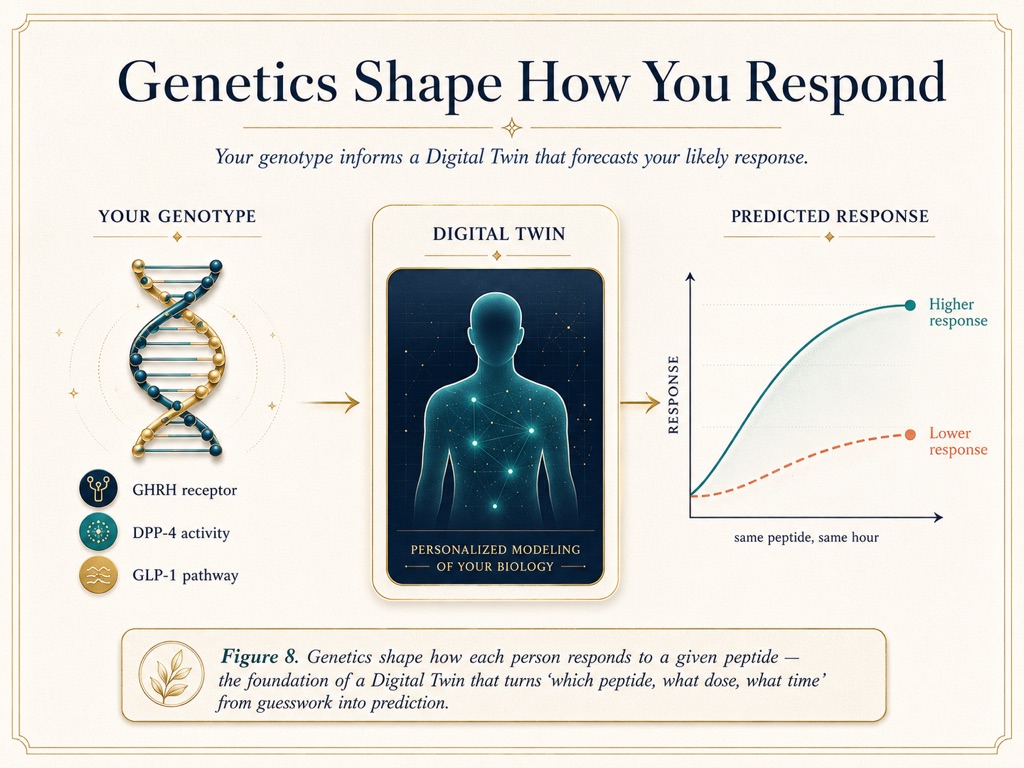
Even a perfectly timed protocol meets a stubborn fact: people don't respond identically. Pharmacogenomics is well established for many drugs, and the logic extends to the peptide axis — variation in GHRH receptor signaling, in DPP-4 activity (the enzyme that degrades many peptides and incretins), and in pathways downstream of GLP-1 helps explain why two people on the same molecule at the same hour can get different results. Genomics-focused diagnostics (such as The Genomics Company) aim to map these differences so "which peptide, what dose, what time" becomes a data question rather than a guess. This is the intellectual foundation of a Digital Twin for Predictive Peptide Performance™: genotype sets the response curve, timing sets the phase, and physiology reports the outcome — an optimization problem, which is where AI earns its keep.
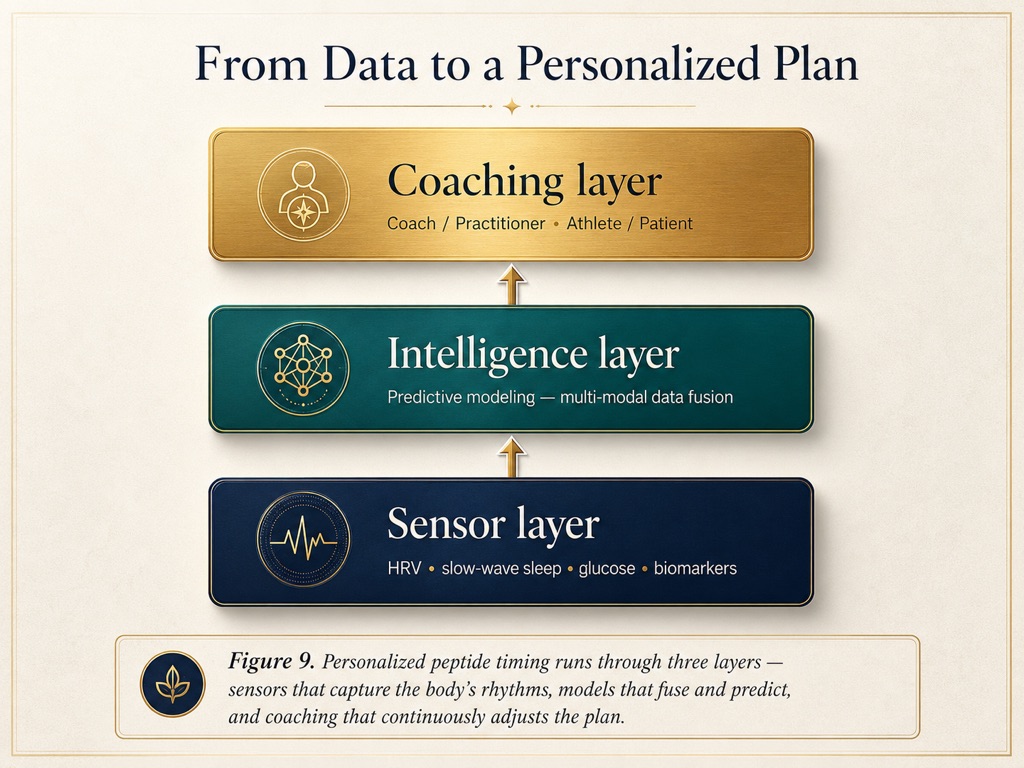
From rules of thumb to a personalized plan: the data layers
The sensor layer. Wearables and lab panels turn the body's rhythms into signals — slow-wave sleep duration, heart rate variability, glucose response, and periodic biomarker testing. A generation of diagnostics platforms — Function Health, Superpower, Lifeforce, Extension Health, Protocole — is racing to own this layer, competing on biomarker breadth, retest cadence, and how legibly they turn a blood panel into a decision. (The tesamorelin trial data cited above is exactly the kind of evidence these platforms surface to members.)
The intelligence layer. Multi-modal health data becomes useful only when disparate sensors are fused and interpreted. Predictive modeling correlates an individual's sleep architecture, recovery markers, and genotype against outcomes to forecast how a protocol — dosed at a given hour — is likely to perform for this person, updating as data arrives. It is the difference between a population average and a personal forecast.
The coaching layer. AI-powered coaching improvements let a Coach / Practitioner adjust an Athlete / Patient's plan continuously rather than quarterly — nudging timing, flagging when a late-night carbohydrate load is quietly suppressing the GH pulse a bedtime protocol was meant to catch, or noticing that recovery markers argue for backing off. It is also how a Corporate Wellness Program or a Longevity Club scales expert-level personalization: encode the science once, personalize it continuously. None of this replaces a physician — it makes the physician's judgment sharper and the patient's biology legible enough to act on.
The practitioner's edge: where science becomes results
Here is what the molecule-obsessed version of this conversation misses: data doesn't change anyone's life — a skilled practitioner does. The weight-loss coach who spots that a client's late dinners are flattening their overnight recovery; the performance coach syncing a training block to an athlete's actual sleep architecture; the dietitian who understands why a fasted morning changes how a metabolic peptide lands; the executive coach who turns a dense lab panel into three habits a busy founder will actually keep — these are the people who convert precision science into visible outcomes. Peptides, wearables, and genomics are simply better instruments; the interpretation is a craft. For coaches, nutritionists, and the counselors and educators shaping the health-and-beauty economy, fluency in this science is quickly becoming the differentiator — what separates durable, evidence-based guidance from the next viral protocol.
What the disciplined get right
Strip away the noise, and the through-line is simple. The timing science is real and, in its foundations, textbook-solid — growth hormone rides deep sleep, metabolic signals ride the waking metabolism, repair follows demand, and the honest evidence gradient runs from approved drugs with trial data, to genuinely promising experimental peptides, to a few compounds that warrant real caution. Molecule-specific pharmacology can bend the rules (tesamorelin is the clean example), which is exactly why guessing loses and personalization wins.
Which brings us back to Las Vegas. The headline-grabbing move is to take more; the durable one is to take the right thing, at the right hour, matched to your own biology — with someone skilled reading the data as it comes in. The peptides are the easy part. The plan is the hard part, and the valuable one. As with most things that compound, the best time to start building that foundation was a while ago; the second-best is before you need it.
Join the Affiliate Program (pays 20%), or subscribe to the Longevity & Peptide Optimization Newsletter.
About the Author
Tony Medrano is CEO and co-founder of LongevityPlan.AI, a platform that integrates performance and health data and leverages proprietary Digital Twin for Predictive Peptide Performance™ technology, wearable data, and biomarker data to deliver personalized optimization and longevity recommendations. A 3x technology/AI company CEO with 2 successful exits, Tony has completed 3 Full Ironman Triathlons (140.6 mi) since 2019. He holds degrees from Harvard University, Columbia University, and a JD/MBA from Stanford University, and has worked with the US Olympic Team, the NBA, NFL, MLB, NASA, Google, Microsoft, and Netflix, among others. He also served as a US Navy Officer commanding an emergency response team aboard a destroyer.
Disclaimer: This article is for education and is not medical advice. Many compounds discussed are not approved by the FDA for human use and, in several cases, carry documented safety or anti-doping consequences. Decisions about any peptide or medication should be made with a licensed physician who knows your history.
Endnotes
- Circadian system, sleep and endocrinology — suprachiasmatic control of hormonal rhythms (review). ScienceDirect.
- Tatem A. "Peptides have gone mainstream… what the science actually shows — and what it doesn't." Public statement, 2026; credentials via dralextatem.com and X.
- Pulsatile GH secretion and slow-wave sleep (review). PMC. pmc.ncbi.nlm.nih.gov/articles/PMC7262958.
- Van Cauter E, Plat L. Physiology of growth hormone secretion during sleep. J Pediatr. 1996. ScienceDirect.
- Van Cauter E, et al. Metabolic consequences of sleep and sleep loss (SWS: GH released, cortisol inhibited). Sleep Med. 2008. PubMed.
- Morning vs. evening GH injections and sleep-wake patterns. Frontiers in Endocrinology, 2025. frontiersin.org.
- Van Cauter E — sleep debt changes "mimic many of the hallmarks of aging." University of Chicago Medicine, 1999. uchicagomedicine.org.
- Van Cauter E, et al. Deepening slow-wave sleep doubles the first GH pulse. J Clin Invest. 1997. PMC.
- EGRIFTA (tesamorelin) — FDA prescribing information. accessdata.fda.gov.
- Falutz J, et al. Tesamorelin pooled Phase III analysis (n=806; ~15.4% VAT reduction). PMC.
- Tesamorelin clinical overview (VAT reduction vs placebo, p<0.001). Superpower. superpower.com/guides/tesamorelin.
- Lee C, Cohen P, et al. MOTS-c mitochondrial-derived peptide; aged-mouse running capacity; "rejuvenate an older mouse." USC Leonard Davis / Cell Metab. 2015. gero.usc.edu.
- Kim KH, et al. MOTS-c enhances insulin sensitivity (~30% clamp improvement). Physiological Reports, 2019. PMC.
- D'Souza RF, et al. Circulating MOTS-c declines with age, 2020. Primary-source links via motscresearch.com.
- MOTS-c — human evidence early and context-dependent; not FDA-approved. Review summary. meto.co.
- Multifunctionality and possible medical application of BPC-157 (preclinical dominance; not FDA-approved). PMC.
- BPC-157: Experimental Peptide Creates Risk for Athletes — WADA S0; no established safe dose. USADA. usada.org.
- Archibald R — BPC-157/KPV "naturally made in your gastric secretions"; route flexibility. Interview, 2023; bio via East West Health. Quote: groco.com.
- Understanding the legal risks of BPC-157 and other unapproved peptides — FDA Category 2; DOJ enforcement. Holt Law. djholtlaw.com.
- Bulk Drug Substances Used in Compounding Under Section 503A. FDA. fda.gov.
- FDA mulls compounding for peptides previously flagged — 2026 expert meeting (BPC-157, KPV, MOTS-c first batch). BioSpace, 2026. biospace.com.
- Enhanced Games (Las Vegas, May 2026) — Gkolomeev's unofficial 50m freestyle mark, $1M bonus, banned suit, and undisclosed substances; Björnsson's 475 kg deadlift. Yahoo Sports; Wikipedia.