Precision Medicine
·18 min read
How Your DNA Determines Which Peptides Will Be Effective on You and Why
The same molecule can transform one person and do almost nothing for another. What decides the difference is written in your genes, and it is the foundation of predictive peptide performance.
By Tony Medrano & Jennifer Little-Fleck, The Genomics Company
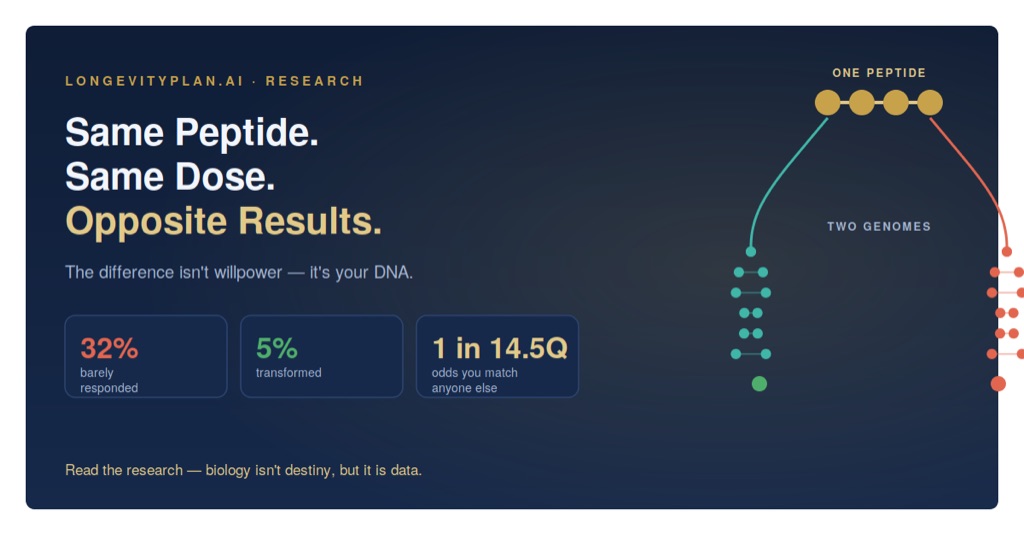
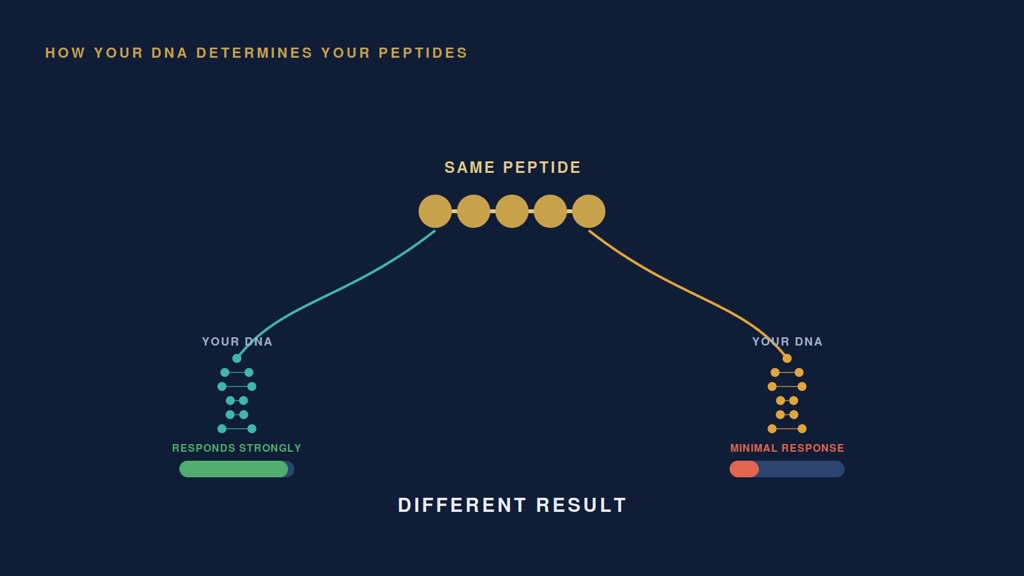
One molecule, two genomes, two outcomes: why the peptide that transforms your friend may barely move you — and why the difference is written in your DNA.
The number that ends the "average" era
Start with a statistic that should reorganize how you think about every supplement, drug, and peptide you will ever take. Across a panel of just 50 functional regions of your DNA, the odds that you share the same code as an unrelated person are about 1 in 14.5 quintillion — roughly 6.9 × 10⁻²⁰.2 Even among close family, the number stays astronomically small. In the most literal biochemical sense, you are a sample size of one.
Now watch what that does to a famous drug. In the pivotal trials of semaglutide — the GLP-1 peptide sold as Wegovy and Ozempic — the average patient lost about 10.2% of their body weight. But averages conceal the only thing that matters to an individual: roughly **4.9% of people lost more than a quarter of their weight, while 32.2% lost less than 5%, or gained.**1 Same peptide, same dose, opposite outcomes. The interesting question was never "does it work?" It is "does it work for you?" — and, increasingly, the answer is inherited.
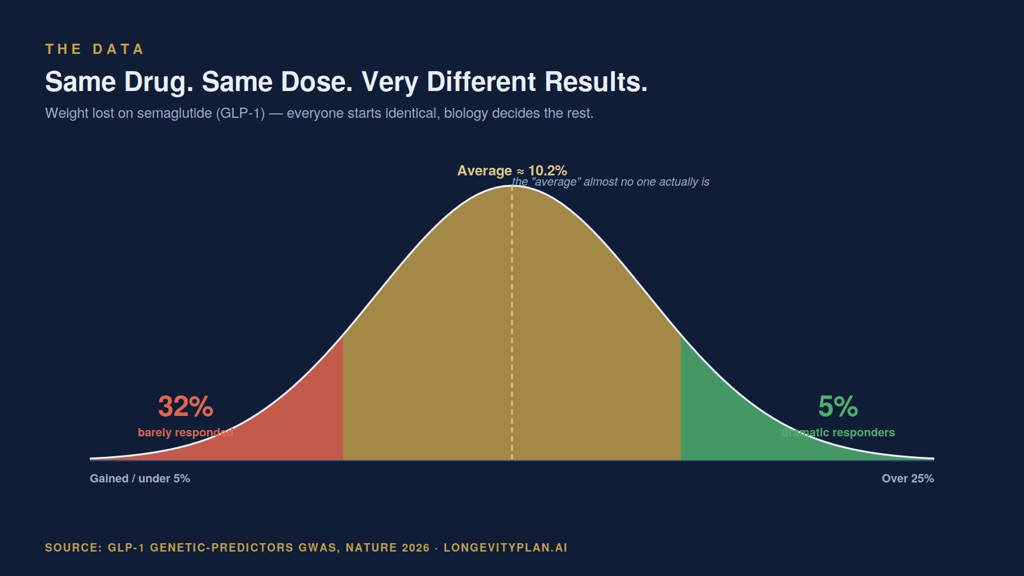
The headline "10.2% average" hides the real story: on the identical drug and dose, roughly a third of people barely move while a lucky few transform. The tails — not the average — are where you actually live.
What follows is a practical field guide to that question, built on a simple, two-way truth. Your genes change how peptides act on you — and, more surprisingly, a few peptides change how your genes act. Read both, and the crowd of non-responders you were statistically lumped into stops being your fate.
The one input that never expires
Everything else in a longevity protocol has a shelf life. Your labs are stale in 90 days. Your wearable data is yesterday's. Your peptide stack will rotate two or three times this year as your baselines shift. As Jennifer Little-Fleck, founder of The Genomics Company, frames it, your DNA is the exception: **sequenced once, interpreted across a lifetime.**21 It was finished before you were born, and it never changes.
That single property — permanence — is why the genome is the rational first purchase in a longevity plan, not the afterthought. It is the only input with a per-use cost that approaches zero, because you buy it once and read it forever. Everything above it becomes more accurate the moment it is grounded in genomics.
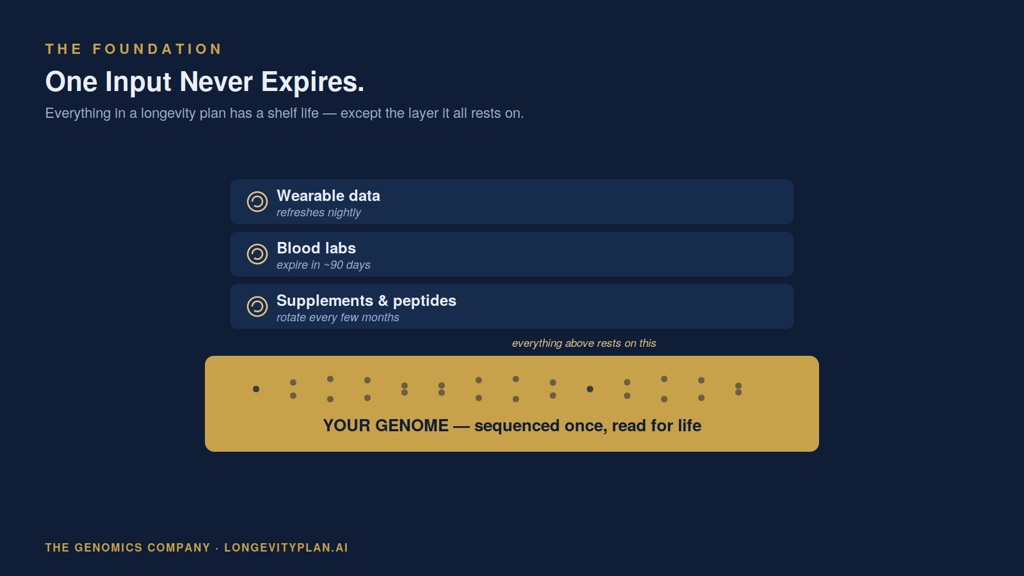
Every other input in a longevity plan expires — labs in 90 days, wearables overnight, peptides on rotation. Your genome is the one layer you read once and use for life, which is exactly why it belongs at the foundation.
Genome, genomics, SNP — and why the distinction is the whole game
Three words get used interchangeably; they describe different layers, and only one is where a protocol acts.
- Genome — all of your DNA, about 3 billion base pairs. Any two people are ~99% identical.2
- Genomics — the science of how variation in that DNA changes biology. Crucially, it reads genes as a system rather than one at a time.
- SNPs — single-letter differences at specific spots. The 1% that varies, and the unit a peptide protocol actually targets.
The system's point matters more than it sounds. A single flagship gene sets a tone, but biology runs on gene stacks. Judging a peptide by one SNP is like judging a company by one employee's performance review; what makes or breaks the decision is how the whole department performs. Serious genomic interpretation looks at the stack.
And it never claims determinism. Two anchors hold the entire field in place: **genes set probabilities, not destinies — and outcomes live in genotype × environment.**21 Your DNA points; your choices steer.
The four conversations that run the longevity stack
Reduced to its useful core, almost every peptide decision sits inside one of four genomic conversations. One saliva panel, four overlapping protocols.
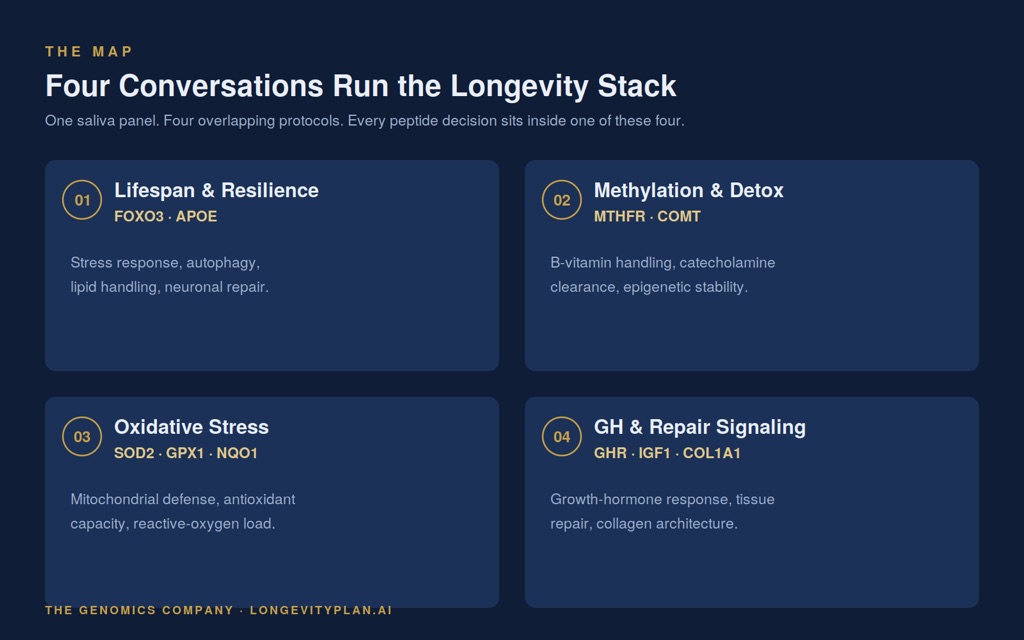
The four gene-system "conversations" that frame every peptide protocol.
- Lifespan & Resilience — FOXO3, APOE. Stress response, autophagy, lipid handling, neuronal repair.
- Methylation & Detox — MTHFR, COMT. B-vitamin handling, catecholamine clearance, epigenetic stability.
- Oxidative Stress — SOD2, GPX1, NQO1. Mitochondrial defense, antioxidant capacity, and reactive oxygen load.
- GH & Repair Signaling — GHR, IGF1, COL1A1. Growth-hormone response, tissue repair, collagen architecture.
The clearest way to see how these change a peptide answer is to watch three real-world profiles walk through the same workshop with very different genomes.
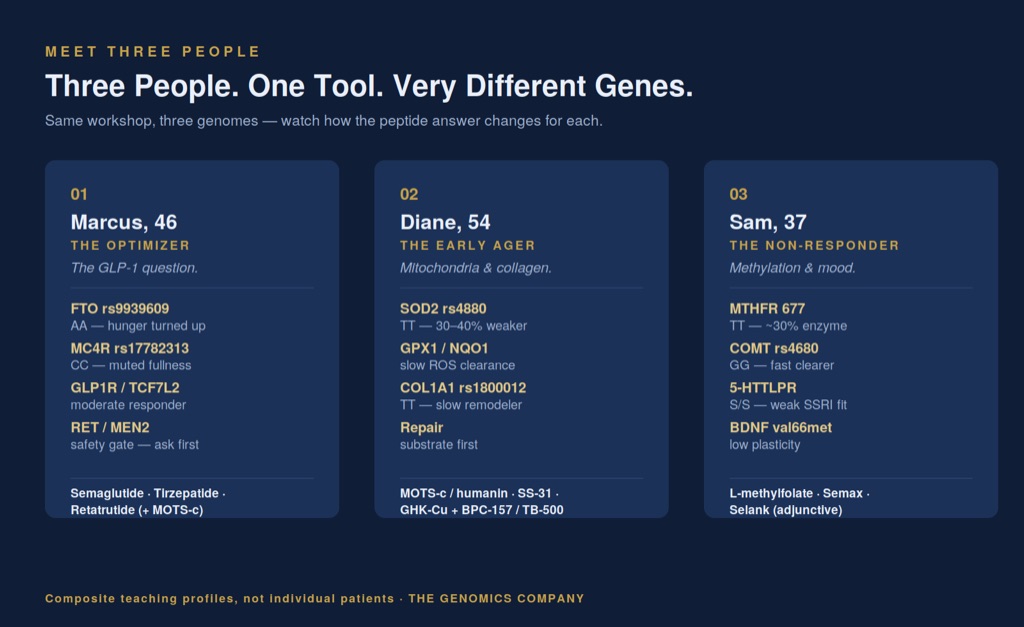
Same tool, three genomes, three different peptide answers. (Composite teaching profiles.)
Marcus, 46 — the GLP-1 question
Marcus carries 30 pounds he cannot shift and is watching friends melt away on semaglutide. He is not chasing a number; he has read the longevity literature and wants durable metabolic health. His appetite is not a character flaw — it is largely hard-wired, and the same variants that make weight gain easy also predict how well a GLP-1 will answer.
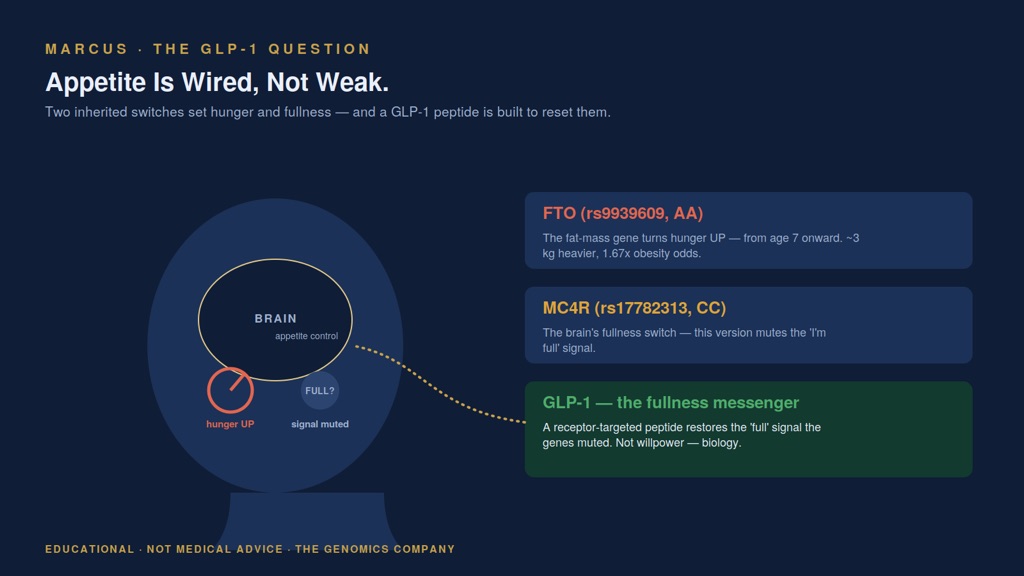
Two inherited switches set Marcus's appetite: FTO cranks hunger up, MC4R quiets the "I'm full" signal. This is the biology a receptor-targeted GLP-1 peptide is built to correct, and the reason willpower alone keeps losing.
- FTO (the fat mass and obesity gene), rs9939609 AA. Not a marginal effect: in the original genome-wide study across 38,759 people, the ~16% of adults homozygous for the A allele weighed about 3 kg more and had 1.67-fold higher odds of obesity than non-carriers — evident from age 7 onward and specifically attributable to increased fat mass, not slower metabolism.3 Mechanistically, AA carriers show reduced satiety and higher energy intake; the gene turns hunger up rather than turning burn down. Willpower is being asked to override a hardware setting.
- MC4R (the brain's melanocortin fullness switch), rs17782313 CC. Meta-analysis confirms each C allele near MC4R raises obesity risk, and the mechanism complements FTO: where FTO amplifies hunger, this variant **mutes the "I'm full" signal.**4 An FTO-plus-MC4R stack is the textbook profile for which a receptor-targeted incretin peptide — not another diet — is the rational tool.
- GLP1R · TCF7L2 · GCGR — the incretin-response genes that determine how strongly Marcus will respond to the drug. He is GLP1R AG/TCF7L2 CT: a moderate responder, since variation in TCF7L2 and GLP1R modulates the magnitude of the GLP-1 Receptor Agonist response.5 GCGR is the glucagon arm that the triple agonist retatrutide recruits on top of GLP-1 and GIP.
If that sounds abstract, it has a very public face. When Oprah Winfrey went on a GLP-1 in 2023, tried to stop, and quietly regained about 20 pounds despite the same diet and exercise, she landed on the exact conclusion the genetics predict: **"Obesity is a disease. It's not about willpower — it's about the brain."**32 Her insight — that naturally lean people simply aren't thinking about food, eating when hungry and stopping when full — is a plain-language description of a well-tuned MC4R fullness switch. (Fittingly, the endocrinologist she invited to explain it on her podcast was Ania Jastreboff, the same researcher who led the retatrutide trials below.) Marcus's biology is Oprah's biology; the only question is which molecule fits it best.
Semaglutide — a single-mechanism GLP-1 — is a solid first step (paired with MOTS-c to achieve the longevity goal). Tirzepatide — the approved dual GIP/GLP-1 — is the strongest option available today and well-suited to MC4R-driven appetite. And retatrutide, the triple agonist that adds Marcus's GCGR arm to GLP-1 and GIP, sits at the frontier. Its phase 2 trial (338 adults, NEJM 2023) was cleanly dose-dependent at 48 weeks — roughly −8.7%, −17.1%, −22.8%, and −24.2% across the 1, 4, 8, and 12 mg doses versus −2.1% on placebo — and 26% of the top-dose group lost more than 30% of their body weight.6 Principal investigator Ania Jastreboff (Yale) called the effect **"substantial and clinically meaningful."**6 Phase 3 (TRIUMPH) has since reported roughly −28.7% at 68 weeks — the largest yet for an anti-obesity agent — though retatrutide remains investigational and not yet FDA-approved.7 The lesson for Marcus is not "take the strongest one"; it is that each added receptor arm buys more effect, and his genotype (GCGR-relevant, MC4R-driven) is exactly the profile that stands to gain from recruiting all three.
The one question first. This entire drug class carries a boxed warning for medullary thyroid cancer and MEN2. If Marcus or a close family member carries a RET mutation or a history of that cancer, every one of these is off the table — no exceptions. A single RET test gives a clean yes-or-no answer.9 This is the difference between optimization and negligence, and it is a genomics question.
Here, the newest science sharpens the plan further. The April 2026 genome-wide study of 27,885 GLP-1 users — from the research arm of 23andMe, published in Nature — linked a GLP-1R variant to greater weight loss (an extra ~0.76 kg per copy) and, tellingly, tied a GIPR variant to nausea only in tirzepatide users, whose drug targets that receptor.7 Lead geneticist Adam Auton said the result **"made very clear biological sense."**8 Your genome can now hint not only whether a peptide will work, but which of two similar peptides you will actually tolerate.
Diane, 54 — mitochondria and collagen
Diane feels closer to 70. She bruises easily, waits three months for a pulled muscle to heal, and lost her skin's bounce a decade early. She sequenced her genome and, for once, the way she feels has an explanation — the report lit up in two systems.
Think of a mitochondrion as a fireplace: it burns fuel to produce energy and emits "smoke"—reactive oxygen species—that must be vented before it damages the cell. Diane's venting is under-resourced from birth.
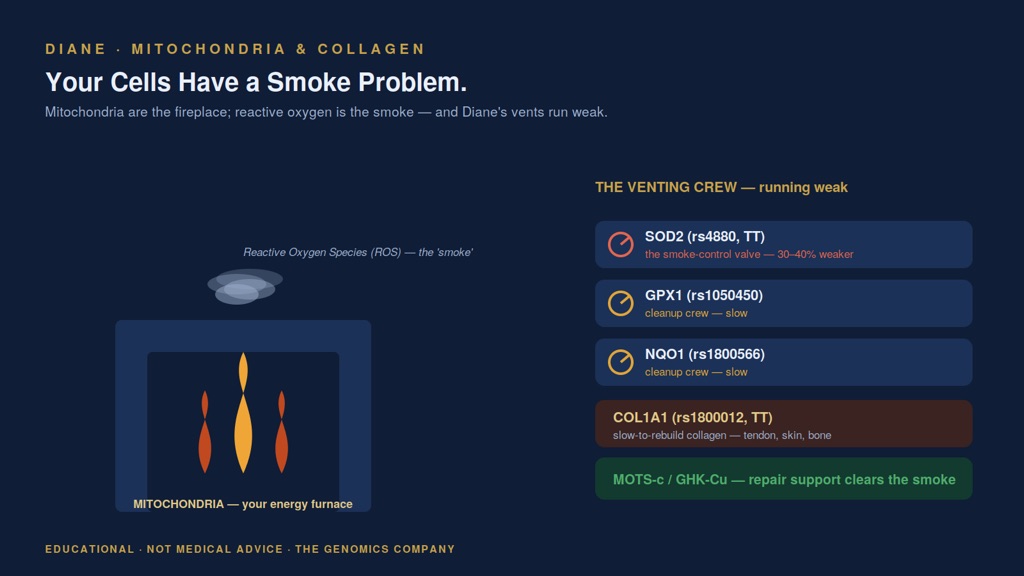
If mitochondria are the fireplace, "smoke" is the reactive oxygen they give off — and Diane inherited a weak SOD2 vent plus slow GPX1/NQO1 cleanup. That is why mitochondrial and repair peptides move from optional to first-line for her genotype.
- SOD2 (the smoke-control gene), rs4880 TT — runs the mitochondria's main antioxidant roughly 30–40% weaker, so she generates more cellular smoke.10
- GPX1 / NQO1 (the cleanup crew), GPX1 rs1050450 TT and NQO1 rs1800566 CT — slower at converting that smoke to water and clearing it.11,12
- COL1A1 (the collagen gene), rs1800012 TT at the Sp1 site — builds slower-remodeling collagen: the genetic slow-healer for tendon, skin, and bone.13
More damage made, slower to clear, slower to rebuild. For this profile, mitochondrial and repair peptides move from "nice to have" to first-line: MOTS-c and humanin (mitochondrial-derived peptides) given the high-ROS SOD2 picture;14 SS-31 / elamipretide, which stabilizes the inner mitochondrial membrane and won FDA accelerated approval for Barth syndrome in 2025 — though its broader pivotal trial missed primary endpoints, a caveat worth stating plainly;15 and GHK-Cu with BPC-157 / TB-500 for the COL1A1 slow-healer, on longer cycles.
Two disciplines keep this honest. Substrate first: pair repair peptides with collagen, vitamin C, and glycine, or they have little to build with. And the IGF-1 lever: GH-axis peptides aid repair but raise IGF-1, so they are skipped in anyone with a history of hormone-sensitive cancer. Relief, patients often say, comes less from the protocol than from finally understanding the why, and a genome tells you which supplements to add and, just as usefully, which quietly make things worse.
Sam, 37 — when the problem was never the effort
Sam has cycled through three SSRIs, each a two-month experiment that ended flat, and earned the label "treatment-resistant." The genome tells a different story: the medications were fighting Sam's biochemistry instead of working with it. Roughly half of antidepressant response is genetic, and Sam's panel hits three of the best-studied variants.18
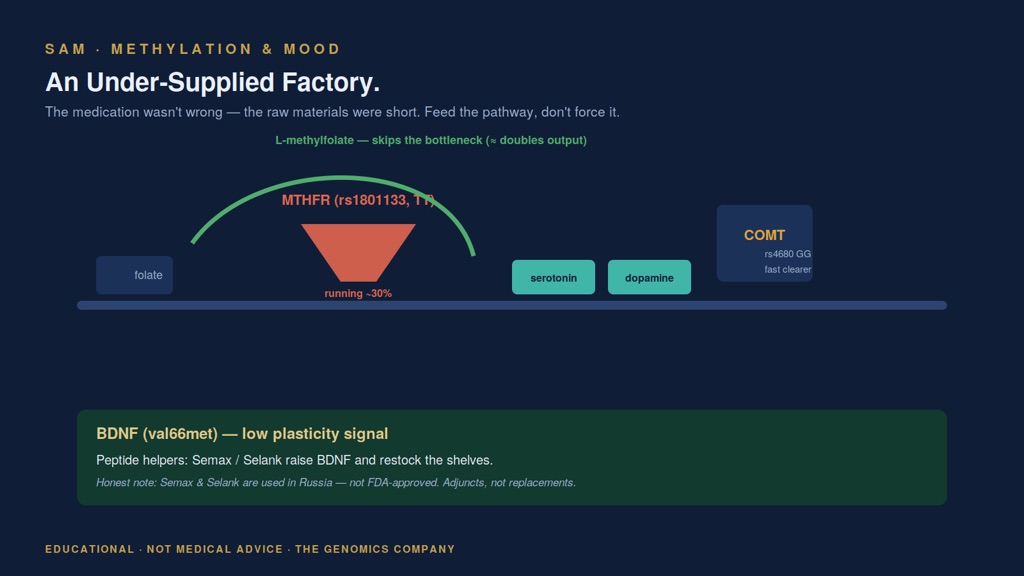
Sam's low mood wasn't a willpower problem — it was an under-supplied factory. An MTHFR bottleneck starves neurotransmitter production; L-methylfolate bypasses it, while BDNF-raising peptides restock the shelves. Match the tool to the genotype, and the line runs again.
- MTHFR (folate processing), rs1801133 (677) TT — runs the folate enzyme near 30%, starving neurotransmitter synthesis. L-methylfolate skips the bottleneck and roughly doubles response in carriers.20
- COMT (dopamine clearance), rs4680 GG — the fast-clearing version, linked in some studies to weaker antidepressant response, and a determinant of which supports he tolerates. 21
- 5-HTTLPR / BDNF — the short (S/S) serotonin-transporter variant (weaker SSRI response, though the evidence is contested) and BDNF val66met (rs6265 AG), signaling lower baseline plasticity. Both argue for raising BDNF directly.22,23
The factory was under-supplied. Peptides that fit feed the pathways rather than forcing them: L-methylfolate (the best-evidenced adjunct here), plus Semax and Selank — ACTH- and anxiolytic-derived peptides that raise BDNF and steady dopamine, serotonin, and GABA tone. The honest caveat: Semax and Selank are approved in Russia but not by the FDA; treat them as adjuncts, not replacements, and keep a clinician in the loop.24 Peptides are not even Sam's only lever — bupropion (which bypasses the serotonin transporter his 5-HTTLPR variant handicaps), saffron (surprisingly solid RCT data), and SAMe all fit the same genotype-matched logic.25,26,27
Why this is a gift to coaches, not a threat
Three genomes, three completely different answers — and none of them reachable by generic advice. That is precisely why genomics is the sharpest tool a weight-loss coach, performance coach, dietitian, executive coach, or nutritionist can hold. It does not replace their judgment; it arms it. A peptide is never simply "good" or "bad" — each carries several separable benefits, and the genome decides which one lands. The useful question is not "is MOTS-c good?" but "which of MOTS-c's effects will this client's biology actually feel?"
Consider a real case: a poor SOD2 genotype typically predicts a slow recovery after hard training — the body clears exercise-induced reactive oxygen slowly, so the athlete drifts toward weights over cardio and plateaus at volume. A coach reading that variant can match a mitochondrial peptide to it and watch the recovery ceiling lift, back-to-back hard sessions suddenly repeating where they used to wreck the week, while the same molecule would do little for a client whose SOD2 already runs clean. The counselor who can explain why a protocol will work for one client and not another stops guessing and starts prescribing with a rationale. In a field crowded with interchangeable advice, that is the difference between a vendor and an expert.
Be straight about the evidence
Enthusiasm and honesty are not opposites here — the most credible way to champion peptides is to be precise about where each one sits on the evidence curve. That curve is uneven, and reading it correctly is exactly what lets a professional confidently promise where the data is strong and intelligently experiment where it is still emerging.
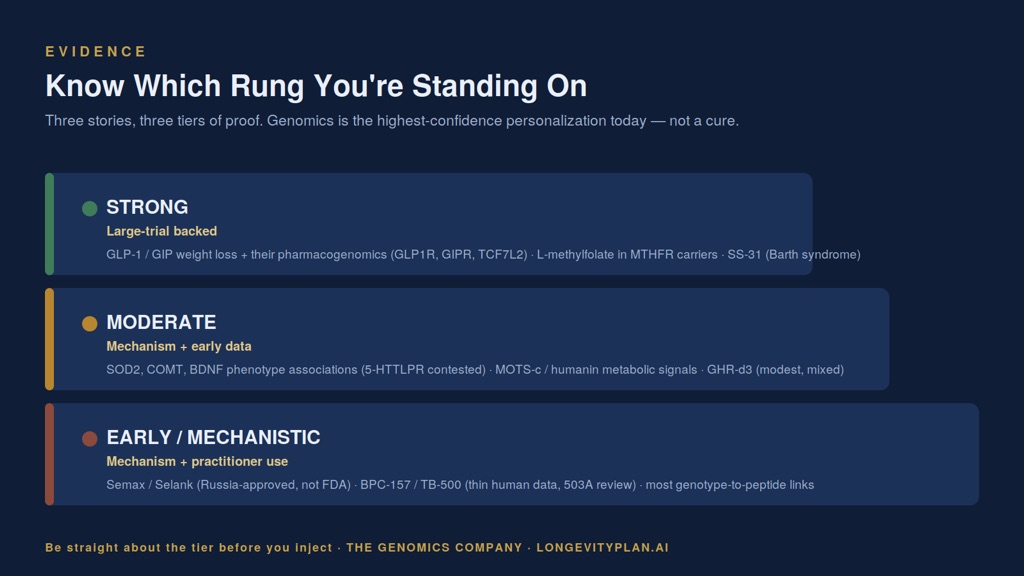
Three peptide stories, three tiers of proof. Know which rung you are standing on before you inject.
Strong. The GLP-1/GIP weight-loss peptides and their pharmacogenomics (GLP1R, GIPR, TCF7L2); L-methylfolate as an antidepressant adjunct in MTHFR carriers; SS-31's accelerated approval for Barth syndrome. This tier is bedrock.
Moderate. SOD2, COMT, and BDNF associations with their phenotypes (the 5-HTTLPR link is contested); MOTS-c and humanin metabolic signals; the growth hormone receptor d3 variant's effect on GH response — real, but modest and inconsistently replicated across studies.16
Early/mechanistic — the exciting frontier. This is where the internet's favorite repair peptides live, and the promise is real, even if the human trials are young. BPC-157, a stable fragment of a protein found in human gastric juice, produces striking results in animal models — accelerated healing of tendon, ligament, muscle, and gut, with a remarkably clean safety signal across studies.17 MOTS-c behaves like an exercise mimetic in mice, improving running capacity and metabolic flexibility. GHK-Cu drives wound closure, hair follicle activation, and skin regeneration in both animal and human studies. Semax and Selank, ACTH- and tuftsin-derived, have decades of clinical use in Russia for mood and cognition. The honest framing is not "these don't work" — it is that they are endogenous or near-endogenous molecules with strong mechanisms and encouraging early data, most not yet FDA-approved and awaiting the large human trials that would move them up the curve. BPC-157, for instance, is under active FDA 503A compounding review as of mid-2026.17 For a client and a coach willing to treat them as monitored experiments, this is the frontier worth watching — and the genotype tells you who is most likely to benefit first.
And the most remarkable peptide story of all runs the other direction — not DNA shaping the peptide, but the peptide reshaping DNA's output. GHK-Cu, a copper tripeptide your body releases from collagen after injury, falls from about 200 ng/mL at age 20 to 80 ng/mL by age 60. Running through the Broad Institute's Connectivity Map shifts the expression of roughly 31–32% of assessed human genes — over 4,000 — up or down by more than half, turning up repair and antioxidant programs and turning down inflammatory ones. Loren Pickart aptly named the finding **"resetting the human genome to health."**16 Your genome decides how peptides reach you; a peptide like GHK-Cu reaches back into the genome. That two-way conversation is the whole game.
From map to route: the digital twin
A genome is a map; what turns a map into a route is a model. The most credible modeling paradigm in medicine is the digital twin — a continuously updated virtual replica run forward to predict behavior before you touch the real system. This is not speculative: Dassault Systèmes' Living Heart Project built the first virtual twin of a human heart in 2014 and, over a decade with the U.S. FDA, matured it into in silico clinical trials that test devices on simulated patients. Dassault's life sciences lead Claire Biot describes the aim as **"empowering precision medicine at scale,"**23 and HeartFlow's cardiac twin now runs in 725+ hospitals.24
Point that validated architecture at a regimen and you get a Digital Twin for Predictive Peptide Performance™ with three layers: a sensor layer (wearables, glucose, sleep, periodic labs) capturing what your body is doing; an intelligence layer fusing the fixed genomic blueprint with that stream into one multi-modal health data picture; and predictive modeling that simulates, before you commit, how a given peptide, dose, or stack is likely to land in your specific twin — flagging, via variants like the GIPR nausea signal, the interventions your biology is inclined to reject. Each cycle of prediction-then-measurement drives improvements in AI-powered coaching: the next recommendation is sharper than the last. (The same engine underlies the Cardiorespiratory Digital Twin™ used for endurance profiles.)
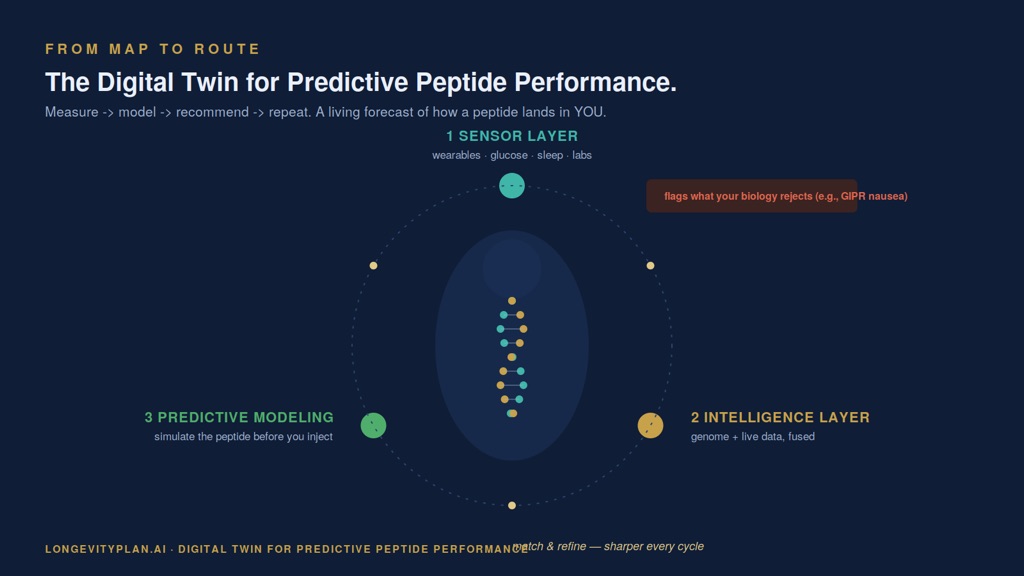
A digital twin turns a static genome into a living forecast: sensors capture what your body is doing, the model fuses that with your DNA, and it predicts how a peptide will land in you — before you ever inject — getting smarter with every cycle.
Where the industry fits — and the lane still open
The longevity market is crowded, and its platforms are not interchangeable. Sort them by the layer of the problem they solve.
Comprehensive biomarker platforms. Function Health tests 100+ (marketed up to ~160) biomarkers across ~two panels a year with clinician review, $365/year.26 Superpower — founded 2023, a $30M Series A in 2025 at a $300M+ valuation, backers ranging from Forerunner to NBA star Giannis Antetokounmpo — undercuts on price ($199) with an AI interpretation engine and concierge support; its chief longevity officer Anant Vinjamoori, frames the mission as changing **"how people live, not just how long."**27,28
Clinician-led platforms. Lifeforce, the diagnostics venture connected to Tony Robbins's Life Force, pairs a tighter panel with a concierge physician who writes and prescribes the plan, at a premium.29
Genomics-led practices. A smaller set — InsideTracker (with an MIT/Harvard research pedigree) and dedicated interpreters like The Genomics Company — layer DNA beneath the bloodwork.30 The Genomics Company's standard Precision Panel reads 447 SNPs — versus the ~80 SNPs of a typical predecessor panel or the ancestry-first, health-light output of a consumer kit — and adds a dedicated peptide genetic library that maps each peptide's specific benefits against your variant stack.21
Notice the whitespace. Nearly everyone tests their blood. A minority integrates the genome. Almost no one yet closes the specific loop this article is about: using your genotype to predict how a given peptide will perform in you, then modeling it forward. That intersection — genomics-grounded, digital-twin Peptide Therapy — is the open lane, and it is why the genetic assessment is the foundation, not a feature.
A practical playbook
Strip away the technology, and the sequence is simple. For the individual — the Athlete / Patient:
- Sequence once. Establish the unchanging genomic baseline before spending downstream. Cheapest decision per year of use, because you make it once.
- Set the biomarker floor. A comprehensive panel, repeated — not one-and-done — to see where you stand and how you move.
- Match molecule to biology, by evidence rung. Lead with strong-tier interventions where genotype favors them; treat early-tier peptides as monitored experiments with stop rules, sourced only through legitimate, tested supply.
- Track against yourself. Not against the friend who lost 30 pounds — against your own baseline weight, waist, fasting glucose, appetite, recovery. Change one variable at a time and let measured outcomes decide what stays.
For the Coach / Practitioner, the same logic scales and compresses the trial-and-error that burns an athlete's competitive window or an executive's patience. It scales again at the organizational level: a Corporate Wellness Program that starts from genomics rather than generic advice is, bluntly, succession planning for human capital — and a Peptide Longevity Plan™ or a members' Longevity Club is simply the disciplined version of a decision most high performers are already making badly, on guesswork. Longevity rewards those who plan early over those who react late.
The bottom line: biology isn't destiny, but it is data
Step back, and the trend is unmistakable: medicine's center of gravity is shifting from treatment to prevention, and the individual is finally the unit of analysis. As Eric Topol — among medicine's most-cited researchers — recently put it, we now have **"newfound capacity to prevent these major age-related diseases."**31 Genomics is what makes that capacity personal, and peptides are among the most versatile levers to pull once you know where a given person's biology bends.
So the honest promise is not that any one molecule is magic. It is that the era of prescribing to the average person is ending, and the professionals who internalize that first, who can look at a client's variants and say with a reason this peptide, this dose, not that one, will simply get better results than those still working from population averages and hope. Science has caught up to the intuition every good coach already had: people are different, and now we can prove exactly how. That is not a reason to guess more boldly. It is an invitation to plan.
Sign up for FREE daily Longevity Club Workshops, or join the Affiliate Program (pays 20%).
About the Author
Tony Medrano is CEO and co-founder of LongevityPlan.AI, a platform that integrates performance and health data and leverages proprietary Digital Twin for Predictive Peptide Performance™ technology, wearable data, and biomarker data to deliver personalized optimization and longevity recommendations. A 3x technology/AI company CEO with 2 successful exits, Tony has completed 3 Full Ironman Triathlons (140.6 mi) since 2019. He holds degrees from Harvard University, Columbia University, and a JD/MBA from Stanford University, and has worked with the US Olympic Team, the NBA, NFL, MLB, NASA, Google, Microsoft, and Netflix, among others. He also served as a US Navy Officer commanding an emergency response team aboard a destroyer.
Jennifer Little-Fleck is a molecular biologist and AANWP-certified functional genomics practitioner, and founder of The Genomics Company, a functional genomics consulting practice for business executives and high performers. She co-founded PrecisionXHealth to give practitioners a rigorous, defensible DNA test and the genomic infrastructure she wished had existed earlier in her own work.
Disclaimer: This article is for educational purposes and is not medical advice, diagnosis, or treatment. Genetic, peptide, and hormone decisions should be made with a qualified clinician who can interpret your individual results.
Endnotes
- Semaglutide efficacy heterogeneity (mean 10.2%; 4.9% >25%; 32.2% <5% or gain), reported in the GLP-1 genetic-predictors GWAS. Nature (2026). doi:10.1038/s41586-026-10330-z.
- Yousefi S, et al. A SNP panel for identification of DNA and RNA specimens (probability of identity 6.9×10⁻²⁰ across a 50-SNP panel). BMC Genomics. 2018;19(1):90.
- National Human Genome Research Institute, Human Genomic Variation (~99% identity; SNPs as most common variation). genome.gov, 2024.
- Frayling TM, et al. A common variant in FTO is associated with BMI and predisposes to obesity. Science. 2007;316:889–894.
- Yu K, et al. The rs17782313 polymorphism near MC4R confers high obesity risk: a meta-analysis. Front Endocrinol. 2023;14:1210455.
- Almeda-Valdes P, et al. Variants in TCF7L2, CTRB1/2 and GLP1R and response to GLP-1 receptor agonists. PubMed 38453649; 2024. See also Lancet Diabetes Endocrinol (2022) incretin-response literature.
- Jastreboff AM, Kaplan LM, Frías JP, et al. Triple–hormone-receptor agonist retatrutide for obesity — a phase 2 trial (n=338; −24.2% at 12 mg / 48 weeks; 26% lost ≥30%). N Engl J Med. 2023;389(6):514–526. doi:10.1056/NEJMoa2301972.
- Ania M. Jastreboff, MD, PhD (Yale School of Medicine), Eli Lilly statement and ADA 2023 presentation on the retatrutide phase 2 results.
- Eli Lilly and Company. Retatrutide delivered powerful weight loss in the pivotal phase 3 trial (TRIUMPH-1; ~−28.7% at 68 weeks) [news release]. 2026 May 21. Investigational; not yet FDA-filed.
- Genetic predictors of GLP-1 receptor agonist weight loss and side effects (23andMe Research; n=27,885; +0.76 kg/copy GLP1R; GIPR nausea restricted to tirzepatide). Nature (2026). doi:10.1038/s41586-026-10330-z.
- Adam Auton quoted in "How Well GLP-1 Weight Loss Drugs Work May Depend on Your Genetics." Scientific American, April 8, 2026.
- U.S. FDA. Wegovy (semaglutide) prescribing information — boxed warning (MTC / MEN2). 2023; class-wide RET/medullary thyroid carcinoma contraindication.
- Sutton A, et al. The Ala16Val (rs4880) dimorphism modulates import of MnSOD into mitochondria. Pharmacogenetics. 2003;13:145–157.
- Ravn-Haren G, et al. GPX1 Pro198Leu polymorphism and erythrocyte GPX activity. Carcinogenesis. 2006;27:820–825.
- Lajin B, Alachkar A. The NQO1 C609T (Pro187Ser) polymorphism: a meta-analysis. Br J Cancer. 2013;109:1325–1337.
- Mann V, et al. A COL1A1 Sp1 binding-site polymorphism (rs1800012) predisposes to osteoporotic fracture. J Clin Invest. 2001;107:899–907.
- Lee C, et al. The mitochondrial-derived peptide MOTS-c promotes metabolic homeostasis. Cell Metab. 2015;21(3):443–454.
- U.S. FDA. Accelerated approval, first treatment for Barth syndrome (elamipretide / Forzinity), 2025; note broader pivotal-trial endpoints were not met.
- Boguszewski CL, et al. Clinical and pharmacogenetic aspects of the GHR d3 polymorphism (modest, mixed replication). Eur J Endocrinol. 2017;177(6):R309–R321; meta-analysis PubMed 19584188.
- Pickart L, Vasquez-Soltero JM, Margolina A. GHK and DNA: Resetting the Human Genome to Health. BioMed Research International 2014;2014:151479. PMC4180391; Pickart & Margolina, Int J Mol Sci 2018;19(7):1987. GHK plasma decline: BioMed Res Int 2015. doi:10.1155/2015/648108.
- "Regeneration or Risk? A Narrative Review of BPC-157" (robust preclinical, minimal human data). PMC12446177 (2025). Human-trial status: Peptide Database (2026); Operation Supplement Safety (U.S. DoD). U.S. FDA Pharmacy Compounding Advisory Committee, July 23–24, 2026 (BPC-157 503A review, status pending).
- Tansey KE, et al. Contribution of common genetic variants to antidepressant response. Biol Psychiatry. 2013;73(7):679–682.
- Papakostas GI, et al. L-methylfolate as adjunctive therapy for SSRI-resistant major depression. Am J Psychiatry. 2012;169(12):1267–1274. MTHFR: Frosst P, et al. Nat Genet. 1995;10(1):111–113.
- Jennifer Little-Fleck / The Genomics Company — framework, Precision Panel (447 SNPs) and peptide genetic library; workshop and interview material, June 2026. thegenomicscompany.com.
- Lachman HM, et al. Human catechol-O-methyltransferase (COMT rs4680) pharmacogenetics. Pharmacogenetics. 1996;6(3):243–250.
- Porcelli S, Fabbri C, Serretti A. Meta-analysis of 5-HTTLPR and antidepressant efficacy (association contested). Eur Neuropsychopharmacol. 2012;22(4):239–258.
- Claire Biot (VP, Life Sciences & Healthcare, Dassault Systèmes), on the Living Heart Project & FDA ENRICHMENT in-silico trials. 3ds.com newsroom, Feb 26, 2025.
- Dolotov OV, et al. Semax (ACTH 4-10 analog) regulates BDNF in rat hippocampus. J Neurochem. 2006;97(Suppl 1):82–86. Semax/Selank Russian-approved, not FDA-approved. BDNF val66met: Egan MF, et al. Cell. 2003;112(2):257–269.
- HeartFlow cardiac digital twin deployed across 725+ hospitals. Patient Analog technology guide (2025–2026); Corral-Acero J, et al. "The 'Digital Twin' to enable the vision of precision cardiology." Eur Heart J. 2020;41:4556–4564.
- Trivedi MH, et al. Medication augmentation after SSRI failure (STAR*D, Level 2; bupropion). N Engl J Med. 2006;354(12):1243–1252.
- Function Health offering (100+/~160 biomarkers, ~2 panels/yr, ~$365). functionhealth.com; Fin vs Fin comparison (2026).
- Superpower funding & offering ($30M Series A, >$300M valuation, Antetokounmpo among backers; ~$199 entry). FierceHealthcare, April 2025; BloodTestComparison (2026).
- Anant Vinjamoori, MD (Chief Longevity Officer, Superpower), company statement, April 2025.
- Lifeforce (Tony Robbins-connected; concierge MD, ~40+ biomarkers, prescriptions). Outliyr biomarker-service review (2026).
- InsideTracker DNA integration and MIT/Harvard pedigree; genomics-led positioning. Fin vs Fin comparison (2026).
- Eric Topol, MD (Scripps Research), Offcall podcast interview, December 2025.
- Oprah Winfrey, on beginning a GLP-1 in 2023, ~20-lb regain after stopping, and framing obesity as biology rather than willpower; People (Dec 2023), CBS News, and The Oprah Podcast (with Ania Jastreboff, MD, Yale), 2025–2026.