Body Composition
·18 min read
The Body's Instrument Panel: How to Use a DEXA Scan to Engineer Longevity and Performance
A precision guide to turning four numbers on a body-composition report into a personalized plan — where muscle, visceral fat, and bone meet peptides, genomics, and AI.
By Tony Medrano & Dr. Tan Rao, PhD
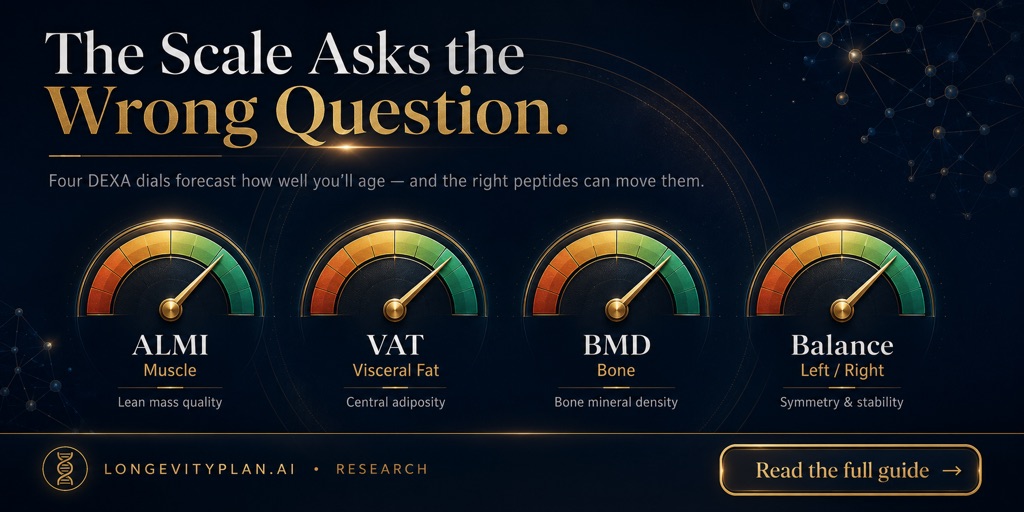
The Scale Asks the Wrong Question
A bathroom scale answers a question almost no one should be asking. It reports how hard gravity pulls on the sum of your bones, organs, blood, water, muscle, and fat — then collapses it all into a single, gloriously uninformative number. A 175-pound powerlifter and a 175-pound person with advancing muscle loss can weigh precisely the same and be aging in opposite directions. If you want to know which one you are becoming, you have to look inside the number.
That is what a DEXA scan does. Dual-energy X-ray absorptiometry passes two low-energy X-ray beams through the body; because bone, lean tissue, and fat each absorb those energies differently, the scan separates your mass into its components with a precision most consumer tools cannot approach.1 The output reads less like a weigh-in and more like the instrument panel of an aircraft: a set of dials that tell you not how heavy you are, but how you are built — and, increasingly, how long and how well the machine is likely to run.
The encouraging news for anyone over 40, for the executive whose training window is measured in minutes, and for the master's athlete refusing to age quietly, is that these dials are not fixed readouts. They are targets. And a growing body of clinical science — including several peptide medicines already approved by the U.S. Food and Drug Administration — can move them in the direction you want. What follows is a guide to reading the panel and then to flying the plane.
Four Dials, Four Forecasts
A whole-body DEXA report contains dozens of figures, but four carry most of the signal for longevity and performance. They are worth understanding not as vanity metrics but as forecasts.
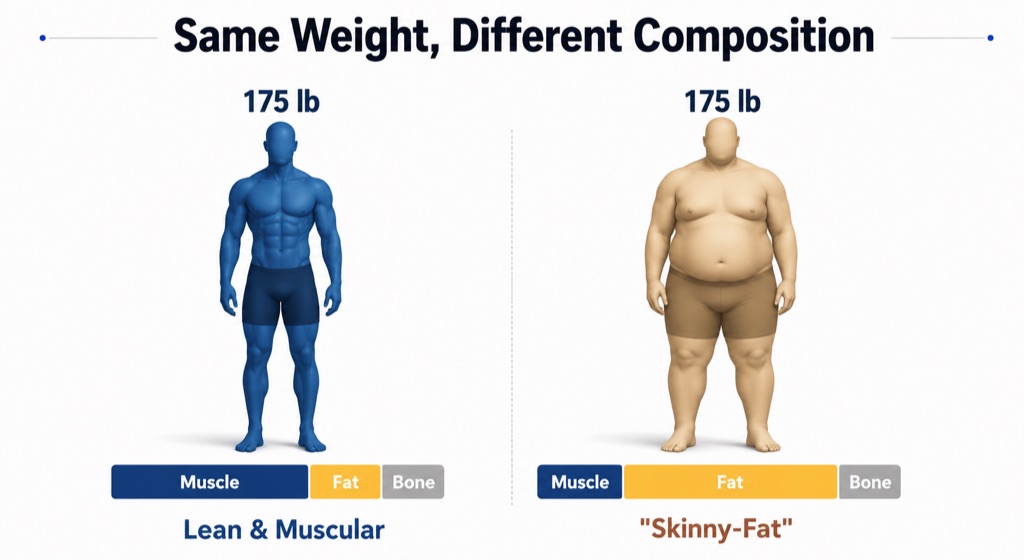
Same number on the scale, opposite trajectories. Weight hides what body composition reveals.
1. Appendicular Lean Mass Index (ALMI) — the muscle that predicts your lifespan
ALMI is the lean (essentially muscle) mass in your arms and legs, divided by height squared. Isolating the limbs is deliberate: it strips out the trunk's organs, leaving what the longevity physician Peter Attia calls a purer measurement of skeletal muscle.2 Attia's target is unambiguous — at or above the 75th percentile for age and sex, and higher with age.2,3 His reasoning is blunt: most people cannot say how much muscle they carry or where they rank, yet that ranking is, in his words, a "highly, highly predictive" metric of how long you will live.2 This is not motivational language dressed up as data. ALMI is the metric clinicians use to assess sarcopenia — the accelerating muscle loss that typically begins in the 40s and is now recognized as one of the strongest predictors of all-cause mortality.3 Lean muscle also operates as a "glucose sink" absorbing glucose and enabling increased insulin sensitivity. The percentile on the report is, in effect, a bet on your future self's ability to carry groceries up their own stairs.
2. Visceral Adipose Tissue (VAT) — the fat you cannot see and most need to know about
Not all fat is equal. Subcutaneous fat, the kind you can pinch, is metabolically quiet. Visceral fat — VAT — is packed deep in the abdomen around the liver, pancreas, and intestines, and it behaves like an endocrine organ gone rogue, driving inflammation, insulin resistance, and cardiovascular risk.4 One can look lean and still carry a dangerous visceral load; a scale, and often a mirror, will miss it. Modern DEXA software estimates VAT by measuring total abdominal fat and subtracting the subcutaneous layer, with commonly cited thresholds around 15.5 in² ("elevated") and 24.8 in² ("high").4,5 To be precise about the tool's limits: DEXA estimates VAT rather than imaging it slice by slice as a CT does, and a single small change can be noisy. But at the trend level, it tracks impressively well with the gold standards — correlating with CT at roughly R² 0.96 and, in the UK Biobank imaging cohort, with MRI at R² 0.94.5,6 For monitoring your own visceral fat over time, that is more than good enough — and vastly more actionable than a waistband.
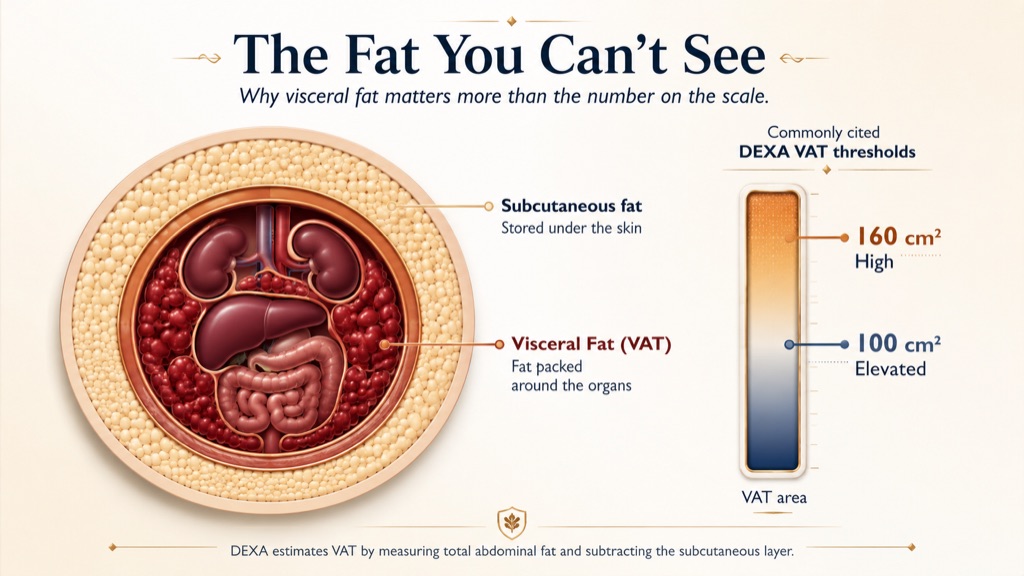
The fat you can pinch is mostly harmless. The fat wrapped around your organs is the one that drives risk — and DEXA estimates it.
3. Bone Mineral Density (BMD) — the frame you will still be standing on at 85
DEXA began its clinical life as the reference standard for bone density, and still reports the T-scores and Z-scores that define osteopenia and osteoporosis.1 The stakes are not abstract. A hip fracture in later life is not a bad week; for many older adults, it is the event from which independence, and sometimes life, never fully returns. Bone, like muscle, is a tissue you build in your stronger decades and draw down in your frailer ones. The T-score is a preview of how much reserve you will bring to your eighth and ninth decades.
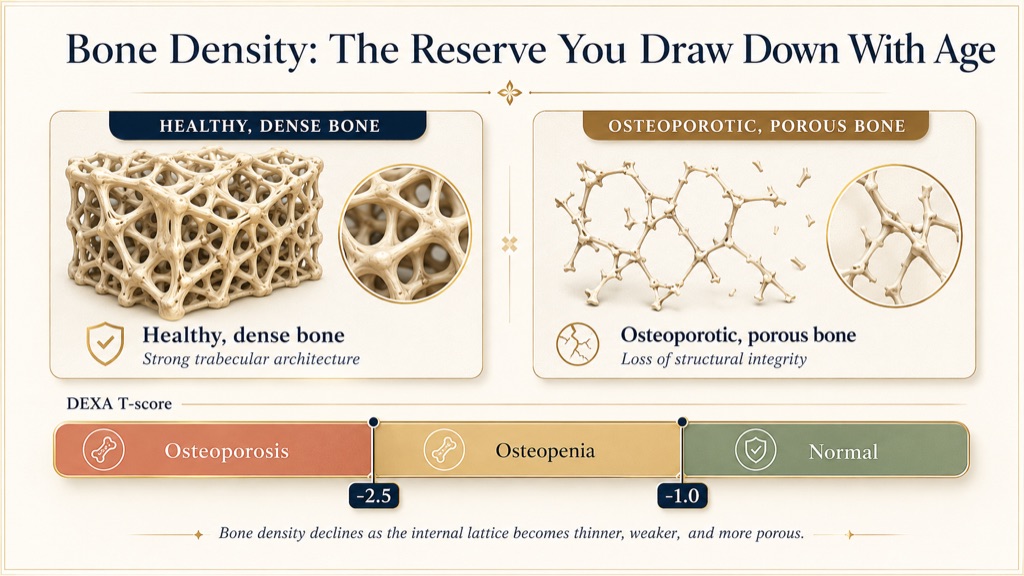
Bone is a reserve you build young and draw down old. The T-score previews how much you'll bring to your eighties.
4. Regional Body Fat % — the asymmetry that ends careers
Because DEXA maps lean mass limb by limb, it exposes left-to-right imbalances a barbell happily hides. A quadriceps 12% weaker than its partner is a torn hamstring or a stalled deadlift waiting for a date on the calendar. Elite sports-science departments have used regional composition to flag injury risk for years; the same readout is available to any executive who would rather not discover an imbalance the hard way on a ski slope.
Why not a smart scale? Bioelectrical impedance — the technology inside most consumer body-fat scales — can swing by 3–5% due to hydration alone, enough to erase or invent a month of progress. DEXA is generally accurate to within about 1–2%.3 When the whole point is to detect small, real changes and act on them, measurement noise is not a rounding error. It is the difference between a decision and a guess.
The Deeper Signal: Muscle Quality and the End of BMI
For a century, medicine estimated risk from body mass index, height, and weight, nothing more. The trouble is that BMI cannot tell muscle from fat, or fat you can see from fat that is killing you. The most detailed rebuttal to date arrived in the journal Radiology in 2026, when a team at the University Medical Center Freiburg used a deep-learning framework to analyze whole-body MRI from more than 66,000 people across the UK Biobank and the German National Cohort — the largest reference map of human fat and muscle distribution ever assembled.7,8 Muscle quality is paramount, but undeterminable by a standard DEXA scan.
Read against future health, the map was both sobering and clarifying. High visceral fat carried a 2.26-fold higher risk of future diabetes; high fat within the muscle a 1.54-fold higher risk of major cardiovascular events; and low skeletal muscle a 1.44-fold higher risk of death from any cause — each beyond what traditional risk factors predicted.7,8 The team's lead author, Matthias Jung, distilled the shift: it is not only how much muscle you have, but the quality of it.8 That distinction — the fat marbling silently through aging muscle, invisible to a scale — is exactly the layer BMI, impedance, and even a standard DEXA readout can miss. The lesson from a companion effort at the University of Wisconsin, where Perry Pickhardt's group ran AI over more than 9,000 routine abdominal CT scans, points the same way: automated body-composition measures predicted mortality far better than BMI, with muscle-density prediction reaching an area-under-the-curve of 0.72 against BMI's coin-flip 0.50.9
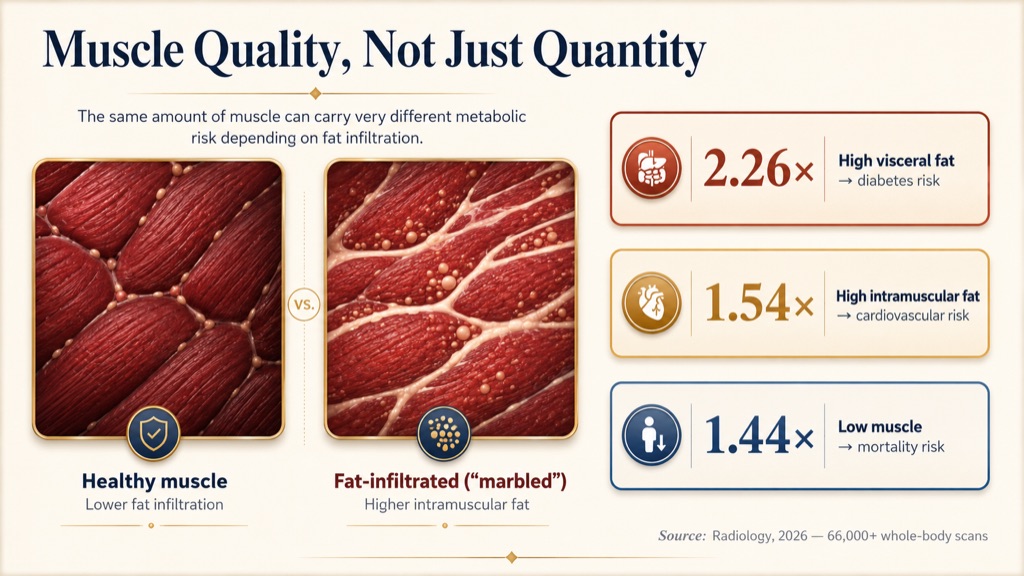
It's not just how much muscle you carry — it's the quality. Fat hiding inside muscle is a signal BMI can't see.
The message across both studies is galvanizing rather than grim. The body has been broadcasting a rich, quantitative signal about its own aging all along; we simply lacked the instrument to read it at scale. Now we have it — and the four dials on your DEXA report are the consumer-accessible version of that same signal.
From Measurement to Molecule: The Peptide Toolkit
Here, a body-composition report stops being a scorecard and becomes a plan. The most compelling evidence that these dials are addressable — not merely descriptive — comes from a class of medicine built from the same signaling molecules the body already makes: peptides. Peptides are short chains of amino acids, the words our biology uses to tell tissues what to do. Many of the most interesting ones are not foreign chemicals but human messengers we produce in abundance when young and progressively lose with age. Restoring or amplifying those signals is the logic of modern Peptide Therapy, and two of the four DEXA dials already have an FDA-approved peptide whose entire clinical case was proven on a body-composition scan.
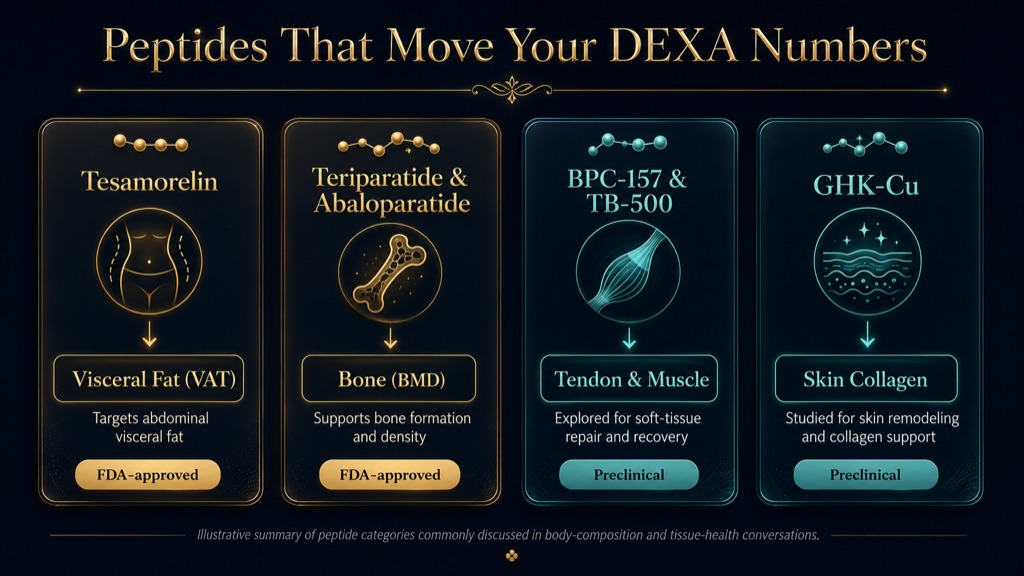
Two of your four dials already have an FDA-approved peptide — and a promising research frontier is building behind them.
The visceral-fat dial: tesamorelin
Tesamorelin is a growth-hormone-releasing-hormone analog — a peptide that nudges the pituitary to release the body's own growth hormone in its natural, pulsatile rhythm. In the pivotal trial published in the New England Journal of Medicine, 412 patients received tesamorelin or placebo for 26 weeks; the treated group reduced visceral fat by 15.2%, while the placebo group's VAT increased by 5.0%.10 The elegance is in the selectivity: the drug preferentially stripped visceral fat while largely sparing subcutaneous fat, and modestly increased lean mass at the same time.10,11 A meta-analysis of five randomized trials confirmed significant reductions in VAT and trunk fat, alongside a roughly 1.4 kg gain in lean mass.11
Tesamorelin's approved indication is narrow — visceral fat in HIV-associated lipodystrophy — and honesty requires saying its Phase 3 evidence lives there.10,11 But the mechanism illuminates something universal, and the contrast with today's blockbuster GLP-1 medicines (from Novo Nordisk and Eli Lilly) is instructive: GLP-1 drugs pull weight off in roughly proportional to where fat happens to sit, not specifically from the visceral depot. Tesamorelin targets exactly the compartment a DEXA scan flags as dangerous. That is why "how much did you lose" is the wrong question, and "what did you lose, and from where" is the right one.
The bone dial: teriparatide and abaloparatide
Osteoporosis medicine offers an even cleaner illustration, because its two premier bone-building agents are, quite literally, peptides. Teriparatide (a fragment of parathyroid hormone, sold by Eli Lilly as Forteo) and abaloparatide (a 34-amino-acid analog of parathyroid-hormone-related peptide) instruct the body to build bone rather than merely slow its loss.12,13 In the 2,463-woman ACTIVE trial led by Paul Miller, both raised bone mineral density and cut fracture risk, with abaloparatide producing greater hip gains — roughly a 4.2% increase in total-hip BMD at 18 months versus 3.3% for teriparatide in the imaging sub-study.12,13 Every one of those gains was verified by DEXA. The dial that predicts whether you fracture at 80 is, demonstrably, a dial you can turn.
Two of your four longevity dials — visceral fat and bone — have a peptide medicine with regulatory approval and a body-composition scan as its proof. That is not a wellness talking point. It is the FDA's file.
The recovery frontier: BPC-157 and TB-500
Beyond the approved agents lies a research frontier that has energized athletes, orthopedists, and recovery-focused clinicians alike. BPC-157 — a 15-amino-acid "body protection compound" originally identified in human gastric juice — has amassed the largest preclinical evidence base of any peptide for connective-tissue repair, with rat studies dating to 2003.14,15 In transected-Achilles-tendon models, treated animals showed faster restoration of biomechanical strength, better collagen organization, and accelerated healing; one widely cited series by Staresinic and colleagues reported healing acceleration in the range of 60–80% on functional and histological measures.15,16 Independent groups have replicated the pattern across Achilles tendon, medial collateral ligament, and muscle-injury models — a consistent direction of effect that is rare in early science.14,16 Mechanistically, BPC-157 appears to promote new blood vessel growth through VEGF and nitric oxide pathways, drive fibroblast migration, and — in a finding that rhymes elegantly with the growth hormone story above — upregulate the growth hormone receptor on tendon cells.17 Thymosin beta-4 (marketed in research circles as TB-500) is its frequent complement, studied for cellular migration, angiogenesis, and reduced scar formation.14
Intellectual honesty is the whole game here, and it cuts both ways for the peptide. A 2025 systematic review in the HSS Journal counted 35 preclinical studies and only a single human clinical study; there are no completed Phase 3 trials, and BPC-157 sits on the World Anti-Doping Agency's prohibited list, so competitive athletes should steer clear.15 What that framing should not obscure is how encouraging the biology is: two decades of animal work pointing consistently in one direction, on precisely the slow-healing tissues — tendon, ligament, poorly vascularized muscle — where conventional medicine has least to offer. The prudent posture is optimism disciplined by data: promising enough to watch closely, early enough to say so plainly.
The regenerative envelope: GHK-Cu, the peptide you stopped making
If the peptides above rebuild the tissues that DEXA measures, one more deserves a place in any serious longevity conversation because it so vividly embodies the "signal we lose with age" thesis. GHK-Cu is a naturally occurring copper-binding tripeptide, first isolated from human plasma in 1973 by biochemist Loren Pickart, who noticed that plasma from young donors could coax aged liver tissue to synthesize proteins as in young tissue.18,19 Its concentration falls from roughly 200 ng/mL at age 20 to about 80 ng/mL by age 60 — a decline of more than 60% that tracks the slowdown in collagen production and repair most people first notice in their late 30s.18,19 In laboratory and animal studies it stimulates collagen and glycosaminoglycan synthesis while restraining the enzymes that break collagen down, attracts stem and immune cells to injury, and, per genome-wide analyses by Pickart and Margolina, shifts the expression of a striking share of human genes.18,19 Its evidence remains largely preclinical and topical/aesthetic rather than validated for longevity endpoints — but as a proof of concept for the entire peptide premise (a human molecule, made in abundance when young, lost with age, restorable), GHK-Cu is hard to beat, and its relevance to the aesthetics, dermatology, and medical-spa world is direct.
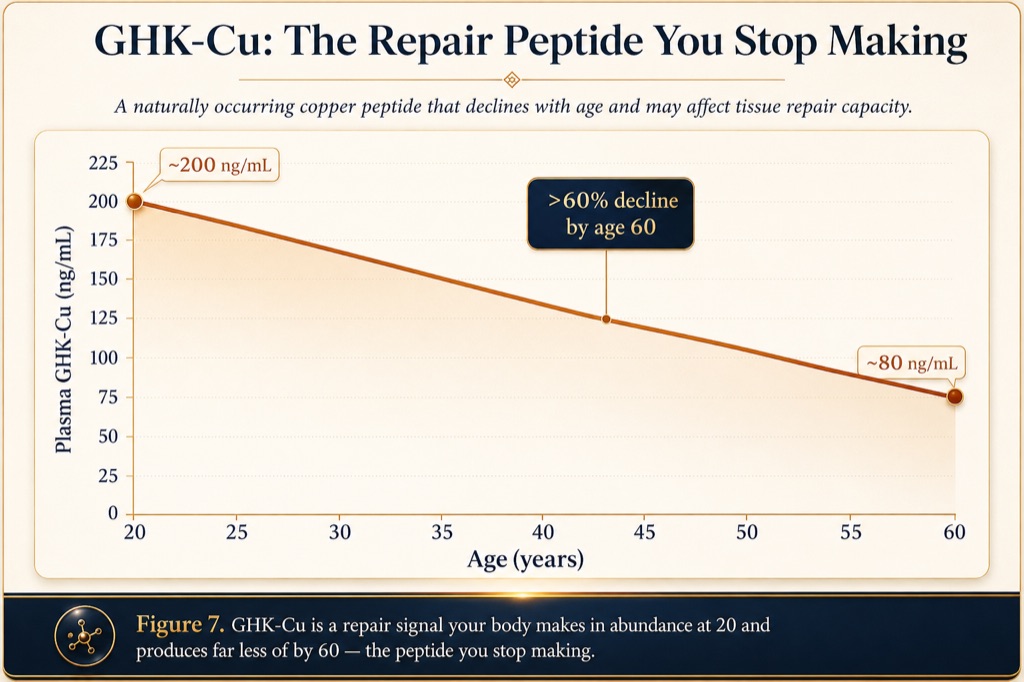
GHK-Cu is a repair signal your body makes in abundance at 20 and largely stops making by 60 — the peptide you stop producing.
Why Your Genes Decide Which Peptides Work
In the National Geographic series Limitless, the actor Chris Hemsworth — Marvel's Thor, a man who looks engineered in a lab — learned from a genetic test that he carries two copies of the APOE4 variant, a genotype shared by only about 2–3% of people and associated with substantially elevated Alzheimer's risk.20 Crucially, his consulting physician on the show, Peter Attia, reframed the result not as a sentence but as a blessing: a reason to make choices at 40 that most people never consider until their 50s or 60s.20 Hemsworth's own reaction — that it was "a good kick in the arse" — is the entire spirit of preventive longevity in six words.21 The genome did not doom him; it handed him a map with the hazards marked early enough to route around them.
The same principle governs whether a peptide protocol will work for you, and it is the question most protocols skip. Identical doses produce non-identical results, and a meaningful share of that variance is written in DNA. The textbook case is the growth-hormone receptor. A common variant of the GHR gene either retains or deletes a stretch called exon 3, producing two receptor isoforms — full-length and exon-3-deleted (d3). The d3 isoform signals more efficiently and, in the literature's own words, was the first identified genetic factor shown to modulate an individual's response to growth-hormone therapy.22,23 The magnitude is not subtle: in growth-hormone-deficient adults, carriers of the d3 allele required roughly 25% less exogenous growth hormone for a comparable effect than people with two full-length copies.24 The isoform is unevenly distributed — in one healthy cohort, genotypes split roughly 35% full-length, 39% mixed, 26% d3/d325 — and the more-sensitive d3 variant has itself been associated with greater longevity.23
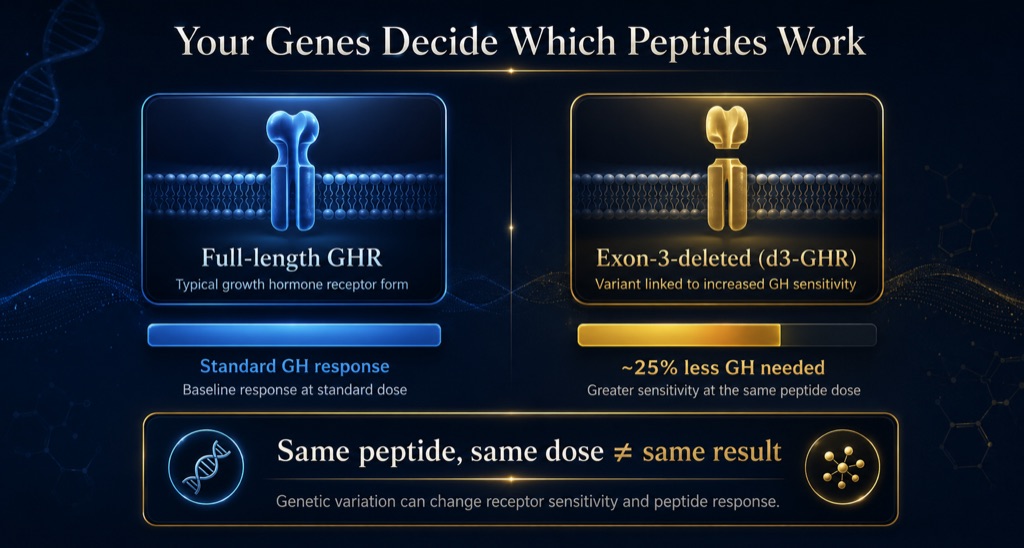
Your genes help decide which peptides work on you. The GHR 'd3' variant is the textbook case — carriers respond to markedly less.
Sit with the implication. Two executives begin the same growth-hormone-axis peptide on the same day at the same dose. One is a d3 carrier and responds briskly; the other, homozygous full-length, would require materially more signal to achieve the same result. Without genotyping, the second is quietly filed as a "non-responder," and the protocol takes the blame — when in fact the dose was written for the wrong person. This is the scientific foundation beneath what LongevityPlan.AI calls a Digital Twin for Predictive Peptide Performance™: a model that begins not with a generic dose chart but with your genetics. Genomic-response platforms such as The Genomics Company are building this layer precisely, turning "peptides work" into "this peptide, at this dose, is likely to work for you."26
The Intelligence Layer: Turning Scans Into a Twin
A DEXA scan is a snapshot; longevity is a trajectory. Closing that gap is the work of what engineers would recognize instantly. In aerospace, a jet engine flies alongside a continuously updated virtual replica of itself — a Digital twin — that predicts wear before it happens and schedules the fix before the failure. A Cardiorespiratory Digital Twin™ applies the same logic to the one machine you cannot swap out.
The architecture has three tiers. A sensor layer gathers the raw truth: the DEXA scan, the wearable, the blood panel, the genome. An intelligence layer fuses multi-modal health data into a single, coherent model, using predictive modeling to forecast where a trajectory is headed rather than merely reporting where it has been. And a plan — what LongevityPlan.AI frames as a Peptide Longevity Plan™ — translates the forecast into what the person and their clinician actually do on Monday. The Wisconsin and Freiburg studies are early evidence that this fusion works: as senior author Jakob Weiss observed about the untapped data in routine scans, "We're already imaging patients every day."9,27 The scan is the sensor. The AI is the mechanic who has read every maintenance log ever written — and can tell the difference between desirable fat loss and unwanted muscle loss hiding behind the same dropping number on the scale.

A jet engine flies beside a virtual replica that predicts failure before it happens. A digital twin does the same for the one machine you can't replace.
How the Industry Answers the Same Question
The consumer longevity market has, in a few short years, converged on a shared premise — that waiting for disease to declare itself is an outdated strategy, and that dense, repeated measurement is the alternative. Where the players diverge is in what they measure, how often they measure it, how much intelligence they layer on top, and whether a clinician is in the loop. Understanding those differences is the difference between buying data and buying a plan.
Two structural signals stand out. First, capital is validating the thesis: Function Health, co-founded by Mark Hyman, reached roughly 200,000 subscribers and, in late 2025, raised a $298 million round at a reported $2.5 billion valuation while cutting its price — a company betting that measurement becomes a habit, not a one-time purchase.31 Second, and more telling for this article, the newest platforms are dissolving the wall between measuring and intervening: Superpower now routes members whose biomarkers warrant it toward clinician-supervised therapies, including peptides and GLP-1s, inside the same app.29 The market is quietly conceding the point that a scan without a plan is a hobby. The frontier belongs to whoever closes the loop from the scan to the molecule — ideally with genomics deciding which molecule.
The Practitioner's Edge: Data as the New Credential
None of this displaces the human in the loop; it upgrades them. For the weight-loss coach, performance coach, dietitian, nutritionist, executive coach, and aesthetic practitioner, a DEXA report is the objective scoreboard the wellness industry has always lacked. It replaces "you look great" with a defensible number, converts a client's vague dissatisfaction into a specific target, and — most valuably — proves the coach's work six months later in tissue rather than testimonials. When a nutritionist can show a client that a protein-and-training protocol raised their ALMI percentile while their visceral fat fell, that is not a compliment; it is evidence, and evidence is what turns a client into a decade-long relationship.
The Coach / Practitioner who pairs that scoreboard with genuine literacy in peptides, genomics, and body-composition science operates at a level the influencer economy cannot fake. This is where the science compounds into a career advantage: understanding why a d3-GHR client responds differently, when a visceral-fat plateau calls for a metabolic rather than a caloric answer, or how to sequence recovery around a healing tendon, is expertise clients will pay a premium for and refer their peers to. Increasingly, that expertise is being amplified rather than replaced — AI-powered coaching improvements surface patterns in a client's Athlete / Patient data that a busy human might miss and hand them back as recommendations the practitioner can apply with judgment. It is also the connective tissue of the emerging Corporate Wellness Program, where organizations increasingly treat the healthspan of their most valuable people as an asset to be measured and maintained, and of the Longevity Club model, where members expect their advisors to speak the language of data as fluently as the language of motivation.
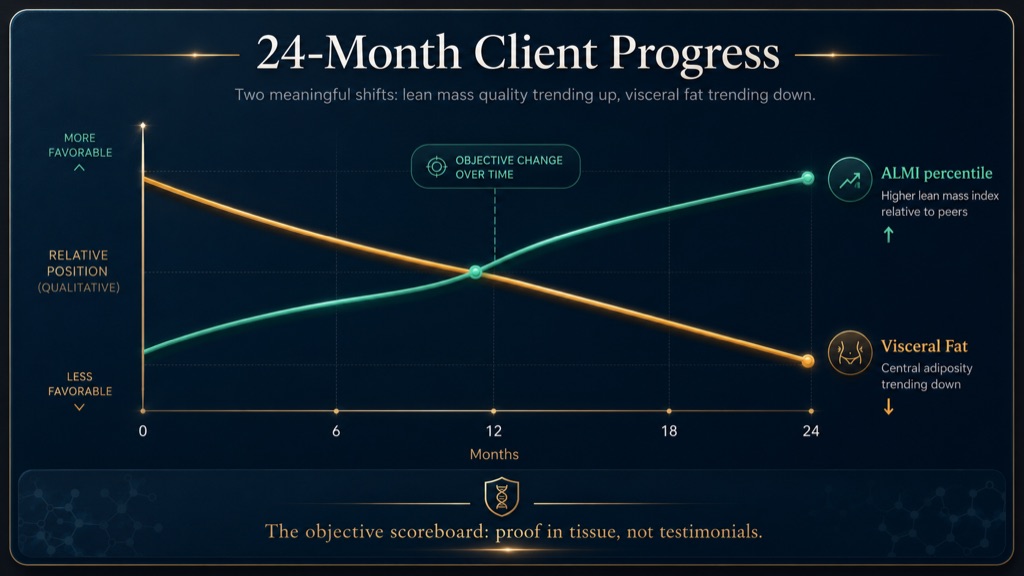
For the coach, dietitian, or practitioner, a DEXA trend replaces 'you look great' with proof — the scoreboard that turns a client into a decade-long relationship.
The Playbook: Four Dials, Four Levers
Measurement earns its keep only when it changes what you do. Each dial has a well-supported lever, and the institutions with the most to lose pull them deliberately rather than hopefully.
To raise a low ALMI, the non-negotiables are progressive resistance training — hypertrophy and heavy strength work — and sufficient protein, with commonly cited intakes beginning around 1.2–1.6 g per kilogram of body weight daily, and many performance-oriented clinicians targeting the upper end or beyond for aging adults defending against sarcopenia.3 A sobering figure from labs that scan thousands of people: climbing from the 10th to the 75th ALMI percentile can require 12 kg or more of muscle for a man — a multi-year project, and precisely why the reference clinics insist you train for life.2
To lower high VAT, the levers are the metabolic fundamentals that visceral fat responds to preferentially: fewer ultra-processed foods, added sugars, and refined carbohydrates; more soluble fiber; and added cardiovascular training. The reward is disproportionate, because shedding the metabolically active depot improves insulin sensitivity and cardiovascular risk faster than shedding the same mass of subcutaneous fat.4
To defend BMD, the stimulus bone recognizes is load: weight-bearing and high-impact work — jumping, heavy lifting such as deadlifts, squats, or goblet squats — alongside adequate calcium, vitamin D, and vitamin K2. For those already below threshold, the anabolic peptides above turn a maintenance problem into a rebuilding one.12,13
To correct regional imbalance, unilateral training and targeted rehabilitation restore symmetry before it becomes an injury — the same discipline elite programs use to keep expensive athletes on the field rather than in the treatment room.
These principles are not the property of the wellness aisle; they are the operating manual of high-performance institutions. NASA studies bone and muscle loss because microgravity accelerates skeletal aging, making astronauts an involuntary model of aging and their countermeasures a preview of ours. Formula 1 and Olympic programs track body composition and regional balance to keep multimillion-dollar athletes competing rather than convalescing. Oncology now reads muscle and fat off routine CT scans to forecast who will tolerate treatment.9 The through-line is unmistakable: the people with the most to lose measure most carefully. A DEXA scan hands that discipline to the rest of us.
Getting a Clean Read: Scan Preparation
DEXA's precision is a gift you can squander with sloppy preparation, because the metric that matters most — change over time — depends on reproducibility. Fast for roughly two to three hours beforehand (water is fine); arrive normally hydrated rather than depleted or overloaded; wear athletic clothing free of metal, underwire, and thick logos; and avoid heavy or intense exercise the afternoon before and the morning of the scan.1,3 The goal is simple: when your next scan shows a change, you want to trust the change is in your body, not in your breakfast.
The Decision Underneath the Data
Strip away the acronyms, and a DEXA scan poses a single, almost philosophical question: Are you aging the way you assume you are? For a great many high-functioning people — the executive who "still feels 35," the former college athlete coasting on decade-old capital — the honest answer is hidden in a visceral fat estimate or an ALMI percentile, unseen until someone measures it. That is not cause for anxiety. It is an invitation to plan while the levers are still long and the timeline still generous — the same invitation that turned a daunting genetic result into a reason to act rather than to worry.
The most encouraging truth in this entire field is that the four dials are not verdicts. Muscle can be built, visceral fat can be selectively stripped, bone can be rebuilt, and — as genomics matures — the peptide signals that do this work can increasingly be matched to the individual most likely to benefit from them. A scan tells you where you stand. A plan, informed by your genes and sharpened by AI, tells you where you can go. The people who decide to find out tend, on the evidence, to be the ones still climbing their own stairs decades after their peers stopped counting. Measuring is the first move. The rest is follow-through — and follow-through, unlike genetics, is entirely yours to write.
Sign up for FREE daily Longevity Club Workshops, or join the Affiliate Program (pays 20%).
About the Authors
Dr. Tan Rao, PhD is the founder of Quantified Wellness, which owns and operates DexaFit Vancouver and DexaFit Portland, where clinical-grade assessments — DEXA, indirect calorimetry, cardiopulmonary exercise testing, and vascular health testing — are integrated to evaluate body composition, metabolism, and cardiovascular fitness. Drawing on more than two decades of leadership across the semiconductor, consumer electronics, and biomedical industries, his current work centers on building quantitative frameworks that turn physiological measurement into actionable models for long-term healthspan.
Tony Medrano is CEO and co-founder of LongevityPlan.AI, a platform that integrates performance and health data and leverages proprietary Digital Twin for Predictive Peptide Performance™ technology, wearable data, and biomarker data to deliver personalized optimization and longevity recommendations. A 3x technology/AI company CEO with 2 successful exits, Tony has completed 3 Full Ironman Triathlons (140.6 mi) since 2019. He holds degrees from Harvard University, Columbia University, and a JD/MBA from Stanford University, and has worked with the US Olympic Team, the NBA, NFL, MLB, NASA, Google, Microsoft, and Netflix, among others. He also served as a US Navy Officer commanding an emergency response team aboard a destroyer.
Disclaimer: This article is for educational purposes and is not medical advice, diagnosis, or treatment. Body-composition, peptide, and hormone decisions should be made with a qualified clinician who can interpret your individual results. Reference ranges, assays, and products are described as of publication and may change.
Endnotes
- GE HealthCare, "CoreScan — visceral fat quantification via dual-energy X-ray absorptiometry," product documentation. gehealthcare.com
- Bodyscan UK, "Dr Peter Attia, Longevity and DEXA scans" (ALMI as a "purer" muscle measure; 75th-percentile target; remarks from Attia's interview with Chris Williamson). bodyscanuk.com
- DexaFit Scottsdale, "Peter Attia's Longevity Blueprint: DEXA, Muscle Mass, and the Metrics That Matter" (sarcopenia as mortality predictor; DEXA ~±1–2% vs BIA 3–5% hydration swing; protein/training levers). scottsdale.dexafit.com
- BodySpec, "DEXA Scan for Visceral Fat: Accuracy, Cost & Results" (VAT risk tiers ~100 cm² / 160 cm²; subcutaneous-subtraction method; precision caveats). bodyspec.com
- PLOS ONE, GE CoreScan / Hologic VAT reference-value study; DXA-VAT vs CT (R² ≈ 0.957) and MRI. journals.plos.org
- UK Biobank imaging comparison: DXA-derived VAT vs whole-volume MRI, R² ≈ 0.94. ncbi.nlm.nih.gov/PMC10368369
- Jung M, … Weiss J, "Body Composition in the General Population: Whole-body MRI–derived Reference Curves from Over 66,000 Individuals," Radiology, 2026. pubs.rsna.org
- RSNA press summary of the above (VAT 2.26× diabetes; intramuscular fat 1.54× MACE; low muscle 1.44× mortality; Jung on muscle quality). rsna.org
- Pickhardt PJ et al., "AI-based abdominal CT measurements of orthotopic and ectopic fat predict mortality and cardiometabolic disease risk," 2024 (muscle-attenuation AUC 0.721 vs BMI 0.499; n=9,223). pubmed.ncbi.nlm.nih.gov/38995381
- Falutz J et al., "Metabolic Effects of a Growth Hormone–Releasing Factor (tesamorelin) in Patients with HIV," New England Journal of Medicine, 2007 (VAT −15.2% vs +5.0% placebo, n=412, 26 weeks). nejm.org
- Meta-analysis of five RCTs of tesamorelin in HIV-associated lipodystrophy: significant VAT and trunk-fat reduction; lean body mass +≈1.42 kg. ScienceDirect, 2026. sciencedirect.com
- Miller PD et al. (ACTIVE trial): abaloparatide vs teriparatide vs placebo; BMD gains by DEXA and fracture reduction; n=2,463. sciencedirect.com
- DXA-based 3D modeling of ACTIVE: total-hip aBMD +4.2% (abaloparatide) vs +3.3% (teriparatide) at 18 months. ncbi.nlm.nih.gov/PMC7929959
- GlobalRPH, "BPC-157 and TB-500: Background, Indications, Efficacy, and Safety" (rat Achilles models; collagen organization; TB-500 migration/angiogenesis). globalrph.com
- Vasireddi N et al., "BPC-157 for Sports Injuries: What a Systematic Review Actually Shows," HSS Journal, 2025 (35 preclinical studies, 1 clinical study; WADA S0 status). HSS Journal / PubMed
- Staresinic M et al., "BPC-157 accelerates Achilles tendon healing" (2003) and related rat-model replications (Krivic 2008; Cerovecki 2010, MCL). Summarized in Klow / RethinkPeptides reviews. rethinkpeptides.com
- "Pentadecapeptide BPC-157 Enhances the Growth Hormone Receptor Expression in Tendon Fibroblasts," PMC6271067 (BPC-157 upregulates GH receptor in rat tendon fibroblasts). ncbi.nlm.nih.gov/PMC6271067
- Pickart L, Vasquez-Soltero JM, Margolina A, "GHK Peptide as a Natural Modulator of Multiple Cellular Pathways in Skin Regeneration," BioMed Research International, 2015 (plasma decline ~200→80 ng/mL age 20→60; collagen/GAG synthesis; gene modulation). ncbi.nlm.nih.gov/PMC4508379
- Pickart L, Margolina A, "Regenerative and Protective Actions of the GHK-Cu Peptide in the Light of New Gene Data," Int. J. Mol. Sci., 2018, PMC6073405 (gene-expression breadth; MMP modulation). ncbi.nlm.nih.gov/PMC6073405
- Genomics Education Programme (NHS) and UT Southwestern summaries of Chris Hemsworth's APOE4 disclosure on Limitless; Attia's "blessing"/early-action framing. genomicseducation.hee.nhs.uk
- Hemsworth remarks on learning his genetic risk ("a good kick in the arse…"), via Men's Health / NMN.com summary. nmn.com
- Jorge AA, Arnhold IJ, "Growth hormone receptor exon 3 isoforms and their implication in growth disorders and treatment," Hormone Research, 2009 (d3-GHR: first genetic factor modulating GH-therapy response). pubmed.ncbi.nlm.nih.gov/19407498
- Review, "The Exon 3-Deleted Growth Hormone Receptor (d3GHR) Polymorphism," 2023 (enhanced signaling; longevity and higher GH sensitivity). ncbi.nlm.nih.gov/PMC10531306
- Meyer S et al., "Association of the exon-3-deleted/full-length GHR polymorphism with recombinant GH dose in GH-deficient adults," Pharmacogenomics, 2009 (d3 carriers required ≈25% less exogenous GH). pubmed.ncbi.nlm.nih.gov/19842933
- Population genotype distribution example (fl/fl 35% / fl-d3 39% / d3/d3 26%), healthy-adult cohort. ncbi.nlm.nih.gov/PMC3184513
- The Genomics Company — genomic assessment of individualized therapeutic/peptide response. thegenomicscompany.com
- Jakob Weiss remarks, University Medical Center Freiburg, via RSNA / PR Newswire, May 2026 ("We're already imaging patients every day"). auntminnie.com
- Function Health, "How It Works," and independent platform comparisons (biomarker breadth, clinician review, AI coach, ~$365/yr, Quest Diagnostics). functionhealth.com
- Superpower, "How it works" (SuperpowerAI, PhenoAge biological age, clinician/peptide access, ~$199/yr). superpower.com
- Comparative reviews of InsideTracker (MIT/Harvard lineage; blood + DNA; "InnerAge") and Lifeforce (clinician-led, quarterly, prescription-integrated). finvsfin.com
- Reporting on Function Health scale/financing: ~200,000 subscribers; $298M Series B at a reported $2.5B valuation, Nov 2025, with a simultaneous price reduction; co-founded by Mark Hyman. thelongevitystore.com