Brain Health
·16 min read
Does Cardio Improve Brain Size and Performance?
The evidence that aerobic exercise physically rebuilds the human brain is unusually strong, and unusually misunderstood. What the data shows, where it stops short, and how genomics and AI turn a population average into a plan for one brain: yours.
By Tony Medrano, CEO & Founder, LongevityPlan.AI
The novelist who runs to think
In 1982, a 33-year-old Tokyo jazz-bar owner sold his business, sat down to write fiction in earnest, and—almost the same week—laced up and started running. He has barely stopped since. Haruki Murakami now runs nearly every day, six days a week, has finished more than twenty marathons and a 62-mile ultramarathon, and, well into his seventies, still treats the morning run as the engine of the morning's writing. Running, he has said, engenders the "focus and endurance" that long-form cognitive work demands; or, more bluntly, "Most of what I know about writing I've learned through running every day."
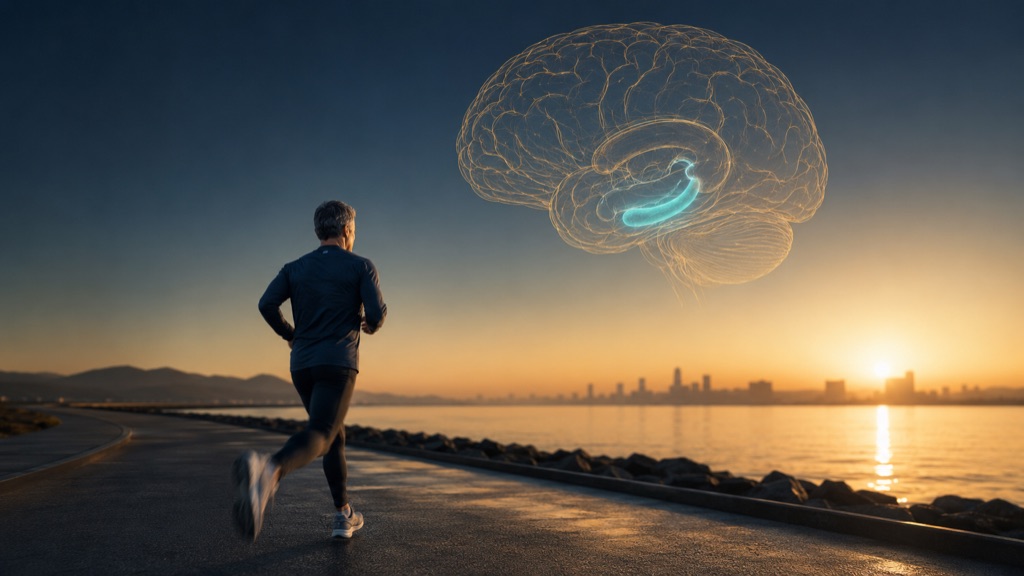
Decades before neuroscience could measure it, runners like novelist Haruki Murakami sensed the link between the morning run and the working mind. The data has since caught up.
One novelist's habit proves nothing on its own. But Murakami is a useful door into a serious question, because the thing he believes about his own mind—that a daily aerobic habit is what lets a brain perform hard work, with concentration, for decades—turns out to be one of the most rigorously documented claims in modern neuroscience. Most things marketed for your brain rest on thin evidence and thick packaging. Aerobic exercise is the strange exception, supported by randomized trials, cross-species mechanisms, and epidemiology spanning millions of people.
So this article takes the skeptic's posture on purpose. The genuinely useful question is not whether cardio helps the average brain—it does—but how much it will help yours, given your genetics, your starting fitness, and your goals. That gap between the population average and the individual is where measurement, and increasingly artificial intelligence, earn their keep.
Does cardio literally make your brain bigger? Mostly, yes.
The anchor study is a 2011 randomized controlled trial led by Kirk Erickson, then at the University of Pittsburgh and now at the AdventHealth Research Institute, with Arthur Kramer of the Beckman Institute at the University of Illinois Urbana-Champaign as senior author, published in the Proceedings of the National Academy of Sciences. The team took 120 sedentary older adults and randomly assigned them either to walk around a track for 40 minutes, three days a week, or to a control group doing stretching and toning. MRI scans were obtained at baseline, 6 months, and 1 year.
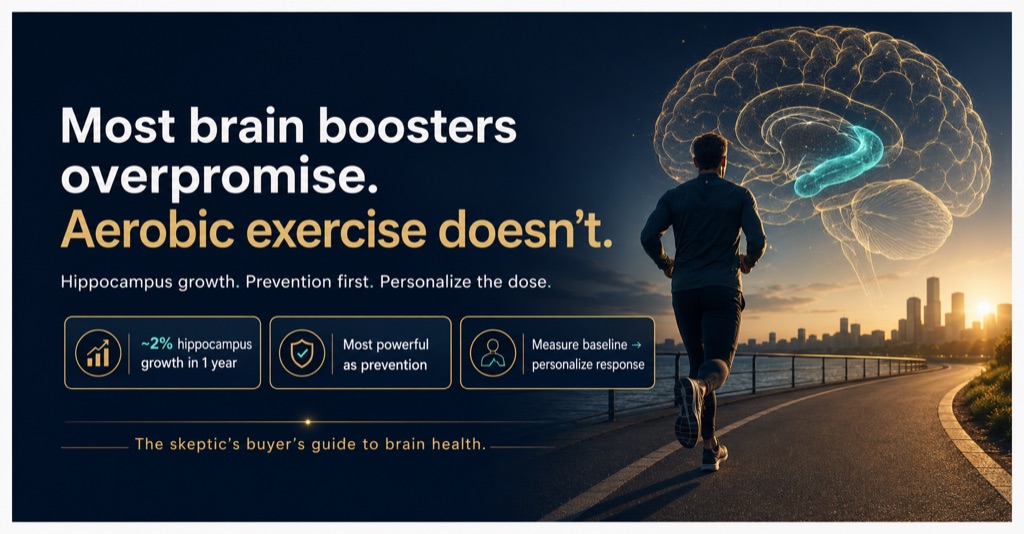
The walkers' hippocampus—the seahorse-shaped structure that anchors memory formation and is among the first regions lost in Alzheimer's—grew. Left hippocampal volume rose 2.12%, and the right rose 1.97%, while the stretching group's same regions shrank by roughly 1.4%, the decline you expect with aging. In the authors' framing, one year of moderate exercise "effectively reversed age-related loss in volume by 1 to 2 years." The growth was associated with higher blood levels of brain-derived neurotrophic factor (BDNF) and better spatial memory scores.
"We think of the atrophy of the hippocampus in later life as almost inevitable," Erickson said when the study was published. "But we've shown that even moderate exercise for one year can increase the size of that structure. The brain at that stage remains modifiable."
Kramer kept the emphasis on dose: even "modest amounts of exercise by sedentary older adults" produced substantial gains in memory and brain health. This was not an outlier. An earlier controlled trial had already shown aerobic training increasing both gray- and white-matter volume in aging humans; the 2011 trial's contribution was to isolate the structure people care about most.
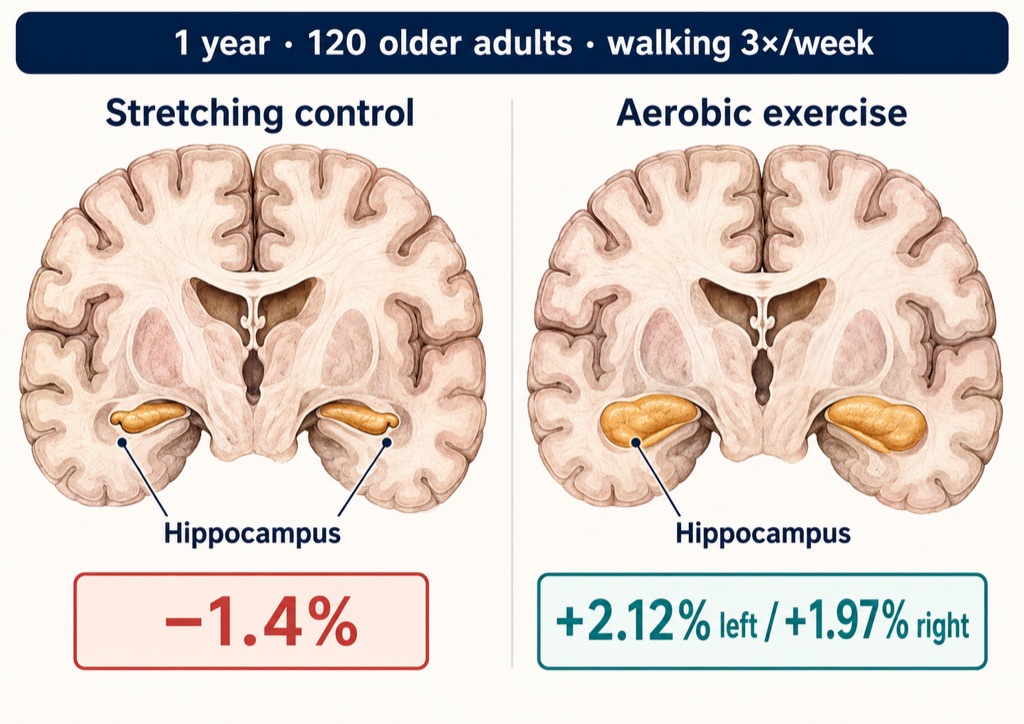
In a 2011 randomized trial, one year of brisk walking grew the hippocampus about 2%, while the non-aerobic control group's shrank—effectively turning back the clock one to two years.
It isn't only old brains: children and twenty-somethings
If exercise merely slowed decline, the benefit would show up only in aging populations. It doesn't—and that breadth is itself evidence that the effect is real rather than a quirk of one cohort.
In children, Laura Chaddock-Heyman and Charles Hillman—the latter now at Northeastern University's Institute for Cognitive and Brain Health—with Kramer, documented that higher-fit 7-to-10-year-olds have larger volumes in the hippocampus and the basal ganglia, structures tied respectively to memory and to cognitive control, than their lower-fit peers. The FITKids randomized trial then showed that a structured after-school activity program improved executive control and the underlying brain function, not merely fitness; higher aerobic fitness was even tracked with better mathematics achievement and measurable cortical differences. For parents optimizing for elite academic outcomes, the uncomfortable implication is that the track may matter to the transcript.
At the other end of early adulthood, a 2019 randomized trial from Columbia University Irving Medical Center, led by Yaakov Stern and Richard Sloan, put 132 adults aged 20 to 67 through six months of aerobic training at a local YMCA. Executive function improved across the whole range—and the older the participant, the larger the gain—alongside increased cortical thickness in a frontal region tied to those functions. Stern was precise about the boundary of the effect:
"Executive function usually peaks around age 30, and I think that aerobic exercise is good at rescuing lost function, as opposed to increasing performance in those without a decline."
Hold onto that distinction—rescue versus enhancement—because it sets the limit we will hit shortly. On the shortest timescale, Wendy Suzuki at NYU has shown that even a single bout of aerobic exercise lifts prefrontal-dependent attention and mood, while sustained training raises baseline mood and, over months, grows the hippocampus and prefrontal cortex. The pattern across decades is summarized by a foundational review whose title is also its thesis: Be Smart, Exercise Your Heart.
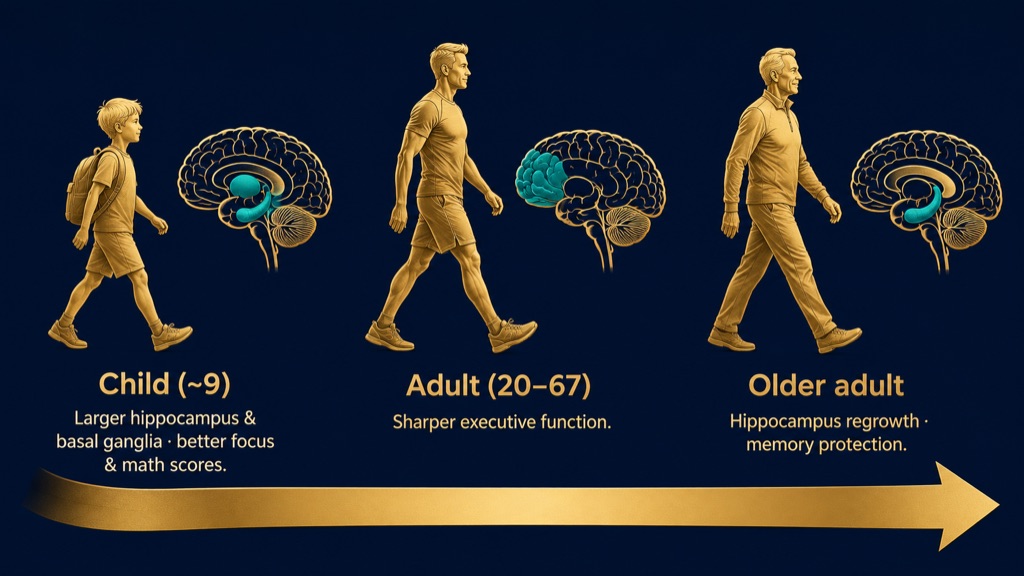
The benefit isn't reserved for aging brains. Higher aerobic fitness tracks with bigger memory and control regions in children, sharper executive function in adults, and structural regrowth in seniors.
The machinery—and the deeper reason
A finding without a mechanism is a coincidence waiting to be debunked. This one has a mechanism that was worked out in animal models before human imaging existed.
Neurogenesis. In 1999, Henriette van Praag (now at Florida Atlantic University), with Fred Gage at the Salk Institute, showed that giving mice a running wheel roughly doubled the number of surviving new neurons in the hippocampus's dentate gyrus, and that running specifically enhanced learning and long-term potentiation, the cellular signature of memory. The effect persisted in aged mice: exercise restored neurogenesis even in old brains.
Growth factors. The molecular bridge is BDNF. Carl Cotman and Nicole Berchtold at UC Irvine's Institute for Brain Aging and Dementia showed that voluntary exercise raises BDNF and other growth factors, stimulates neurogenesis, and improves learning—framing exercise as, literally, "a behavioral intervention to enhance brain health and plasticity," one that leaves the brain in a "state of readiness" for plasticity. The causal test came from Fernando Gómez-Pinilla's lab: chemically block BDNF in the hippocampus, and exercise's cognitive benefit disappears. A meta-analysis later confirmed BDNF as among the most reliably elevated molecules after a few weeks of consistent training in humans. Exercise also drives new blood-vessel growth and cerebral blood flow, supplying the metabolically expensive tissue doing the work.
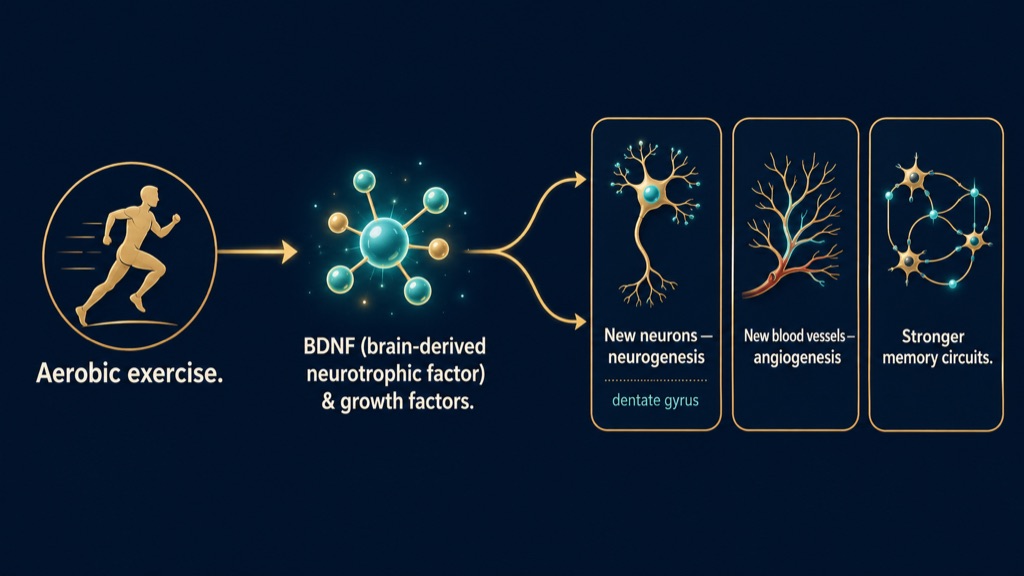
The mechanism, simplified: aerobic exercise raises BDNF and other growth factors, which spark the formation of new neurons in the hippocampus, build new blood vessels, and reinforce the circuits behind memory.
The ultimate "why." Beneath these proximate mechanisms sits an evolutionary one. David Raichlen (University of Southern California) and Gene Alexander (University of Arizona) proposed the adaptive capacity model in Trends in Neurosciences. Roughly two million years ago, our ancestors shifted to hunting and foraging—tasks simultaneously aerobic and cognitively demanding—and selection wired physical activity and brain maintenance together.
"Our organ systems adapt to the stresses they undergo," Raichlen explained. "If you're not engaging in aerobic exercise, to save energy, your body simply reduces that capacity." In the brain, if it is not sufficiently stressed, it may begin to atrophy.
Daniel Lieberman, the Harvard human evolutionary biologist, makes a parallel case that calling exercise "medicine" undersells it: physical activity is simply the input the human body and brain were built to receive. The model also yields a usable prediction—that combining aerobic and cognitive challenge should beat either alone—which is exactly what Murakami does without naming it, and exactly what a good program should be designed around.
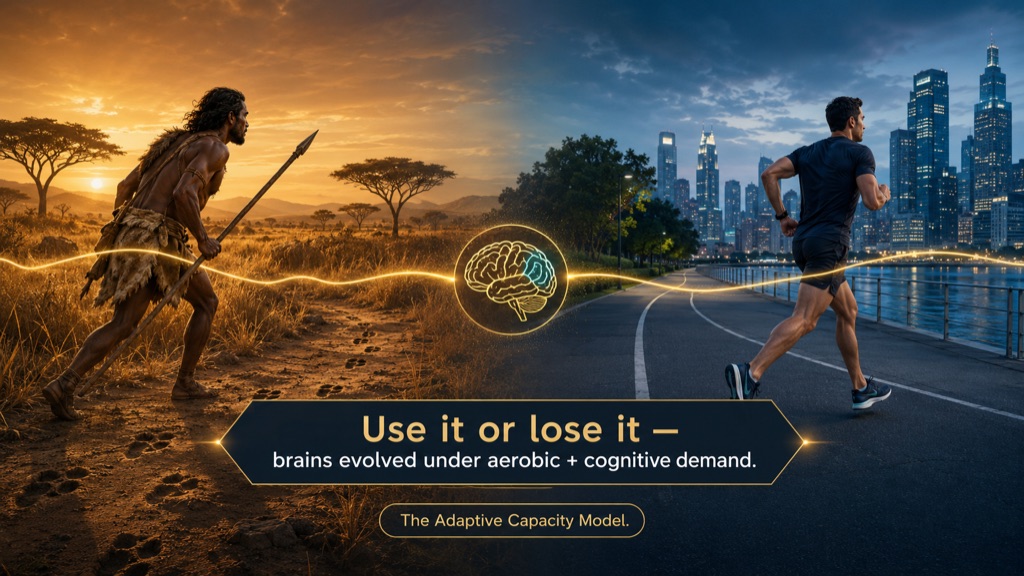
Why aerobic effort, specifically? Two million years of foraging wired physical activity and brain maintenance together. Stop challenging the system, the model holds, and the brain—like an unused muscle—downsizes.
The honest part: where the story gets complicated
Here is where most "exercise grows your brain" articles stop, and where a serious one keeps going.
The largest rigorous test of exercise in people who already have a problem is the EXERT trial, led by Laura Baker at Wake Forest University School of Medicine with Carl Cotman as co-principal investigator, reported in Alzheimer's & Dementia in 2025. Nearly 300 sedentary older adults with amnestic mild cognitive impairment—the stage before dementia—were randomized to moderate-to-high-intensity aerobic training or to lower-intensity stretching and balance work, supervised at YMCAs, for 12 months. Baker called it "the largest rigorous trial of exercise ever conducted in adults with mild cognitive impairment."
The result was not the clean win the field wanted. There was no difference between the aerobic and stretching groups on the primary cognitive measure. But neither group declined over 12 months, when a measurable decline is exactly what amnestic MCI predicts. The catch, which the authors state plainly, is that without a no-intervention control arm, they cannot prove either form of exercise stopped the decline rather than the two arms simply being equivalent.
Read carefully, EXERT is a clarification, not a refutation. It suggests that once meaningful impairment has set in, the advantage of "aerobic" over "gentle structured movement plus social contact" narrows—and that timing matters enormously. This is Stern's "rescue lost function" running into its ceiling: the structural gains seen in healthy aging brains do not promise that you can reverse an already compromised one. Cardio is most powerful as prevention, applied early, which is precisely the message the high-functioning forty- and fifty-somethings who feel fine, and therefore wait, are least likely to act on. Murakami started at 33.
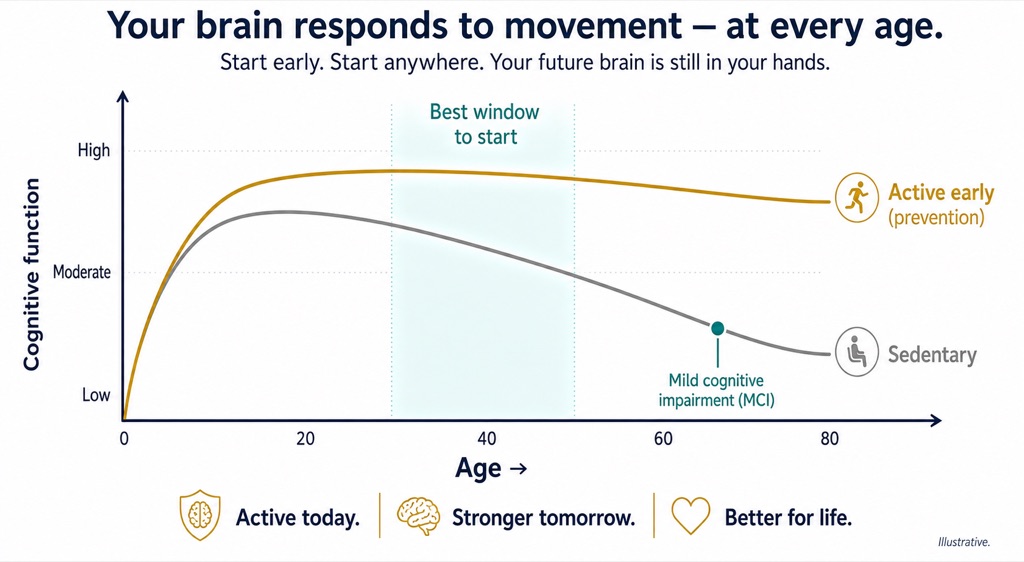
The honest caveat: in the large EXERT trial, exercise didn't reverse existing impairment, but cognition held steady. The leverage is greatest as prevention—the reason to start while you still feel fine.
What millions of people show—and the genetics it exposes
Step back from the scanner to the population, and the signal is large and dose-dependent. A 2024 study in the British Journal of Sports Medicine, using a cohort of 61,214 people, found higher cardiorespiratory fitness associated with meaningfully lower dementia risk—an incidence rate ratio near 0.81 per standard-deviation increase—with dementia onset delayed by roughly 1.48 years in the fittest. Norwegian HUNT-study data indicate that improving fitness over time, rather than having it once, is associated with lower dementia incidence and mortality. A systematic review in Nature Mental Health spanning 27 cohorts and more than four million participants linked higher fitness to lower risk of dementia, depression, and psychosis, with one long-running cohort showing the fittest group at 53% lower dementia risk.
The most strategically important detail in the 2024 analysis is about genes: the protective association held even among people genetically predisposed to dementia, who could lower their risk by up to roughly a third through higher fitness, but the size of the benefit depended on genetic background. Your DNA loads the dice; your training still influences the roll. And that is the catch that defeats one-size-fits-all advice. Telling a specific person that "fitness lowers dementia risk by 19%" is like telling a specific investor that "stocks return 7% a year": true on average, and nearly useless for the decision in front of you.
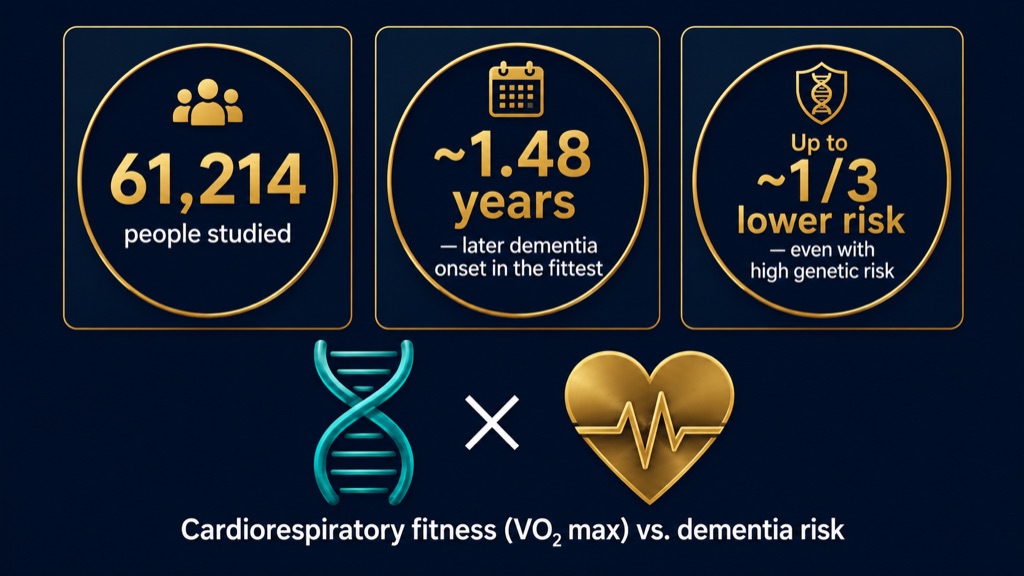
Across 61,000+ people, higher cardiorespiratory fitness delayed dementia onset and cut risk by up to a third—even in those genetically predisposed. Your genes load the dice; your fitness still moves the odds.
From the average to your brain
Every study above reports a mean. Around that mean is a distribution—strong responders and weak ones—driven by genetics, baseline fitness, sleep, sex, hormonal status, inflammation, and APOE genotype, the same gene Raichlen and Alexander examined in their work on exercise and the human lifespan. Closing the gap between the average and the individual requires three things the average article never mentions: measure your starting point, measure your response, and personalize the dose.
Genomics supplies the first layer. The Genomics Company, a Pittsburgh-based firm, builds saliva-based reports across seven body systems—including brain chemistry and neurotransmitter patterns, cardiovascular function, and methylation—and makes a point worth quoting to anyone who believes "healthy" is a single recipe: across just 50 functional regions of the genome, the odds of sharing the same code as an unrelated person are about 1 in 14.5 quintillion. Their framing—"biology isn't destiny; it's a design manual"—is the right one for training, too. Genotype helps predict who responds to aerobic volume, who needs intensity, and who benefits from specific adjuncts.
This is the logic behind LongevityPlan.AI's Cardiorespiratory Digital Twin™: a continuously updated model of one person's physiology. Its sensor layer aggregates objective inputs—VO₂ and metabolic data (the kind PNOĒ captures from breath analysis), heart-rate variability, and recovery from wearables such as Apple Watch, Garmin, Polar, and WHOOP, sleep architecture, and, where indicated, the structural MRI—from imaging platforms including GE HealthCare and Siemens Healthineers—that made hippocampal measurement possible in the first place. The diagnostic-membership companies in this category—Function Health, Lifeforce, Superpower, Protocole, and Extension Health—differ in emphasis but share a structure: broad biomarker panels feeding an interpretation layer. The intelligence layer fuses this multimodal health data with genomics and applies predictive modeling to forecast not the population's trajectory but this brain's—estimating the expected response to a prescription and flagging when measured adaptation diverges from the forecast, which is the cue to change the plan.
The same personalization logic extends to pharmacology, with the same humility. Individual genetics shape how a person responds to a given molecule as surely as they shape the training response—so a Digital Twin for Predictive Peptide Performance™ models predicted response before exposure, letting a Coach / Practitioner and the Athlete / Patient reason about probabilities rather than guess. In any responsible Peptide Longevity Plan™, Peptide Therapy is an adjunct that sits atop the aerobic base the evidence supports—never a substitute for it.
A buyer's guide: what to actually do and measure
If you take one operational message from the literature, take this: cardiorespiratory fitness is the master metric, and it is modifiable at virtually any age.
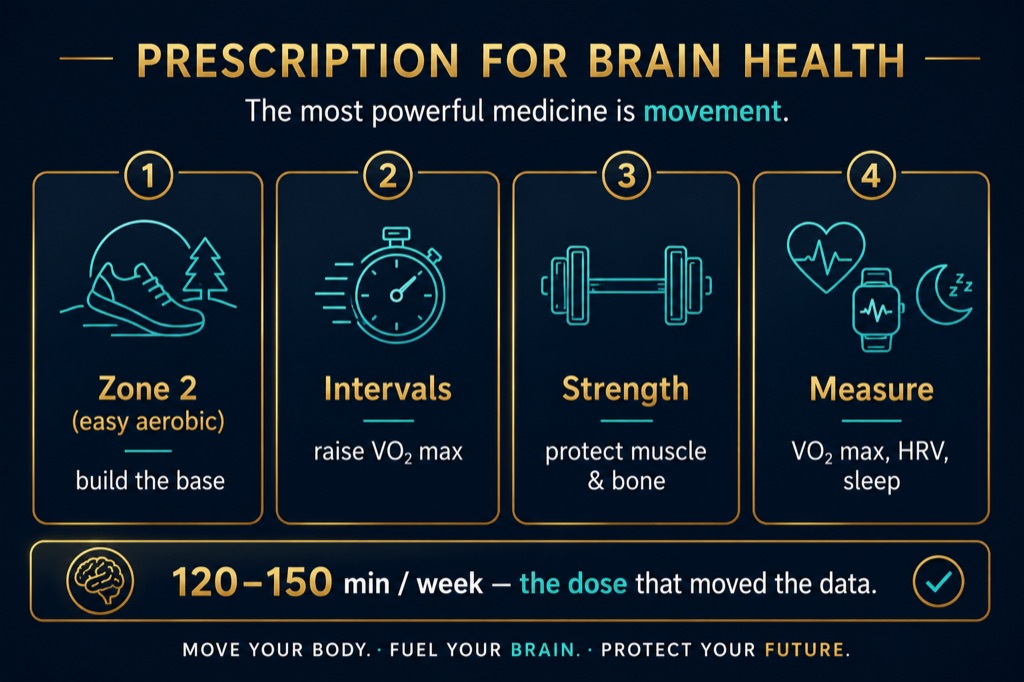
The buildable plan: an easy aerobic base, intervals to lift VO₂ max, strength work to keep you training for decades—and regular measurement so the dose fits you, not the average.
Volume. The trials that moved brain structure used ordinary doses—120 minutes per week of brisk walking in the 2011 PNAS study, roughly 120–150 in EXERT. That aligns with American College of Sports Medicine and Exercise is Medicine guidance, and with what the Cooper Institute's mortality data imply: the biggest gains come from moving the least-fit into "moderately fit," not from turning the fit into elites.
Structure. Lower-intensity aerobic work (conversational "Zone 2") for mitochondrial and vascular adaptation, plus intervals to raise VO₂ max, covers both the fitness driver and the plumbing. Resistance training, studied extensively by Teresa Liu-Ambrose at the University of British Columbia, provides complementary cognitive benefits and protects the muscles and bones that keep you training for decades.
Cognitive load. Because the adaptive-capacity model predicts a multiplier when aerobic and mental challenge combine, "exercise plus learning"—navigation, sport, dance, dual-task training, pairing a run with tools like BrainHQ from Posit Science—beats a treadmill stared at blankly.
Measurement. Establish a VO₂ max baseline, track resting heart rate and HRV, monitor sleep, and re-test on a schedule, so AI-powered coaching improvements act on your real adaptation curve rather than a textbook one. For organizations, a Corporate Wellness Program built around measured fitness is a cognitive-performance and retention investment, not a perk; for individuals who want accountability and benchmarking, a measurement-driven Longevity Club turns a solitary habit into a tracked one.
The bottom line
The skeptic's verdict, fairly rendered: aerobic exercise is the single most evidence-backed intervention for human brain structure and function—proven to grow the hippocampus in older adults, enlarge memory and control regions in children, lift executive function in young adults, mechanistically grounded, and consistent across millions of people. Its limits are real: the benefit is strongest as prevention, narrows once significant impairment has set in, and varies from person to person in ways group averages cannot capture—which is the whole argument for measuring rather than assuming.
Murakami didn't have a digital twin or a genomic report; he had a 33-year-old's intuition that the run and the work were the same project, and four decades of showing up. The science now tells us why that worked—and how, with the right measurements, to make it work more precisely and earlier for brains less stubborn than his. Erickson's line is the evidence-based heart of it: the older brain "remains modifiable." It is not a fixed asset depreciating on schedule. It is a responsive system, and the response is yours to shape—more precisely, the better you know your own biology. The plan beats the average. Build the plan.
Sign up for FREE daily Longevity Club Workshops, or join the Affiliate Program (pays 20%).
About the Author
Tony Medrano is CEO and co-founder of LongevityPlan.AI, a platform that integrates performance and health data and leverages proprietary Digital Twin for Predictive Peptide Performance™ technology, wearable data, and biomarker data to deliver personalized optimization and longevity recommendations. A 3x technology/AI company CEO with 2 successful exits, Tony has completed 3 Full Ironman Triathlons (140.6 mi) since 2019. He holds degrees from Harvard University, Columbia University, and a JD/MBA from Stanford University, and has worked with the US Olympic Team, the NBA, NFL, MLB, NASA, Google, Microsoft, and Netflix, among others. He also served as a US Navy Officer commanding an emergency response team aboard a destroyer.
Disclaimer: This article is for educational purposes and is not medical advice, diagnosis, or treatment. Health decisions should be made with a qualified clinician who can interpret your individual results.
Endnotes
- Murakami H. What I Talk About When I Talk About Running: A Memoir. Knopf; 2008 (English translation). Murakami began distance running in 1982 and describes running as engendering the "focus and endurance" essential to writing.
- Erickson KI, Voss MW, Prakash RS, et al. Exercise training increases the size of the hippocampus and improves memory. Proc Natl Acad Sci USA. 2011;108(7):3017–3022. doi:10.1073/pnas.1015950108. Quotations from the University of Illinois Urbana-Champaign news release (Feb. 1, 2011).
- Colcombe SJ, Erickson KI, Scalf PE, et al. Aerobic exercise training increases brain volume in aging humans. J Gerontol A Biol Sci Med Sci. 2006;61(11):1166–1170.
- Chaddock L, Erickson KI, Prakash RS, et al. A neuroimaging investigation of the association between aerobic fitness, hippocampal volume, and memory performance in preadolescent children. Brain Res. 2010;1358:172–183.
- Chaddock-Heyman L, Hillman CH, Cohen NJ, Kramer AF. III. The importance of physical activity and aerobic fitness for cognitive control and memory in children. Monogr Soc Res Child Dev. 2014;79(4):25–50.
- Hillman CH, Pontifex MB, Castelli DM, et al. Effects of the FITKids randomized controlled trial on executive control and brain function. Pediatrics. 2014;134(4):e1063–e1071.
- Chaddock-Heyman L, Erickson KI, Kienzler C, et al. The role of aerobic fitness in cortical thickness and mathematics achievement in preadolescent children. PLoS One. 2015;10(8):e0134115.
- Stern Y, MacKay-Brandt A, Lee S, et al. Effect of aerobic exercise on cognition in younger adults: A randomized clinical trial. Neurology. 2019;92(9):e905–e916. Quotation via Columbia University Irving Medical Center news (Jan. 31, 2019).
- Basso JC, Suzuki WA. The effects of acute exercise on mood, cognition, neurophysiology, and neurochemical pathways: A review. Brain Plast. 2017;2(2):127–152.
- Hillman CH, Erickson KI, Kramer AF. Be smart, exercise your heart: effects of exercise on the brain and cognition. Nat Rev Neurosci. 2008;9(1):58–65.
- van Praag H, Christie BR, Sejnowski TJ, Gage FH. Running enhances neurogenesis, learning, and long-term potentiation in mice. Proc Natl Acad Sci USA. 1999;96(23):13427–13431.
- van Praag H, Kempermann G, Gage FH. Running increases cell proliferation and neurogenesis in the adult mouse dentate gyrus. Nat Neurosci. 1999;2(3):266–270.
- van Praag H, Shubert T, Zhao C, Gage FH. Exercise enhances learning and hippocampal neurogenesis in aged mice. J Neurosci. 2005;25(38):8680–8685.
- Cotman CW, Berchtold NC. Exercise: a behavioral intervention to enhance brain health and plasticity. Trends Neurosci. 2002;25(6):295–301.
- Cotman CW, Berchtold NC, Christie LA. Exercise builds brain health: key roles of growth factor cascades and inflammation. Trends Neurosci. 2007;30(9):464–472.
- Vaynman S, Ying Z, Gómez-Pinilla F. Hippocampal BDNF mediates the efficacy of exercise on synaptic plasticity and cognition. Eur J Neurosci. 2004;20(10):2580–2590.
- Szuhany KL, Bugatti M, Otto MW. A meta-analytic review of the effects of exercise on brain-derived neurotrophic factor. J Psychiatr Res. 2015;60:56–64.
- Raichlen DA, Alexander GE. Adaptive capacity: an evolutionary neuroscience model linking exercise, cognition, and brain health. Trends Neurosci. 2017;40(7):408–421. Quotation via University of Arizona news (June 26, 2017).
- Lieberman DE. Is exercise really medicine? An evolutionary perspective. Curr Sports Med Rep. 2015;14(4):313–319.
- Raichlen DA, Alexander GE. Exercise, APOE genotype, and the evolution of the human lifespan. Trends Neurosci. 2014;37(5):247–255.
- Baker LD, Pa JA, Katula JA, et al. Effects of exercise on cognition and Alzheimer's biomarkers in a randomized controlled trial of adults with mild cognitive impairment: The EXERT study. Alzheimers Dement. 2025;21(4). doi:10.1002/alz.14586. Quotation via University of California San Diego / Wake Forest news.
- Wang S, Xu L, Yang W, et al. Association of cardiorespiratory fitness with dementia risk across different levels of genetic predisposition: a large community-based longitudinal study. Br J Sports Med. Published online Nov. 19, 2024. doi:10.1136/bjsports-2023-108048.
- Tari AR, Norevik CS, Scrimgeour NR, et al. Temporal changes in cardiorespiratory fitness and risk of dementia incidence and mortality: a population-based prospective cohort study (HUNT). Lancet Public Health. 2019;4(11):e565–e573.
- Systematic review and meta-analysis of cardiorespiratory fitness and risk of depression, dementia, and psychotic disorders, Nature Mental Health (2024); 27 cohort studies, >4 million participants.
- The Genomics Company (a division of BrainCelling, LLC), Pittsburgh, PA — program and genomic-systems descriptions, thegenomicscompany.com (accessed June 2026). Educational; not intended to diagnose or treat.