Sports Science
·18 min read
The Banned and the Blessed: Which Peptides WADA Restricts for Olympic Athletes
The world's most rigorous list of performance molecules doubles as a map of what actually works — and why GHK-Cu and NAD+ are not on it.
By Tony Medrano, Marc Anthony Longwith & Mike Hollis
This article is for education and is not medical advice.
Watch or listen to the companion episode: Apple | Spotify | YouTube
The list nobody reads as a longevity document
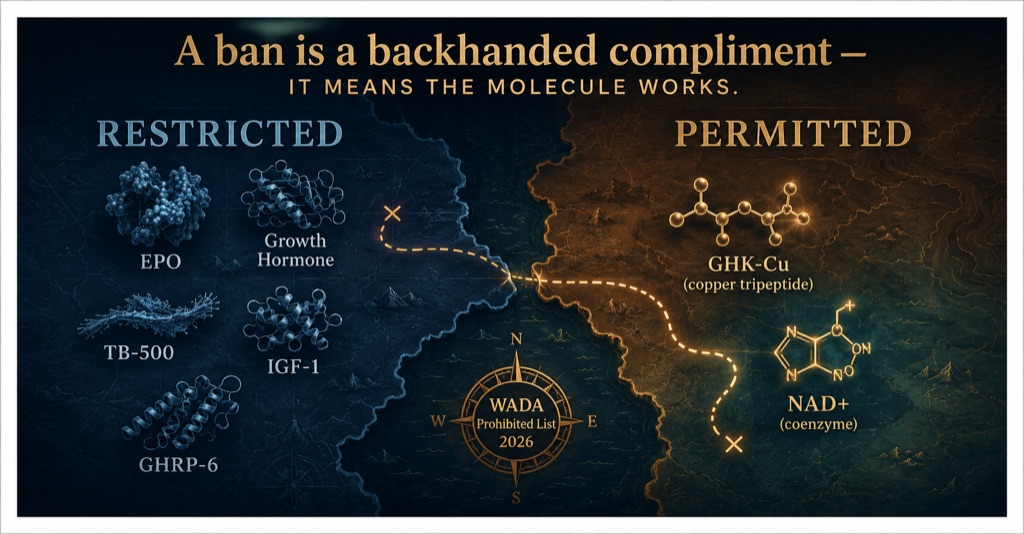
The WADA Prohibited List isn't a wall of "no" — it's a peer-reviewed map of the molecules potent enough to change human physiology. Two notable exceptions, GHK-Cu and NAD+, remain permitted.
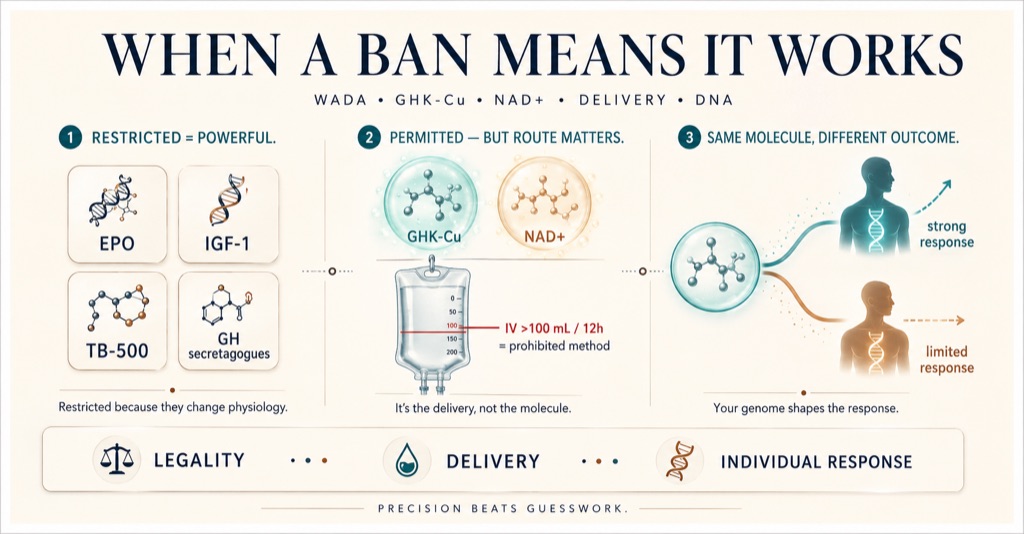
The World Anti-Doping Agency (WADA) Prohibited List is usually treated as a wall of "no." It is better understood as a peer-reviewed inventory of the molecules potent enough to change human physiology — curated every year by scientific, medical, and anti-doping experts, with a substance earning a place only if it meets two of three criteria: it can enhance performance, it poses a real or potential health risk, or it violates the "spirit of sport."[1] A ban, in other words, is a backhanded compliment. It means the molecule works.
For a 47-year-old founder rebuilding a rotator cuff, a physician optimizing her own healthspan, or the parent of a Division-I recruit, the operative questions are the same ones a Tour de France team doctor asks: which of these molecules are genuinely powerful, which are permitted, and why does response vary so wildly between people? This article answers all three — mapping what WADA restricts and why, explaining the science behind two molecules that remain permitted (the copper tripeptide GHK-Cu and the coenzyme NAD+), and then turning to the variable no regulator can legislate: the individual receiving the dose.
The restricted roster — and why athletes want it anyway
WADA distributes peptides across three parts of its code, all worth understanding because they explain both the appeal and the prohibition.[2]
S0 (Non-Approved Substances) is the default baseline: any pharmacological agent not approved for human use anywhere — the "research chemical" peptides — is prohibited at all times, with no medical defense. S2 (Peptide Hormones, Growth Factors, and Mimetics) is the dense core, banned in- and out-of-competition. S4 (Hormone and Metabolic Modulators) captures myostatin inhibitors and metabolic agents.
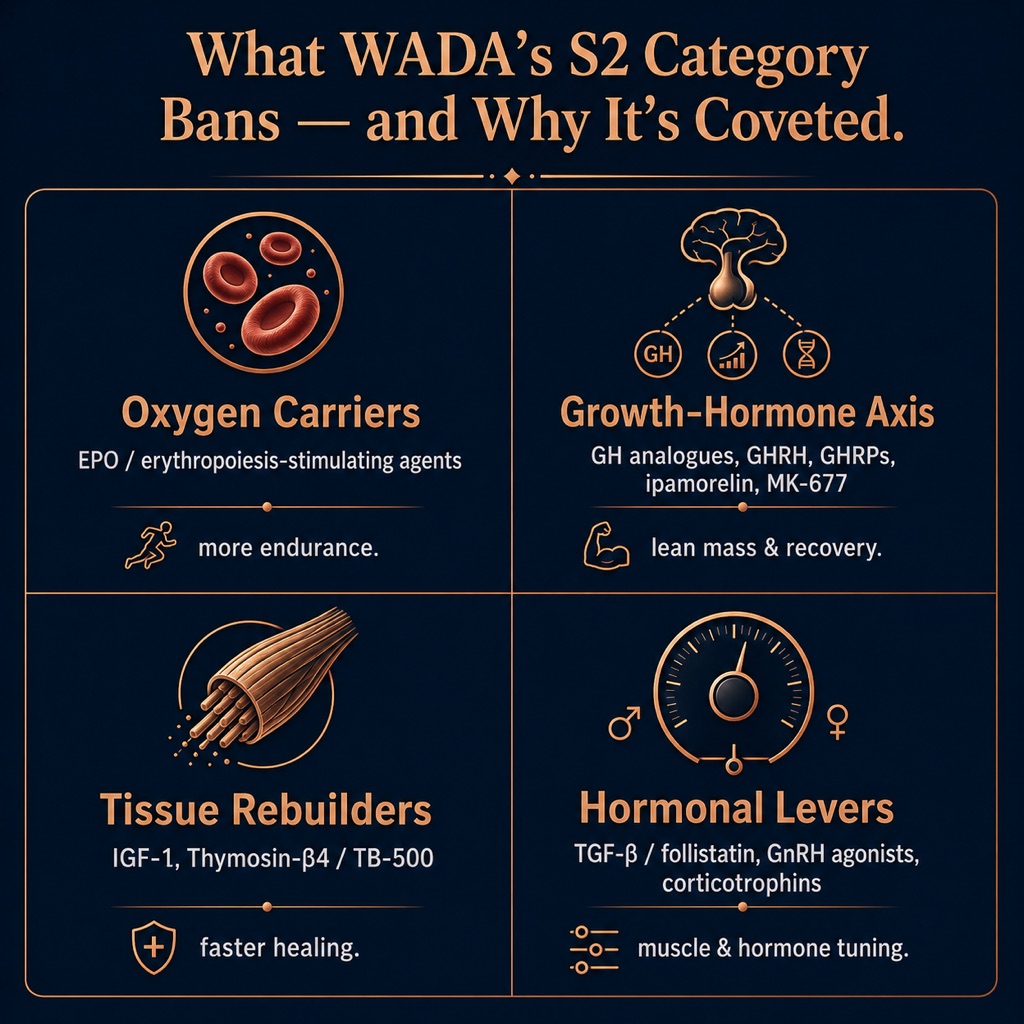
The banned S2 families read like a wish list for performance and recovery — which is precisely why they're prohibited. Restriction is a measure of potency.
The named S2 families read like a catalog of everything the performance and recovery world covets:
- The oxygen carriers — EPO and erythropoiesis-stimulating agents, which raise red-cell mass and endurance. The original blood-doping targets are still among the most effective.[3]
- The growth-hormone axis — GH analogs and fragments (AOD-9604, hGH 176-191), plus a long roster of secretagogues that coax the body into releasing its own GH: GHRH analogs (sermorelin, tesamorelin, CJC-1293, CJC-1295), the GH-releasing peptides (hexarelin, GHRP-1 through GHRP-6, pralmorelin), and ghrelin-receptor agonists (ipamorelin, anamorelin, ibutamoren/MK-677, macimorelin, tabimorelin). Prized for lean mass, sleep quality, and recovery.[4]
- The tissue rebuilders — IGF-1 and its analogs; growth factors affecting muscle, tendon, and ligament; and thymosin-β4 and its derivatives, including TB-500, which is explicitly prohibited. These are the molecules the injury-recovery community reaches for, on the strength of animal and early studies suggesting accelerated healing of tendon, muscle, and connective tissue.[5]
- The hormonal levers — TGF-β signaling inhibitors (the follistatin / myostatin-blocking mechanism behind experimental muscle-growth agents), GnRH agonists, and corticotrophins (ACTH, corticorelin, tetracosactide).[6]
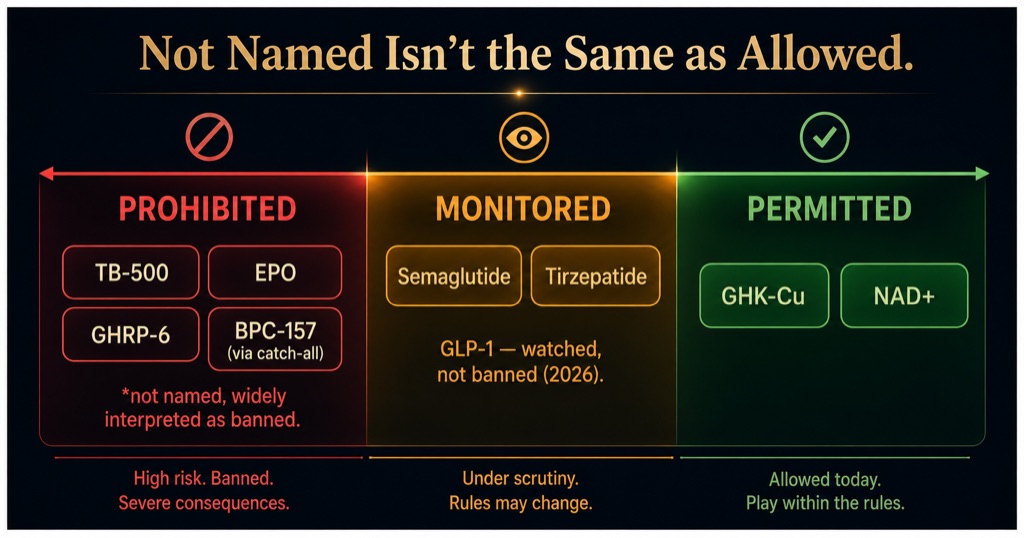
Peptide status isn't binary. BPC-157 is unnamed yet effectively banned; the GLP-1 blockbusters are permitted but monitored; GHK-Cu and NAD+ sit in the clear — for now.
Two compounds generate the most questions. BPC-157 — a synthetic fragment derived from a protein in gastric juice, with an enthusiastic following for gut and connective-tissue repair grounded largely in rodent studies — is not named on the 2026 List, yet the near-universal expert reading is that its tendon-, ligament-, and muscle-directed effects place it squarely inside the S2 catch-all for tested athletes. "Not named" is not "allowed."[7] And the GLP-1 drugs (semaglutide, tirzepatide) from Novo Nordisk and Eli Lilly are, as of 2026, permitted but monitored — WADA is tracking markers of both to watch for misuse before deciding whether that status holds.[8]
The S4 grey zone is where the science gets genuinely fun: epicatechins in cocoa and green tea are documented myostatin inhibitors, follistatin occurs naturally in egg yolk, and the literature lists hundreds of plant-derived aromatase inhibitors.[9] WADA polices by biological effect and intent, not merely by name — the nuance that lets a chocolate bar off the hook while a follistatin injection is prohibited, and the same nuance that shapes the status of the two molecules we turn to next.
One rule that catches even clean molecules
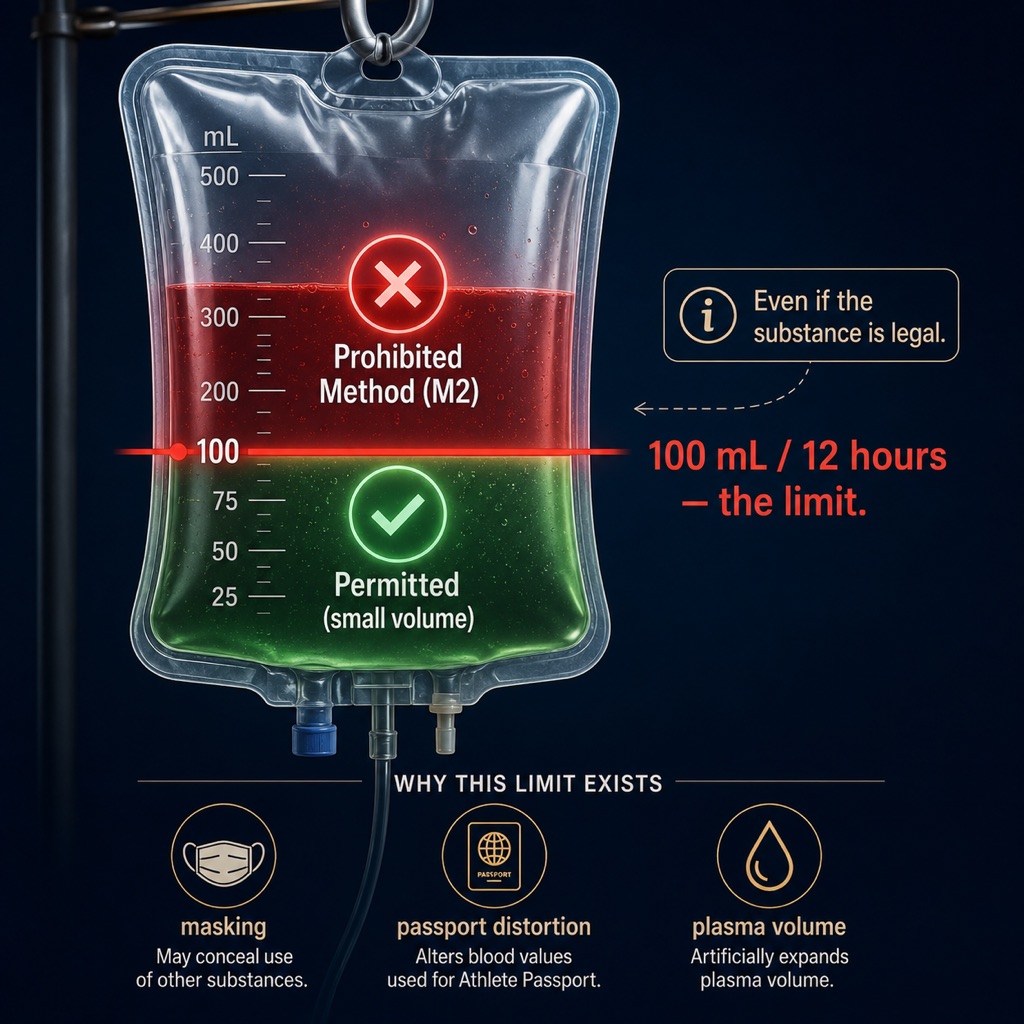
The counterintuitive rule every recovery-lounge regular should know: infusions over 100 mL per 12 hours are a prohibited method — you can commit a violation with saline.
Before celebrating any permitted substance, absorb the rule that surprises everyone who has booked a recovery-lounge IV. Under prohibited method M2, intravenous infusions or injections exceeding 100 mL per 12 hours are prohibited — even when the substance in the bag is entirely legal — barring hospital care, surgery, clinical investigation, or a Therapeutic Use Exemption.[10] The logic: large-volume infusions can mask another agent, distort the Athlete Biological Passport, and manipulate plasma volume. The counter-intuitive result — you can commit a violation with saline — is exactly why an endogenous coenzyme like NAD+ can still cost a tested athlete their career.
The blessed: GHK-Cu and NAD+
Both molecules earn their freedom the same way — the body already makes them, and neither acts through the S2 or S4 performance pathways — but each carries an asterisk around delivery rather than the molecule itself.
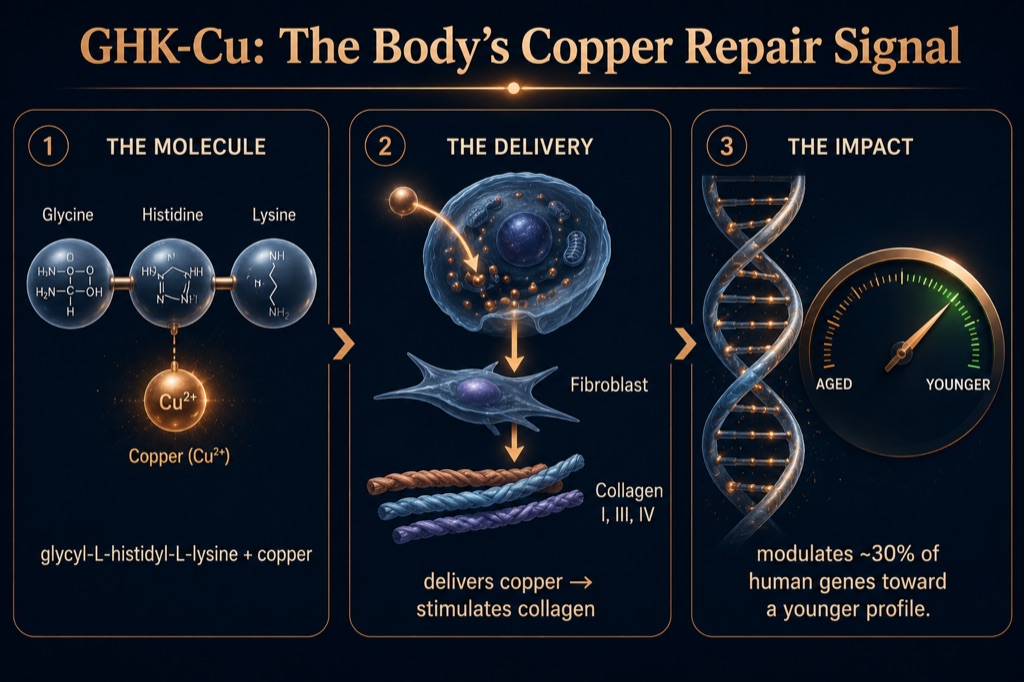
GHK-Cu ferries copper into cells, switches on collagen synthesis at tiny concentrations, and shifts thousands of genes toward a more youthful expression pattern — a molecule your own body deploys to repair itself.
GHK-Cu is glycyl-L-histidyl-L-lysine bound to a copper(II) ion. Its origin story is almost fable-like: in 1973, biochemist Loren Pickart found that incubating aged liver tissue in blood from younger donors made the old cells behave young again — and the active factor was GHK.[11] In 1980, Pickart's team reported in Nature that it works by ferrying copper into cells.[12] It is endogenous and declines with age, from roughly 200 ng/mL of plasma GHK at 20 to about 80 ng/mL by 60.[13]
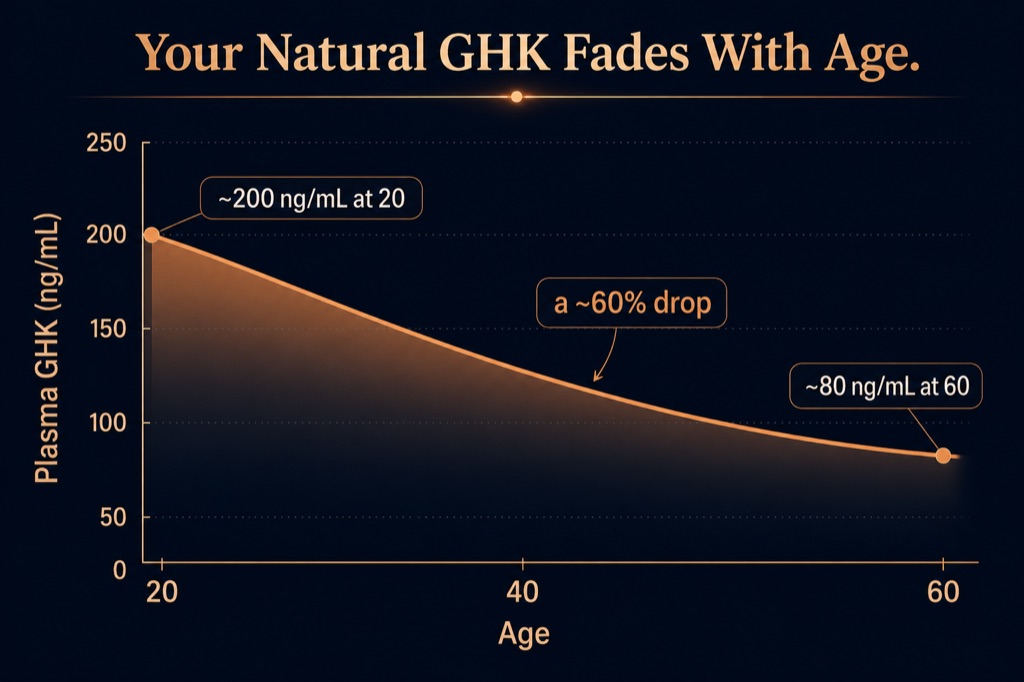
Circulating GHK falls by roughly 60% between ages 20 and 60 — part of why interest in replenishing it has grown among the longevity-minded.
What makes it compelling to the longevity audience is the breadth and quality of its results. Using the Broad Institute's Connectivity Map, Pickart and Margolina documented that GHK-Cu modulates roughly 30–31% of human genes at a significant threshold — thousands of genes — nudging aging expression patterns toward a younger profile and upregulating collagen types I, III, and IV.[14] It stimulates collagen synthesis at astonishing picomolar-to-nanomolar concentrations (Maquart, Pickart et al., FEBS Letters 1988; confirmed in rat wound models, J. Clin. Invest. 1993), improves tissue repair across skin, lung, bone, liver, and stomach lining in animal and human work, and — in a randomized 12-week clinical trial of a GHK-Cu facial and eye cream — reduced fine lines and increased skin density versus control.[15] A 2007 comparison found that it produced significant gains in collagen, elastin, and glycosaminoglycan synthesis, rivaling those of retinoic acid.[16] For a molecule your own body deploys as an emergency repair signal, that is a remarkable dossier.
It is not on the Prohibited List because its dominant use is topical cosmetics, and its mechanism — copper delivery to extracellular-matrix enzymes — is structurally distinct from a GH secretagogue or anabolic agent; it does not raise GH, EPO, testosterone, or IGF-1 through the targeted pathways.[17] The only caveats are delivery-side: honest experts note that systemic, injectable GHK-Cu could theoretically be argued into the S2 connective-tissue catch-all, and in the U.S., injectable compounded GHK-Cu has drawn FDA scrutiny over purity and immunogenicity while topical use stays freely available.[18] The molecule is permitted; the syringe is where the friction lives.
NAD+: the coenzyme that powers the cell
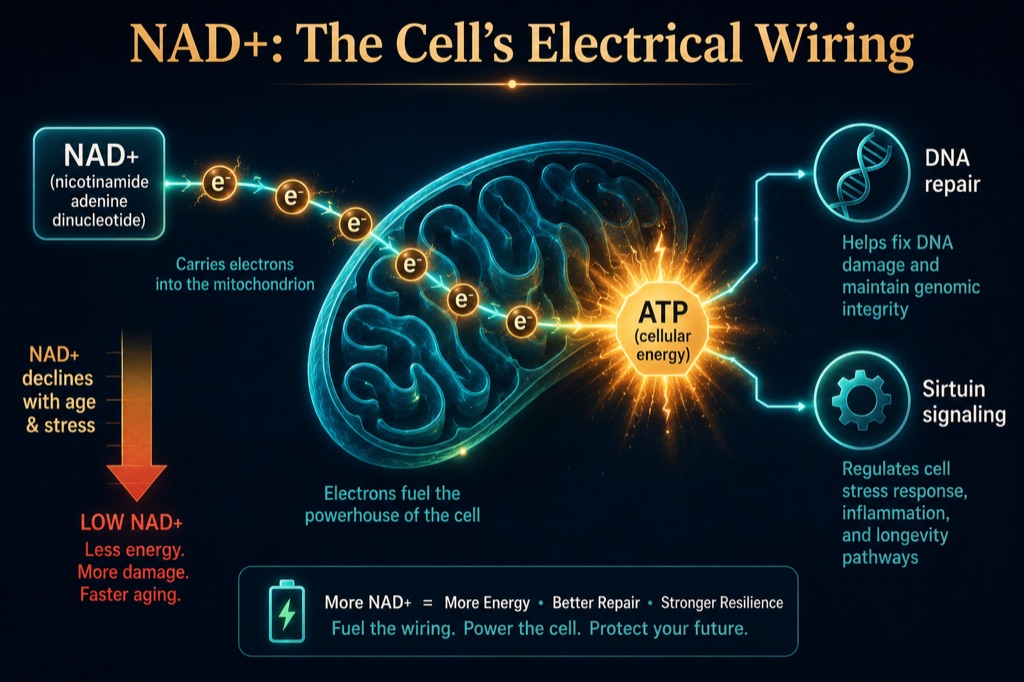
NAD+ is the "wiring" that carries high-energy electrons into your mitochondria to make ATP — and it also fuels DNA repair and sirtuin signaling tied to aging.
NAD+ (nicotinamide adenine dinucleotide) is neither a peptide nor a hormone but a coenzyme in every living cell — the central catalyst of energy metabolism, the "wiring" for the high-energy electrons that drive ATP production, and a participant in DNA repair and sirtuin signaling implicated in aging.[19] Because it is endogenous and acts through none of the List's performance mechanisms, WADA does not prohibit NAD+ or its precursors, NR and NMN.[20]
Read more scientific research from LongevityPlan.AI, or buy peptides from our shop.
The field's founding figure here is Dr. Charles Brenner of City of Hope, who discovered the vitamin activity of nicotinamide riboside and has spent a decade keeping the science evidence-based, showing that metabolic stressors — inflammation, obesity, heart failure, neurodegeneration — measurably deplete the NAD system.[21] He is refreshingly direct about precursor hype, once dismissing a rival compound as one that "doesn't make sense as a supplement or drug."[22]
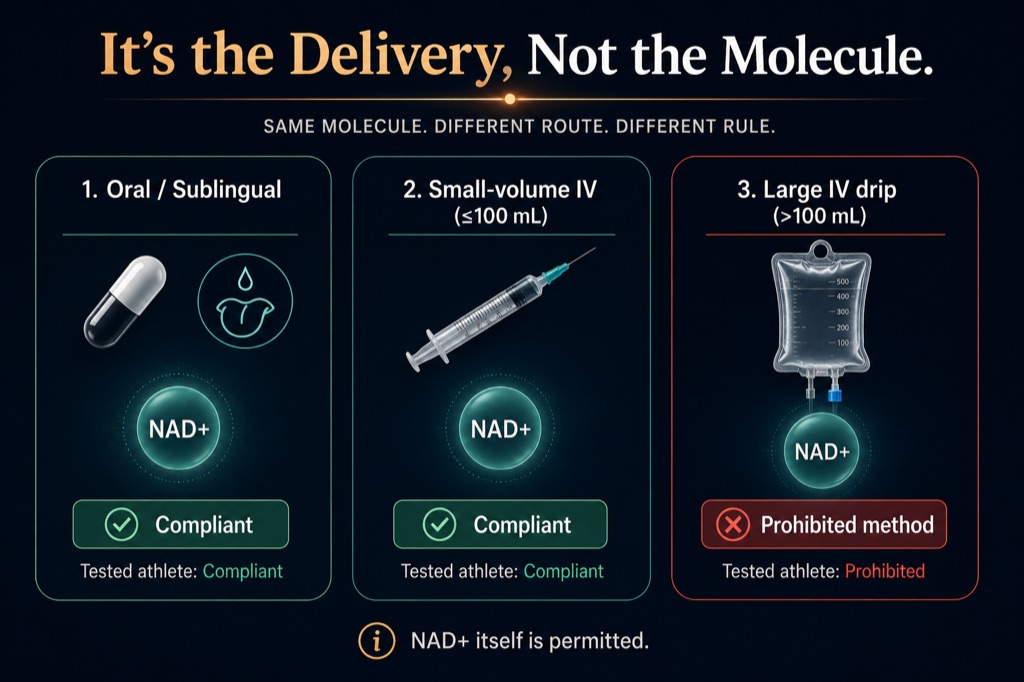
High performers from executives to podcasters swear by NAD+ for energy and recovery — but for a tested athlete, the large IV drip, not the molecule, is what crosses the line.
For a vivid real-world illustration of both the appeal and the delivery caveat, consider Joe Rogan — UFC commentator, martial artist, and host of a podcast reaching millions. Rogan has openly described his NAD+ infusions on-air: the fast intravenous push, he warned, is "excruciating," leaving recipients feeling as though their "guts are on fire" for ten minutes.[23] Yet he credits the therapy with a striking rebound in energy and mental sharpness, once saying he felt "ready to run through a wall" on three hours of sleep.[24] His experience captures the whole story in miniature: a permitted, endogenous molecule that many high performers find genuinely energizing — but delivered through exactly the kind of large IV infusion that would put a tested athlete on the wrong side of the 100 mL rule. Oral, sublingual, or small-volume approaches keep an athlete compliant; the big drip does not. For the non-competing executive, that is a safety-and-value question rather than a legal one — but it is precisely the detail that separates a planned protocol from an expensive guess.
Why detection is so hard — and why that points at genomics
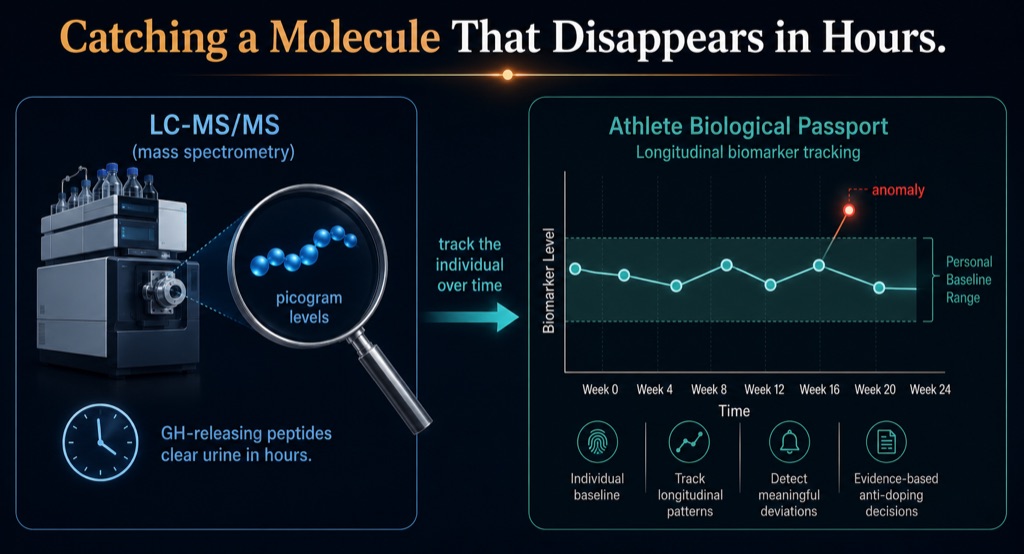
Because peptides vanish fast and circulate at picogram levels, anti-doping science leans on ultra-sensitive mass spectrometry and long-term biomarker tracking — the same "measure the person over time" logic now driving personalized medicine.
WADA relies on broad language and biomarkers because peptides are genuinely difficult to catch. Unlike steroids — small, stable, lingering for weeks — peptides are large, fragile, and cleared fast: GH-releasing peptides can vanish from urine within hours, so an evening injection may read clean by morning. Detection demands liquid chromatography–tandem mass spectrometry at picogram sensitivity, or indirect biomarker signatures such as disturbed GH pulsatility that outlast the drug itself.[25]
The scientists doing this work — Professor Mario Thevis at the German Sport University Cologne, who pioneered the GHRP mass-spec methods; Dr. Christiane Ayotte, longtime director of the WADA-accredited Montreal laboratory at INRS; Dr. Daniel Eichner of Salt Lake City's SMRTL; and Dr. Don Catlin, who founded the UCLA Olympic Analytical Laboratory and later Anti-Doping Research, Inc. — are supported by indispensable large-cap instrument makers (Sciex, Waters Corporation, Thermo Fisher Scientific) and led on policy by figures including WADA's Dr. Olivier Rabin, President Witold Bańka, Director General Olivier Niggli, founding president Richard Pound, and USADA CEO Travis Tygart.[25] Their central insight is the one that now drives personalized medicine: tracking an individual's own biology over time beats any single snapshot. The Athlete Biological Passport was built on it. So, increasingly, is longevity planning.
The variable no list can capture: your genome
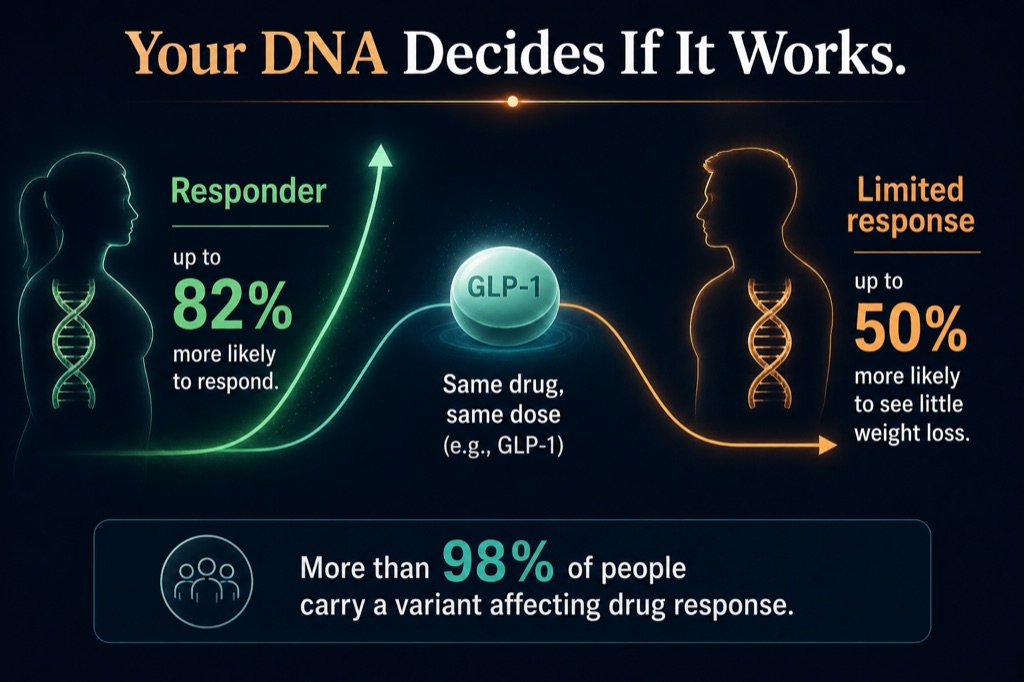
Cleveland Clinic researchers showed a genetic score can predict who thrives on GLP-1 drugs and who barely responds — the clearest sign yet that the person, not just the molecule, determines the result.
WADA can tell you what is prohibited. It cannot tell you what will work for you, and individual response to peptides and metabolic molecules varies enormously, largely because of genetics. The U.S. National Human Genome Research Institute estimates that more than 98% of people carry at least one genomic variant affecting how they respond to a common medication.[26] The "one-size-fits-all" brochure approach to peptides is not merely imprecise; it is obsolete.
The sharpest recent evidence comes from the GLP-1 world: Cleveland Clinic researchers, in Diabetes, Obesity and Metabolism (2025), reported a genetic score that flagged individuals up to 82% more likely to respond significantly to GLP-1 drugs — and separately, those up to 50% more likely not to lose meaningful weight on the same medication.[27] Same molecule, same dose, opposite outcomes, predictable from DNA. If that holds for the most-studied metabolic drugs of the decade, the genetic variance beneath a GH-axis peptide, GHK-Cu's effect on your particular collagen genes, or your personal NAD-salvage efficiency is at least as consequential.
This is the foundation of what LongevityPlan.AI calls the Digital Twin for Predictive Peptide Performance™: a computational model of an individual, seeded with their genome and continuously updated with multimodal health data, used to predict which molecules, at which doses, are most likely to help that person — before the first injection. As The Genomics Company and other precision-genomics groups argue, the genetic assessment is not an add-on to the plan; it is the plan's foundation.
Turning a universal list into a personal protocol
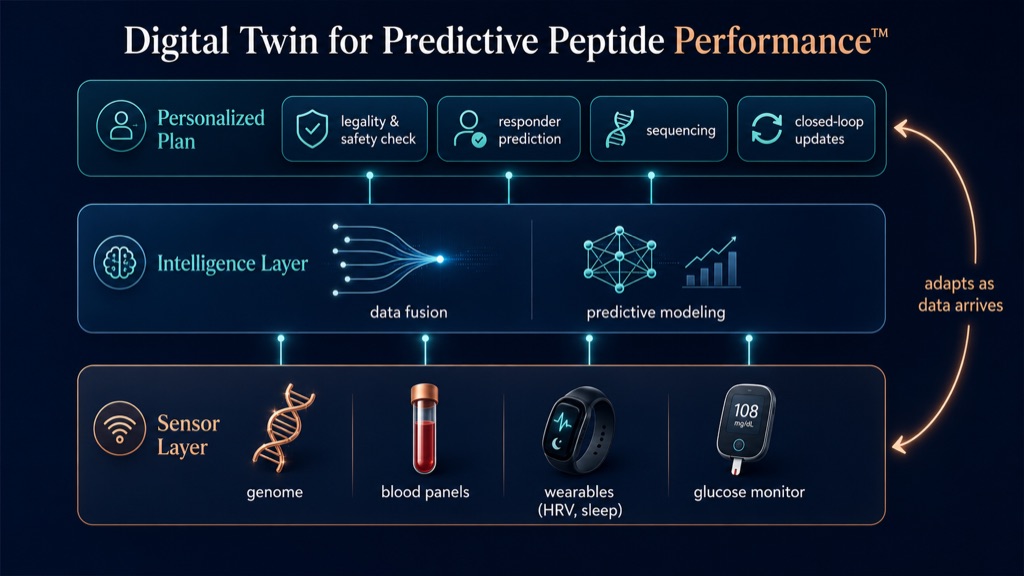
Three layers turn a universal watch list into one person's plan: sensors gather the data, the intelligence layer predicts a response, and the protocol adapts as new results arrive.
A Digital Twin is only as good as its inputs and its modeling. In practice, three layers do the work. The sensor layer supplies raw signals — continuous glucose monitors, wearables tracking heart rate variability and sleep, periodic blood panels, and a one-time genome. The intelligence layer fuses those streams (which rarely speak the same language) and runs predictive modeling to project how a given intervention should affect a given biomarker in a given person. The output is a plan that adapts as data arrives rather than a static PDF — and, for the Coach / Practitioner and Athlete / Patient working together, four concrete advantages:
- Legality and safety screening first — any candidate compound is checked against the current List and the 100 mL rule, so competitors avoid inadvertent violations and everyone gets a quality gate.
- Responder prediction — genomic markers in the GH axis, GLP-1 receptor, NAD salvage, and collagen-synthesis pathways flag, in advance, whether a molecule is a high-yield investment or a likely waste of time and money.
- Sequencing without interference — some peptides synergize while others compete for the same receptors; modeling stages a program rather than stacking blindly.
- A closed loop — as lab and wearable data accumulate, the twin sharpens its predictions.
The market is converging on this from several directions, which is a useful business context for anyone allocating a longevity budget. Comprehensive-panel platforms such as Function Health and Lifeforce lead with biomarker breadth and clinician review — the raw material any model needs. Superpower pushes accessible aggregation of large panels (and, notably, explains GHK-Cu's copper-delivery mechanism with real rigor).[17] Protocol-oriented networks, such as The Protocol and Extension Health, focus on supervised translation of results into action. And a distinct category is emerging around peptide-specific pharmacogenomics — PlexusDx, for instance, markets a genetic test mapping DNA variants across dozens of peptide-relevant pathways, on the argument that mapping variants before a protocol beats discovering them by trial and error.[28] The frontier — and where LongevityPlan.AI positions its Peptide Longevity Plan™ — is the integration layer: stitching together genome, labs, and wearables into a single predictive model rather than leaving the customer to reconcile three dashboards. On the molecule side, ChromaDex (the NR company Brenner advises) shows what clinical rigor looks like in a supplement, while the GLP-1 giants show what happens when a metabolic molecule is validated at scale — and lands on WADA's watch list rather than its ban list.
The list is a map, not a verdict
Read correctly, WADA's Prohibited List is a peer-reviewed guide to the molecules powerful enough to matter, annotated with why. The banned peptides — GH secretagogues, growth factors, TB-500, the EPO family — are restricted precisely because they work, and working carries risk. GHK-Cu and NAD+ earn their freedom by being endogenous, broadly regulatory, and mechanistically distinct from the pathways the List polices — though both still reward attention to how they are delivered.
What no list can supply is the next step: turning a universal inventory into a plan that fits one specific body. That requires answering three separate questions in order: is it permitted for my situation, does my genome predict I will respond, and is the delivery safe and compliant? — which is exactly the problem genomics and AI were built to solve. The anti-doping scientists taught the world to measure the individual over time. Longevity medicine's job is to point that same rigor at building a longer, stronger, sharper life — on purpose, and on the right side of the rules.
Sign up for FREE daily Longevity Club Workshops, or join the Affiliate Program (pays 20%). Subscribe to the Longevity & Peptide Optimization Newsletter.
About the Authors
Tony Medrano is CEO and co-founder of LongevityPlan.AI, a platform that integrates performance and health data and leverages proprietary Digital Twin for Predictive Peptide Performance™ technology, wearable data, and biomarker data to deliver personalized optimization and longevity recommendations. A 3x technology/AI company CEO with 2 successful exits, Tony has completed 3 Full Ironman Triathlons (140.6 mi) since 2019. He holds degrees from Harvard University, Columbia University, and a JD/MBA from Stanford University, and has worked with the US Olympic Team, the NBA, NFL, MLB, NASA, Google, Microsoft, and Netflix, among others. He also served as a US Navy Officer commanding an emergency response team aboard a destroyer.
Marc Anthony Longwith is CEO and founder of Evolved Entrepreneur, an advisory and coaching practice built around the ERI Method (Excavate, Reconstruct, Integrate), a framework he developed to help founders and executives identify and dismantle the internal patterns that quietly cap their growth. Marc works with established founders, executives, special operators, and professional athletes, using a proprietary psychometric assessment called the Logos to profile clients across archetypes, genius scores, and execution patterns before building a tailored path forward. Before building Evolved Entrepreneur, Marc spent 20 years in Las Vegas hospitality as a sommelier and alongside Michelin-star chefs, while competing professionally in mixed martial arts and earning a black belt. He later consulted elite athletes and special operators on pressure literacy drawn from his fighter training, co-founded one of downtown Las Vegas's top-rated breweries, and has since exited two seven-figure brands. He is based in Medellín, Colombia, where he hosts the Evolved Entrepreneur Podcast.
Mike Hollis is the founder of Zealous Wellness and a retired NFL All-Pro kicker. He played nine professional seasons, seven of them with the Jacksonville Jaguars, and was selected to the Pro Bowl in 1998 after leading the NFL in scoring. He now runs ProForm Kicking Academy in Jacksonville Beach, Florida, where he coaches and mentors kickers of all ages, and works as a health coach focused on longevity, health, and vitality. He hosts the Zealous Wellness podcast, where he and Tony Medrano discussed peptide therapy and longevity in an August 2026 conversation.
Disclaimer: This article is educational and is not medical, legal, or anti-doping advice. Athletes subject to testing must verify the current status of any substance or method with WADA, USADA, or their governing body via GlobalDRO before use, as the Prohibited List changes annually. Peptides and infusions carry real risks and should be pursued only under qualified medical supervision.
Endnotes and sources
- WADA, "The Prohibited List"; USADA, criteria for inclusion (two of three: performance enhancement, health risk, spirit of sport). usada.org/prohibited-list; wada-ama.org/en/prohibited-list
- Athletics Integrity Unit, "Understand the Prohibited List" (S0–S9, M1–M3; 2026 List effective 1 Jan 2026). athleticsintegrity.org
- WADA S2 / BSCG summary (EPO and erythropoiesis-stimulating agents prohibited). bscg.org
- WADA 2026 List, S2.2.3–S2.2.4; Drugs.com and BSCG references (GH analogues/fragments AOD-9604, hGH 176-191; GHRH analogues; GHRPs; ghrelin-receptor agonists). drugs.com/wada/s2; bscg.org
- WADA S2 / RethinkPeptides analysis (Thymosin-β4 and derivatives, e.g. TB-500, and IGF-1 prohibited; injury-repair rationale). rethinkpeptides.com
- WADA 2026 List, S2.1.4 (TGF-β inhibitors), S2.2.1 (GnRH agonists), S2.2.2 (corticotrophins: corticorelin, tetracosactide). wada-ama.org/en/prohibited-list
- RethinkPeptides; Neurogan Health (BPC-157 not named on the 2026 List but widely interpreted as prohibited under the S2 catch-all; derived from a gastric-juice protein). rethinkpeptides.com; neuroganhealth.com
- NADA / IWBF on WADA 2026 changes (semaglutide and tirzepatide markers monitored, not prohibited, from 1 Jan 2026). nada.de; iwbf.org
- BSCG, "WADA Prohibited List" (S4 grey area; epicatechins as myostatin inhibitors; follistatin in eggs; natural aromatase inhibitors). bscg.org
- USADA, "IV Infusion: Explanatory Note" (M2; >100 mL per 12 hours prohibited; exceptions and rationale — masking, ABP distortion, plasma-volume manipulation). usada.org/iv-infusions-explanatory-note
- Pickart's 1973 isolation of GHK-Cu from human plasma albumin and the young-plasma / aged-liver observation. en.wikipedia.org/wiki/Copper_peptide_GHK-Cu
- Pickart L. et al., "Growth-modulating plasma tripeptide may function by facilitating copper uptake into cells," Nature 288:715–717 (1980). via PubMed reference list, PMID 29986520
- Plasma GHK decline with age (~200 ng/mL at 20 to ~80 ng/mL at 60). superpower.com/guides/ghk-cu; Wikipedia
- Pickart L. & Margolina A., gene-expression reviews; Broad Institute Connectivity Map (GHK-Cu modulates ~31% of human genes; collagen I/III/IV upregulation). PMID 29986520; guidetopeptide.com
- Collagen stimulation at picomolar–nanomolar concentrations (Maquart, Pickart et al., FEBS Letters 1988; rat wound models, J. Clin. Invest. 1993); tissue repair across skin, lung, bone, liver, stomach (Pickart & Margolina review, 2018); randomized 12-week GHK-Cu facial/eye cream trial (Leyden J.J. et al.). evenskyn.com (research summary); PMID 29986520; prime-journal.com
- 2007 comparison of GHK-Cu to retinoic acid (significant collagen, elastin, and glycosaminoglycan synthesis). guidetopeptide.com
- GHK-Cu not on the WADA Prohibited List; copper-delivery mechanism distinct from growth peptides / receptor agonists. neuroganhealth.com; superpower.com/guides/ghk-cu
- Systemic injectable GHK-Cu as a theoretical S2 catch-all risk; FDA scrutiny of injectable compounded GHK-Cu (immunogenicity/purity) while topical remains available. neuroganhealth.com; honehealth.com
- Charles Brenner, FoundMyFitness (NAD as the "wiring" for high-energy electrons; roles in ATP production and DNA repair); City of Hope faculty profile. foundmyfitness.com/episodes/charles-brenner; cityofhope.org/charles-brenner
- NAD+ and precursors (NR, NMN) not listed on the WADA Prohibited List. relivehealth.com; viverelife.co.uk
- Profile of Charles Brenner, The Proof (discovered NR vitamin activity; metabolic stressors deplete the NAD system; evidence-first critic of hype). theproof.com
- Charles Brenner, quoted in "The Longevity Skeptic," Nautilus. nautil.us/the-longevity-skeptic-305806
- Joe Rogan on the intensity of a fast NAD+ IV push ("excruciating"; "guts…on fire"), as transcribed from the Joe Rogan Experience. raisingnad.com
- Joe Rogan on post-IV energy ("ready to run through a wall" on three hours of sleep), Joe Rogan Experience #74. neuromendcenter.com
- Peptide-detection science and personnel: Thomas A. et al. (2011), LC-MS of GHRPs/metabolites in urine; Barroso O. et al. (2012), analytical challenges (short windows, picogram concentrations), summarized in RethinkPeptides. rethinkpeptides.com
- National Human Genome Research Institute, "Pharmacogenomics Fact Sheet" (>98% of people carry a variant affecting drug response). genome.gov (Pharmacogenomics)
- Cleveland Clinic researchers, Diabetes, Obesity and Metabolism (2025): genetic score identifying individuals up to 82% more likely to respond to GLP-1 drugs and up to 50% more likely not to lose weight, as reported by PlexusDx. plexusdx.com (report summary)
- PlexusDx, Precision Peptide Genetic Test (DNA variants mapped across peptide-relevant pathways; map variants before starting a protocol). plexusdx.com/what-is-genetic-peptide-testing