Wearables
·5 min read
The Wearable VO2 Max Illusion: Don't Be Fooled by Silicon Valley
Why Your $500 Smartwatch Might Be Lying About Your Most Important Health Metric—And What Elite Athletes Actually Use
By Felipe Loureiro, Head Coach at LongevityPlan.AI
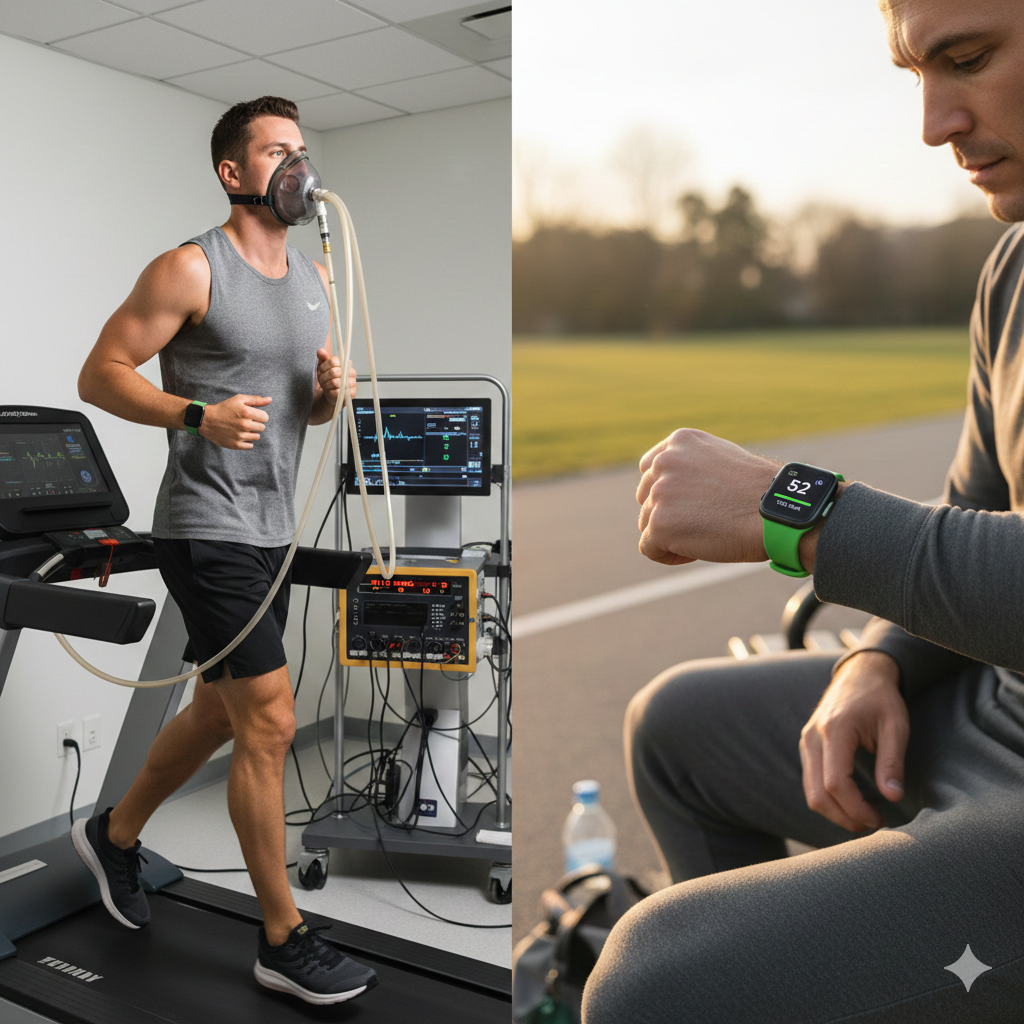
Your Apple Watch just told you your VO2 max is 52. Your Garmin says 48. Your WHOOP claims 45. Which one is right?
The uncomfortable truth: probably none of them.
As a three-time Ironman finisher and CEO of a longevity AI platform, I've spent the last year investigating a question that keeps elite athletes, cardiologists, and longevity-obsessed executives up at night: Can consumer wearables accurately measure the single most important predictor of how long you'll live?
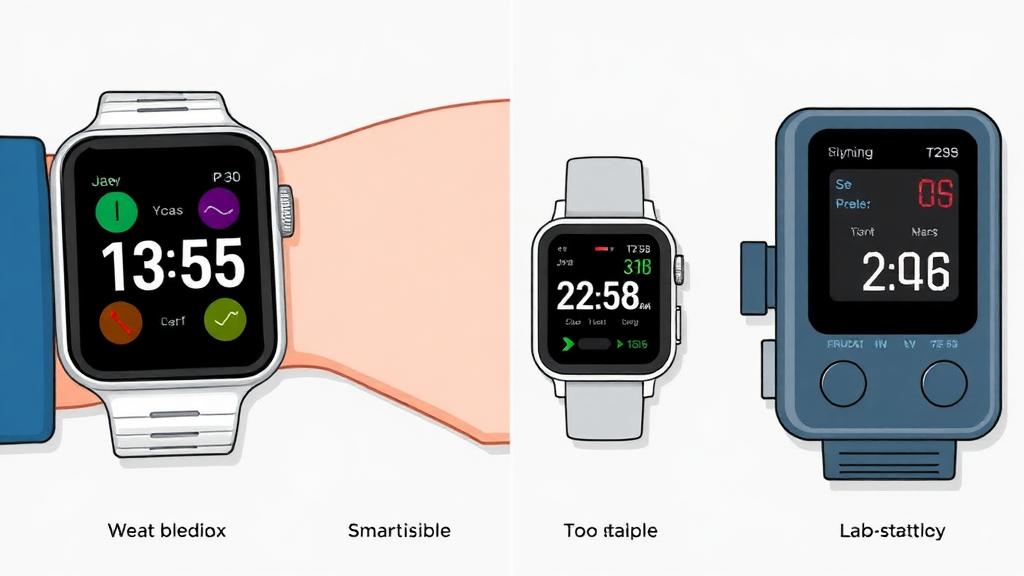 The $50,000 difference: Clinical-grade cardiopulmonary exercise testing (CPET) with direct oxygen consumption measurement versus consumer wearable algorithmic estimation based on heart rate and GPS data.
The $1 Trillion Market Built on a Clinical Biomarker
VO2 max isn't just another fitness metric to gamify. It's the most powerful predictor of longevity we have. Dr. Michael J. Joyner at Mayo Clinic puts it bluntly: "For every one ml/kg/min reduction in VO2 max, you get a 3.3 percent increase in mortality risk." The Cleveland Clinic analyzed 122,007 adults and found that moving from the lowest fitness quartile to just the 25th-49th percentile cut mortality risk by approximately 50%.
Despite its life-or-death importance, VO2 max remains frustratingly difficult to measure accurately outside a clinical setting. A true test requires exercise laboratory equipment, a mask to collect expired air, a treadmill, and trained personnel—costing $200-400 per test. 99.9% of people will never be tested. Enter the wearable revolution.
What VO2 Max Actually Measures
VO2 max—or maximal oxygen consumption—represents the maximum amount of oxygen your body can use during intense exercise. According to Harvard Health, a true test requires an exercise laboratory with computerized gas analysis equipment, a mask, a treadmill or cycle ergometer, and trained personnel. Dr. Joyner's research has shown that training-induced increases in VO2 max are facilitated mainly by expansion of red blood cell volume and associated improvements in stroke volume.
The Validation Studies Silicon Valley Doesn't Want You to See
A 2025 PLOS ONE study by University College Dublin researchers found Apple Watch had a mean underestimation of 6.07 mL/kg/min, with limits of agreement spanning -6.11 to 18.26 mL/kg/min—the difference between "poor" and "excellent" fitness. The researchers concluded: "Apple Watch VO2 max estimates require further refinement prior to clinical implementation."
A separate study in npj Cardiovascular Health examined both Apple and Garmin devices in 48 adults with complex congenital heart disease and found a "large positive bias," emphasizing that clinical CPET provides critical additional metrics like anaerobic threshold and oxygen uptake efficiency slope that wearables simply cannot measure.
Garmin claims 95% accuracy with less than 3.5 ml/kg/min error via Firstbeat Analytics, but buries a critical caveat: accuracy depends on your maximum heart rate matching the formula (220 minus age). If your actual HRmax deviates by 15 bpm—common in many individuals—estimates are off by 7-9%.
Consumer wearables face fundamental challenges: optical heart rate sensors are less reliable during high-intensity exercise, GPS accuracy varies by environment, population-based algorithms can't capture individual physiology (mitochondrial density, cardiac output, muscle fiber composition), and no device directly measures gas exchange. As one Nature study examining the Fenland cohort of 11,059 participants noted, fewer than 5% of consumer wearables have been validated for their full range of biometric outcomes.
A Coach's Perspective
Felipe Loureiro, Head Coach at LongevityPlan.AI and founder of Breakaway Training, notes: "The average serious athlete now owns 3-5 different wearables. They might have an Apple Watch for daily activity, a Garmin for structured training, an Oura ring for sleep and recovery, a WHOOP strap for strain tracking, and perhaps a continuous glucose monitor from Levels or Supersapiens."
Add to that biomarker testing from InsideTracker, TruDiagnostic for epigenetic age, Function Health for comprehensive panels, and training platforms like Strava, TrainingPeaks, or Today's Plan. The result? Data overload without actionable integration.
What Elite Athletes Actually Use
PNOĒ: Clinical Precision, Portable Form Factor
PNOĒ represents a middle ground between $50,000 laboratory equipment and consumer wearables. Validation data shows correlation coefficients of r ≈ 0.98 for VO2, VCO2, RQ, and ventilation against gold-standard COSMED Quark CPET, with test-retest reliability around ICC ≈ 0.98. Over 30 universities and 500+ fitness centers in the US now use PNOĒ.
Fountain Life
For those willing to invest, Fountain Life—co-founded by Tony Robbins, Peter Diamandis, and Dr. Bill Kapp—offers the APEX Longevity membership ($19,500/year) including full-body and brain MRI scans, AI-assisted coronary CT angiography, genome sequencing, and their AI health assistant Zori.
TruDiagnostic: The Epigenetic Layer
TruDiagnostic's TruAge test analyzes over 900,000 methylation markers to calculate your biological age and pace of aging. Developed in partnership with Harvard Medical School, Yale University, and Duke University, their OMICmAge algorithm from Brigham and Women's Hospital goes beyond simply telling you if you're aging faster—it explains why.
The VO2 Master Pro
The gold standard for portable analysis: the VO2 Master Pro achieves measurements within 0.3 L/min of gold standard. Submaximal estimation protocols offer a middle ground—trained exercise physiologists can estimate VO2 max from heart rate responses to standardized workloads with 5-8% error margins.
The Path Forward
The solution isn't abandoning wearables—it's understanding their limitations. Use wearable estimates for trend tracking (is your fitness improving or declining over months?), not absolute clinical assessment. Get a baseline CPET test if possible, then calibrate your wearable readings against it. Dr. Aaron Baggish at Massachusetts General Hospital has shown that cardiac size and VO2 max correlate strongly (r=0.79 for left ventricular mass), explaining 73% of variance. The most important thing isn't the precision of your number—it's whether you're training consistently to improve it.