Longevity
·3 min read
What's the Science of Longevity?
What Does it Matter?
By Tony Medrano, CEO
The question isn't whether we'll live longer—life expectancy has been climbing for decades. The real question is whether we'll live better. As Northwestern University's Douglas Vaughan puts it: "Aging is a primary risk factor for every disease affecting adults—including diabetes, arthritis, dementia, heart disease, diabetes, aging-related cancer, hypertension, and frailty. The biological processes that drive aging may be malleable."
That last sentence is the key. For the first time in human history, we're not just treating the symptoms of aging—we're targeting aging itself at the molecular level. And the results are nothing short of revolutionary.
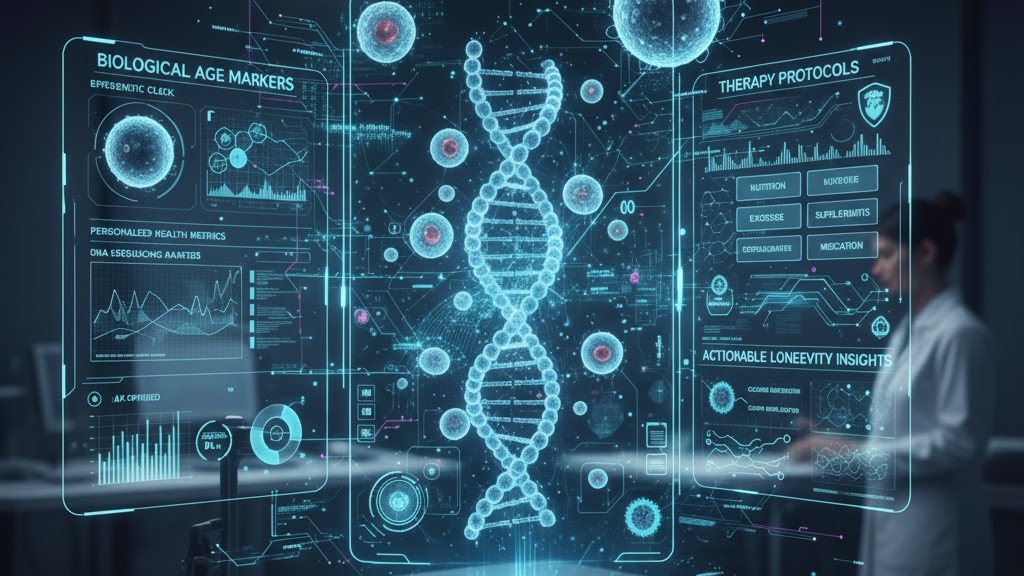
 AI-powered precision medicine is transforming longevity science by analyzing millions of biomarkers to create personalized healthspan optimization protocols tailored to individual biological profiles.
The $600 Billion Convergence: When Silicon Valley Meets Biotech
The longevity technology market surpassed $600 billion in global valuation in 2025. This isn't just venture capital hype. The cost of age-related chronic diseases will reach $47 trillion globally by 2030, while increasing life expectancy by just one year is worth $38 trillion. Alex Zhavoronkov, founder of Insilico Medicine, recently ran the first human trial of a drug designed entirely by generative AI. What traditionally took 2.5 to 4 years—from target identification to preclinical candidate nomination—Insilico now accomplishes in 12 to 18 months, synthesizing only 60 to 200 molecules per program compared to thousands in traditional pipelines.
The Epigenetic Clock: Your Body's True Age
If you're 45 years old, are you really 45? Not according to your epigenetic clock. Steve Horvath demonstrated that DNA methylation patterns can predict chronological age with a correlation coefficient of r = 0.96. A five-year elevation of DNA methylation age compared with chronological age is associated with a 16% higher mortality risk. The Northwestern University Human Longevity Laboratory is now enrolling diverse participants to map how aging affects different populations. In 2025, researchers developed new epigenetic clocks based on histone modifications, and UCLA discovered that measuring methylation entropy predicts age with similar accuracy while providing new information about the loss of epigenetic information that may drive aging.
From Lab Bench to Locker Room: The Athletic Revolution
Professional athletes have become unexpected pioneers in longevity science because they need what everyone wants: peak performance, rapid recovery, and extended productive years. A 2025 peer-reviewed study found that Oura Ring Gen3/Gen4 and WHOOP 4.0 outperformed other devices in measuring heart rate variability—a key metric for recovery and autonomic nervous system function. Professional athletes from Michael Phelps to Cristiano Ronaldo to LeBron James rely on WHOOP's strain and recovery metrics to optimize training loads.
NAD+: The Molecule That Matters
Nicotinamide adenine dinucleotide (NAD+) is essential for cellular energy production, DNA repair, and cellular defense mechanisms, but levels decline significantly with aging. A groundbreaking multicenter, randomized, double-blind, placebo-controlled trial tested NMN supplementation in 80 healthy middle-aged adults. Both 600mg and 900mg doses significantly increased blood NAD+ concentrations, with the 900mg group showing the most pronounced improvements in physical performance. NASA has taken notice—research shows NMN improved bone density in weightlessness models by restoring bone NAD+ levels.
Senolytics: The Cellular Spring Cleaning
James Kirkland and his team at Mayo Clinic pioneered the discovery that dasatinib combined with quercetin could selectively clear senescent cells. The first human clinical trial showed decreased adipose tissue senescent cell burden, reduced inflammation and fibrosis, and lower circulating senescence-associated secretory phenotype factors for at least 11 days after the last dose. More than 30 clinical trials of senolytic agents are now completed, underway, or planned—targeting osteoporosis, diabetic kidney disease, Alzheimer's disease, and age-related frailty. The next generation includes antibody-drug conjugates, CAR-T cells targeting senescent cells, and even vaccines against senescence markers.