Well-being
·3 min read
The Science of Happiness
How Well-Being Extends Life and What It Means for the Future of Health
By Priyanka Balasaheb & Tony Medrano, CEO
Humanity's pursuit of happiness is as old as philosophy itself. Yet for most of history, joy was treated as a luxury—pleasant but peripheral to survival, a matter of temperament or fortune rather than something we could systematically cultivate. Philosophers pondered it, poets celebrated it, but no one could measure it, predict it, or reliably create it.
That changed at the turn of the millennium when psychology underwent a quiet revolution. Scientists began asking a radical question: What if we studied not just what makes people miserable, but what makes them thrive? What if happiness wasn't merely the absence of depression but its own measurable phenomenon with distinct causes, mechanisms, and—most remarkably—biological consequences?
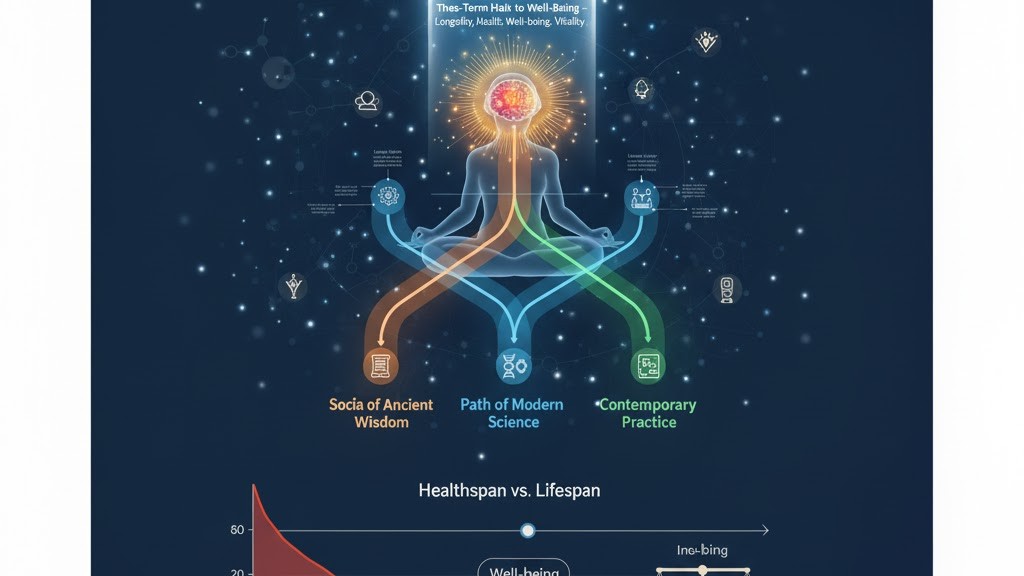
 Research reveals that happiness operates through specific biological pathways—neuroendocrine regulation, immune function, and cellular aging—that directly determine not just how long we live, but how many of those years we live in full health and vitality.
When Happiness Became a Science
Martin Seligman stood before the American Psychological Association and proposed a radical reframing: What if psychology studied what makes life worth living? He developed the PERMA model—positive emotion, engagement, relationships, meaning, accomplishment—and demonstrated these elements predicted everything from workplace productivity to longevity. Ed Diener at the University of Illinois pioneered subjective well-being measurement, revealing that while genetics accounts for roughly 50% of our baseline happiness, a substantial portion remains within our control. His longitudinal studies found people with higher well-being scores lived four to ten years longer than their less satisfied peers.
Daniel Kahneman distinguished between the "experiencing self" and the "remembering self," showing we judge experiences primarily by their peaks and endings. Mihaly Csikszentmihalyi studied "flow"—those absorbed states where time disappears—showing that people who regularly experience flow show biomarkers associated with reduced inflammation and improved immune function.
The Longevity Dividend: How Happiness Extends Life
The Nun Study provided an almost perfect natural experiment. The School Sisters of Notre Dame shared similar diets, abstained from alcohol and tobacco, had comparable socioeconomic status, and received identical healthcare. What differed was the emotional content of autobiographies they'd written sixty years earlier. The emotional content of a few pages written at age twenty-two predicted health outcomes six decades later. Many nuns' brains showed extensive Alzheimer's pathology at autopsy, yet they had remained cognitively intact until death—positive emotions had built "cognitive reserve."
The Harvard Study of Adult Development, beginning in 1938 and running for over 85 years, found that the quality of relationships at age fifty predicts health at age eighty more powerfully than cholesterol levels. Chronic loneliness is as damaging as smoking fifteen cigarettes daily. The Whitehall Studies found that lower-status jobs with less control and autonomy were far more harmful than high-stress executive positions—people in the lowest employment grades had mortality rates three times higher.
The Biology of Positive Emotion
How does happiness get "under the skin"? Through multiple biological pathways: happier people show healthier cortisol patterns; greater parasympathetic activation and better vagal tone; lower inflammatory markers; enhanced cellular and humoral immunity; longer telomeres and higher telomerase activity; altered gene expression through epigenetic modifications; and better health behaviors including regular exercise, balanced diets, and adequate sleep.
Richard Davidson's laboratory at Wisconsin-Madison found that employees who completed an eight-week mindfulness program showed increased left-sided anterior brain activation and produced significantly more flu antibodies. Barbara Fredrickson's "broaden-and-build" theory demonstrated that positive feelings literally expand our visual field, increase creative thinking, and build durable assets: resilience, social bonds, and coping skills. Sonja Lyubomirsky's research revealed that roughly 40% of happiness is determined by intentional activities—representing an enormous opportunity for intervention.
The Path Forward
Shawn Achor at Harvard flipped conventional wisdom: success doesn't lead to happiness—happiness leads to success. Positive brains are 31% more productive, achieve 37% higher sales, and show 19% greater diagnostic accuracy. Simple daily practices—writing three gratitudes, journaling, exercise, meditation, acts of kindness—create measurable improvements in well-being within three weeks. The science is clear: subjective experience exerts forces on our biology as powerful as diet, exercise, and medication.