Sports Medicine
·16 min read
The Scalpel's Dilemma
How Defensive Medicine Drives Unnecessary Surgery in High-Stakes Athletics—And What AI-Powered Longevity Planning Can Do About It
By Dr. Eric Rightmire, Board Certified Orthopedic Surgeon, LongevityPlan.AI Board Member
When Robert Griffin III limped back onto the field during that 2013 playoff game despite obvious injury, millions watched a collision between athletic ambition and medical judgment unfold in real time. The pressure on team physicians to keep star athletes competing—coupled with the looming specter of malpractice litigation—creates a perfect storm for defensive medicine: the practice of performing tests, procedures, or surgeries primarily to avoid liability rather than optimize patient outcomes.
Twenty years after Griffin's career-altering decision, the defensive medicine crisis has metastasized beyond professional sports into a $46 billion annual drain on the U.S. healthcare system. But here's the twist nobody saw coming: the same AI technologies revolutionizing drug discovery and personalized medicine are now offering an escape route from this vicious cycle—one that prioritizes data-driven prevention over litigation-driven intervention.
The Epidemic Nobody Wants to Admit
The numbers are staggering. A landmark study of 824 U.S. surgeons and specialists found that 93% reported practicing defensive medicine—ordering unnecessary CT scans, biopsies, MRIs, and prescribing antibiotics beyond medical need. In high-stakes sports medicine, where careers and multi-million dollar contracts hang in the balance, these pressures intensify exponentially.
"The functional demand out of an injured area is significantly higher in athletes than in non-athletes, which may be the reason for a higher rate of recurrent injuries and secondary injuries," notes research published in the Journal of Arthroscopy and Joint Surgery. This creates what I call the "surgery-first trap": when facing a 23% risk of re-injury after ACL reconstruction, why wouldn't athletes and their medical teams opt for aggressive surgical intervention?
The answer lies in understanding defensive medicine's two faces. Positive defensive medicine involves overutilization—excessive testing, over-diagnosing, and overtreatment. Negative defensive medicine manifests as avoiding high-risk patients or procedures entirely. In elite athletics, we see both: surgeons performing procedures that might be premature or unnecessary while simultaneously refusing to treat athletes with complex co-morbidities.
Dr. Michael Frakes' framework on defensive medicine identifies "Binary Treatment Dynamics" with critical threshold cutoffs. Physicians recommend interventional treatment when health risk exceeds their comfort threshold—but in high-pressure athletic environments, that threshold gets artificially lowered by litigation fears, career pressures, and the athlete's own desperation to return to play.
The Real Costs: Beyond Dollars
Research by the Cleveland Clinic examined three hospital medicine services and found that 28% of orders and 13% of costs were judged at least partially defensive, with 2.9% of costs deemed completely defensive. But strip away the healthcare system perspective and focus on the individual athlete: what does defensive medicine actually cost them?
Consider the physical toll. Nearly 20% of Division I football athletes require operative management over a 10-season career, with knee injuries accounting for 49.4% of surgeries requiring high school athletes. Post-surgery recovery demands 6-9 months that "athletes seldom allow themselves," creating the "vicious cycle of injury and re-injury." Each surgical intervention carries infection risks, blood clots, and post-operative complications—hazards that conservative physical therapy could avoid.
The psychological dimension is equally devastating. As Dr. Robert Flannery from University Hospitals notes, "If you talk to an athlete and ask them to describe themselves, one of the first things out of their mouths is 'I'm a football player... I'm a soccer player.' That's part of their identity. If they're injured and can't play, it takes away some of their identity and purpose." The pressure to undergo surgery stems not just from medical advice but from athletes' core sense of self—making them uniquely vulnerable to overtreatment.
Then there's the career calculus. Professional athletes face tremendous pressure: 52% of NFL players use opioids at some point during their career, often to "play through the pain" rather than properly recover. The downward spiral from injury to surgery to pain medication to potential addiction represents defensive medicine's darkest endpoint.
Why Traditional Reform Has Failed
For decades, the medical establishment has promoted tort reform—primarily caps on malpractice damages—as the solution to defensive medicine. The results? Disappointing at best.
A comprehensive systematic review of 37 studies concluded that "traditional tort reform methods may not be sufficient for health reform." Damage caps limit the economic consequences of lawsuits but don't reduce the risk of being sued or the psychological trauma of litigation. Most critically, they fail to address the cultural and systemic factors driving defensive behavior.
Here's what research actually shows:
- Estimated savings from a 10% decline in malpractice premiums would be less than 1% of total medical care costs in every specialty
- The Congressional Budget Office analysis found total healthcare expenses saved through tort reform would be merely 0.3%
- Physicians' perception of malpractice risk rarely correlates with their state's actual tort system stringency
Alternative approaches show more promise but remain largely theoretical. Safe harbors for physicians adhering to evidence-based clinical guidelines could encourage cost-effective care—but only 12 states have implemented any form of this protection. Communication-and-resolution programs that prioritize disclosure and apology show potential, but the Agency for Healthcare Research and Quality's demonstration projects are still in evaluation.
The fundamental problem? We're treating symptoms, not causes. Defensive medicine stems from a "deep crisis in the relationship between doctors and society"—one that won't be solved by adjusting liability caps or courtroom procedures alone.
The AI Revolution: From Reactive to Predictive
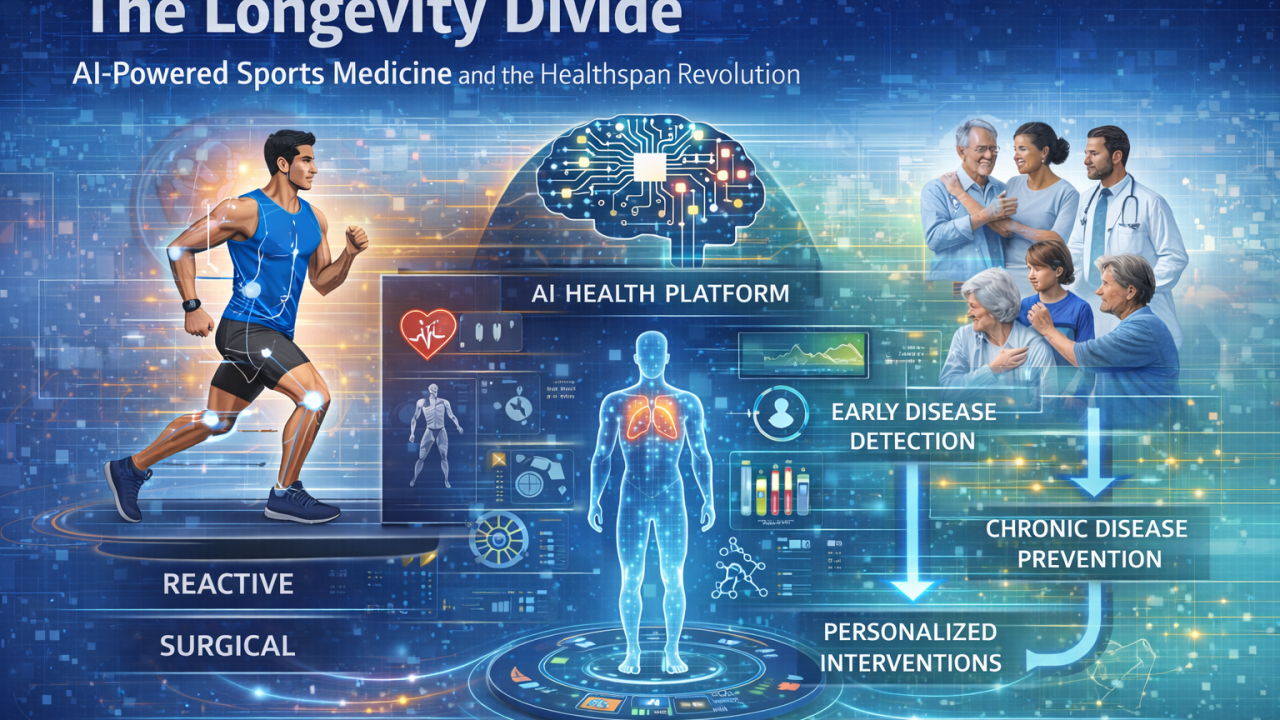
Enter the convergence of artificial intelligence, personalized medicine, and what I term the Cardiorespiratory Digital Twin™—a dynamic, data-driven replica that enables real-time monitoring, predictive analytics, and truly personalized interventions.
Professor Brian Kennedy from the National University of Singapore's Department of Biochemistry & Physiology explains: "We tested AI methods using real-world examples such as medicines and dietary supplements. We found that by following specific guidelines, AI can provide more accurate and detailed insights." His collaborative study with Professor Georg Fuellen at Rostock University Medical Center proposes comprehensive standards for AI systems in longevity research and aging interventions.
The implications for sports medicine are profound. Instead of waiting for injuries to occur and then reacting defensively with aggressive surgical intervention, AI-powered systems can predict injury risk, optimize training loads, and implement preventive strategies—all while generating the documentation that traditionally drives defensive medicine.
Consider how this works in practice:
Predictive Injury Modeling
Insilico Medicine, led by founder and CEO Dr. Alex Zhavoronkov, has pioneered AI-driven drug discovery that reduced development timelines from 3-6 years to 12-18 months. Their Pharma.AI platform doesn't just discover drugs—it identifies biological targets by analyzing "large amounts of data from many components," as Nobel Prize winner Dr. Michael Levitt describes it.
Apply this same approach to athletic injury: instead of waiting for an ACL tear and defensively recommending surgery, AI systems analyze biomechanical data, genetic predispositions, training loads, and recovery metrics to identify at-risk athletes months in advance. Intervention becomes preventive, not reactive.
Personalized Treatment Optimization
Fountain Life's Zori AI—winner of the 2025 Global Tech Awards in HealthTech—demonstrates the power of integrated health data. Zori continuously analyzes clinical diagnostics (full-body MRIs, genomic sequencing, metabolic panels) alongside real-time wearable data from Apple Watch, Oura Ring, Whoop, and continuous glucose monitors.
Dr. Bill Kapp, Fountain Life's CEO and co-founder, articulates the paradigm shift: "We're no longer waiting for symptoms, we're preventing disease before it starts. This is the next frontier of medicine." For athletes, this means no longer waiting for catastrophic injuries before intervening—and no longer resorting to defensive surgical procedures when conservative treatments could suffice.
Evidence-Based Decision Support
The challenge that team physicians face—determining whether a given surgery is medically necessary or defensively motivated—gets clearer when AI systems can instantly compare an athlete's case to thousands of similar injuries with documented outcomes.
Longevity AI, a platform used by functional medicine practitioners, pulls biomarker data directly from lab results and "organizes it in a way that's clinically useful," according to Dr. Ingemaud Gerber. When applied to sports medicine decisions, these systems can flag when proposed interventions deviate from evidence-based protocols, providing both clinical teams and athletes the confidence to resist defensive overtreatment.
Digital Twin Technology
The concept of aging digital twins (ADTs)—virtual replicas that mirror an individual's biological systems—is transforming longevity medicine. Research published in Current Opinion in Neurobiology describes how ADTs enable "real-time monitoring, predictive analytics and highly personalized medical care."
For athletes, a Cardiorespiratory Digital Twin™ goes beyond simple fitness tracking. It creates a complete physiological model incorporating cardiovascular function, respiratory capacity, metabolic efficiency, musculoskeletal stress patterns, and recovery dynamics. This digital doppelganger can simulate different treatment pathways—surgical versus conservative—and predict outcomes based on the athlete's unique biology.
As documented in research by Rostock University Medical Center, "Digital twin-guided interventions for hypertension and type 2 diabetes patients demonstrated improved blood pressure, microalbuminuria and medication adherence." Imagine similar precision applied to torn meniscus decisions: the digital twin simulates both surgical repair and targeted physical therapy, showing which path leads to better long-term joint health and athletic performance.
The Corporate Players Reshaping the Landscape
Several major corporations and innovative startups are driving this transformation:
Established Giants
Eli Lilly has deepened its collaboration with Insilico Medicine, with deals exceeding $100 million, recognizing that "pharmaceutical companies are beginning to view these collaborations as strategic necessities rather than speculative experiments." Lilly's metabolic disease programs, combined with Insilico's AI-generated GLP-1 receptor agonists, may represent "the first wave of longevity therapeutics increasing both healthspan and lifespan in a large population."
NVIDIA, through its digital biology initiative, is positioning AI-driven biomedical research as the "next amazing revolution." President Jensen Huang declared: "For the very first time in human history, biology has the opportunity to be engineering, not science."
Amazon Web Services has become the infrastructure backbone for companies like Insilico Medicine, which uses Amazon SageMaker to reduce ML model iteration time from 50 to 3 days—a 16-fold acceleration. This democratizes access to powerful AI tools that can prevent defensive medicine by making sophisticated predictive analytics available beyond elite research institutions.
Innovative Disruptors
Fountain Life, co-founded by Tony Robbins, exemplifies the direct-to-consumer longevity model. With $108 million in funding, they've built luxury diagnostic centers that combine full-body MRI, CCTA heart scanning, genetic testing, and biological age assessment—then synthesize everything through Zori AI. Their integration with "all major wearables" creates what CTO Chris Hemp calls "a unified data stream that connects these devices and AI-driven insights."
Longevity AI targets functional medicine practitioners with their "Book About You" platform that translates health data into "longevity insights and a clear, actionable plan." Their focus on preventive care rather than reactive treatment directly counters defensive medicine's intervention-heavy approach.
SRW Laboratories partnered with Insilico Medicine to develop "next-generation anti-aging and longevity nutraceuticals" using AI-identified biological pathways. Founder Greg Macpherson envisions personalized formulations: "We could create a formula that's designed for you, which for example, could bring your organs back to the [biological] age where it should be."
Academic Powerhouses
Stanford University, through researchers like Nobel Prize winner Dr. Michael Levitt (Insilico Medicine's Scientific Advisory Board), bridges academic rigor with commercial application. Dr. Levitt's declaration—"The protein-folding problem that was a very difficult problem for 50 years, and drug design, are all being dealt with in this global, all-encompassing way"—signals how AI is fundamentally restructuring biomedical research.
National University of Singapore's Yong Loo Lin School of Medicine leads collaborative aging research with Germany's Rostock University Medical Center. Their 2025 publication in Ageing Research Reviews establishes validation requirements for AI-based interventions, creating the scientific foundation that could give physicians legal protection when following AI-guided recommendations instead of defensive surgical protocols.
UCSF Sports Medicine Center, treating everyone "from recreational to elite" athletes including UC Berkeley teams and U.S. Olympians, performs over 1,000 surgeries annually while conducting research on ACL injuries, rotator cuff tears, and concussions. Their integration of research with clinical practice positions them to evaluate how AI tools can reduce unnecessary procedures.
Stop-Gap Measures: What Works Right Now
While we await the full AI revolution, several immediate interventions can reduce defensive medicine in sports:
Institutional Support for Physicians
Research shows that physicians involved in adverse events receive "poor and inefficient" institutional support, creating the psychological trauma that drives defensive behavior. Sports medicine departments should implement:
- Peer support programs for physicians facing litigation
- Mental health resources addressing the stress that leads to defensive practices
- "Second victim" programs recognizing that clinicians need support after adverse outcomes
Enhanced Informed Consent Processes
The key to reducing defensive surgery? Ensure athletes truly understand their options. Dr. Kara Fitzgerald's 2025 Practitioner Survey on AI and wearables in functional medicine found that education and agency over health data dramatically improves outcomes.
Athletes should receive:
- AI-generated risk-benefit analyses comparing surgical versus conservative treatment
- Access to outcome data from similar injuries in comparable athletes
- Digital simulations showing recovery timelines for each treatment path
- Second opinions facilitated by AI analysis of their specific case
Clinical Practice Guidelines with Legal Protection
The most promising reform involves creating "safe harbors" for physicians who adhere to evidence-based guidelines. Sports medicine associations should:
- Develop injury-specific protocols validated by AI analysis of thousands of cases
- Provide legal protection for physicians following these guidelines
- Update protocols continuously as AI systems identify optimal treatment approaches
Transparency in Surgical Decision-Making
One study found significant discrepancies between treatments doctors recommend to patients versus their own families: Switzerland's hysterectomy rate is 16% in the general population but only 10% among female doctors. For sports medicine:
- Require surgeons to document specific clinical criteria justifying surgical intervention
- Implement peer review of high-volume surgical practices
- Create transparency dashboards showing each surgeon's rates of various procedures compared to evidence-based norms
Long-Term Solutions: Reimagining Sports Medicine
The ultimate solution requires transforming how we approach athletic health from the ground up:
Shift 1: From Episodic to Continuous Care
Traditional sports medicine operates reactively: athletes seek care when injured, receive treatment, and return to play. The AI-powered alternative? Continuous monitoring that identifies problems before they become catastrophic.
The concept of a Cardiorespiratory Digital Twin™ enables this transition. As research on aging digital twins demonstrates, "real-time monitoring and predictive analytics" allow interventions at the earliest stages of dysfunction. For athletes, this means:
- Continuous biomechanical analysis during training
- Real-time inflammation markers from wearable devices
- Predictive alerts when injury risk exceeds safe thresholds
- Automated load management recommendations
Shift 2: From Population to Precision Medicine
Current clinical guidelines apply population-level evidence to individual athletes—but variation in genetics, prior injuries, and recovery capacity makes this imprecise. Professor Georg Fuellen explains: "Telling the AI about the critical requirements of a good response can enable it to find more effective treatments and make them safer to use."
Precision sports medicine would:
- Use genetic testing to identify athletes predisposed to tendon injuries, concussion complications, or medication sensitivities
- Apply pharmacogenomic insights to optimize pain management without opioid overuse
- Leverage biological age algorithms (not just chronological age) to guide treatment intensity
- Personalize recovery protocols based on individual metabolic and inflammatory profiles
Shift 3: From Treatment to Prevention
Dr. Eric Topol, director of the Scripps Research Translational Institute and author of Deep Medicine, champions AI-driven preventive care. Similarly, Dr. Peter Attia's work on "Medicine 3.0" emphasizes preventing disease decades before symptoms appear.
Applied to sports medicine, this means:
- Early-career screening identifying injury vulnerabilities
- Preventive interventions strengthening identified weak points
- Optimized training programs that maximize performance while minimizing injury risk
- Nutrition and recovery protocols personalized to each athlete's biology
Shift 4: From Defensive to Data-Driven Decision-Making
The fundamental shift: replace fear-based defensive medicine with confidence-based precision medicine. When physicians have AI systems that can:
- Analyze an athlete's complete injury history and biomechanics
- Compare the case to thousands of similar injuries with documented outcomes
- Simulate different treatment pathways with predicted success rates
- Provide legal documentation that decisions followed evidence-based protocols
...then defensive overtreatment becomes unnecessary. The data provides both clinical confidence and legal protection.
The Longevity Connection: Why This Matters Beyond Athletics
Here's where sports medicine intersects with broader longevity planning: the principles that optimize athletic healthspan translate directly to extending general healthspan.
Consider the parallel between a 35-year-old NBA player trying to extend their career and a 55-year-old executive trying to maintain vigor into their 80s. Both benefit from:
- Continuous health monitoring identifying problems early
- Personalized interventions based on their unique biology
- Data-driven decisions replacing guesswork
- Preventive strategies that avoid catastrophic decline
As Insilico Medicine's research reveals, identifying "dual-purpose targets that are implicated in both aging and age-associated diseases" could provide "unprecedented health benefits through extending not only lifespan but also healthy life expectancy." The GLP-1 receptor agonists being developed for metabolic health may prove to be the first scalable longevity therapeutics.
The defensive medicine problem in sports provides the perfect testbed for longevity medicine principles:
- High-stakes decisions with clear outcomes
- Motivated individuals willing to invest in optimization
- Excellent data from wearables and objective performance metrics
- Economic incentives aligned with long-term health
Practical Steps for Athletes and Organizations
For Professional Athletes
- Build Your Health Data Infrastructure Now — Begin aggregating medical records, genetic testing, wearable data, and performance metrics into a single platform. Services like Fountain Life or Longevity AI provide this integration.
- Establish a Cardiorespiratory Digital Twin™ — Work with longevity-focused physicians to create a comprehensive digital model of your biology. This becomes your personalized decision-support system.
- Get Second Opinions Enhanced by AI — Before any significant surgical procedure, seek a second opinion from a physician who uses AI analysis tools to compare your case to evidence-based outcomes.
- Invest in Prevention — Spend resources on continuous monitoring, biomechanical optimization, and personalized nutrition rather than waiting for injuries that require defensive surgery.
For Sports Organizations
- Partner with AI-Focused Health Companies — The NBA, US Olympic team, and Stanford Athletics already leverage advanced technologies. Follow their lead by contracting with companies like Fountain Life, Longevity AI, or developing in-house capabilities.
- Implement Continuous Monitoring Systems — Deploy wearable technology and AI analytics that identify injury risk before problems occur. This protects both athletes and the organization from defensive medicine pressures.
- Establish Evidence-Based Surgical Protocols — Work with AI systems to analyze your organization's historical injury and surgery data, identifying when conservative treatments could have produced equal or better outcomes.
- Provide Legal Protection for Data-Driven Decisions — Create organizational policies that protect team physicians who follow AI-validated clinical guidelines, reducing defensive medicine incentives.
For Longevity-Focused Individuals
- Adopt the Athletic Mindset — Even if you're not a professional athlete, treating your body with the same data-driven precision extends healthspan.
- Use Aging Digital Twins — Companies like Fountain Life (with Zori AI) and Longevity AI now offer consumer-facing platforms that create comprehensive health models.
- Integrate Your Data Streams — Connect wearables (Oura, Whoop, Apple Watch, CGMs) with clinical testing (genetics, metabolomics, imaging) for holistic insights.
- Plan for Longevity, Not Just Treatment — Shift from reactive healthcare to proactive healthspan extension using the same AI-powered tools that are transforming sports medicine.
The Uncomfortable Truth About Implementation
Let's be honest: transitioning from defensive medicine to AI-powered precision care won't happen smoothly. Resistance will come from multiple directions:
Economic Incentives — Surgeons who perform 15 ACL reconstructions weekly have financial incentives to maintain surgical volume. Fee-for-service payment models reward procedures, not prevention.
Regulatory Lag — The FDA and medical boards operate on timescales measured in years, while AI technologies evolve monthly. Creating legal safe harbors for AI-guided clinical decisions requires regulatory frameworks that don't yet exist.
Cultural Inertia — Medical training emphasizes action—"see one, do one, teach one." The shift toward AI-guided watchful waiting challenges deeply ingrained professional identities.
Data Privacy Concerns — Creating Cardiorespiratory Digital Twins™ requires aggregating vast amounts of personal health data. Despite HIPAA protections, privacy anxieties remain substantial.
Algorithmic Bias — AI systems trained on historically biased data can perpetuate inequities. As research on aging digital twins notes, "age-stratified biases in training datasets" and "variations in data quality" limit model generalizability.
Yet these obstacles pale compared to the $46 billion annual cost of defensive medicine and the incalculable human cost of unnecessary procedures, prolonged recovery times, and shortened athletic careers.
The Way Forward
The convergence of AI, personalized medicine, and continuous health monitoring offers an unprecedented opportunity to escape defensive medicine's trap. The technology exists today. Companies like Insilico Medicine, Fountain Life, and Longevity AI are proving these systems work. Academic institutions from Stanford to NUS are establishing the scientific foundations.
What's missing? The collective will to prioritize long-term health optimization over short-term litigation avoidance. The courage to trust data over defensive instincts. The wisdom to invest in prevention rather than reaction.
For high-performing individuals—whether professional athletes extending their careers or executives optimizing their healthspan—the message is clear: planning for longevity is no longer optional, it's essential. The tools exist to move beyond defensive medicine's scalpel-happy defaults toward precision interventions guided by your unique biology.
The question isn't whether AI will transform sports medicine and longevity planning. It's whether you'll be an early adopter reaping the benefits or a late convert learning the hard way that reactive defensive medicine is no match for proactive data-driven optimization.
Twenty years after Robert Griffin III's fateful return to the field, we finally have an alternative to the impossible choice between aggressive surgical intervention and risk-averse avoidance. The Cardiorespiratory Digital Twin™ represents not just a technological advancement but a philosophical shift: from defending against worst-case scenarios to engineering best-case outcomes.
The scalpel's dilemma doesn't require choosing between patient health and legal protection. It requires having better information—and acting on it. Welcome to the future of longevity-focused sports medicine, where defensive decisions give way to data-driven precision, and athletic healthspan extends through intelligence, not intervention.
About the Author
Dr. Eric Rightmire is a dual Board Certified Orthopedic Surgeon specializing in sports medicine. He earned his BA from Harvard University and his MD from SUNY. He completed his residency and internship at Harvard. Dr. Rightmire has served as an orthopedic surgeon to celebrity athletes and is a member of the prestigious Quigley Society.