Sports Science
·3 min read
The $213 Million Problem
How NFL Teams Are Using Machine Learning to Rewrite the Playbook on Injury Prevention
By Tony Medrano, CEO
The Philadelphia Eagles just won Super Bowl LIX with one of the league's lowest injury costs at $8.36 million. Meanwhile, the Tampa Bay Buccaneers hemorrhaged $33.4 million on injured players during the 2024-25 season. The difference? A revolutionary approach to injury prediction powered by machine learning models that demand unprecedented annotation accuracy—the same challenge facing healthcare providers trying to detect cancer and Alzheimer's disease before symptoms appear.
The Digital Twin Revolution: From Turbine Engines to Human Athletes
When Jennifer Langton, former SVP of Player Health and Innovation at the NFL, visited GE's innovation lab and witnessed "digital twins" predicting turbine engine failures, she had an epiphany that would transform professional sports. "When we left, we said, 'Well, what if we create the digital athlete?'" she recalls. That moment sparked what would become the most ambitious injury prevention initiative in professional sports history.

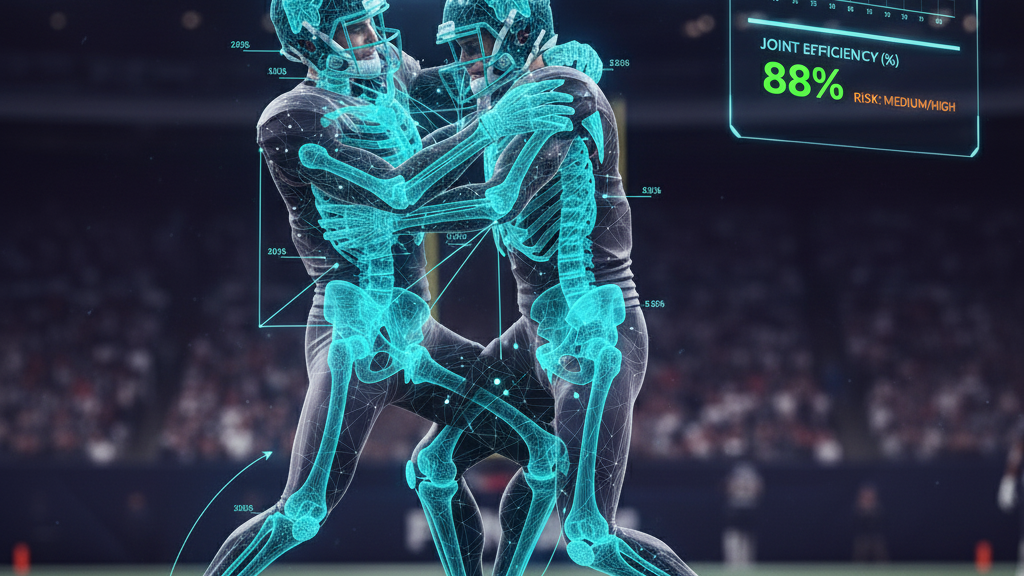
Today, the NFL's Digital Athlete platform, developed in partnership with Amazon Web Services (AWS), represents a seismic shift in how teams approach player safety. The Digital Athlete uses artificial intelligence and machine learning to build a complete view of players' experience, enabling NFL teams to understand precisely what individual players need to stay healthy, recover quickly, and perform at their best. All 32 NFL clubs now have access to this game-changing technology, but success depends critically on one overlooked factor: the quality of data annotation feeding these hungry ML models.
The Economics of Prevention: Why Every Percentage Point Matters
The financial stakes in professional football are staggering. Players out for the season due to ACL or Achilles tears will make $312.2 million combined. In total, the NFL lost $213 million to lower body injuries alone in 2024—translating to an average of $6.7 million per team per season, or roughly $370,000 per team, per week.
Dr. Allen Sills, NFL Chief Medical Officer, emphasizes the human cost: "Every injury represents not just a financial impact but a player's career, their family's future, and the dreams of millions of fans." The league's investment in ML-driven prevention has yielded remarkable returns: in 2024, the NFL had its lowest concussion rate on record, decreasing 17% from the previous year.
Inside the ML Architecture: Computer Vision at Scale
AWS captures 3D player movements with a carefully calibrated, perfectly synchronized set of 38 cameras positioned in a ring around the football stadium. Each camera captures 5K video at 60 frames per second and uploads it to the AWS Cloud for analysis. The AI model can then view any play from 38 different angles, 60 times per second. This generates approximately 6.8 million video frames per game week, each requiring precise annotation.
The annotation challenge is monumental. Initially, the NFL's approach involved significant manual effort. "Dr. Crandall and his team would review every single concussion by human eye, labeling 150 variables, defining what happened in that concussion," Langton says. "To count the number of head impacts per game took four days." The parallels to healthcare are striking—Harvard Medical School's CHIEF system achieved nearly 94 percent accuracy in cancer detection using similar ML approaches, both requiring solving the same fundamental challenge of medical-grade annotation quality.
Team-Specific Success Stories
Since adopting VueMotion in 2022, the Minnesota Vikings have seen a continuous decline in lower body injury rates, bucking the league-wide trend. In the 2024 season, the Vikings ranked top 3 in the NFL for fewest games missed due to lower body injuries and were number one in the league for the lowest number of players missing consecutive games due to lower body injuries.
Dr. Tyler Williams, Vikings Director of Sports Medicine, explains: "The difference between our program and others comes down to data quality. We don't just collect data—we ensure every data point is accurately labeled by experts who understand the biomechanical implications."
The Kansas City Chiefs' success isn't accidental either. Their medical staff processes injury risk assessments that would have taken "3 months internally completed in 2 weeks" using properly annotated training data. Patrick Mahomes' helmet failure during the 2024 playoffs demonstrated the effectiveness of position-specific safety innovations—while the helmet experienced a catastrophic failure that left pieces on the field, Mahomes did not sustain injury, proving the value of ML-driven position-specific protection design.
The Future: Convergence of Sports and Healthcare ML
The university research pipeline is accelerating innovation. Stanford's Movement Lab has pioneered biomechanical analysis using force plates that measure thousands of data points per second. MIT's Sports Analytics Lab focuses on real-time risk assessment algorithms. As Dr. Timothy Hewett from the Mayo Clinic states: "Preventative biomechanics could be uniquely adapted to sport-specific needs to lower the incidence of traumatic and overuse injuries to both improve health outcomes and reduce medical expenditures."
The convergence of sports injury prevention and clinical healthcare ML represents one of the most promising frontiers in data-driven medicine—where lessons learned protecting elite athletes are directly transferable to predicting and preventing disease in the general population.