Neuroscience
·3 min read
The Neuroscience of Chanting
How Ancient Practice Meets Modern Technology
By Priyanka Balasaheb & Tony Medrano, CEO
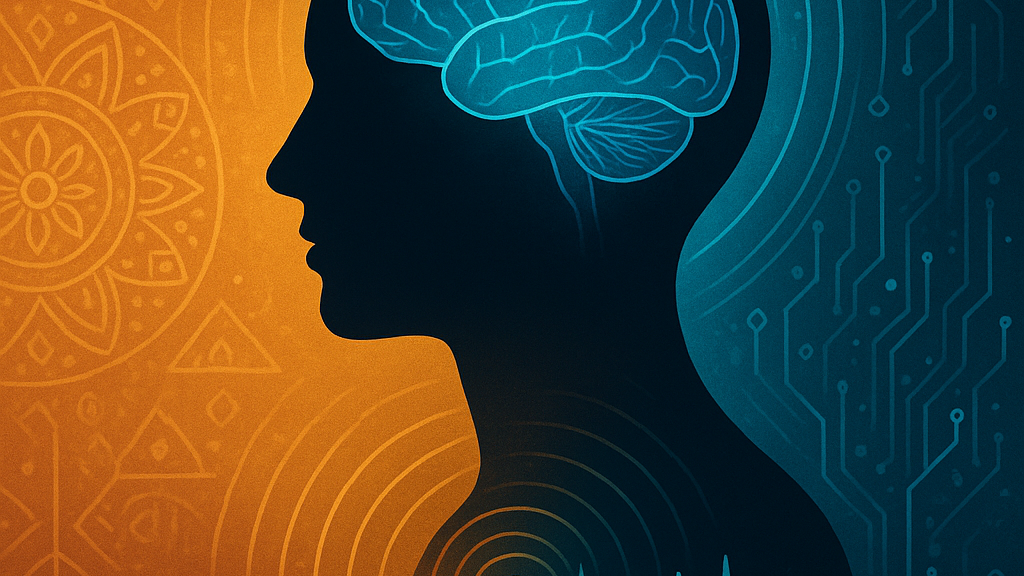
For millennia, religious and spiritual traditions across the globe have incorporated rhythmic chanting into their contemplative practices. From Tibetan Buddhist mantras to Vedic "OM" recitations, from Gregorian chants to Islamic dhikr, the human voice repeating sacred sounds has been understood intuitively as a powerful tool for transformation. Now, modern neuroscience is beginning to validate what practitioners have long known: chanting fundamentally alters brain activity, emotional processing, and physiological states.
This convergence of ancient wisdom and cutting-edge science has given rise to a new wave of innovation. Technology companies are leveraging artificial intelligence, voice synthesis, and biometric feedback to personalize and optimize chanting practices. Meanwhile, researchers armed with EEG machines and fMRI scanners are mapping the precise neural mechanisms through which rhythmic vocalization affects consciousness, cognition, and well-being.
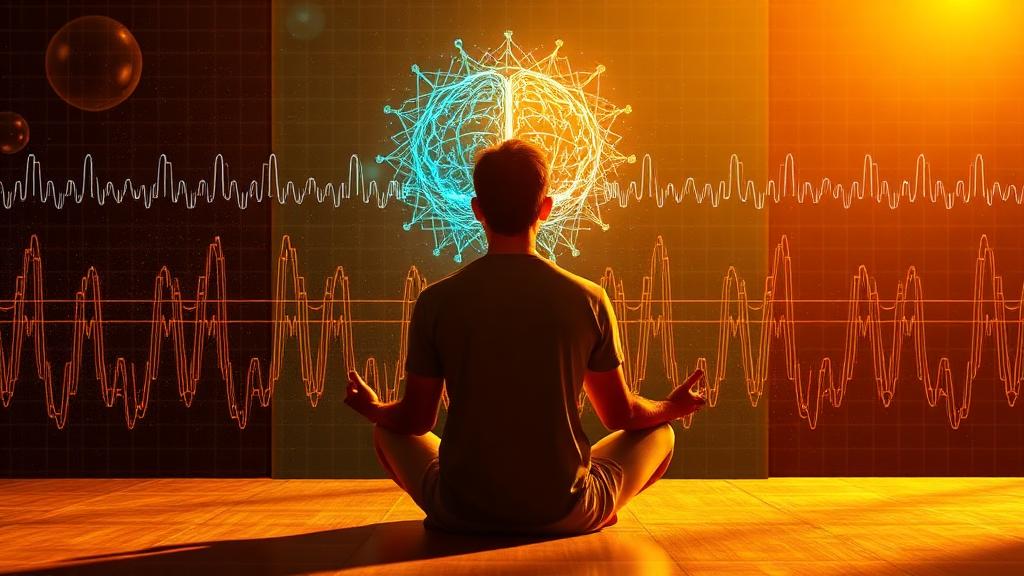 Landmark studies using both fMRI and EEG reveal that chanting produces significant increases in delta wave activity specifically in the posterior cingulate cortex, a key hub of the brain's default mode network.
Neural Correlates: The Gao Laboratory Studies
The most rigorous neuroscientific evidence comes from landmark studies by Gao and colleagues at the University of Hong Kong. Their 2019 study in Nature Scientific Reports used both fMRI and EEG to examine Buddhist chanting of Amitābha Buddha. Chanting produced approximately 40% increases in delta wave activity in the posterior cingulate cortex (PCC)—a key hub of the brain's default mode network responsible for self-referential processing. This suggests a mechanism by which chanting might reduce rumination and self-focused worry.
A follow-up study examined emotional processing during chanting using event-related potentials. The Late Positive Potential—reflecting elaborative emotional processing—was significantly reduced during chanting. Practitioners register fear-evoking stimuli but engage in less elaborative processing of negative content. The practice appears to recalibrate the emotional significance assigned to potentially threatening information.
The Vagus Nerve Connection
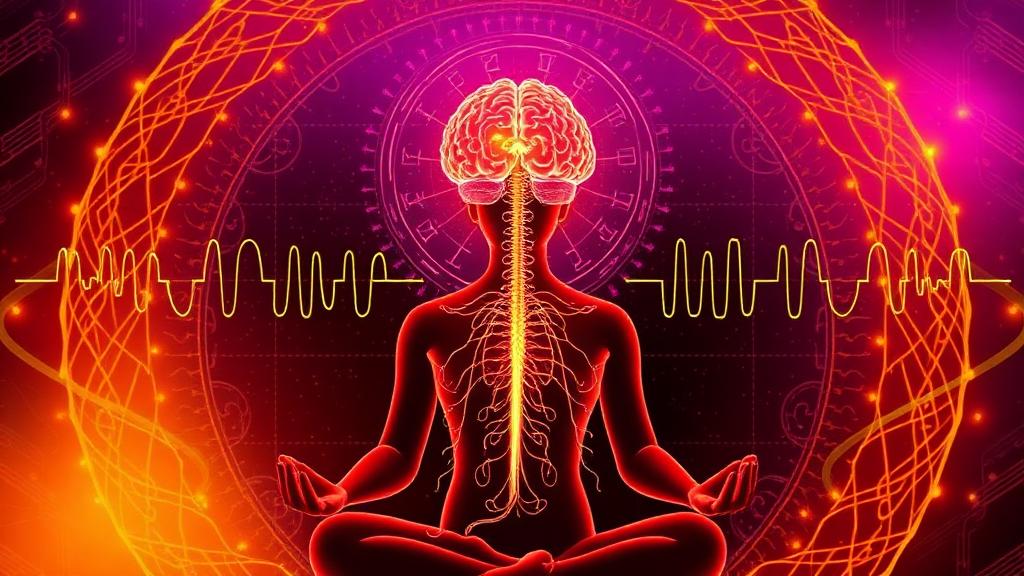 Chanting engages the vagus nerve through vocal vibration, triggering a cascade of calming responses: heart rate slows, breathing deepens, digestion improves, and the stress axis downregulates.
Stanford neuroscientist Andrew Huberman has discussed how humming and vocalization engage the vagus nerve—the major nerve of the parasympathetic "rest and digest" system. The vibration of humming activates motor pathways of the vagus nerve, promoting a downshift in arousal. Huberman emphasizes technique: producing the "h" sound in "hmm" is more effective than pure "mmm" because of how vibration propagates through vagally-innervated tissues. The vagus nerve innervates the larynx, pharynx, heart, lungs, and digestive tract, explaining why chanting can produce rapid shifts in autonomic state—sometimes within just 2-3 minutes.
Chanting at Harvard and NIMHANS
Matthew D. Sacchet's laboratory at Harvard Medical School and Massachusetts General Hospital represents leading Western institutional engagement with contemplative practices. Even practitioners with 6-12 months of regular practice showed measurable changes in default mode network connectivity. Hemant Bhargav at India's NIMHANS has shown that "OM" chanting specifically deactivates the amygdala—the brain's fear and threat-detection center. The chanting pace of 8-10 repetitions per minute corresponds to a breathing rate known to optimize heart rate variability and autonomic balance.
Gen Z Kirtan: The Cultural Renaissance
Gen Z is transforming kirtan—the ancient practice of call-and-response devotional chanting—into something unprecedented. Instead of traditional religious venues, Gen Z kirtan happens in art galleries, rooftop terraces, and clubs on designated "bhakti nights." The musical approach fuses traditional instrumentation with modern production, creating "lo-fi mantras." This cultural renaissance offers overstimulated young people a rare combination of catharsis and belonging—supported by the neuroscience showing measurable brain and body benefits from just 10-15 minutes of practice.