Microbiome
·3 min read
The Gut-Performance Revolution
How Microbiome Science Is Redefining Elite Athletic Achievement
By Catherine Littlewood & Tony Medrano, CEO
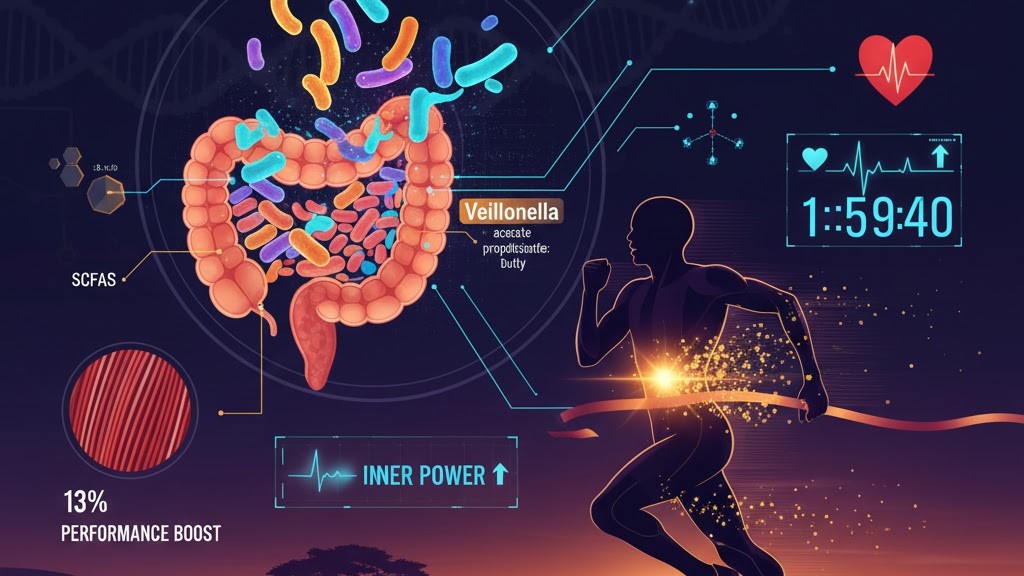
When Eliud Kipchoge shattered the two-hour marathon barrier in Vienna in 2019, running 1:59:40.2, the world focused on his training, pacing strategy, and revolutionary shoes. What few discussed was the potential role of his gut microbiome—a factor that elite Kenyan runners may have been optimizing unknowingly for generations through their traditional diet.
As marathon runners cross the finish line at Boston, something remarkable happens inside their bodies that has nothing to do with their legs. Specific bacteria in their gut surge, converting the lactate flooding their bloodstream into performance-enhancing compounds. Elite athletes are becoming aware of their powerhouse performance organ—one they may have been ignoring: their gut microbiome.
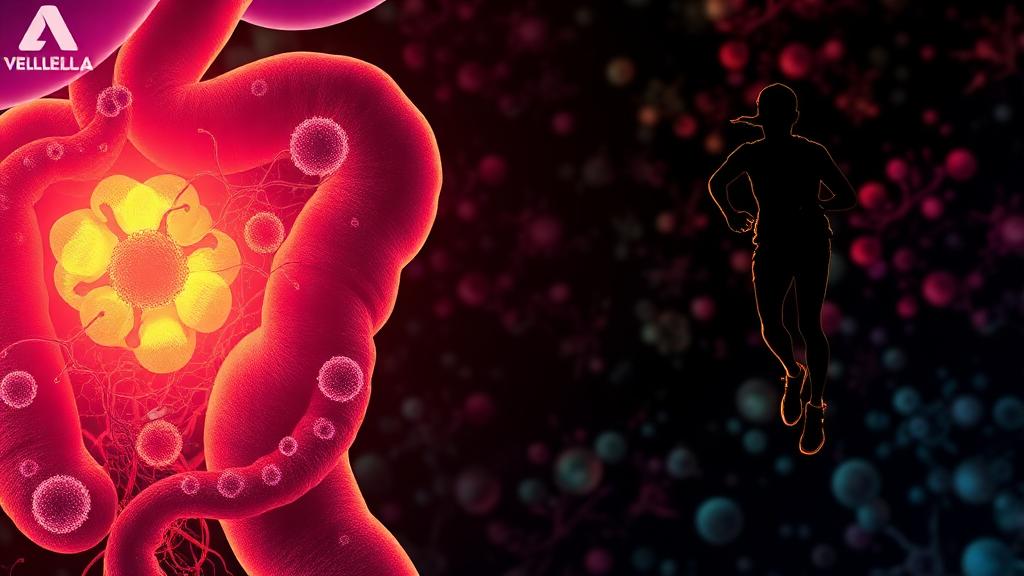 Elite athletes display significantly greater gut microbial diversity with enrichment of SCFA-producing bacteria including Veillonella, Faecalibacterium, and Prevotella compared to sedentary individuals.
The Sub-Two-Hour Marathon: What Kipchoge's Gut Reveals
Research on elite Kenyan runners provides compelling insights. A 2022 study published in Medicine & Science in Sports & Exercise analyzed the gut microbiomes of 20 elite Kenyan marathon runners from the Rift Valley compared to recreational European runners. The findings were striking: Kenyan elite runners showed 4.8-fold higher abundance of Prevotella copri, 3.2-fold higher Lactobacillus diversity, and significantly elevated Veillonella populations. Their total short-chain fatty acid (SCFA) production was 67% higher than European runners (142 mM vs. 85 mM). Blood samples showed lactate clearance 34% faster than matched European runners, inflammatory markers 42% lower despite equivalent training loads, and post-exercise cortisol recovery 28% faster.
What's driving these differences? Diet. Kenyan runners typically consume 55-75g of fiber daily (versus 15-20g in typical Western diets) through fermented maize (ugali), fermented milk (mursik), traditional vegetables high in prebiotic fibers, and sweet potatoes prepared to maximize resistant starch.
The Harvard Discovery: From Lab to Product
The breakthrough came from Harvard researchers analyzing stool samples from Boston Marathon runners. Dr. Jonathan Scheiman, a former Division I basketball player who pivoted to molecular biology, led the research at the Wyss Institute for Biologically Inspired Engineering. In a groundbreaking 2019 study published in Nature Medicine, researchers observed increased abundance of Veillonella atypica in marathon runners post-marathon. When they inoculated this bacterial strain into mice, the animals showed a 13% improvement in exhaustive treadmill run time.
The mechanism is elegantly simple: Veillonella utilizes lactate as its sole carbon source and metabolizes it into propionate, a short-chain fatty acid the body can use for energy. This discovery spawned FitBiomics, now one of the leading companies in athlete-derived probiotics, co-founded by Dr. Scheiman and Dr. George Church. In their first beta test with over 1,000 participants, 94% reported improvements in at least one category, with 45% reporting sleep quality improvements and 38.5% experiencing shorter recovery time after intense workouts.
The SCFA Triumvirate: Acetate, Propionate, and Butyrate
The broader story of short-chain fatty acids reveals an even more comprehensive performance enhancement system. Acetate, the most abundant SCFA comprising around 60% of total production, serves as a substrate for acetyl-CoA synthesis, directly feeding into the tricarboxylic acid cycle for ATP production. Butyrate inhibits histone deacetylase (HDAC) activity, leading to epigenetic modifications that suppress inflammatory signaling. A 2024 study in the Journal of Cachexia, Sarcopenia and Muscle demonstrated that daily SCFA cocktail administration for 3 months produced measurable improvements in aged mice: grip strength increased by 26%, muscle wet weight improved by 18.3%, and treadmill endurance time extended by 43%.
Digital Twins of the Gut
The Institute for Systems Biology in Seattle is pioneering computational approaches to personalized microbiome interventions. Led by Dr. Sean Gibbons, the team has developed MICOM—a microbial community-scale metabolic modeling platform downloaded by more than 300,000 scientists worldwide. Their groundbreaking research demonstrated that microbial community-scale metabolic modeling can predict individual-specific SCFA production rates. ISB is now developing "My Digital Gut," an online dashboard giving individuals the ability to predict the impact of personalized nutritional changes before making them.
The gut-performance revolution represents one of the most exciting frontiers in both athletic performance and longevity science, with implications far beyond the finish line.