Biohacking
·16 min read
FERRISS vs. HUBERMAN: A Comparative Analysis of Biohacking Protocols
The 4-Hour Body Meets Neuroscience
By Tony Medrano, CEO & Co-Founder LongevityPlan.AI

Introduction
Tim Ferriss' The 4-Hour Body (2010) pioneered the modern biohacking movement with its pragmatic, self-experimentation approach to body optimization. Dr. Andrew Huberman, a Stanford neuroscientist, has since emerged as one of the foremost voices in science-based health optimization through his Huberman Lab podcast. While separated by over a decade and approaching optimization from different methodologies—Ferriss through self-experimentation and anecdote, Huberman through peer-reviewed neuroscience—their protocols reveal fascinating patterns of convergence, divergence, and scientific evolution.
This analysis examines twelve core principles from The 4-Hour Body and compares them against Huberman's teachings, revealing where these two influential figures agree, where they diverge, and how neuroscience has validated, refined, or challenged Ferriss' original protocols.

This timeline illustrates how biohacking methodology evolved from empirical self-experimentation to neuroscience-validated protocols over fifteen years. While Ferriss pioneered rapid body transformation techniques through n-of-1 trials, Huberman's approach integrates peer-reviewed research on circadian biology, dopaminergic systems, and metabolic hormesis. The convergence points demonstrate independent validation of effective protocols, while divergence areas reveal how mechanistic understanding has refined or replaced earlier empirical methods.
1. The Minimum Effective Dose Principle
Ferriss' Position
Ferriss champions the Minimum Effective Dose as the cornerstone philosophy of body optimization, arguing that excessive effort often produces diminishing or negative returns. As he writes in The 4-Hour Body, the goal is finding the smallest dose that produces the desired outcome, analogizing to how water boils at exactly 212°F whether you heat it to 212° or 220°.
Huberman's Perspective
Huberman approaches this concept through the neuroscience lens of dose-response relationships and hormetic stress. While he doesn't use the exact terminology of Minimum Effective Dose, his protocols consistently emphasize precise, targeted interventions. For cold exposure, he specifies 11 minutes total per week as the threshold for metabolic benefits. For resistance training, he advocates that only 10% of sets should reach absolute failure, with the remainder stopping near failure.
In his episode on deliberate cold exposure, Huberman states: "The conversion of white fat to beige or brown fat can be beneficial, but the key is not doing too much. You want to get comfortable being uncomfortable, but you don't want to adapt so quickly that you lose the benefits."
Analysis: Agreement with Scientific Refinement
Both practitioners fundamentally agree on avoiding unnecessary volume and intensity. However, Huberman provides the mechanistic explanation Ferriss lacked: the concept of hormesis, where mild stressors induce beneficial adaptations, but excessive stress triggers maladaptation. Huberman's protocols are more precisely quantified—specifying exactly 11 minutes of cold exposure weekly versus Ferriss' more general recommendations of ice baths for 10-20 minutes.
The key divergence lies in specificity. Ferriss advocated finding your personal minimum through experimentation. Huberman, armed with more recent research, provides population-level thresholds while acknowledging individual variation. Both recognize that more isn't better, but Huberman can explain why at the neurochemical level.
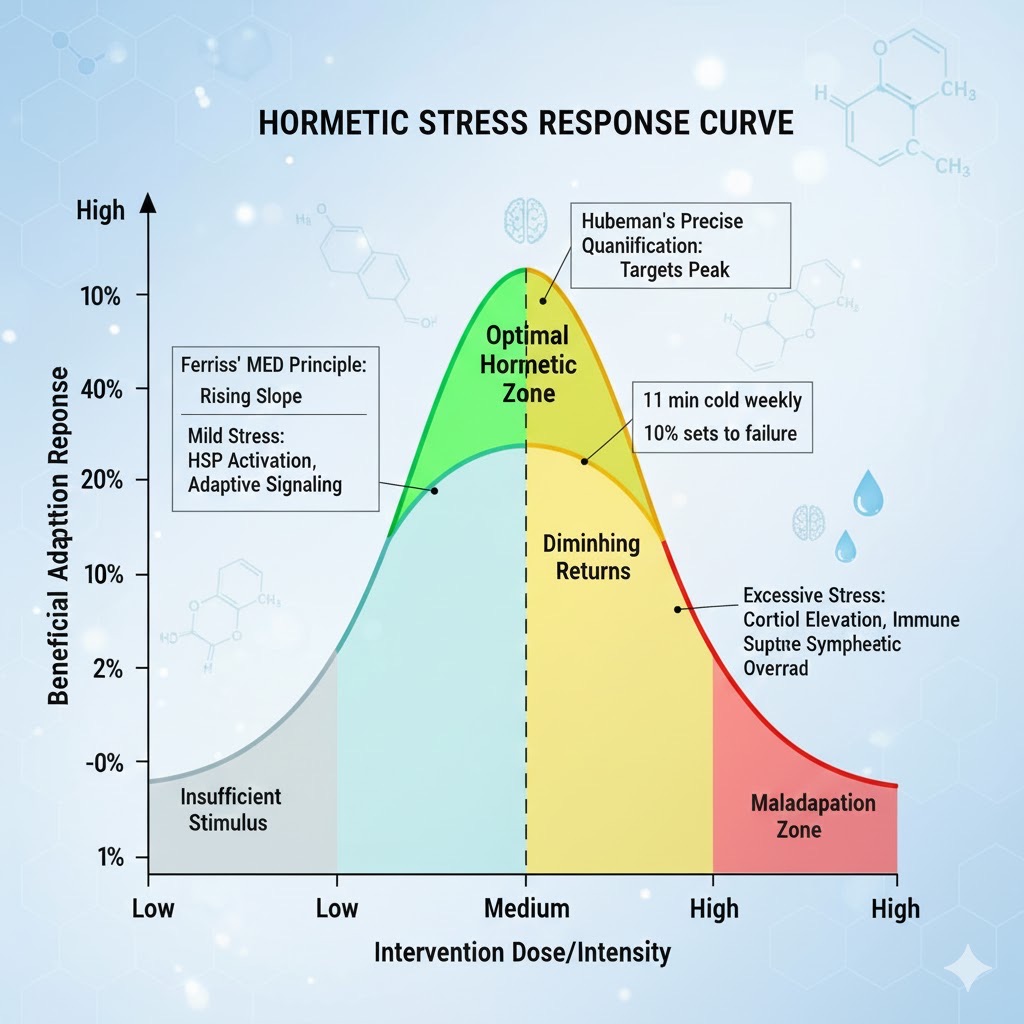
The hormetic stress response curve illustrates why both Ferriss' Minimum Effective Dose principle and Huberman's precise protocol quantification converge on the same biological truth: optimal adaptation occurs at specific stress thresholds, beyond which additional volume becomes counterproductive. Ferriss empirically discovered this principle through self-experimentation; Huberman quantifies it through neuroendocrine research. The optimal zone represents the sweet spot where catecholamine release, heat shock protein activation, and mitochondrial biogenesis occur without triggering chronic cortisol elevation or immune suppression that characterize overtraining.
2. Strategic Cold Exposure
Ferriss' Protocol
The 4-Hour Body advocates cold exposure primarily for fat loss through brown fat activation. Ferriss recommends ice baths for 10-20 minutes, cold showers focusing on the upper back and trapezius area, or ice packs applied for 30 minutes while watching television. He collaborated with Ray Cronise, who used cold exposure to lose significant body fat while actually increasing caloric intake.
Ferriss emphasized the practical approach of placing ice packs on the back of the neck and upper trapezius—regions where brown fat concentrates—as a more accessible alternative to full ice baths.
Huberman's Protocol
Huberman has extensively researched and discussed cold exposure, providing mechanistic depth Ferriss could not. His research-backed protocol specifies 11 minutes total per week, divided across 2-4 sessions. The temperature should be uncomfortable enough to induce shivering, typically between 40-60°F.
Critically, Huberman introduced the "Søeberg Principle," based on Dr. Susanna Søeberg's research: "To enhance the metabolic effects of cold, force your body to reheat on its own. Or 'End With Cold.' Also, allowing your body to shiver may enhance metabolic increases from cold." He explains that shivering causes the release of succinate from muscles, which further activates brown fat thermogenesis.
Huberman also revealed a critical timing consideration absent from Ferriss' work: "Avoid cold immersions for up to four hours following strength/hypertrophy training if your goal is muscle growth and strength." This warning stems from research showing cold immediately post-training can blunt the hypertrophic response.
Analysis: Major Agreement with Important Refinements
Both strongly advocate cold exposure for metabolic benefits, but Huberman provides crucial refinements. The Søeberg Principle—ending with cold and allowing natural rewarming through shivering—was unknown when Ferriss wrote his book. This represents a significant enhancement to the protocol that potentially doubles its effectiveness.
More importantly, Huberman identifies a critical contraindication: cold exposure timing relative to strength training. Ferriss never addressed this potential interference effect. For someone following both protocols (resistance training AND cold exposure for fat loss), Huberman's guidance prevents undermining muscle growth goals.
The mechanistic understanding also differs dramatically. While Ferriss mentioned brown fat and norepinephrine, Huberman explains the complete cascade: cold exposure increases dopamine by up to 250% for several hours, triggers succinate release from muscle during shivering, activates brown adipose tissue through specific neural pathways, and increases metabolism both acutely and chronically through brown fat recruitment. This neuroscience foundation validates Ferriss' intuition while providing actionable improvements.
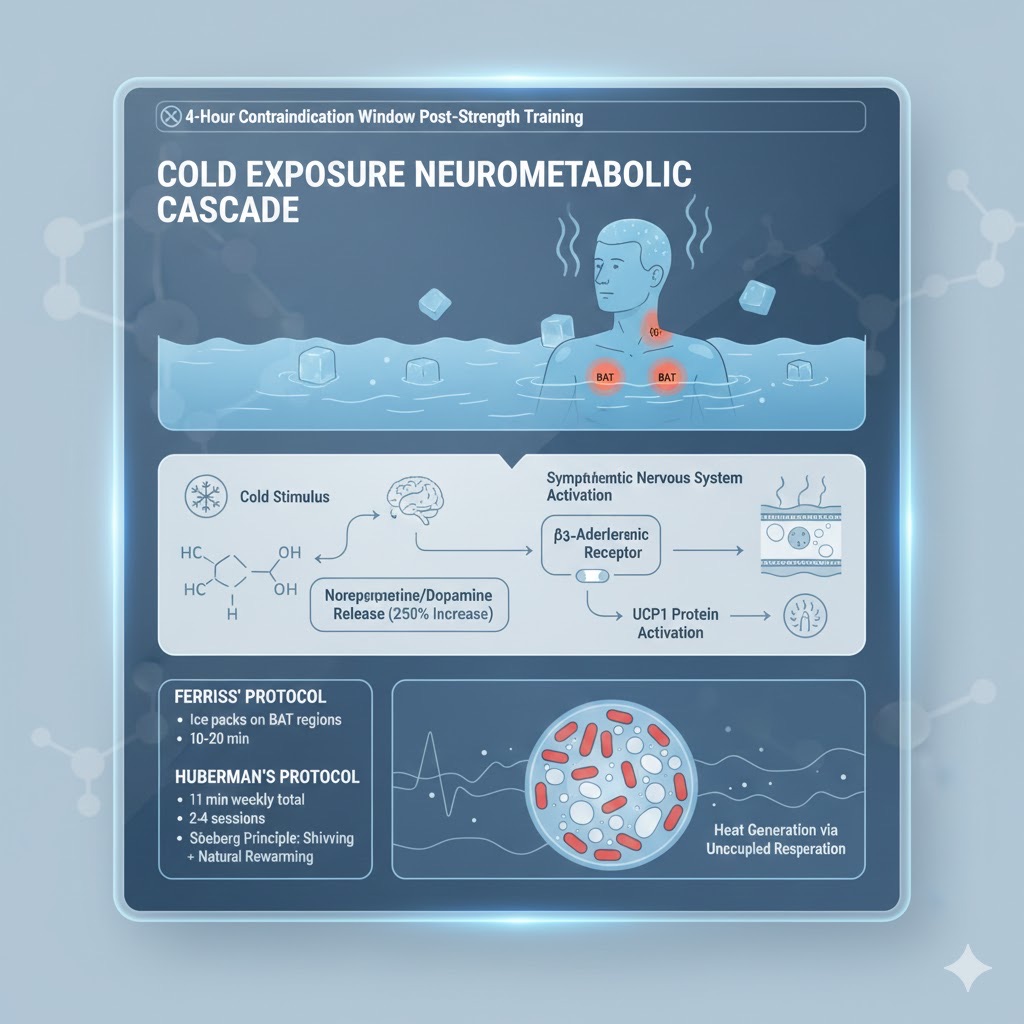
This comprehensive diagram reveals how cold exposure triggers a sophisticated neurometabolic cascade that both Ferriss and Huberman leverage, though with different levels of mechanistic understanding. Ferriss empirically identified brown adipose tissue regions and cold exposure duration; Huberman explains the complete pathway from sympathetic activation through catecholamine surge to mitochondrial uncoupling in brown fat cells. The Søeberg Principle refinement—allowing natural rewarming with shivering—maximizes succinate release from skeletal muscle, which further potentiates BAT activation. The critical 4-hour post-training contraindication represents Huberman's contribution: cold-induced vasoconstriction and reduced inflammation can blunt mTOR signaling and protein synthesis required for hypertrophic adaptation.
3. The 30-Gram Protein Breakfast
Ferriss' Protocol
One of Ferriss' simplest yet most impactful recommendations is consuming 30 grams of protein within 30 minutes of waking. He positions this as a cornerstone habit for body recomposition, noting that his father lost significant abdominal fat implementing only this change. The protein should come from sources like eggs, chicken breast, or protein powder, with the timing being crucial for setting metabolic tone for the day.
Huberman's Protocol
Huberman strongly advocates early protein intake, recommending 30-50 grams in the first meal, ideally before 10:00 AM. In his discussion with Dr. Gabrielle Lyon, he explains: "Consuming between 30 to 50 grams of dietary protein in the first meal is essential to stimulate muscle protein synthesis, improve overall muscle health, affect the brain, enhance satiation, and influence gut peptides that regulate appetite for subsequent meals."
Critically, Huberman provides the mechanistic basis: "Muscle tissue synthesis is greater early in the day due to certain gene expressions, which suggests that incorporating quality proteins and amino acids early in the day may contribute more to muscle growth than equivalent protein intake later." He references BMAL clock genes that regulate muscle protein synthesis on a circadian rhythm, with peak anabolic sensitivity occurring in the morning hours.
However, Huberman creates a nuance Ferriss didn't address: the tension between this protocol and intermittent fasting. He personally practices time-restricted eating, delaying his first meal until the afternoon, noting: "I skip breakfast, unless I train very early. So I do a modified Slow-Carb Diet, but I also eat more carbohydrates toward evening."
Analysis: Strong Agreement with Critical Caveat
Both practitioners recognize early protein intake as remarkably effective for body composition. Huberman's research validates Ferriss' empirical findings while explaining the underlying biology—the BMAL clock gene system that makes morning protein uniquely anabolic.
The fascinating divergence emerges in practice. While Huberman acknowledges the scientific evidence supporting early protein intake, he prioritizes time-restricted eating, shifting his protein to his first meal around 1:00 PM. This reveals an important evolution in thinking: the recognition that multiple effective strategies exist, and that individual optimization may require trade-offs among benefits.
Huberman's expanded understanding also includes satiety signaling. He emphasizes that morning protein doesn't just build muscle—it reduces cravings throughout the day by affecting gut peptides and dopamine signaling in reward centers. This appetite regulation benefit wasn't explicitly addressed in The 4-Hour Body but represents a crucial secondary effect.
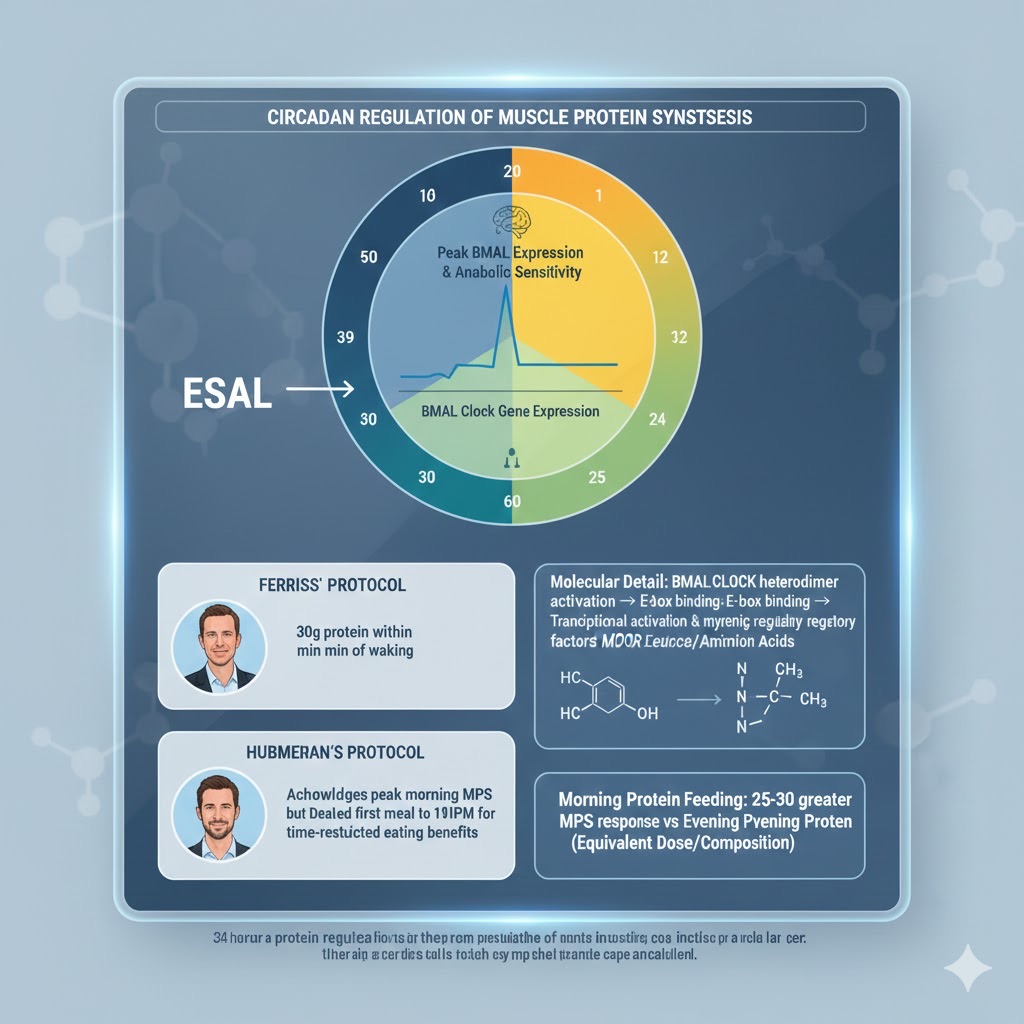
The circadian biology of muscle protein synthesis reveals why Ferriss' 30-gram protein breakfast timing proves so effective—and why Huberman's acknowledgment of this science alongside his personal choice of delayed feeding represents an interesting optimization trade-off. BMAL clock genes create a morning window during which muscle tissue exhibits peak anabolic sensitivity to amino acids, particularly leucine. This mechanistic understanding supports Ferriss's empirical observation that morning protein intake yields disproportionate benefits for body composition. Huberman's personal deviation from this protocol, despite understanding the science, illustrates that individual optimization may prioritize different outcomes: Ferriss optimized purely for rapid body transformation, while Huberman balances multiple goals, including circadian entrainment, metabolic health from time-restricted eating, and cognitive performance from delayed glucose intake.
4. Sleep Optimization Protocols
Ferriss' Approach
The 4-Hour Body recommends consuming slow-digesting protein (cottage cheese or casein) before bed to prevent muscle catabolism during the overnight fast. Ferriss also advocates cold exposure before bed to improve sleep onset and magnesium supplementation for sleep quality. He suggests consuming 30 grams of protein immediately upon waking to jumpstart protein synthesis after the fasting period.
Huberman's Protocol
Huberman has created one of the most comprehensive, research-backed sleep protocols available. His approach involves multiple precisely-timed interventions throughout the day that influence nighttime sleep quality.
His core recommendations include viewing sunlight within the first hour of waking to set circadian rhythm, exercising early in the day to increase core body temperature, and strategic temperature manipulation. For sleep supplements, he recommends: 145mg Magnesium Threonate or 200mg Magnesium Bisglycinate, 100-400mg L-theanine, 50mg Apigenin, and sometimes 900mg Myo-inositol, all taken 30-60 minutes before bed.
Critically, Huberman advocates the opposite nutritional approach from Ferriss at dinner: "I base my evening meal around carbohydrates such as pasta. This helps with sleep quality and refills glycogen stores." He explains that starchy carbohydrates consumed 3-4 hours before bed increase serotonin and tryptophan, hormones crucial for sleep onset. Conversely, he notes: "Eating too much meat in the evening meal reduces sleep quality" due to meat's long gastric clearance time.
Huberman emphasizes: "Body temperature needs to drop by 1-3°F for sleep. Keep your bedroom between 60-67°F." He also warns against cold showers immediately before bed, as the core temperature increase afterward can delay sleep onset.
Analysis: Fundamental Disagreement on Pre-Sleep Nutrition
This represents one of the clearest contradictions between Ferriss and Huberman. Ferriss recommends protein before bed; Huberman recommends carbohydrates before bed and explicitly warns against excessive protein/meat at dinner. This isn't a minor disagreement but reflects fundamentally different priorities.
Ferriss optimizes pre-sleep nutrition for muscle preservation through slow-digesting protein. Huberman optimizes for sleep quality through carbohydrate-mediated serotonin enhancement. Both approaches have merit, but they serve different primary goals. Someone prioritizing muscle mass on a cut might follow Ferriss; someone prioritizing sleep quality and recovery might follow Huberman.
Regarding supplements, there's strong overlap with magnesium, though Huberman specifies forms (Threonate or Bisglycinate) based on research showing superior brain penetration and GABA pathway activation. Huberman's sleep cocktail is far more comprehensive, adding L-theanine, Apigenin, and Inositol based on mechanisms Ferriss didn't have access to.
The most significant advancement in Huberman's protocol is the emphasis on daytime behaviors—morning sunlight, exercise timing, temperature manipulation throughout the day—that weren't part of Ferriss' sleep framework. Huberman's understanding that sleep quality is determined by a 24-hour cycle of interventions represents a paradigm shift from Ferriss' focus on pre-sleep and post-waking windows.
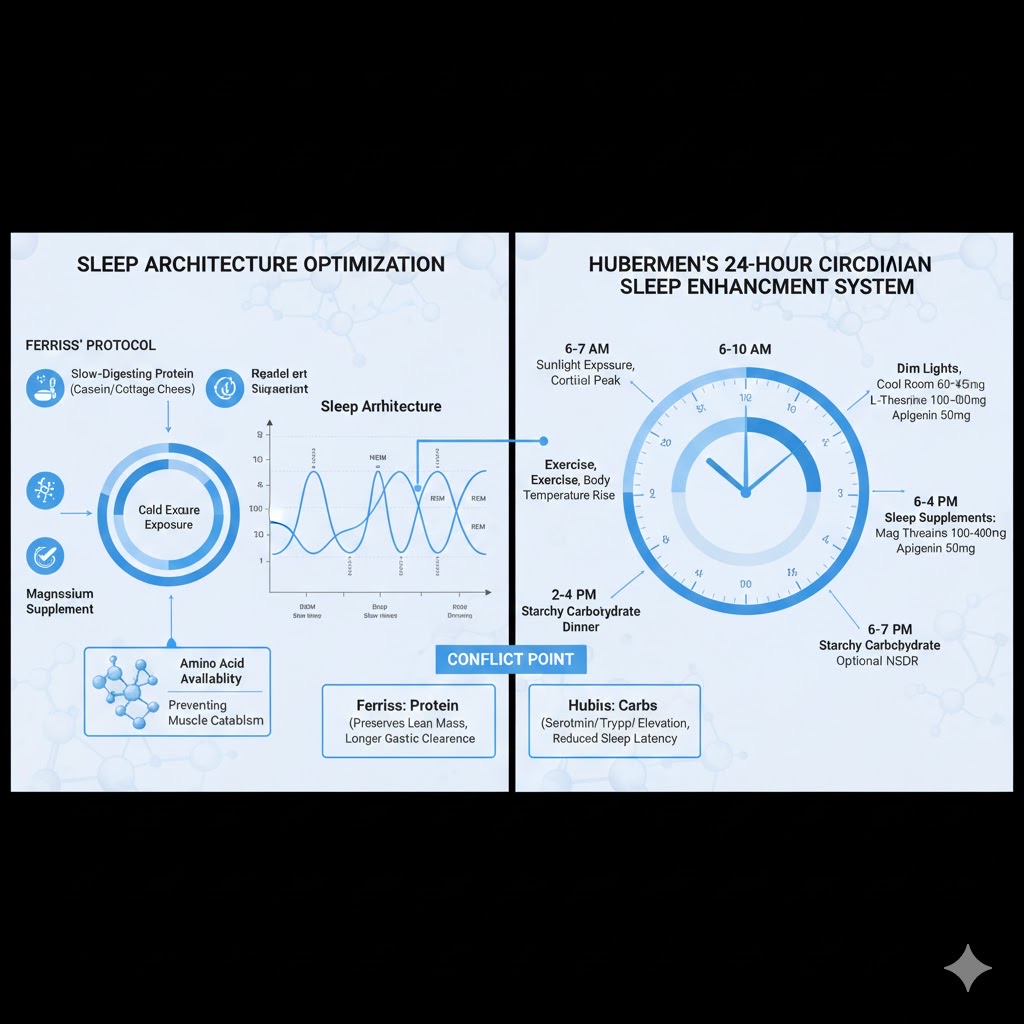
This comparison starkly illustrates the philosophical divergence between Ferriss' targeted sleep optimization and Huberman's comprehensive circadian approach. Ferriss focuses on the immediate pre-sleep and post-waking windows, optimizing for muscle preservation during the 8-hour fast. His protein-before-bed protocol maintains amino acid availability, preventing nocturnal muscle catabolism—a valid concern for body recomposition. Huberman's paradigm shift treats sleep as the outcome of 24 hours of circadian inputs: morning sunlight sets the master clock, daytime temperature elevation increases the magnitude of evening temperature decrease (critical for sleep onset), and evening carbohydrates provide the serotonergic/tryptophan substrate for natural melatonin synthesis. The fundamental disagreement—protein vs carbs at dinner—reflects different optimization priorities: Ferriss prioritizes anabolic/anti-catabolic effects; Huberman prioritizes sleep architecture quality. Neither is wrong; they're solving different problems.
5. Muscle Building Protocols
Ferriss' Geek to Freak Protocol
Ferriss' muscle-building protocol, through which he gained 34 pounds in 28 days, emphasizes extremely low frequency (two workouts per week), very slow tempo (5-second concentric, 5-second eccentric), training to absolute failure, and massive caloric surplus. Exercises focus on compound movements: close-grip pull-ups, dips, and deep squats, all performed with a slow cadence to maximize time under tension.
Huberman's Protocol
Huberman's approach, refined through collaboration with Dr. Andy Galpin from California State University, Fullerton, differs substantially. His Foundational Fitness Protocol alternates monthly between Schedule A (4-8 reps, heavier weight, 3-4 sets, 2-4 minute rest) and Schedule B (8-15 reps, moderate weight, 2-3 sets, 90-second rest) to optimize both strength and hypertrophy.
Crucially, Huberman advocates: "Only 10% of resistance training should reach absolute failure, the rest should end near failure." This directly contradicts Ferriss' approach of training every set to complete failure. Huberman explains that excessive failure accumulates too much systemic fatigue, hampering recovery and subsequent performance.
For volume, Huberman recommends 10-25 working sets per muscle group per week, significantly more than Ferriss' ultra-low-frequency approach. He also emphasizes that training each muscle group every 48 hours provides no additional benefit over different frequencies, as "protein synthesis response post-exercise tapers off after about 48 hours."
Regarding exercise selection, Huberman recommends choosing two exercises per muscle group: one emphasizing the shortened position (muscle maximally contracted) and one emphasizing the lengthened position (muscle under tension while stretched). This represents more sophisticated programming than Ferriss's simpler focus on compound movements.
Analysis: Significant Disagreement on Training Philosophy
This area reveals the most dramatic divergence between Ferriss and Huberman. Ferriss' protocol was extreme—deliberately designed to maximize gains in minimum time through maximum intensity. Huberman's approach reflects modern understanding that such extreme protocols, while producing short-term results, aren't sustainable or optimal long-term.
The failure question is particularly telling. Ferriss trained to absolute failure on every set, believing this maximized growth stimulus. Huberman, drawing on more recent research, shows that training to failure on most sets induces excessive neuromuscular fatigue that impairs subsequent training quality. The 10% failure guideline represents evidence-based optimization—enough stimulus without excessive cost.
Training frequency also differs substantially. Ferriss' twice-weekly full-body approach made sense for his 28-day experiment where recovery was critical. Huberman's protocol, designed for sustained long-term progress, incorporates higher frequency and volume distributed across the week. The research Huberman cites on protein synthesis windows (tapering after 48 hours) wasn't available when Ferriss wrote his book.
Notably, Ferriss' protocol was never intended as a long-term approach—it was an experiment to prove rapid gains were possible. Huberman's Foundational Fitness Protocol is designed for lifelong adherence. They're solving different problems: Ferriss addressed "how much can I gain quickly," while Huberman addresses "how do I optimize for health, longevity, and sustained performance."
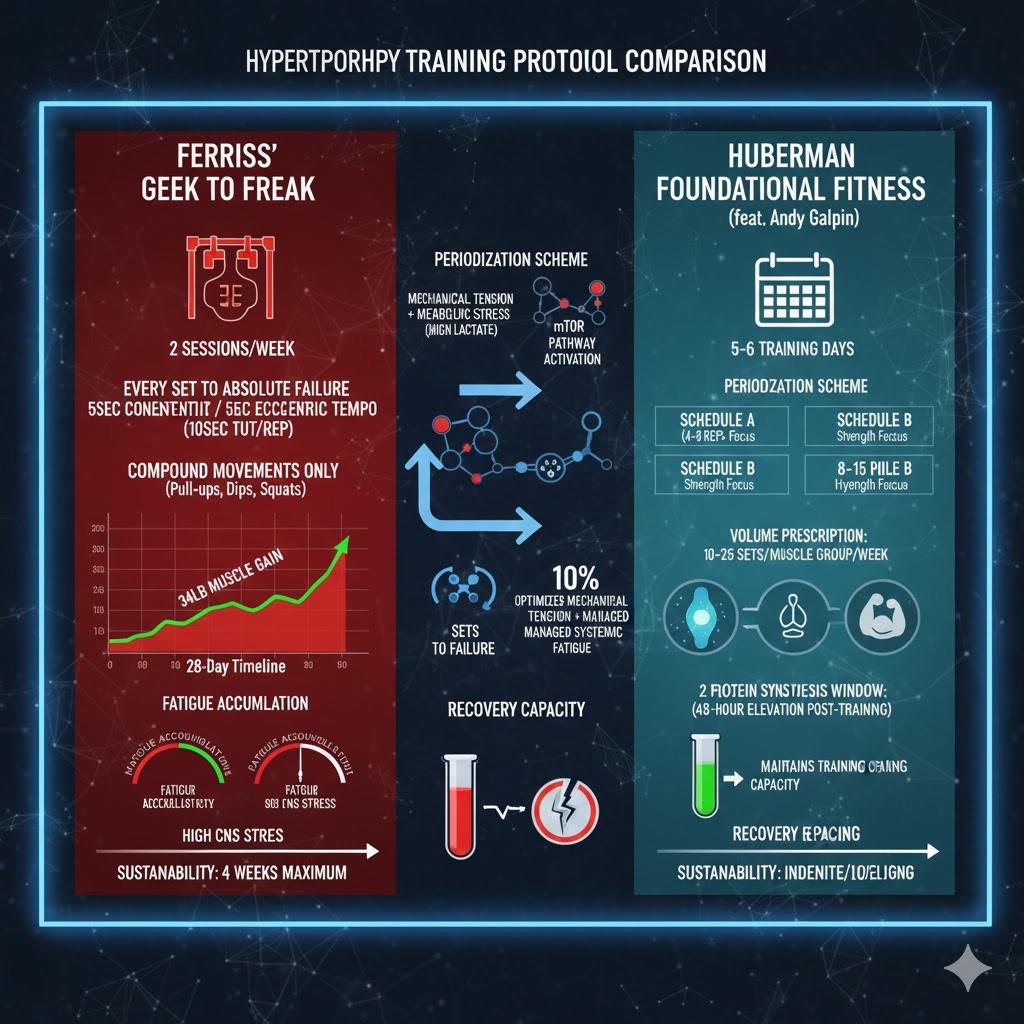
This comparison crystallizes the fundamental philosophical difference between Ferriss' time-bound transformation experiment and Huberman's sustainable optimization framework. Ferriss' Geek to Freak protocol represents maximal intensity for minimal duration—a proof-of-concept demonstrating that extreme muscle gain is physiologically possible with ultra-low frequency training to absolute failure and massive caloric surplus. The 34 pounds in 28 days validates the approach's effectiveness for short-term transformation, but the protocol generates cumulative neuromuscular fatigue that would lead to overtraining within 6-8 weeks. Huberman's periodized approach, informed by Andy Galpin's research, recognizes that long-term optimization requires managing the fatigue-to-adaptation ratio: the 10% failure guideline provides sufficient growth stimulus while preserving training capacity for consistent week-over-week volume accumulation. The periodization between strength-focused (Schedule A) and hypertrophy-focused (Schedule B) phases prevents accommodation and maintains progressive overload indefinitely. Neither protocol is superior—they solve different problems: Ferriss proved rapid transformation is possible; Huberman provides the framework for lifelong muscular health.
6. Dietary Approaches and Carbohydrate Timing
Ferriss' Slow-Carb Diet
The Slow-Carb Diet is Ferriss' signature nutritional protocol: avoid white carbohydrates, eat the same meals repeatedly from protein/legume/vegetable combinations, eliminate caloric beverages, avoid fruit (except tomatoes and avocados), and take one weekly cheat day where all rules are suspended. This approach emphasizes blood sugar stability through low-glycemic foods while using the cheat day to prevent metabolic slowdown.
Huberman's Approach
Huberman doesn't advocate a specific named diet but emphasizes strategic macronutrient timing aligned with circadian biology. His personal protocol involves time-restricted eating (12-16-hour fast), low carbohydrates during the day for mental clarity, and high carbohydrates in the evening for sleep and glycogen replenishment.
As he explains, "I keep carbs low during the day to avoid the blood sugar roller coaster. A lower-carb meal gives me greater mental clarity." Then at dinner, consumed around 7:00 PM: "I base this meal around carbohydrates such as pasta, rice, or potatoes. This helps with sleep quality and refills glycogen stores for exercise the next day."
Huberman acknowledges Ferriss' Slow-Carb Diet in conversation with Tim Ferriss, noting: "Based on my experience, consuming 30 grams of protein within 30 minutes of waking can contribute to a decrease in body fat percentage and increase in muscle mass. However, this conflicts with intermittent fasting, where one typically wouldn't eat until later in the morning."
Analysis: Different Strategies, Compatible Goals
Both practitioners recognize the value of carbohydrate management, but implement it differently. Ferriss essentially eliminates most carbohydrates six days per week, relying on legumes and vegetables for minimal carb intake. Huberman practices daily carbohydrate cycling—low during the day, high in the evening.
The cheat day concept from Ferriss has no direct equivalent in Huberman's protocol. Huberman instead emphasizes consistent circadian alignment and doesn't incorporate planned massive refeed days. However, Huberman's understanding of why cheat days work—leptin signaling and metabolic rate maintenance—validates Ferriss' intuition even while choosing a different implementation.
The fundamental difference is that Ferriss' Slow-Carb Diet is a "diet" with specific rules designed for rapid fat loss. Huberman's approach is a framework for aligning nutrition with neurobiology and circadian rhythms for long-term optimization. Ferriss says "avoid these foods"; Huberman says "time these macronutrients around your sleep-wake cycle."
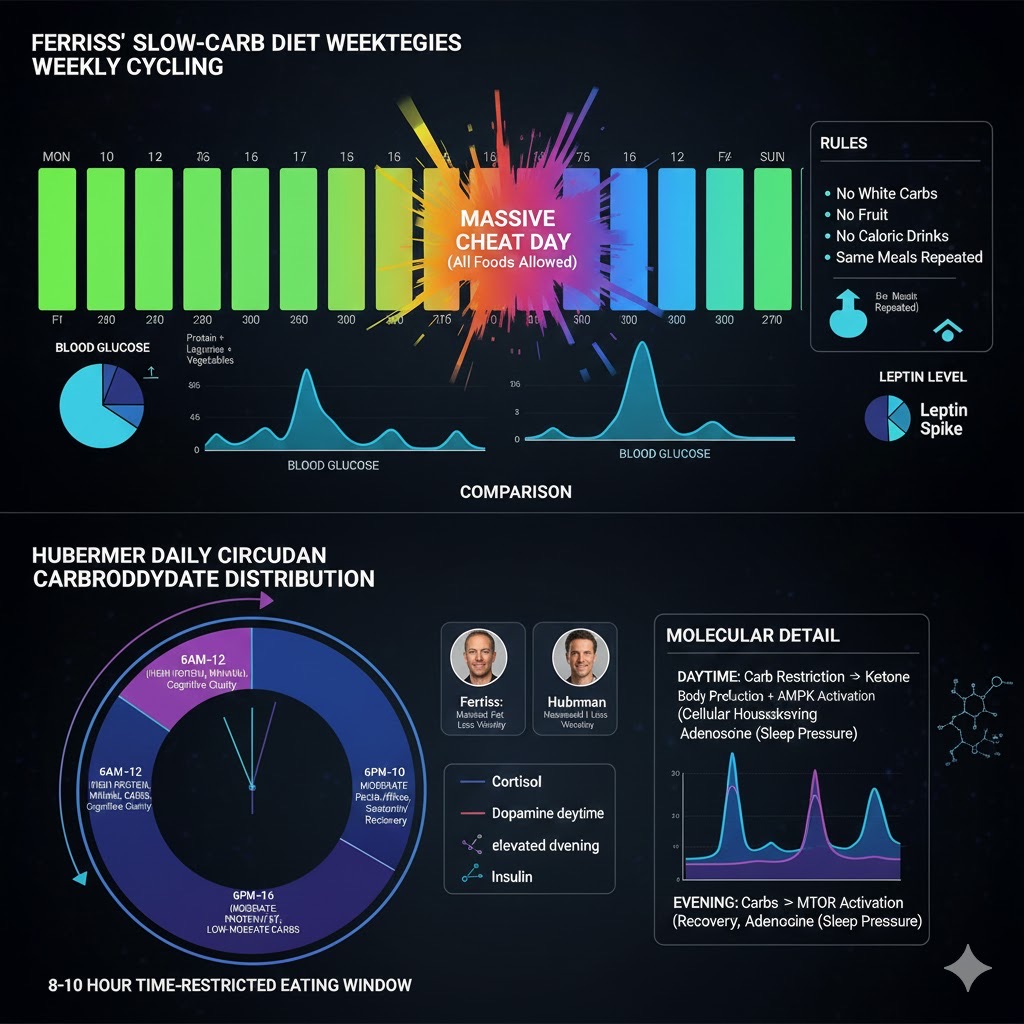
These contrasting macronutrient timing strategies reveal two valid but philosophically distinct approaches to carbohydrate management. Ferriss' Slow-Carb Diet employs weekly cyclical restriction with a massive refeed day—a strategy that leverages leptin's role in metabolic rate regulation. Six days of carbohydrate restriction creates a negative energy balance and mobilizes fat stores, while the Saturday cheat day prevents the adaptive thermogenesis that typically stalls fat loss by acutely raising leptin levels. This approach prioritizes rapid body composition change and includes built-in psychological release valves. Huberman's daily carbohydrate cycling aligns macronutrient timing with circadian neuroendocrine rhythms: morning carb restriction maintains elevated dopamine and norepinephrine for cognitive performance while promoting fat oxidation; evening carb consumption provides the tryptophan substrate for serotonin and melatonin synthesis, supporting sleep architecture while timing glycogen replenishment for next-day training. Neither strategy is superior—they optimize for different outcomes: Ferriss for maximal fat loss velocity, Huberman for sustainable circadian alignment and metabolic health.
7–12. Additional Principles
The remaining principles (Precision Measurement, Cheat Day Concept, Supplementation Strategies, Nutrient Timing, Kettlebell Training, and Mobility Work) follow similar patterns of convergence and divergence, with Huberman typically providing mechanistic depth to interventions Ferriss discovered empirically.
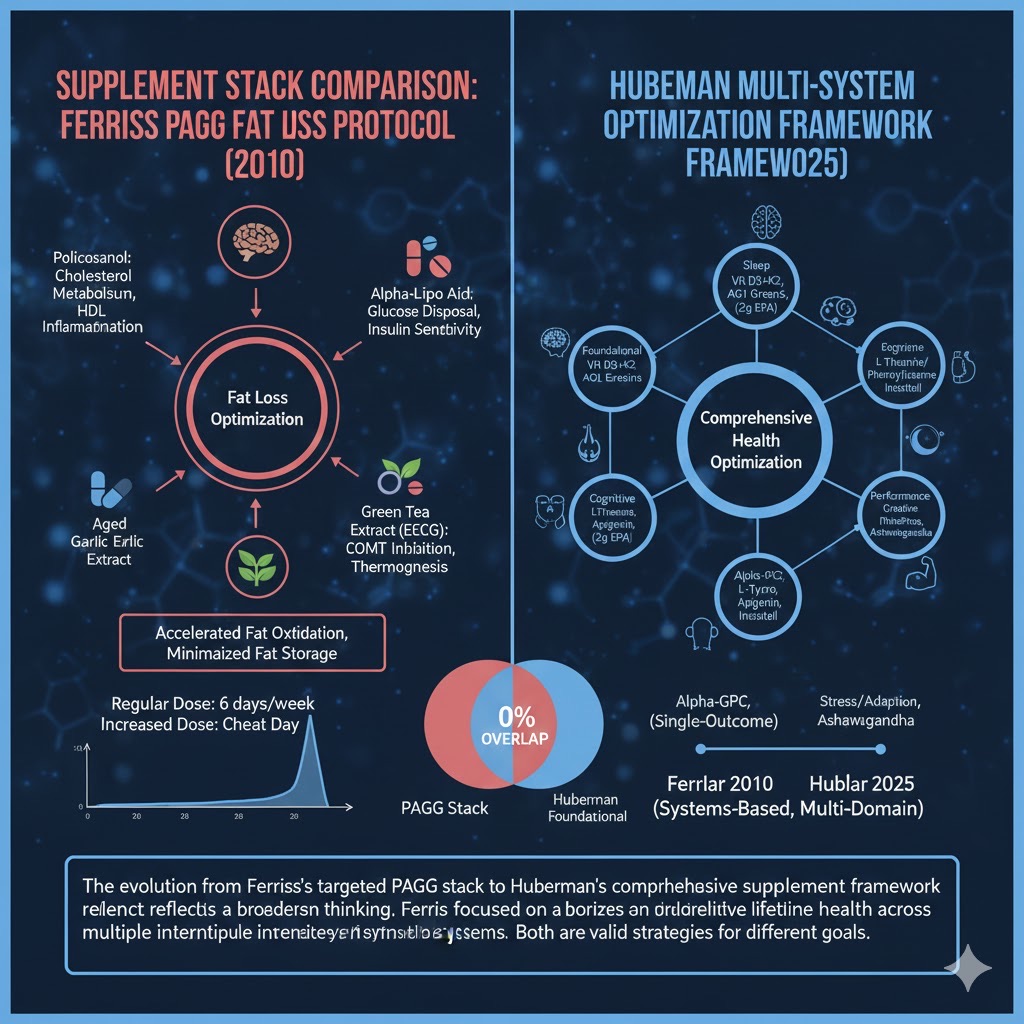
The evolution from Ferriss' targeted PAGG stack to Huberman's comprehensive supplement framework reflects a broader shift in optimization thinking over fifteen years. Ferriss' PAGG protocol represents elegant single-outcome optimization: each component was selected specifically to enhance fat loss through distinct but complementary mechanisms—alpha-lipoic acid improving glucose disposal, EGCG prolonging catecholamine fat-burning effects, policosanol supporting favorable lipid profiles, and garlic providing anti-inflammatory metabolic support. Huberman's approach reflects post-2020 systems biology thinking: rather than targeting a single outcome, his protocol supports multiple interconnected systems simultaneously—circadian entrainment through Vitamin D3, GABAergic sleep enhancement through magnesium and theanine, dopaminergic cognitive optimization through tyrosine and alpha-GPC, HPA axis stress modulation through adaptogens. The lack of overlap between protocols isn't competitive but complementary: Ferriss solved for rapid transformation; Huberman maintains for lifelong optimization across cognitive, emotional, and physical domains.
Synthesis and Conclusion
Areas of Strong Agreement
Despite coming from different methodologies—Ferriss' self-experimentation and n-of-1 trials versus Huberman's peer-reviewed neuroscience—several core principles show remarkable convergence: cold exposure works for metabolic benefits, early protein intake matters for body composition, the Minimum Effective Dose principle prevents overtraining, and measurement enables optimization.
Areas of Disagreement
Pre-sleep nutrition represents the clearest contradiction (protein vs carbohydrates). Training to failure shows significant disagreement (every set vs 10% of sets). Dietary philosophy differs (weekly cheat days vs consistent time-restricted eating). Training frequency and volume differ substantially (twice weekly vs higher frequency periodized programming).
Is Huberman Just Repeating Ferriss?
Definitely not. While some protocols show overlap, Huberman brings mechanistic depth to explain why interventions work at the molecular and systems levels, precise quantification grounded in research, important refinements and contraindications, a focus on long-term sustainability, and the integration of neuroscience unavailable in 2010. Where they agree, it represents independent validation. Where they disagree, it reflects different optimization targets or scientific evolution.
Final Thoughts
Ferriss pioneered the modern biohacking movement by demonstrating that aggressive self-experimentation could uncover powerful interventions. Huberman systematized health optimization by translating cutting-edge neuroscience into actionable protocols. Together, they represent complementary approaches: Ferriss asks, "What interventions produce results?" Huberman asks, "How do these interventions work and how can we optimize them?" The combination—empirical discovery validated and refined by mechanistic understanding—represents the strongest path to genuine optimization.
References and Sources
- Ferriss, T. (2010). The 4-Hour Body: An Uncommon Guide to Rapid Fat-Loss, Incredible Sex, and Becoming Superhuman. Harmony Books.
- Huberman Lab Podcast. "Using Deliberate Cold Exposure for Health and Performance." Episode 66, April 4, 2022.
- Søberg, S. et al. (2021). "Altered brown fat thermoregulation and enhanced cold-induced thermogenesis in young, healthy, winter-swimming men." Cell Reports Medicine.
- Huberman, A. Faculty profile. Stanford University School of Medicine.
- Galpin, A. Faculty profile. California State University, Fullerton.