Digital Health
·3 min read
The Digital Twin Revolution
How Virtual Replicas of Your Body Are Transforming Healthcare, Athletic Performance, and Extended Healthspan
By Tony Medrano, CEO
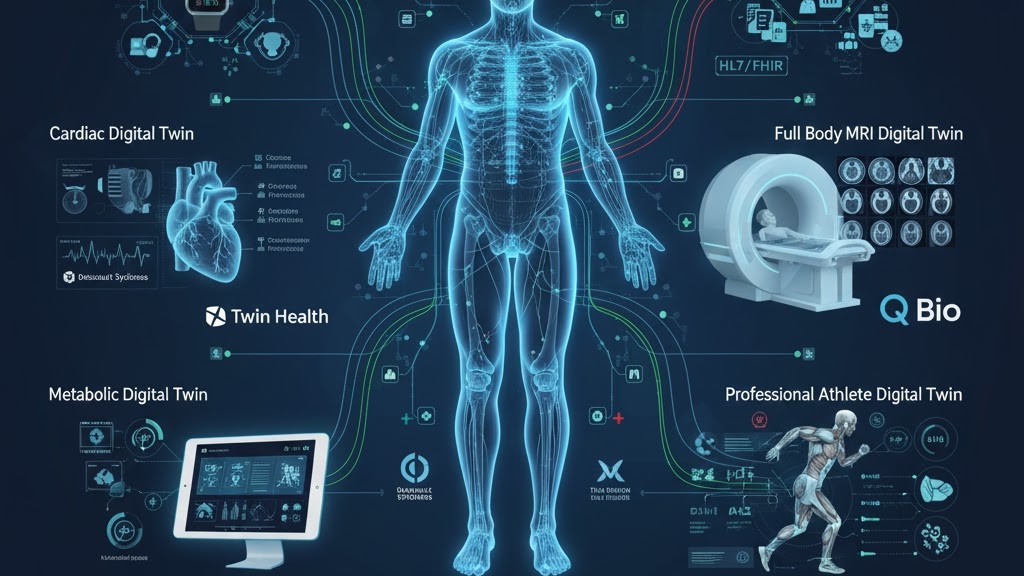
Imagine walking into a medical facility, spending 15 minutes in an open scanner, and walking out with a complete digital replica of your body—every organ measured, every biomarker tracked, every metabolic process mapped in real-time. Now imagine this digital twin continuously learning from your daily activities, predicting your glucose response to tonight's dinner, alerting your care team to subtle cardiovascular changes months before symptoms appear, and optimizing your training regimen based on how your body actually responds, not generic population averages.
This isn't science fiction. It's happening now, and it's poised to fundamentally transform how we approach health, longevity, and human performance.
From Apollo 13 to Your Body: The Evolution of Digital Twins
The concept of digital twins traces back to NASA's space program in the 1960s, when engineers created virtual replicas of spacecraft to simulate and debug problems in real-time. During the Apollo 13 mission, this approach proved lifesaving—NASA teams used ground-based simulations to model the crippled spacecraft and devise solutions that brought the astronauts home safely. The term "digital twin" itself was coined in 2005 by Michael Grieves in the context of product lifecycle management, and by 2010, NASA formalized the concept as a virtual model continuously updated with real-time data from its physical counterpart.
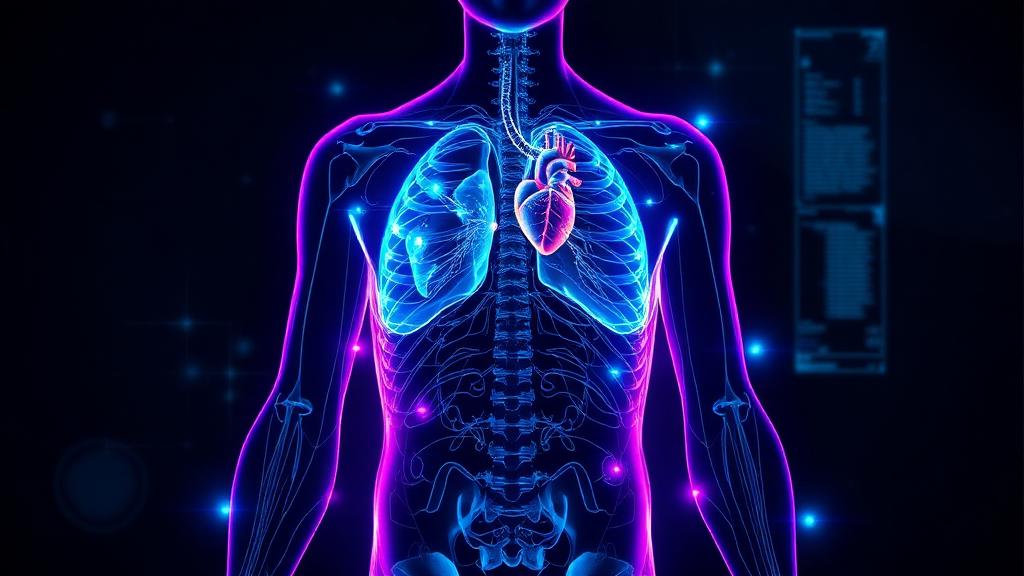
Digital twin technology creates dynamic virtual replicas of the human body, integrating wearable sensor data, medical imaging, and AI to enable predictive health monitoring and personalized interventions.
Today, digital twin technology has revolutionized industries from aerospace to manufacturing. Dassault Systèmes, the French software giant, has spent 35 years creating 3D digital twins of bridges, buildings, and automobiles to test how they behave under stress. Now, this same technology is being applied to the most complex system known to science: the human body.
The Science of Digital Twins in Healthcare
At its core, a digital twin in healthcare is a dynamic, virtual representation of a patient that integrates multiple data streams—clinical records, genetic information, continuous biosensor data, imaging, and lifestyle factors—to create a computational model that mirrors the individual's physiological state in real-time. Unlike static medical records or one-time diagnostic tests, digital twins continuously update as new data flows in, enabling predictive insights and personalized interventions impossible with traditional approaches.
The power lies in the convergence of several enabling technologies: Internet of Things (IoT) and wearable sensors collecting thousands of data points daily, artificial intelligence and machine learning analyzing massive datasets, cloud computing infrastructure processing petabytes of precision medicine data, and mechanistic modeling based on physiology and physics providing causal understanding.
Metabolic Digital Twins: Reversing Diabetes Without Drugs
Twin Health, a Silicon Valley company, has created a "Whole Body Digital Twin" specifically for type 2 diabetes, prediabetes, and obesity. Their AI-powered platform creates a real-time model of each individual's unique metabolism using data from continuous glucose monitors, activity trackers, sleep monitors, and meal logs. The system collects 3,000 data points daily, analyzes them through machine learning algorithms, and provides personalized guidance—all calibrated to keep glucose levels stable without medication.
The results have been extraordinary. In a Cleveland Clinic-led randomized controlled trial, 71% of participants using Twin Health achieved an A1C below 6.5% while eliminating most blood sugar-lowering medications. Participants lost an average of 9% of their body weight in one year—comparable to GLP-1 medications but achieved through metabolic optimization rather than pharmacology.
The Road Ahead: Toward Complete Virtual Humans
The digital twin revolution in healthcare is still in its early stages. The long-term vision is far more ambitious: complete virtual humans that integrate all components into unified models capable of simulating health across all biological scales. Within the next decade, it's plausible that comprehensive digital twin monitoring becomes standard for anyone serious about optimizing their health and extending their healthspan—annual whole-body scans, continuous biosensors, AI analyzing data streams, and personalized intervention plans optimized for your unique biology.
The emergence of digital twin technology doesn't obsolete traditional health practices—exercise, nutrition, sleep, stress management, social connection remain foundational. Rather, it amplifies their effectiveness through precision and personalization. The digital twin revolution is here. The question isn't whether this technology will transform healthcare and longevity science—it's already happening. The question is: when will you create yours?