Digital Health
·20 min read
What's the Difference Between a Digital Companion and a Digital Twin?
Use Cases, AI Models, Risks, and Why the Distinction Matters for Your Longevity Plan
By Tony Medrano, CEO & Co-Founder, LongevityPlan.AI
Introduction: Two Roads to Your Future Self
Imagine two scenarios. In the first, you open your phone at 6:00 a.m. and a warm, conversational AI greets you by name. It knows you slept poorly, senses from your tone that you're stressed about a work deadline, and gently suggests a five-minute breathing exercise before your morning run. It checks in on your mood. It remembers your goal to qualify for the Boston Marathon at age fifty-two. It is, in every functional sense, a companion—a digital friend with the patience of a Tibetan monk and the memory of an elephant.
In the second scenario, a platform has been quietly ingesting data from your continuous glucose monitor, your Oura ring, your last bloodwork panel, and your VO2max test from two weeks ago. It has built a dynamic mathematical model of your metabolism—your very own physiological replica. When you log a bowl of overnight oats, it doesn't just count calories; it simulates how your blood glucose will respond over the next four hours based on your insulin sensitivity, your gut microbiome composition, and your cortisol curve. It is a twin—a virtual clone of your biology.
Both of these technologies are real. Both are attracting hundreds of millions in venture capital. And both claim to be the future of personalized health. But they are not the same thing—not in architecture, not in ambition, and not in the risks they carry. Understanding the distinction between a digital companion and a digital twin is more than an academic exercise. For anyone serious about longevity planning—whether you're a fifty-year-old CEO optimizing your next decade, a Division I athlete managing training load, or a parent investing in your child's long-term health trajectory—the difference determines what kind of data you need, what kind of outcomes you can expect, and what kind of risks you're willing to accept.
This article is an attempt to draw that line with scientific precision, name the companies and researchers pushing each frontier forward, and explain why the most exciting developments in health technology may lie not in choosing between these two paradigms but in their convergence.
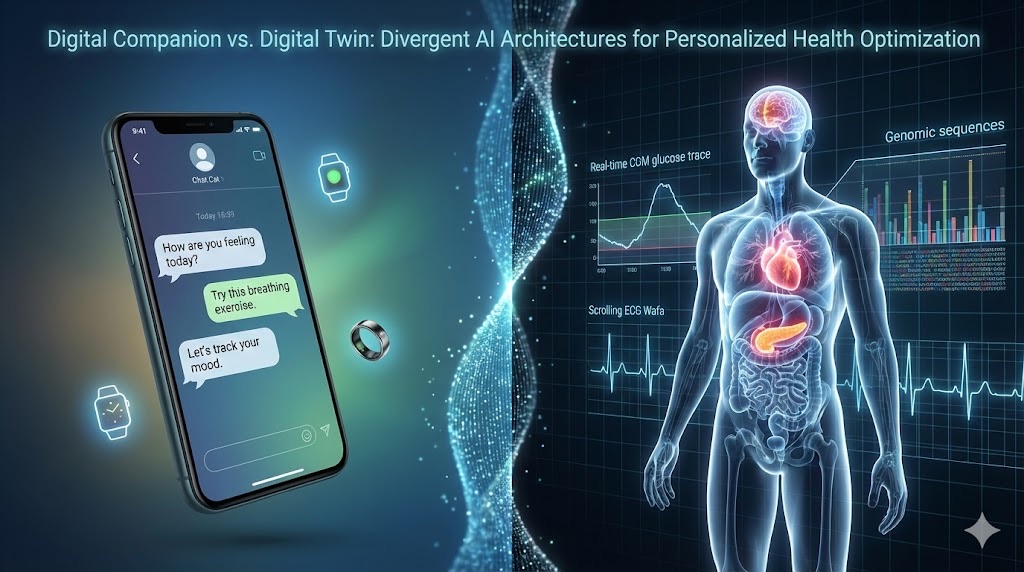
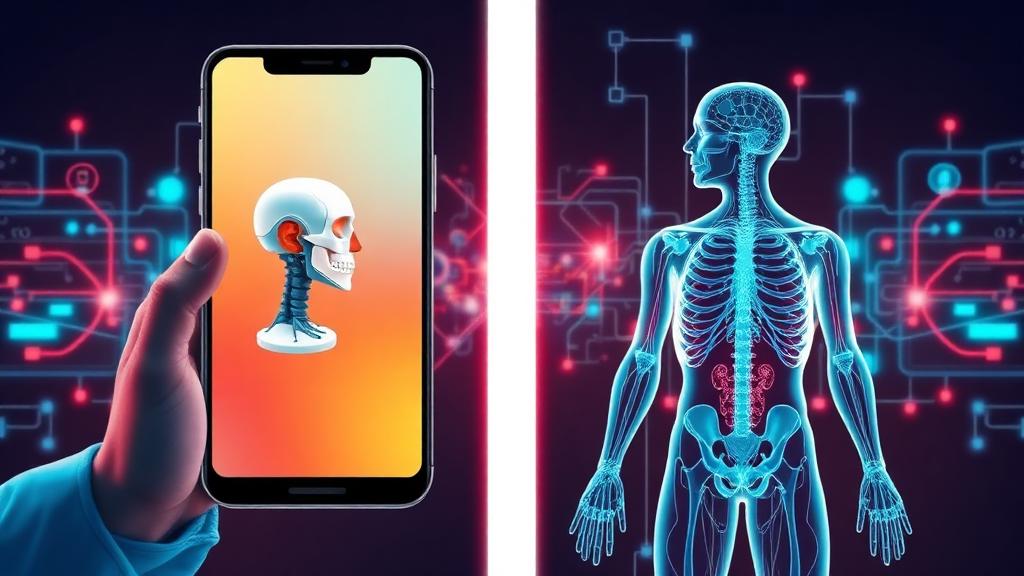
Figure 1. Two paradigms for AI-driven health optimization—conversational digital companions (left) and simulation-based digital twins (right)—are converging toward hybrid platforms that combine behavioral engagement with physiological precision.
I. Definitions: Parsing the Terminology
The Digital Companion: Your AI Coach, Therapist, and Accountability Partner
A digital companion is an AI-powered conversational agent designed to provide real-time guidance, emotional support, and personalized recommendations through ongoing dialogue. At its core, a companion is relational. It prioritizes engagement, therapeutic alliance, and behavioral change. It is the digital descendant of ELIZA, the 1966 MIT chatbot that first demonstrated our tendency—now called the ELIZA effect—to attribute understanding and empathy to machines that merely simulate it.
Modern digital companions deploy natural language processing (NLP), sentiment analysis, cognitive behavioral therapy (CBT) logic trees, and increasingly, large language models (LLMs) to create interactions that feel genuinely supportive. They respond to your current state: your mood, your motivation, your moment. They are present-tense technologies. Critically, companions are software-first—they typically work with existing wearables rather than requiring proprietary hardware.
The Digital Twin: Your Virtual Biological Replica
A digital twin, by contrast, is a comprehensive virtual replica of an individual's biological and physiological systems that continuously mirrors its real-world counterpart through data integration. The concept originated in aerospace: NASA coined the term in 2002, building on principles used during the Apollo program, when ground-based simulators replicated spacecraft behavior for mission planning.
In healthcare, a digital twin is a dynamic, mathematical model of you. It ingests data from continuous glucose monitors, wearable sensor arrays, genomic profiles, medical imaging, electronic health records, and laboratory biomarkers. It does not simply track your metrics; it simulates how your body will respond to different interventions before you actually implement those changes. It is a prediction engine for your physiology.
"The idea is that if you had all the layers of data for each person, and you had now a data resource of millions of people with their follow-up, then instead of what we rely upon today, which are randomized clinical trials … this is much more precise, granular."
— Eric Topol, M.D., Director, Scripps Research Translational Institute
Dr. Eric Topol, one of the most cited researchers in medicine with over 330,000 citations and founder of the Scripps Research Translational Institute, has been articulating this vision for more than a decade. His concept of "deep phenotyping"—completely defining each individual by gathering all available data across multiple layers of biology—is the intellectual foundation upon which digital twin technology is being built.
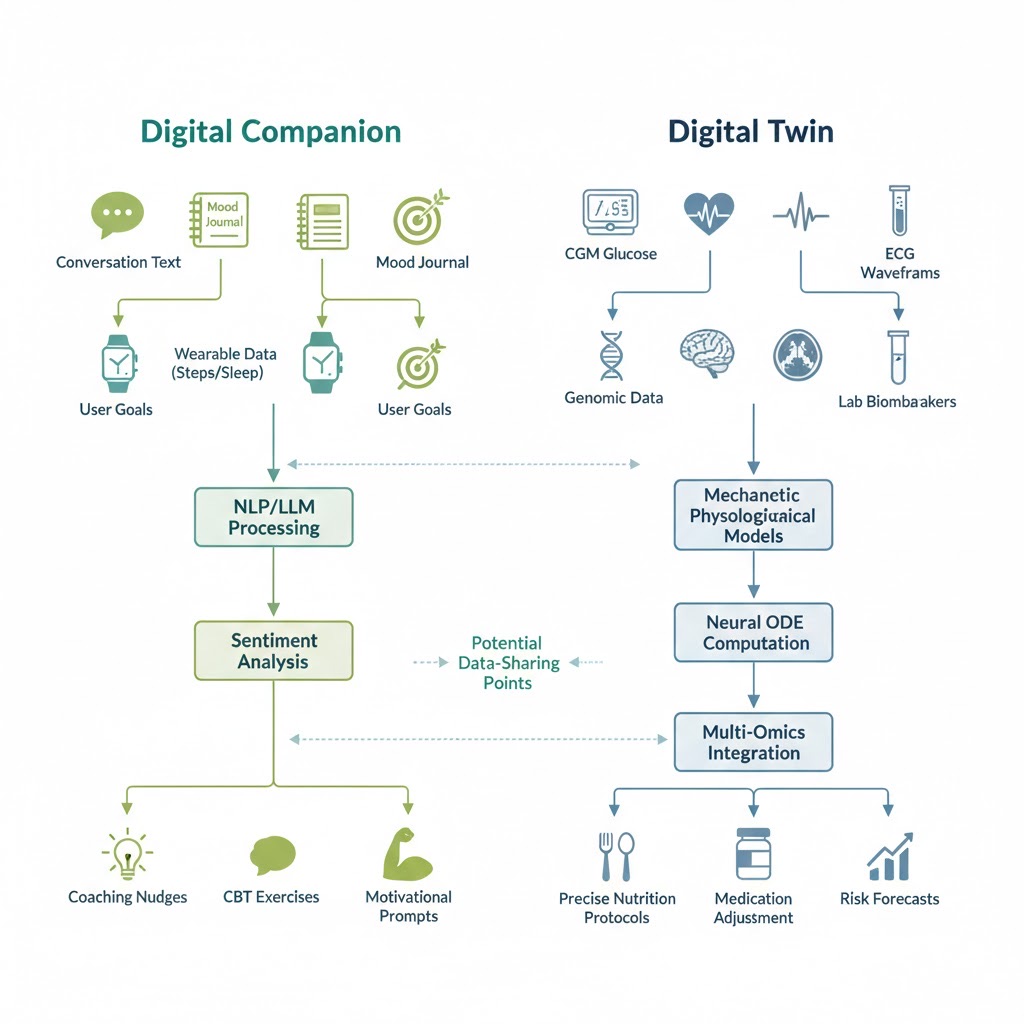
Figure 2. Data architectures diverge fundamentally: digital companions process conversational and behavioral signals through language models, while digital twins integrate continuous biomarkers and imaging through physiological simulation engines.
II. The Core Differences: A Technical Comparison
The following table summarizes the key architectural, functional, and commercial differences between digital companions and digital twins in health and wellness applications:
| Dimension | Digital Companion | Digital Twin |
|---|---|---|
| Core Function | Conversational guidance, emotional support, behavioral coaching | Physiological simulation, predictive modeling, intervention optimization |
| Interaction Style | Chat-based, relational, empathetic | Data-driven, algorithmic, continuous monitoring |
| Primary AI Models | NLP/LLM, sentiment analysis, CBT logic trees, reinforcement learning from feedback | Mechanistic physiological models, Neural ODEs, deep generative models, multi-omics integration |
| Data Sources | User self-reports, wearable summaries, conversation logs, mood journals | Continuous biomarkers (CGMs, ECG), genomics, medical imaging, EHR, wearable sensor streams |
| Output | Coaching nudges, motivational messages, CBT exercises, habit tracking | Precise nutrition protocols, training loads, medication adjustments, risk forecasts |
| User Experience | Feels like talking to an empathetic coach or therapist | Feels like consulting a personal scientist or precision medicine team |
| Validation | Therapeutic alliance scores, engagement metrics, self-reported outcomes | Clinical biomarker changes (HbA1c, VO2max), RCT data, peer-reviewed publications |
| Regulatory Path | FDA Breakthrough Device (e.g., Woebot WB001); general wellness exemptions | SaMD classification; FDA draft guidance (Jan 2025) for digital twin simulations; EMA qualification |
| Typical Funding | $10M–$30M for B2C engagement platforms | $50M–$243M+ for B2B2C platforms targeting clinical outcomes |
Perhaps the most revealing distinction is in the funding patterns. Digital companion companies typically raise $10–$30 million for B2C engagement platforms, while digital twin ventures command $50–$243 million or more, reflecting the far greater data infrastructure, clinical validation, and regulatory complexity required.
III. The AI Under the Hood: Models, Architectures, and Limitations
Companion AI: Language as Medicine
Digital companions are built primarily on NLP and, increasingly, on large language models. The therapeutic mechanism is the conversation itself. Woebot Health, founded in 2017 by Stanford psychologist Alison Darcy, Ph.D., pioneered this approach with a relational agent that delivered CBT through scripted, text-based dialogues. At its peak, Woebot served approximately 1.5 million users and received FDA Breakthrough Device Designation for its postpartum depression therapeutic, WB001—the first of its kind.
Woebot's architecture was deliberately rule-based, not generative. Darcy's team chose scripted responses over free-form generation precisely because they could be clinically validated and safety-tested. But this conservatism also became a constraint. When large language models like GPT-4 emerged, Woebot's scripted approach felt increasingly dated. In July 2025, Woebot shut down its direct-to-consumer app, with Darcy citing the cost of FDA requirements alongside the regulatory void around LLMs in clinical settings.
Wysa, founded in 2016, has navigated these waters differently. With more than 30 peer-reviewed studies and an FDA Breakthrough Device designation for mental health support in chronic illness and pain, Wysa operates a hybrid model: AI-driven support coupled with optional escalation to licensed human therapists. It serves 4.5 million users across 65 countries and has facilitated over 400 million conversations.
The newest entrant, Bevel, represents the next evolution. Founded in late 2023 and funded by a $10 million Series A from General Catalyst in October 2025, Bevel is a software-only health companion that unifies data from Apple Watch, continuous glucose monitors like Dexcom and Libre, and other wearable sources through its proprietary Bevel Intelligence engine. Co-founded by Grey Nguyen and Aditya Agarwal (former CTO of Dropbox), Bevel reports over 100,000 daily active users with 80% retention at 90 days and an average of eight app opens per day.
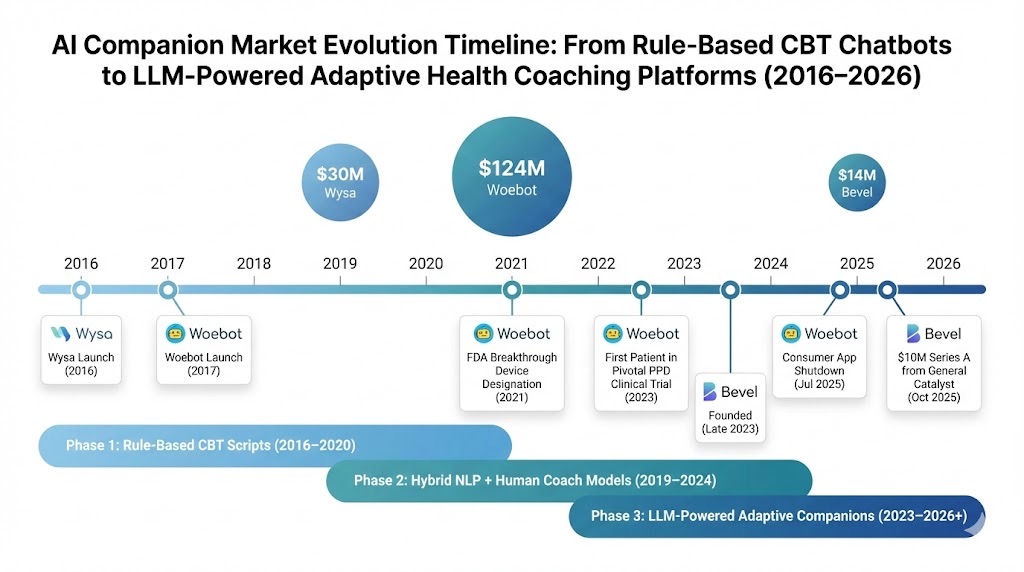
Figure 3. The digital companion landscape has evolved rapidly from scripted CBT delivery to LLM-powered adaptive coaching, with regulatory challenges accelerating industry transformation—as evidenced by Woebot's 2025 consumer pivot and Bevel's meteoric engagement growth.
Digital Twin AI: Physics Meets Physiology
Digital twins operate on a fundamentally different computational substrate. Rather than generating empathetic text, they build mechanistic models of biological systems—mathematical representations of how glucose is metabolized, how cardiac output responds to exercise load, how bone density changes under varying mechanical stress. These models integrate ordinary differential equations, compartmental pharmacokinetic models, neural ordinary differential equations (Neural ODEs), and deep generative architectures.
At Frontiers in Digital Health, Khoshfekr Rudsari and colleagues at the University of Texas MD Anderson Cancer Center published a comprehensive 2025 review cataloging digital twin implementations from cellular to whole-body scale. Their analysis reveals a field moving rapidly from proof-of-concept to clinical deployment, with particular maturity in cardiology, oncology, and metabolic disease.
The foundational challenge—and the reason digital twins command so much more capital—is the sheer complexity of human biology. As Charles Fisher, Ph.D., CEO of Unlearn.AI, has noted: with tens of trillions of cells, mechanistic modeling of the entire human body remains elusive. Unlearn's approach uses deep generative models to forecast patient outcomes directly from data, bypassing the need to model every underlying mechanism. Their digital twin generators have been qualified by the European Medicines Agency (EMA) for primary analysis in Phase 2 and 3 clinical trials, with the FDA confirming concurrence.
IV. Clinical Evidence: Where the Data Lives
The Twin Health Story: From Silicon Valley to the NEJM
No company better illustrates the clinical ambition of the digital twin paradigm than Twin Health. Founded in 2018 by Jahangir Mohammed—who previously built and sold Jasper Technologies to Cisco for $1.4 billion—Twin Health has raised over $243 million, achieved a $950 million valuation, and partnered with Fortune 500 employers including Walmart, Blackstone, and Berkshire Hathaway.
The company's Whole Body Digital Twin™ technology creates an individualized metabolic model from thousands of daily data points. The twin then provides continuous, personalized guidance on nutrition, activity, sleep, and stress—not based on population averages, but on the user's own real-time biology.
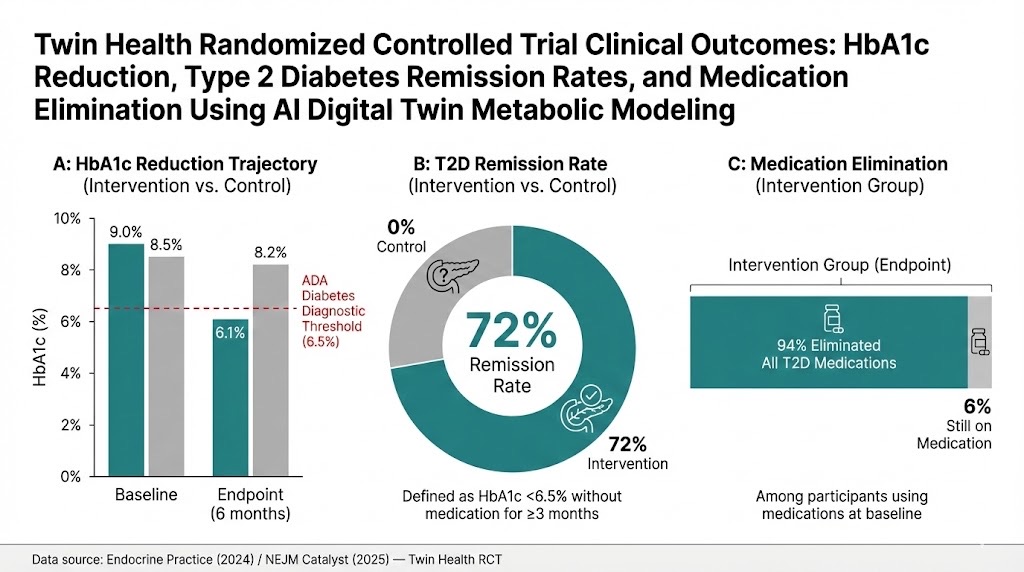
Figure 4. Twin Health's landmark randomized controlled trial demonstrated a 2.9-point HbA1c reduction (9.0% to 6.1%), 72% type 2 diabetes remission, and 94% complete elimination of diabetes medications—without GLP-1 receptor agonists.
The clinical results are striking. In the world's first randomized controlled trial for reversing chronic metabolic disease using digital twin technology, published in Endocrine Practice and subsequently in the New England Journal of Medicine Catalyst, the intervention group saw average HbA1c levels drop from 9.0% to 6.1%—a 2.9-point reduction. The control group improved from 8.5% to 8.2%. Among participants who used the technology for at least six months, 72% achieved diabetes remission. Meanwhile, 94% eliminated all type 2 diabetes medications, including insulin.
At Medline Industries, more than a third of enrolled employees stopped diabetes medications within two months. At Blackstone, medication costs fell by half among those enrolled for at least three months. Twin Health now delivers more than $8,000 in annualized savings per member for employers and health plans. The company's performance-based pricing model—clients pay only for measurable clinical outcomes—aligns incentives in a way that most digital health companies cannot match.
Unlearn.AI: Reimagining Clinical Trials
While Twin Health focuses on consumer and employer wellness, Unlearn.AI is applying digital twin technology to pharmaceutical R&D. The San Francisco-based company, which raised $50 million in Series C funding in 2023, creates AI-generated digital twins of clinical trial participants to forecast their likely outcomes under control conditions. This allows sponsors to reduce control group enrollment by 25–50%, shaving months off trial timelines and millions from budgets.
In a landmark 2025 study published in Alzheimer's & Dementia, Unlearn collaborated with AbbVie to demonstrate that their digital twin methodology could boost statistical power in Alzheimer's disease trials while maintaining full regulatory rigor. The approach uses their proprietary PROCOVA method—prognostic covariate adjustment—which generates individualized predictions and uses them as covariates in standard ANCOVA models.
Cardiac Digital Twins: From Hopkins to Imperial College
At Johns Hopkins University, Natalia Trayanova, Ph.D., has pioneered the use of digital heart twins for treating ventricular tachycardia. Her team uses high-performance computing and neural networks to segment cardiac MRI scans and build patient-specific models that allow clinicians to simulate catheter ablation procedures before entering the operating room.
In March 2024, French startup inHEART secured FDA clearance for its AI-powered software module that automates the segmentation of CT images to generate 3D cardiac models. The technology demonstrated up to a 60% reduction in VT procedure times and a 38% decrease in VT recurrence rates compared to conventional methods.
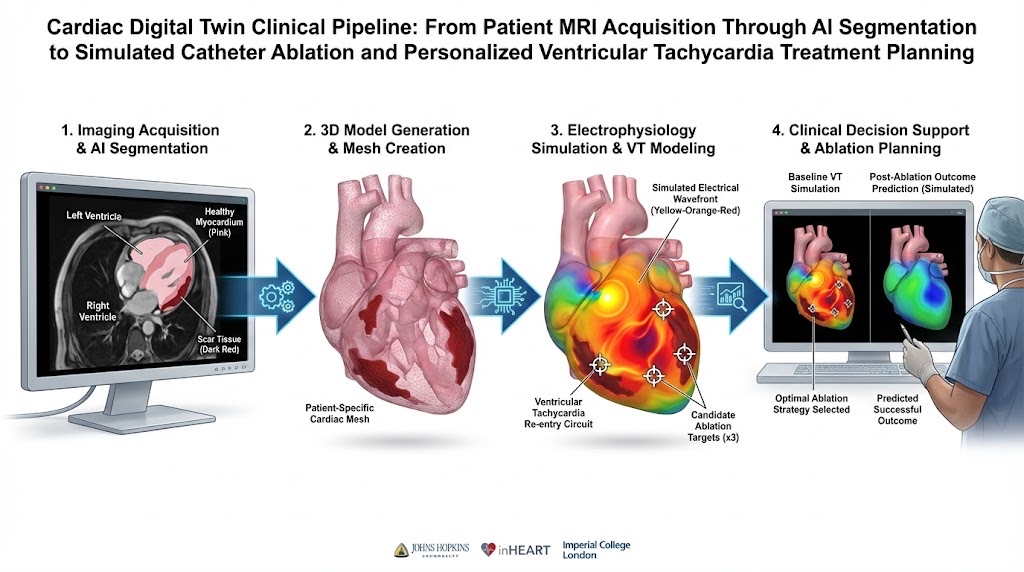
Figure 5. The cardiac digital twin pipeline transforms patient-specific MRI data into a fully simulated electrophysiology model, enabling surgeons to test ablation strategies virtually—reducing VT procedure times by up to 60% and recurrence rates by 38% (inHEART, 2024).
Meanwhile, a London-based pilot backed by the NHS in collaboration with Imperial College London is creating personalized digital heart twins. And in September 2025, Siemens Healthineers partnered with the Mayo Clinic to develop next-generation digital twin platforms for cardiovascular care.
As Manesh Patel, M.D., Chief of the Duke Division of Cardiology, has noted: digital twins allow doctors to compare different interventions before the patient even reaches the operating room.
V. The Psychological Dimension: When Your Companion Becomes Too Close
The risks of these two technologies are as different as their architectures. For digital twins, the primary concerns are data privacy, model accuracy, and regulatory compliance—technical challenges with technical solutions. For digital companions, the risks cut deeper: they are psychological.
In July 2025, Nature Machine Intelligence published an editorial titled "Emotional risks of AI companions demand attention," reviewing case studies that identified two adverse mental health outcomes: ambiguous loss and dysfunctional emotional dependence. Ambiguous loss occurs when users grieve the psychological absence of an AI companion, as when an app is shut down, leaving them to mourn a relationship that felt emotionally real. Dysfunctional emotional dependence describes a maladaptive attachment in which users continue engaging with an AI companion despite recognizing its negative impact.
Researchers at the MIT Media Lab, in collaboration with OpenAI, conducted a longitudinal controlled study examining how chatbots affect social and emotional well-being. In a survey of 404 regular AI companion users, 12% were drawn to the apps to cope with loneliness and 14% used them to discuss personal issues. Among nearly 1,000 participants in a randomized controlled trial of ChatGPT usage, heavy use correlated with increased loneliness and reduced social interaction.
The American Psychological Association weighed in with a November 2025 Health Advisory, cautioning that most AI wellness applications lack scientific validation, adequate safety protocols, and regulatory approval.
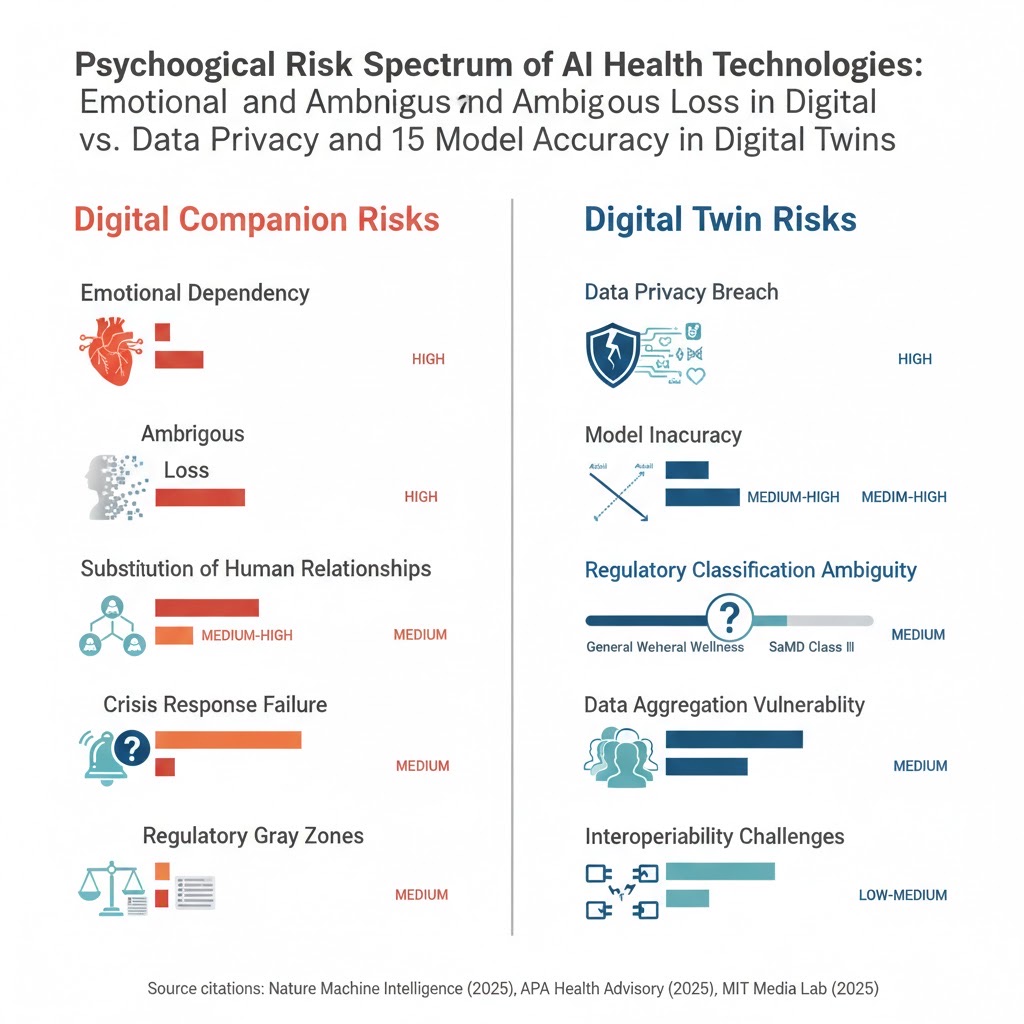
Figure 6. Digital companions and digital twins carry fundamentally different risk profiles—psychological and relational for companions, technical and regulatory for twins—each demanding distinct governance frameworks and clinical safeguards.
These findings carry particular weight for the longevity-focused population. High-performing executives, aging athletes, and health-optimizers are often driven, goal-oriented people who may be drawn to the always-available, never-judgmental quality of AI companions. The very traits that make someone successful—persistence, commitment, willingness to invest deeply—can become risk factors for AI dependency when the companion feels like it uniquely "understands" them.
Digital twins, by contrast, maintain an inherent emotional distance. You don't bond with a simulation of your insulin response curve. You read its output, adjust your behavior, and check back. This transactional quality, while less engaging, may actually be a safety feature.
VI. The Market Landscape: Follow the Money
The global digital twin in healthcare market was valued at approximately $2.1 billion in 2024 and is projected to reach $15.2 billion by 2032, expanding at a compound annual growth rate of 28.17%. These numbers reflect the technology's migration from industrial applications—where Siemens, GE, and Boeing have used digital twins for decades—into the far more complex domain of human biology.
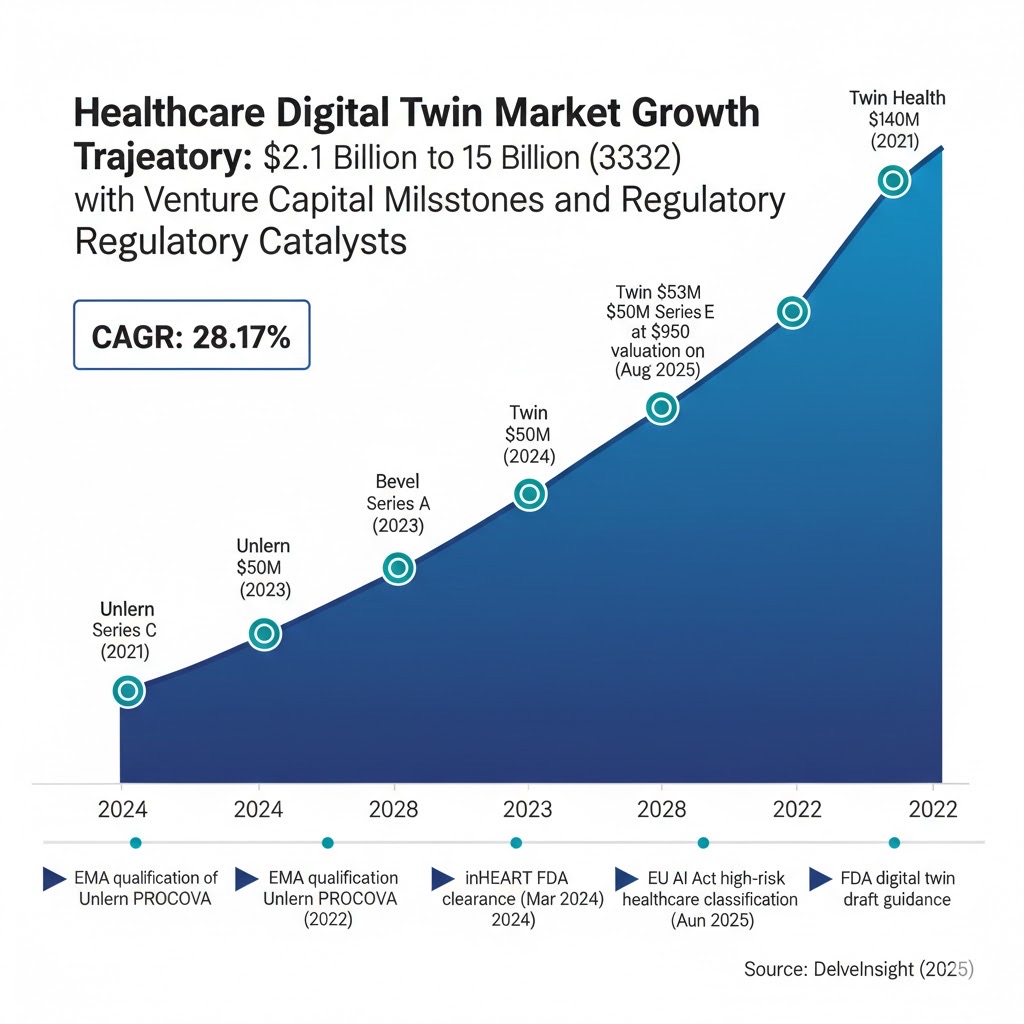
Figure 7. The healthcare digital twin market is projected to expand over 7x by 2032, with accelerating venture capital deployment tracking alongside landmark regulatory milestones from both the FDA and EMA.
Company Profiles: The Leading Edge
Digital Companion Leaders. Bevel (founded 2023, New York): $14 million total raised, including a $10M Series A led by General Catalyst; a software-only platform integrating wearable data through Apple Health and CGMs; over 100,000 DAU with 80%+ retention at 90 days; priced at $6/month or $50/year. Wysa (founded 2016): ~$30M total raised; AI mental health support with FDA Breakthrough Device designation; 4.5M users in 65 countries, 400M+ conversations; hybrid AI + human coach model. Woebot Health (founded 2017, San Francisco): $124M total raised; pioneered CBT-based relational agents; consumer app shut down June 30, 2025, pivoted to enterprise; FDA Breakthrough Device for PPD.
Digital Twin Leaders. Twin Health (founded 2018, Mountain View, CA): $243M+ total raised; $950M valuation; published in NEJM Catalyst, ADA, AHA, ACC; partnerships with Walmart, Blackstone, Berkshire Hathaway, Blue Cross Blue Shield; delivers $8,000+ annualized savings per member. Unlearn.AI (founded 2017, San Francisco): $130M+ total raised; digital twin generators for clinical trial optimization; EMA-qualified with FDA concurrence; AbbVie collaboration published 2025. inHEART (France): FDA-cleared AI cardiac CT segmentation software (March 2024); foundational to cardiac digital twin applications; 60% reduction in VT procedure times.
VII. The Convergence Thesis: Why the Future Is Hybrid
Here is what makes this moment so interesting: the most promising companies are already blurring the line. Twin Health, despite being the quintessential digital twin company, describes its platform as a "health companion for life" and emphasizes human care teams for engagement. Bevel, despite being a companion, integrates CGM data and aspires to the metabolic intelligence typically associated with twins.
The logic of convergence is irresistible. A digital twin without engagement is a report nobody reads. A digital companion without physiological depth is a chatbot guessing about your health. The ideal platform combines the predictive precision of a twin—your VO2max trajectory, your metabolic response to specific foods, your recovery curves—with the motivational intelligence of a companion that knows when to push you and when to back off.
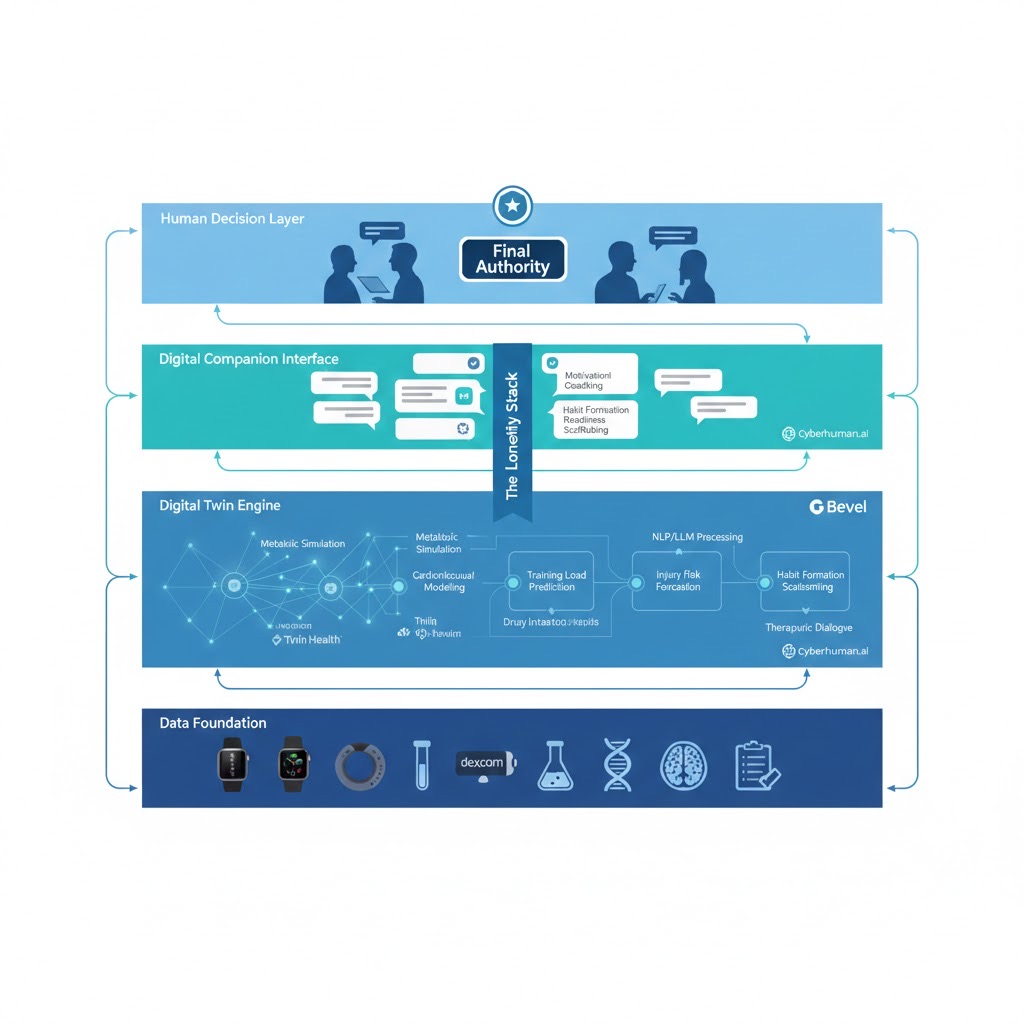
Figure 8. The emerging 'Longevity Stack' integrates continuous biometric data, digital twin simulation engines, and AI companion coaching into a unified architecture—with human clinical judgment as the ultimate decision layer.
For aspirational athletes, the hybrid model would integrate real-time physiological simulation (training load prediction, injury risk modeling, recovery optimization) with psychological readiness assessment and coaching. For executives, it would combine metabolic and cardiovascular monitoring with stress management and cognitive performance optimization. For aging populations, it would pair fall risk prediction and bone density modeling with social engagement and cognitive stimulation.
Cyberhuman.ai represents an early attempt at this convergence, creating AI-powered interactive versions of health experts (including DeepakChopra.ai) combined with a preventive health platform that integrates biomarkers, genetic data, and lifestyle patterns—bridging digital twin precision with companion-style interaction through expert AI personas.
VIII. Applications Across the Longevity Spectrum
Professional and Elite Athletics
For organizations like the NBA, NFL, and U.S. Olympic & Paralympic Committee, digital twins offer the possibility of simulating training interventions before implementation—reducing injury risk and optimizing periodization in ways that population-averaged models cannot achieve. The NFL's $213 million annual injury burden creates a powerful economic incentive for prediction accuracy. A digital twin that could forecast an athlete's hamstring strain risk based on neuromuscular fatigue patterns, travel schedules, and game-week load would be worth millions to a single franchise.
Digital companions, meanwhile, address the psychological dimension increasingly recognized as critical to athletic performance. Mental readiness, confidence calibration, and stress resilience are not easily captured in physiological data. An AI companion assessing psychological state through natural language interaction fills a gap no blood test or sensor can address.
Executive Health and Corporate Wellness
Fortune 500 companies are recognizing that their most valuable assets walk out the door every evening. Twin Health's enterprise model demonstrates the business case: performance-based pricing where employers pay only for measurable clinical outcomes. Digital companions complement this by addressing the behavioral and psychological barriers to health optimization that even the best physiological data cannot overcome.
Aging and Preventive Medicine
The aging population stands to benefit most from convergence. Cardiovascular digital twins, like those at Duke's Center for Computational and Digital Health Innovation, Johns Hopkins, and Imperial College London, can simulate disease progression and enable earlier intervention. AI companions can combat the loneliness and social isolation that accelerate cognitive decline and mortality.
In January 2025, the U.S. FDA issued draft guidance encouraging digital twin simulations in regulatory submissions—a signal that the regulatory infrastructure is beginning to catch up with the science.
IX. Risks, Limitations, and the Regulatory Frontier
Digital Twin Risks
The primary risks are technical and ethical: data privacy (aggregating genomic, metabolic, and behavioral data creates extraordinarily sensitive profiles), model accuracy (a twin that makes a confident but wrong prediction about drug interactions could be dangerous), and regulatory ambiguity. The EU Medical Device Regulation (MDR) and the EU AI Act (2024) are beginning to address these challenges, classifying healthcare AI as high-risk and requiring transparency, risk management, and human oversight.
Digital Companion Risks
The risks are psychological and sociological: emotional dependency, substitution of AI for human relationships, potential for harm in crisis situations, and absence of clinical oversight. Many companion apps exploit a regulatory gray zone—the FDA's "general wellness product" classification, which exempts tools that don't claim to treat disease from rigorous safety review.
The APA's November 2025 advisory was blunt: AI chatbots and wellness applications often "lack scientific validation and oversight, often do not include adequate safety protocols, and have not received regulatory approval." For consumers, this means performing due diligence: look for published clinical evidence, FDA designations, and transparent capability descriptions.
X. The Longevity Planning Imperative
The distinction between digital companions and digital twins maps directly onto a practical question for anyone serious about longevity planning: What kind of help do I actually need?
If your primary challenge is behavioral—you know what to do but struggle to do it consistently—a well-designed digital companion may be the higher-leverage investment. If your primary challenge is informational—you generate data but cannot translate it into precise protocols—a digital twin offers transformative potential. If, like most people optimizing for long-term healthspan, you face both challenges simultaneously, the emerging hybrid platforms represent the frontier.
The practical implication: the data you generate today—from wearables, bloodwork, genetic testing, imaging, and self-reported habits—becomes exponentially more valuable as the AI systems that interpret it become more sophisticated. Investing in comprehensive, longitudinal health data is not just a present-tense optimization strategy; it is a bet on a future where your digital twin will simulate your biology with extraordinary fidelity and your digital companion will know how to motivate you to act on what the twin reveals.
"It's understanding uniqueness, individuality at every layer, and then multimodal to pull it all together. Once we crack that at a significant level, I do think we can deliver better medicine, better prevention, which up until now has been like a fantasy."
— Eric Topol, M.D., Scripps Research Translational Institute
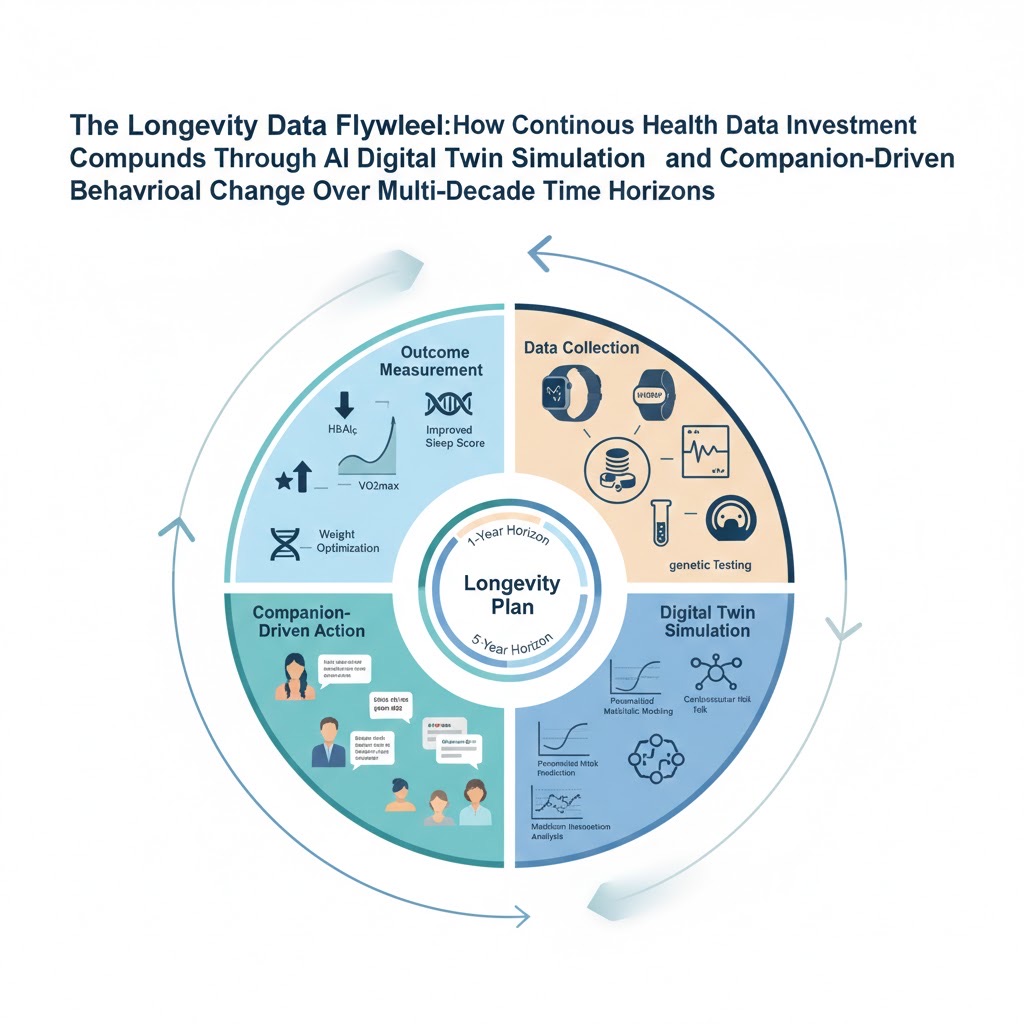
Figure 9. The longevity data flywheel: health data collected today compounds in value as digital twin simulation and AI companion coaching create a continuously improving cycle of personalized optimization across multi-decade time horizons.
XI. Looking Ahead: The Five-Year Horizon
Several developments will shape how these technologies evolve over the next five years:
Regulatory clarity. The FDA's January 2025 draft guidance on digital twin simulations, combined with the EU AI Act's high-risk classification for healthcare AI, signals that regulatory frameworks are catching up. Expect clearer pathways for both digital twins (as Software as a Medical Device) and AI companions (with emerging LLM guidance).
Multi-modal data fusion. The convergence of genomics, continuous wearable monitoring, medical imaging, and EHRs into unified platforms will enable increasingly granular physiological models. The next generation will integrate microbiome sequencing, epigenetic clocks, and proteomic biomarkers.
LLM-powered companions with clinical guardrails. Woebot's shutdown illustrates the tension between generative AI's power and the need for safety validation. The companies that build LLM-powered companions that are engaging and clinically validated will capture the market Woebot pioneered but couldn't scale.
Democratized access. Bevel's $6/month pricing model signals a shift toward accessibility. The future of longevity planning should not be the exclusive province of the wealthy.
Population-scale digital twins. Cleveland Clinic's initiative to create digital twins of entire neighborhoods—modeling access, utilization, and disease surveillance—suggests a future where the technology scales from personal optimization to public health infrastructure.
XII. Conclusion: Choose Your Mirror Wisely
A digital companion listens to you. A digital twin looks inside you. One speaks the language of motivation and behavior change; the other speaks the language of physiology and prediction. Both are imperfect. Both are improving rapidly. And both are converging toward a future in which the distinction between them may matter less than the quality of the data that feeds them and the wisdom of the human who acts on their recommendations.
For anyone building a longevity plan—whether you are a thirty-year-old entrepreneur, a fifty-five-year-old executive, or a seventy-year-old athlete who refuses to stop competing—the imperative is the same: invest in your data, choose your technologies with clinical evidence in mind, and remember that no algorithm, however sophisticated, replaces the irreducible human judgment about how you want to live.
The twin can tell you what will happen to your blood glucose after dinner. The companion can help you make the choice to go for a walk afterward. But only you can decide that living well for another forty years is worth the effort of both.
About the Author
Tony Medrano is CEO and co-founder of LongevityPlan.AI, a platform that integrates performance and health data from athletes and leverages proprietary Cardiorespiratory Digital Twin™ technology, wearable data, and biomarker data to deliver personalized performance optimization and longevity recommendations to athletes, coaches, organizations, businesses, government, and the military. A 3x technology/AI company CEO with 2 successful exits, Tony has also finished 3 Full Ironman Triathlons (140.6 mi) since 2019. He holds degrees from Harvard University, Columbia University, and a JD/MBA from Stanford University, and has worked with the US Olympic Team, the NBA, NFL, MLB, NASA, Google, Microsoft, Netflix, and Bridgewater Associates, among others. He also served as a US Navy Officer commanding an emergency response team aboard a destroyer.