Neuroscience
·11 min read
The Digital Brain: AI-Powered Cognitive Twins
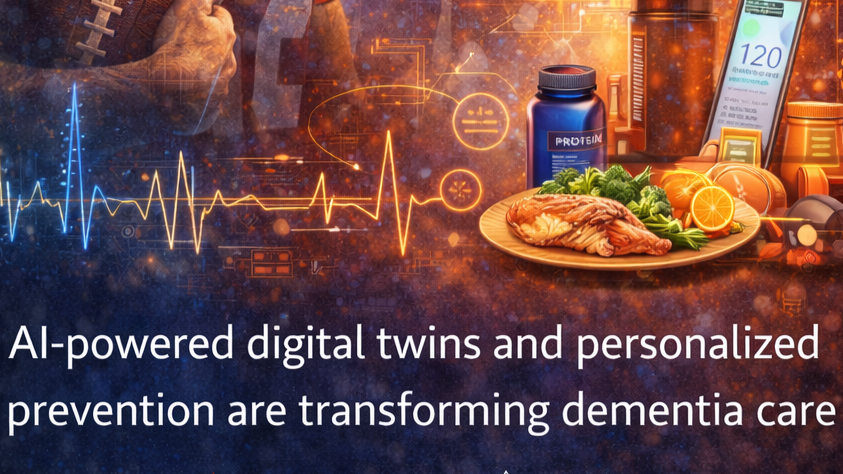
How AI-Powered Cognitive Twins Are Revolutionizing Dementia Prevention, Detection, and Treatment
By Tony Medrano & Sydney Wiredu, LongevityPlan.AI & Harvard University
Abstract
Dementia affects over 55 million people worldwide, with Alzheimer's disease accounting for 60–80% of cases. The 2024 Lancet Commission identified 14 modifiable risk factors that collectively account for 45% of dementia cases—meaning nearly half of all dementia could potentially be prevented. AI-generated digital twins are now transforming this landscape: predicting individual cognitive trajectories, optimizing clinical trials, detecting decline 5–7 years before symptoms emerge, and personalizing interventions with unprecedented precision. This article examines the convergence of cutting-edge neuroscience, professional sports brain health initiatives, and AI-powered Cardiorespiratory Digital Twins™ that together offer a roadmap for extending cognitive healthspan into the 9th and 10th decades of life.
The Crisis: A Global Epidemic Hiding in Plain Sight
The NFL quarterback stands on the field, reading defensive formations in milliseconds—a cognitive feat requiring working memory, processing speed, spatial reasoning, and executive function. Twenty years later, that same player struggles to remember his grandchildren's names. This trajectory, tragically common among contact sport athletes, illustrates a broader crisis that extends far beyond locker rooms.
By 2050, the global dementia population is projected to reach 139 million as populations age. The economic burden already exceeds $1.3 trillion annually. Women face twice the risk of men for developing Alzheimer's—a disparity scientists still don't fully understand. But here's what makes this moment different: we now know that 45% of dementia cases are linked to modifiable risk factors—traumatic brain injury, hypertension, obesity, physical inactivity, diabetes, smoking, hearing loss, depression, social isolation, and others. Nearly half of all dementia could potentially be prevented or delayed.
The question is no longer whether dementia can be prevented, but how—and for whom. This is where digital twin technology enters the picture, transforming population-level statistics into personalized predictions and interventions.
Why 2025 Is the Inflection Point: A Decade of Breakthroughs Converging
To understand why this moment matters, consider the accelerating timeline of discovery. In 2015, the Finnish FINGER trial became the first randomized controlled study to demonstrate that multidomain lifestyle interventions—combining exercise, diet, cognitive training, and cardiovascular monitoring—could prevent cognitive decline in at-risk adults. The intervention group showed 25% greater cognitive improvement than controls.
By 2017, the World-Wide FINGERS Network had launched, adapting and testing these interventions across 70+ countries. Then came the AI revolution. In late 2024 and early 2025, Harvard Medical School researchers published groundbreaking work showing how AI-generated digital twins could transform both research and clinical care.
In July 2025, the Alzheimer's Association announced results from U.S. POINTER—the first large-scale American trial to confirm that accessible lifestyle interventions can protect cognitive function in diverse populations. The structured intervention protected cognition from normal age-related decline for up to two years, and the effects held regardless of sex, ethnicity, APOE genetic risk, or baseline heart health. The Association committed $40 million over four years to implement these findings community-wide.
A 2025 systematic review published in Biomimetics examined 78 studies on digital twin cognition, revealing dramatic acceleration: 54% of all studies (42 of 78) were published from 2023 onwards. The synthesis confirmed transformative potential—digital twins can now identify subtle cognitive changes 5–7 years before clinical diagnosis by integrating neuroimaging, blood biomarkers, genetic data, wearable sensor streams, cognitive assessments, and speech patterns into predictive models invisible to human clinicians alone.
The Digital Twin Revolution: From Research Labs to Clinical Reality
Dr. Hiroko Dodge, director of research analytics at the Massachusetts General Hospital Interdisciplinary Brain Center and professor of neurology at Harvard Medical School, uses digital twins to create chatbots that mimic each participant's speech patterns in her behavioral intervention trials. "These twins allow us to validate our early detection methods for cognitive decline by analyzing each patient's conversational patterns—without needing to recruit new patients," Dodge explained.
The approach is elegantly practical. Subtle changes in speech—reduced vocabulary diversity, increased pauses, simplified sentence structure, word-finding difficulties—appear years before dementia diagnosis. Machine learning algorithms trained on thousands of conversation transcripts can identify these "speech fingerprints" predicting cognitive decline with 80–90% accuracy. A November 2025 study in npj Dementia achieved an AUC of 0.988 for detecting mild cognitive impairment using end-to-end deep learning on voice recordings—near-perfect discrimination.
Dr. Honghuang Wu at Boston University takes a different approach: creating digital twins from data on 50,000 patients with Alzheimer's and related dementias. A single person can have 100 digital twins sharing their age, gender, race, socioeconomic background, and even obscure metrics correlated with disease progression—like walking speed. By comparing a patient's trajectory after treatment versus their twins' trajectories, clinicians can statistically determine whether observed changes reflect real improvement or random noise.
AbbVie's AWARE trial demonstrated this power at scale. Machine learning models created individualized predictions of each participant's outcomes had they received placebo. The result: digital twin methodology reduced residual variance by 35% for the primary cognitive outcome, enabling 20–25% smaller sample sizes while maintaining statistical power. For Alzheimer's trials that typically require 1,000–2,000 participants at $50,000+ per person over 18–24 months, digital twins could save tens of millions per trial while accelerating therapeutic development by years.
The Athlete's Brain: When Peak Performance Meets Hidden Risk
The relationship between athletic excellence and brain health reveals medicine's most compelling paradox. Exercise is among the most powerful interventions for preventing dementia—promoting neuroplasticity through BDNF upregulation, enhancing cerebral blood flow, reducing inflammation, and stimulating neurogenesis in the hippocampus. Every 1-MET improvement in VO2 max reduces dementia risk by approximately 10–15%.
Yet contact sports simultaneously threaten the very organ they strengthen. A sobering statistic from Boston University's CTE Center: of 376 deceased NFL players whose brains have been autopsied, 345—92%—had chronic traumatic encephalopathy (CTE). Each year of playing tackle football increases CTE risk by 30%.
The tragedy deepens when we examine living players. A 2024 study of nearly 2,000 former NFL players found that one-third believe they have CTE—and 25% of those players reported frequent thoughts of suicide or self-harm. The Harvard Football Players Health Study documented the psychological burden: players with CTE concerns were twice as likely to have suicidal thoughts even after accounting for depression and other risk factors.
But here's what makes this research actionable rather than merely alarming: many of these players had treatable conditions causing their cognitive symptoms. Sleep apnea, low testosterone, high blood pressure, chronic pain, depression—all can impair memory, concentration, and mood independently of CTE. "A key takeaway," said Rachel Grashow, director of epidemiological research for the Harvard study, "is that many conditions common to former NFL players can cause problems with thinking, memory, and concentration."
In one remarkable case, a former NFL player participating in Harvard's In-Person Assessment Study was discovered to have Normal Pressure Hydrocephalus—a treatable condition causing cognitive decline. After surgical treatment with a shunt, he reported dramatic improvement in thinking, feeling, and functioning. His symptoms had mimicked CTE, but the cause was entirely reversible.
This is precisely where digital twin technology transforms the landscape. The NFL Alumni Health Association now provides comprehensive brain health programs—neurofeedback, cognitive training, psychological counseling, advanced neuroscience protocols—through partnerships with providers like Pure Sports Recovery. The NFL's $100 million research commitment funds studies at Harvard, Boston University, and the NIH, while the league's 88 Plan provides up to $88,000 annually for dementia-related care.
The DIAGNOSE CTE Research Project-II, launched in 2025, is now recruiting 350 participants—including 225 former college and professional football players—to develop the first reliable methods for diagnosing CTE in living individuals. "As a former NFL player, I know I am at risk for CTE, but right now I am blessed to be feeling healthy," said Matt Hasselbeck, a three-time Pro Bowler who volunteered for the study. "I encourage former college and pro football players aged 50 and over to join me."
Digital Biomarkers: Your Smartphone as an Early Warning System
Traditional dementia diagnosis relies on cognitive testing, patient reports, and brain imaging—methods that detect disease only after substantial neurodegeneration. By the time someone meets clinical criteria for Alzheimer's dementia, they've typically lost 30–50% of neurons in affected brain regions. This diagnostic delay is catastrophic: interventions work best in preclinical stages when the brain's plasticity can still compensate.
Digital biomarkers are changing this calculus. Gait analysis from wearable accelerometers—measuring walking speed, stride length, variability, and dual-task performance—predicts dementia risk years before symptoms. Heart rate variability (HRV) from consumer devices reveals autonomic dysfunction associated with cognitive decline; the autonomic nervous system and brain share neurodegenerative pathways, making HRV changes an early sentinel.
Sleep architecture disruption—measurable through consumer trackers—predicts dementia risk. Alzheimer's pathology disrupts circadian rhythms years before diagnosis; reduced slow-wave sleep (crucial for memory consolidation and amyloid clearance) appears early. Digital phenotyping—continuous passive data from smartphones tracking app usage, typing speed, GPS movements, communication frequency—creates behavioral signatures revealing cognitive changes invisible to the individual experiencing them.
Cardiorespiratory Digital Twins™: Unifying Heart and Mind
The brain consumes 20% of cardiac output despite representing only 2% of body weight. Cerebral blood flow reductions of even 10–15% impair cognitive function. This intimate connection between cardiovascular and brain health demands integrated monitoring—the rationale behind Cardiorespiratory Digital Twins™.
Companies like Fountain Life, co-founded by Peter Diamandis and Tony Robbins, provide comprehensive cardiovascular and neurological assessment generating 150GB of data per member. LongevityPlan.AI has designed its Cardiorespiratory Digital Twin™ platform specifically to integrate data from wearables (ŌURA, WHOOP, Garmin, Apple Watch), biomarker providers (Function Health, InsideTracker, Viome), cognitive assessments, sleep trackers, and medical records.
The platform was born from founders' elite endurance backgrounds—Tony Medrano (3x Ironman finisher, 3x tech CEO), Lina Ramos (35x Ironman finisher, 2026 Kona qualifier), and Felipe Louriero (600+ triathlon finisher, 40+ years coaching). They experienced firsthand how cardiovascular conditioning affects cognitive performance: the mental clarity after Zone 2 training, the brain fog from overtraining, the cognitive changes accompanying aging.
AI algorithms identify patterns linking cardiovascular function to cognitive performance—perhaps declining HRV predicts next-day cognitive slowing, or elevated nighttime blood pressure correlates with accelerated memory decline. These insights enable preemptive interventions: increasing Zone 2 aerobic training to boost cerebral blood flow, optimizing blood pressure control to slow white matter disease progression, adjusting sleep protocols to enhance amyloid clearance.
Practical Applications: Two Scenarios
The 30-year-old former college football player concerned about future dementia risk receives proactive monitoring through digital twin technology. Baseline assessment includes brain MRI (establishing white matter integrity, hippocampal volume), cognitive testing (processing speed, memory, executive function), genetic testing (APOE ε4 status), blood biomarkers (p-tau, NfL), and cardiovascular evaluation. This creates a personal risk profile and baseline digital twin.
Annual reassessments track changes while continuous wearable monitoring detects real-time deviations. If processing speed declines 10% year-over-year—unusual at age 30—the system triggers comprehensive evaluation for reversible causes: sleep apnea, thyroid dysfunction, depression, medication effects, substance use. The goal isn't to identify irreversible damage, but to catch and treat what can be treated.
The 55-year-old executive noticing subtle memory lapses undergoes digital twin assessment that may reveal mild cognitive impairment (MCI)—a transitional state between normal aging and dementia affecting 12–18% of adults over 60. Of those with MCI, 10–15% per year progress to dementia. The digital twin predicts this individual's progression probability based on biomarker profile, genetic risk, lifestyle factors, and comorbidities.
If high risk, aggressive interventions include: intensive aerobic exercise (150+ minutes weekly at 60–80% max heart rate), Mediterranean-DASH diet (emphasizing fish, olive oil, leafy greens, whole grains), cognitive training, social engagement, blood pressure optimization (target <130/80), diabetes control (HbA1c <6.5%), and potentially anti-amyloid antibody therapy (aducanumab or lecanemab) if biomarker-positive.
The Path Forward: From Elite Access to Universal Prevention
The vision for 2030 is ambitious but increasingly realistic: comprehensive brain health monitoring accessible not just to professional athletes and wealthy executives, but to everyone. Digital twin technology costs are falling rapidly—what cost $50,000 per person in research settings in 2020 could cost $500–1,000 by 2030 through consumer platforms.
The democratization follows a familiar technology adoption curve: early adopters subsidize development; costs fall; mass market adoption follows. Companies like Fountain Life, TruDiagnostic, InsideTracker, Viome, and LongevityPlan.AI are accelerating this transition by building scalable platforms. The FDA's Digital Health Center of Excellence is streamlining approval of software-as-medical-device, including digital biomarkers and AI diagnostics.
Dr. Miia Kivipelto, who led the original FINGER trial, is optimistic that within the next five years, prevention strategies will become more personalized—combining lifestyle, pharmacological interventions, and early detection to create a "cocktail of different interventions available at different stages of the disease." Her hope: that "brain health clinics" will replace "memory clinics," taking a holistic approach addressing hearing, vision, depression, stress, and other conditions affecting cognition.
Conclusion: Your Move
The convergence of neuroscience, AI, wearable technology, and precision medicine has created an inflection point in brain health. Digital twins transform abstract risk into actionable predictions. The NFL quarterback can now monitor his brain health quantitatively, receiving alerts when biomarkers drift into concerning ranges. The aging executive can optimize cognitive performance through precision interventions. The longevity-focused individual can extend cognitive vitality decades beyond what previous generations achieved.
The critical insight from a decade of research: dementia prevention is not one-size-fits-all. Your genetic variants, baseline fitness, cognitive reserve, sleep architecture, stress response, and microbiome all influence which interventions work best for you. Digital twins identify your optimal prevention strategy through continuous monitoring and feedback—not population averages, but personalized predictions.
The tools exist. The science is validated. The question is whether you will leverage this revolution to protect your most precious asset: your mind. Your cognitive future—clear thinking at 80, sharp memory at 90, maintained independence into your 10th decade—awaits your decision.
About the Authors
Tony Medrano is CEO and co-founder of LongevityPlan.AI, a platform that integrates performance and health data from athletes and leverages proprietary digital twin technology, wearable data, and biomarker data to deliver personalized optimization and longevity recommendations to athletes, coaches, organizations, businesses, government, and the military. In addition to being a 3x technology/AI company CEO with 2 successful exits, Tony has finished 3 Full Ironman Triathlons (140.6 mi) since 2019. He has degrees from Harvard University, Columbia University, and a JD/MBA from Stanford University.
Sydney Wiredu is a Research Intern at LongevityPlan.AI and a researcher and entrepreneur passionate about using science and technology to extend human healthspan. A Ghanaian-American student at Harvard University, he studies Chemistry and Neuroscience with a secondary focus in Global Health and Health Policy. His work lies at the intersection of biotechnology, health systems innovation, and rare disease research, united by a mission to make longevity accessible to all.