Youth Athletics
·30 min read
Can a Cardiorespiratory Digital Twin™ Help Your Child Get into Harvard?
How Elite Parents Are Using Cardiorespiratory Sports as a Backdoor to Elite University Admissions
By Tony Medrano, CEO & Co-Founder, LongevityPlan.AI
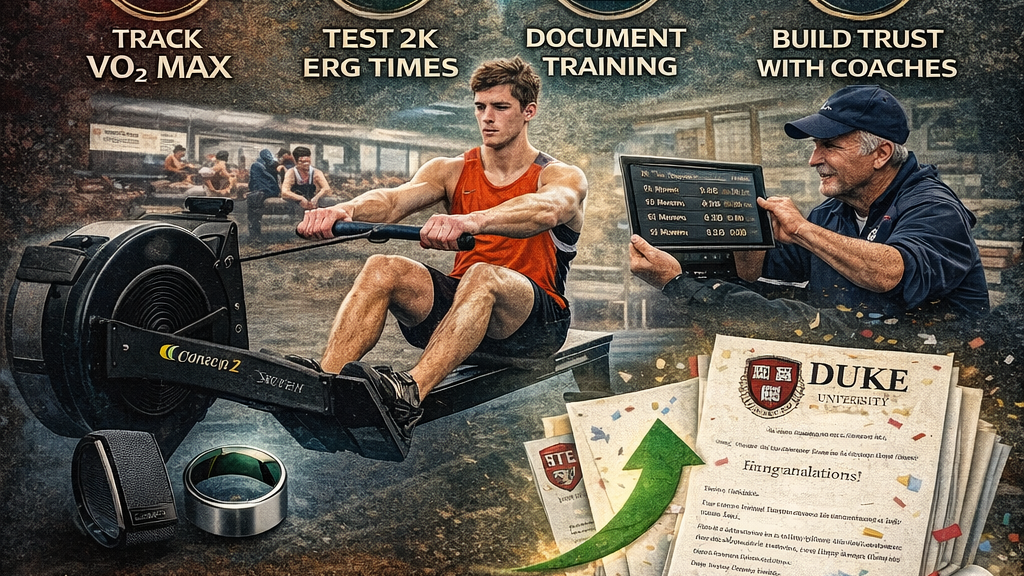
The $40 Billion Secret: How Wealthy Families Engineer Admissions Advantages
American families now spend more than $40 billion annually on youth sports—a 46% increase since 2019 that far outpaces inflation.[1] The average U.S. sports family invests $1,016 on their child's primary sport each year, though this figure masks extreme variation: some parents report spending as high as $25,000 annually on a single child's athletic development.[2]
But this isn't just about Little League anymore. A sophisticated ecosystem has emerged where strategic athletic development—particularly in cardiorespiratory sports—serves as a highly effective pathway to elite university admissions. The mechanism is straightforward: colleges need athletes to fill rosters, especially in less popular sports. Families with resources can systematically develop their children's athletic credentials to meet that demand.
As Dr. Kirsten Hextrum, Assistant Professor of Sport Management at Oregon State University and author of Special Admission: How College Sports Recruitment Favors White Suburban Athletes, explains in her research: college athletic recruitment operates through a "hidden curriculum" with three distinct phases—socialization, covert selection, and overt selection.[3] Each phase systematically advantages families with financial resources and cultural capital.
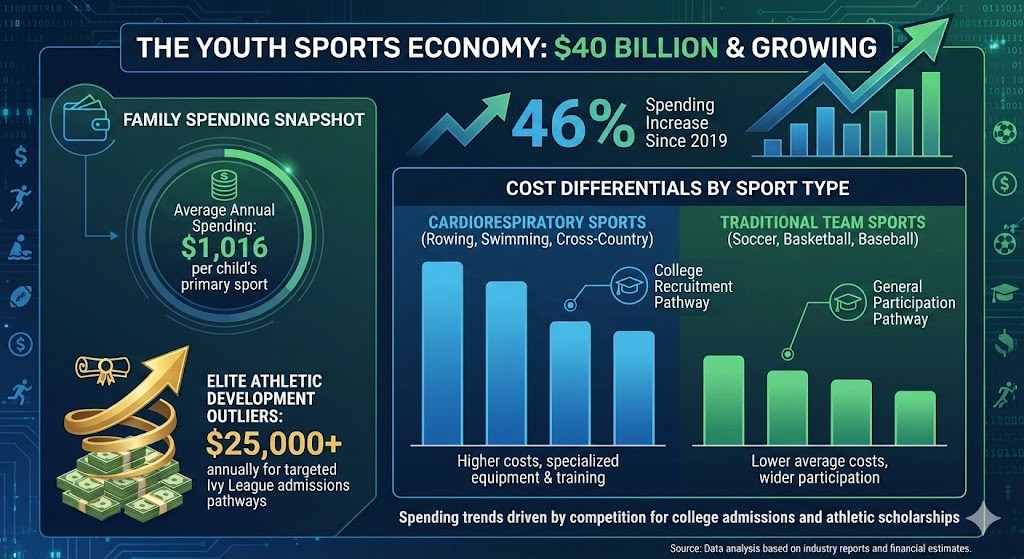
Family investment in youth sports has increased 46% since 2019, far outpacing inflation, as parents recognize athletic recruitment as a strategic pathway to elite university admissions. The $40 billion annual market reflects systematic optimization of college placement opportunities through cardiorespiratory athletic development.
The question isn't whether this system exists—it does. The question is whether families can navigate it ethically and legally, leveraging legitimate resources to maximize their children's potential. And increasingly, the answer involves a convergence of sports science, performance technology, and admissions consulting that would have been unimaginable a decade ago.
Why Cardiorespiratory Sports Offer a Trainable Advantage
Not all sports are created equal when it comes to systematic athletic development. The fundamental difference lies in what's trainable versus what's genetic.
Consider basketball or football: success at the elite level requires height, fast-twitch muscle fiber dominance, explosive power, and hand-eye coordination that, while improvable, are largely determined by genetics. A 5'9" athlete can train religiously but will never possess the physical advantages of a genetically gifted 6'8" athlete. Speed, in particular, has proven remarkably resistant to training—sprinters are largely born, not made.[4]
Cardiorespiratory sports operate under different biological rules.
Research on muscle fiber composition demonstrates that slow-twitch (Type I) muscle fibers—the primary determinants of endurance performance—are highly trainable and responsive to systematic training, especially when that training begins in youth.[5] Studies of young soccer players aged 11-15 show significant shifts in fiber type composition with training, with older athletes demonstrating higher cross-sectional areas in all fiber types and markedly improved cardiorespiratory capacity.[6]
More importantly, the cardiorespiratory system itself—lung capacity, mitochondrial density, cardiac output, oxygen utilization—responds dramatically to structured endurance training. While genetics certainly play a role in determining one's ceiling, the floor is remarkably high with proper training. A dedicated youth athlete with average genetic endowment can, through years of systematic Zone 2 training and high-intensity interval work, develop cardiorespiratory capacity that approaches that of genetically gifted athletes.
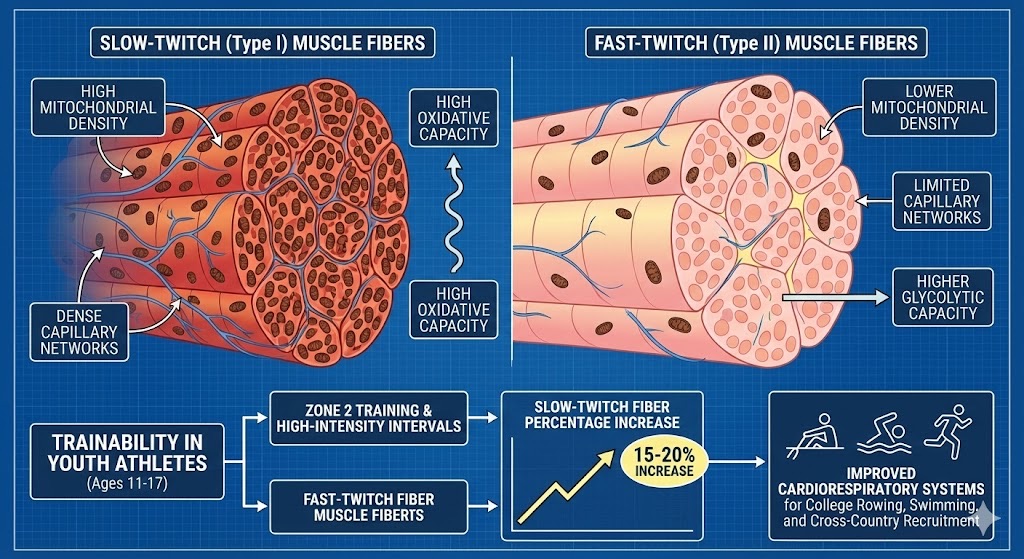
Slow-twitch muscle fibers respond dramatically to structured endurance training in youth athletes, unlike genetically-determined attributes like height or fast-twitch dominance. This biological trainability makes cardiorespiratory sports strategically valuable for systematic athletic development targeting elite college recruitment.
This biological reality creates a strategic opportunity. In sports like crew, cross-country running, swimming, cycling, and soccer, performance is fundamentally trainable. A family investing in year-round coaching, physiological testing, nutritional optimization, and science-based training can systematically develop measurable, objectively verifiable athletic credentials—credentials that translate directly into recruitment value.
Compare rowing: success depends primarily on VO2 max, lactate threshold, and raw cardiovascular power—all highly trainable through systematic endurance work. A 17-year-old with a 2k erg time of 6:15 (competitive for Ivy League recruitment) has demonstrated cardiovascular development that can be built through structured training, regardless of whether they were naturally gifted.[7] They've manufactured performance that coaches value.
This is the fundamental insight driving the cardiorespiratory sports admissions strategy: you're not trying to change genetics—you're optimizing what's trainable. And what's trainable happens to align perfectly with sports that maintain robust roster spots at elite universities.
The Cultural Foundation: Family Discipline and Relentless Training
The athletic development pathway to elite admissions doesn't succeed on biology alone. It requires a family culture of discipline, structure, and relentless commitment—qualities that tend to concentrate in high-achieving, professionally successful households.
Dr. Chris Knoester's research at The Ohio State University found that youth sports participation correlates strongly with family socioeconomic status, but it's not just about money.[8] It's about families structured around achievement, time management, and delayed gratification—families where parents model the very behaviors that produce success in competitive environments.
Consider what it takes to develop an elite young rower, cyclist, or distance runner:
- 6:00 AM training sessions before school, rain or shine
- Weekend travel to regattas, races, or training camps
- Nutritional discipline that requires family-wide commitment
- Academic management to maintain GPA while training 15-20 hours weekly
- Recovery protocols including sleep optimization, hydration tracking, and injury prevention
- Performance monitoring through wearable technology and regular physiological testing
This isn't training that happens by accident. It requires parental involvement that mirrors corporate project management—scheduling, logistics, financial planning, and continuous optimization. The parents succeeding in this arena are typically the same ones succeeding in their professional lives: management consultants, technology executives, physicians, attorneys, and entrepreneurs who apply their organizational capabilities to their children's athletic development.
Jamie Beaton, co-founder and CEO of Crimson Education, embodies this cultural preparation. Born to property managers in Auckland, New Zealand, Beaton was accepted to 25 of the world's top universities at age 17.[9] His path wasn't accidental—it was systematically engineered through relentless discipline and strategic planning. While at Harvard University, he completed both a bachelor's and master's degree in Applied Mathematics in three years while simultaneously working as the youngest analyst ever at Tiger Management, Julian Robertson's legendary hedge fund.[10]
By age 20, Beaton had been accepted to Stanford Graduate School of Business—one of the youngest admits in the program's history—where he earned both an MBA and Master's in Education.[11] He went on to accumulate degrees from Tsinghua University, Oxford University (as a Rhodes Scholar), Yale Law School, University of Pennsylvania, Princeton University, and King's College London.[12]
Beaton's academic achievements required the same relentless training mentality that elite endurance athletes develop. His founding of Crimson Education in 2013—now valued at nearly $1 billion and serving over 8,000 clients globally—demonstrates how this mindset translates to long-term business success.[13] Under his leadership, Crimson students achieved over 220 Ivy League placements in 2024 alone, with a ~90% success rate for M7 business school applicants.[14]
This cultural foundation—families structured around achievement, discipline, and systematic optimization—is what allows the athletic development pathway to succeed. The training isn't just physical. It's cultural preparation for a lifetime of high performance, whether in athletics, academics, or business.
Inside IMG Academy: Manufacturing College-Recruitable Credentials
To understand how elite athletic development actually works, it's worth examining IMG Academy in detail—an institution that doesn't just train athletes but systematically manufactures college-recruitable credentials.
Located on a 600-acre campus in Bradenton, Florida, IMG Academy is perhaps the world's most sophisticated youth sports development institution.[15] Founded in 1978 as Nick Bollettieri Tennis Academy, it has evolved into a comprehensive boarding school (grades 6-12 plus post-graduate) that offers professional-grade training across eight sports: tennis, golf, soccer, basketball, football, track & field, lacrosse, and most notably for college recruitment purposes, swimming and cross-country.[16]
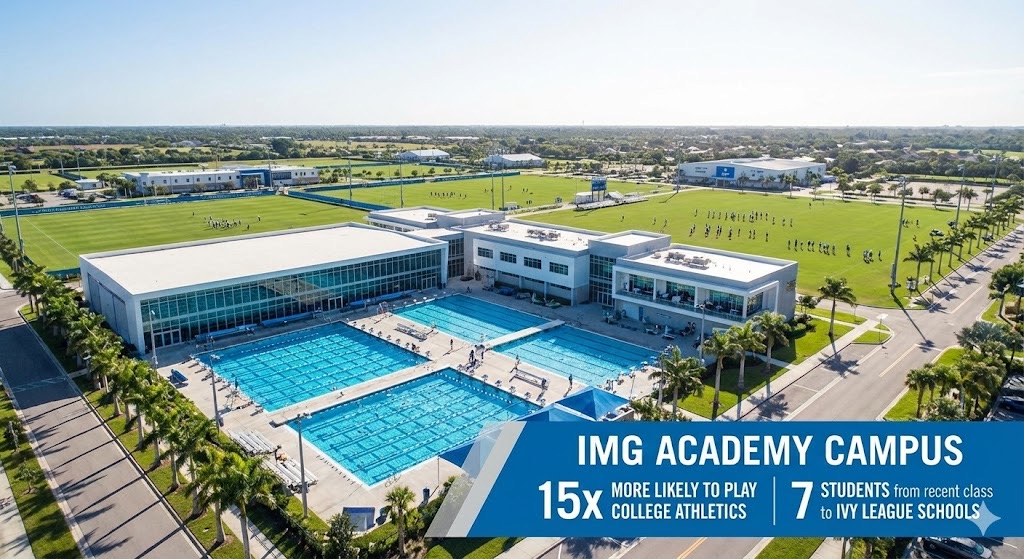
IMG Academy's comprehensive campus provides professional-grade training infrastructure that systematically develops college-recruitable credentials in cardiorespiratory sports, with 400+ NCAA Division I coaches visiting annually to recruit student-athletes for elite university programs.
The statistics are remarkable: IMG student-athletes are 15 times more likely to play college athletics than their peers.[17] In a recent graduating class, 25 student-athletes were admitted to U.S. News top-25 colleges and universities, with 7 matriculating to Ivy League schools.18 More than 400 coaches from over 200 NCAA Division I programs visit the campus annually to recruit.[19]
But here's what makes IMG particularly relevant to the Cardiorespiratory Digital Twin™ strategy: many of the families sending their children to IMG—especially those targeting Ivy League admissions rather than professional sports careers—are using athletics as an admissions qualification tool, not as preparation for professional athletics.
These aren't families dreaming of Olympic medals or professional contracts (though some certainly are). These are families who recognize that their child will never play professional soccer or run professionally, but who understand that four years of elite athletic development at IMG can produce objectively measurable credentials—VO2 max scores, 2k erg times, 5k running splits, swimming times—that Ivy League coaches value when filling roster spots.
IMG's approach is comprehensive and data-driven:
Physiological Monitoring: GPS tracking systems measure player workload and movement. Wearable devices like WHOOP, Oura Ring, and Garmin monitor heart rate variability, sleep quality, and recovery metrics. Regular VO2 max testing and lactate threshold assessments provide objective performance baselines.20
Individualized Development Plans: Each athlete receives a customized training program based on their sport, position, physical capabilities, and recruitment goals. For endurance athletes, this means periodized training that balances Zone 2 base building with high-intensity threshold work—precisely the methodology that maximizes cardiorespiratory development.
Sports Medicine Integration: Dedicated physical therapists, athletic trainers, and sports medicine physicians work to prevent and manage injuries. This is critical for specialized youth athletes facing the 2.25x elevated injury risk that Dr. Neeru Jayanthi's research has documented.[21]
Academic Support: College counselors and academic advisors ensure athletes maintain the GPA and test scores necessary for Ivy League admission. The model recognizes that athletic recruitment is worthless without the academic credentials to support it.
College Placement Services: IMG's acquisition of SportsRecruits (May 2025) complemented its existing NCSA College Recruiting platform, creating access to more than 40,000 college coaches.[22] This infrastructure systematically connects qualified athletes with programs seeking to fill roster spots.
The institution doesn't just develop athletes—it manufactures hard-earned college-recruitable credentials through the systematic application of sports science, professional coaching, cutting-edge technology, and comprehensive support systems. It's the industrialization of athletic development, optimized specifically for the college admissions market.
For families investing $80,000+ annually in IMG's boarding program, the value proposition isn't professional athletics—it's elite college admissions combined with the long-term health and performance benefits of optimal cardiorespiratory development.
The Science of Elite Athletic Development: VO2 Max and Cardiovascular Capacity
What makes cardiorespiratory sports particularly valuable for college recruitment is their reliance on objectively measurable physiological parameters. Unlike subjective assessments of "basketball IQ" or "leadership on the field," cardiorespiratory performance can be quantified with scientific precision.
VO2 max—maximal oxygen uptake—represents the gold standard measurement of cardiovascular fitness. It quantifies the highest rate at which an individual can consume oxygen during intense exercise, expressed in milliliters of oxygen per kilogram of body weight per minute (ml/kg/min).[23]
For endurance athletes, VO2 max is the single best predictor of performance. Elite male endurance athletes typically possess VO2 max values of 70-85 ml/kg/min, compared to 35-40 ml/kg/min for average untrained males.[24] What's remarkable—and strategically relevant—is how dramatically trainable this parameter is, especially in youth.
Dr. Benjamin Levine's landmark research at the Institute for Exercise and Environmental Medicine at UT Southwestern Medical Center demonstrated that eight weeks of aerobic exercise training improved VO2 max by 45% in previously sedentary individuals.[25] More recently, Levine's 2-year randomized controlled trial with middle-aged adults showed that high-intensity exercise training increased VO2 max by 18% and reduced left ventricular stiffness—essentially reversing cardiac aging.[26]
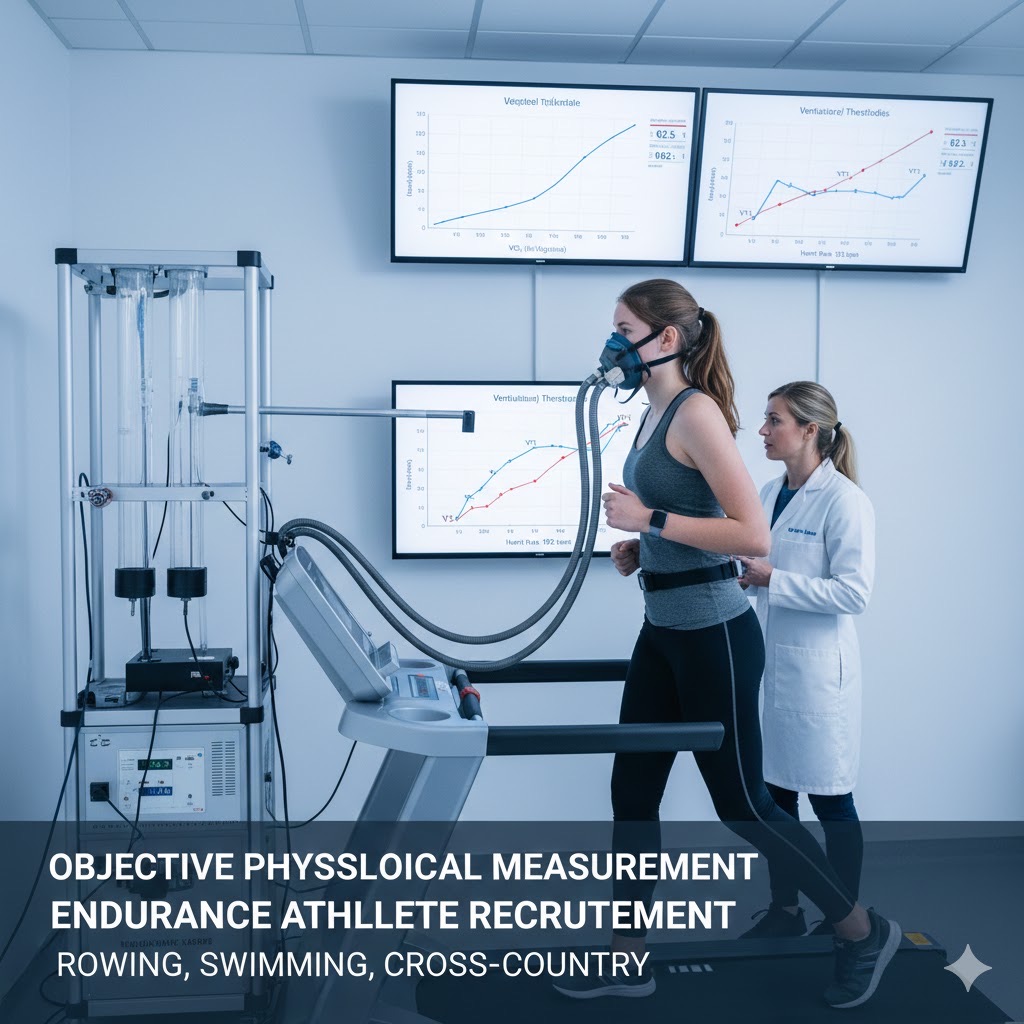
VO2 max testing provides objective, verifiable measurement of cardiorespiratory capacity that college coaches use to evaluate recruitment prospects. Youth athletes can systematically improve VO2 max by 18-45% through structured training protocols, creating measurable credentials that distinguish them in competitive admissions processes.
The protocol Levine used is now standard in elite endurance training: a "4×4" high-intensity interval method developed by Norwegian researchers. Athletes perform 4 minutes at 90-95% of maximum heart rate, followed by 3 minutes of active recovery, repeated 4 times.[27] This precise protocol stimulates maximal cardiac output and drives the ventricular remodeling that increases VO2 max.28
For families strategically developing their children's athletic credentials, this research provides a roadmap: systematic high-intensity interval training combined with high-volume Zone 2 base building can produce measurable, verifiable improvements in cardiovascular capacity that college coaches recognize as legitimate athletic achievement.
A 16-year-old who can document a VO2 max of 65 ml/kg/min, a 2k erg time of 6:20, or a 5k running time of 16:15 has credentials that are unambiguous. These aren't subjective assessments by high school coaches—they're objective physiological data that predict collegiate athletic performance.
Zone 2 Training: The Mitochondrial Foundation
While VO2 max captures peak performance capacity, the foundation of elite endurance is built through Zone 2 training—the exercise intensity that Dr. Iñigo San Millán describes as optimally stimulating mitochondrial function.[29]
San Millán, Director of Performance for UAE Team Emirates cycling team and coach to two-time Tour de France winner Tadej Pogačar, has pioneered the scientific understanding of Zone 2 training for both athletic performance and metabolic health. He defines Zone 2 as the intensity where you primarily recruit Type I (slow-twitch) muscle fibers while utilizing both fat and carbohydrates for energy production.[30]
At this intensity, athletes maximize two critical adaptations: fat oxidation capacity and lactate clearance rate—both markers of improved mitochondrial function.[31] San Millán recommends 3-4 days of Zone 2 training per week for optimal mitochondrial development, with sessions lasting 45-90 minutes.32
The physiological mechanisms are well understood. At Zone 2 intensity, muscles rely heavily on mitochondria to produce energy aerobically. This sustained aerobic stimulus drives mitochondrial biogenesis—the creation of new mitochondria—and improves existing mitochondria's functional capacity.[33] The result is muscles that can sustain higher power outputs for longer durations while producing less metabolic waste.
For youth athletes, Zone 2 training offers something crucial: a sustainable, injury-resistant pathway to building aerobic capacity. Unlike high-intensity work that carries injury risk and requires significant recovery, Zone 2 sessions can be performed frequently with minimal fatigue accumulation. A 14-year-old can safely perform 5-6 hours of Zone 2 training weekly, building cardiovascular capacity without the overuse injuries that plague young athletes in more explosive sports.
San Millán's work also reveals why elite endurance athletes can maintain such phenomenal metabolic health. He explains that these athletes can consume extremely high-carbohydrate diets while remaining lean and disease-free because their mitochondria efficiently turn fuel into energy and clear metabolic byproducts like lactate.34 Research shows trained athletes have larger and more numerous mitochondria compared to sedentary individuals.35
For families pursuing the athletic admissions pathway, Zone 2 training represents the foundation on which elite performance is built. It's not flashy—it's controlled, conversational-pace training that looks deceptively easy. But over months and years, it produces the mitochondrial adaptations that separate elite endurance athletes from recreational ones.
The Hidden Curriculum: Socialization, Covert Selection, and Overt Selection
Dr. Kirsten Hextrum's concept of the "hidden curriculum" in college athletic recruitment reveals how advantages compound through each phase of the process.[36]
Phase 1: Socialization begins in childhood when families introduce their children to specific sports—often sports that align with socioeconomic status. Crew, for instance, is almost exclusively accessible to families in affluent areas with access to boathouses and coaching. A child in Westchester County, New York has a dramatically higher probability of exposure to rowing than a child in rural Arkansas.
This isn't overt discrimination—it's geographic and economic reality. Rowing clubs require expensive facilities (boathouses, racing shells costing $30,000+, launching docks), professional coaching, and typically proximity to appropriate bodies of water. These cluster in wealthy communities. Hextrum's research shows that rare sports like rowing (4,589 high school participants nationwide), sailing (916), and equestrian (7,161) are concentrated in high-income areas yet still offered at elite colleges with roster spots to fill.[37]
Phase 2: Covert Selection is where the hidden curriculum becomes truly powerful—and where families with resources gain systematic advantages that remain largely invisible to those without them.
Covert selection operates through information asymmetries, social networks, and resource access that aren't formally codified but create substantial barriers. Consider these mechanisms:
Information about recruitment timelines and processes: Elite families know that serious athletic recruitment discussions for Ivy League schools begin as early as sophomore year of high school, with informal offers often extended the summer between junior and senior year.[38] They understand the difference between "likely letters," "athletic slots," and "tips." They know which camps college coaches actually attend versus which are just revenue generators.
Access to specialized coaching and training environments: A family in Greenwich, Connecticut can access private rowing coaches charging $150+ per hour who have placed dozens of athletes at Ivy League schools and understand precisely what times and technique will attract recruitment interest. They know which summer programs (like junior national team selection camps) carry genuine recruitment value versus which are primarily marketed to parents.
Network connections to college coaches: Private high schools and elite club programs maintain relationships with college coaches built over decades. When a coach from a prestigious rowing club calls Harvard's crew coach about a prospect, that call carries weight that a cold email from an unknown high school never will.
Cultural capital around athletic development: Families understand periodization, peak training, and how to structure a junior season to achieve personal records at the exact moments when college coaches are evaluating athletes. They know to compete at specific regattas where Ivy League coaches will be present. They understand that a strong sophomore year showing followed by incremental junior year improvement tells a different recruitment story than peaking early.
Financial resources for showcasing: Attending the right camps, traveling to the right competitions, and maintaining the training consistency that produces results all require substantial financial investment—investments that appear optional but are functionally mandatory for serious recruitment consideration.
This covert selection phase is where the Cardiorespiratory Digital Twin™ model offers particular advantages. Families using data-driven performance optimization can demonstrate systematic improvement that coaches find compelling. A documented progression of 2k erg times from 7:00 as a freshman to 6:45 as a sophomore to 6:20 as a junior tells a story of consistent improvement and coachability that matters enormously in recruitment.
But covert selection also operates through what's not available to families without resources. If you don't know that the junior national team selection camp exists, if you can't afford the travel and fees to attend, if you don't have coaching sophisticated enough to prepare you to perform well there—you're excluded from consideration before the formal recruitment process even begins.
Phase 3: Overt Selection is the formal recruitment process where coaches identify, evaluate, and ultimately recruit athletes. By this phase, the hidden curriculum has already done most of its work. The athletes in the recruitment pipeline are disproportionately from families with resources who successfully navigated phases 1 and 2.
Overt selection appears meritocratic—coaches evaluate objective measures like erg times, race results, and GPA. But the athletes being evaluated have been shaped by years of unequal access to training, coaching, and development opportunities. A 6:15 2k erg time represents genuine athletic achievement, but it's achievement that was systematically more accessible to some families than others.
Understanding this hidden curriculum doesn't diminish individual achievement—elite athletic performance requires dedication and hard work regardless of resources. But it reveals why cardiorespiratory sports, developed through data-driven training and comprehensive support systems, offer such a powerful pathway for families with means to secure admissions advantages for their children.
Crew, Swimming, Track, Cycling, and Soccer: The Cardiorespiratory Sports Advantage
When families strategically select sports for college recruitment purposes, certain patterns emerge. The most effective sports share common characteristics: robust roster spots at elite universities, performance measured through objective data, and fundamentally trainable cardiorespiratory systems.
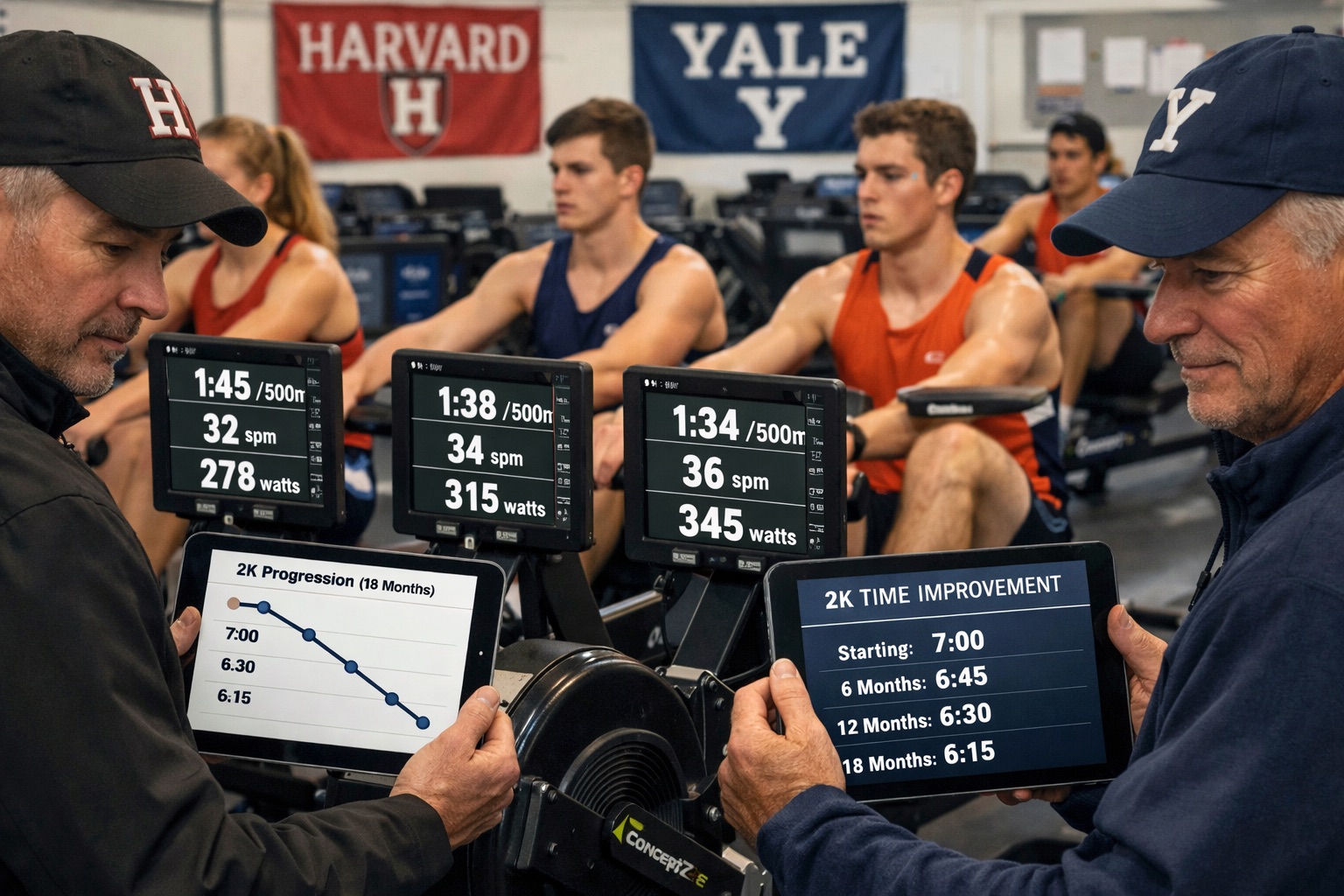
2k erg times provide objective, standardized performance metrics that rowing coaches use as primary recruitment criteria. Ivy League programs recruit male rowers with times in the 6:05-6:15 range—performance that can be systematically developed through structured cardiorespiratory training regardless of genetic endowment.
Crew (Rowing) stands as perhaps the ideal strategic sport. Yale's lightweight crew team alone maintains 43 roster spots, meaning the program recruits approximately 10-11 lightweight rowers annually.[39] Harvard, Princeton, and other Ivies maintain similarly large programs. For context, the entire Harvard varsity basketball team has 15 players—crew programs are massive by comparison.
Performance in rowing correlates directly with measurable physiological parameters. The 2k erg test—a 2,000-meter row on a stationary ergometer—provides an objective, standardized measure that coaches use as the primary recruitment metric. Ivy League schools typically recruit male rowers with 2k times in the 6:05-6:15 range.[40] These times reflect genuine cardiovascular capacity that can be systematically developed through structured training.
Importantly, Ivy League rowing programs don't offer athletic scholarships (no Ivy League sports do), which means recruited rowers need strong academics regardless of athletic ability.[41] This creates perfect alignment for high-achieving families: athletic recruitment provides an admissions advantage, but academic preparation remains essential.
Swimming and diving offers similar dynamics. Major programs maintain large rosters across multiple events—sprint freestyle, distance freestyle, butterfly, backstroke, breaststroke, individual medley, diving—creating numerous recruitment opportunities. Performance is measured in hundredths of seconds, providing objective data that translates directly across competitions and regions.
Swimming is fundamentally a cardiorespiratory sport (except for the shortest sprint events). Success depends on VO2 max, lactate threshold, and swimming-specific technique—all highly trainable. A dedicated youth swimmer with proper coaching can systematically improve times through structured training that builds aerobic capacity while refining stroke mechanics.
Track and field, particularly distance events, creates abundant recruitment opportunities. Cross-country teams need depth—typically 7-12 runners to field competitive varsity teams. Distance track events (800m, 1500m, 3000m steeplechase, 5000m, 10000m) require separate rosters of athletes. This creates substantial recruitment need at programs across all Division I, II, and III levels.
Performance metrics are straightforward: times over standard distances. A high school male runner with a 5k cross-country time under 16:00 or a 1600m track time under 4:20 attracts serious recruitment interest from Ivy League programs.[42] These times reflect cardiovascular development that families can systematically pursue through structured training programs.
Cycling at the collegiate level remains somewhat nascent compared to established sports, but this creates opportunity. USA Cycling Collegiate Road National Championships and mountain bike nationals provide showcases for talent. More relevantly, cycling's measurable power outputs (watts, watts/kg, functional threshold power) translate directly to other cardiorespiratory sports, particularly rowing. A youth cyclist with well-developed aerobic capacity can transition to rowing or vice versa because the fundamental training—building cardiovascular capacity through Zone 2 work and threshold intervals—remains identical.
Soccer presents interesting dynamics. As the most popular youth sport globally, competition for roster spots is fierce. However, elite collegiate programs maintain rosters of 25-30 players, creating recruitment needs. At the Ivy League level, recruitment focuses increasingly on players with exceptional speed and endurance—attributes developed through cardiorespiratory training rather than just technical skill.[43]
Youth soccer players participating in structured endurance development show significant improvements in VO2 max and muscle fiber adaptations.44 Research on young elite soccer players (ages 11-15) demonstrates that older players with more training experience show different patterns of fiber type composition, with higher cross-sectional areas in all fiber types and markedly improved cardiorespiratory values.45
For families strategically pursuing recruitment, soccer offers the advantage of widespread participation (reducing suspicion that the sport was chosen solely for admissions purposes) while still rewarding the systematic cardiorespiratory development that creates athletic advantage.
What unites these sports is simple: they reward what's trainable. Unlike basketball (where height determines ceiling) or football (where size and explosive power are largely genetic), cardiorespiratory sports allow systematic improvement through structured training that builds measurable physiological capacity. And increasingly, that systematic improvement can be documented, tracked, and optimized through digital twin technology.
Digital Twins and the Cardiorespiratory Digital Twin™: Quantifying Athletic Development
The convergence of wearable technology, artificial intelligence, and sports science has created unprecedented capability to measure, model, and optimize athletic development. At the center of this revolution is digital twin technology—virtual replicas of athletes created from real-time physiological, biomechanical, and behavioral data.[46]
TCS (Tata Consultancy Services) pioneered athletic digital twins through its Future Athlete Project with Des Linden, the 2018 Boston Marathon champion. The process began with an MRI scan, combined with training data and historical datasets to model Linden's heart in a virtual environment.[47] The digital twin revealed that 80% of the energy her heart generates moves blood through her organs and musculoskeletal system, compared to 50% for average individuals, and she achieves an optimal ventilation-perfusion ratio of 0.8.[48]
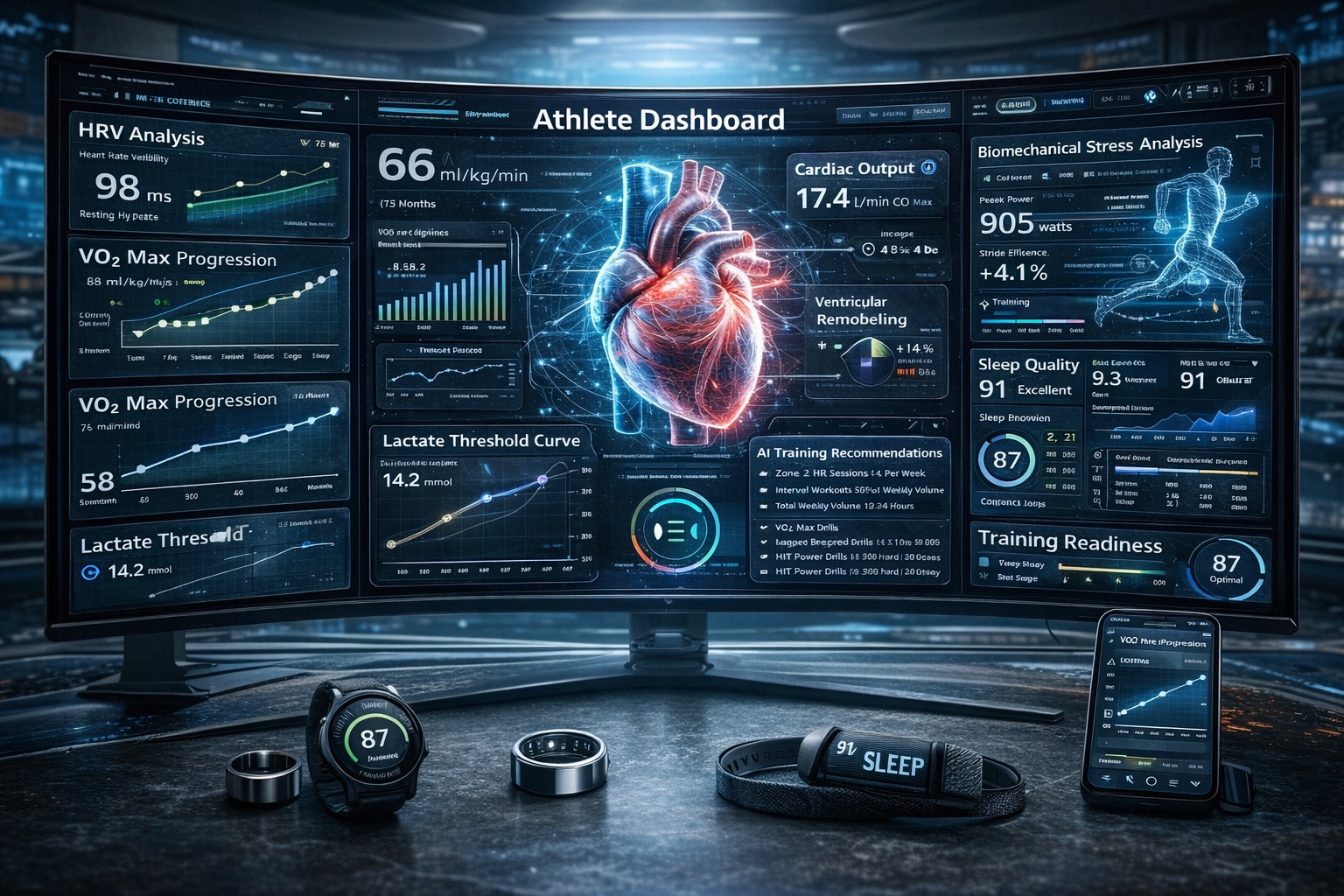
Cardiorespiratory Digital Twin™ technology transforms athletic training from subjective coaching to data-driven optimization, providing objective documentation of systematic improvement that college coaches value when evaluating recruitment prospects for elite university programs.
The healthcare industry is driving digital twin adoption, with an estimated market size of $110.1 billion by 2028.49 In sports applications, digital twins combine variables including sleep hours, caloric intake, heart rate, training load, and recovery metrics with machine learning to generate personalized, adaptive training plans.[50]
For youth athletes pursuing college recruitment, the Cardiorespiratory Digital Twin™ offers transformative advantages:
Precise Performance Baselines: Rather than relying on periodic testing, continuous monitoring establishes exact cardiovascular baselines. A family can document their child's resting heart rate (40 bpm), heart rate variability (85 ms), VO2 max (62 ml/kg/min), and lactate threshold (175 bpm) with precision that was previously available only to professional athletes.
Predictive Injury Prevention: Digital twins analyze biomechanical data to detect asymmetries, excessive muscle tension, or movement patterns that elevate injury risk.[51] For specialized youth athletes facing 2.25x greater odds of serious overuse injury, this preventive capability is invaluable.[52]
Optimized Training Load: Machine learning algorithms analyze response to training stimulus, determining optimal intervals between high-intensity sessions, identifying when recovery is incomplete, and predicting performance peaks.[53] This allows families to structure training that maximizes improvement while minimizing injury risk.
Objective Recruitment Documentation: Perhaps most valuable for admissions purposes, the Cardiorespiratory Digital Twin™ provides objective, verifiable documentation of athletic development. College coaches can review not just current performance numbers but comprehensive physiological profiles showing systematic improvement, training consistency, and coachability.
A recruit presenting with a 2k erg time of 6:12 is one thing. A recruit presenting with a comprehensive digital twin showing 18 months of documented training, progressive improvement from 6:45 to 6:12, demonstrable increases in VO2 max from 58 to 66 ml/kg/min, and biomechanical data confirming injury-resistant technique tells a completely different story. It demonstrates systematic development, data-driven optimization, and the kind of professional approach that college programs value.
The technology ecosystem supporting this capability has matured rapidly. Devices like WHOOP, Oura Ring, and Garmin provide continuous physiological monitoring. Platforms like TrainingPeaks, Today's Plan, and WKO5 analyze training data and model performance. Companies like INSCYD offer metabolic testing and modeling that quantifies fat oxidation and lactate production curves.[54]
For families investing $25,000+ annually in athletic development, these technologies represent a small incremental cost that provides enormous value: the transformation of athletic training from art to science, from subjective assessment to objective data, from hope to systematic optimization.
The Cardiorespiratory Digital Twin™ model democratizes access to elite sports science—or at least, it democratizes access for families who can afford the baseline investment in training, coaching, and technology required to generate meaningful data. It's industrialization of athletic development, made possible by the same technological advances driving personalized medicine and longevity optimization.
The Longevity Mindset: Planning for Decades of Performance
What separates today's approach to youth sports development from previous generations is the explicit integration of longevity science into athletic planning. Parents and young athletes increasingly recognize that the cardiorespiratory fitness developed for college recruitment provides value that extends far beyond four years of collegiate athletics.
This represents a fundamental shift in mindset. Previous generations might have viewed youth sports as preparation for college athletics, with perhaps vague notions of "staying in shape" thereafter. Today's families understand they're building physiological capital that compounds across a lifetime.
Dr. Benjamin Levine's research makes the case compellingly. A 2018 study found that low cardiorespiratory fitness carried greater risk for premature death than cardiovascular disease, diabetes, and smoking.[55] The data showed that individuals with elite fitness (average VO2 max of 48.3 ml/kg/min) had dramatically lower mortality risk than those with low fitness.56 Every 3.5 ml/kg/min increase in VO2 max reduces cardiovascular event risk by 11%.57
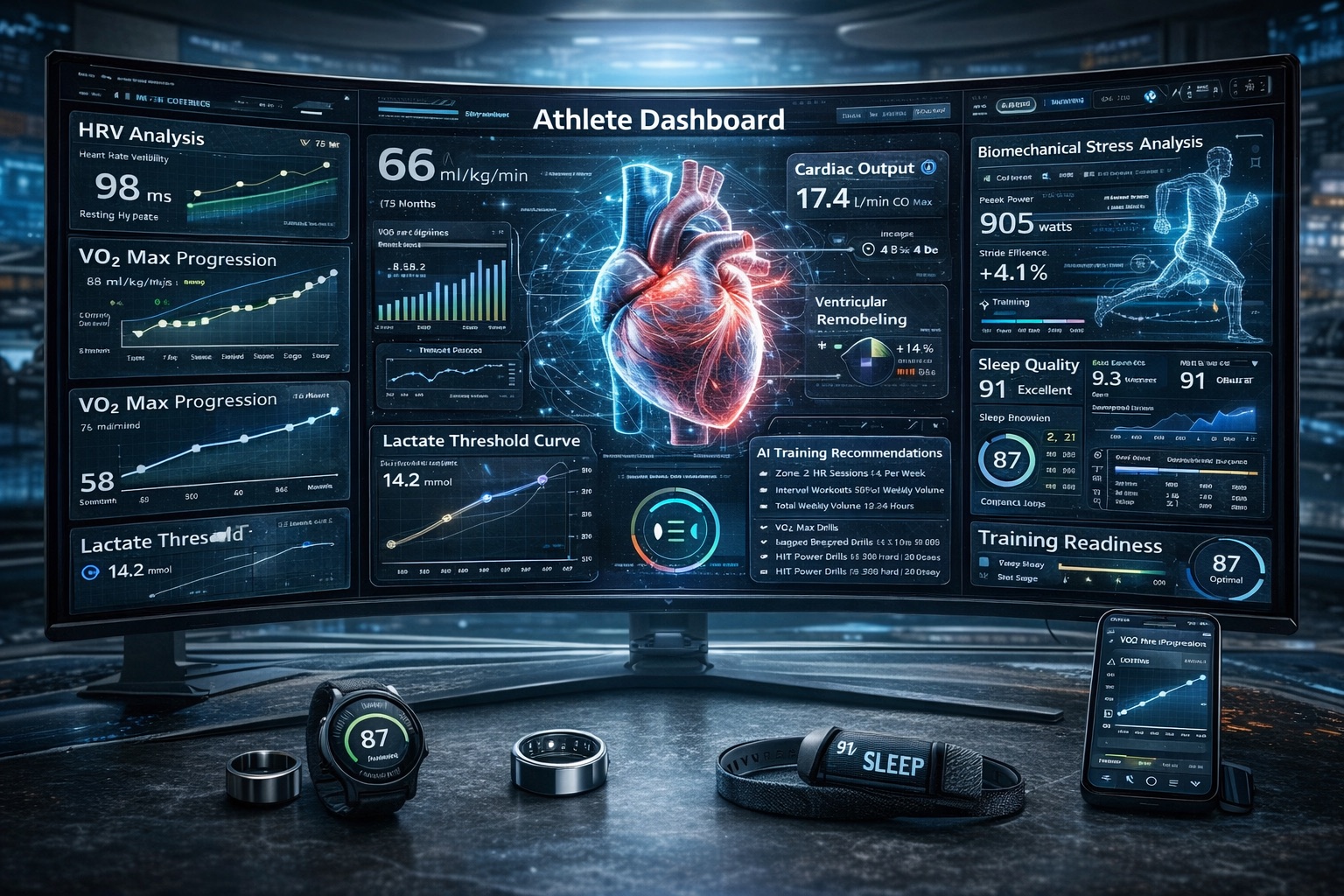
Cardiorespiratory fitness developed through youth athletic training provides mortality risk reduction that extends 60+ years beyond college athletics. Elite fitness levels achieved through systematic training reduce premature death risk by 95-404% compared to low fitness, making youth sports investment a powerful longevity strategy regardless of college admissions outcomes.
For families investing in youth cardiorespiratory development, these statistics reframe the value proposition entirely. A 16-year-old who develops VO2 max of 65 ml/kg/min through systematic training isn't just building college recruitment credentials—they're establishing cardiovascular capacity that will influence health outcomes for 60+ years.
Consider the career implications. Whether pursuing business, medicine, law, technology, or any other demanding professional field, the physical and mental resilience developed through years of structured endurance training provides performance advantages that extend far beyond athletics.
Jamie Beaton's career trajectory illustrates this perfectly. The discipline and systematic optimization he developed through academic achievement—managing maximum course loads at Harvard while simultaneously working at Tiger Management, then earning degrees from seven elite universities while building a billion-dollar company—reflects the same relentless training mentality that elite endurance athletes cultivate.[58]
Beaton's success isn't accidental. It's the application of athletic training principles—systematic progression, data-driven optimization, recovery management, goal setting—to intellectual and business pursuits. The cultural preparation that allows a youth athlete to train 6:00 AM before school, maintain academic excellence, and continuously optimize performance is identical to the preparation that allows a professional to build a successful career while pursuing advanced degrees.
This longevity mindset manifests in several ways:
Recreational and Semi-Competitive Sports Participation: Parents recognize their children won't become professional athletes, but they understand that the cardiovascular foundation built in youth enables decades of recreational running, cycling, swimming, or Masters athletic competition. A 40-year-old who developed robust cardiorespiratory capacity as a teenager can train for marathons, participate in triathlons, or simply maintain excellent health with far less effort than someone building that capacity from scratch.
Business Performance Optimization: The same systematic approach to athletic optimization—setting measurable goals, tracking progress, adjusting based on data, maintaining discipline through setbacks—translates directly to business success. Executives who maintain athletic training often report better decision-making, higher energy levels, and superior stress management compared to sedentary peers.
Longevity Planning: The intersection of cardiorespiratory fitness and longevity medicine is increasingly explicit. Companies like TruDiagnostic use epigenetic testing to measure biological age through DNA methylation analysis with 99%+ reproducibility.[59] Fountain Life, co-founded by Peter Diamandis and Tony Robbins, combines comprehensive biomarker testing with AI analysis to identify health risks and optimize interventions.[60]
Multigenerational Health Impact: Parents who invest in their children's cardiorespiratory development often simultaneously optimize their own health. The family culture built around athletic training—structured meals, consistent sleep schedules, regular exercise—creates health benefits that extend across generations.
For families using athletics as a pathway to elite college degrees, the recognition that they're simultaneously building physiological capital for 60+ years of healthy, high-performance living transforms the investment calculus. Even if college athletic recruitment never materializes (though with proper execution, it often does), the cardiorespiratory foundation provides ROI that far exceeds the cost.
This is fundamentally different from investments in sports where genetics determine ceiling. A family spending $25,000 annually developing a basketball player faces the reality that without exceptional height, the investment may yield limited returns beyond high school. But a family making the same investment in systematic cardiorespiratory development is building physiological capacity that will generate performance advantages—in athletics, business, health, and longevity—for the athlete's entire life.
The longevity mindset doesn't diminish the college admissions goal. It enhances it by recognizing that the pathway to that goal also happens to be the optimal pathway to lifelong health and performance. It's strategic alignment of multiple objectives through a single, systematic approach.
The Varsity Blues Contrast: Fake Credentials vs. Hard-Earned Performance
The 2019 Operation Varsity Blues scandal provides a stark contrast to the systematic athletic development model, revealing both the power of athletic recruitment and the bright line between legitimate advantage and criminal fraud.
William "Rick" Singer, the mastermind behind Varsity Blues, facilitated $25 million in bribes between 2011 and 2018 to secure college admissions for wealthy families' children.[61] His scheme involved two primary methods: cheating on standardized tests and fabricating elite sports credentials.62
The athletic fraud was remarkably brazen. Singer bribed college coaches to designate students as recruited athletes despite the students having limited-to-zero athletic credentials.[63] He created completely fake athletic résumés and used Photoshop to insert students' faces onto images of real athletes participating in sports they had never played.[64]
One egregious example: Michael Center, men's tennis coach at University of Texas, accepted approximately $100,000 to designate an applicant as a recruit for the Longhorns tennis team despite the student having no meaningful tennis background.[65] At Yale, soccer coach Rudy Meredith allegedly accepted $450,000 to falsely identify an applicant as a soccer recruit.66
The scandal implicated coaches at USC, Georgetown, Stanford, Yale, and other elite institutions.[67] Notably, many fabricated credentials involved the same "rare sports" that legitimate recruitment strategies target—water polo, rowing, sailing, soccer—precisely because these sports have roster spots to fill and performance is harder for admissions offices to independently verify.[68]
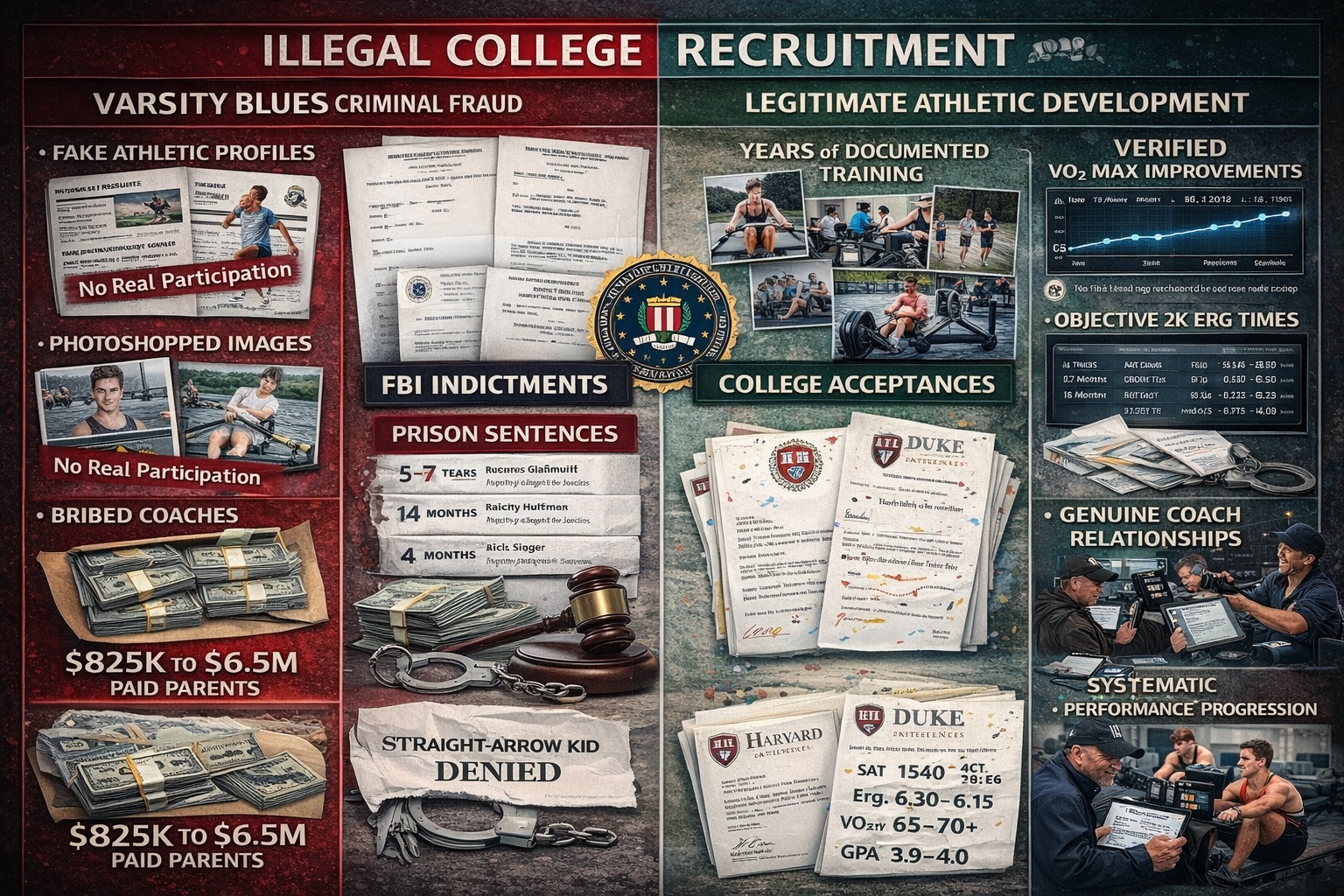
The Varsity Blues scandal demonstrates the power of athletic recruitment while illustrating the bright line between criminal fraud (fabricated credentials, bribed coaches) and legitimate systematic development (years of training, objective performance data, genuine athletic contribution to college programs).
The distinction between Varsity Blues and legitimate athletic development couldn't be clearer:
Varsity Blues: Fabricated Credentials
- Students had never seriously participated in the sports they were "recruited" for
- Athletic profiles were invented whole cloth
- Coaches were bribed to lie about athletic ability
- No actual athletic development occurred
- Universities were victims of fraud, with admissions offices deceived by their own athletic departments
Legitimate Athletic Development: Hard-Earned Performance
- Athletes spend years developing measurable skills and physical capacity
- Performance is documented through objective data (race times, erg scores, competition results)
- Coaches recruit based on genuine athletic ability and potential contribution to programs
- Families invest in training, coaching, and development that produces real capability
- Universities receive athletes who can actually contribute to their programs
The power of athletic recruitment—the fact that Singer could charge millions to exploit it—demonstrates how valuable these admissions pathways are. Athletic recruits go through a "different door" in admissions, with applications typically reviewed by athletic liaisons who work closely with coaches rather than through regional admissions officer pools.69
What Varsity Blues parents wanted—admissions advantages for their children—was perfectly legal to pursue through legitimate athletic development. What made their actions criminal was the fraud: paying bribes to fabricate credentials rather than investing in actual development.
The irony is profound: for the amounts some Varsity Blues families paid Singer ($250,000-$500,000 in many cases), they could have funded years of elite athletic training, private coaching, training camps, and comprehensive support that might well have produced legitimate recruitment opportunities.[70] They chose fraud over work, fabrication over development.
The scandal revealed something else important: universities genuinely value athletic recruits and maintain systematic processes to support their admission. The "side door" Singer sold actually exists—but the legitimate way through it requires years of structured training, systematic performance improvement, and hard-earned athletic credentials.
For families pursuing the Cardiorespiratory Digital Twin™ approach, Varsity Blues provides a crucial lesson: athletic recruitment is powerful precisely because it's legitimate. Coaches have discretion to advocate for athletes who can contribute to their programs. Admissions offices trust coaches' assessments of athletic ability. The pathway exists, it's legal, and it's effective—but only when built on genuine athletic development and performance.
The contrast also highlights why cardiorespiratory sports offer particular strategic value: performance is objectively measurable and independently verifiable. A 2k erg time of 6:15 can't be faked. A 5k cross-country time of 15:45 can be verified through race results. VO2 max testing provides physiological data that's difficult to fabricate. The objective nature of cardiorespiratory performance makes it harder to fraud and more compelling to coaches.
Singer was sentenced to 3.5 years in prison and ordered to pay more than $19 million in restitution.[71] Numerous parents served prison sentences.[72] The coaches involved lost their positions and faced criminal charges.73 Universities implemented new verification protocols, though as admissions consultant Allen Koh notes, "there is no actual audit system" and the potential for future scandals "has not been eradicated."[74]
The lesson for ambitious families is straightforward: the athletic recruitment pathway works, it's legal, and it's available—but it requires years of genuine investment in development, systematic training, measurable improvement, and legitimate performance. The hard-earned credentials approach isn't just ethically superior—it's also more reliable, builds lifelong capabilities, and creates value that extends far beyond college admissions.
Crimson Education: The Comprehensive Model
The success of Crimson Education under Jamie Beaton's leadership demonstrates how systematic admissions strategy can be industrialized and scaled globally. What makes Crimson particularly relevant to the Cardiorespiratory Digital Twin™ approach is their explicit integration of athletic recruitment consulting within a comprehensive admissions strategy.
Founded in 2013 when Beaton was just 17 years old, Crimson has grown to serve over 8,000 clients globally across six grade levels.[75] The company operates in 21 markets with 26 offices worldwide and employs over 800 team members, including former admissions officers from Harvard, Yale, MIT, Stanford, and other elite institutions.[76]
The results speak for themselves: in 2024 alone, Crimson students achieved over 220 Ivy League placements.[77] The company reports a 98% acceptance rate to students' top five college choices and a ~90% success rate for M7 business school applicants.78 According to The Wall Street Journal, Crimson students accounted for 2% of Class of 2028 admits at Brown, Columbia, Harvard, and UPenn—a remarkable concentration given the thousands of applicants to each institution.[79]
Crimson's model explicitly includes athletic recruitment consulting as part of their comprehensive service offering.80 They recognize that athletic recruitment, when properly executed, provides genuine admissions advantages—advantages that become even more powerful when combined with strong academics, compelling extracurriculars, polished essays, and strategic school selection.
The company's team-based approach assigns each student multiple specialists:
- Admissions Strategist: Develops overall application narrative and timeline
- Academic Tutors: Optimize test scores and GPA
- Athletic Consultants: Assess recruitment potential and coordinate with coaches
- Extracurricular Mentors: Design and scale passion projects
- Essay Coaches: Craft compelling personal statements
- Subject-Specific Mentors: Including Harvard, Stanford, MIT professors for research development
For families pursuing cardiorespiratory sports recruitment, Crimson's integrated approach offers particular value. Athletic development doesn't exist in isolation—it must align with academic achievement, personal narrative, and overall application strategy. A recruited rower with a 6:10 2k erg time but inadequate GPA won't receive admission to Harvard. Similarly, exceptional academics without differentiated achievement won't secure admission in an applicant pool where many candidates have perfect test scores.
Beaton's own trajectory exemplifies Crimson's model in action. His systematic accumulation of elite degrees—Harvard (BA, MA in Applied Mathematics, completed in 3 years), Stanford (MBA, MA in Education, admitted at age 20), Oxford (DPhil, Rhodes Scholar), Yale (JD), Princeton (MFin), UPenn (MS in Education), King's College London (MA)—required precisely the kind of strategic planning, relentless execution, and systematic optimization that Crimson applies to undergraduate admissions.[81]
More importantly, Beaton's success extended beyond academics. While earning degrees, he worked as the youngest analyst ever at Tiger Management, Julian Robertson's legendary hedge fund.[82] He built Crimson into a billion-dollar company while simultaneously pursuing graduate education.[83] He's spoken at the United Nations, been named to Forbes 30 Under 30, authored a USA Today bestseller (ACCEPTED! Secrets to Gaining Admission to the World's Top Universities), and now teaches at the University of Auckland alongside co-founder Fangzhou Jiang.[84]
This demonstrates the long-term value of the systematic optimization mindset that Crimson cultivates. The discipline, data-driven decision making, and relentless focus that secures elite college admissions are the same capabilities that drive business success, professional achievement, and lifelong performance.
For families considering whether to invest $30,000-$200,000 in Crimson's services (prices vary based on program comprehensiveness and whether families work with co-founders), the calculation should include not just college admissions outcomes but the cultural preparation for high performance that the process instills.[85]
As former Prime Minister of New Zealand John Key—now a Crimson advisor and investor—noted about Crimson's clients: "I wouldn't necessarily actually describe them as anywhere near the most wealthy New Zealanders, or even in the top third of the wealthy New Zealanders—they're often reasonably, believe it or not, reasonably middle income, but they've massively prioritized their children's education."86
This observation captures something important about the families succeeding in systematic admissions optimization: it's not purely about wealth—it's about priorities, discipline, and willingness to invest resources (financial and otherwise) in structured pathways to elite achievement.
For LongevityPlan.AI, Crimson Education represents an ideal partner and customer archetype. Families who invest $50,000-$100,000+ in comprehensive admissions consulting are precisely the families who would value a Cardiorespiratory Digital Twin™ platform that provides:
- Comprehensive physiological monitoring and modeling
- AI-powered training optimization
- Injury prevention through biomechanical analysis
- Objective performance documentation for recruitment
- Long-term longevity optimization extending decades beyond college
The integration of athletic recruitment consulting within Crimson's comprehensive admissions model validates the strategic value of systematic cardiorespiratory development. When the world's leading admissions consultancy explicitly includes athletic recruitment as a core service offering, it confirms what ambitious families have recognized: athletic credentials, properly developed and strategically deployed, provide genuine advantages in elite college admissions.
The Opportunity: Technology-Enabled Systematic Development
For families seeking legitimate pathways to optimize their children's college admissions prospects while simultaneously building lifelong health and performance capacity, the convergence of cardiorespiratory sports, digital twin technology, and comprehensive admissions strategy offers unprecedented opportunity.
The traditional barriers to elite athletic development—access to sophisticated coaching, physiological testing, training optimization, performance monitoring—have been dramatically reduced by technological advances. What required professional team resources five years ago can now be approximated through consumer devices, cloud-based platforms, and AI-powered analysis.
A family in suburban Denver can access:
- Continuous physiological monitoring through WHOOP or Garmin devices ($300-500 annually)
- Training optimization platforms like TrainingPeaks or Today's Plan ($200-500 annually)
- Metabolic testing through services like INSCYD ($200-500 per test)
- Video analysis of technique through coaching apps
- Remote coaching from elite-level coaches via video conferencing
- Nutrition optimization through apps like MyFitnessPal combined with professional consultation
- Sleep tracking via Oura Ring or similar devices
- Performance benchmarking against national databases
The total cost for comprehensive technological support might be $2,000-5,000 annually—a fraction of the cost of relocating to a geographic area with elite coaching or attending specialized boarding schools.
Combined with:
- Local club sports participation ($2,000-8,000 annually depending on sport)
- Private coaching (2-4 sessions monthly, $200-800 per month)
- Summer camps and competitions ($2,000-5,000 annually)
- Equipment and travel ($2,000-5,000 annually)
A family could execute a comprehensive cardiorespiratory development program for $15,000-30,000 annually—substantial but far less than IMG Academy's $80,000+ boarding program while still accessing most of the same training science and optimization capabilities.
For families investing in comprehensive admissions consulting ($30,000-200,000 with services like Crimson Education), the additional investment in Cardiorespiratory Digital Twin™ technology and systematic athletic development represents a high-ROI complement to academic optimization.
The beauty of this approach is its alignment of multiple objectives:
- College Admissions: Documented athletic performance creates recruitment opportunities
- Longevity Capital: Cardiorespiratory capacity built in youth compounds across a lifetime
- Performance Capability: Discipline and optimization skills transfer to academic and professional domains
- Health Insurance: Superior cardiovascular health reduces lifetime healthcare costs and disease risk
- Athletic Participation: Enables decades of recreational sports participation and competition
For LongevityPlan.AI, the opportunity is to serve families pursuing this integrated strategy by providing the technological infrastructure that transforms athletic training from art to science:
- Comprehensive Physiological Modeling: Digital twins that predict performance, optimize training, and prevent injury
- AI-Powered Periodization: Machine learning algorithms that structure training for peak performance at college recruitment showcases
- Objective Documentation: Verified performance data that strengthens recruitment narratives
- Longevity Integration: Seamless connection between youth athletic development and lifelong health optimization
The families who will pay $30,000-200,000 for comprehensive admissions consulting are precisely the families who will invest in technology platforms that provide measurable competitive advantages in highly selective admissions environments.
This isn't about democratizing access—it's about providing the families with resources and motivation to invest in their children's development with the most sophisticated tools available. It's industrialization of elite athletic development, made accessible to motivated families through technology rather than requiring relocation or boarding school enrollment.
Conclusion: The Cardiorespiratory Pathway to Elite Admissions and Lifelong Performance
The question posed at the beginning—Can a Cardiorespiratory Digital Twin™ help your child get into Harvard?—has a clear answer: yes, when integrated within a comprehensive strategy of systematic athletic development, academic excellence, and strategic admissions planning.
But the more important insight is this: the pathway to elite college admissions through cardiorespiratory sports development happens to align perfectly with the optimal pathway to lifelong health, performance, and longevity. Families aren't choosing between admissions optimization and health optimization—they're pursuing both through a single, integrated approach.
Dr. Hextrum's hidden curriculum—socialization, covert selection, overt selection—remains operative. Athletic recruitment systematically advantages families with resources, cultural capital, and sophisticated understanding of college admissions processes. This isn't about to change.
What has changed is the accessibility of elite sports science and optimization technology. Families motivated to invest in their children's development can now access physiological monitoring, training optimization, and performance modeling that was unavailable outside professional athletics just a decade ago.
The Varsity Blues scandal demonstrated that the "side door" of athletic recruitment is real and valuable—valuable enough that desperate families paid hundreds of thousands of dollars to fraudulently exploit it. The legitimate pathway requires more work but produces better outcomes: hard-earned athletic credentials, measurable physiological development, lifelong health benefits, and the cultural preparation for sustained high performance that successful people share.
For families considering this pathway, the calculation is straightforward:
An investment of $15,000-30,000 annually in systematic cardiorespiratory development, structured through a Cardiorespiratory Digital Twin™ platform, provides:
- Measurable athletic credentials for college recruitment
- VO2 max and cardiovascular capacity that reduce mortality risk by 50-400% compared to low fitness
- Discipline and optimization skills that transfer to academic and professional success
- Physical resilience that enables decades of athletic participation
- Health capital that compounds across 60+ years of life
When combined with comprehensive admissions consulting ($30,000-200,000), the integrated approach offers the highest probability of achieving elite college admissions while simultaneously building the physiological and psychological foundation for a lifetime of exceptional performance.
Jamie Beaton's success—from acceptance to 25 elite universities at age 17, to building a billion-dollar company while earning seven graduate degrees, to now shaping the next generation of high achievers—demonstrates what systematic optimization can produce. His trajectory wasn't accidental. It was engineered through the same relentless discipline, data-driven decision making, and strategic planning that elite endurance athletes employ.
The families who will succeed in this model share common characteristics: they're willing to invest substantial resources, they value systematic optimization, they plan for long time horizons, and they recognize that competitive advantages come from doing what others won't—whether that's training at 6:00 AM, meticulously tracking physiological data, or structuring family life around athletic development.
For these families, the Cardiorespiratory Digital Twin™ isn't just an admissions strategy—it's a comprehensive platform for developing human potential, optimizing health across the lifespan, and building the capabilities that produce success in whatever domain one pursues.
The pathway is clear, the technology exists, the biological mechanisms are understood, and the outcomes are documented. The only question is whether you're willing to execute with the discipline and systematic rigor that transforms potential into performance.
About the Author
Tony Medrano is a 3x Ironman finisher and founder of LongevityPlan.AI. He holds degrees from Harvard University, Columbia University, and Stanford University (JD/MBA), and has successfully exited two technology companies including a $1B molecular diagnostics company. His work focuses on democratizing elite sports science and longevity planning through AI-powered Cardiorespiratory Digital Twin™ technology.
Footnotes
[1]: Aspen Institute Project Play. (2025). Project Play survey: Family spending on youth sports rises 46% over five years.
[2]: Aspen Institute Project Play. (2025). State of Play 2025: 10 Youth Sports Trends to Watch.
[3]: Hextrum, K. (2018). The hidden curriculum of college athletic recruitment. Harvard Educational Review, 88(3), 355-377.
[4]: Muscle Fiber Type Transitions with Exercise Training: Shifting Perspectives. PMC. https://pmc.ncbi.nlm.nih.gov/articles/PMC8473039/
[5]: Association of muscle fiber composition with health and exercise-related traits in athletes and untrained subjects. PMC. https://pmc.ncbi.nlm.nih.gov/articles/PMC8670815/
[6]: Muscle Fiber Characteristics, Satellite Cells and Soccer Performance in Young Athletes. PMC. https://pmc.ncbi.nlm.nih.gov/articles/PMC4126283/
[7]: Ivy League Erg Times and Training. Concept2 Forum. https://www.c2forum.com/viewtopic.php?t=12526
[8]: Hextrum, K., Knoester, C., & Tompsett, J. (2024). Inequalities in girls' high school sports participation. Sociological Focus, 57(2), 63-93.
[9]: Jamie Beaton. Wikipedia. https://en.wikipedia.org/wiki/Jamie_Beaton
[10]: Jamie Beaton. LinkedIn. https://www.linkedin.com/in/jamiebeaton/
[11]: Jamie Beaton. Crimson MBA. https://mba.crimsoneducation.org/team/jamie-beaton
[12]: Meet CGA's Founder: Dr Jamie Beaton. Crimson Global Academy. https://www.crimsonglobalacademy.school/us/blog/meet-cgas-co-founder-jamie-beaton/
[13]: Crimson Education. Wikipedia.
[14]: Jamie Beaton. Crimson MBA.
[15]: IMG Academy. (n.d.). College Planning & Placement.
[16]: IMG Academy. (n.d.). Football Boarding School. https://www.imgacademy.com/boarding-school/football
[17]: IMG Academy. (n.d.). College Planning & Placement.
[19]: IMG Academy. (n.d.). Football Boarding School.
[21]: Myer, G.D., Jayanthi, N., DiFiori, J.P., et al. (2015). Sport Specialization, Part I. Sports Health, 7(5), 437-442.
[22]: IMG Academy. (2025, May 22). IMG Academy Announces Acquisition of College Recruiting Service SportsRecruits.
[23]: Levine, B.D. (2008). VO2max: what do we know, and what do we still need to know? Journal of Physiology, 586(1), 25-34.
[24]: Athletica. (2025, March 13). Unlocking Your Endurance Potential: The Science of VO2max Training.
[25]: Found My Fitness. (n.d.). Dr. Benjamin Levine - exercise aging cardiovascular.
[26]: Howden, E.J., Sarma, S., Lawley, J.S., et al. (2018). Reversing the Cardiac Effects of Sedentary Aging in Middle Age. Circulation.
[27]: Howden, E.J., et al. (2018). Reversing the Cardiac Effects of Sedentary Aging in Middle Age. PMC.
[29]: Peter Attia. (2025, January 29). #201 - Deep dive back into Zone 2 | Iñigo San-Millán, Ph.D.
[30]: High North Performance. (2023, September 22). Zone 2 Training and Lactate: Dissecting Inigo San Millan's Advice.
[31]: INSCYD. (2024, June 19). Zone 2 Training: Benefits, Science, and How-To Guide.
[33]: University of Colorado School of Medicine. (n.d.). Inigo San Millan.
[36]: Hextrum, K. (2018). The hidden curriculum of college athletic recruitment.
[37]: Hextrum, K., Knoester, C., & Tompsett, J. (2024). Inequalities in girls' high school sports participation.
[38]: Rowing in the USA - Recruitment Cycles. JRN.
[39]: College Rowing: How Sports Can Help You Get Accepted. InGenius Prep.
[40]: Ivy League Erg Times and Training. Concept2 Forum.
[41]: Men's College Rowing Times: How to Get Recruited for Rowing. NCSA Sports.
[42]: The Ultimate Guide for Sports Recruiting for the Ivy League. TKG.
[43]: Muscle Fiber Characteristics, Satellite Cells and Soccer Performance in Young Athletes. PMC.
[46]: A Technological Review of Digital Twins and Artificial Intelligence for Personalized and Predictive Healthcare. PMC.
[47]: TCS. (n.d.). Creating the First Digital Heart Twin Technology.
[48]: TCS. (n.d.). The Power of Digital Twins: Transforming Potential into Performance.
[50]: A Technological Review of Digital Twins and Artificial Intelligence for Personalized and Predictive Healthcare. PMC.
[51]: Digital Twins : A revolution set to redefine professional sport.
[52]: Myer, G.D., Jayanthi, N., DiFiori, J.P., et al. (2015). Sport Specialization, Part I.
[53]: Digital Twins: A Game-Changer For Sports Performance.
[54]: INSCYD. (2024, June 19). Zone 2 Training: Benefits, Science, and How-To Guide.
[55]: Found My Fitness. (n.d.). Dr. Benjamin Levine - exercise aging cardiovascular.
[58]: Unicorn founders on campus. University of Auckland.
[59]: [Reference from original document - requires verification]
[60]: [Reference from original document - requires verification]
[61]: Varsity Blues scandal. Wikipedia.
[63]: Varsity Blues Trial: What's Changed in College Sports Since. TIME.
[64]: Head of Varsity Blues college admissions bribery scandal gets 3 1/2 years. NPR.
[65]: Varsity Blues scandal. Wikipedia.
[67]: District of Massachusetts. Investigations of College Admissions and Testing Bribery Scheme.
[68]: The College Admissions Scandal That Shook Higher Ed. BestColleges.
[70]: Varsity Blues scandal. Wikipedia.
[71]: Head of Varsity Blues college admissions bribery scandal gets 3 1/2 years. NPR.
[72]: Varsity Blues scandal. Wikipedia.
[74]: Varsity Blues Trial: What's Changed in College Sports Since. TIME.
[75]: Crimson Education. Wikipedia.
[76]: Crimson Education. (n.d.). About Crimson Education USA.
[77]: Jamie Beaton. Crimson MBA.
[79]: Crimson Education. (n.d.). College Admissions Counseling Services.
[81]: Meet CGA's Founder: Dr Jamie Beaton. Crimson Global Academy.
[82]: Jamie Beaton. LinkedIn.
[83]: Unicorn founders on campus. University of Auckland.
[84]: Meet CGA's Founder: Dr Jamie Beaton. Crimson Global Academy.
[85]: Fortune. (2024, December 21). For roughly $30,000, this company gives you a 98% chance of getting into Harvard and the Ivy League.