Wearables
·3 min read
Brain Health & Wearables
The $1.5 Billion Revolution Transforming Alzheimer's Detection From Fiction to Clinical Reality
By Tony Medrano, CEO
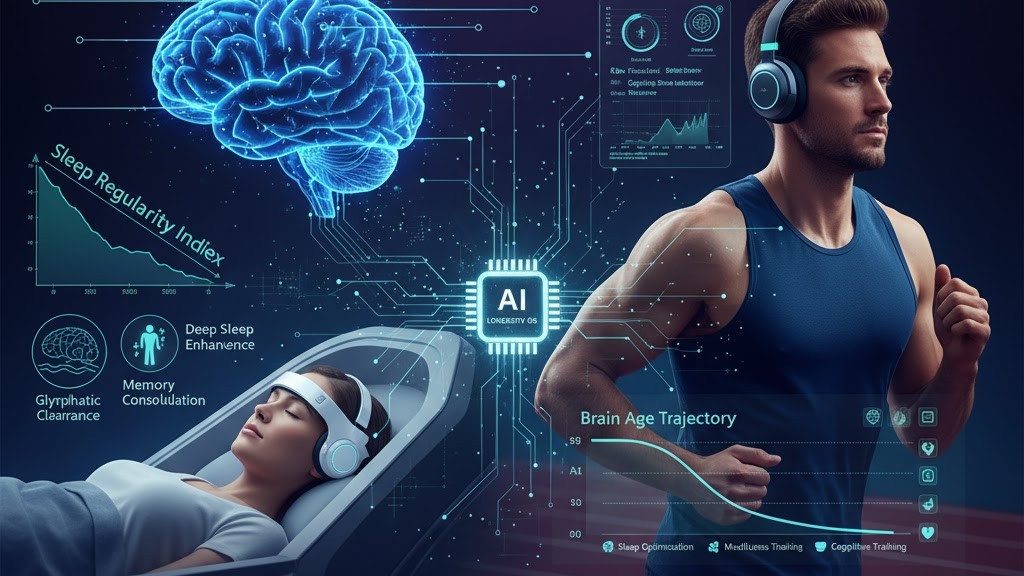
The question isn't whether brain-tracking wearables will transform how we detect and prevent Alzheimer's disease—it's how quickly the medical establishment and consumers will embrace technology that can identify cognitive decline 20 years before symptoms appear. In 2023, researchers from the University of Colorado Anschutz Medical Campus demonstrated that simple EEG headband devices can detect brain wave patterns related to memory reactivation in sleep, identifying abnormal protein levels associated with Alzheimer's disease before any symptoms manifest.
This isn't science fiction. It's data-driven medicine meeting consumer technology, creating a market opportunity that analysts project will reach $1.57 billion by 2030 from just $464.88 million in 2024—a compound annual growth rate exceeding 22%. But beneath the market projections lies a more fundamental question: can these devices actually extend healthspan, or are they merely generating mountains of data without actionable interventions?

The Sleep-Brain-Alzheimer's Connection
"This digital biomarker essentially enables any simple EEG headband device to be used as a fitness tracker for brain health," explained Dr. Brice McConnell, assistant professor of neurology at the University of Colorado School of Medicine. McConnell's team analyzed data from 205 aging adults, identifying measurable problems with memory reactivation associated with amyloid and tau protein accumulation—the hallmark pathology of Alzheimer's disease.
What makes this breakthrough particularly significant is the timing: "What we found is these abnormal levels of proteins are related to sleep memory reactivations, which we could identify in people's brainwave patterns before they experienced any symptoms," McConnell noted. During deep sleep, our brains engage in memory consolidation—a process where experiences from the day are processed and integrated into long-term memory. This produces specific patterns of electrical activity composed of slow waves and sleep spindles, unique types generated in different brain regions that represent distinct types of memory processing.
The disruption of slow waves and spindles with Alzheimer's pathology creates a bidirectional relationship: sleep disruption accelerates amyloid and tau development, while the presence of these proteins disrupts the brain's ability to create proper slow waves and spindles. It's a vicious cycle—but one that wearable technology can now detect and potentially interrupt years before clinical symptoms appear.
From Lab-Grade to Living Room: Consumer Neurotech Achieves Clinical Accuracy
The transformation of electroencephalography from bulky, $50,000 clinical systems to sleek consumer headbands represents one of the most significant democratizations of medical technology in recent history. Recent research published in npj Digital Medicine demonstrates that commercial wearables can now achieve moderate to substantial agreement with hospital-grade equipment in sleep staging and neural signal detection.
Healthspan—distinct from lifespan—represents years lived without significant disease burden or functional limitation. In cognitive health, healthspan is measured through validated instruments including the Clinical Dementia Rating scale, Montreal Cognitive Assessment, and Activities of Daily Living measures. The promise of wearable neurotech lies in detecting changes at the biomarker level—years before any clinical scales would show abnormalities—enabling intervention when the brain retains maximum plasticity and regenerative capacity.
Active Neuromodulation: Elemind Technologies
While most wearables passively monitor, Elemind Technologies represents a different paradigm: active, real-time neuromodulation with measurable impacts on immediate cognitive performance and theoretical long-term healthspan benefits. Their system uses signal processing with bandpass filtering to isolate activity in the 8-12 Hz frequency range (alpha band), then generates precisely timed bursts of pink noise synchronized to individual brainwave oscillations.
In clinical trials involving 112 subjects accounting for 876 nights of sleep and 96 naps, 76% of participants fell asleep faster—an average of 48% reduction in sleep onset time, with some experiencing up to 74% improvement. Elemind's Deep Sleep Stimulation feature uses neurostimulation to boost time spent in deep sleep and enhance sleep quality, with studies showing increased amplitude of slow waves that result in improved memory consolidation and autonomic balance.
CEO Meredith Perry articulated the vision: "How do we move beyond sleep into what could ultimately become like an app store for the brain, where you can download a brain state like you download an app?" The company is working with teams at McGill University and the Leuven Brain Institute to determine if the technology can enhance memory consolidation in deep sleep, potentially proving useful for people with mild cognitive impairment and other memory disorders.
The Athlete-Cognition Connection
Elite athletes are increasingly recognizing that brain health is inseparable from athletic performance. The same neuroplasticity that enables motor learning and skill acquisition also represents vulnerability to neurodegeneration if not actively maintained. This recognition has positioned athletes as early adopters of cognitive healthspan technology—creating a pathway for broader consumer adoption that mirrors how GPS watches moved from elite running to mainstream fitness tracking.
The convergence of consumer neurotechnology, AI-powered analysis, and clinical validation is creating unprecedented opportunities for proactive brain health management. For the first time in medical history, individuals can monitor the biomarkers most predictive of cognitive decline from the comfort of their own bedrooms—and potentially intervene decades before symptoms would otherwise appear.